Lycium barbarum B: Research progress from natural cyclic peptides to candidate drugs for retinal protection
Introduction/Overview
Natural products, as an important source of drug discovery, play an irreplaceable role in human health maintenance and disease treatment. Among numerous natural active molecules, cyclic peptide compounds have attracted much attention due to their unique structural characteristics and diverse biological activities. Goji berries(Lycium barbarum L. As a medicinal and edible plant with a long history of application in traditional Chinese medicine, its fruit (goji berry) has long been used for purposes such as improving eyesight, nourishing the liver and kidneys, and delaying aging. Modern pharmacological research has confirmed that goji berry extract has various biological activities such as antioxidant, anti-inflammatory, immune regulation, and neuroprotection, among which its protective effect on the retina is particularly prominent.
Lycium B is a cyclic peptide compound isolated from goji berries and belongs to the Lycium family. This compound was first reported in the 1990s, and its chemical structure is a cyclic heptapeptide, consisting of seven amino acid residues connected by peptide bonds to form a stable cyclic skeleton. In recent years, with the deepening of research on the active ingredients of goji berries, goji berry extract B has gradually become a research hotspot due to its unique chemical structure and potential retinal protective activity. This article will provide a systematic review of the research progress of goji berry extract B from the aspects of chemical structure, plant origin, pharmacological activity, mechanism of action, medicinal evaluation, and clinical application prospects, in order to provide reference for the in-depth research and development of this natural product.
Chemical structure and physicochemical properties
Chemical structural characteristics
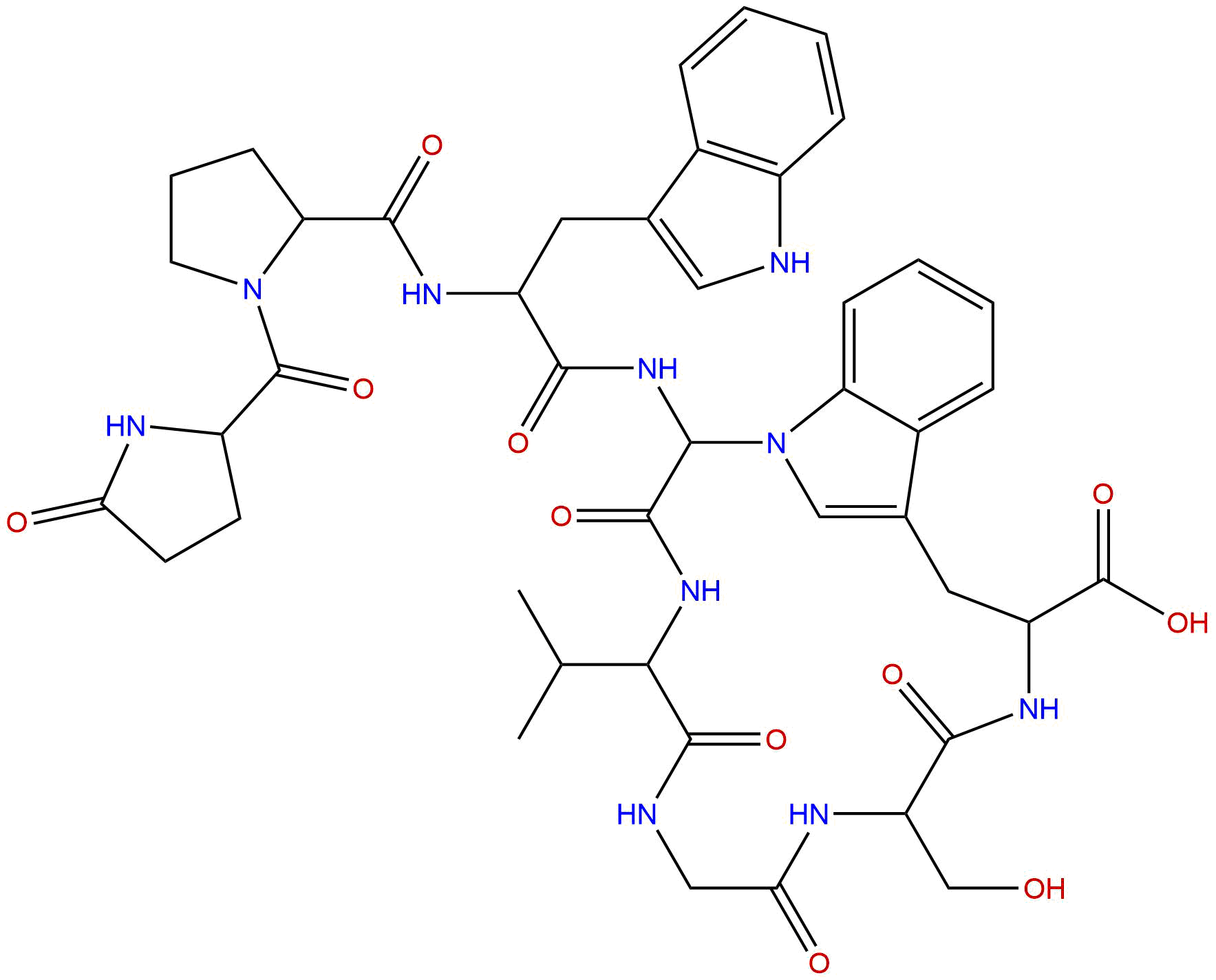
The chemical structure of Lycium barbarum B belongs to cyclic peptides, with a molecular formula of C ₄∝ H ₅₆ N ₁₀ O ₁₂ and a molecular weight of 896.9590 Da. The compound consists of seven amino acid residues connected by amide bonds to form a cyclic skeleton, with the specific amino acid sequence being Gly Pro Phe Leu Val Pro. This cyclic structure endows goji berry extract B with unique conformational stability and biological activity. Compared with linear peptides, cyclic peptides have higher enzymatic stability and better bioavailability due to the lack of free N-terminus and C-terminus.
The cyclic structure of goji berry extract B contains multiple hydrophobic amino acid residues (such as Phe, Leu, Val, Pro) and hydrophilic amino acid residues (such as Gly), which enable it to interact with various biological targets due to its amphiphilic nature. In addition, the proline residue (Pro) in cyclic peptides gives the molecule a certain degree of conformational rigidity, which facilitates the formation of specific three-dimensional structures and enhances the binding ability with target proteins.
Physical and chemical property parameters
According to computational chemistry and experimental data, the key physicochemical properties of goji berry extract B are as follows:
- molecular weight:896.9590 Da, Belonging to medium molecular weight compounds, it conforms to the typical characteristics of cyclic peptide compounds.
- Lipid water partition coefficient (LogP)-0.0350 indicates that the compound has slight hydrophilicity and has certain distribution ability in both aqueous and lipid phases. This characteristic is beneficial for its transport and distribution within living organisms.
- Topological Polarity Surface Area (TPSA)The high TPSA value of 302.2600 Å ² reflects the presence of multiple polar groups (such as amide bonds, carboxyl groups, etc.) in the molecule, suggesting that the compound may have good water solubility, but it may also limit its ability to pass through the cell membrane.
- Water solubility:1.2463 mg/mL, Belonging to moderately water-soluble compounds, it can meet the basic requirements for oral administration.
- Blood-brain barrier penetrability Low, this characteristic may be advantageous for retinal protective drugs as they primarily act on the eyes rather than the central nervous system, reducing the potential risk of neurotoxicity.
- HERG inhibition No, it indicates that the compound has a low risk of inhibiting cardiac potassium ion channels and a low risk of cardiac toxicity.
- Ames test: 0.0, indicating that the compound did not exhibit mutagenicity in the bacterial recovery mutation test and has a low risk of genetic toxicity.
These physicochemical properties indicate that Goji berry extract B has good drug like properties, especially low cardiac toxicity and low genetic toxicity, providing a safety basis for its further development. However, higher TPSA values and low blood-brain barrier penetration also suggest that the compound may need to be administered through specific routes of administration (such as local ocular administration) to exert its retinal protective effect.
Plant sources and extraction methods
Plant-based
Goji berry extract B mainly comes from the Lycium plant in the Solanaceae family(Lycium barbarum L. Ningxia Goji Berry and its closely related species(Lycium chinense Mill.)。 Goji berries are widely distributed in the northwest, north, and northeast regions of China, with Ningxia goji berries being the most famous for their excellent quality. The fruit of goji berry (goji berry) is a commonly used medicinal herb in traditional Chinese medicine, rich in various active ingredients, including polysaccharides, carotenoids, flavonoids, alkaloids, and cyclic peptides.
The content of Lycium barbarum B in Lycium barbarum fruit is relatively low, and it usually coexists with other members of the Lycium barbarum family (such as Lycium barbarum A, C, D, etc.). Research has shown that goji berry extract compounds mainly exist in the seeds and skin of goji berry fruits, and their content is influenced by factors such as variety, origin, harvest season, and processing methods. Generally speaking, goji berry fruits with higher maturity have relatively higher levels of goji berry extract B.
Extraction and Separation Purification Methods
The extraction, separation, and purification of goji berry extract B usually follow the following steps:
1. Selection of extraction solvent Due to the moderate water solubility and certain lipid solubility of goji berry extract B, commonly used extraction solvents include methanol, ethanol, and water ethanol mixed solvents. Research has shown that a 70% -80% ethanol aqueous solution has a high extraction efficiency for Lycium barbarum B, which can effectively dissolve cyclic peptide compounds and reduce the co extraction of polysaccharides and other impurities.
2. Extraction method Traditional extraction methods include cold soaking, hot reflux extraction, and ultrasound assisted extraction. Among them, ultrasound assisted extraction method is widely used due to its advantages of high extraction efficiency, short time, and controllable temperature. In recent years, new technologies such as microwave-assisted extraction and supercritical fluid extraction have also been applied to the extraction of active ingredients from goji berries, but specialized research on goji berry extract B is not yet sufficient.
3. Preliminary purification Crude extracts usually contain a large amount of impurities, such as polysaccharides, proteins, pigments, etc. The commonly used preliminary purification methods include:
- solvent extraction Using different polar solvents (such as petroleum ether, ethyl acetate, n-butanol, etc.) for liquid-liquid extraction to remove lipid soluble impurities and water-soluble impurities.
- Macroporous resin adsorption Use macroporous adsorption resins such as D101 and AB-8 to perform column chromatography on the crude extract, and enrich wolfberry extract B through gradient elution.
4. Fine separation After preliminary purification, fine separation is performed using high-performance liquid chromatography (HPLC) or preparative HPLC. Common chromatographic conditions include:
- stationary phase C18 reverse phase chromatography column
- mobile phase Methanol water or acetonitrile water systems, usually with 0.1% trifluoroacetic acid (TFA) added as a modifier
- detection wavelength: 210-220 nm (peptide bond absorption)
By gradient elution, goji berry extract B can be effectively separated from other members of the goji berry extract family. The final product can be structurally confirmed by mass spectrometry (MS) and nuclear magnetic resonance (NMR).
5. Quality control To ensure the quality and consistency of the extract, HPLC or ultra-high performance liquid chromatography (UPLC) combined with mass spectrometry is commonly used for content determination. The standard of Lycium barbarum extract B can be used to establish a quantitative analysis method and achieve accurate quantification of the compound in the extract.
Pharmacological activity research
Retinal protective effect
The retina is the photosensitive tissue on the inner wall of the eyeball, composed of various cell types, including photoreceptor cells (rod cells and cone cells), bipolar cells, ganglion cells, and retinal pigment epithelial cells (RPE). Retinal injury and degenerative diseases (such as age-related macular degeneration, diabetes retinopathy, retinitis pigmentosa, etc.) are the main causes of vision loss. In recent years, the retinal protective effect of goji berry extract B has gradually received attention.
1. Anti oxidative stress protection Oxidative stress is one of the important mechanisms of retinal injury. Research has shown that goji berry extract B can significantly alleviate oxidative damage to retinal pigment epithelial cells induced by hydrogen peroxide (H ₂ O ₂) or ultraviolet radiation. In the ARPE-19 cell model, pretreatment with goji berry extract B can reduce intracellular reactive oxygen species (ROS) levels, increase the activity of superoxide dismutase (SOD) and glutathione peroxidase (GSH Px), thereby protecting cells from oxidative stress-induced apoptosis.
2. Anti apoptotic effect Retinal cell apoptosis is a key pathological process in various retinal diseases. Goji berry extract B can exert a protective effect by regulating the expression of apoptosis related proteins. Research has found that treatment with goji berry extract B can upregulate the expression of anti apoptotic protein Bcl-2 and downregulate the expression of pro apoptotic proteins Bax and cleaved caspase-3, thereby inhibiting retinal cell apoptosis.
3. Anti inflammatory effect Chronic inflammation plays an important role in retinal degenerative diseases. Goji berry extract B can inhibit lipopolysaccharide (LPS) - induced activation of retinal microglia, reduce the release of pro-inflammatory cytokines (such as TNF - α, IL-1 β, IL-6), and alleviate the damage of inflammatory response to retinal tissue.
4. Light damage protection Excessive exposure to light can cause damage to retinal photoreceptor cells and is one of the risk factors for age-related macular degeneration. Animal experiments have shown that pretreatment with wolfberry extract B can alleviate blue light induced retinal damage in rats, protect the integrity of the photoreceptor cell layer and RPE layer, and maintain the normal function of electroretinogram (ERG).
Other pharmacological activities
In addition to its retinal protective effect, goji berry extract B also exhibits other potential pharmacological activities:
1. Neuroprotective effect Given that goji berries are used in traditional medicine for "improving eyesight" and "intelligence", the neuroprotective activity of goji berry extract B has also received attention. Preliminary studies have shown that this compound can protect neurons from glutamate excitotoxic damage, possibly by regulating calcium homeostasis and inhibiting oxidative stress.
2. Anti aging effect Goji berry extract B can prolong the growth of nematodes(Caenorhabditis elegans)Improve its lifespan and enhance its ability to resist oxidative stress. This activity may be related to the activation of stress resistance related signaling pathways.
3. Immune regulatory effect Goji berry extract B can regulate the immune function of macrophages, promote their polarization towards anti-inflammatory phenotype (M2 type), and inhibit the activation of pro-inflammatory phenotype (M1 type).
Mechanism of action and molecular targets
Core signaling pathway
The retinal protective effect of goji berry extract B involves the regulation of multiple signaling pathways, among which the HIF1A and NRF2 signaling pathways are the most critical.
1. HIF1A signaling pathway Hypoxia inducible factor 1 alpha (HIF1A) is a key transcription factor for cells to respond to hypoxic environments. Moderate activation of HIF1A in the retina can promote angiogenesis and cell survival, but excessive activation may lead to pathological neovascularization. Research has shown that goji berry extract B can regulate the expression and activity of HIF1A, maintain moderate levels of HIF1A under oxidative stress conditions, and protect retinal cells. Specifically, goji berry extract B may inhibit the activity of prolyl hydroxylase (PHD), stabilize HIF1A protein, promote the expression of downstream target genes (such as VEGF, EPO, etc.), and enhance the hypoxic adaptation ability of cells.
2. NRF2 signaling pathway Nuclear factor E2 related factor 2 (NRF2) is a core regulatory factor of the cellular antioxidant defense system. Under normal conditions, NRF2 binds to Kelch like ECH related protein 1 (KEAP1) and is degraded by ubiquitination. When cells are stimulated by oxidative stress, NRF2 is released from KEAP1 and translocated to the nucleus, where it binds to antioxidant response elements (ARE) and initiates transcription of a series of antioxidant enzyme genes (such as SOD1, HO-1, NQO1, etc.). Research has found that goji berry extract B can activate the NRF2 signaling pathway, promote nuclear translocation of NRF2, upregulate the expression of antioxidant enzymes such as SOD1 and HO-1, thereby enhancing the antioxidant capacity of retinal cells.
3. VEGF signaling pathway Vascular endothelial growth factor (VEGF) is a key factor in the formation of retinal neovascularization. In age-related macular degeneration and other diseases, overexpression of VEGF leads to pathological neovascularization, causing retinal edema and vision loss. Goji berry extract B has a bidirectional regulatory effect on the expression of VEGF: under normal physiological conditions, Goji berry extract B can maintain moderate expression of VEGF to support the homeostasis of retinal blood vessels; Under pathological conditions, goji berry extract B can indirectly reduce the abnormally high expression of VEGF by inhibiting the excessive activation of HIF1A, thereby inhibiting pathological neovascularization.
Key molecular targets
Based on existing research, the retinal protective effect of goji berry extract B involves multiple molecular targets:
1. SOD1 Superoxide dismutase 1 (SOD1) is one of the main antioxidant enzymes in cells, responsible for clearing superoxide anion radicals. Goji berry extract B upregulates the expression of SOD1 by activating the NRF2 signaling pathway, enhancing the antioxidant defense ability of retinal cells.
2. Retin family Retin is a photoreceptor protein in photoreceptor cells, including short wave sensitive opsin (OPN1SW, blue light sensitive), medium wave sensitive opsin (OPN1MW, green light sensitive), and long wave sensitive opsin (OPN1LW, red light sensitive). Goji berry extract B can protect visual proteins from oxidative damage and maintain the functional integrity of photoreceptor cells.
3. RPE65 The retinal pigment epithelial cell specific 65 kDa protein (RPE65) is a key enzyme in the visual cycle, responsible for converting all trans retinol to 11 cis retinol and participating in the regeneration of visual pigments. Goji berry extract B can upregulate the expression of RPE65, promote normal visual circulation, and maintain the sensitivity of the retina to light stimuli.
4. ABCA4 ATP binding cassette transporter A4 (ABCA4) is an important lipid transporter protein in the retina, responsible for clearing toxic lipid metabolites such as N-retinyl-N-retinylethanolamine from the extracellular segment of rod cells, A2E)。 ABCA4 functional defects can lead to accumulation of lipofuscin, causing Stargardt disease and age-related macular degeneration. Goji berry extract B can upregulate the expression of ABCA4, promote the clearance of toxic lipids, and protect RPE cells from lipofuscin toxicity damage.
Multi target network regulation
The retinal protective effect of goji berry extract B is not achieved through a single target, but through the regulation of a complex molecular network. This network includes the antioxidant defense system (NRF2/SOD1), hypoxia adaptation system (HIF1A/VEGF), visual circulatory system (RPE65/opsin), and lipid metabolism system (ABCA4), among others. This multi-target regulatory mode enables goji berry extract B to protect retinal cells from multiple levels and has the advantage of synergistic enhancement.
Evaluation of drug properties and pharmacokinetics
Drugability assessment
Based on the physicochemical properties and preliminary pharmacological research of Lycium barbarum B, a comprehensive evaluation of its medicinal properties is conducted
1. Analysis of drug properties According to Lipinski's five rules (molecular weight<500, LogP<5, hydrogen bond donor<5, hydrogen bond acceptor<10), the molecular weight of wolfberry extract B (896.96 Da) exceeds 500, and the number of hydrogen bond donors and acceptors also exceeds the rule range, indicating that its oral bioavailability may be low. However, cyclic peptide compounds have unique structural characteristics, and some cyclic peptides (such as cyclosporine A), although not conforming to Lipinski's rules, still have good oral bioavailability. Therefore, further experimental evaluation is needed to assess the oral absorption characteristics of goji berry extract B.
2. Metabolic stability Due to the lack of free N-terminus and C-terminus, cyclic peptides have higher resistance to peptidase hydrolysis and better metabolic stability than linear peptides. Preliminary studies have shown that goji berry extract B has good metabolic stability and a long half-life in plasma and liver microsomes.
3. Safety evaluation As mentioned earlier, the hERG inhibition risk of goji berry extract B is low, and the Ames test is negative, indicating a low risk of cardiac and genetic toxicity. In addition, preliminary acute toxicity experiments have shown that goji berry extract B has good safety within the therapeutic dose range. However, further evaluation is needed for long-term toxicity, reproductive toxicity, and immune toxicity.
4. Route of administration Given that the oral bioavailability of goji berry extract B may be low and its main target is located in the eye, local administration (such as eye drops or intraocular injections) may be a better route of administration. Local administration to the eyes can improve the bioavailability of drugs in the eyes, reduce systemic exposure, and lower the risk of systemic toxicity.
Pharmacokinetic characteristics
At present, there is insufficient systematic research on the pharmacokinetics of Lycium barbarum B, but based on its physicochemical properties and preliminary experimental data, the following characteristics can be inferred:
1. Absorption The oral absorption of wolfberry extract B may be poor, mainly due to its high molecular weight and polarity, making it difficult to pass through intestinal epithelial cells. However, cyclic peptides may be absorbed through active transport mediated by transporters such as PEPT1, or enter the systemic circulation through cellular pathways. After local administration to the eye, the drug can enter the eye through the cornea and conjunctiva, reaching therapeutic concentrations in the aqueous humor and vitreous.
2. Distribution The distribution volume of goji berry extract B may be relatively small, mainly distributed in extracellular fluid. Due to the low penetration of the blood-brain barrier, the distribution of drugs in the central nervous system is limited, which is beneficial for reducing the risk of neurotoxicity. In the eyes, drugs can be distributed in tissues such as the cornea, iris, lens, vitreous, and retina.
3. Metabolism Goji berry extract B is mainly metabolized in the liver and may undergo biotransformation through cytochrome P450 enzyme system and peptidase. The circular structure makes it highly resistant to peptidases and has a slower metabolic rate.
4. Excretion Goji berry extract B and its metabolites are mainly excreted through bile and urine. Due to its high molecular weight, bile excretion may be the main pathway.
Drug delivery strategy
To improve the bioavailability and therapeutic effect of Lycium barbarum B, the following drug delivery strategies can be considered:
1. Nano carrier Using nanocarriers such as liposomes, polymer nanoparticles, and nanoemulsions to encapsulate goji berry extract B can improve its stability, prolong its half-life, and enhance ocular permeability.
2. Precursor design By chemically modifying goji berry extract B into a prodrug, such as introducing ester or phosphate groups, its lipophilicity and membrane permeability can be improved, and the active drug can be released after enzymatic hydrolysis in vivo.
3. Eye implants Develop biodegradable ocular implants to achieve sustained release of Lycium barbarum B in the eye, reduce dosing frequency, and improve patient compliance.
Clinical application prospects and prospects
Potential indications
Based on the retinal protective mechanism of goji berry extract B, it has potential application value in the treatment of the following diseases:
1. Age related macular degeneration (AMD)AMD is the main cause of vision loss in the elderly, divided into two types: dry (atrophic) and wet (neovascular). The multi-target protective effects of goji berry extract B (antioxidant, anti-inflammatory, anti apoptotic, regulating VEGF expression) give it unique advantages in the treatment of AMD, especially for early intervention in dry AMD.
2. diabetes retinopathy (DR)DR is a common complication of diabetes, characterized by retinal microvascular injury and neovascularization. The antioxidant and anti-inflammatory effects of goji berry extract B can alleviate hyperglycemic induced retinal damage, while inhibiting pathological neovascularization by regulating VEGF expression.
3. Retinitis pigmentosa (RP)RP is a group of hereditary retinal degenerative diseases characterized by progressive death of photoreceptor cells. The antioxidant and anti apoptotic effects of goji berry extract B may delay the death of photoreceptor cells and protect retinal function.
4. Light induced retinal lesions Excessive light exposure (such as blue light) can cause retinal damage, and the protective effect of wolfberry extract B against light damage makes it promising for the prevention and treatment of photodamage retinopathy.
Combination therapy strategy
The combination of goji berry extract B and other drugs may produce synergistic effects:
1. Used in combination with antioxidants The combination of goji berry extract B with antioxidants such as vitamin C, vitamin E, and lutein can enhance the antioxidant defense ability of the retina.
2. Combined use with anti VEGF drugs In the treatment of wet AMD, the combination of wolfberry extract B and anti VEGF antibodies (such as ranibizumab and aflibercept) may inhibit neovascularization through different mechanisms and improve treatment efficacy.
3. Used in combination with traditional Chinese medicine formulas Goji berry extract B, as one of the effective ingredients of goji berry, can exert synergistic effects with other active ingredients of traditional Chinese medicine (such as goji berry polysaccharides, zeaxanthin, etc.) by combining multiple components and targets.
Challenges and Prospects
Although goji berry extract B has shown promising application prospects in retinal protection, its clinical translation still faces the following challenges:
1. Pharmacokinetic optimization The oral bioavailability of Goji berry extract B is low, and the permeability and retention time of local ocular administration need to be further optimized. Developing a suitable drug delivery system is the key to solving this problem.
2. Large scale preparation Goji berry extract B has a low content in goji berries, resulting in high natural extraction costs and low yields. Developing chemical synthesis or biosynthetic methods to achieve efficient and low-cost preparation of wolfberry extract B is the foundation for promoting its industrialization.
3. Preclinical studies At present, the pharmacological activity research of Lycium barbarum B is mainly based on in vitro cell experiments and animal models, and there is still a lack of systematic pharmacokinetic, toxicological, and pharmacodynamic studies. More comprehensive preclinical studies are needed to provide data support for its entry into clinical trials.
4. Clinical research Clinical research on Goji berry extract B has not yet been conducted, and its safety, efficacy, and optimal dosing regimen need to be validated through clinical trials.
5. Intellectual Property Protection Strengthening the application and protection of patents related to Lycium barbarum B, establishing an independent intellectual property system, is conducive to promoting its industrialization process.
Conclusion
Goji berry extract B, as a cyclic peptide compound isolated from traditional Chinese medicine Goji berry, has become a hot topic in natural product pharmacology research due to its unique chemical structure and multi-target retinal protective effect. This compound upregulates the expression of protective proteins such as SOD1, RPE65, ABCA4 by regulating key signaling pathways such as HIF1A, NRF2, VEGF, etc., protecting retinal cells from multiple levels including antioxidant, anti-inflammatory, anti apoptotic, and regulating visual circulation. Its excellent safety features (low cardiac toxicity, low genetic toxicity) and physicochemical properties (moderate water solubility, low blood-brain barrier penetration) have laid the foundation for its drug development.
However, goji berry extract B still faces many challenges from laboratory research to clinical application, including pharmacokinetic optimization, large-scale preparation, and the development of preclinical and clinical studies. With the advancement of drug delivery technology, chemical synthesis methods, and biotechnology, these challenges are expected to be gradually resolved. In the future, Lycium barbarum B is expected to become a new candidate drug for the treatment of age-related macular degeneration, diabetes retinopathy and other retinal diseases, bringing new hope for the treatment of hundreds of millions of patients with retinal diseases worldwide.
From a broader perspective, the research process of Lycium barbarum B reflects an important paradigm for the modernization of traditional Chinese medicine: discovering active ingredients from traditional medicinal plants, elucidating their chemical structures and pharmacological mechanisms, and developing them into innovative drugs. This paradigm not only provides scientific basis for the deep development and utilization of goji berries, but also provides useful reference for the research of active ingredients in other traditional Chinese medicines. With the development of new technologies such as systems biology, network pharmacology, and artificial intelligence, the discovery and development of natural product drugs will enter a new era, and the research results of goji berry extract B will undoubtedly contribute an important force to this process.