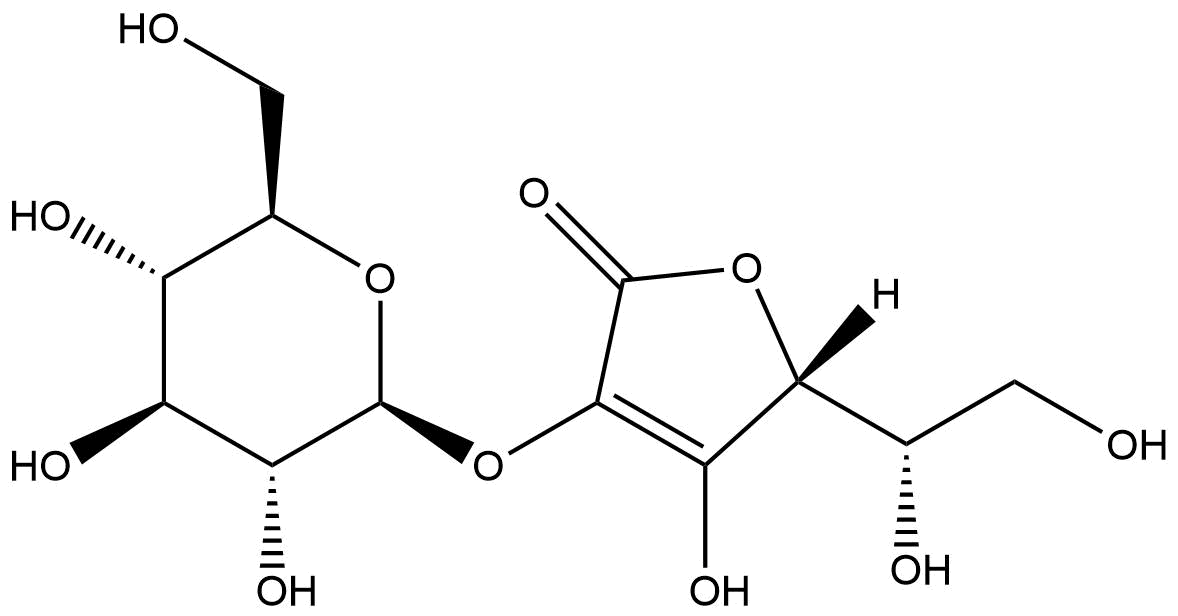


Product name: 2-O-β-D-Glucopyranosyl-L-ascorbic acid
Synonym name:
Catalogue No.: BP2077
Cas No.: 562043-82-7
Formula: C12H18O11
Mol Weight: 338.265
Botanical Source: Lycii Fructus
Physical Description: 枸杞子
Type of Compound:
Purity: 95%~99%
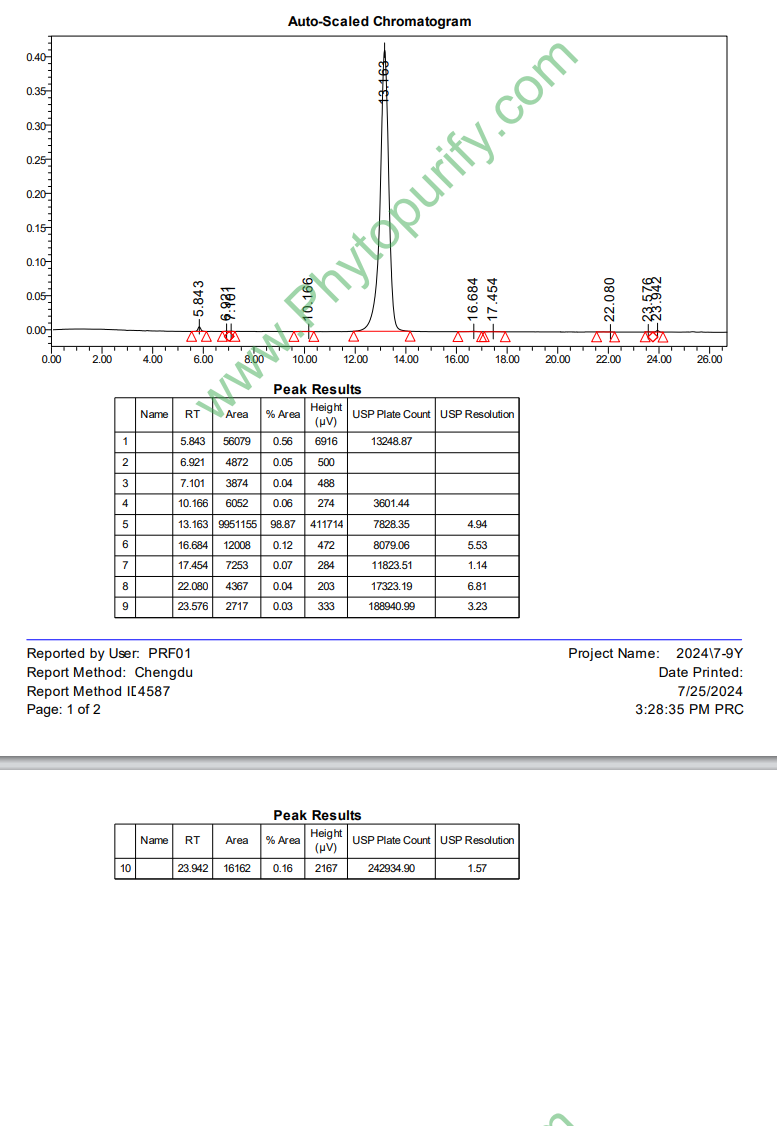
Analysis Method: HPLC-DAD or/and HPLC-ELSD
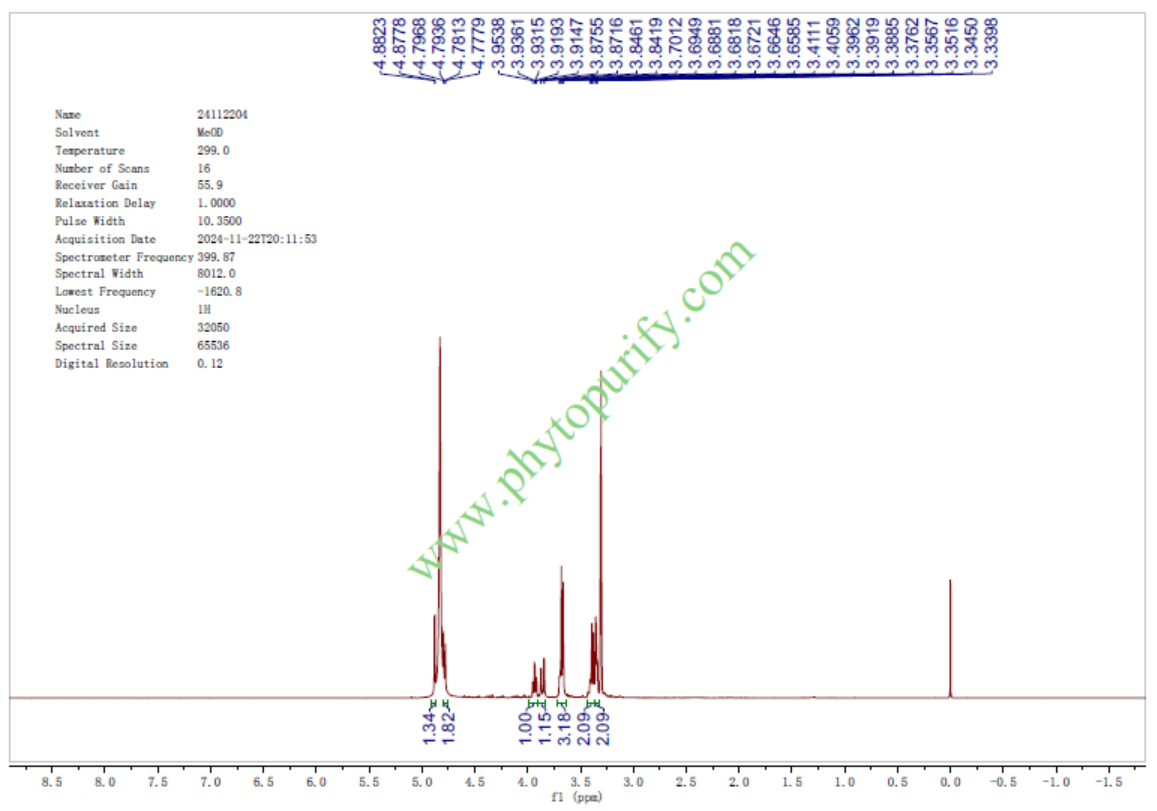
Identification Method: Mass, NMR
Packing: Brown vial or HDPE plastic bottle
Storage: Store in a well closed container, protected from air and light. Put into refrigerate or freeze for long term storage.
Whenever possible, you should prepare and use solutions on the same day. However, if you need to make up stock solutions in advance, we recommend that you store the solution as aliquots in tightly sealed vials at -20℃. Generally, these will be useable for up to two weeks.
The product could be supplied from milligrams to grams
Inquire for bulk scale.
2-O-β-D-Glucopyranosyl-L-ascorbic acid (AA-2βG), isolated from Lycium Fruit, is a stable vitamin C analog with anti-tumor activity.
HPLC of 2-O-β-D-Glucopyranosyl-L-ascorbic acid
HNMR of 2-O-β-D-Glucopyranosyl-L-ascorbic acid
Storage conditions:Short-term storage at 2~8℃, long-term storage at -20 ~ -80℃
186.3700
-2.3020
-2.6029
165.6154
.4637
.2195
Low
32.3375
4.4179
Yes
No
No
No
No
No
0.0
Yes
No
Yes
Yes
Goji acid (2-O - β - D-Glucopyranosyl-L-ascorbac acid), as an emerging natural product, has attracted widespread attention in the fields of natural medicinal chemistry and pharmacology in recent years. This compound was initially isolated from plants such as Lycium barbarum and has unique structural features and significant biological activity. With the incidence rate of autoimmune diseases increasing year by year, finding safe and effective treatment has become a research hotspot. Goji berry acid is gradually recognized as a promising candidate compound for treating autoimmune diseases due to its excellent antioxidant properties and potential to regulate immune function.
This article will systematically review the chemical structure and physicochemical properties, plant sources, and extraction methods of goji acid, with a focus on analyzing its pharmacological activity and mechanism of action, exploring its interactions with autoimmune disease-related targets, evaluating its pharmacological and pharmacokinetic characteristics, and looking forward to its clinical application prospects. Through comprehensive literature integration and analysis, the aim is to provide scientific basis and theoretical support for the subsequent research and clinical development of goji acid.
The chemical name of goji acid is 2-O - β - D-Glucopyranosyl-L-ascorbic acid, with a molecular formula of C12H18O10 and a molecular weight of 338.2650. Its structure is composed of L-ascorbic acid (vitamin C) and β - D-glucose connected by a glycosidic bond formed by a 2-position hydroxyl group. This glycosylation modification not only improves its water solubility, but also enhances the stability of the compound, especially its antioxidant activity under physiological conditions.
From the perspective of physical and chemical properties, the LogP value of goji acid is -2.3020, indicating its strong hydrophilicity and good water solubility (165.6154 mg/mL), which is beneficial for its absorption and distribution in vivo. Its polar surface area (TPSA) is as high as 186.37 Å ², indicating its high molecular polarity, which may limit its ability to penetrate lipid membranes. The low permeability of the blood-brain barrier suggests that its role in the central nervous system may be limited. The hERG channel inhibition experiment showed a negative result, indicating a low risk of cardiac toxicity. The Ames test result is 0.0, indicating that goji acid has no significant mutagenicity and good safety.
In summary, the structural characteristics and physicochemical properties of goji acid provide a good foundation for its use as a drug molecule, especially for targeted immune regulation and antioxidant therapy.
Goji acid is mainly found in Lycium barbarum and its related plants. Goji berry, as a traditional Chinese medicine and functional food, is rich in various bioactive ingredients, including polysaccharides, flavonoids, vitamins, and various secondary metabolites. Goji acid, as one of the important vitamin C derivatives, has been successfully isolated and identified in recent years.
The common methods for extracting goji acid include water extraction and alcohol extraction, combined with column chromatography separation technology. The specific steps are generally as follows:
In recent years, ultrasound assisted extraction and microwave-assisted extraction techniques have also been applied to the extraction of goji acid, improving extraction efficiency and purity, and reducing energy consumption and time costs.
The pharmacological activity research of goji berry acid mainly focuses on its antioxidant, immune regulatory, and anti-inflammatory effects, especially its potential application in autoimmune disease models.
As a glycoside derivative of vitamin C, goji acid exhibits significant free radical scavenging ability. In vitro experiments have shown that goji acid can effectively scavenge hydroxyl radicals, superoxide anions, and hydrogen peroxide, reducing oxidative stress damage. Its stable structure gives it a longer half-life in the body, prolonging the duration of its antioxidant effect.
Goji berry acid exerts immunomodulatory effects by regulating the function of immune cells. Research has shown that goji acid can promote the proliferation of regulatory T cells (Treg), enhance FOXP3 expression, and thus suppress autoimmune responses. At the same time, goji acid inhibits the secretion of pro-inflammatory cytokines such as IL-17A, reducing the inflammatory response. In addition, goji acid can regulate the expression of anti-inflammatory factors such as IL-10 and TGF β 1, maintaining immune homeostasis.
In various inflammatory models, goji acid exhibits good anti-inflammatory activity. It reduces the expression of pro-inflammatory cytokines and mitigates tissue inflammation damage by downregulating the activity of the STAT3 signaling pathway. Animal experiments have shown that goji acid can significantly alleviate symptoms of autoimmune related diseases such as arthritis and inflammatory bowel disease.
The mechanism of action of goji acid in autoimmune diseases mainly involves the regulation of multiple signaling pathways and key molecular targets.
STAT3 is an important transcription factor that regulates immune cell differentiation and inflammatory response. Goji acid inhibits the phosphorylation of STAT3, blocks its nuclear translocation, and reduces the expression of pro-inflammatory cytokines such as IL-17A, thereby alleviating inflammation and autoimmune pathological damage.
Transforming growth factor beta 1 (TGFB1/TGF β 1) plays a bidirectional role in immune regulation. Goji berry acid can promote the expression of TGFB1, enhance Treg cell function, inhibit the activation of effector T cells, maintain immune tolerance, and prevent excessive activation of autoimmune reactions.
IL-10, as the main anti-inflammatory cytokine, is promoted by goji acid secretion, enhancing negative feedback regulation of the immune system, inhibiting the release of inflammatory factors, and reducing tissue damage.
FOXP3 is a key transcription factor that regulates T cells. Goji acid upregulates FOXP3 expression, promotes the generation and function of Treg cells, enhances immune suppression ability, and prevents the occurrence and development of autoimmune diseases.
IL-17A is a pro-inflammatory cytokine secreted by Th17 cells and is involved in the pathological processes of various autoimmune diseases. Goji berry acid inhibits the expression of IL-17A, reduces inflammatory response, and improves disease symptoms.
In summary, goji acid has the potential to treat autoimmune diseases by synergistically regulating immune balance and inhibiting inflammatory reactions through multiple targets and pathways.
The pharmacological evaluation of goji acid shows that it has good safety and pharmacological potential.
Goji acid has a moderate molecular weight and high water solubility, which is beneficial for oral absorption. However, its low lipid solubility and high polar surface area limit its transmembrane ability, especially the low permeability of the blood-brain barrier, indicating that it mainly acts on the peripheral immune system. The metabolism in the body mainly occurs through the hydrolysis of glycosidic bonds by the liver enzyme system, releasing active ascorbic acid and exerting antioxidant and immune regulatory effects.
The hERG channel inhibition experiment was negative, reducing the risk of cardiac toxicity. The Ames test results showed no mutagenicity, further proving its safety. In addition, animal toxicology studies have not shown significant toxic side effects, supporting its feasibility as a drug candidate molecule.
At present, there is limited research on the interaction between goji acid and commonly used drugs. In the future, further evaluation is needed on its safety and synergistic effects when used in combination with immunosuppressants, anti-inflammatory drugs, and other drugs.
Goji acid, as a natural immunomodulatory agent, has broad clinical application prospects. Its potential therapeutic effects in autoimmune diseases such as rheumatoid arthritis, multiple sclerosis, systemic lupus erythematosus, etc. have been preliminarily validated in vitro and animal models. Future research should focus on the following directions:
In addition, goji acid has shown potential in antioxidant, anti-inflammatory, and anti-aging fields, and is expected to expand its indications.
Goji acid, as a natural product with unique structure and significant biological activity, has shown broad application prospects in the treatment of autoimmune diseases due to its excellent antioxidant and immune regulatory abilities. The multi-target and multi pathway mechanism of action provides a theoretical basis for the development of novel immunomodulatory drugs. Although research is still in its infancy, with the deepening integration of pharmacology, molecular biology, and clinical medicine, goji acid is expected to become a safe and effective new drug for the treatment of autoimmune diseases. In the future, it is necessary to strengthen its pharmacokinetics, toxicology, and clinical research, promote its transition from laboratory to clinical application, and benefit the vast number of patients.
