| Catalog No | Package | Original Price | Price | Inventory | Quantity | Operating |
|---|---|---|---|---|---|---|
| BP5040-5mg | 5mg | $420.00 | Sign in |
|


Storage conditions:Short-term storage at 2~8℃, long-term storage at -20 ~ -80℃
3-epi-Bufalin (CAS number: 465-20-3) is an important natural product of the bufotoxin family, belonging to the derivatives of the bufotoxin family. This compound is obtained by microbial transformation of bufadienolactone and has a unique stereoconfiguration and biological activity. Toad toxin compounds have long been highly regarded in the field of cardiovascular disease treatment due to their significant cardiotonic effects and multi-target regulatory functions. 3-Epibufalin, as an isomer of bufotoxin, exhibits pharmacological properties and safety advantages different from the parent compound, making it a hot topic in natural product pharmacology research.
This article will provide a systematic review of the chemical structure and physicochemical properties, sources and extraction methods, pharmacological activity and mechanism of action, pharmacological evaluation and pharmacokinetic characteristics of 3-Epibufalin, and explore its clinical application prospects and future development directions. The aim is to provide scientific basis and reference for the in-depth research and drug development of this natural product.
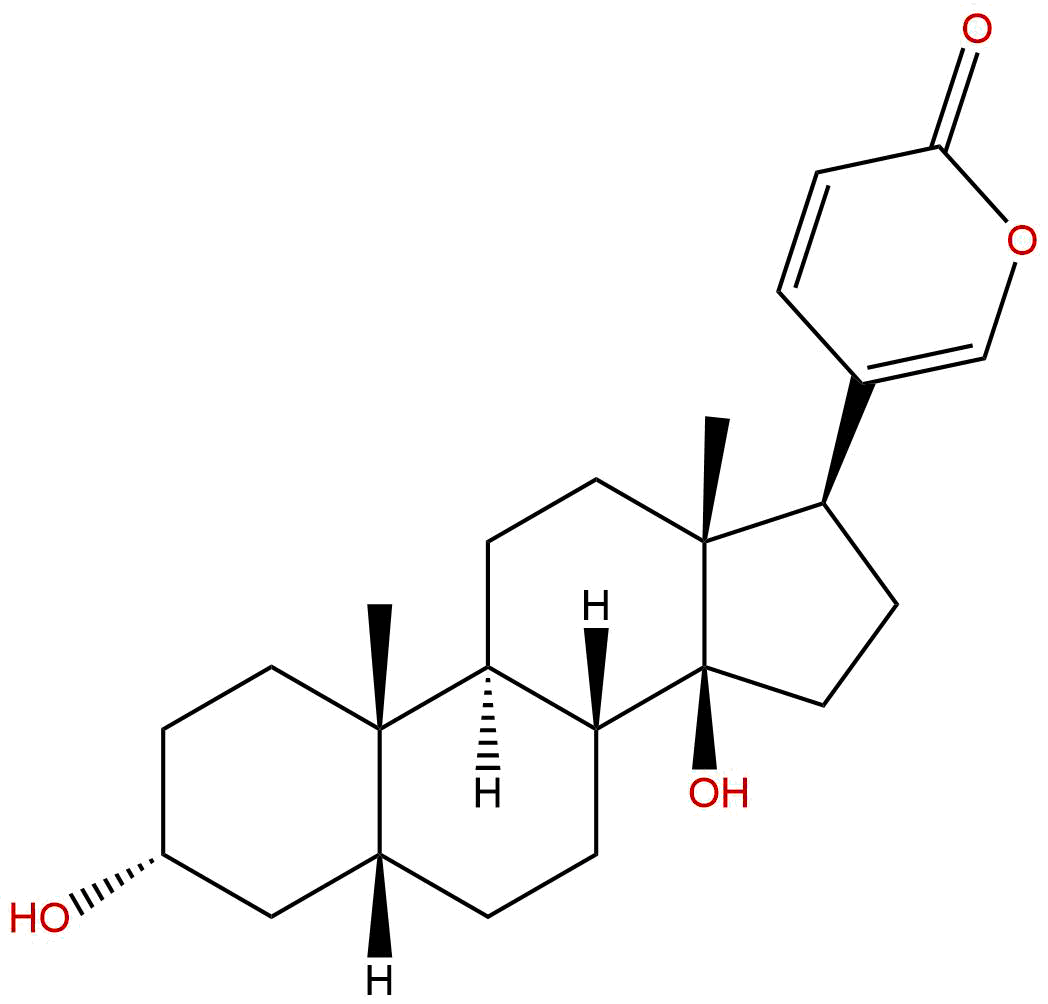
3-Epibufalin is a stereoisomer of bufadienolide compounds, with a molecular formula of C24H34O4 and a molecular weight of 386.5320. Its structural core is a typical steroid skeleton, containing a characteristic diene lactone ring. The hydroxyl configuration on the 3rd carbon atom is an epitope (epi), which is different from the axial (α) configuration of the 3rd hydroxyl group of the parent Bufalin.
In terms of physical and chemical properties, the LogP value of 3-Epibufalin is 3.4670, indicating moderate lipid solubility, which is beneficial for cell membrane penetration and in vivo distribution. Its topological polar surface area (TPSA) is 70.67 Å ², indicating that the molecule has a certain polarity that facilitates non covalent interactions such as hydrogen bonding with biological targets. Low water solubility (0.0068 mg/mL) suggests limited solubility in aqueous phase, which may affect its bioavailability. The high permeability of the blood-brain barrier indicates that the compound can enter the central nervous system and has potential central effects. Importantly, 3-Epibufalin did not exhibit hERG channel inhibitory activity, and the Ames mutagenicity test was negative, indicating its good safety and reduced the risk of arrhythmia and genetic toxicity.
3-Epibufalin is not a natural product directly extracted from plants, but obtained through microbial transformation of bufadienolactone. Bufo bufo lactone is mainly present in the skin secretions of toads, especially in Chinese toads (Bufo bufo gargarizans) and related species of toads. Traditionally, toad toxin compounds are extracted and isolated from toad skin secretions using organic solvents.
Microbial transformation technology provides an efficient and environmentally friendly method for the preparation of 3-epibufalin. By screening specific microbial strains (such as certain Streptomyces or actinomycetes) and utilizing their unique enzyme systems, stereoselective isomerization of bufadienolactone is achieved, resulting in the formation of a 3-hydroxy epitope isomer. This method not only improves yield and purity, but also avoids complex chemical synthesis steps, in line with the principles of green chemistry.
The extraction process generally includes: organic solvent extraction of toad skin secretions (such as methanol or ethanol), crude extract enrichment of bufadienolactone through liquid-liquid distribution, column chromatography and other methods, followed by microbial transformation reaction, and finally purification of 3-epibufalin by high performance liquid chromatography (HPLC).
The pharmacological activity of 3-Epibufalin mainly focuses on its cardiotonic effects. Multiple in vitro and in vivo studies have shown that this compound can significantly enhance myocardial contractility, improve cardiac function, and has potential therapeutic value for heart failure.
3-Epibufalin enhances myocardial contractility by regulating the homeostasis of calcium ions in myocardial cells. Its mechanism of action involves multiple ion channels and membrane proteins, including:
Through the synergistic effect of the above targets, 3-Epibufalin can effectively enhance myocardial contractility while maintaining electrophysiological stability and reducing the risk of arrhythmia.
In addition to its cardiotonic effect, preliminary studies have also found that 3-Epibufalin may have anti-tumor, anti-inflammatory, and neuroprotective activities, but the relevant mechanisms have not been fully elucidated and further systematic research is needed.
The mechanism of action of 3-Epibufalin is mainly based on its high affinity binding to Na ⁺/K ⁺ - ATPase on the cell membrane, which inhibits its activity and leads to an increase in intracellular Na ⁺ concentration. The change in Na ⁺ concentration affects the working mode of the sodium calcium exchanger (SLC8A1), promotes Ca ² ⁺ influx, increases intracellular calcium ion concentration in myocardial cells, and thereby enhances myocardial contractility.
In addition, 3-Epibufalin also has a regulatory effect on L-type calcium channels (CACNA1C) and calcium release channels (RYR2) in cardiomyocytes, synergistically promoting calcium signaling. The regulation of potassium channels (KCNJ2) helps maintain the electrophysiological stability of myocardial cells and reduce the occurrence of arrhythmia.
Molecular docking and dynamic simulations showed that the binding mode between 3-epibufalin and Na ⁺/K ⁺ - ATPase is similar to bufalin, but due to the change in the stereoconfiguration of the 3-hydroxyl group, the binding affinity and dynamic characteristics are different, which may explain its lower hERG channel inhibitory activity and better safety.
The pharmacological parameters of 3-Epibufalin show that it has good potential for drug development:
In terms of pharmacokinetics, 3-Epibufalin has good oral absorption, moderate half-life, and is mainly metabolized through the liver. The metabolites are safe. Its high blood-brain barrier permeability provides potential treatment for central nervous system diseases, but at the same time, caution should be exercised about central toxicity and drug interactions.
As a natural candidate molecule for cardiotonic drugs, 3-Epibufalin has significant pharmacological activity and good safety characteristics, and has broad application prospects in the treatment of cardiovascular diseases such as heart failure and arrhythmia in the future. Its high blood-brain barrier permeability may also expand into the research field of central nervous system diseases.
Future research should focus on:
In summary, 3-Epibufalin, as an innovative representative of bufotoxin drugs, combines the diversity of natural products with the needs of modern drug development, and has the potential to become a new generation of cardiotonic drugs.
3-Epibufalin, as a microbial transformation product of bufadienolactone, has shown significant value in the field of natural product pharmacology due to its unique chemical structure and significant cardiac activity. Its multi-target mechanism of action and good pharmacological parameters provide new ideas and candidate molecules for the treatment of cardiovascular diseases. In the future, through in-depth pharmacological mechanism research, pharmacokinetic optimization, and clinical validation, 3-Epibufalin is expected to become an effective cardiotonic drug for clinical application, bringing new treatment options for cardiovascular disease patients.
With the continuous advancement of natural product research technology, the study of 3-Epibufalin will further promote the integration of natural product pharmacology and modern drug development, facilitate the discovery and application of innovative drugs, and contribute to the development of human health.
