


Product name: Scoparone
Synonym name: 6,7-Dimethylesculetin; 6,7-Dimethoxycoumarin; Escoparone; Scoparin
Catalogue No.: BP1272
Cas No.: 120-08-1
Formula: C11H10O4
Mol Weight: 206.197
Botanical Source: Artemisia scoparia Waldst.et Kit.
Physical Description:
Type of Compound: Coumarins
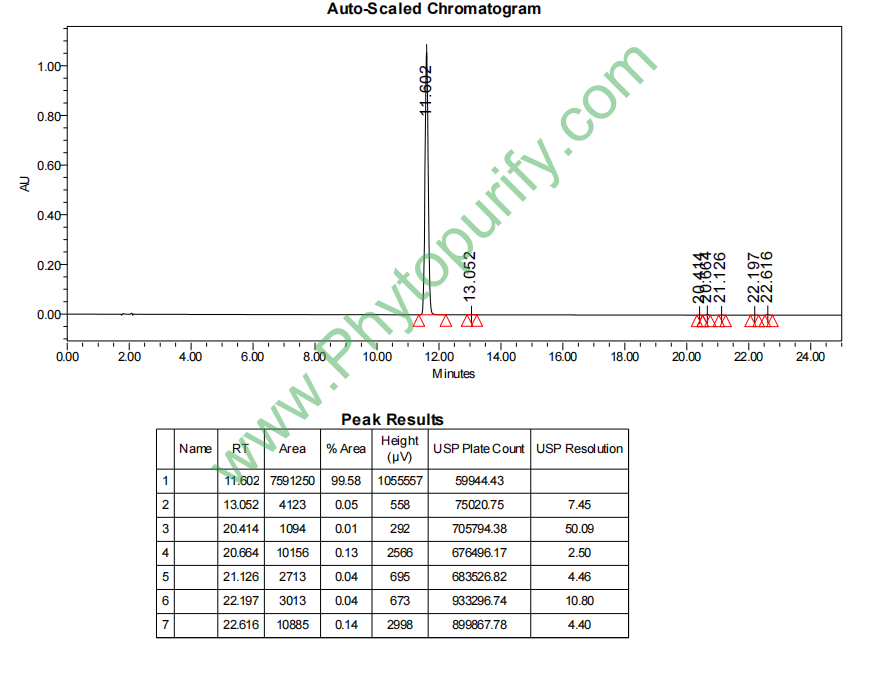
Purity: 95%~99%
Analysis Method: HPLC-DAD or/and HPLC-ELSD
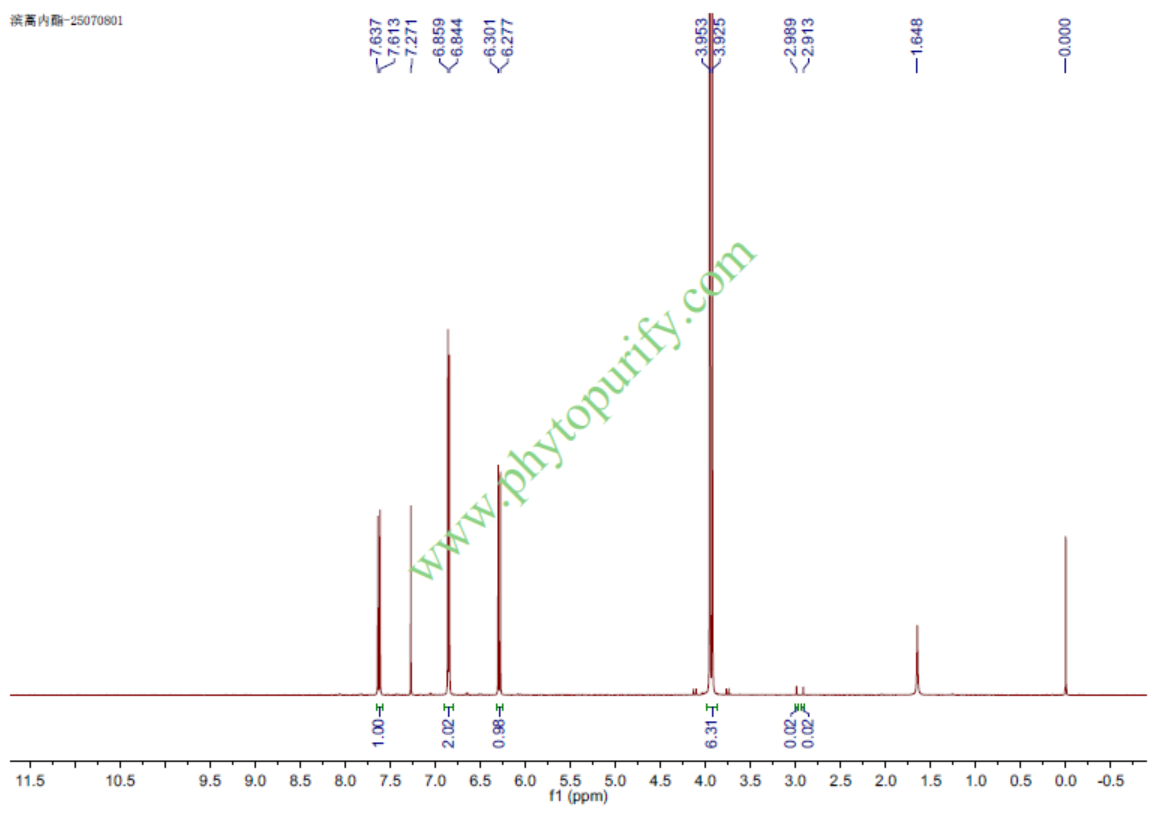
Identification Method: Mass, NMR
Packing: Brown vial or HDPE plastic bottle
Storage: Store in a well closed container, protected from air and light. Put into refrigerate or freeze for long term storage.
Whenever possible, you should prepare and use solutions on the same day. However, if you need to make up stock solutions in advance, we recommend that you store the solution as aliquots in tightly sealed vials at -20℃. Generally, these will be useable for up to two weeks.
The product could be supplied from milligrams to grams
Inquire for bulk scale.
Chengdu Biopurify Phytochemicals Ltd. is a leading company in the research, development, manufacture and marketing of High Quality Phytochemicals and Extracts(especially Active Ingredients from Traditional Chinese Medicine,TCM), Natural Active Pharmaceutical Ingredients worldwide.
The main services:
A. Supply active ingredients and reference standards of TCM, from mgs to kgs scale
B. Custom extraction and purification, target Herb Active Ingredients
C. Custom synthesis and semi-synthesis for Natural Active Ingredients
D. CR(contract research), CM(contract manufacture) and PD(process development) services from lab scale, pilot scale to commercial scale(GMP is also available)
E. TCM compounds library for drug screen,more than 3000 compounds available, many of them are rare and unique.
HPLC of Scoparone
HNMR of Scoparone
Storage conditions:Short-term storage at 2~8℃, long-term storage at -20 ~ -80℃
48.6700
1.8147
1.8146
.1528
4.2043
36.4314
High
74.9765
1.8577
Yes
No
Yes
No
Yes
Yes
0.9
Yes
No
Yes
Yes
Coumarin compounds are a class of benzopyranone derivatives widely found in nature. Due to their diverse chemical structures and significant biological activities, they have long been a hot topic in medicinal chemistry and pharmacology research. Scoparone, also known as 6,7-dimethoxycoumarin, is one of the representative dimethoxy substituted coumarins. Its CAS number is 120-08-1, and it was first isolated from the traditional Chinese medicine Artemisia scoparia Waldst.&Kit. It is considered as one of the main pharmacological substances for Artemisia scoparia to exert the effects of "clearing dampness and heat, promoting bile flow and reducing jaundice". Traditionally, Yin Chen Hao and its compound (such as Yin Chen Hao Tang) have been widely used in traditional Chinese medicine clinical practice to treat liver and gallbladder diseases such as jaundice hepatitis and cholecystitis. Modern pharmacological research has revealed that the pharmacological effects of artemisinin are far beyond choleretic, and it has shown great potential in anti-inflammatory, antioxidant, anti fibrotic, anti-tumor, cardiovascular protection, and neuroprotection. In particular, its clear anti-inflammatory activity involves the regulation of many key inflammatory mediators and targets such as interleukin-6 (IL-6), tumor necrosis factor - α (TNF - α), nuclear factor - κ B (NF - κ B) signaling pathway, cyclooxygenase (COX), making it a potential candidate drug for the treatment of chronic inflammatory diseases (such as hepatitis, atherosclerosis, neurodegenerative diseases, etc.). This article aims to systematically review the chemical properties, plant sources, pharmacological activities, molecular mechanisms of action, pharmacological evaluation, and clinical application prospects of artemisinin, in order to provide comprehensive scientific references for the in-depth research and development of this natural product.
The molecular formula of artemisinin is C11H10O4, with a molecular weight of 206.1970. Its chemical structure belongs to the coumarin parent nucleus (benzo α - pyranone), characterized by a methoxy group (- OCH3) attached to the 6th and 7th carbon atoms on the benzene ring, forming a 6,7-dimethoxy substitution mode. This structure makes it a methylated derivative of heptaphylline (6,7-dihydroxycoumarin).
Its physical and chemical properties determine its bioavailability and functional characteristics. The calculated lipid water partition coefficient (LogP) is approximately 1.81, indicating that artemisinin has moderate lipophilicity, which is beneficial for its penetration into cell membranes. The topologically polar surface area (TPSA) is 48.67 Å ², which is relatively small and further supports its good membrane permeability. The water solubility data shows that its solubility is about 0.15 mg/mL, which belongs to the category of slightly soluble to poorly soluble. This suggests that solubilization strategies may need to be considered in formulation development to improve its oral bioavailability. It is worth noting that artemisinin exhibits high blood-brain barrier (BBB) permeability potential, which provides an important material basis for its application in central nervous system related diseases such as neuroinflammation and Alzheimer's disease. In the preliminary safety screening, the Ames test result was 0.9 (usually considered to be less than 1.5 indicating no mutagenicity), and there was no significant inhibitory effect on the potassium channel of the human ether - à - go related gene (hERG), indicating a low potential risk of mutagenicity and cardiac toxicity, and a promising prospect for drug development.
Artemisia scoparia and Artemisia capillaris Thunb. are the most abundant components of the Artemisia scoparia and Artemisia capillaris Thunb. plants in the Asteraceae family, which are characteristic ingredients of these two traditional choleretic herbs. In addition, it is sporadically distributed in various plants such as Rutaceae and Umbelliferae.
Organic solvent extraction is commonly used to extract artemisinin from plant materials. Classic methods include heating reflux extraction or ultrasound assisted extraction of dried Artemisia annua using methanol, ethanol, or ethyl acetate. Due to its coumarin like structure and aromaticity, artemisinin has good solubility in moderately polar solvents. After filtration and concentration, the crude extract can be further separated and purified using the physicochemical properties of artemisinin. Conventional column chromatography techniques, such as silica gel column chromatography, using gradient elution systems such as petroleum ether ethyl acetate or chloroform methanol, can effectively separate artemisinin. Modern separation techniques such as high-speed counter current chromatography (HSCCC) and preparative high-performance liquid chromatography (Prep HPLC) have become important means of obtaining high-purity artemisinin monomers due to their high resolution and recovery rate. The optimization of extraction processes, such as combining enzymatic pretreatment or using supercritical CO2 fluid extraction, aims to improve extraction efficiency and protect thermosensitive components.
A large number of pharmacological studies both in vitro and in vivo have confirmed that artemisinin has broad and significant biological activities.
Anti inflammatory and immune regulatory activity This is the core pharmacological action of artemisinin. In various acute and chronic inflammation models (such as lipopolysaccharide induced macrophage inflammation model, carrageenan induced rat paw swelling model, mouse acute lung injury model, etc.), artemisinin can significantly inhibit the redness, swelling, and exudation of inflammatory sites, and reduce the infiltration of inflammatory cells. It can effectively inhibit the excessive production of pro-inflammatory cytokines (such as TNF - α, IL-6, IL-1 β) and regulate immune cell function.
Hepatoprotective, choleretic, and anti fibrotic activity As the main active ingredient of Artemisia scoparia, the hepatoprotective effect of artemisinin has been extensively studied. It can counteract liver cell damage caused by various liver toxins such as carbon tetrachloride, acetaminophen, and D-galactosamine, and reduce serum transaminase levels. Its choleretic effect is manifested by promoting bile secretion and excretion. More importantly, in liver stellate cell activation models and animal liver fibrosis models, artemisinin can inhibit collagen deposition and reduce fibrosis degree, and its mechanism is related to anti-inflammatory, antioxidant, and fibrosis related signaling pathways regulation.
Cardiovascular protective activity Research has shown that artemisinin has the effect of relaxing blood vessels and lowering blood pressure. It can counteract the vasoconstrictive response caused by vasoconstrictors. In addition, its anti-inflammatory and antioxidant properties help to reduce vascular endothelial damage and inhibit the formation and development of atherosclerotic plaque.
Antitumor activity In recent years, it has been found that scoparolide can inhibit the growth of many tumor cells (such as liver cancer, lung cancer, breast cancer, colon cancer cells), and can induce apoptosis and block cell cycle. Its anti-tumor effect is usually synergistic with mechanisms such as regulating apoptosis related proteins, inhibiting inflammation related pathways (such as STAT3, NF - κ B), and anti angiogenesis.
Neuroprotective activity By virtue of its excellent blood-brain barrier penetration ability and strong anti-inflammatory and antioxidant properties, artemisinin has shown protective effects in neurodegenerative and damaging disease models such as Alzheimer's disease, Parkinson's disease, and cerebral ischemia-reperfusion injury, improving cognitive dysfunction and reducing neuronal death.
Other activities It also includes anti allergic, anti platelet aggregation, and antimicrobial effects.
The multiple pharmacological activities of artemisinin stem from its diverse regulation of cellular signaling networks. Its mechanism of action is complex, involving multiple molecular targets and pathways, especially in the field of anti-inflammatory research, which is the most systematic.
Regulating the NF - κ B signaling pathway NF - κ B is the core transcription factor of inflammatory response. Artemisinin can inhibit the phosphorylation and degradation of I κ B α, thereby preventing the translocation of NF - κ B p65 subunit to the nucleus, ultimately downregulating the expression of a series of NF - κ B dependent pro-inflammatory genes (such as TNF - α, IL-6, IL-1 β, COX-2, iNOS). This is one of the key mechanisms by which it exerts anti-inflammatory effects.
Regulating the STAT3 signaling pathway STAT3 is another important pathway related to inflammation and tumorigenesis. Artemisinin can inhibit the phosphorylation (activation) of STAT3, block its dimerization and nuclear translocation, and thereby affect the expression of downstream target genes, which play important roles in its anti-inflammatory and anti-tumor effects.
Inhibition of inflammatory mediator synthase:
Regulating cytokines and chemokines As mentioned earlier, artemisinin can significantly reduce the levels of key pro-inflammatory cytokines such as TNF - α and IL-6. Meanwhile, it may also affect the expression of anti-inflammatory factors such as IL-10 and reshape the inflammatory microenvironment.
Affects cell apoptosis and pyroptosis By regulating the activity of Caspase family proteins (such as CASP1, closely related to cell apoptosis), artemisinin can regulate the inflammatory cell death pathway.
Acting on ion channels Research suggests that artemisinin may act as a regulator of transient receptor potential vanillic acid subtype 1 (TRPV1) and anchoring protein subtype 1 (TRPA1), which are involved in the transmission of pain and neurogenic inflammation. This may be a potential mechanism for its analgesic and anti neuroinflammatory effects.
anti-oxidative stress Artemisinin can enhance the intracellular antioxidant defense system (such as upregulating the Nrf2 pathway, increasing the activity of superoxide dismutase (SOD) and glutathione (GSH)), clearing reactive oxygen species (ROS), and reducing oxidative stress damage, which is closely intertwined with the inflammatory process.
To sum up, scoparolide forms a networked pharmacological action system through multiple targets and multiple pathways, which explains its effectiveness against complex diseases (such as chronic hepatitis and atherosclerosis).
Although artemisinolide exhibits excellent pharmacological activity, its pharmacological properties still need to be comprehensively evaluated.
Absorption, distribution, metabolism, excretion (ADME):
Pharmacokinetic study Animal pharmacokinetic studies have shown that the disposal process of artemisinin in vivo conforms to a two compartment model, with a moderate elimination half-life. The overall exposure (AUC) needs to be improved through formulation optimization. Its pharmacokinetic behavior may exhibit nonlinear characteristics.
safety evaluation Preliminary in vitro safety data (Ames test negative, no hERG inhibition) suggest good baseline safety. However, the comprehensive preclinical safety evaluation, including acute toxicity, long-term toxicity, reproductive toxicity, and genetic toxicity, has not yet been fully disclosed. Among coumarin compounds, coumarin has anticoagulant activity, but the structural differences of artemisinin make its anticoagulant activity not significant and the risk of bleeding relatively low. However, it still needs to be evaluated in specific applications.
Challenges and Strategies in Drug Development The main challenges lie in poor water solubility and possible first pass effects. The future development strategy should focus on: 1) developing new drug delivery systems (such as nano formulations, liposomes, prodrugs) to improve solubility and bioavailability; 2) Conduct systematic preclinical toxicology studies; 3) Elucidate its precise in vivo metabolic profile and active metabolites.
Artemisinin has emerged from traditional Chinese medicine, and with its clear molecular targets and extensive pharmacological activities, it has shown broad prospects for translational medicine in modern medicine.
liver disease As a natural hepatoprotective and choleretic ingredient, artemisinin is an excellent candidate for developing novel anti hepatitis (especially cholestatic hepatitis), anti liver fibrosis, and liver cirrhosis drugs. It can be explored as a single component or in combination with existing antiviral drugs as an adjuvant therapy for the treatment of chronic viral hepatitis.
Inflammatory and autoimmune diseases Its powerful multi-target anti-inflammatory properties make it suitable for the development of therapeutic drugs or health products for rheumatoid arthritis, inflammatory bowel disease, asthma, chronic obstructive pulmonary disease (COPD), and skin inflammatory diseases such as dermatitis and psoriasis.
Cardiovascular and cerebrovascular diseases Based on its vasodilation, anti-inflammatory and antioxidant effects, scoparolide has potential in the prevention and treatment of hypertension, atherosclerosis and their complications (such as coronary heart disease, stroke).
Neurological disorders The ability to penetrate the blood-brain barrier has attracted much attention in the treatment of Alzheimer's disease, Parkinson's disease, multiple sclerosis, stroke, and neuropathic pain. It may protect neurons by inhibiting neuroinflammation and oxidative stress.
neoadjuvant therapy Although its direct anti-tumor activity is not yet sufficient as a first-line chemotherapy drug, it can be used as an adjuvant therapy to enhance chemotherapy sensitivity, reduce inflammation and organ damage caused by radiotherapy and chemotherapy (such as radiation pneumonitis and liver injury), and improve patients' quality of life.
Future research directions should focus on: ① conducting high-quality randomized controlled clinical trials to verify their effectiveness and safety in the above-mentioned diseases; ② By utilizing structural modification and drug design, optimizing its pharmacokinetic properties, and developing more selective and effective derivatives or analogues; ③ Thoroughly explore its interactions with other drugs (including Western and traditional Chinese medicine ingredients) to provide a basis for rational combination therapy; ④ Combining systems biology and network pharmacology methods, comprehensively elucidate its "multi-component multi-target multi-path" action network.
As a natural coumarin compound successfully isolated and identified from traditional Chinese medicine Artemisia scoparia, artemisia scoparia lactone is one of the exemplars in the modernization research of traditional Chinese medicine. From the initial understanding of the choleretic effect to the revelation of its multidimensional pharmacological activities such as anti-inflammatory, antioxidant, hepatoprotective, neuroprotective, and anti-tumor effects, it reflects the continuous deepening of our understanding of natural products. The study of its mechanism of action has delved into key signaling molecules and pathways such as NF - κ B, STAT3, COX-2, and preliminary pharmacological parameters also show that it has good potential for development. Although there are still challenges in solubility, systemic toxicology, and clinical translation, with the advancement of modern pharmaceutical, pharmacological, and clinical research methods, artemisinin is highly likely to move from the laboratory to clinical practice and develop into a new type of drug or functional formulation for the treatment of chronic inflammatory diseases, liver and gallbladder diseases, and neurodegenerative diseases. Continuous and in-depth research on it not only helps to explore the scientific connotation of traditional Chinese medicine, but also provides valuable natural templates and ideas for the discovery of innovative drugs.
