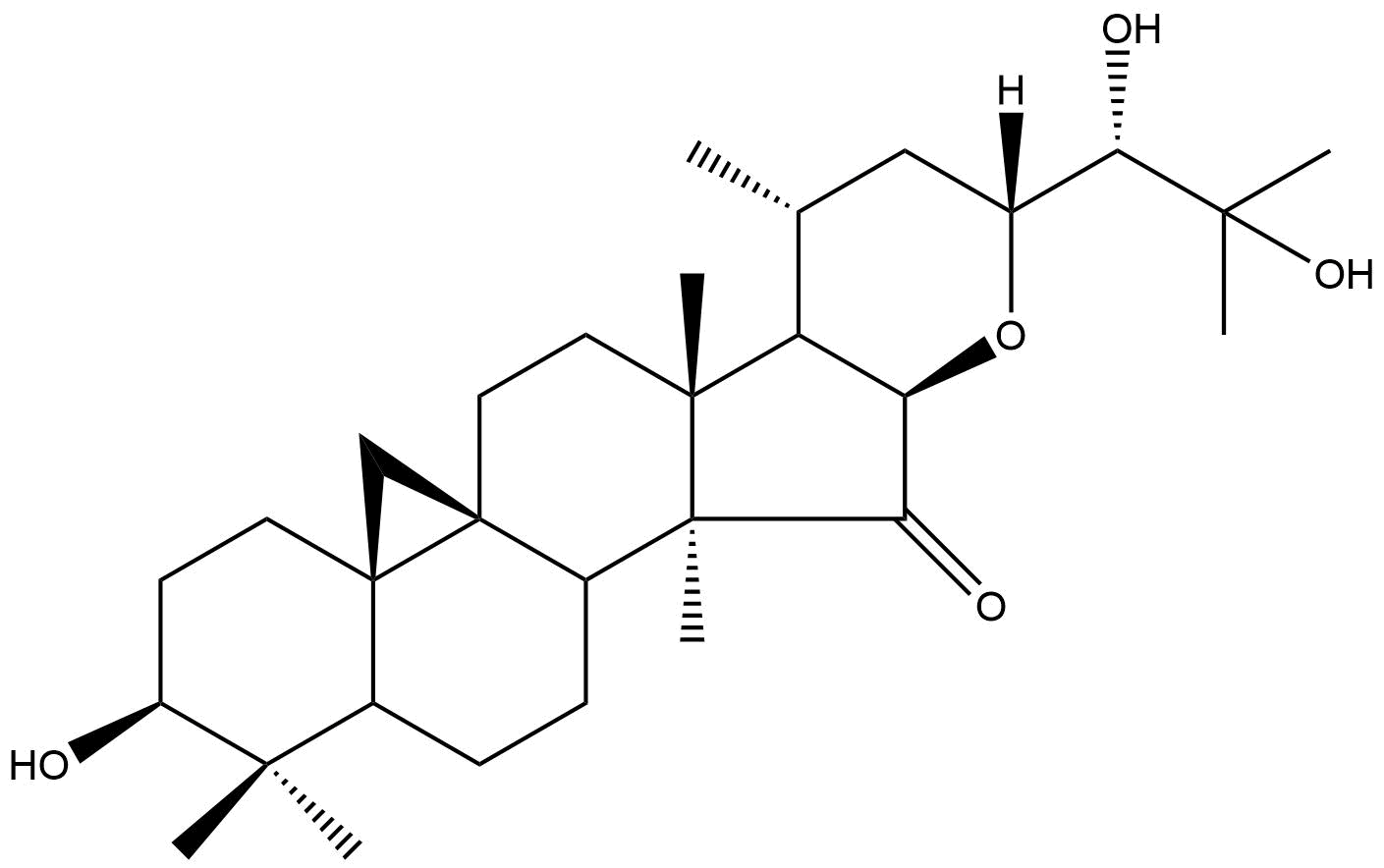


Product name: Dahurinol
Synonym name:
Catalogue No.: BP2058
Cas No.: 38908-87-1
Formula: C30H48O5
Mol Weight: 488.709
Botanical Source: Cimicifugae rhizoma
Type of Compound: Triterpenoids
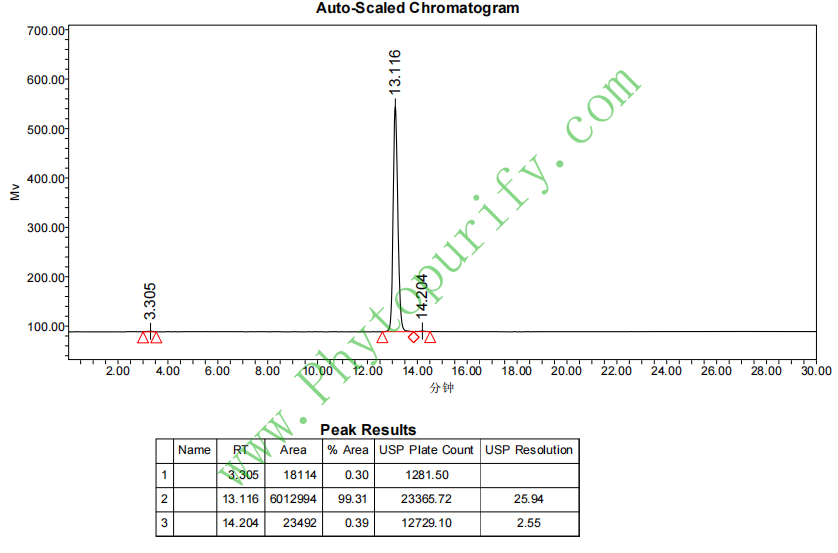
Purity: 95%~99%
Analysis Method: HPLC-DAD or/and HPLC-ELSD
Identification Method: Mass, NMR
Packing: Brown vial or HDPE plastic bottle
Storage: Store in a well closed container, protected from air and light. Put into refrigerate or freeze for long term storage.
Whenever possible, you should prepare and use solutions on the same day. However, if you need to make up stock solutions in advance, we recommend that you store the solution as aliquots in tightly sealed vials at -20℃. Generally, these will be useable for up to two weeks.
The product could be supplied from milligrams to grams
Inquire for bulk scale.
Chengdu Biopurify Phytochemicals Ltd. is a leading company in the research, development, manufacture and marketing of High Quality Phytochemicals and Extracts(especially Active Ingredients from Traditional Chinese Medicine,TCM), Natural Active Pharmaceutical Ingredients worldwide.
The main services:
A. Supply active ingredients and reference standards of TCM, from mgs to kgs scale
B. Custom extraction and purification, target Herb Active Ingredients
C. Custom synthesis and semi-synthesis for Natural Active Ingredients
D. CR(contract research), CM(contract manufacture) and PD(process development) services from lab scale, pilot scale to commercial scale(GMP is also available)
E. TCM compounds library for drug screen,more than 3000 compounds available, many of them are rare and unique.
HPLC of Dahurinol
Storage conditions:Short-term storage at 2~8℃, long-term storage at -20 ~ -80℃
86.9900
4.5376
4.5379
.0052
1.7246
10.3845
High
85.2997
6.0103
No
No
No
No
No
No
0.0
Yes
No
No
No
Dahurinol (CAS number: 38908-87-1) is a natural product isolated from the plant Cimicifuga acerina, which has attracted widespread attention in recent years due to its potential pharmacological activity and good medicinal properties. Plants of the Cistanche genus have various effects in traditional Chinese medicine, such as regulating endocrine function and relieving menopausal syndrome. As one of its main active ingredients, North Cistanche alcohol exhibits unique biological activity, especially in the field of anti menopausal syndrome, showing significant therapeutic potential. This article provides a systematic review of the chemical structure and physicochemical properties, plant sources and extraction methods, pharmacological activity, mechanism of action, evaluation of drug properties, and clinical application prospects of Beishengma alcohol. The aim is to provide theoretical basis and reference for the in-depth research and development of this natural product.
The molecular formula of Beishengma alcohol is C27H32O8, with a molecular weight of 488.7090 Da. Its chemical structure belongs to the sesquiterpene class, with multiple hydroxyl and ester groups, a complex structure, and obvious stereochemical characteristics. The LogP value of Beishengma alcohol is 4.5376, indicating that it has good lipid solubility and is beneficial for cell membrane penetration. Its polar surface area (TPSA) is 86.9900 Å ², indicating that it has moderate polarity in vivo, which facilitates binding with target proteins. The low water solubility (0.0052 mg/mL) to some extent limits its oral bioavailability, but the high lipid solubility may help to pass through the blood-brain barrier (BBB), further confirmed by its high blood-brain barrier permeability. The hERG channel inhibition experiment showed a negative result, indicating that the risk of cardiac toxicity is relatively low with regard to the use of berberine. The Ames test result is 0.0, indicating no significant genotoxicity and good safety.
The main source of North Cimicifuga alcohol comes from the Cimicifuga acerina plant, which is distributed in the mountainous areas of Northeast and Southwest China. It is traditionally used to treat female endocrine disorders, alleviate menopausal symptoms, and anti-inflammatory effects. The commonly used methods for extracting coumarin include solvent extraction, column chromatography separation, and high-performance liquid chromatography (HPLC) purification. The specific steps are usually:
This extraction process has high extraction efficiency and purity, which can meet the needs of subsequent pharmacological activity research.
The pharmacological activity research of Beishengma alcohol mainly focuses on its therapeutic potential for menopausal syndrome. Menopausal syndrome is an endocrine disorder caused by the decline of ovarian function in women, characterized by symptoms such as hot flashes, emotional fluctuations, and osteoporosis. Beishengma alcohol exerts its anti menopausal effect by regulating estrogen receptor (ER) and related hormone levels.
Multiple in vitro and in vivo experiments have shown that resveratrol can significantly regulate the expression and activity of estrogen receptor alpha (ESR1) and estrogen receptor beta (ESR2), promoting the balance of the estrogen signaling pathway. In addition, resveratrol also affects key targets such as sex hormone binding globulin (SHBG), progesterone receptor (PGR), and aromatase (CYP19A1), regulating the metabolism and balance of estrogen and progesterone in the body, thereby alleviating menopausal symptoms.
In addition to anti menopausal syndrome, North Shengma alcohol also exhibits anti-inflammatory, antioxidant, and neuroprotective activities. Its anti-inflammatory effect may be achieved by inhibiting the NF - κ B signaling pathway and the expression of inflammatory factors; Antioxidant activity helps alleviate tissue damage related to oxidative stress; The neuroprotective effect may be related to its good blood-brain barrier penetration, providing potential for the treatment of neurodegenerative diseases.
The main mechanism of action of North Shengma alcohol involves the regulation of various hormone receptors and enzymes, including:
Estrogen receptor regulation (ESR1 and ESR2)
Beishengma alcohol can selectively regulate the expression and activity of ESR1 and ESR2, promote estrogen signaling, and restore the balance of estrogen levels in menopausal women. The activation of ESR2 is considered particularly important for alleviating menopausal symptoms, and the affinity of resveratrol for this target is strong, demonstrating good selectivity.
Regulation of sex hormone binding globulin (SHBG)
As a carrier of binding hormones in the blood, SHBG levels directly affect the biological activity of free hormones. Beishengma alcohol can regulate the expression of SHBG, indirectly regulating the availability of estrogen and progesterone in the body.
Aromatase (CYP19A1) inhibition
Aromatase catalyzes the conversion of androgens to estrogens and is a key enzyme in estrogen synthesis. Beishengma alcohol has a certain inhibitory effect on CYP19A1, regulates hormone synthesis balance, and prevents abnormal fluctuations in hormone levels.
Progesterone receptor (PGR) activation
The activation of progesterone receptors helps regulate reproductive system function and endocrine balance. Beishengma alcohol regulates PGR expression, promotes progesterone signaling, and synergistically improves menopausal symptoms.
In summary, the synergistic effect of Beishengma alcohol on multiple targets and pathways regulates the stability of the female endocrine system, demonstrating its unique advantages as a natural anti menopausal drug.
The pharmacological parameters of Beishengma alcohol indicate that it has good potential for drug development. Its molecular weight is 488.7090 Da, slightly higher than the recommended upper limit of 500 Da by Lipinski's rule, but still within an acceptable range. The LogP value is 4.5376, indicating that it has good lipid solubility, which is conducive to cell membrane penetration and oral absorption. TPSA is 86.99 Å ², suitable for binding to protein targets while supporting good membrane permeability.
Low water solubility (0.0052 mg/mL) may limit its oral bioavailability, and it is necessary to improve solubility through formulation techniques such as nanocarriers and solid dispersions. The high permeability of the blood-brain barrier suggests its potential advantages in the treatment of central nervous system diseases. The hERG channel has no inhibitory effect and reduces the risk of cardiac toxicity. The Ames test is negative, indicating low genetic toxicity risk and high safety.
The pharmacokinetic data is not yet complete, and preliminary in vivo experiments have shown that North Shengma alcohol is well absorbed and widely distributed after oral administration, especially at high concentrations in brain tissue. The metabolic pathway is mainly through the liver enzyme system, and the activity and toxicity of metabolites need further research. Excretion is mainly completed through the kidneys, with a moderate half-life, supporting the design of daily dosing regimens.
With the increasing aging of the population, the demand for prevention and treatment of menopausal syndrome is growing day by day. As a natural source multi-target regulator, Beishengma alcohol has good safety and pharmacological activity, showing broad clinical application prospects. Its excellent blood-brain barrier permeability makes it not only suitable for alleviating menopausal symptoms, but also may play a role in the adjuvant treatment of neurodegenerative diseases.
Future research should focus on:
Preclinical safety and toxicology assessment
Systematically evaluate the long-term toxicity, allergenicity, and potential drug interactions of North Shengma alcohol to provide safety assurance for clinical trials.
Pharmacodynamics and Formulation Optimization
Further improve pharmacokinetic parameters, develop efficient oral formulations, enhance bioavailability and patient compliance.
Clinical trial design
Conduct randomized controlled clinical trials for patients with menopausal syndrome, verify its efficacy and safety, and promote its clinical translation.
In depth study of multi-target mechanism
By utilizing modern molecular biology and omics techniques, we aim to reveal the comprehensive mechanism of action of North Shengma alcohol and expand its indications.
In summary, as a natural product with high development value, North Shengma alcohol is expected to become an important candidate drug for the treatment of menopausal syndrome and related diseases in the future.
As a natural sesquiterpene compound isolated from Cimicifuga acerina, North cohosphamide exhibits significant anti menopausal syndrome activity and multi-target regulatory ability due to its unique chemical structure and good physicochemical properties. Its excellent pharmacological parameters and safety evaluation have laid a solid foundation for drug development. Although the research on its pharmacokinetics and clinical efficacy is still in its preliminary stage, Beishengma alcohol is undoubtedly a brilliant new star in the field of natural product pharmacology. In the future, through interdisciplinary collaborative research, it is expected to promote the transition of North Shengma alcohol from laboratory to clinical use, benefiting menopausal women and patients with related diseases.
