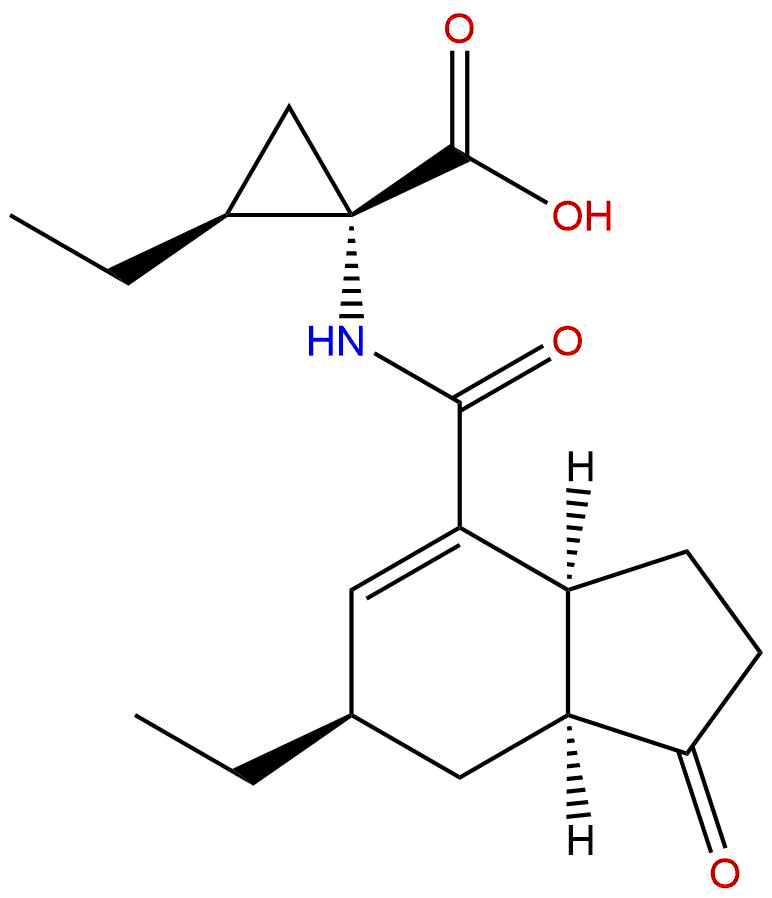


Product name: Coronatine
Synonym name: (+)-Coronatine
Catalogue No.: BP5189
Cas No.: 62251-96-1
Formula: C18H25NO4
Mol Weight: 319.401
Botanical Source:
Type of Compound: Alkaloids
Purity: 95%~99%
Analysis Method: HPLC-DAD or/and HPLC-ELSD
Identification Method: Mass, NMR
Packing: Brown vial or HDPE plastic bottle
Storage: Store in a well closed container, protected from air and light. Put into refrigerate or freeze for long term storage.
Whenever possible, you should prepare and use solutions on the same day. However, if you need to make up stock solutions in advance, we recommend that you store the solution as aliquots in tightly sealed vials at -20℃. Generally, these will be useable for up to two weeks.
The product could be supplied from milligrams to grams
Inquire for bulk scale.
For Reference Standard and R&D, Not for Human Use Directly.
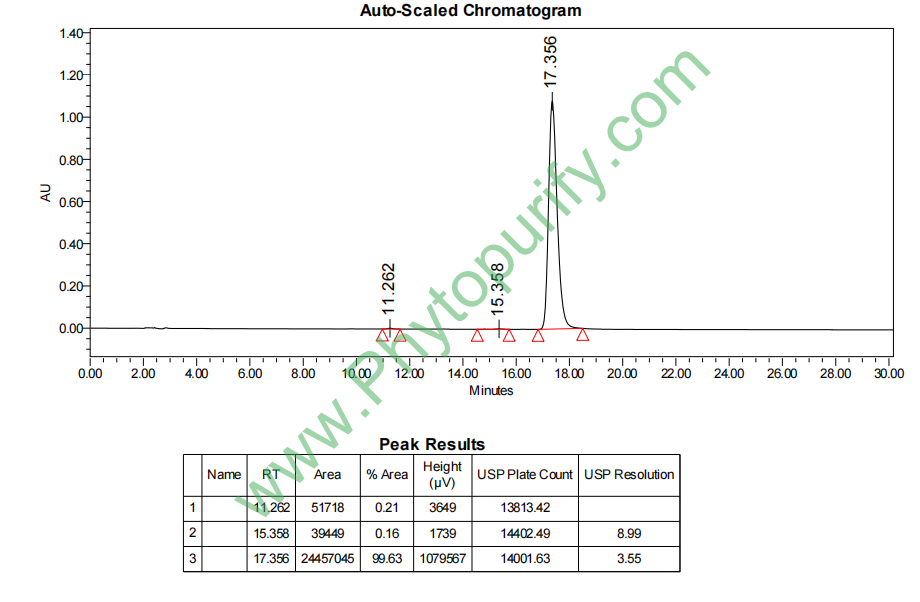
HPLC of Coronatine
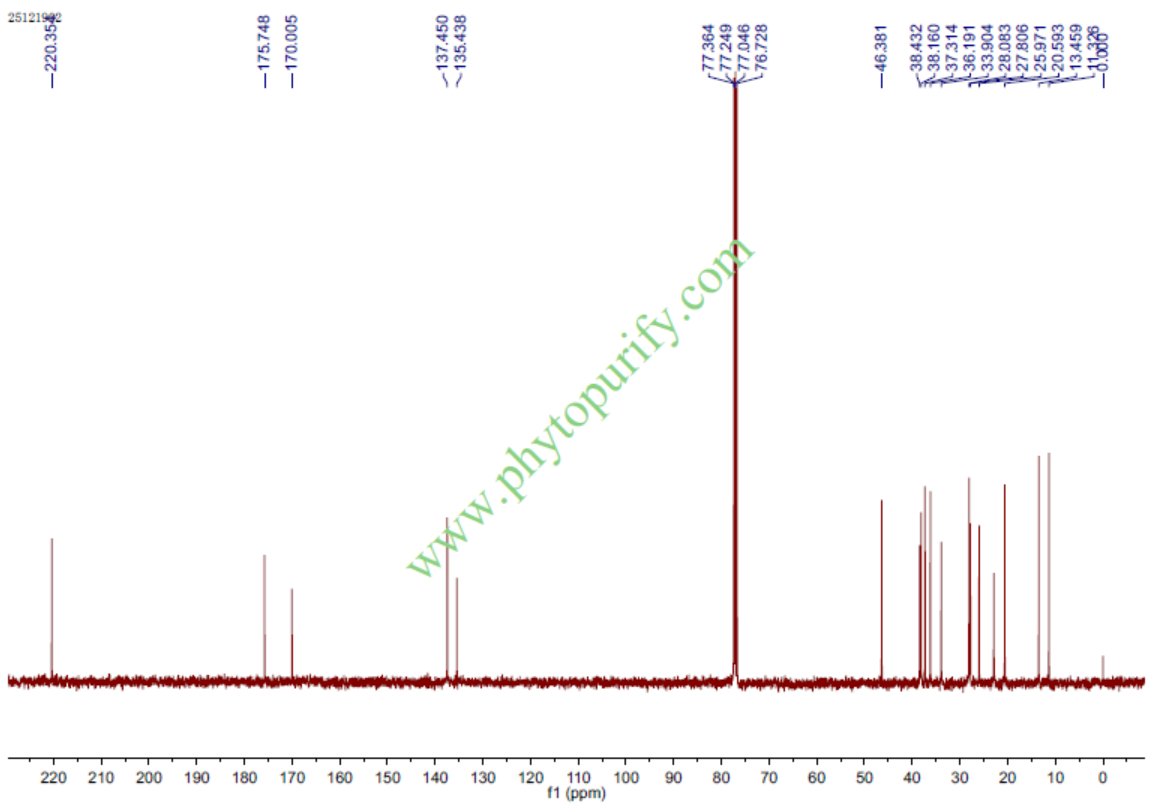
HNMR of Coronatine
Storage conditions:Short-term storage at 2~8℃, long-term storage at -20 ~ -80℃
86.1700
2.0000
Low
Unknown
Unknown
Unknown
Unknown
Unknown
Unknown
Coronatine (CAS number: 62251-96-1) is a natural product produced by plant pathogenic bacteria and belongs to the bacterial toxin family. It was first introduced from the plant pathogenic bacterium Pseudomonas(Pseudomonas syringae)Separated. As a plant growth regulator, coronamycin plays a key role in plant pathogen interactions, simulating the endogenous hormone jasmonic acid isoleucine complex (JA Ile) in plants, activating the jasmonic acid signaling pathway, and regulating plant defense responses. Guanmycin targets the jasmonic acid receptor COI1, inhibits salicylic acid (SA) - dependent defense mechanisms, and promotes the infection and spread of pathogens. In addition, coronamycin can also antagonize stomatal closure, induce plant cell necrosis and yellowing, disrupt plant hormone balance, and affect plant growth and development.
In recent years, with the deepening of research on plant hormone signaling, the mechanism of action of coronamycin as a jasmonic acid signal analog has gradually become clear, and its potential application value in plant pathology, plant physiology, and crop disease prevention and control has received increasing attention. This article provides a systematic review of the chemical structure and physicochemical properties, plant sources and extraction methods, pharmacological activity and mechanism of action, pharmacological evaluation, and clinical application prospects of coronamycin, aiming to provide reference and inspiration for research in the field of natural product pharmacology.
Guanjunsu is a complex molecule composed of two main structural units: one is the cyclic fatty acid moiety similar to jasmonic acid, and the other is the amino acid moiety similar to isoleucine. The two are connected by ester bonds to form a structural analogue of jasmonic acid isoleucine complex (JA Ile). Its molecular formula is C18H27NO4, with a molecular weight of 319.40 and a LogP value of approximately 2.0, indicating moderate lipophilicity that facilitates its penetration into plant cell membranes.
The topological polar surface area (TPSA) of coronamycin is 86.17 Å ², indicating its polarity and the ability to form multiple hydrogen bonds with protein receptors. The number of hydrogen bond receptors is 5, indicating that when coronamycin binds to the jasmonic acid receptor COI1, it may stabilize the complex through multi-point hydrogen bonding. The structural characteristics of coronamycin enable it to highly simulate the spatial configuration of endogenous jasmonic acid hormones, thereby effectively activating the jasmonic acid signaling pathway.
In terms of physical and chemical properties, coronamycin has good stability, but is sensitive to light and high temperature, and is prone to degradation reactions. It has low water solubility and usually requires the use of organic solvents or emulsifiers for dissolution and application. The synthesis route of coronamycin is relatively complex, currently mainly relying on microbial fermentation separation and semi synthetic methods.
Coronavirin is not a substance synthesized by plants themselves, but is produced by plant pathogenic bacteria, especially certain strains of Pseudomonas. These bacteria interfere with plant hormone signals by secreting coronamycin, promoting self infection and spread. Typical strains of coronamycin producing bacteria include Pseudomonas syringae pv. coronafaciens、P. syringae pv. tomato Wait.
The extraction of coronamycin usually uses bacterial fermentation broth as raw material. The specific steps include:
In recent years, genetic engineering based reconstruction of the synthesis pathway and metabolic engineering techniques for coronamycin have also been developed to improve its yield and purity, and promote its industrial production.
As a plant hormone mimic, coronamycin mainly exhibits the following pharmacological activities:
Guanmycin can mimic the jasmonic acid isoleucine complex (JA Ile) and form a high affinity complex with the plant jasmonic acid receptor COI1, activating the downstream transcription factor MYC2 and initiating the jasmonic acid signaling pathway. This signaling pathway regulates the expression of defense genes in plants and is involved in stress response.
The salicylic acid (SA) signaling pathway is an important defense mechanism for plants to resist pathogens. Coron activates the jasmonic acid signal, negatively regulates the SA signaling pathway, inhibits the expression of SA dependent defense genes, reduces plant resistance to certain pathogens, and promotes pathogen infection.
Pores are key structures in plants that regulate gas exchange and water transpiration. Guanmycin can antagonize stomatal closure induced by salicylic acid and other signaling molecules, maintain stomatal openness, and increase the possibility of pathogen invasion.
Under high concentrations or specific conditions, coronamycin can induce programmed cell death (PCD) and leaf yellowing in plants, disrupt plant tissue structure, and further promote the spread of pathogens.
Coron not only affects the signals of jasmonic acid and salicylic acid, but also indirectly affects the synthesis and signal transduction of other plant hormones such as ethylene and abscisic acid, disrupts the plant hormone network, and affects plant growth, development, and defense capabilities.
The main molecular target of coronamycin is the plant jasmonic acid receptor COI1 (CORONATINE INSENSIVE 1), which belongs to the F-box protein family and is a component of the SCF (Skp1-Cullin-F-box) ubiquitin ligase complex. Guanmycin promotes the binding and ubiquitination degradation of COI1 and JAZ (Jasmonate ZIM domain) inhibitory proteins by simulating the binding of JA Ile to COI1, relieving the inhibition of transcription factor MYC2 and activating the jasmonic acid signaling pathway.
The key points of this mechanism include:
In addition, the role of coronamycin also involves regulating ROS metabolism in plant cells, the expression of cell wall modifying enzymes, and the activation of apoptosis related genes, which comprehensively promote the infection and spread of pathogens.
The pharmacological evaluation of coronamycin is mainly analyzed from the aspects of physicochemical properties, biological activity, safety, and in vivo metabolism.
The molecular weight of coronamycin is 319.4 and the LogP is 2.0, indicating that it has a moderate balance of lipid solubility and water solubility, which is beneficial for the penetration of plant cell membranes and in vivo distribution. The TPSA is 86.17, indicating that it can form effective hydrogen bonds with the receptor. The number of hydrogen bond receptors is 5, supporting its high affinity binding to protein targets.
At present, the safety data on the hepatotoxicity, cardiotoxicity (including hERG channel inhibition), and mutagenicity (Ames test) of coronamycin are not clear, and further systematic research is needed. There are few reports on the toxic effects of coronamycin on mammals. Considering its main action on the plant hormone pathway, short-term low-dose exposure has a lower risk, but long-term environmental exposure and ecological safety need to be evaluated.
The in vivo metabolism and kinetics research of coronamycin mainly focuses on the plant body, manifested as rapid absorption, distribution, and metabolism. It can be enzymatically hydrolyzed and modified in plants, with low activity of metabolites. The low penetration of the blood-brain barrier suggests limited impact on the central nervous system. The absorption, distribution, metabolism, and excretion (ADME) characteristics in mammals have not been systematically elucidated.
As a natural product produced by plant pathogenic bacteria, coronamycin is mainly used in the fields of plant pathology and agriculture. Its characteristic of simulating jasmonic acid signaling makes it an important tool for studying plant hormone signaling pathways, plant immune regulation, and pathogen infection mechanisms.
Although coronamycin mainly targets the plant hormone pathway, its unique molecular structure and biological activity provide inspiration for the development of novel small molecule regulators. In the future, its potential applications in mammalian cell signaling regulation can be explored through structural modification, especially in the fields of inflammation regulation and immune regulation.
As a natural product that simulates jasmonic acid signaling, coronamycin has important scientific value and application potential in plant pathology and plant hormone research. Its unique chemical structure and mechanism of action provide key tools for a deeper understanding of plant immune regulation, and also lay the foundation for the development of new plant protectants and growth regulators. In the future, through interdisciplinary integration, systematic evaluation of the safety and biological activity of coronamycin, optimization of its synthesis and application strategies, it is expected to promote the widespread application of coronamycin and its derivatives in agriculture and biomedicine.
