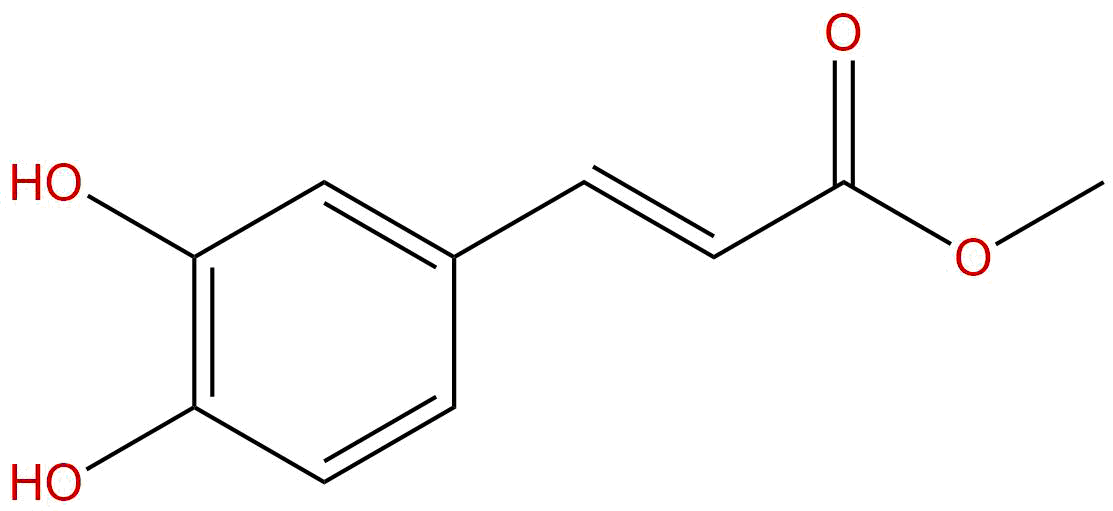


Product name: Methyl caffeate
Synonym name: Methyl caffeoate
Catalogue No.: BP4491
Cas No.: 3843-74-1
Formula: C10H10O4
Mol Weight: 194.186
Botanical Source:
Type of Compound: Phenylpropanoids
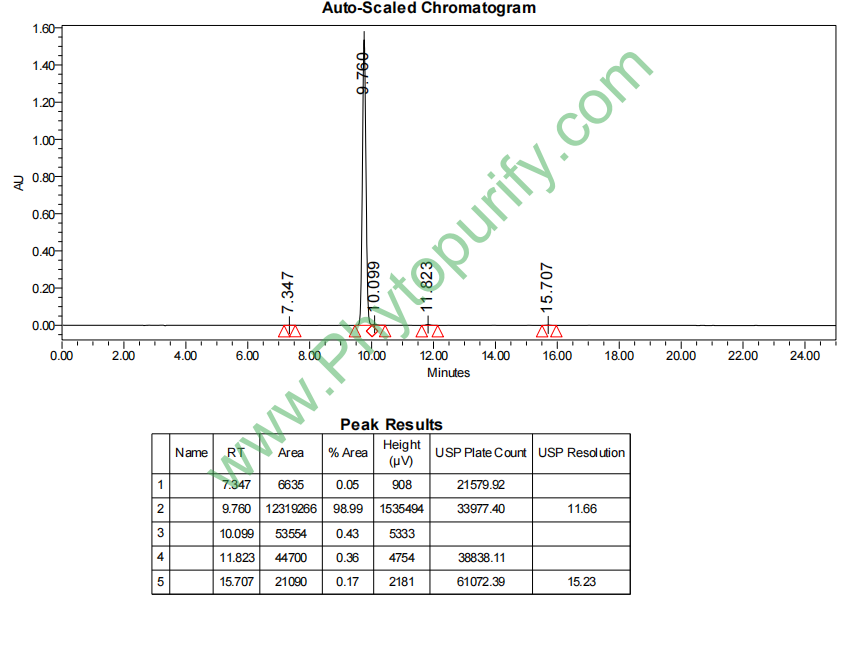
Purity: 95%~99%
Analysis Method: HPLC-DAD or/and HPLC-ELSD
Identification Method: Mass, NMR
Packing: Brown vial or HDPE plastic bottle
Storage: Store in a well closed container, protected from air and light. Put into refrigerate or freeze for long term storage.
Whenever possible, you should prepare and use solutions on the same day. However, if you need to make up stock solutions in advance, we recommend that you store the solution as aliquots in tightly sealed vials at -20℃. Generally, these will be useable for up to two weeks.
The product could be supplied from milligrams to grams
Inquire for bulk scale.
For Reference Standard and R&D, Not for Human Use Directly.
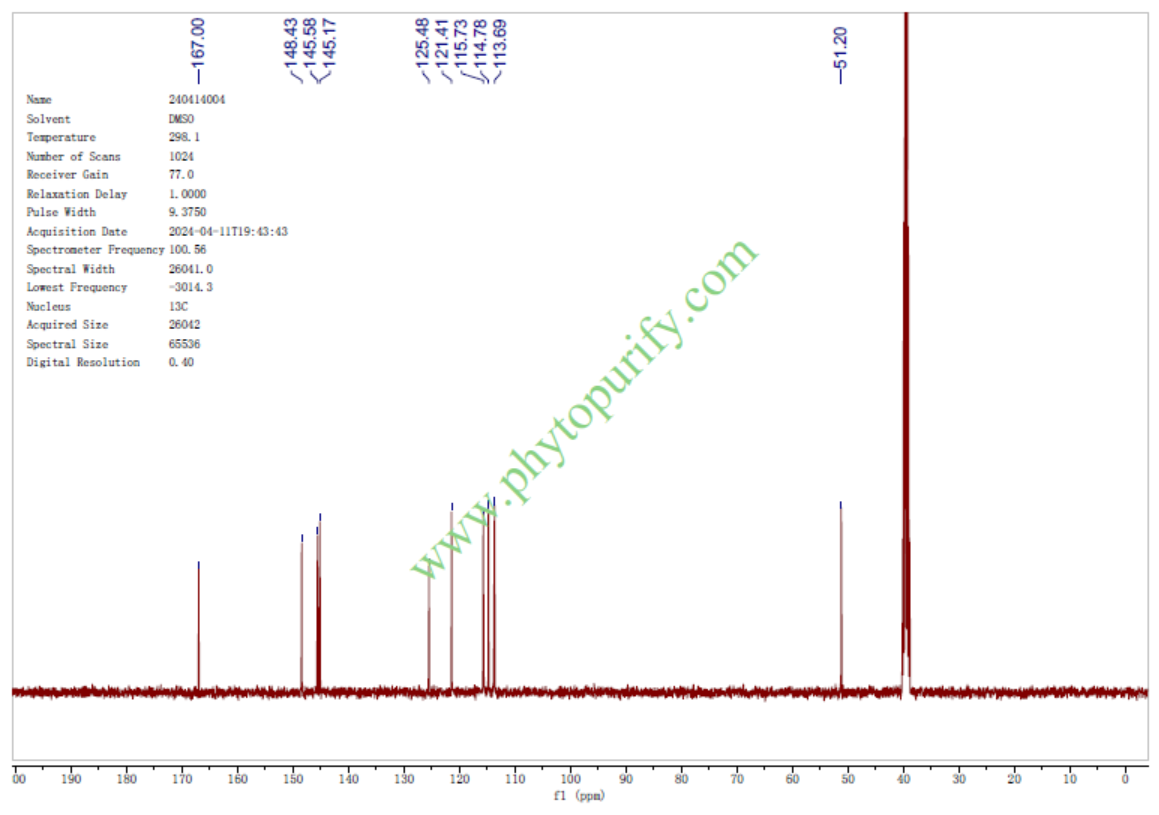
NMR of Methyl caffeate
HPLC of Methyl caffeate
Storage conditions:Short-term storage at 2~8℃, long-term storage at -20 ~ -80℃
66.7600
1.8714
1.8521
1.7520
4.9850
6.8837
High
72.2862
2.0649
Yes
No
Yes
No
Yes
No
0.0
Yes
Yes
Yes
Yes
Natural products, as an important treasure trove for drug discovery, play an irreplaceable role in the long history of human fight against diseases. Among them, phenylpropanoid compounds have attracted much attention due to their wide range of biological activities. Methyl caffeate (MC), also known as 3- (3,4-dihydroxyphenyl) -2-acrylate methyl ester, with a CAS number of 3843-74-1, is a simple ester derivative of caffeic acid. Early studies have revealed that it has pharmacological activities such as antibacterial, anti mycobacterial, anti platelet aggregation, and inhibition of alpha glucosidase. In recent years, with the increase of the incidence rate of neurodegenerative diseases, the exploration of neuroprotective agents has become a research hotspot. Remarkably, caffeic acid methyl ester has shown significant neuroprotective potential in various in vitro and in vivo models, involving the regulation of apoptosis, reduction of oxidative stress, inhibition of amyloid protein production, and excessive phosphorylation of tau protein, among other key pathological processes. This article aims to systematically review the chemical properties, plant sources, pharmacological activities of methyl caffeic acid, and focus on exploring its mechanism of action and molecular target network in the field of neuroprotection. Finally, it looks forward to its medicinal properties and clinical application prospects, in order to provide scientific basis for the deep development and utilization of this natural product.
The molecular formula of methyl caffeic acid is C10H10O4, with a molecular weight of 194.1860. The core of its chemical structure is the phenylpropanoid skeleton, with two phenolic hydroxyl groups (catechol structure) at positions 3 and 4 of the benzene ring, and α, β - unsaturated carboxylic acid methyl ester as the side chain. This structural feature determines its key physicochemical properties and biological activity.
The catechol structure endows methyl caffeic acid with strong antioxidant capacity, enabling it to effectively scavenge free radicals and chelate metal ions, which is the chemical basis for its oxidative stress inhibition activity. α. The β - unsaturated ester structure allows it to act as a Michael addition receptor, covalently binding with biomolecules such as thiol groups in proteins, which may be involved in regulating specific enzyme activity or signaling pathways.
From the perspective of pharmacological parameters, the lipid water partition coefficient (LogP) of caffeic acid methyl ester is 1.8714, indicating its moderate lipophilicity. The topological polar surface area (TPSA) is 66.7600 Å ², which is relatively low. These parameters collectively indicate its good membrane permeability. The calculated water solubility is about 1.7520 mg/mL, belonging to the range of slightly soluble to soluble, which provides the possibility for its absorption and distribution in organisms. More importantly, the predictive model shows that it has a high blood-brain barrier permeability, which provides a prerequisite for it to directly act on the central nervous system and exert neuroprotective effects. In addition, preliminary toxicity predictions indicate no risk of hERG inhibition (which may lead to cardiac toxicity) and a negative Ames test result (no mutagenicity), suggesting its relatively good safety.
Methyl caffeic acid is not widely present in high levels in plants, but as a member of the caffeic acid and its derivative family, it can be found in various plant sources. It mainly exists in plants such as Asteraceae, Lamiaceae, and Solanaceae. For example, in medicinal plants such as snow lotus、honeysuckle、rosemary And some edible spices have been detected. In addition, it is also one of the characteristic phenolic components in honey (especially honeydew) and propolis, which may be one of the material bases for its antibacterial activity.
Organic solvent extraction is commonly used to extract methyl caffeic acid from plant materials. Methanol, ethanol, or acetone aqueous solutions are commonly used solvents, and extraction efficiency can be improved using techniques such as Soxhlet extraction, ultrasound assisted extraction, or microwave-assisted extraction. Due to the complex composition of plant extracts, obtaining pure products usually requires further separation and purification steps. The conventional separation strategy includes: utilizing its acidity and conducting preliminary enrichment through acid-base treatment; Subsequently, crude separation was performed using silica gel column chromatography, reverse phase C18 column chromatography, etc; Finally, high-purity caffeic acid methyl ester was obtained through methods such as preparative high-performance liquid chromatography (HPLC) or recrystallization. Modern analytical techniques such as liquid chromatography-mass spectrometry (LC-MS) are key tools for identifying and quantifying its content.
Caffeic acid methyl ester exhibits diverse pharmacological activities, and its research has expanded from the initial antibacterial field to multiple fields such as metabolic diseases, cardiovascular diseases, cancer, and neuroscience.
The neuroprotective effect of caffeic acid methyl ester is not achieved through a single pathway, but acts on a complex multi-target network to synergistically combat multiple core pathological processes of neurodegenerative diseases.
Antioxidant and activation of NRF2 pathway The catechol structure of methyl caffeic acid is its direct free radical scavenger. More importantly, it can activate Nuclear factor E2 related factor 2 (NRF2)NRF2 is the central regulator of cellular antioxidant response. Caffeic acid methyl ester may promote NRF2 translocation into the nucleus by modifying KEAP1 protein, initiating the expression of downstream phase II detoxifying enzymes such as heme oxygenase-1 (HO-1) and quinone oxidoreductase 1 (NQO1), as well as antioxidant proteins, thereby systematically enhancing the antioxidant defense ability of nerve cells and reducing oxidative stress damage.
Inhibition of amyloid (A β) pathology In AD pathology, caffeic acid methyl ester acts on key enzymes involved in A β production. It can inhibitβ - secretase 1 (BACE1)Reduce the activity of A β precursor protein (APP) and decrease the generation of A β through the β - cleavage pathway. Meanwhile, research suggests that it may regulate APP The metabolic process itself. In addition, methyl caffeic acid has been reported to inhibit acetylcholinesterase (ACHE), which may not only improve cholinergic neurotransmission, but also involve the non catalytic function of ACHE in the aggregation process of A β.
Regulating tau protein phosphorylation and microtubule stability Overphosphorylated microtubule associated proteins tau(MAPT) The formation of neurofibrillary tangles is another hallmark of Alzheimer's disease. Caffeic acid methyl ester may maintain the stability of neuronal cytoskeleton by regulating the activity of related kinases (such as GSK-3 β) and phosphatases, reducing abnormal phosphorylation of tau protein.
Anti apoptotic effect Neuronal apoptosis is the main mode of neuronal loss in neurodegenerative diseases. Caffeic acid methyl ester can upregulate anti apoptotic proteins BCL2 Simultaneously downregulating pro apoptotic proteins and inhibiting their expression Caspase-3 (CASP3) Activation of mitochondrial signaling pathway, thereby blocking mitochondrial mediated cell apoptosis pathway.
Regulating cellular signaling pathways:Mitogen activated protein kinase 1 (MAPK1/ERK) Pathways play a crucial role in cell survival, proliferation, and differentiation. Caffeic acid methyl ester may promote neuronal survival and plasticity by activating survival signaling pathways such as ERK. Meanwhile, it can also inhibit the overactivation of JNK and p38 MAPK pathways associated with inflammation and stress.
Affects protein homeostasis and epigenetic regulation Caffeic acid methyl ester may be activated through Deacetylase SIRT1 Play multiple protective effects. The deacetylation of SIRT1 can regulate transcription factors such as PGC-1 α and FOXO, affecting energy metabolism and antioxidant response; It can also regulate the acetylation status of tau protein and NF - κ B, exerting neuroprotective effects. For PD related matters Alpha Synuclein (SNCA)Methyl caffeic acid may reduce the misfolding and aggregation of SNCA through its antioxidant and molecular chaperone inducing effects.
In summary, methyl caffeic acid acts simultaneously on NRF2、BACE1、MAPT、BCL2、CASP3、SIRT1 Multiple key targets have formed a synergistic protective network against multiple pathological processes such as oxidative stress, protein misfolding and aggregation, cell apoptosis, and neuroinflammation, which gives it unique advantages in dealing with neurodegenerative diseases with complex etiology.
Based on its physicochemical parameters, methyl caffeic acid exhibits preliminary good pharmacological properties. Moderate LogP and lower TPSA indicate good oral absorption and permeability, especially in predicting high blood-brain barrier permeability, which is its core advantage as a neuroprotective agent. The absence of hERG inhibition and mutagenicity alerts provides preliminary positive signals for its safety assessment.
However, comprehensive drug efficacy evaluation still requires in-depth experimental data support. At present, the pharmacokinetic research on the caffeic acid methyl ester system is relatively limited, which is one of the bottlenecks for future development. Based on its structural characteristics, it can be inferred that it may have PK features and challenges:
* Absorption and first pass effect After oral administration, it may be well absorbed in the small intestine, but the phenolic hydroxyl group on the benzene ring is prone to undergo II binding reactions (such as glucuronidation and sulfation) in the intestinal wall and liver, resulting in significant first pass effects and possibly lower absolute bioavailability.
* distribution Thanks to its lipophilicity and BBB penetration ability, it should be able to reach effective concentrations in brain tissue, which is key to its central role.
* Metabolism In addition to binding reactions, catechol-O-methyltransferase (COMT) may catalyze the methylation of its phenolic hydroxyl group, which is one of the main I-phase metabolic pathways. The activity of metabolites such as methyl ferulate needs to be evaluated.
* excretion Metabolites are mainly excreted through the kidneys and urine.
Future research needs to clarify its drug time curves, absolute bioavailability, tissue distribution (especially brain tissue concentration), major metabolites, and excretion pathways in different species. In addition, its chemical stability, especially the oxidation of phenolic hydroxyl groups under light and alkaline conditions, also needs to be considered in formulation development.
Methyl caffeic acid, as a natural small molecule with multiple targets and functions, has broad clinical application prospects but also faces challenges.
Potential application directions:
1. Prevention and adjuvant therapy of neurodegenerative diseases As a dietary supplement or functional food ingredient, used for neuroprotective prevention in high-risk populations. Or it can be used in combination with existing AD/PD treatment drugs (such as donepezil and levodopa) to achieve synergistic effects and reduce side effects.
2. Prevention and treatment of complications related to metabolic syndrome Using its α - glucosidase inhibitory and antioxidant activities, we developed adjuvant drugs for diabetes and its vascular and neurological complications.
3. Application in antibacterial field Especially as candidate compounds or enhancers against drug-resistant mycobacteria, or for the development of natural preservatives.
Challenges and Prospects Faced:
1. Drug efficacy intensity and selectivity As a natural product, its strength of action on a single target may be weaker than that of highly selective synthetic drugs. Future research can optimize its pharmacophore through structural modification, enhancing its efficacy and selectivity towards core targets such as BACE1 and NRF2 while retaining multi-target advantages.
2. Pharmacokinetic optimization To address the issues of rapid first pass metabolism and potential low bioavailability, strategies such as preparing prodrugs (such as esterified phenolic hydroxyl groups to improve lipid solubility and metabolic stability) and developing novel drug delivery systems (such as nanoliposomes and cyclodextrin inclusion complexes to enhance solubility and targeting) can be employed to improve the situation.
3. In depth study on the mechanism of action More in vivo research is needed to use genetically modified animal models to clarify their specific mechanisms of action and dominant target pathways in different disease stages.
4. System security evaluation Complete comprehensive preclinical toxicology studies, including long-term toxicity, reproductive toxicity, etc., to ensure the safety of its clinical application.
Caffeic acid methyl ester is a phenylpropanoid compound found in nature with rich biological activity. From the initial development of antibacterial agents to their enormous potential in the field of neuroprotection, the research process reflects the continuous expansion of the depth and breadth of natural product research. Its most prominent feature is the ability to synergistically regulate through a single molecule NRF2/antioxidant, BACE1/A β, MAPT/tau, BCL2/CASP3/apoptosis, SIRT1/epigenetics Multiple key targets and pathways closely related to neurodegenerative diseases have unique value in treating chronic diseases with complex etiologies through this multi-target mode of action. Despite facing challenges such as optimizing drug efficacy, improving pharmacokinetics, and verifying system safety on the road to clinical application, with the advancement of modern medicinal chemistry, pharmacology, and pharmacology technologies, caffeic acid methyl ester and its structurally optimized derivatives are expected to be developed into a new class of candidate drugs or functional preparations for the prevention and treatment of neurodegenerative diseases such as Alzheimer's disease and Parkinson's disease, providing a natural solution for the increasingly heavy burden of neurological diseases worldwide.
