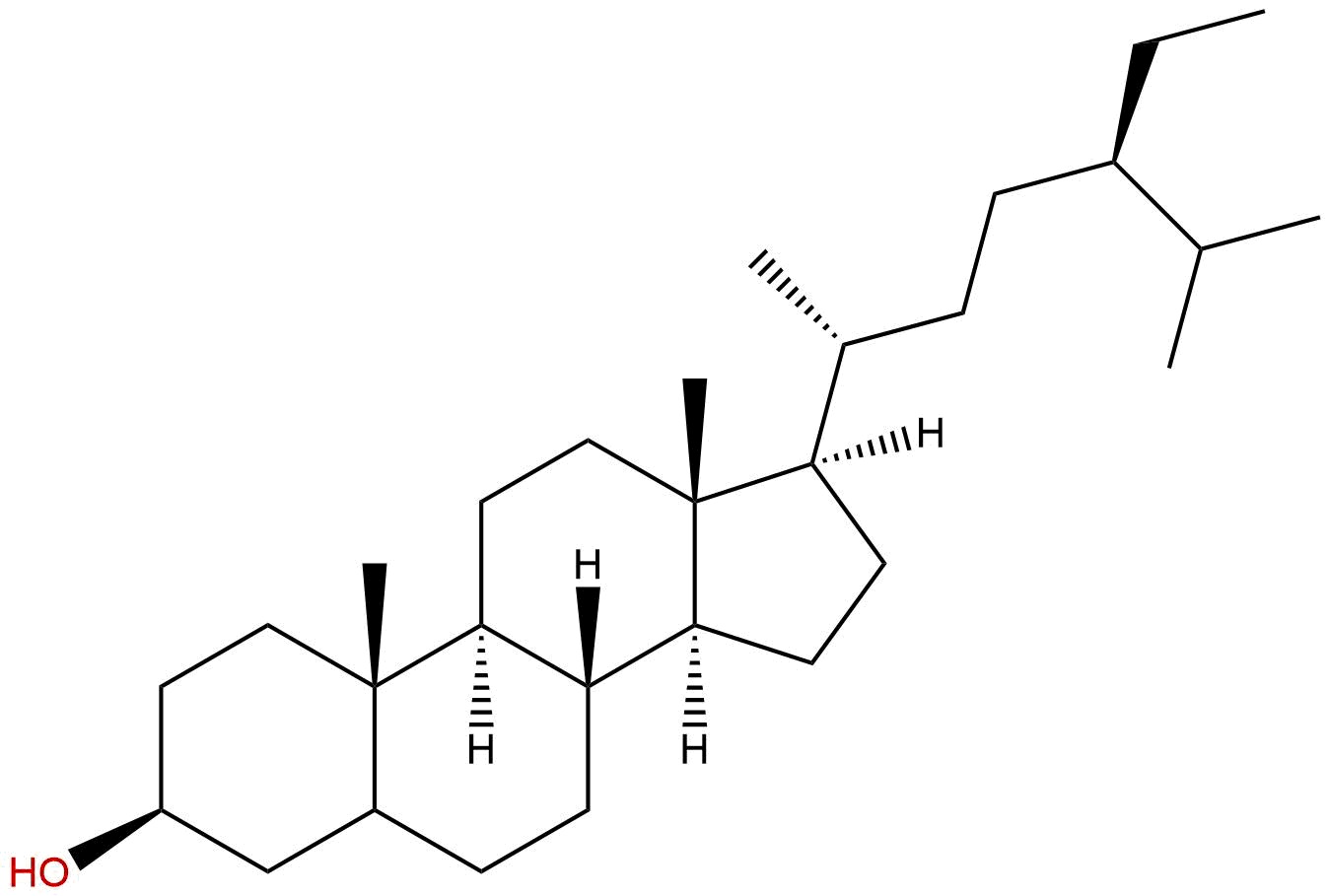


Product name: Stigmastanol
Synonym name: Fucostanol; Sitostanol; 19466-47-8
Catalogue No.: BP4769
Cas No.: 83-45-4
Formula: C29H52O
Mol Weight: 416.734
Botanical Source:
Type of Compound: Oligoses
Purity: 95%~99%
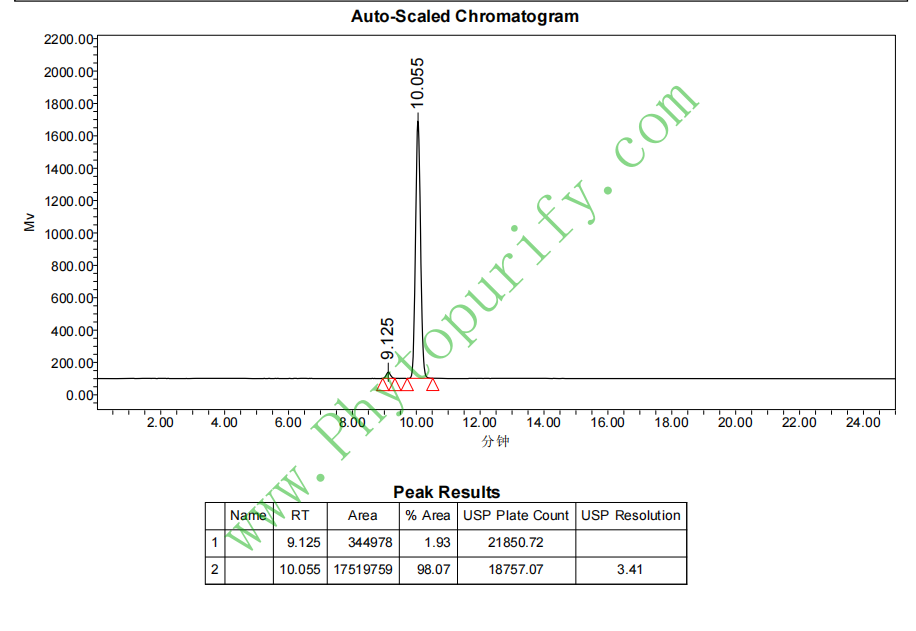
Analysis Method: HPLC-DAD or/and HPLC-ELSD
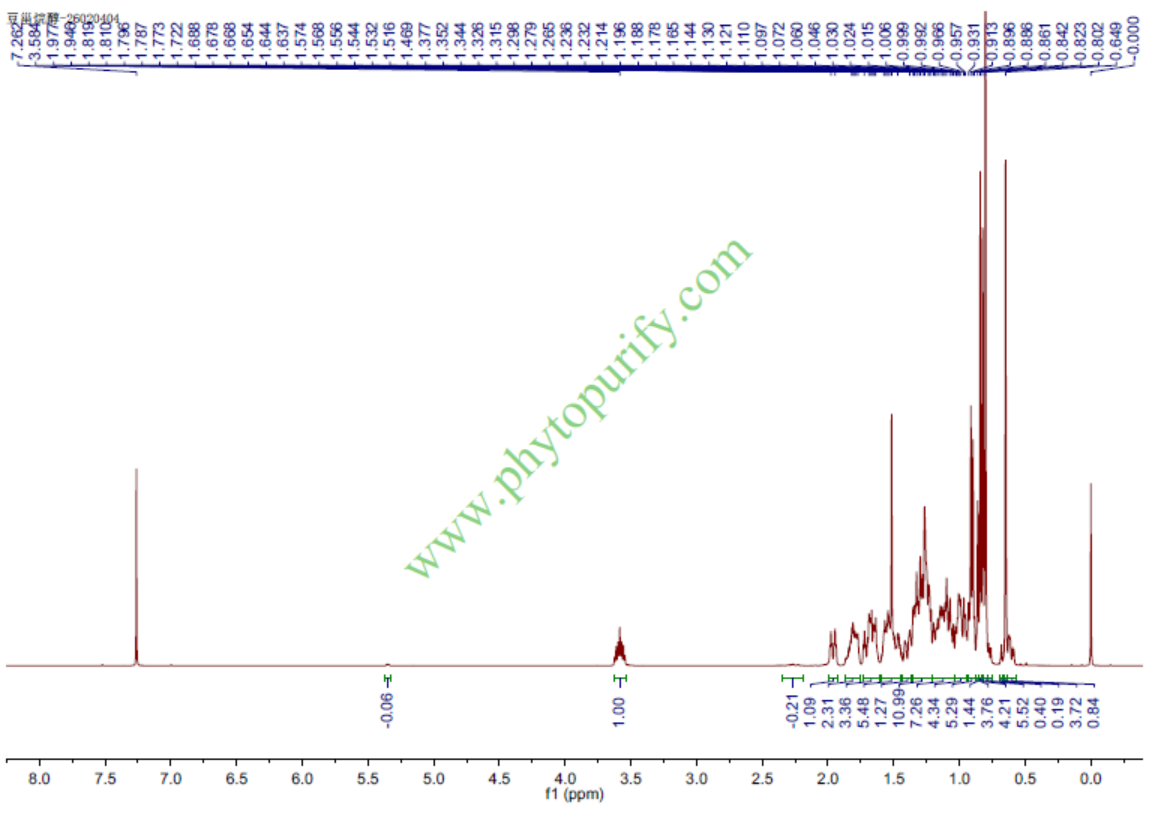
Identification Method: Mass, NMR
Packing: Brown vial or HDPE plastic bottle
Storage: Store in a well closed container, protected from air and light. Put into refrigerate or freeze for long term storage.
Whenever possible, you should prepare and use solutions on the same day. However, if you need to make up stock solutions in advance, we recommend that you store the solution as aliquots in tightly sealed vials at -20℃. Generally, these will be useable for up to two weeks.
The product could be supplied from milligrams to grams
Inquire for bulk scale.
For Reference Standard and R&D, Not for Human Use Directly.
HNMR of Stigmastanol
HPLC of Stigmastanol
Storage conditions:Short-term storage at 2~8℃, long-term storage at -20 ~ -80℃
20.2300
8.3735
8.3735
.0000
8.4362
9.1471
High
94.3700
4.3711
No
No
No
No
No
No
0.0
No
No
No
No
Phytosterols are a type of natural active ingredient widely present in the plant kingdom, with a structure similar to cholesterol in animals, but with differences in the side chains. Stigmastanol, also known as sitosterol, is a member of the plant sterol family and a saturated derivative of Stigmastol. Its CAS number is 83-45-4. For a long time, plant sterols have been widely added to functional foods due to their cholesterol lowering effects. However, recent studies have gradually revealed that plant sterols, represented by stigmasterol, have biological activities far beyond regulating lipid metabolism. Research has shown that stigmasterol can regulate immune cytokines (such as increasing the secretion of IL-2 and IL-10), affect cellular energy metabolism (such as reducing maximum mitochondrial respiration), and exhibit beneficial effects in immune related disease models such as asthma. These findings have expanded the research scope of stigmasterol from nutrition to the fields of immunopharmacology and metabolic regulation, making it a highly promising natural product lead compound. This article aims to systematically review the chemical properties, plant sources, pharmacological activities, potential mechanisms of action, pharmacological evaluation, and clinical application prospects of stigmasterol, in order to provide comprehensive academic references for the in-depth research and development of this compound.
The chemical name of stigmastanol is (3 β, 5 α) - stigmastan-3-ol, with a molecular formula of C29H52O and a molecular weight of 416.7340. Structurally speaking, stigmasterol belongs to steroid compounds and has a classical cyclopentane dihydrophenanthrene core. Its core feature is that the A/B ring is trans coupled (5 α - H, where the hydrogen at position 5 is in the α configuration), and a β - configured hydroxyl group is attached to the carbon at position 3, which is the key functional group with biological activity. Compared with unsaturated stigmasterol (which has double bonds at the C5-C6 and C22-C23 positions), the steroid nucleus C5-C6 and side chain C22-C23 positions of stigmasterol are completely saturated. This structural difference significantly affects its physicochemical properties and biological activity.
Based on its chemical structure, stigmasterol exhibits typical physicochemical properties of plant sterols. Its lipophilicity is extremely strong, and the calculated lipid water partition coefficient (LogP) is as high as 8.3735, indicating its high lipophilicity and hydrophobicity. Consistent with this, its theoretical polar surface area (TPSA) is only 20.23 Å ², and its water solubility is extremely low. It is often labeled as 0.0000 mg/mL in databases, which determines its absorption, distribution, and delivery mode in organisms. High lipid solubility also means that it is easy to penetrate the lipid bilayer, and its penetration through the blood-brain barrier (BBB) is predicted to be "high", providing a structural basis for its potential central nervous system activity research. In terms of preliminary safety prediction, the data shows no risk of hERG potassium channel inhibition (hERG inhibition: No), and the Ames mutagenicity test result is 0.0, indicating a low risk of genetic toxicity and a good safety starting point.
Soybean sterols are widely distributed in nature and are secondary metabolites of various plants. The literature clearly states that it can be derived from plants in the family Theaceae Hypericum riparium It was isolated from a plant of the genus Hypericum. In addition, stigmasterol is also commonly found in various grains (such as corn and wheat), vegetable oils (such as corn oil and rapeseed oil), nuts, and legumes, often coexisting with other plant sterols such as stigmasterol and β - sitosterol.
The extraction and purification of sitosterol from plant materials usually follow the general extraction process of plant sterols, and special attention should be paid to its separation from structurally similar compounds. The conventional extraction methods include:
1. Solvent extraction method The most commonly used method. Organic solvents such as n-hexane, chloroform, ethyl acetate, or their mixed solvents are used for Soxhlet extraction, reflux extraction, or ultrasound assisted extraction of dried and crushed plant materials. This method has high efficiency, but poor selectivity, and can simultaneously extract a large amount of fat soluble components such as oils and pigments.
2. saponification To obtain free sterols, crude extracts or plant oils are often subjected to alkaline saponification treatment. Heating and refluxing in an alcoholic potassium hydroxide solution to hydrolyze sterol esters into free sterols, followed by organic solvent extraction and purification. This step can effectively remove triglycerides.
3. Separation and Purification After obtaining the mixture of free sterols, further separation of stigmasterol is required. Due to the highly similar structure of plant sterols, separation is difficult. Traditional methods include recrystallization(Utilizing the difference in solubility in different solvents) and column chromatography(Silica gel column chromatography is most commonly used, with gradient elution using n-hexane/ethyl acetate, etc.). Modern separation technology relies more on High performance liquid chromatography (HPLC)Especially with the use of normal phase silica gel columns or reverse phase C18 columns, efficient separation and quantitative analysis of sitosterol and sitosterol, β - sitosterol, etc. can be achieved.Gas chromatography-mass spectrometry (GC-MS) This is the key technology for identifying and confirming the structure of stigmasterol, as it requires derivatization (such as silanization) of the sample to increase volatility.
In recent years, pharmacological research has broken through the traditional understanding of the lipid-lowering function of sitosterol, revealing its multiple activities in immune regulation and cellular metabolism.
Immune regulatory activity:
Cellular metabolic regulation activity:
Other potential activities:
Although the information provided in this article is limited, based on the widespread research on plant sterols, it is possible that stigmasterol may also have antioxidant, anti-inflammatory (independent of the IL-10 pathway), and classic lipid-lowering effects through competitive inhibition of cholesterol absorption.
The exact molecular targets and detailed mechanisms of action of stigmasterol are still in the exploratory stage, but existing research has outlined a possible network of action for it.
Possible mechanisms of immune regulation:
Potential targets affecting mitochondrial function:
The integrated mechanism of beneficial effects on asthma:
In asthma models, sitosterol may exert its effects through the following comprehensive pathways: ① upregulation of IL-10, directly inhibiting airway inflammation and Th2 response; ② Inhibiting the function of overactive immune cells (such as eosinophils and activated Th2 cells) through metabolic reprogramming; ③ It may stabilize the cell membrane and reduce degranulation of mast cells through its steroid structure. These effects collectively contribute to its correction of the state of "weakened immune function" (i.e. Th2/Treg imbalance).
Based on its physicochemical properties and preliminary data, a preliminary evaluation of the pharmacological properties of stigmasterol is conducted
Absorption, distribution, metabolism, excretion (ADME) prediction:
Advantages and challenges of pharmaceutical properties:
Formulation strategy:
Future formulation research is crucial to improve its bioavailability. Possible strategies include: ① Lipid preparations(such as self microemulsions, liposomes, nanoemulsions); ② Solid dispersion;③ Cyclodextrin inclusion complex;④ Nanocrystal technology These techniques aim to increase its solubility and dissolution rate, promoting intestinal absorption.
The unique pharmacological activity of sitosterol has brought potential application prospects in multiple therapeutic fields:
Immune inflammatory diseases:
Metabolic related diseases:
Functional foods and dietary supplements:
As a natural plant component, stigmasterol can be further developed to target Immune Support or Metabolic health Functional foods or high-end dietary supplements with high market acceptance.
Future research directions and challenges:
As a naturally occurring plant sterol, stigmasterol has evolved from a traditional nutritional component to a pharmacological active molecule with unique immune and cellular metabolic regulatory activities. It can promote the secretion of IL-2 and IL-10, inhibit the maximum mitochondrial respiration of cells, and show the potential to correct immune imbalance in asthma models, revealing its important value in the cross domain of immune metabolism. Although its extremely low water solubility and unclear mechanism of action are the main challenges in current development, its good preliminary safety and clear multiple biological activities have laid a solid foundation for its subsequent research. In the future, through the cross fusion of modern medicinal chemistry, formulation, and molecular pharmacology methods, the molecular action network of sitosterol will be deeply revealed, and the delivery difficulties caused by its physicochemical properties will be overcome. This natural molecule is expected to be developed into a new therapeutic agent or functional health product for immune inflammatory and metabolic diseases, fully tapping into its natural medicinal potential.
