| Catalog No | Package | Original Price | Price | Inventory | Quantity | Operating |
|---|---|---|---|---|---|---|
| BP4195-5mg | 5mg | $350.00 | Sign in |
|


Storage conditions:Short-term storage at 2~8℃, long-term storage at -20 ~ -80℃
169.4300
1.8595
-.4032
.1233
.8525
2.3875
Low
75.8196
5.4205
No
No
No
No
No
No
0.0
Yes
No
No
No
Ganoderma lucidum(Ganoderma As a highly representative medicinal fungus in traditional Chinese medicine, spp has long been of great concern to the scientific community due to its diverse biological activities and extensive clinical application value. Ganoderma lucidum contains abundant triterpenoids, especially lanostane type triterpenoids, which are considered one of the main active ingredients in its pharmacological effects. 20 Hydroxyganoderic acid G (CAS number: 400604-12-8)Ganoderma curtisii The typical lanostane triterpenoids isolated from ethanol extracts of fruiting bodies have attracted widespread attention in recent years due to their potential role in regulating neuroinflammation.
Neuroinflammation is a key link in the pathogenesis of various neurological diseases, such as Alzheimer's disease, Parkinson's disease, multiple sclerosis, etc. Microglia, as the innate immune cells of the central nervous system, directly affect the progression of neuroinflammation in their activated state. 20 hydroxylingzhi acid G can inhibit BV-2 microglia activated by lipopolysaccharide (LPS), exhibiting significant anti-inflammatory activity with an IC50 of 21.33 μ M, indicating its important research value and application potential in the field of neuroimmune regulation.
This article provides a systematic review of the chemical structure and physicochemical properties, plant sources and extraction methods, pharmacological activity and mechanism of action, pharmacological evaluation and pharmacokinetic characteristics of 20 hydroxy ganoderic acid G. Combined with the current clinical application prospects, it aims to provide scientific basis and theoretical support for the in-depth research and drug development of this natural product.
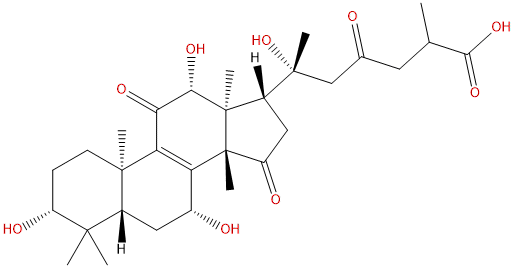
20 hydroxylingzhi acid G belongs to the lanostane triterpenoid class, with a molecular formula of C30H44O10 and a molecular weight of 548.6730. Its structure is based on a typical lanostane skeleton, containing multiple hydroxyl and carboxyl functional groups, endowing it with strong polarity and biological activity. The introduction of a hydroxyl group at position 20 in the molecular structure is a key feature of its naming, and this hydroxyl group may have a significant impact on its biological activity.
In terms of physical and chemical properties, the LogP value of 20 hydroxylingzhi acid G is 1.8595, indicating that it has moderate lipid solubility, which is beneficial for cell membrane penetration, but not too hydrophobic to affect bioavailability. The polar surface area (TPSA) is 169.43 Å ², and a higher TPSA value usually indicates stronger molecular polarity, which may limit its ability to pass through the blood-brain barrier, consistent with its evaluation of low blood-brain barrier permeability. The water solubility is 0.1233 (unit not specified, but can be inferred as mg/mL or mol/L level), indicating low water solubility, suggesting that appropriate solubility improvement strategies may need to be adopted in drug formulation design.
In terms of safety, 20 hydroxylingzhi acid G does not exhibit hERG channel inhibition, reducing the potential risk of cardiac toxicity; The Ames test result is 0.0, indicating that it has no significant genotoxicity and has a good safety basis.
20 hydroxy ganoderic acid G mainly comes from fungi of the Ganoderma genus Ganoderma curtisii The sub entity. Lingzhi, as a wood decaying fungus in the family Polyporus, is widely distributed in temperate and subtropical regions of Asia. It is an important traditional Chinese medicine herb used for regulating immunity, anti-tumor, anti-inflammatory, and delaying aging.
The extraction of 20 hydroxy ganoderic acid G is usually carried out using ethanol (EtOH) as a solvent, extracted from dried ganoderic fruiting bodies. The ethanol extraction method can effectively dissolve triterpenoids in Ganoderma lucidum, and then obtain pure 20 hydroxylingzhi acid G through liquid-liquid distribution, column chromatography (such as silica gel column, C18 reverse phase column), and high-performance liquid chromatography (HPLC) separation and purification techniques.
In recent years, with the advancement of extraction technology, green and efficient methods such as ultrasound assisted extraction and microwave-assisted extraction have also been applied to the extraction of triterpenoids from Ganoderma lucidum, significantly improving extraction efficiency and purity, providing technical support for the large-scale preparation of 20 hydroxy ganoderic acid G. In addition, structural identification mainly relies on modern analytical methods such as nuclear magnetic resonance (NMR), mass spectrometry (MS), and infrared spectroscopy (IR) to ensure the accuracy and purity of compounds.
The pharmacological activity research of 20 hydroxy ganoderic acid G mainly focuses on its anti-inflammatory and immune regulatory effects, especially its performance in neuroinflammation related disease models. Using LPS activated BV-2 microglia as an in vitro model, 20 hydroxylingzhi acid G showed significant inhibitory effects with an IC50 of 21.33 μ M, indicating its ability to effectively inhibit the overactivation of microglia and alleviate neuroinflammatory responses.
As immune effector cells of the central nervous system, the activation status of microglia is closely related to the pathological progression of various neurodegenerative diseases. 20 hydroxylingzhi acid G regulates the release of inflammatory mediators in microglia, reduces the expression of pro-inflammatory cytokines (such as TNF - α, IL-1 β, IL-6), alleviates neuroinflammatory damage, and demonstrates good neuroprotective potential.
In addition, 20 hydroxylingzhi acid G also has potential application value in immune regulation. Related studies have shown that this compound can affect the activity of various immune related targets, regulate the functional status of immune cells, and promote the maintenance of immune homeostasis. Although there are currently few reports on its anti-tumor, antioxidant, and other pharmacological activities, based on its structural characteristics and the activity of similar Ganoderma triterpenoids, future research is expected to further expand its pharmacological spectrum.
The mechanism of action of 20 hydroxylingzhi acid G mainly involves the regulation of immune signaling pathways, especially targeting key molecular targets in LPS induced inflammatory responses. LPS, as a component of the cell wall of Gram negative bacteria, activates Toll like receptor 4 (TLR4) to initiate downstream inflammatory signaling cascades, leading to the activation of transcription factors such as nuclear factor kappa B (NF - κ B) and promoting the expression of pro-inflammatory cytokines.
Research has shown that 20 hydroxylingzhi acid G can inhibit the activation of TLR4, thereby downregulating the activity of the NF - κ B (NFKB1) signaling pathway and reducing the release of pro-inflammatory cytokines. In addition, the compound also affects the STAT3 and STAT4 signaling pathways, which play critical roles in the differentiation and functional regulation of immune cells. By regulating STAT3/STAT4, 20 hydroxylingzhi acid G helps balance pro-inflammatory and anti-inflammatory responses, promoting immune homeostasis.
At the cytokine level, 20 hydroxylingzhi acid G regulates the expression of various key factors, including IL-2, IL-10, IFN - γ (IFNG), TGF - β 1 (TGFB1), etc. These factors play important roles in immune regulation and inflammatory response. Especially the upregulation of IL-10 and FOXP3 suggests that this compound may promote regulatory T cell (Treg) function, enhance immunosuppressive effects, and further suppress excessive inflammation.
In addition, the regulatory effect of 20 hydroxylingzhi acid G on CTLA4 also suggests its potential value in immune checkpoint regulation, which may affect T cell activation and immune tolerance mechanisms. The comprehensive regulation of these molecular targets constitutes the molecular basis for the immunomodulatory and anti-inflammatory effects of 20 hydroxylingzhi acid G.
The evaluation of drug properties is an important step in the development of natural product drugs. The molecular weight of 20 hydroxylingzhi acid G is 548.6730, slightly higher than the recommended upper limit of 500 Da by Lipinski's rule, but its LogP value of 1.8595 is moderate, which is beneficial for membrane penetration. The higher TPSA (169.43 Å ²) and lower water solubility (0.1233) suggest that this compound has certain limitations in oral absorption and blood-brain barrier penetration.
The blood-brain barrier has low permeability, which limits its ability to directly affect the central nervous system. However, therapeutic strategies targeting peripheral immune cells or the meningeal immune environment may have advantages in avoiding potential toxicity to the central nervous system.
In terms of safety, 20 hydroxylingzhi acid G does not inhibit hERG channels, reducing the risk of cardiac toxicity; The Ames test is negative, indicating no significant genotoxicity and good safety potential.
There is currently a lack of systematic in vivo metabolism, distribution, excretion, and bioavailability data regarding pharmacokinetics. Given its high molecular weight and polarity, future research should focus on its in vivo stability, metabolic pathways, and formulation improvement strategies to enhance its bioavailability and therapeutic efficacy.
20 hydroxylingzhi acid G, as a natural triterpenoid compound with significant immune regulation and anti-inflammatory activity, has shown broad application prospects in the treatment of neuroinflammatory related diseases. Its inhibitory effect on LPS activated microglia provides new ideas for the adjuvant therapy of neurodegenerative diseases such as Alzheimer's disease, Parkinson's disease, and multiple sclerosis.
In addition, 20 hydroxylingzhi acid G regulates multiple immune related targets, indicating its potential application value in autoimmune diseases, chronic inflammatory diseases, and immune dysregulation. Combining the traditional immune regulatory effects of Ganoderma lucidum, this compound is expected to become an important candidate for the development of natural product drugs.
In the future, it is necessary to strengthen the in vivo pharmacological and safety evaluation of 20 hydroxylingzhi acid G, conduct animal models and preclinical studies, clarify its pharmacokinetic characteristics and dose-response relationship. Meanwhile, based on its physical and chemical properties, optimizing formulation technology, improving bioavailability and targeting will be the key to promoting its clinical translation.
The multi-target and multi pathway mechanism of action provides a theoretical basis for the combination therapy of 20 hydroxylingzhi acid G and the treatment of multiple diseases. In the future, its synergistic effect with existing anti-inflammatory and immunomodulatory drugs can be explored to expand its clinical application scope.
20 hydroxy ganoderic acid G, as an important natural product of lanostane triterpenoids in Ganoderma lucidum, has become a hot topic in the research of neuroinflammation and related immune diseases due to its unique chemical structure and significant immunomodulatory and anti-inflammatory activities. It regulates key signaling pathways such as TLR4, NF - κ B, STAT3/4, and affects the expression of various cytokines, demonstrating a complex and effective multi-target mechanism of action.
Although research on its pharmacokinetics and clinical applications is still in its early stages, its good safety and potential therapeutic value lay a solid foundation for future drug development. With the continuous advancement of extraction and purification technology and drug design strategies, 20 hydroxylingzhi acid G is expected to become an important breakthrough in the field of natural product pharmacology, providing new drug candidates for the treatment of neuroinflammation and immune regulation related diseases.
Future research should focus on in-depth analysis of its molecular mechanisms, optimization of drug formulations, systematic in vitro and in vivo evaluations, and preclinical studies to promote the clinical application of 20 hydroxylingzhi acid G from the laboratory, benefiting a wide range of patients.
