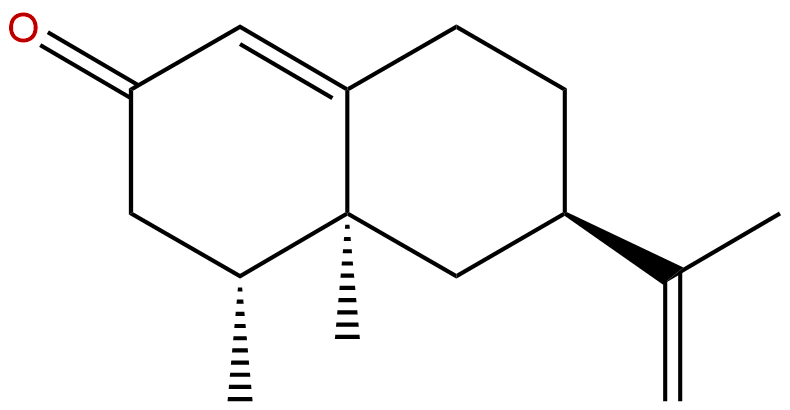


Product name: Nootkatone
Synonym name: (+)-Nootkatone;Nootkanone;4betaH,5alpha-Eremophila-1(10),11-dien-2-one
Catalogue No.: BP3274
Cas No.: 4674-50-4
Formula: C15H22O
Mol Weight: 218.34
Botanical Source:
Physical Description: Off-white Powder
Type of Compound: Sesquiterpenoids
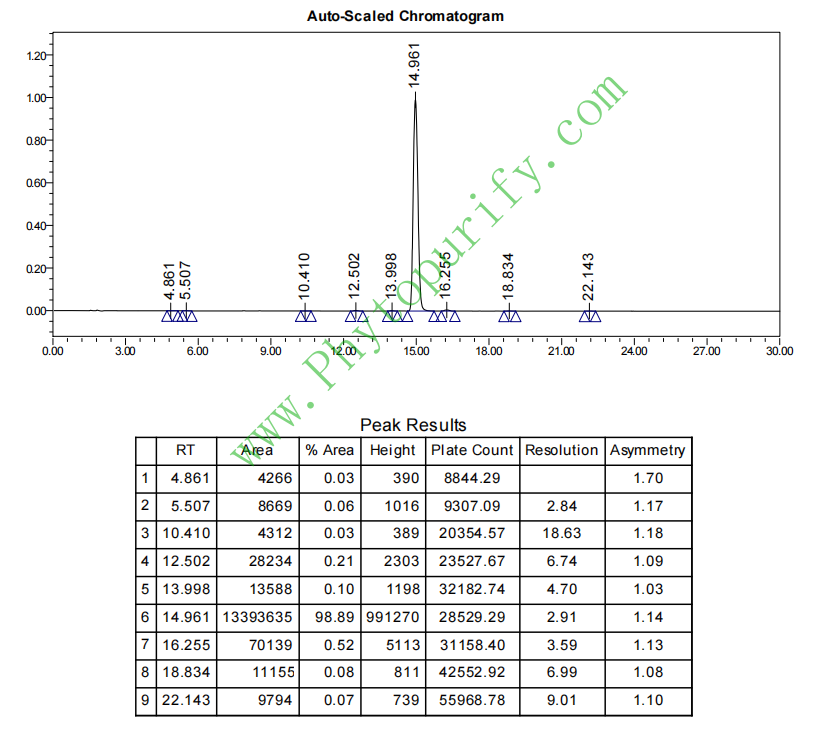
Purity: 95%~99%
Analysis Method: HPLC-DAD or/and HPLC-ELSD
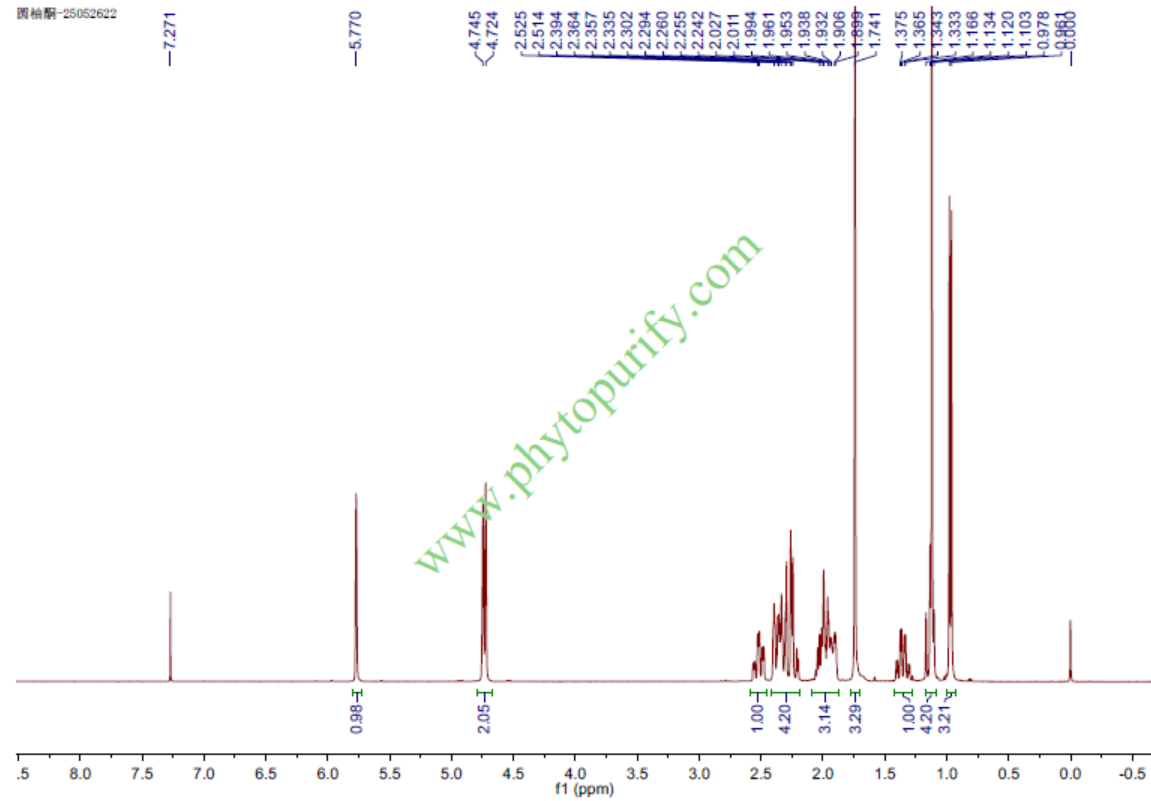
Identification Method: Mass, NMR
Packing: Brown vial or HDPE plastic bottle
The product could be supplied from milligrams to grams. Inquire for bulk scale.
We provide solution to improve the water-solubility of compounds, thereby facilitating the variety of activity tests and clinic uses.
For Reference Standard and R&D, Not for Human Use Directly.
Description:
Nootkatone, a naturally occurring AMPK activator, can stimulate energy metabolism and prevents diet-induced obesity by activating AMPK. (+)-Nootkatone has antiallergic, anti-inflammatory, antiproliferative, and antiplatelet activities. Nootkatone is a strong repellent and toxicant to Formosan subterranean termites, the lowest effective concentration tested is 10 micrograms/g substrate. (+)-Nootkatone has potent inhibitory effect on collagen-, thrombin-, and AA-induced platelet aggregation, it also has a significant inhibitory effect on rat platelet aggregation ex vivo.
References:
J Ethnopharmacol. 2011 Apr 26;135(1):48-54.
Antiplatelet effects of Cyperus rotundus and its component (+)-nootkatone.
Cyperus rotundus, a well-known oriental traditional medicine, has been reported to exhibit wide spectrum activity in biological systems including the circulatory system, however, little information is available on its antiplatelet activity. This study was undertaken to investigate the antiplatelet effects of Cyperus rotundus EtOH extract (CRE) and its constituent compounds.
METHODS AND RESULTS:
The antiplatelet activities of CRE and its eight constituent compounds were evaluated by examining their effects on rat platelet aggregations in vitro and ex vivo, and on mice tail bleeding times. During the in vitro platelet aggregation study, CRE showed significant and concentration-dependent inhibitory effects on collagen-, thrombin-, and/or AA-induced platelet aggregation. Of its eight components, (+)-Nootkatone was found to have the most potent inhibitory effect on collagen-, thrombin-, and AA-induced platelet aggregation. In addition, CRE- and (+)-Nootkatone-treated mice exhibited significantly prolonged bleeding times. Furthermore, (+)-Nootkatone had a significant inhibitory effect on rat platelet aggregation ex vivo.
CONCLUSIONS:
This study demonstrates the antiplatelet effects of CRE and its active component (+)-Nootkatone, and suggests that these agents might be of therapeutic benefit for the prevention of platelet-associated cardiovascular diseases.
J Econ Entomol. 2009 Dec;102(6):2316-24.
Ability of two natural products, nootkatone and carvacrol, to suppress Ixodes scapularis and Amblyomma americanum (Acari: Ixodidae) in a Lyme disease endemic area of New Jersey.
We evaluated the ability of the natural, plant-derived acaricides Nootkatone and carvacrol to suppress Ixodes scapularis Say and Amblyomma americanum (L.) (Acari: Ixodidae).
METHODS AND RESULTS:
Aqueous formulations of 1 and 5% Nootkatone applied by backpack sprayer to the forest litter layer completely suppressed I. scapularis nymphs through 2 d. Thereafter, the level of reduction gradually declined to < or =50% at 28 d postapplication. Against A. americanum nymphs, 1% Nootkatone was less effective, but at a 5% concentration, the level of control was similar or greater to that observed with I. scapularis through 21 d postapplication. Initial applications of 0.05% carvacrol were ineffective, but a 5% carvacrol formulation completely suppressed nymphs of both species through 2 d and resulted in significant reduction in I. scapularis and A. americanum nymphs through 28 and 14 d postapplication, respectively. Backpack sprayer applications of 5% Nootkatone to the shrub and litter layers resulted in 100% control of I. scapularis adults through 6 d, but the level of reduction declined to 71.5% at 28 d postapplication. By contrast, high-pressure applications of 2% Nootkatone to the litter layer resulted in 96.2-100% suppression of both I. scapularis and A. americanum nymphs through 42 d, whereas much lower control was obtained from the same formulation applied by backpack sprayer. Backpack sprayer application of a 3.1% Nootkatone nanoemulsion resulted in 97.5-98.9 and 99.3-100% reduction in I. scapularis and A. americanum nymphs, respectively, at 1 d postapplication. Between 7 d and 35 d postapplication, the level of control varied between 57.1% and 92.5% for I. scapularis and between 78.5 and 97.1% for A. americanum nymphs.
CONCLUSIONS:
The ability of natural products to quickly suppress and maintain significant control of populations of these medically important ticks at relatively low concentrations may represent a future alternative to the use of conventional synthetic acaricides.
J Chem Ecol. 2001 Mar;27(3):523-31.
Nootkatone is a repellent for Formosan subterranean termite (Coptotermes formosanus).
We examined the behavior of Formosan subterranean termites toward one of the components of vetiver grass oil, the roots of which manufacture insect repellents.
METHODS AND RESULTS:
We found Nootkatone, a sesquiterpene ketone, isolated from vetiver oil is a strong repellent and toxicant to Formosan subterranean termites. The lowest effective concentration tested was 10 micrograms/g substrate.
CONCLUSIONS:
This is the first report of Nootkatone being a repellent to insects.
Am J Physiol Endocrinol Metab. 2010 Aug;299(2):E266-75.
Nootkatone, a characteristic constituent of grapefruit, stimulates energy metabolism and prevents diet-induced obesity by activating AMPK.
AMP-activated protein kinase (AMPK) is a serine/threonine kinase that is implicated in the control of energy metabolism and is considered to be a molecular target for the suppression of obesity and the treatment of metabolic syndrome.
METHODS AND RESULTS:
Here, we identified and characterized Nootkatone, a constituent of grapefruit, as a naturally occurring AMPK activator. Nootkatone induced an increase in AMPKalpha1 and -alpha2 activity along with an increase in the AMP/ATP ratio and an increase the phosphorylation of AMPKalpha and the downstream target acetyl-CoA carboxylase (ACC), in C(2)C(12) cells. Nootkatone-induced activation of AMPK was possibly mediated both by LKB1 and Ca(2+)/calmodulin-dependent protein kinase kinase. Nootkatone also upregulated PPARgamma coactivator-1alpha in C(2)C(12) cells and C57BL/6J mouse muscle. In addition, administration of Nootkatone (200 mg/kg body wt) significantly enhanced AMPK activity, accompanied by LKB1, AMPK, and ACC phosphorylation in the liver and muscle of mice. Whole body energy expenditure evaluated by indirect calorimetry was also increased by Nootkatone administration. Long-term intake of diets containing 0.1% to 0.3% (wt/wt) Nootkatone significantly reduced high-fat and high-sucrose diet-induced body weight gain, abdominal fat accumulation, and the development of hyperglycemia, hyperinsulinemia, and hyperleptinemia in C57BL/6J mice. Furthermore, endurance capacity, evaluated as swimming time to exhaustion in BALB/c mice, was 21% longer in mice fed 0.2% Nootkatone than in control mice.
CONCLUSIONS:
These findings indicate that long-term intake of Nootkatone is beneficial toward preventing obesity and improving physical performance and that these effects are due, at least in part, to enhanced energy metabolism through AMPK activation in skeletal muscle and liver.
HPLC of Nootkatone
HNMR of Nootkatone
Storage conditions:Short-term storage at 2~8℃, long-term storage at -20 ~ -80℃
17.0700
3.6385
3.6385
.0579
9.5322
42.5027
High
76.6160
3.9293
No
Yes
No
No
Yes
No
0.0
No
Yes
Yes
Yes
Alzheimer's Disease (AD) is a progressive neurodegenerative disease characterized by deposition of beta amyloid protein, excessive phosphorylation of Tau protein, neuroinflammation, and oxidative stress, ultimately leading to progressive cognitive decline. With the increasing aging of the global population, AD has become a serious public health challenge. However, current first-line clinical drugs such as cholinesterase inhibitors and NMDA receptor antagonists can only alleviate some symptoms and cannot effectively prevent or reverse disease progression. Therefore, exploring neuroprotective agents with multi-target and high safety features from natural products has become an important direction for new drug development.
Nootkadone, a unique sesquiterpene compound, was initially known in the spice industry for its typical citrus aroma contribution in grapefruit (Citrus paradisi). In recent years, its biological activity has gradually been revealed, especially its potential in the field of neuroprotection has attracted much attention. Research has shown that naringenin not only originates from citrus plants in the Rutaceae family, but also exists in plants such as grapes (Vitis vinifera). Its core pharmacological properties lie in its powerful antioxidant and anti-inflammatory effects, which precisely target two key links in the pathogenesis of AD. Of particular note is that in the lipopolysaccharide (LPS) - induced AD mouse model, naringenin exhibits a clear effect in improving cognitive impairment, suggesting that it may exert neuroprotective effects by regulating neuroinflammation and oxidative damage. In addition, its potential sedative/anti anxiety activity involves multiple targets such as monoamine oxidase A (MAOA), serotonin transporter (SLC6A4), dopamine D2 receptor (DRD2), serotonin 1A receptor (HTR1A), and gamma aminobutyric acid A receptor (GABRA1), providing new possibilities for improving common neuropsychiatric symptoms in AD patients. This article aims to systematically review the chemical properties, plant sources, pharmacological activities, mechanisms of action, medicinal properties, and application prospects of naringenin in the treatment of neurodegenerative diseases, especially AD.
The chemical name of naringenin is 4,4a, 5,6,7,8-hexahydro-6-isopropyl-4,4a-dimethyl-2 (3H) - naphthone, and its CAS number is 4674-50-4. Structurally, naringenin belongs to the eucalyptol type sesquiterpene ketone, with a molecular formula of C15H22O and a molecular weight of 218.34 g/mol. Its core structure is a decahydronaphthalene skeleton, with one methyl group at each of the C-4 and C-4a positions, an isopropyl group at the C-6 position, and a carbonyl (ketone) group at the C-2 position. This rigid double ring structure and specific functional group distribution are the structural basis for its unique aroma and biological activity.
In terms of physical and chemical properties, naringenin is a colorless to pale yellow oily liquid with a strong grapefruit like aroma. Its lipid water partition coefficient (LogP) is 3.64, indicating that the compound has high lipophilicity, which is beneficial for its penetration of cell membranes and the blood-brain barrier. The topologically polar surface area (TPSA) is only 17.07 Å ², further confirming its low molecular polarity and strong lipid solubility. The water solubility is poor, about 0.0579 mg/mL, which to some extent limits its application in aqueous formulations, but can be improved through formulation methods such as cyclodextrin inclusion, nanoemulsion, or liposome drug delivery systems. The key pharmacological parameters show that naringenin has high blood-brain barrier permeability, which is its huge advantage as a lead compound for central nervous system drugs. In addition, its hERG inhibition risk is negative, and preliminary Ames test results (0.0) also suggest that it is non mutagenic, providing preliminary positive signals for its safety.
Naringin was initially isolated and identified from grapefruit peel oil, and is one of the main contributors to the characteristic aroma of grapefruit. In addition to grapefruit, it is also distributed in the essential oils of citrus plants in the Rutaceae family, such as grapefruit and bergamot. It is worth noting that one of the sources focused on in this review is grapes (Vitis vinifera). Studies have shown that certain grape varieties or their by-products (such as grape seeds and skins) also contain naringenin, providing a sustainable resource for obtaining this compound from by-products of winemaking or juice processing.
The extraction of naringenin from plant materials mainly relies on its volatility and lipophilicity. The traditional and commonly used method is steam distillation, which uses steam to remove volatile essential oils from plant tissues. After condensation and oil-water separation, crude oil is obtained, which is further purified by vacuum distillation or chromatographic techniques to obtain naringenin. This method has simple equipment, but there may be issues with the degradation or low extraction rate of thermosensitive components. Solvent extraction method, especially using non-polar organic solvents such as n-hexane and petroleum ether for reflux or cold soaking, is also an effective extraction method suitable for laboratory scale or specific raw materials. In recent years, greener and more efficient extraction techniques have been applied, such as supercritical carbon dioxide fluid extraction (SFE-CO2). CO2 combines high gas diffusion and strong liquid solubility in a supercritical state, and is non-toxic and residue free. It is particularly suitable for the extraction of thermosensitive natural products, which can obtain higher purity and activity of naringenin extract. The extracted crude product usually needs to be separated and purified by methods such as silica gel column chromatography, preparative high-performance liquid chromatography (HPLC), or gas chromatography (GC) to obtain high-purity naringenin standards for pharmacological research.
The pharmacological activity research of naringenin has gone beyond its initial use as a fragrance, exhibiting various biological effects, especially in the field of nervous system.
1. Neuroprotection and anti Alzheimer's disease activity
This is currently the most studied direction of naringenin. In the LPS induced AD mouse model, systematic injection of LPS can trigger strong central nervous system inflammatory response, simulating the neuroinflammatory pathological process of AD. Research has shown that pre-treatment with naringenin can significantly improve the performance of such model mice in behavioral tests such as Morris water maze and new object recognition, and alleviate learning and memory impairments. Its protective mechanism is closely related to inhibiting excessive activation of microglia and reducing the production of pro-inflammatory cytokines such as TNF - α, IL-1 β, IL-6. At the same time, naringenin can enhance the antioxidant defense system in the brain, such as increasing the activity of superoxide dismutase (SOD) and glutathione peroxidase (GSH Px), reducing the level of malondialdehyde (MDA), thereby alleviating the damage of oxidative stress to neurons. In addition, studies suggest that it may also have a certain regulatory effect on A β aggregation and Tau protein phosphorylation.
2. Sedative and anti anxiety effects
The aroma of naringenin itself has a soothing effect on emotions, and pharmacological experiments have confirmed its sedative and anti anxiety activity. In classic anti anxiety experimental models such as elevated cross maze and light dark box, administration of naringenin can increase the dwell time and exploratory activity of mice in open arms or light boxes, exhibiting anti anxiety effects similar to benzodiazepines, but with potentially smaller side effects. Its sedative effect is reflected in the ability to prolong the sleep time induced by pentobarbital sodium in mice. These behavioral effects are related to their regulation of multiple neurotransmitter systems.
3. Antioxidant and anti-inflammatory activities
This is the basis for many pharmacological effects of naringenin. In various cell models such as neuronal cells and macrophages, naringenin can effectively scavenge free radicals such as DPPH and ABTS, and inhibit lipid peroxidation. In an inflammatory model, it can inhibit the excessive production of nitric oxide (NO) and prostaglandin E2 (PGE2) in RAW264.7 macrophages induced by lipopolysaccharide (LPS), and downregulate the expression of inducible nitric oxide synthase (iNOS) and cyclooxygenase-2 (COX-2). This powerful antioxidant and anti-inflammatory ability is the core of its neuroprotective and cardiovascular protective effects.
4. Other activities
The study also found that grapefruit ketone has insecticidal (especially for ticks and mosquitoes, which has been registered by the U.S. Environmental Protection Agency as an insect repellent product), anti obesity (promoting energy metabolism by activating the AMPK pathway), cardiovascular protection (anti atherosclerosis) and certain anti-tumor activities, demonstrating its potential as a multi-purpose natural active molecule.
The multiple pharmacological effects of naringenin stem from its diverse regulation of cellular signaling pathways and interactions with multiple molecular targets.
1. Anti inflammatory and antioxidant pathways
One of the core mechanisms of naringenin is the inhibition of the nuclear factor kappa B (NF - κ B) signaling pathway. Under inflammatory stimulation, naringenin can prevent the degradation of I κ B α and nuclear translocation of NF - κ B p65 subunit, thereby inhibiting the transcriptional expression of numerous downstream pro-inflammatory factors (TNF - α, IL-1 β, IL-6, iNOS, COX-2). Meanwhile, it exerts its effect by activating the nuclear factor E2 related factor 2 (Nrf2) pathway. Nrf2 is the central regulator of cellular antioxidant response, and naringenin can promote the translocation of Nrf2 from the cytoplasm to the nucleus, bind to antioxidant response elements (ARE), initiate the expression of phase II detoxifying enzymes such as heme oxygenase-1 (HO-1) and quinone oxidoreductase 1 (NQO1), and antioxidant proteins, thereby enhancing the overall antioxidant defense ability of cells.
2. Sedation/anti anxiety related targets
The regulation of the central nervous system by naringenin involves multiple neurotransmitter systems, which explains its sedative and anti anxiety effects:
* Monoamine oxidase A (MAOA)MAOA is a key enzyme that degrades monoamine neurotransmitters such as serotonin and norepinephrine. Naringine may exert antidepressant and anti anxiety effects by inhibiting MAOA activity and increasing levels of monoamine neurotransmitters in synaptic cleft.
* 5-hydroxytryptamine transporter (SLC6A4/SERT) and 5-hydroxytryptamine 1A receptor (HTR1A)The serotonin system is closely related to emotion regulation. Naringine may increase 5-HT concentration by inhibiting SERT and may act as a partial agonist of the HTR1A receptor, directly activating the receptor and producing anti anxiety and anti depressive effects.
* Dopamine D2 receptor (DRD2)The dopamine system is involved in reward, motivation, and emotion regulation. Naringine may have a certain regulatory effect on DRD2, affecting dopaminergic neurotransmission.
* Gamma aminobutyric acid A receptor (GABRA1)GABA is the main inhibitory neurotransmitter in the central nervous system. Naringine may enhance the inhibitory effect of GABA by modulating GABAA receptors through conformational changes (possibly acting on or near the benzodiazepine binding site), thereby producing sedative, anti anxiety, and anticonvulsant effects.
3. Mechanisms related to neuroprotection
In the AD model, in addition to the anti-inflammatory and antioxidant pathways mentioned above, naringenin may also reduce the release of neurotoxic substances by inhibiting abnormal activation of microglia and astrocytes; Inhibit neuronal apoptosis by activating survival promoting signaling pathways such as PI3K/Akt and CREB; And it may indirectly affect A β metabolism and Tau protein pathology.
Based on its physicochemical properties and preliminary biological data, naringenin has shown certain potential as a drug, but there are also challenges.
Pharmaceutical advantages:
1. Good blood-brain barrier permeability High LogP values and low TPSA enable it to passively diffuse through the blood-brain barrier and directly act on central targets, which is a key prerequisite for treating brain diseases such as AD.
2. Clear multi-target mechanism of action In response to the complex pathological network of AD, the multiple effects of naringenin, such as antioxidant, anti-inflammatory, and neurotransmitter regulation, constitute the advantages of multi-target synergistic therapy.
3. Preliminary safety is good The absence of hERG inhibition risk indicates low cardiac toxicity, and negative Ames test results preliminarily rule out genetic toxicity concerns. Natural sources also provide some endorsement for their safety.
Drug Challenge:
1. Poor water solubility The extremely low water solubility seriously affects its oral bioavailability and the development of intravenous dosage forms.
2. Lack of pharmacokinetic data At present, there is still insufficient systematic research on the absorption, distribution, metabolism, and excretion (ADME) of naringenin in the body. As a sesquiterpene compound, it may be easily metabolized in the liver through cytochrome P450 enzyme systems (such as CYP3A4, CYP2C9), leading to significant first pass effects and possibly a short half-life.
3. The dose-response relationship needs to be clarified The dosage, model, and administration route used in different studies vary greatly, and standardized pharmacological and toxicological studies are needed to determine their therapeutic window.
Pharmaceutical Strategy:
To improve its pharmacological properties, future research focuses on formulation innovation:
* Nano drug delivery system Preparation of nanoemulsions, liposomes, solid lipid nanoparticles, or polymer nanoparticles of naringenin can significantly improve its water solubility and stability, enhance oral absorption, and potentially achieve brain targeted delivery.
* Cyclodextrin inclusion technology The use of cyclodextrin's cavity structure to encapsulate naringenin molecules is a classic method for improving their water solubility and bioavailability.
* Prodrug design Introducing hydrophilic groups through chemical modification to synthesize prodrugs with higher water solubility, and releasing the original drug through enzymatic interpretation in vivo.
The preclinical pharmacokinetic study of the system, including absolute bioavailability, tissue distribution (especially brain tissue concentration), identification of major metabolites, and excretion pathways in different animal models, is a necessary path to promote the development of naringenin.
As a natural compound with multi-target neuroprotective effects, naringenin has a clinical application prospect mainly focused on the field of neurological diseases and may be expanded to other areas.
1. Adjuvant therapy for Alzheimer's disease and related cognitive impairments
Given its role in improving cognitive function in AD models, naringenin has the greatest potential to be developed as a disease modifying therapy or adjuvant therapy for AD. It can be used in combination with existing symptomatic treatment drugs to delay disease progression from the perspectives of anti-inflammatory, antioxidant, and neuroprotective effects. For vascular dementia, mild cognitive impairment, etc., naringenin may also play a preventive and improving role.
2. Potential treatments for anxiety disorders, sleep disorders, and depression
Its clear sedative and anti anxiety activity, as well as regulatory mechanisms involving multiple systems such as 5-HT, GABA, and dopamine, make it a promising natural medicine or functional food ingredient for the next generation of anti anxiety or sleep aid, especially suitable for patients with poor tolerance to traditional benzodiazepines or concerns about dependence.
3. Other potential applications
* Insect repellent products Its environmentally friendly and low toxicity insecticidal properties have been approved for commercial use as insect repellents in the United States, with clear market applications.
* Functional foods and cosmetics As an antioxidant and anti-inflammatory ingredient, it can be used to develop cosmetics with anti-aging and soothing skin functions, or health foods with emotional regulation functions.
* Cardiovascular metabolic diseases Its anti obesity and anti atherosclerosis activities provide a new idea for the treatment of metabolic syndrome.
Future research directions and challenges:
1. In depth mechanism research Molecular docking, surface plasmon resonance, gene knockout and other techniques are needed to accurately verify the direct interactions and modes of action between naringenin and targets such as MAOA, SLC6A4, HTR1A, DRD2, GABRA1, etc.
2. System preclinical development Complete systematic pharmacodynamic (more AD model validation), toxicological (long-term toxicity, reproductive toxicity, etc.), and pharmacokinetic studies that meet the requirements for new drug registration.
3. Formulation optimization and clinical translation Develop stable, efficient, and safe formulations suitable for clinical administration, and design rigorous clinical trials (Phase I, II, III) to verify their effectiveness and safety in humans.
4. structural optimization Using naringenin as the lead compound, structural modification was carried out with the aim of enhancing activity, improving water solubility and metabolic stability, and discovering more medicinal derivatives.
Naringine, a natural sesquiterpene derived from plants such as grapefruit and grapes, has evolved from a simple spice ingredient to an attractive candidate molecule for neuroprotective agents. It exhibits multiple pharmacological activities such as improving AD cognitive impairment, anti anxiety, antioxidant and anti-inflammatory effects in experimental models by inhibiting the NF - κ B inflammatory pathway, activating the Nrf2 antioxidant pathway, and regulating multiple neurotransmitter targets such as MAOA, 5-HT system, and GABAergic system. The excellent blood-brain barrier penetration ability and preliminary good safety characteristics further establish its potential application in the treatment of central nervous system diseases. Despite facing challenges such as poor water solubility and insufficient pharmacokinetic data, these obstacles are expected to be overcome through modern formulation technology and in-depth pharmaceutical research. In the future, the deepening of the mechanism of action of naringenin, preclinical systematic evaluation, and formulation innovation will promote this natural molecule from the laboratory to clinical practice, providing a multi-target, naturally sourced new option for the treatment of diseases such as Alzheimer's disease and anxiety disorders. At the same time, it will also provide new ideas and paradigms for the development of neuropsychiatric drugs based on natural products.
