Introduction/Overview
Natural products, as an important treasure trove for drug discovery, play an irreplaceable role in the history of human disease prevention and treatment. Turmeric(Curcuma longa L. As a traditional medicinal plant, its active ingredient curcumin has attracted much attention due to its extensive anti-inflammatory, antioxidant, and anti-tumor activities. However, the low bioavailability and rapid metabolism of curcumin in vivo limit its clinical application. In recent years, another type of trace component with unique structure and significant activity in turmeric, curcumin analogues, has gradually entered the research field. Cyclocurcumin (CAS: 153127-42-5) is one of them, which is a dimer structure formed by intramolecular cyclization of two curcumin molecules. Compared with linear curcumin, cyclic curcumin exhibits unique physicochemical properties and pharmacological activity spectrum. Early studies have revealed that it acts as an effective inhibitor of p38 α mitogen activated protein kinase (p38 α MAPK), exhibiting anti rheumatic, anti vasoconstrictive, and antioxidant activities. What is even more remarkable is that subsequent research has continuously discovered its enormous potential in the field of anti-tumor, involving multiple aspects such as regulating cell apoptosis, inhibiting tumor invasion and metastasis, and interfering with the tumor metabolic microenvironment. Its targets include key proteins such as MCL1, BCL2, STAT3, MMP2, TOP1/2A, HIF1A, MAPK1, ESR1, and CYP19A1. This article aims to systematically review the chemical properties, plant sources, pharmacological activities, molecular mechanisms of action, pharmacological evaluation, and clinical application prospects of curcumin, in order to provide comprehensive academic references for the in-depth research and development of this promising natural product.
Chemical structure and physicochemical properties
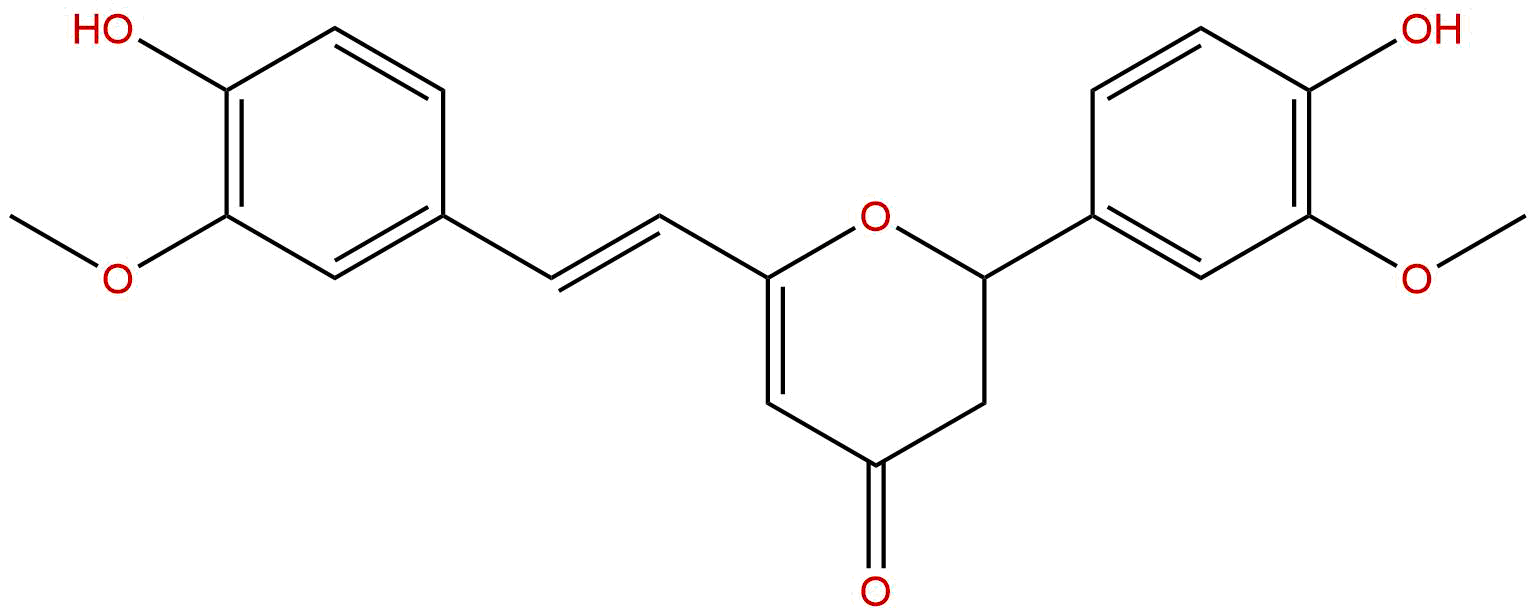
Cyclocurcumin is a dimeric analogue of curcumin, with the chemical name (1E, 4Z, 6E) -5-hydroxy-1,7-bis (4-hydroxy-3-methoxyphenyl) -4,6-heptadiene-3-one. Its molecular formula is C21H20O6 and its molecular weight is 368.3850 g/mol. Its core structural feature lies in the intramolecular cyclization reaction of two curcumin monomer units through their central β - diketone moiety, forming a unique seven membered ring structure, thereby disrupting the classical linear conjugation system of curcumin. This structural change profoundly affects its physical and chemical properties.
In terms of lipid water partition, the calculated lipid water partition coefficient (LogP) of curcumin is 3.1195, indicating its moderate lipophilicity, which facilitates its penetration of cell membranes but may also affect its water solubility. Its topological polar surface area (TPSA) is 85.22 Å ², which is relatively moderate. The water solubility data obtained from the experiment is relatively low, about 0.0330 mg/mL, which is consistent with its high LogP value, indicating that there may be a solubility disorder in oral absorption. In the early warning indicators of drug safety, curcumin showed no significant risk of hERG potassium channel inhibition (hERG inhibition: no), and the Ames test result was 0.0, indicating that it has no mutagenicity and good early safety characteristics. Of particular note is that its predicted blood-brain barrier permeability is "high", suggesting that curcumin may have potential advantages in treating central nervous system related diseases such as gliomas and neurodegenerative diseases, which are characteristics that many large molecules or highly polar natural products do not possess. Stability studies have shown that compared to curcumin, cyclic curcumin may have improved stability to light, heat, and pH changes, thanks to its cyclic structure providing partial protection to active ketones and phenolic hydroxyl groups.
Plant sources and extraction methods
Curcumin mainly comes from the turmeric plant in the ginger family, Curcuma longa(Curcuma longa L. The roots and stems of. In ginger, the content of curcumin is much lower than its main component curcumin, usually belonging to trace or trace components, which poses challenges for its separation and purification. In addition, there are research reports on similar plants such as Curcuma zedoaria(Curcuma phaeocaulis)It has also been detected to exist.
The extraction method usually follows the general process of curcumin compounds, but optimization is needed to enrich this trace component. The conventional extraction process begins with organic solvent extraction. Common solvents include ethanol, acetone, methanol, or their mixed solvents with water. Reflux extraction, ultrasound assisted extraction, or microwave-assisted extraction methods are used to improve extraction efficiency. Due to the strong lipophilicity of curcumin, a high proportion of organic solvent system is more conducive to its dissolution.
The key step is to isolate and purify curcumin from the crude extract. Chromatography technology is often used for analysis. Firstly, preliminary separation is performed using silica gel column chromatography, employing gradient elution systems such as chloroform methanol or petroleum ether ethyl acetate. Subsequently, fine purification was performed using high-performance liquid chromatography (HPLC) or preparative thin layer chromatography (PTLC). The use of reverse phase C18 chromatography column combined with methanol water or acetonitrile water as mobile phase is a commonly used HPLC purification strategy. In recent years, liquid-liquid distribution chromatography techniques such as high-speed countercurrent chromatography (HSCCC) have also been attempted to separate structurally similar compounds, as they do not require a solid phase carrier and can avoid losses caused by irreversible adsorption.
It should be pointed out that, given the extremely low content of naturally sourced curcumin, chemical synthesis and semi synthetic pathways have also become important means to obtain sufficient samples for further research. By biomimetic oxidative coupling or designing specific cyclization reactions, curcumin or its derivatives can be used as starting materials to synthesize curcumin, providing material guarantees for structure-activity relationship research and pharmacological evaluation.
Pharmacological activity research
Curcumin exhibits diverse pharmacological activities, and its research focus has expanded from early anti-inflammatory and antioxidant activities to the core field of anti-tumor effects.
1. Anti inflammatory and immune regulatory activity: Curcumin has been identified as an effective p38 α MAPK inhibitor. P38 α is a key signaling molecule in the inflammatory response, involved in the production of pro-inflammatory cytokines such as TNF - α, IL-1 β, IL-6. By inhibiting p38 α, curcumin exhibits significant anti-inflammatory effects in cell and animal models, which is why it Anti rheumatic disease Activity provides the molecular basis. Research has shown that it can alleviate joint swelling and cartilage damage in collagen induced arthritis model rats.
2. Antioxidant and cardiovascular protective activity: Curcumin retains the phenolic hydroxyl structure and has a certain ability to scavenge free radicals, exhibiting antioxidant Activity. In addition, it Anti vasoconstriction The effect may be related to the regulation of endothelial function, inhibition of abnormal proliferation of vascular smooth muscle cells and antagonism of some vascular contraction factors, suggesting that it has potential application value in cardiovascular diseases such as hypertension and atherosclerosis.
3. Anti tumor activity (core activity): This is the most promising research direction for curcumin. Numerous in vitro and partially in vivo studies have confirmed that it has proliferative inhibitory and pro apoptotic effects on various human tumor cell lines.
* Inducing cell apoptosis: Curcumin can upregulate pro apoptotic proteins and downregulate the expression of anti apoptotic proteins MCL1 and BCL2, thereby disrupting mitochondrial membrane potential, activating Caspase cascade reaction, and inducing intrinsic pathway apoptosis in tumor cells.
* Inhibition of invasion and metastasis: Curcumin can significantly inhibit the expression and activity of matrix metalloproteinase 2 (MMP2). MMP2 is a key enzyme that degrades extracellular matrix and promotes tumor invasion and metastasis. By inhibiting MMP2, curcumin can reduce the migration and invasion ability of tumor cells.
* Inhibition of tumor angiogenesis: Curcumin can downregulate the expression of hypoxia inducible factor 1 alpha (HIF1A). HIF1A is a core transcription factor for tumors to adapt to the hypoxic microenvironment and initiate angiogenesis programs. Inhibition of HIF1A can reduce the production of angiogenic factors such as vascular endothelial growth factor (VEGF), thereby inhibiting tumor angiogenesis.
* Interference with cellular signal transduction: Curcumin can inhibit the abnormal sustained activation of signal transduction and transcription activator 3 (STAT3). STAT3 is an important oncogenic transcription factor involved in regulating multiple processes such as cell proliferation, survival, and immune escape. In addition, it can also inhibit pathways such as extracellular signal regulated kinase 1 (MAPK1/ERK).
* Affects hormone related tumors: Curcumin exhibits regulatory effects on estrogen receptor alpha (ESR1) and aromatase (CYP19A1). CYP19A1 is a key enzyme that converts androgen into estrogen, and its inhibitor is an important therapeutic drug for breast cancer (especially hormone receptor positive). Cyclocurcumin may have therapeutic potential for hormone dependent tumors such as breast cancer by inhibiting CYP19A1 activity and interfering with ESR1 signal.
* Topoisomerase inhibition: Research suggests that curcumin may act on topoisomerases I (TOP1) and II α (TOP2A). These two enzymes are essential for DNA replication and transcription, and are targets of various classic chemotherapy drugs such as irinotecan and etoposide. This activity may endow curcumin with the ability to directly damage tumor cell DNA.
Mechanism of action and molecular targets
The pharmacological effects of curcumin, especially its strong anti-tumor effect, stem from its synergistic intervention on multiple key cellular targets and signaling pathways, forming a multi-target action network.
1. Apoptosis regulatory targets: MCL1 and BCL2
MCL1 and BCL2 are important anti apoptotic members of the BCL-2 protein family, overexpressed in various tumors, helping tumor cells resist apoptosis. Curcumin can downregulate the expression levels of these two proteins, thereby relieving their inhibition of pro apoptotic proteins such as BAX and BAK, promoting increased mitochondrial outer membrane permeability, cytochrome C release, and ultimately initiating Caspase dependent apoptosis programs. This is one of the core mechanisms by which it induces tumor cell death.
2. Transcription factor targets: STAT3 and HIF1A
* STAT3: Curcumin can inhibit the tyrosine phosphorylation activation of STAT3, prevent its nuclear translocation and binding to DNA, thereby downregulating the expression of downstream target genes such as Cyclin D1, BCL2, MCL1, VEGF, etc., achieving multiple effects such as inhibiting proliferation, promoting apoptosis, and anti angiogenesis.
* HIF1A: In the hypoxic microenvironment of tumors, curcumin inhibits the stability and transcriptional activity of HIF1 α protein, blocks its mediated glucose metabolism reprogramming (such as upregulation of GLUT1 and LDHA) and angiogenesis signals, and weakens the adaptability and diffusion ability of tumors.
3. Enzyme targets:
* MMP2: Curcumin inhibits the expression of MMP2 at the transcriptional and/or translational levels, and suppresses its enzyme activity through possible direct interactions or influences on its activation pathways, effectively suppressing the invasion and metastasis of tumor cells.
* TOP1/TOP2A: Curcumin may stabilize "cleavable complexes" by embedding into DNA or binding to enzyme DNA complexes, preventing DNA reconnection, leading to DNA double strand breaks, triggering DNA damage reactions, and cell death.
* CYP19A1 (aromatase): Curcumin can act as a competitive or non competitive inhibitor, directly binding to the active site of CYP19A1, blocking its conversion of androstenedione and testosterone to estrone and estradiol, reducing local estrogen levels in tumors, and inhibiting estrogen dependent tumor growth.
* p38α MAPK: As an early discovered target, curcumin directly binds to the ATP binding pocket of p38 α, inhibiting its kinase activity and subsequently suppressing the production of downstream inflammatory mediators.
4. Signal kinases and receptor targets:
* MAPK1(ERK): Curcumin also has inhibitory effects on the key pathway of RAS/RAF/MEK/ERK, which promotes cell proliferation and survival, possibly by inhibiting upstream receptors or directly acting on kinases.
* ESR1 (estrogen receptor alpha): In addition to reducing ligand (estrogen) production by inhibiting CYP19A1, curcumin may also act as a selective estrogen receptor modulator (SERM), directly interacting with ESR1 and antagonizing its transcriptional activity.
In summary, curcumin forms a multidimensional and multi-level anti-tumor network by simultaneously acting on apoptosis regulators, oncogenic transcription factors, degradation enzymes, metabolic enzymes, and multiple signal kinases, which helps to overcome the problem of drug resistance caused by single target drugs.
Evaluation of drug properties and pharmacokinetics
Although curcumin exhibits excellent biological activity in vitro, its potential as a drug still requires systematic pharmacological evaluation.
Preliminary evaluation based on calculations and in vitro parameters: As mentioned earlier, the molecular weight of curcumin is moderate (368.4), which conforms to the rules of drug likeness. Its LogP value (~3.12) is within the ideal range (usually considered to be 1-5), which is beneficial for membrane permeation. The lower water solubility (0.033 mg/mL) is the main physical and chemical barrier to its oral absorption, which may need to be improved through formulation techniques such as nanocrystals, solid dispersions, phospholipid complexes, or cyclodextrin inclusion complexes. The absence of hERG inhibition and Ames mutagenicity risk are important early safety signals. The prediction of high blood-brain barrier permeability is a significant advantage that distinguishes it from curcumin, providing the possibility for the treatment of central nervous system diseases.
Current status of pharmacokinetic research: At present, there are relatively limited reports on the in vivo pharmacokinetic studies of the curcumin system, far fewer than curcumin. Existing sporadic data and analytical speculation suggest:
* Absorption: Due to its lipophilicity and low water solubility, oral bioavailability may be low. The absorption process may be affected by the first pass effect.
* Distribution: Thanks to its high lipid solubility and predicted high BBB permeability, curcumin may have good tissue distribution characteristics in vivo, especially the ability to enter brain tissue, which has been indirectly confirmed in some animal experiments.
* Metabolism: As a curcumin analogue, it may undergo similar metabolic pathways, including reduction, glucuronidation, and sulfation. Its circular structure may make it less sensitive to metabolic degradation, especially the reduction of β - diketone, compared to linear curcumin, but the specific metabolic profile, main metabolites, and key enzymes involved in metabolism (such as CYP450 isoenzymes) still need to be clarified.
* Excretion: It is speculated that its metabolites are mainly excreted through bile and urine.
Main challenges and optimization strategies:
1. Solubility and bioavailability: This is the primary challenge facing development. Advanced drug delivery systems are needed for optimization.
2. Lack of PK data in the system: It is necessary to establish sensitive and specific biological analysis methods (such as LC-MS/MS), conduct comprehensive animal in vivo ADME research, and clarify its absolute bioavailability, half-life, tissue distribution, and clearance mechanism.
3. Safety evaluation: After completing preliminary pharmacological validation, a systematic preclinical toxicology study is required, including acute toxicity, long-term toxicity, reproductive toxicity, etc., to evaluate its therapeutic window.
Clinical application prospects and prospects
The multi-target anti-tumor properties and unique physicochemical properties (such as high BBB permeability) of curcumin have shown broad application prospects in the treatment of various refractory diseases, especially malignant tumors.
Potential clinical application directions:
1. Comprehensive treatment of malignant tumors:
* Solid tumor: For liver cancer, breast cancer, colorectal cancer, lung cancer, prostate cancer, etc., its effect on STAT3, HIF1A, MMP2, CYP19A1 and other targets can be used to inhibit tumor growth, metastasis and recurrence. It can be used as an adjuvant drug in combination with chemotherapy and radiotherapy to enhance efficacy, reduce drug resistance, or alleviate side effects.
* Hematological system tumors: Its targeting of MCL1/BCL2 gives it potential in hematological malignancies such as acute myeloid leukemia (AML) and multiple myeloma that rely on these anti apoptotic proteins for survival.
* Brain tumors: With its predicted high BBB permeability, curcumin has unique advantages in the treatment of malignant brain tumors such as glioblastoma, overcoming the bottleneck of most chemotherapy drugs being difficult to enter the brain.
2. Inflammatory and autoimmune diseases: Based on its p38 α inhibitory activity, it can be used for the treatment of diseases such as rheumatoid arthritis and inflammatory bowel disease.
3. Neurodegenerative diseases: Its anti-inflammatory and antioxidant properties combined with BBB permeability provide new candidate molecules for the prevention and treatment of diseases such as Alzheimer's disease and Parkinson's disease.
Future research prospects and development strategies:
1. In depth mechanism research: Using chemical biology methods such as affinity fishing and proteomics to discover its direct target and draw a more accurate interaction network. The necessity of using gene editing technology to validate key targets.
2. Structural optimization and derivative development: In response to its poor water solubility and other shortcomings, reasonable structural modifications are carried out to synthesize a series of derivatives or analogues, which can improve its pharmacokinetic properties while maintaining or even enhancing its activity. Studying its structure-activity relationship (SAR) is crucial.
3. Advanced delivery system research and development: Develop delivery systems based on nanotechnology (such as liposomes, polymer nanoparticles, albumin nanoparticles) or prodrug strategies to improve their solubility, stability, targeting, and bioavailability.
4. Preclinical and clinical research advancement: On the basis of obtaining optimized compounds or formulations, carry out standardized preclinical pharmacodynamics (using models closer to clinical practice such as human tumor xenograft PDX models) and safety evaluations, thereby promoting the development of clinical trials and verifying their effectiveness and safety in humans.
5. Explore combination therapy regimens: Systematically studying the synergistic effects of curcumin and existing standard therapeutic drugs (chemotherapy drugs, targeted drugs, immune checkpoint inhibitors), searching for the optimal combination strategy, is expected to improve the efficacy of existing therapies and overcome drug resistance.
Conclusion
As a structurally unique trace active ingredient in turmeric, curcumin has gradually demonstrated its enormous potential as a multi-target anti-tumor lead compound from its initial role as a p38 α inhibitor. It exerts multiple effects in inhibiting tumor cell proliferation, inducing apoptosis, resisting invasion and metastasis, resisting angiogenesis, and regulating the tumor microenvironment by synergistically acting on multiple key nodes of tumor occurrence and development, such as MCL1, BCL2, STAT3, HIF1A, MMP2, TOP1/2A, CYP19A1, etc. Its predicted high blood-brain barrier permeability endows it with special value in the treatment of brain diseases. Although there are still challenges in drug formulation, especially in terms of water solubility and systemic pharmacokinetics, these challenges are becoming manageable with the development of modern medicinal chemistry, pharmacy, and pharmacology technologies. Through in-depth analysis of its mechanism of action, rational structural optimization, innovative drug delivery technology, and standardized preclinical development, curcumin is expected to gradually move from a potential natural product molecule to clinical use, providing new weapons for the treatment of major diseases such as cancer and continuing the glorious chapter of natural products in the history of drug discovery. The continuous and in-depth research on it not only has important scientific significance, but also contains broad clinical application prospects and social value.