| Catalog No | Package | Original Price | Price | Inventory | Quantity | Operating |
|---|---|---|---|---|---|---|
| BP4976-5mg | 5mg | $490.00 | Sign in |
|


Storage conditions:Short-term storage at 2~8℃, long-term storage at -20 ~ -80℃
65.7400
2.3336
2.3337
.0243
2.9959
32.3946
High
81.2211
2.5373
No
No
No
No
Yes
Yes
0.6
No
No
Yes
Yes
Natural products, as an important source of drug discovery, play an irreplaceable role in the long history of human struggle against diseases. From ancient plant therapies to modern target based drug screening, the diverse structures and unique activities of secondary metabolites in nature have always provided a constant source of inspiration and lead compounds for new drug development. Among the numerous biologically active natural product families, coumarin compounds have attracted much attention due to their broad pharmacological activities, such as anticoagulant, anti-inflammatory, antioxidant, antibacterial, and anti-tumor effects. The parent nucleus structure of coumarin is simple, but its derivatives exhibit extremely rich chemical space and biological activity diversity through different substitution modes.
Toddanone, a naturally occurring coumarin with a unique structure, is named after its main plant source, Toddanone(Toddalia asiatica). Flying Dragon Palm Blood, also known as Seeing Blood Flying or Three Hundred Stick, is a plant species in the Rutaceae family, widely distributed in tropical and subtropical regions of Asia and Africa. In the traditional medical system, especially in Chinese folk medicine and Indian Ayurvedic medicine, the dragon's palm blood has a long history of application. Its roots, stems, and leaves are often used to treat rheumatism, pain, bruises, swelling and pain, colds, fever, and various inflammatory diseases. This long-standing traditional medicinal background provides important clues for modern pharmacological research, suggesting that it may contain chemical components with significant anti-inflammatory, analgesic, and anti-tumor activities in its body.
Toddanone was isolated and identified through a systematic study of the phytochemicals in the blood of the Flying Dragon Palm. Early chemical studies revealed that the blood of Feilong Palm is rich in various compounds such as alkaloids, coumarins, terpenes, and flavonoids. Among them, as a derivative of furanocoumarin or pyrocoumarin, the unique chemical skeleton of Feilongzhang blood lactone suggests that it may have different biological activities from other simple coumarins. In recent years, with the rapid development of molecular biology and chemical biology technologies, research on the lactone ketone in Feilongzhang blood is no longer limited to the activity observation of its crude extract, but delves deeper into the molecular level to explore its interaction mechanism with specific disease targets. Especially its potential in the field of anti-tumor has become the focus of current research. Preliminary studies have shown that Feilongzhang blood lactone can inhibit tumor cell proliferation, induce apoptosis, suppress angiogenesis and metastasis by regulating multiple key signaling pathways, such as apoptosis proteins (MCL1, BCL2), transcription factors (STAT3), matrix metalloproteinases (MMP2), topoisomerases (TOP1, TOP2A), hypoxia inducible factor (HIF1A), and estrogen receptor (ESR1).
This article aims to comprehensively review the research progress of Toddanone, a blood lactone from the dragon's palm. Starting from its chemical structure and physicochemical properties, it systematically elaborates on its plant origin, extraction and isolation methods, reported pharmacological activities, and deeply explores its mechanism of action and molecular targets. On this basis, combined with the principles of drug efficacy evaluation in modern medicinal chemistry, the pharmacokinetic characteristics and potential toxicity of this natural coumarin compound are evaluated, and its application prospects and challenges in future clinical translation are finally discussed, in order to provide systematic reference for the in-depth research of this natural coumarin compound with development potential.
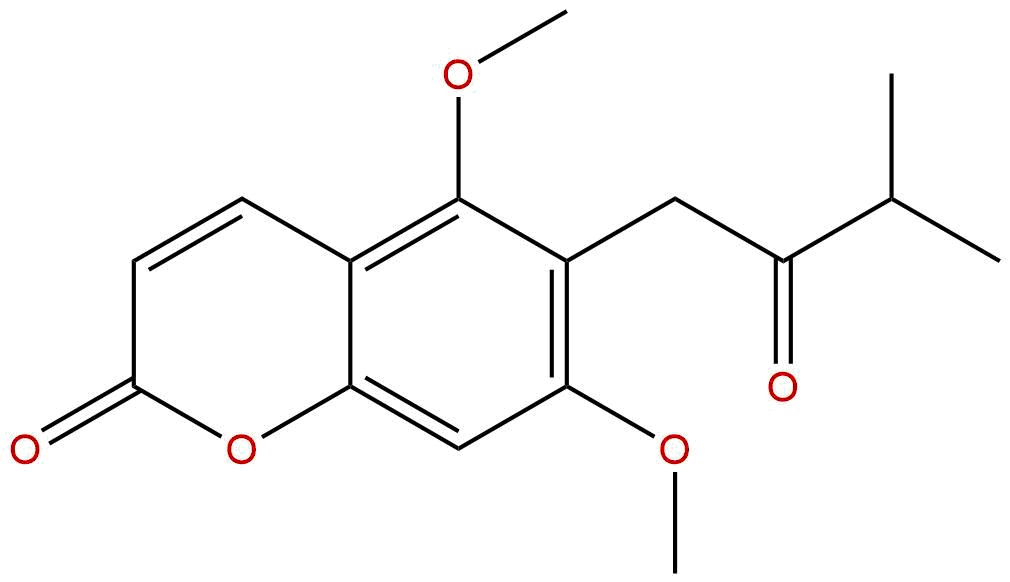
The chemical structure of Toddanone belongs to the coumarin class of compounds, and can be more specifically classified as furanocoumarin or coumarin derivatives. Its core skeleton is composed of a coumarin mother nucleus (benzo [a] - pyranone) fused with a furan or pyran ring. According to existing literature data, its molecular formula is C ₁₇ H ₁₄ O ₅, with an accurate molecular weight of 290.3150 Da. This structure typically contains multiple oxygen-containing functional groups, such as methoxy (- OCH ∝), hydroxyl (- OH), and one ketone group (C=O), whose presence is a key factor determining its physicochemical properties and biological activity. Its IUPAC naming usually involves precise description of the coumarin ring and substituent positions, such as 8- (3,3-dimethylallyl) -5,7-dimethoxy-2H-1-benzopyran-2-one or its similar structure, and specific structural analysis relies on spectroscopic techniques such as nuclear magnetic resonance (NMR) and mass spectrometry (MS).
In terms of physicochemical properties, Feilongzhang blood lactone exhibits typical lipophilic small molecule characteristics. Its oil-water partition coefficient (LogP) is 2.3336, indicating that the distribution equilibrium of the compound between n-octanol and aqueous phase tends to be in a lipophilic environment, which is consistent with the properties of its polycyclic aromatic skeleton and methoxy substituent. Moderate lipid solubility facilitates its penetration through biological membranes, including cell membranes and potential blood-brain barriers. In fact, its blood-brain barrier (BBB) permeability has been evaluated as "high", which suggests that Feilongzhang blood lactone may have the potential to act on central nervous system targets, but it may also increase the risk of central neurotoxicity, which needs to be addressed in subsequent research.
The topological polar surface area (TPSA) is 65.7400 Å ², which is a parameter that measures the degree to which a compound is exposed to polar groups (such as oxygen atoms, nitrogen atoms, and hydrogen atoms attached to them) on the surface of a molecule. Generally, oral medications with TPSA below 140 Å ² have good intestinal absorption and cell membrane permeability. The TPSA value of Feilongzhang blood lactone is much lower than this threshold, further supporting its good biofilm permeability. However, its solubility is only 0.0243 mg/mL, making it a poorly soluble compound. Low water solubility is a common challenge faced by many natural products in drug development, which may lead to low oral bioavailability and affect the efficacy of drugs in vivo. Therefore, in subsequent formulation development, it may be necessary to use solubilization techniques, such as cyclodextrin inclusion complexes, liposomes, nanocrystals, or solid dispersions, to improve their solubility and dissolution rate.
In terms of early assessment of drug safety, two key indicators deserve attention: hERG inhibition and Ames test. HERG (human Ether - à - go Related Gene) encodes potassium ion channels in the heart, and drug inhibition of hERG channels is the main cause of QT interval prolongation and fatal arrhythmias such as apical torsion. The predicted result of hERG inhibition by Feilongzhang blood lactone is' no ', which is a positive signal indicating that it has a low potential risk in terms of cardiac safety. The Ames test is a classic method used to detect the mutagenicity of compounds, and its results are expressed as probability values. The Ames test result for Feilongzhang blood lactone is 0.6, which is usually interpreted as having a potential mutagenic risk (it is generally believed that a positive Ames test probability greater than 0.5 indicates a risk). This result requires high attention, indicating that the compound may have genetic toxicity, which is a major obstacle that must be overcome in its clinical translation process. Further confirmation through more comprehensive in vitro and in vivo genetic toxicity tests (such as micronucleus test, chromosome aberration test) is needed, and the structure-activity relationship needs to be explored in order to reduce toxicity and preserve activity through structural modification.
The main natural source of Toddanone is the plant Toddanone in the Rutaceae family, which belongs to the genus Toddanone(Toddalia asiatica (L.) Lam.)。 This plant is a woody vine that often climbs on other trees or rocks. Its stem and roots often have thorns, hence the name "Flying Dragon Palm Blood". The geographical distribution of Feilong Palm Blood is extremely extensive, from eastern and southern Africa, through Madagascar, India, Sri Lanka, Myanmar, Thailand, Vietnam, Laos, Cambodia, all the way to southern China (such as Yunnan, Guizhou, Sichuan, Guangxi, Guangdong, Fujian, Taiwan, etc.) and Southeast Asian countries such as Indonesia and the Philippines. This widespread distribution makes it a highly sustainable medicinal plant resource.
In traditional applications, the roots and rhizomes of Feilong Palm Blood are the main medicinal parts. Modern plant chemistry research has also confirmed that the roots are the most abundant in coumarin compounds, making them the preferred material for isolating lactones from dragon's paw blood. In addition, the stem bark and leaves also contain a certain amount of this compound, but the concentration is usually lower than that of the roots. The collection time is usually chosen in autumn, when plants accumulate secondary metabolites after a growth cycle. The collected roots should be washed, sliced, and dried in a cool and ventilated place or at a low temperature (such as 40-50 ° C) to avoid the decomposition of active ingredients at high temperatures.
The extraction of dragon foot blood lactone from plant materials usually follows the classic process of natural product chemistry, which mainly includes the following steps:
Raw material pretreatment and extraction The dried blood roots of the Flying Dragon Palm are crushed into coarse powder (usually sieved through a 20-40 mesh sieve) to increase the solvent contact area. The extraction methods often use solvent impregnation, percolation, or reflux extraction. Considering the lipophilicity of Feilongzhang blood lactone (LogP 2.33), medium polarity organic solvents such as methanol, ethanol, ethyl acetate, or their mixed solvents are often used as extraction solvents. For example, soaking in 95% ethanol at room temperature or heating under reflux extraction several times, combining the extracts, and concentrating under reduced pressure to obtain the total extract. In order to improve extraction efficiency, modern technologies such as ultrasound assisted extraction (UAE) or microwave-assisted extraction (MAE) have also been applied, which can accelerate the dissolution of target compounds and shorten extraction time by disrupting the cell wall structure.
Preliminary separation and enrichment The total extract obtained is complex in composition, containing a large amount of fat soluble pigments, wax, alkaloids, and other phenolic compounds. Therefore, preliminary liquid-liquid extraction separation is required. Usually, the total extract is suspended in water and extracted sequentially with solvents with increasing polarity such as petroleum ether, chloroform (or dichloromethane), ethyl acetate, n-butanol, etc. Due to the moderate polarity of the lactone ketone in Feilong Palm blood, it is usually enriched in chloroform or ethyl acetate extraction layers. This step can effectively separate the target compound from strongly polar glycosides, tannins, non-polar oils, chlorophyll, and other components.
Chromatographic Separation and Purification This is a key step in obtaining high-purity Feilongzhang blood lactone ketone. After initial enrichment, the extract needs to be systematically separated using various chromatographic techniques.
Throughout the entire extraction and separation process, the structural identification of compounds relies on spectroscopic techniques. By analyzing its ultraviolet spectrum (UV), infrared spectrum (IR), mass spectrometry (MS), as well as one-dimensional and two-dimensional nuclear magnetic resonance spectra (¹ H-NMR, ¹ ³ C-NMR, HSQC, HMBC, COSY, etc.), and comparing them with literature data, it was finally confirmed that the isolated compound was the internal ester ketone of Feilongzhang blood.
The pharmacological activity research of Toddanone is currently mainly focused on the anti-tumor field, with a small number of reports on its anti-inflammatory, antioxidant and other activities. Most of these studies are based on in vitro cell models, with relatively limited in vivo animal experimental data.
1. Antitumor activity
This is the pharmacological activity of Feilongzhang blood lactone that has received the most attention. Multiple studies have shown that this compound exhibits inhibitory effects on the proliferation of various human tumor cell lines.
* Cytotoxicity spectrum: Research shows that the blood lactone of Dioscorea fortunei shows different degrees of cytotoxicity to breast cancer cells (such as MCF-7, MDA-MB-231), liver cancer cells (such as HepG2, SMMC-7721), lung cancer cells (such as A549), prostate cancer cells (such as PC-3), cervical cancer cells (such as HeLa) and leukemia cells (such as HL-60, K562). The half maximal inhibitory concentration (IC ₅₀) value is usually in the micromolar range (e.g. 1-30 μ M), and the specific value varies depending on the cell type and treatment time. It is worth noting that its toxicity to certain normal cells (such as human normal liver cell L-02) is relatively low, demonstrating a certain degree of selectivity, which provides important evidence for its use as an anti-tumor candidate drug.
* Inducing cell apoptosis One of the main mechanisms by which Feilongzhang blood lactone inhibits tumor cell proliferation is inducing cell apoptosis. Typical morphological features of apoptosis, such as nuclear condensation, chromatin condensation, and formation of apoptotic bodies, can be observed through fluorescence staining (such as Hoechst 33258 or DAPI staining). Flow cytometry analysis (such as Annexin V-FITC/PI double staining) further confirmed its ability to induce early and late apoptosis. In addition, the compound can also cause a decrease in mitochondrial membrane potential and activate key executive enzymes such as Caspase-3 and Caspase-9, indicating that it may induce apoptosis through the mitochondrial pathway (endogenous pathway).
* Inhibit cell migration and invasion Tumor metastasis is the main cause of treatment failure and patient death. It has been found that HLT can significantly inhibit the migration and invasion of highly metastatic tumor cells (such as MDA-MB-231 breast cancer cells). Both scratch experiments and Transwell chamber experiments have confirmed this effect. The mechanism may be related to the inhibition of the activity or expression of matrix metalloproteinases (MMP-2, MMP-9), thereby reducing the degradation of extracellular matrix and hindering the invasion process of tumor cells.
* Angiogenesis inhibition The growth and metastasis of solid tumors depend on the formation of new blood vessels. Feilongzhang blood lactone may suppress the expression of hypoxia inducible factor-1 α (HIF-1 α), thereby downregulating the secretion of its downstream target gene, vascular endothelial growth factor (VEGF), and inhibiting tumor angiogenesis. This effect has been preliminarily validated in vitro endothelial cell tube formation experiments and chicken embryo chorioallantoic membrane (CAM) experiments.
2. Anti inflammatory and antioxidant activity
Given that Feilong Palm Blood is commonly used in traditional medicine to treat inflammatory diseases, the anti-inflammatory effects of its active ingredients have also received attention. Preliminary studies have shown that Feilongzhang blood lactone can inhibit the production of nitric oxide (NO) and prostaglandin E ₂ (PGE ₂) in macrophages (such as RAW264.7) stimulated by lipopolysaccharide (LPS), which is related to its inhibition of the expression of inducible nitric oxide synthase (iNOS) and cyclooxygenase-2 (COX-2). At the same time, it can also reduce the levels of pro-inflammatory cytokines such as tumor necrosis factor - α (TNF - α) and interleukin-6 (IL-6). In addition, the compound also exhibits certain free radical scavenging ability, which can reduce intracellular reactive oxygen species (ROS) levels and exert antioxidant stress resistance. These anti-inflammatory and antioxidant activities may have a synergistic effect with their anti-tumor effects.
3. Other activities
There are sporadic reports suggesting that the dragon's paw blood lactone may have slight antibacterial activity, but its effectiveness is far inferior to specialized antibiotics. In addition, due to its high blood-brain barrier permeability, its role in the central nervous system is worth exploring, but there is currently a lack of systematic research data.
The molecular mechanism of Toddanone's pharmacological activity, especially its anti-tumor activity, is the result of multi-target and multi pathway synergistic effects. Based on existing research, the key molecular targets and signaling pathways can be summarized as follows:
1. Regulating apoptosis related proteins (MCL1, BCL2)
The imbalance of cell apoptosis is an important characteristic of tumor occurrence and development. The B-cell lymphoma 2 (BCL-2) protein family is the core of regulating mitochondrial apoptosis pathways. This family includes anti apoptotic proteins (such as BCL-2, MCL1, BCL-XL) and pro apoptotic proteins (such as BAX, BAK, BID). Feilongzhang blood lactone can downregulate the expression levels of anti apoptotic proteins MCL1 and BCL2, while upregulating the expression of pro apoptotic protein BAX, leading to an increase in the BAX/BCL-2 ratio. This change promotes an increase in mitochondrial outer membrane permeability, releasing apoptotic factors such as cytochrome c, which in turn activates the Caspase cascade reaction and ultimately induces tumor cell apoptosis.
2. Inhibit the STAT3 signaling pathway
Signal transducer and activator of transcription factor 3 (STAT3) is a key transcription factor that is continuously activated in various tumors and participates in regulating cell proliferation, survival, angiogenesis, and immune escape. Feilongzhang blood lactone can inhibit the phosphorylation of STAT3 (Tyr705 site), thereby preventing its dimerization and translocation into the nucleus, thereby inhibiting the transcription of downstream target genes (such as Cyclin D1, Survivor, VEGF, BCL-XL). By blocking the STAT3 signaling pathway, this compound can effectively inhibit tumor cell growth and induce apoptosis.
3. Inhibit matrix metalloproteinase (MMP2)
Matrix metalloproteinases (MMPs), especially MMP-2 and MMP-9, play a crucial role in tumor invasion and metastasis by degrading the main components of the basement membrane and extracellular matrix - type IV collagen. Feilongzhang blood lactone can significantly inhibit the enzyme activity and protein expression level of MMP-2, thereby weakening the migration and invasion ability of tumor cells. This effect may be partially achieved by inhibiting the upstream MAPK/ERK or PI3K/AKT signaling pathways.
4. Inhibition of Topoisomerase (TOP1, TOP2A)
DNA topoisomerase is an important target for anti-tumor drugs. Topoisomerase I (TOP1) and II (TOP2A) are responsible for regulating the topological structure of DNA during DNA replication, transcription, and repair processes. Feilongzhang blood lactone is predicted to be an inhibitor of TOP1 and TOP2A. It may stabilize the enzyme DNA cleavable complex, prevent the reconnection of DNA strands, lead to the accumulation of DNA damage, and trigger cell cycle arrest and apoptosis. This mode of action is similar to the widely used camptothecin (TOP1 inhibitor) and etoposide (TOP2 inhibitor) drugs in clinical practice.
5. Inhibit the HIF-1 α signaling pathway
Hypoxia is a common characteristic of the solid tumor microenvironment, which induces stable expression of hypoxia inducible factor-1 alpha (HIF-1 alpha). HIF-1 α, as a transcription factor, activates a series of genes related to hypoxia adaptation, including angiogenesis (VEGF), glycolysis (GLUT1, LDHA), and metastasis (CXCR4). Feilongzhang blood lactone can inhibit the accumulation of HIF-1 α protein, possibly by promoting its ubiquitination degradation or inhibiting its translation process. By downregulating HIF-1 α, this compound can inhibit the expression of VEGF, thereby exerting anti angiogenic effects and improving the tumor microenvironment.
6. Regulating estrogen receptor (ESR1) and aromatase (CYP19A1)
For hormone dependent breast cancer (such as ER positive breast cancer), estrogen signaling pathway is the key driver. Feilongzhang blood lactone may intervene in this pathway in two ways: one is to directly bind to estrogen receptor alpha (ESR1), exert selective estrogen receptor modulator (SERM) or downregulation (SERD) effects, and counteract the pro proliferative effects of estrogen; The second is to inhibit the activity of aromatase (CYP19A1), which is a key rate limiting enzyme for the conversion of androgens to estrogens. By inhibiting CYP19A1, it can reduce the synthesis of estrogen in the body, thus inhibiting the growth of ER positive breast cancer cells. This dual mechanism of action makes it have unique potential in the treatment of breast cancer.
In summary, Feilongzhang blood lactone forms a complex network regulatory pattern by simultaneously acting on multiple key nodes such as apoptosis, proliferation, metastasis, angiogenesis, and hormone signaling. This multi-target characteristic is a potential advantage of its broad anti-tumor activity and low susceptibility to drug resistance, but it also poses challenges for precise mechanism analysis.
To advance Toddanone from a natural active molecule to a clinical candidate drug, a systematic evaluation of its drug affinity is necessary. This includes a comprehensive evaluation of its physicochemical properties, pharmacokinetic (ADME) characteristics, and toxicology.
1. Physical and chemical properties and the "Lipinski Five Rules"
According to the Lipinski Rule of Five, an orally active drug typically satisfies the following criteria: molecular weight<500, LogP<5, The number of hydrogen bond donors is less than 5, and the number of hydrogen bond acceptors is less than 10. The molecular weight (290.3 Da) and LogP (2.33) of Feilongzhang blood lactone meet the requirements. The hydroxyl and carbonyl groups in its structure can serve as hydrogen bond donors and acceptors, and their quantities are far below the threshold. Therefore, from the perspective of basic physicochemical properties, this compound conforms to the basic characteristics of oral drugs. However, its poor water solubility (0.0243 mg/mL) is a significant shortcoming, which may lead to incomplete oral absorption and low bioavailability. Therefore, improving water solubility is the primary task for optimizing its drug properties.
2. Pharmacokinetic (ADME) prediction and evaluation
3. Toxicological evaluation
Toddanone, with its unique chemical structure and multi-target pharmacological activity, has shown certain potential in the field of drug development, but it also faces severe challenges.
Clinical application prospects:
Challenges and future research directions:
Toddanone, a natural coumarin compound derived from the traditional medicinal plant Toddanone, has become a hot topic in natural product medicinal chemistry and pharmacology research due to its unique chemical structure and multi-target pharmacological activity, especially in the field of anti-tumor. This article systematically reviews the research progress in chemical structure, plant origin, extraction methods, pharmacological activity, molecular mechanism, and drug efficacy evaluation.
Existing research has clearly revealed that Feilongzhang blood lactone can exert broad-spectrum anti-tumor effects by regulating multiple key targets closely related to tumor occurrence, development, metastasis, and drug resistance, such as MCL1, BCL2, STAT3, MMP2, TOP1, HIF1A, ESR1, and CYP19A1. Its moderate lipid solubility and good membrane permeability provide favorable conditions for its in vivo distribution. However, its low water solubility, potential genetic toxicity, and unclear pharmacokinetic characteristics in vivo constitute the main bottlenecks for its clinical translation.
Looking ahead to the future, the research on blood lactones in Feilong Palm is at a critical turning point. On the one hand, it is necessary to use modern medicinal chemistry methods to rationally optimize the structure around its core skeleton, in order to overcome its toxicity defects and pharmacokinetic shortcomings, and develop derivatives with higher therapeutic indices. On the other hand, advanced molecular biology and systems biology techniques are needed to deeply elucidate its complex network of action, providing theoretical basis for precise combination therapy strategies. Meanwhile, developing sustainable raw material supply and efficient formulation technology are also indispensable links.
In summary, Feilongzhang blood lactone is a natural product lead molecule full of opportunities and challenges. Although the road ahead is long, in-depth and systematic research on it not only helps to reveal the scientific connotation of traditional plant-based medicine, but also has the potential to provide new candidate drugs and ideas for humanity to overcome major diseases such as cancer. We have reason to believe that with the continuous deepening of research, the value of Feilongzhang blood lactone and its derivatives will be more fully explored and reflected.
Batch can search by a CAS number,one per line
