


Synonym name:
Catalogue No.: BP0145
Cas No.: 33457-62-4
Formula: C19H18O
Mol Weight: 262.352
Botanical Source: Alnus pendula and Curcuma xanthorrhiza (Java turmeric)
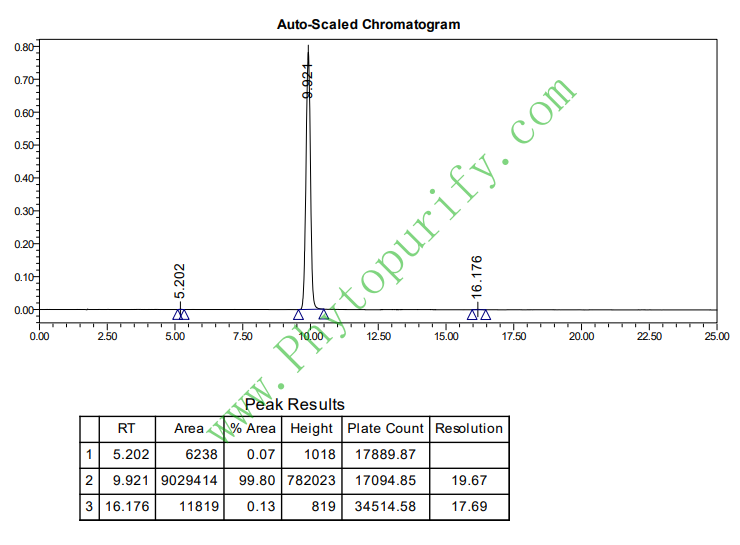
Purity: 95%~99%
Analysis Method: HPLC-DAD or/and HPLC-ELSD
Identification Method: Mass, NMR
Packing: Brown vial or HDPE plastic bottle
Can be supplied from milligrams to grams.
For Reference Standard and R&D, Not for Human Use Directly.
Inquire for bulk scale.
Description:
Alnustone has anti-inflammatory, antihepatotoxic and antiemetic activities,
References:
Planta Med. 1993 Oct;59(5):451-4.
Three non-phenolic diarylheptanoids with anti-inflammatory activity from Curcuma xanthorrhiza.
METHODS AND RESULTS:
Bioassay-guided fractionation of a hexane extract of the rhizomes of Curcuma xanthorrhiza Roxb. (Zingiberaceae) led to the isolation of three non-phenolic diarylheptanoids, identified mainly by high-field 1H-NMR as trans-trans-1,7-diphenyl-1,3-heptadien-4-one (Alnustone), trans-1,7-diphenyl-1-hepten-5-ol, and trans,trans-1,7-diphenyl-1,3-heptadien-5-ol. The latter is reported for the first time as a plant constituent. Germacrone, curzerenone, and cinnamaldehyde were also isolated and identified.
CONCLUSIONS:
The three diarylheptanoids all exerted significant anti-inflammatory activity in the assay of carrageenin-induced hind paw edema in rats.
HPLC of Alnustone
Storage conditions:Short-term storage at 2~8℃, long-term storage at -20 ~ -80℃
17.0700
4.5000
4.5000
High
No
No
No
No
No
No
Alnustone, CAS number 33457-62-4, is a naturally occurring non phenolic diarylheptane compound that was first isolated and identified from the herb Alpiniae katsumadai. As a type of diarylheptane, alderone has a unique structure, high lipid solubility, and good biofilm penetration ability. In recent years, with the deepening of research on the pharmacological activity of natural products, alder ketone has received widespread attention due to its significant anti-inflammatory, hepatotoxic, and antiemetic activities. In addition, preliminary studies have shown that it also exhibits potential pharmacological activity in regulating targets related to hyperglycemia, suggesting its development value in the field of metabolic diseases.
This article aims to systematically review the chemical structure and physicochemical properties, plant sources, and extraction methods of alder ketone. Combining the latest pharmacological activity research, it explores its mechanism of action and molecular targets, evaluates its pharmacological and pharmacokinetic characteristics, and looks forward to its clinical application prospects, providing a theoretical basis and research direction for natural product pharmacology and new drug development.
Aljone is a typical diarylheptane compound with a molecular formula of C19H26O and a molecular weight of 262.35. Its structural feature is that two aromatic rings are connected by a seven carbon chain, belonging to non phenolic diarylheptane. The structure only contains one hydrogen bond acceptor (carbonyl oxygen), no hydrogen bond donor, low molecular polarity, with a LogP value of about 4.5, showing strong hydrophobicity, which is conducive to crossing cell membranes and the blood-brain barrier (BBB has high permeability). The topological polar surface area (TPSA) is 17.07 Å ², further supporting its excellent membrane permeability.
In terms of physical and chemical properties, alder ketone is an oily or crystalline solid with good stability and no obvious photosensitivity or thermosensitivity. Its non phenolic structure makes its antioxidant activity inferior to typical phenolic compounds, but it exhibits unique advantages in anti-inflammatory and other biological activities. High lipid solubility endows it with good oral absorption potential, but may also bring challenges in bioavailability and solubility.
Aljone is mainly found in the traditional Chinese medicine Alpiniae katsumaadai (grass fruit), which is a perennial herbaceous plant of the Alpinia genus in the ginger family and widely distributed in southern China and Southeast Asia. Grass fruit, as a traditional Chinese medicine, has always been used to treat symptoms such as indigestion, vomiting, and abdominal pain. Alnus carmichaelii ketone, as one of its main active ingredients, plays a part of the pharmacological basis.
The common methods for extracting alder ketone include organic solvent extraction, liquid-liquid distribution, and chromatographic separation. Generally, ethanol or methanol is used for reflux extraction of dried plant powder, which is then concentrated and purified by silica gel column chromatography or high-performance liquid chromatography (HPLC) to obtain high-purity alderone. In recent years, ultrasound assisted extraction and supercritical CO2 extraction techniques have also been applied to improve extraction efficiency and purity.
The key to optimizing the extraction process lies in solvent selection, extraction time, and temperature control, in order to maximize the retention of the active components of alder ketone while reducing impurity interference. During the purification process, mass spectrometry and nuclear magnetic resonance (NMR) techniques were used to confirm the structure of alderone, ensuring its chemical purity and structural integrity.
The anti-inflammatory effect of alder ketone is one of its earliest pharmacological activities discovered and studied. Both in vitro cell models and in vivo inflammatory animal models have shown that alderone can significantly inhibit the release of inflammatory mediators, such as tumor necrosis factor - α (TNF - α), interleukin-6 (IL-6), and nitric oxide (NO). Its mechanism of action is partially attributed to the inhibition of the nuclear factor kappa B (NF - κ B) signaling pathway, which reduces the transcriptional expression of pro-inflammatory genes.
In mouse models of plantar edema and rat models of arthritis, alderone showed significant anti-inflammatory effects, reducing tissue swelling and inflammatory cell infiltration. In addition, alder ketone can regulate the polarization state of macrophages, promote the formation of M2 anti-inflammatory phenotype, and further alleviate chronic inflammation.
The liver, as an important organ for drug metabolism and detoxification, is susceptible to damage from various toxic substances. Research has shown that alder ketone has significant liver protective effects. By inhibiting oxidative stress response in liver cells and reducing the generation of reactive oxygen species (ROS), alder ketone alleviates liver cell damage and apoptosis.
In the liver injury model induced by carbon tetrachloride (CCl4), the liver function indicators such as alanine aminotransferase (ALT) and aspartate aminotransferase (AST) were significantly decreased in the alder ketone treatment group, and the pathological damage to liver tissue was alleviated. In addition, it enhances the liver's antioxidant defense system by regulating glutathione (GSH) levels and superoxide dismutase (SOD) activity.
The antiemetic effect of alder ketone is mainly reflected in its inhibition of chemically induced vomiting. Animal experiments have shown that alderone can effectively reduce vomiting reactions caused by chemotherapy drugs or toxins, and the mechanism may involve regulating the vomiting center in the central nervous system and affecting gastrointestinal motility.
Its antiemetic activity provides a scientific basis for traditional herbal treatment of digestive system diseases, and provides a natural molecular framework for the development of new antiemetic drugs.
The latest network pharmacology and molecular docking studies suggest that alderone may exert its effects by regulating multiple targets associated with hyperglycemia, including EHMT2, UBP2, PAI1, AMPK, SGLT2, GCK, APP, BACE1, CES1, and PTPN1. These targets involve multiple physiological processes such as glucose metabolism regulation, insulin signaling pathway and neuroprotection, suggesting that alder ketone has potential value in the prevention and treatment of diabetes and its complications.
The multiple pharmacological effects of alder ketone mainly depend on its regulation of cellular signaling pathways and key enzyme targets. In the anti-inflammatory mechanism, alder ketone inhibits the NF - κ B and MAPK pathways, reduces the expression of pro-inflammatory factors, and lowers the intensity of inflammatory responses. At the same time, regulating macrophage polarization, promoting the secretion of anti-inflammatory cytokines, and balancing immune status.
In terms of anti hepatotoxicity, alder ketone enhances cellular antioxidant capacity and reduces ROS mediated cell damage by activating the Nrf2/ARE antioxidant pathway. In addition, inhibiting mitochondrial pathway induced apoptosis protects liver cell function.
The antiemetic effect may involve the regulation of serotonin (5-HT3) receptors and dopamine receptors in the central nervous system, which weakens the neural transmission of the vomiting reflex. Meanwhile, the relaxing effect of alder ketone on gastrointestinal smooth muscle can help alleviate gastrointestinal spasms and alleviate vomiting symptoms.
Regarding targets related to hyperglycemia, alder ketone may activate AMPK, promote glucose uptake and lipid metabolism; Inhibit SGLT2 and reduce renal glucose reabsorption; Regulating GCK activity and improving pancreatic beta cell function; Affects epigenetic and signaling molecules such as EHMT2 and PTPN1, regulates insulin signaling and inflammatory status. These mechanisms lay the foundation for its development of anti diabetes drugs.
Aljone has ideal pharmacological parameters. Its molecular weight of 262.35 conforms to Lipinski's rule, and although the LogP value of 4.5 is high, it is still within an acceptable range, indicating good lipid solubility. Low TPSA (17.07 Å ²) and a small number of hydrogen bond receptors (1) are beneficial for the penetration of cell membranes and the blood-brain barrier, supporting the activity of the central nervous system.
In vitro and in vivo toxicological evaluations showed that alderone had no significant hepatotoxicity, cardiotoxicity, or hERG channel inhibition, and the Ames mutagenicity test was negative, indicating high safety. The high blood-brain barrier permeability suggests its potential application in neurological diseases.
In terms of pharmacokinetics, alder ketone has good oral absorption, but its high lipid solubility may lead to solubility limitations and affect bioavailability. Its metabolic pathway has not been fully elucidated, and preliminary data suggests that it is mainly metabolized through the liver CYP450 enzyme system. Further research is needed on the activity and safety of metabolites. The distribution in the body shows that it can be widely distributed in various tissues, especially brain tissue, which is in line with its pharmacological activity characteristics.
Aljone, as a multifunctional natural product, has multiple pharmacological activities such as anti-inflammatory, hepatotoxic, and antiemetic effects, demonstrating broad clinical application potential. Aljone is expected to become a new therapeutic or adjuvant drug in the fields of inflammatory diseases, liver damage, and chemotherapy-induced nausea and vomiting.
In addition, the potential activity of alder ketone in regulating hyperglycemia related targets provides a new direction for its development in the treatment of diabetes and metabolic syndrome. Combined with its good safety and blood brain barrier penetrability, its application in neurodegenerative diseases such as diabetes neuropathy and Alzheimer's disease can be explored in the future.
However, the clinical translation of alder ketone still faces many challenges, including improving water solubility and bioavailability, clarifying pharmacokinetic characteristics, systematically evaluating long-term safety, and toxicological risks. In addition, in-depth analysis of its molecular mechanism of action and target network will help to accurately locate its indications and optimize drug design.
Future research should focus on structural modification optimization, development of nanocarrier delivery systems, and systematic evaluation of preclinical animal models to promote the clinical application of alderone from the laboratory.
Aljone, as a natural product with unique structure and multiple biological activities, exhibits broad pharmacological research value and clinical application potential. Its anti-inflammatory, hepatotoxic, and antiemetic activities have been systematically validated, and it has shown new research directions in regulating molecular targets related to hyperglycemia. Good drug efficacy and safety have laid the foundation for its drug development.
In the future, combining modern medicinal chemistry, molecular biology, and pharmacokinetic techniques to deeply analyze the mechanism of action of alder ketone and optimize its drug properties will help promote it as an effective drug for treating various diseases. The study of alder ketone not only enriches the knowledge system in the field of natural product pharmacology, but also provides an important example for the rational utilization of natural drug resources and innovative drug development.
