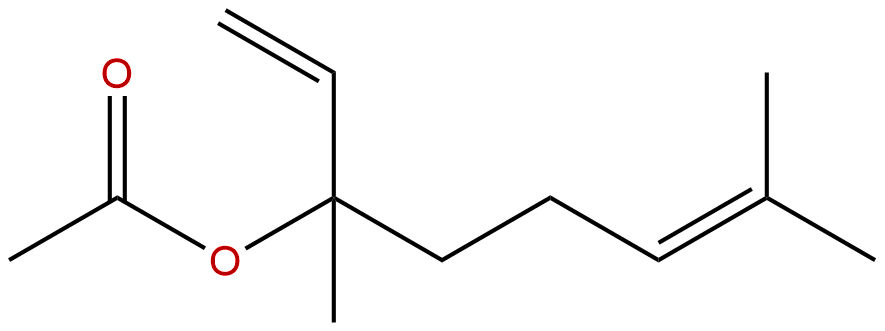


Synonym name: Linalool acetate
Catalogue No.: BP0868
Cas No.: 115-95-7
Formula: C12H20O2
Mol Weight: 196.29
Botanical Source: numerous plants and essential oils, e.g. beramot, clary sage, lavender, petitgrain, sassafras, neroli, lemon etc.
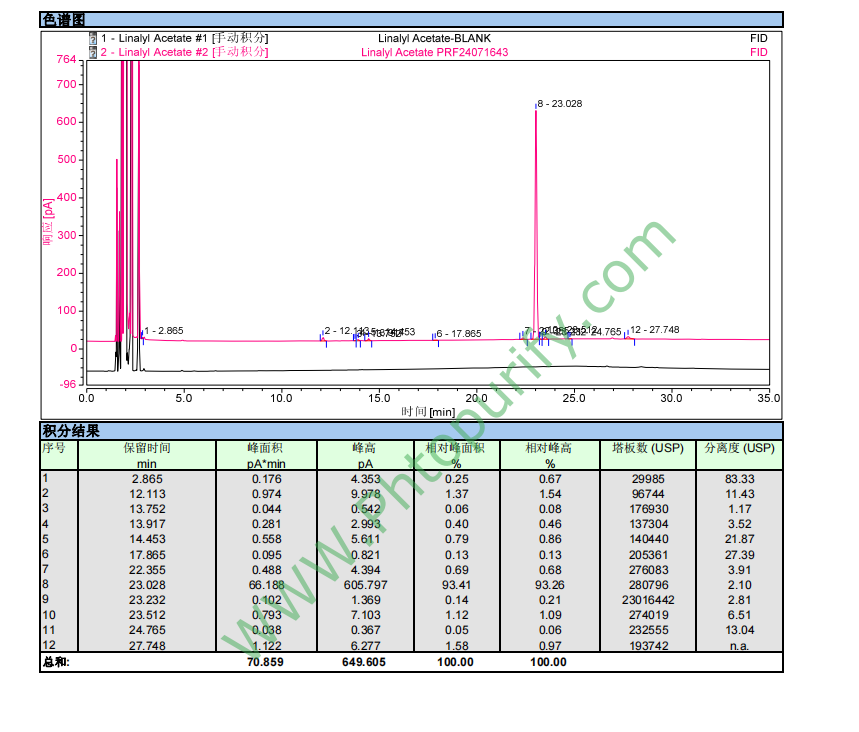
Purity: 95%~99%
Analysis Method: HPLC-DAD or/and HPLC-ELSD
Identification Method: Mass, NMR
Packing: Brown vial or HDPE plastic bottle
Can be supplied from milligrams to grams.
For Reference Standard and R&D, Not for Human Use Directly.
Inquire for bulk scale.
HPLC of Linalyl Acetate
Storage conditions:Short-term storage at 2~8℃, long-term storage at -20 ~ -80℃
Linalyl acetate (CAS number: 115-95-7) is a natural monoterpene ester widely present in various plant essential oils, and has attracted much attention due to its unique aroma and diverse biological activities. As the acetate of linalool, linalool acetate is not only an important component in the spice industry, but also widely studied for its significant pharmacological activity. In recent years, linalyl acetate has shown good potential in anti anxiety, anti-inflammatory, anti diabetes, anti stress, cardiovascular regulation and other fields, and its oral activity provides a possible basis for its clinical application. In addition, linalool acetate exhibits inhibitory effects on various microbial targets in the antibacterial field, demonstrating its value as a novel antibacterial agent. This article will systematically review the chemical structure and physicochemical properties, plant sources and extraction methods, pharmacological activity and mechanism of action, drug evaluation and pharmacokinetic characteristics of linalool acetate. Combined with current research progress, it will explore its clinical application prospects and future development directions.
The chemical name of linalool acetate is 3,7-dimethyl-1,6-octadiene-3-ol acetate, with a molecular formula of C12H20O2 and a molecular weight of 196.29. Its structure contains a linalool skeleton, which forms acetate through esterification reaction and has strong hydrophobicity. In terms of physicochemical properties, the LogP value of linalool acetate is 3.726, indicating that it has good lipid solubility and is beneficial for penetrating cell membranes and the blood-brain barrier (BBB). Its polar surface area (TPSA) is 26.3 Å ², and a lower TPSA facilitates its absorption and distribution in vivo. The low water solubility (0.2312 mg/mL) limits its solubility in the aqueous phase, but this can be improved to some extent through formulation techniques. The high permeability of the blood-brain barrier suggests that it can act on the central nervous system. In terms of safety, linalool acetate did not exhibit hERG channel inhibition and the Ames mutagenicity test result was negative, indicating that it has a good safety basis.
Cinnamyl acetate is widely present in the essential oils of various aromatic plants, especially Cinnamomum camphora, Lavandula angustifolia, Ocimum basilicum, Melissa officinalis, and other plants. Its content varies significantly among different plants and parts, usually accounting for a higher proportion in essential oils, especially in lavender essential oil where the content of linalool acetate can reach over 30%.
The extraction methods mainly include steam distillation and solvent extraction. The steam distillation method is widely used due to its mild and non-destructive properties of the active ingredients. In recent years, supercritical CO2 extraction technology has gradually become the preferred method for extracting linalool acetate due to its high efficiency, environmental friendliness, and protection of thermosensitive components. During the extraction and purification process, gas chromatography-mass spectrometry (GC-MS) technology is widely used for qualitative and quantitative analysis of linalool acetate, ensuring the quality and purity of the extract.
The pharmacological activities of linalyl acetate cover many aspects such as central nervous system regulation, anti-inflammatory, anti diabetes, anti stress and cardiovascular protection.
Multiple in vitro and in vivo studies have shown that linalool acetate has significant anti anxiety effects. It enhances GABA mediated inhibitory neurotransmission and alleviates anxiety symptoms by regulating the gamma aminobutyric acid (GABA) receptor system. In animal models, oral or inhalation administration of linalool acetate can significantly reduce anxiety behavior, demonstrating good sedative and anti anxiety effects. In addition, its high blood-brain barrier permeability supports its direct effect on the central nervous system.
Cinnamyl acetate exerts anti-inflammatory effects by inhibiting the expression of inflammatory factors such as tumor necrosis factor - α (TNF - α), interleukin-6 (IL-6), and cyclooxygenase-2 (COX-2). In vitro studies have shown that linalool acetate can inhibit inflammatory responses in macrophages and alleviate tissue inflammatory damage. Its anti-inflammatory mechanism involves inhibition of the NF - κ B signaling pathway, reducing the transcriptional activity of pro-inflammatory genes.
Cinnamyl acetate shows potential in regulating blood glucose levels. Animal experiments have shown that linalool acetate can improve insulin resistance, promote glucose metabolism, and reduce blood glucose concentration. Its mechanism of action may be related to enhancing the insulin signaling pathway and inhibiting the activity of gluconeogenesis related enzymes. In addition, linalyl acetate also has a protective effect on diabetes related complications such as oxidative stress and inflammatory reaction.
Cinnamyl acetate has anti stress effects by regulating the activity of the hypothalamic pituitary adrenal axis (HPA axis), reducing stress hormone levels, and alleviating physiological and behavioral abnormalities caused by stress. In terms of cardiovascular function, linalool acetate exhibits vasodilatory, hypotensive, and antiplatelet aggregation effects, which contribute to the protection and functional regulation of the cardiovascular system.
Cinnamyl acetate exhibits inhibitory effects on various bacteria and fungi, particularly on the growth of Gram positive bacteria and fungi. Its targets include bacterial DNA gyrase (GYRA), cell wall synthase (FABI), dihydrofolate reductase (DHFR), fungal membrane enzymes (ERG11, CYP51A1), and multidrug resistance protein (CDR1). By interfering with the key enzyme activities of bacteria and fungi, linalool acetate inhibits the proliferation of pathogenic microorganisms, demonstrating its potential as a natural antibacterial agent.
The multi-target mechanism of action of linalool acetate is the basis for its diverse pharmacological activities. Its main mechanism of action includes:
Neurotransmitter regulation Cinnamyl acetate enhances the activity of GABA_A receptors, promotes inhibitory neurotransmission in the central nervous system, and exerts anti anxiety and sedative effects.
Inhibition of inflammatory signaling pathway Cinnamyl acetate inhibits the NF - κ B signaling pathway, reduces the expression of pro-inflammatory cytokines, and alleviates inflammatory responses.
metabolic regulation By regulating insulin signaling pathway and glucose metabolism related enzymes, linalyl acetate can improve the abnormal glucose metabolism and play an anti diabetes effect.
Antioxidant effect Cinnamyl acetate enhances the activity of antioxidant enzymes in the body, reduces oxidative stress damage, and protects cellular function.
Antibacterial target action Cinnamyl acetate inhibits bacterial DNA replication and cell wall synthesis by binding to key enzymes such as bacterial DNA gyrase (GYRA), cell wall synthase (FABI), and dihydrofolate reductase (DHFR), thereby blocking bacterial proliferation. Meanwhile, targeting the ERG11 and CYP51A1 enzymes of fungi, linalool acetate interferes with fungal cell membrane synthesis and exerts antibacterial effects.
Cardiovascular regulation Cinnamyl acetate maintains cardiovascular homeostasis by dilating vascular smooth muscle, inhibiting platelet aggregation, and regulating the neuroendocrine system.
The pharmacological parameters of linalool acetate show that it has good potential for drug development. The molecular weight of 196.29 conforms to Lipinski's rule, with a moderate LogP value of 3.726, indicating good lipid solubility and cell membrane penetration ability. A lower TPSA (26.3 Å ²) is beneficial for oral absorption and blood-brain barrier penetration, consistent with its oral activity and central nervous system effects.
Although its low water solubility (0.2312 mg/mL) limits its solubility in aqueous phase, its bioavailability can be improved through formulation techniques such as nanoparticles and liposomes. The high permeability of the blood-brain barrier supports its application in neurological diseases.
In terms of safety, linalool acetate has no hERG channel inhibitory effect, reducing the risk of arrhythmia. A negative Ames test indicates no genetic toxicity risk. In addition, existing in vivo toxicology studies have not shown significant toxic side effects, demonstrating a good safety foundation.
Pharmacokinetic studies have shown that linalool acetate is rapidly absorbed and widely distributed after oral administration, especially at high concentrations in brain tissue. Its metabolism is mainly hydrolyzed by liver esterases into linalool and acetic acid, which are then further metabolized and excreted. Moderate half-life, suitable for oral administration.
Cinnamyl acetate has broad clinical application prospects due to its extensive pharmacological activity and good drug properties. Its anti anxiety and central nervous system regulatory effects provide new ideas for the development of natural sedatives and anti anxiety drugs, especially suitable for patients seeking natural alternatives with low side effects. Anti inflammatory and anti diabetes activities lay the foundation for its application in chronic inflammatory diseases and metabolic syndrome.
The antibacterial activity makes linalool acetate a potential candidate for combating drug-resistant bacteria and fungal infections, especially in the development of natural antimicrobial agents. Combining modern pharmaceutical formulation technology, the bioavailability and targeting of linalool acetate are expected to be further improved.
Future research needs to delve into the mechanism of action of linalool acetate, particularly its multi-target synergistic effects and synergistic effects with other natural components. Meanwhile, preclinical and clinical trials of the system are crucial for its translational application, and its safety, efficacy, and dosage optimization need to be evaluated. In addition, the development of new drug delivery systems and combination therapy strategies will help to maximize the efficacy of linalool acetate.
As an important natural product, linalool acetate has demonstrated broad scientific research and clinical application value due to its diverse pharmacological activities and good medicinal properties. Its potential in anti anxiety, anti inflammation, anti diabetes, antibacterial and other fields provides valuable resources for the development of natural drugs. In the future, combining modern pharmacology and medicinal chemistry techniques, in-depth analysis of the mechanism of action of linalool acetate and optimization of its pharmacokinetic properties will promote its clinical application and advance the development and innovation of natural product pharmacology.
