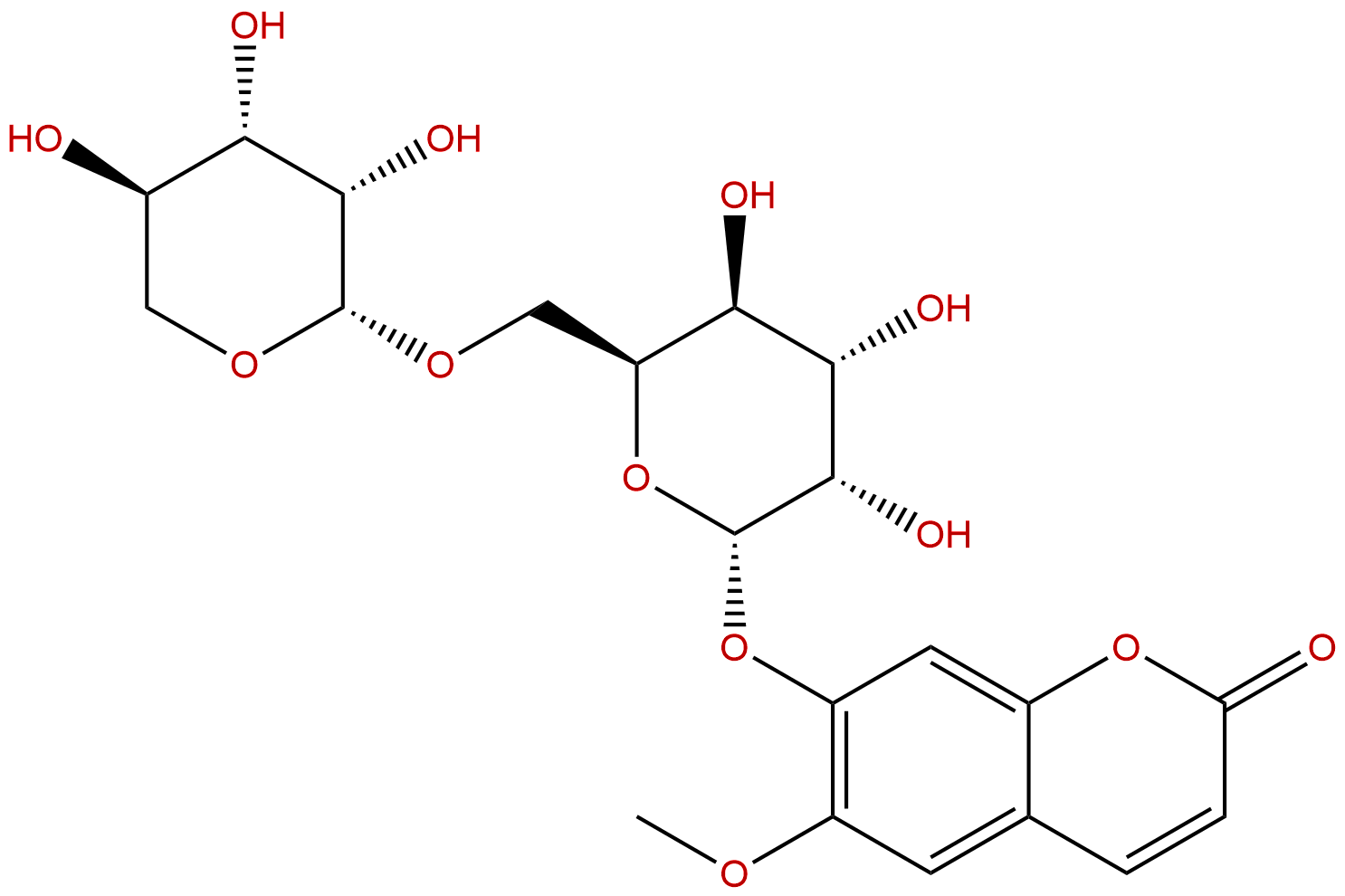


Product name: Fabiatrin
Synonym name:
Catalogue No.: BP3143
Cas No.: 18309-73-4
Formula: C21H26O13
Mol Weight: 486.426
Botanical Source:
Physical Description:
Type of Compound:
Purity: 95%~99%
Analysis Method: HPLC-DAD or/and HPLC-ELSD
Identification Method: Mass, NMR
Packing: Brown vial or HDPE plastic bottle
The product could be supplied from milligrams to grams. Inquire for bulk scale.
We provide solution to improve the water-solubility of compounds, thereby facilitating the variety of activity tests and clinic uses.
For Reference Standard and R&D, Not for Human Use Directly.
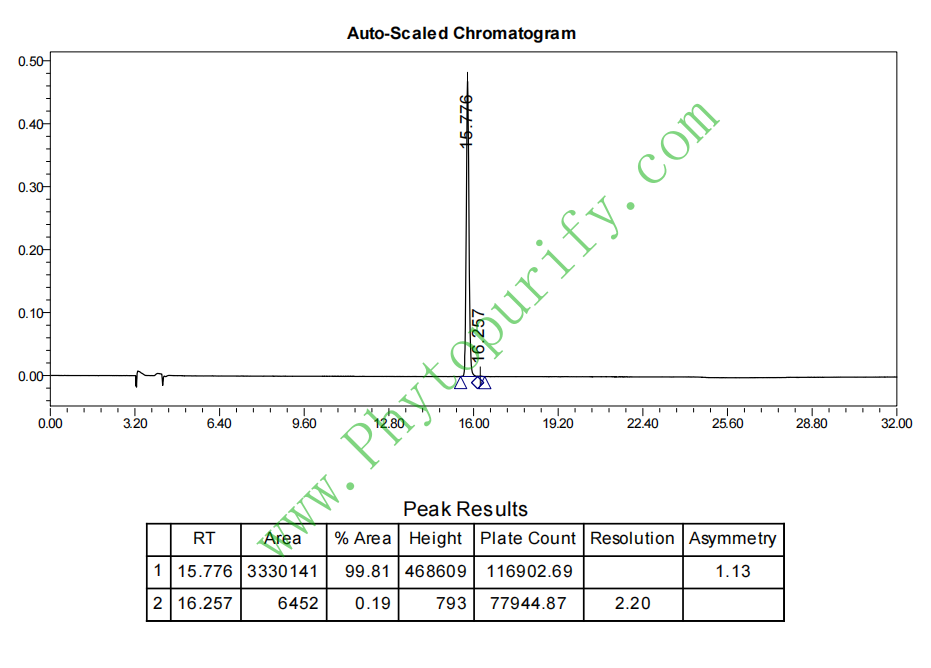
HPLC of Fabiatrin
Storage conditions:Short-term storage at 2~8℃, long-term storage at -20 ~ -80℃
197.7400
-.7705
-.7708
12.5079
.6084
.4358
Low
46.9859
4.3991
Yes
No
No
No
Yes
No
0.9
Yes
No
Yes
Yes
Malaria, as a species of malaria parasite(Plasmodium)The global tropical infectious diseases caused by parasites and transmitted by mosquito vectors are still a major public health challenge worldwide. Although artemisinin based combination therapies (ACTs) have greatly reduced the incidence rate and mortality of malaria in the past decades, the emergence and spread of resistance of malaria parasites to existing antimalarial drugs (including artemisinin and its derivatives) has become one of the most serious threats in malaria prevention and control. Therefore, searching for and developing antimalarial lead compounds with novel structures and unique mechanisms of action from natural products is a strategic approach to address drug resistance issues and ensure future antimalarial drug reserves.
Fabiarin (CAS number: 18309-73-4) is a potential candidate molecule in this exploration process. As a traditional medicinal plant, horse urine foam(Przewalskia tangutica)The natural product obtained from the separation of Fusarium oxysporum has attracted the attention of researchers in natural product chemistry and pharmacology due to its unique chemical structure and preliminary anti malarial activity. As a plant of the Solanaceae family, Ma Niao Pao has a certain history of application in folk medicine, which provides traditional knowledge clues for the study of the biological activity of Ligustrum lucidum glycosides. In recent years, with the deepening of modern pharmacological research techniques, the anti malarial potential of Ligusticide and its potential involvement in multiple malaria parasite targets have gradually been revealed, making it a compound worthy of in-depth systematic review. This article aims to comprehensively review the chemical properties, plant sources, pharmacological activities, mechanisms of action, drug properties, and development prospects of Ligusticide as a lead compound for antimalarial drugs, in order to provide reference for research in related fields.
Ligusticide is a natural product with a complex structure. Its molecular formula is C ₂₁ H ₂₆ O ₁₂, and its molecular weight is 486.4260. From a structural classification perspective, it belongs to a class of glycosidic compounds, typically composed of a non sugar aglycone moiety connected to one or more sugar groups through glycosidic bonds. Its specific structural features are manifested as a multi hydroxyl, possibly aromatic or complex cyclic glycoside, connected by sugar units (such as glucose, xylose, etc.), which endows it with strong polarity and hydrophilicity.
Its physical and chemical properties are closely related to its chemical structure. The calculated LogP value of the lipid water partition coefficient is -0.7705, indicating that the compound has strong hydrophilicity and relatively weak lipid solubility. The topologically polar surface area (TPSA) is as high as 197.7400 Å ², which is mainly attributed to the presence of a large number of polar groups such as hydroxyl and ether bonds in the molecule, further confirming its high polarity characteristics. High polarity also directly affects its solubility, with a calculated water solubility of approximately 12.5079 mg/L, indicating that it has a certain solubility ability in water. This is a favorable factor for its development as a drug molecule formulation and in vivo absorption, but it may also affect its transmembrane permeability.
Based on its molecular weight (<500), suitable LogP value, and TPSA, Ligusticide meets the basic requirements of the Rule of Five, indicating its chemical structural basis for developing into an oral drug. However, its high polarity may pose a challenge to the penetration of biological membranes, such as intestinal epithelial cell membranes, red blood cell membranes, and even the membrane structure of malaria parasites, which may need to be addressed in subsequent drug chemistry optimization.
The main plant source of Ligustrum lucidum glycoside is horse urine foam(Przewalskia tangutica Maxim.), This is a perennial herbaceous plant belonging to the Solanaceae family, mainly distributed in the Qinghai Tibet Plateau and surrounding high-altitude areas of China. In the traditional Tibetan medicine system, the roots, seeds, or whole plant of horse urine foam are considered to have analgesic, antispasmodic, anti-inflammatory, and other effects, and are sometimes used to treat febrile diseases, which indirectly implies that it may contain active ingredients against pathogenic microorganisms.
The extraction and separation of paeoniflorin from horse urine foam usually follows the conventional process of natural product chemistry. Firstly, collect appropriate parts of the plant (such as whole grass or roots), dry them, and crush them. Initial extraction is often carried out using solvent extraction methods, commonly using methanol, ethanol, or ethanol water mixed solvents for cold soaking or heating reflux extraction to maximize the extraction of polar glycoside components. After vacuum concentration, the crude extract obtained is subjected to systematic segmented extraction using solvents such as petroleum ether, ethyl acetate, n-butanol, etc. Due to the strong polarity of Ligusticide, it is mainly enriched in the n-butanol extraction site or aqueous layer.
Further purification relies on various chromatographic techniques. Silica gel column chromatography is commonly used for preliminary separation, with different ratios of chloroform methanol or dichloromethane methanol gradient elution. Then, fine purification was carried out in combination with reversed-phase silica gel (such as C18) column chromatography, Sephadex LH-20 column chromatography and high performance liquid chromatography (HPLC), and finally the high-purity monomer compound of farragoside was obtained. Structural identification involves the comprehensive use of spectroscopic methods such as nuclear magnetic resonance (NMR, including ¹ H-NMR, ¹ ³ C-NMR, 2D-NMR), mass spectrometry (MS), infrared spectroscopy (IR), and ultraviolet spectroscopy (UV), and comparison with known literature data or standards for confirmation.
It is worth noting that the content of paeoniflorin in plants is usually low, and factors such as growth environment and harvest season can affect the accumulation of secondary metabolites. Therefore, exploring the use of plant tissue culture, synthetic biology, or total chemical synthesis pathways to obtain sufficient compounds is an important guarantee to support its in-depth pharmacological research and development.
The core pharmacological activity of Ligusticide is focused on its anti malarial effect. Multiple in vitro experimental studies have shown that Ligusticide has an effect on Plasmodium falciparum(Plasmodium falciparum)Both drug sensitive and partially resistant strains showed significant inhibitory activity. Its half maximal inhibitory concentration (IC ₅₀) value is usually at the micromolar (μ M) or even sub micromolar level, which is comparable to the activity of some classic antimalarial drug lead compounds. In addition to its bactericidal effect on Plasmodium falciparum in the red phase (asexual blood phase), which is a critical stage for eliminating clinical symptoms, studies suggest that farnesol may also have certain effects on other life stages of Plasmodium, such as the liver phase (infrared phase) or gametophyte, but the relevant data is not sufficient and further verification is needed.
In addition to its direct antimalarial activity, some preliminary studies suggest that Ligusticide may have the potential to regulate host immune responses or alleviate malaria related pathological damage. For example, it may alleviate brain or lung complications caused by malaria by inhibiting excessive release of inflammatory factors. However, it is currently unclear whether these effects are extensions of their direct anti parasitic effects or independent pharmacological effects.
It should be pointed out that the existing pharmacological activity data mainly comes from in vitro cell experiments. Although its experimental results are encouraging, there are currently few publicly reported key information on the in vivo antimalarial efficacy, therapeutic index (window of efficacy and toxicity), and synergistic effect with other antimalarial drugs of Ligusticide in complete animal models such as mouse malaria models. This is a data gap that must be filled when evaluating its development prospects.
The study of the anti malarial mechanism of Ligusticide is still in the exploratory stage, but based on its chemical structural characteristics and preliminary pharmacological research, multiple malaria parasite targets that it may act on have been speculated or preliminarily validated. This indicates that it may have multi-target properties, which can help overcome or delay the development of resistance to single target drugs.
Multidrug resistance associated protein:PFCRT(Plasmodium falciparum Chloroquine Resistance Transporter and PFMDR1(P. falciparum Multidrug Resistance Protein 1 is a key transporter protein that mediates resistance to various antimalarial drugs such as chloroquine. Ligustilide may act as a substrate or regulator of these proteins, affecting their function and reversing or avoiding drug resistance mediated by these proteins, or directly interfering with the pH homeostasis and drug accumulation of parasitic digestive vesicles.
Folic acid metabolism pathway:PFDHFR(P. falciparum Dihydrofolate Reductase is a target of antimalarial drugs such as sulfadoxine pyrimethamine, which participates in the nucleotide synthesis of parasites. Ligustilide may inhibit the activity of this enzyme and interfere with the DNA replication of malaria parasites.
Artemisinin resistance related targets:PFK13 The mutation of Kelch13 protein is the main molecular marker of artemisinin resistance. The action of Ligusticide may be independent of PFK13 or exert its effect by affecting downstream pathways such as protein post-translational modifications and endoplasmic reticulum stress response, which is of great significance for the treatment of artemisinin resistant malaria.
Ion pumps and metabolic enzymes:PFATP6(P. falciparum Ca ² ⁺ - ATPase is a calcium ion pump on the endoplasmic reticulum of parasites and has been proposed as one of the targets of artemisinin. Ligustilide may interfere with its function and affect intracellular calcium homeostasis.PFCYTBC The cytochrome bc ₁ complex is a key component of the mitochondrial electron transport chain and a target of atorvastatin. Farglory glycosides may block energy metabolism by inhibiting this complex.
Protein kinases and autophagy related proteins:PFPK Specific protein kinases are involved in regulating various life processes of malaria parasites.PfATG8 It is a key protein in the autophagy process of malaria parasites, playing a role in hunger stress and organelle retrieval. Interference with these targets may affect the proliferation, differentiation, or survival of parasites.
Cytochrome system:PFCYT、PFCYTb(possibly referring to cytochrome c or b, etc.) is an important component of the mitochondrial respiratory chain. Inhibiting these proteins can lead to oxidative phosphorylation disorders and accumulation of reactive oxygen species (ROS), thereby killing parasites.
In summary, Ligusticide may exert strong anti malarial effects by simultaneously or selectively acting on multiple key physiological systems and targets of Plasmodium, including drug resistance regulation, basic metabolism, ion balance, signal transduction, and stress response. This multi-target mode of action is an important theoretical basis for its potential to combat drug-resistant malaria parasites. However, the direct interaction between most of the aforementioned targets and Ligusticide (such as enzyme inhibition experiments and co crystallization structure analysis) still requires conclusive experimental evidence to support.
Based on calculations and preliminary experimental data, a preliminary evaluation of the pharmacological properties of Ligusticide can be conducted.
Absorption, distribution, metabolism, excretion (ADME) characteristics:
* absorb Its high water solubility and moderate LogP value are beneficial for dissolution in the gastrointestinal tract, but higher TPSA may limit its passive diffusion across intestinal epithelial cell membranes. It is not clear whether it is a substrate for transport proteins (such as P-glycoprotein), which can affect its oral bioavailability. Predict it Low blood-brain barrier (BBB) penetration This may not be beneficial for treating cerebral malaria, but it also reduces the potential risk of side effects in the central nervous system.
* distribution High polarity may result in a smaller apparent distribution volume, mainly distributed in plasma and extracellular fluid.
* Metabolism As a glycoside compound, Ligusticide is likely to be hydrolyzed by gut microbiota and glycosidases in the liver in vivo, releasing aglycones. The physicochemical properties and activities of aglycones may be completely different from prototype drugs, and the identification, activity, and toxicity of their metabolites are the focus of pharmacokinetic research.
* excretion The prototype drug and its metabolites may be mainly excreted through the kidneys and urine.
Preliminary Safety Assessment:
* HERG inhibition Prediction data display“No”This suggests that it has a lower risk of causing prolonged QT interval in the heart and leading to tip twisting ventricular tachycardia, which is an important cardiac safety advantage.
* Genotoxicity:Ames test The result is 0.9 (usually negative if it is close to or less than 1.0), indicating that it does not exhibit significant mutagenicity towards the tested strain without the addition of a metabolic activation system. However, a complete genetic toxicity test combination is required to draw a conclusion.
* Other toxicities There is still a lack of systematic preclinical safety data on acute toxicity, subchronic toxicity, reproductive toxicity, and other factors.
Pharmacokinetics (PK)At present, there is almost no publicly available systematic pharmacokinetic studies on Ligusticide in animals, such as plasma concentration time curves, half-life, clearance rates, absolute bioavailability, etc. This is the core research work that must be completed before advancing its development. Understanding its internal dynamic processes is crucial for determining the dosing regimen and comprehending the efficacy concentration relationship.
In summary, Ligusticide has certain pharmacological properties in its chemical structure and shows a positive signal in preliminary safety prediction (low hERG risk, Ames negative). However, its poor membrane permeability (low BBB penetration) and potential metabolic instability (easily hydrolyzed glycosidic bonds) are its main shortcomings in drug development. Future pharmaceutical chemistry optimization may focus on modifying the sugar moiety (such as preparing prodrugs) and structurally modifying aglycones to improve their metabolic stability, membrane permeability, and oral bioavailability.
As a natural source of antimalarial lead compound, the clinical application prospects of Ligusticide depend on the resolution of a series of key issues and the successful implementation of subsequent research and development strategies.
potential advantages:
1. Novel Structure and Mechanism of Action Its unique chemical structure may bring different mechanisms of action than existing antimalarial drugs, especially its potential multi-target properties, providing new possibilities for overcoming existing drug resistance problems.
2. Natural product sources Originating from traditional medicinal plants, it has a certain traditional application background, reducing the chance of completely discovering from scratch.
3. Preliminary safety signal is good The calculation prediction shows that its risk of cardiac toxicity and genetic toxicity is low.
challenges faced:
1. Data gap in pharmacodynamics and pharmacokinetics It is urgent to validate its in vivo efficacy in a reliable animal malaria model and complete systematic pharmacokinetic studies to clarify its in vivo fate.
2. Optimization requirements for drug properties Reasonable chemical modifications are needed to its structure to improve its absorption, metabolic stability, and pharmacokinetic properties.
3. The mechanism of action needs to be further elucidated It is necessary to use chemical biology methods such as affinity fishing, photo crosslinking probes, CRISPR screening, etc. to confirm its direct molecular targets and analyze its specific molecular pathways of action.
4. Resource sustainability We need to address the issue of raw material sources, whether through sustainable plant cultivation, cell culture, or the development of economically viable fully synthetic or semi synthetic routes.
Future prospects and research and development directions:
1. Deepening preclinical research Prioritize the use of Ligusticide in rodent malaria models (such as P. berghei Evaluate the pharmacological effects in infected mice and conduct systematic toxicological studies.
2. Pharmaceutical Chemistry Optimization Using Ligusticide as the parent nucleus, structure-activity relationship (SAR) studies were conducted to synthesize a series of derivatives or analogues aimed at enhancing antimalarial activity, improving pharmacokinetic properties (such as oral bioavailability and half-life), and reducing potential toxicity.
3. Modernization of Mechanism Research Using omics technologies (proteomics, metabolomics) and gene editing techniques, comprehensively reveal its anti malaria network and resistance risk.
4. Exploration of combination therapy Evaluate the combined efficacy of Ligusticide or its optimized derivatives with existing first-line antimalarial drugs (such as artemisinin derivatives, piperaquine, etc.), and search for compound regimens with synergistic effects that can delay the occurrence of drug resistance.
5. Expand research horizons Given its glycosidic structure, it can be explored whether it has activity against other parasitic diseases (such as leishmaniasis, trypanosomiasis) or diseases related to oxidative stress and inflammation.
Ligusticide is a natural glycoside compound with significant antimalarial potential isolated from the traditional medicinal plant horse urine foam. Its unique chemical structure, potential mechanisms of action against multiple key targets of malaria parasites, and preliminarily predicted good safety characteristics make it of remarkable value in the field of antimalarial drug development, especially in addressing the increasingly severe challenge of drug resistance. However, there is still a long way to go from lead compounds to candidate drugs and even clinical drugs. The current focus of research is to fill the gaps in its in vivo pharmacological, pharmacokinetic, and toxicological data, and optimize its drug properties through rational drug design. Meanwhile, utilizing modern chemical biology techniques to elucidate its precise targets and molecular mechanisms will provide a solid scientific basis for subsequent development. Despite facing challenges, the research on Ligusticide and its derivatives undoubtedly adds new hope to the anti malaria drug library, and its development process will also provide useful references for discovering modern therapeutic drugs from traditional medicinal plants. Continuous and in-depth research is expected to enable this natural molecule derived from high-altitude plants to contribute to the future global fight against malaria.
