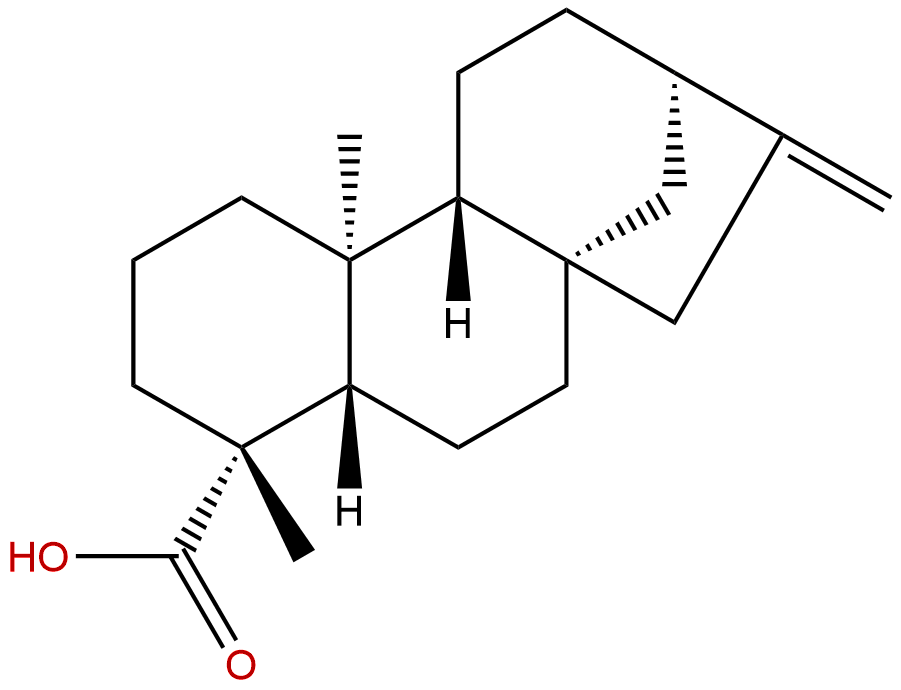


Product name: Kaurenoic acid
Synonym name:
Catalogue No.: BP3722
Cas No.: 6730-83-2
Formula: C20H30O2
Mol Weight: 302.458
Botanical Source:
Physical Description: Cryst.
Type of Compound: Diterpenoids
Purity: 95%~99%
Analysis Method: HPLC-DAD or/and HPLC-ELSD
Identification Method: Mass, NMR
Packing: Brown vial or HDPE plastic bottle
Storage: Store in a well closed container, protected from air and light. Put into refrigerate or freeze for long term storage.
Whenever possible, you should prepare and use solutions on the same day. However, if you need to make up stock solutions in advance, we recommend that you store the solution as aliquots in tightly sealed vials at -20℃. Generally, these will be useable for up to two weeks.
The product could be supplied from milligrams to grams, up to kilograms
Inquire for bulk scale.
Descriptions:
Kaurenoic acid, a diterpene isolated from Copaifera langsdorffii oleo-resin, has cytotoxic and embryotoxic effects.[1]
Kaurenoic acid has anti-inflammatory potential in acetic acid-induced colitis, decreases in MDA level, an indicator of lipoperoxidation in colon tissue. [2]
Kaurenoic acid exerts a uterine relaxant effect acting principally through calcium blockade and in part, by the opening of ATP-sensitive potassium channels.[3]
Kaurenoic acid exhibits an analgesic effect in a consistent manner and that its mechanisms involve the inhibition of cytokine production and activation of the NO-cyclic GMP-protein kinase G-ATP-sensitive potassium channel signaling pathway.[4]
Kaurenoic acid derivatives has antimicrobial activity of substituted on carbon-15 at concentrations greater than or equal to 250 micrograms/ml.[5]
Kaurenoic acid has inhibitory effects on LPS-induced inflammatory response in RAW264.7 macrophages.[6]
References:
[1] Costa-Lotufo L V, Cunha G M A, Farias P A M, et al. Toxicon, 2002, 40(8):1231-4.
[2] Paiva L A F, Gurgel L A, Silva R M, et al. Vascular Pharmacol, 2002, 39(6):303-7.
[3] De A C K M, Paiva L A F, Santos F A, et al. Phytother Res, 2003, 17(4):320-4.
[4] Mizokami S S, Arakawa N S, Ambrosio S R, et al. J Nat Prod, 2012, 75(5):896-904.
[5] Davino S C, Giesbrecht A M, Roque N F. Brazilian journal of medical and biological research 1989, 22(9):1127-9.
[6] Ran J C, Shin E M, Jung H A, et al. Phytomed Int J Phytother Phytopharmacol, 2011, 18(8-9):677-82.
[7] Fucina G, Block L C, Baccarin T, et al. Talanta, 2012, 101(22):530-6.
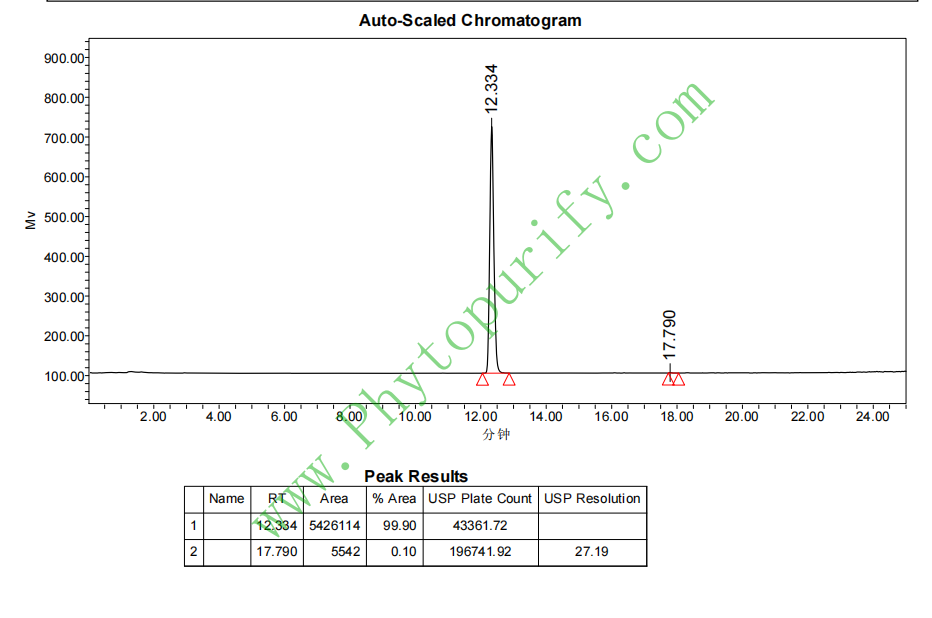
HPLC of Kaurenoic acid
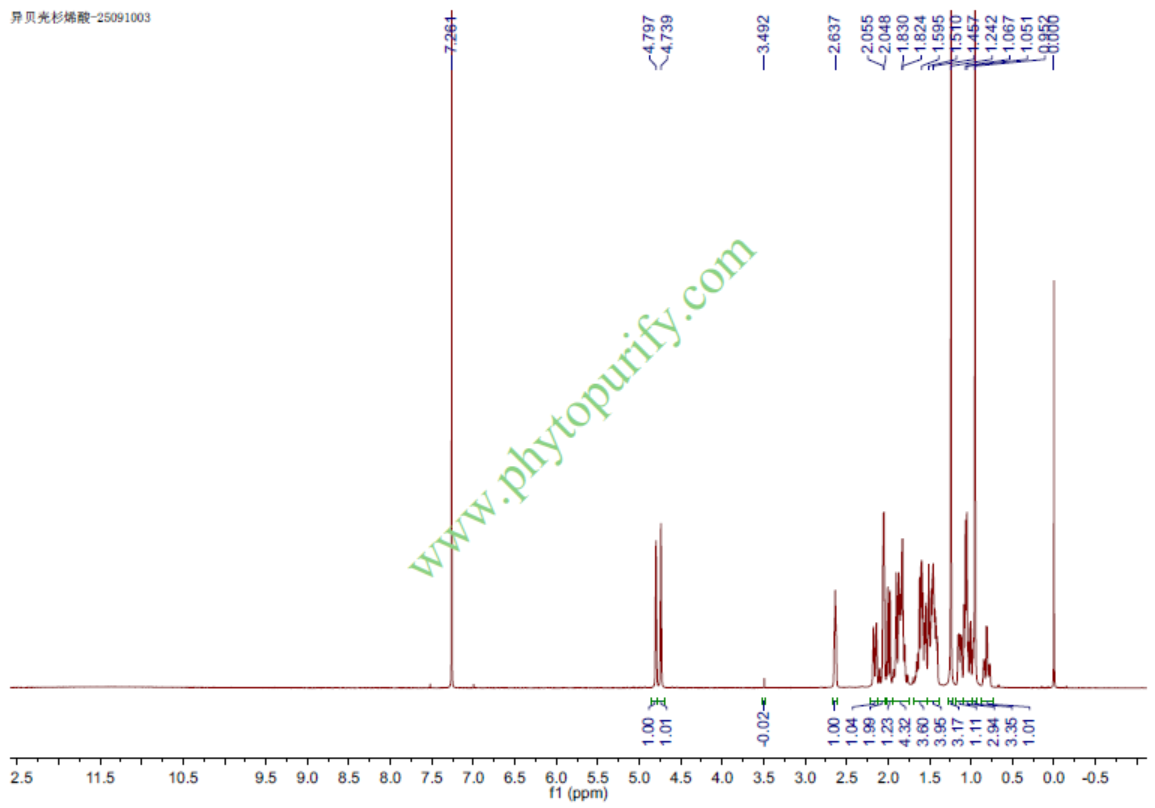
HNMR of Kaurenoic acid
Storage conditions:Short-term storage at 2~8℃, long-term storage at -20 ~ -80℃
37.3000
4.9224
3.2173
.0064
7.6053
17.3407
High
93.7169
5.4680
No
No
No
No
No
No
0.0
No
No
No
No
Kaurenoic acid, also known as ent-kaur-16-en-19-oic acid, is a natural product of tetracyclic diterpenes widely found in various plants. Its CAS number is 6730-83-2, molecular formula is C20H30O2, and molecular weight is 302.4580 g/mol. As a typical ent kaurane diterpene, its structural feature is the presence of a double bond between positions C-16 and C-17, and a carboxyl group at position C-19. This compound initially received attention as a precursor to plant hormones such as gibberellin, but recent studies have gradually revealed its broad biological activity, making it a hot molecule in the field of natural product drug research.
Existing research data indicates that isokaempferol has significant Anti inflammatory, analgesic, antibacterial, anticonvulsant, vascular relaxation Various pharmacological effects. Its mechanism of action involves inhibition of key inflammatory factors such as TNF - α, IL-6, IL-1 β, regulation of cyclooxygenase-2 (PTGS2/COX-2), and intervention in the NF - κ B signaling pathway. In addition, the study also found that it has Anti tumor, anti-HIV-1 And the activity of uterine smooth muscle relaxation shows the characteristic of multi-target action. Its plant sources are diverse, including traditional Chinese medicine Wujiapi(Originating from the slender pillar of Wujia) Eleutherococcus gracilistylus)The existence of it provides some modern scientific explanations for its traditional medicinal effects. This article will provide a systematic professional popularization of this potential natural compound from its chemical structure, plant origin, pharmacological mechanism, medicinal evaluation, and research prospects.
Isokaempferol belongs to the enantiomeric kaempferol type diterpenes, and its core skeleton is composed of four fused rings (three hexagonal rings and one pentagonal ring), with multiple chiral centers and complex stereochemistry. Its SMILES string (C=C1C [C @ @] 23CC [C @ H] 4)C@@(CCC [C @ @] 4 (C) C (=O) O) [C @ @ H] 2CC [C @ @ H] 1C3) accurately describes its relative configuration. The double bond between C-16 and C-17 is an important structural feature, while the carboxyl group at C-19 is a key functional group for its acidity and interaction with biological targets.
According to the analysis of drug parameters, its molecular weight (MW) is 302.46, which meets the requirement of "MW<500" in Lipinski's five rules. The calculated lipid water partition coefficient (LogP) is 4.92, indicating that the compound Strong lipophilicity The LogD (apparent partition coefficient at pH 7.4) is 3.22, indicating that it is still predominantly in a hydrophobic form at physiological pH. This characteristic and its extremely low Water solubility(0.0064 mg/mL) is consistent, which may be a limiting factor for its oral bioavailability. Its topological polar surface area (TPSA) is 37.3 Å ², much lower than the commonly believed membrane permeability limit (140 Å ²), indicating that it has good membrane permeability.
The experimental data supports this prediction: its Caco-2 cell permeability value is as high as 17.34 × 10 ⁻⁶ cm/s, indicating that it has Excellent intestinal absorption potential More notably, its blood-brain barrier (BBB) permeability is predicted to be "high", providing a structural basis for its application in central nervous system related diseases such as anticonvulsants and neuroinflammation. The plasma protein binding rate (PPB) is as high as 93.7%, indicating that most drugs in the bloodstream bind to proteins, which may affect their free drug concentration and efficacy, but may also prolong their half-life.
Isokaempferol is widely distributed in the plant kingdom, especially abundant in plants such as Asteraceae, Lamiaceae, and Araliaceae. The database clearly indicates that it originates from Wujiapi, namely the fine column five plus(Eleutherococcus gracilistylus, now commonly attributed Eleutherococcus Dry root bark of the genus. Wujiapi, as a traditional Chinese medicine with a long history, was first recorded in the "Shennong Bencao Jing" and is listed as a top-grade product. Its nature is pungent, bitter, and warm, and it belongs to the liver and kidney meridians. It has Dispelling wind and dampness, nourishing liver and kidney, strengthening muscles and bones Its efficacy is commonly used to treat rheumatism and pain, muscle and bone weakness, delayed movement in children, and physical weakness.
The bridge between traditional applications and modern pharmacological research is being built. The efficacy of Wujiapi in dispelling wind and dampness is often manifested as anti-inflammatory and analgesic effects, which is consistent with the proven properties of isokaempferol Strong anti-inflammatory and analgesic activity Highly correlated. Its "strengthening muscle and bone" effect may be related to improving local blood circulation and regulating immunity, and the vascular relaxation effect exhibited by kaempferol may play a certain role in it. In addition to Wujiapi, this compound is also present in other medicinal plants, such as the three lobed clover(Sphagneticola trilobata)Coffee beans and other plants are commonly used in their respective traditional medical systems for anti-inflammatory, detoxifying, or energizing purposes. Therefore, isokaempferol can be regarded as one of the common effective substance bases of these traditional medicinal plants, and its discovery provides key clues for interpreting the modern scientific connotation of traditional pharmacological effects.
Isokaempferol exhibits diverse pharmacological activities, with its core role concentrated in anti-inflammatory The field extends to include pain relief, antibacterial, anticonvulsant, cardiovascular regulation, and anti-tumor effects. Its mechanism of action is the result of the synergy of multiple targets and pathways, mainly by regulating the core signaling molecules of inflammation and immune response.
According to the provided target information, its anti-inflammatory mechanism can be systematically elucidated as follows:
1. Inhibit the production of pro-inflammatory cytokines Isokaempferol can significantly inhibit Tumor necrosis factor alpha (TNF)、Interleukin-6 (IL6) and Interleukin-1 β (IL1B) The generation. These three cytokines are key "alarm factors" and effector factors in the inflammatory cascade response. TNF - α is the initiating factor of inflammatory response; IL-1 β and IL-6 amplify inflammatory responses and participate in systemic reactions such as fever and acute phase protein synthesis. Inhibiting their production can curb excessive inflammatory reactions from the source.
2. Regulating inflammatory mediator synthase Isokaempferol acts on Prostaglandin endoperoxide synthase 2 (PTGS2, also known as COX-2)COX-2 is an inducible cyclooxygenase that is highly expressed under inflammatory stimuli and is responsible for catalyzing the synthesis of inflammatory and pain mediators such as prostaglandin E2 (PGE2). By inhibiting the activity or expression of COX-2, isokaempferol can reduce the accumulation of PGE2 in the inflammatory site, thereby directly producing Anti inflammatory and analgesic effects effect.
3. Intervene in the core inflammatory signaling pathway Its targets also include Nuclear factor kappa B1 (NFKB1)NF - κ B is a core transcription factor that regulates the transcription of numerous inflammatory factors (including TNF, IL6, IL1B mentioned above) and COX-2 genes. Isokaempferol is likely to inhibit the activity of I κ B kinase (IKK), prevent I κ B degradation, or interfere with NF - κ B nuclear translocation, thereby blocking the activation of the NF - κ B signaling pathway and inhibiting the expression of inflammation related genes at a more upstream and global level.
In addition to the direct targets mentioned above, the study also revealed other mechanisms:
- Analgesic mechanism In addition to reducing pain sensitizers by inhibiting COX-2, it may also involve activating the endogenous opioid system or regulating ion channels.
- Antibacterial activity It may be achieved by disrupting the integrity of microbial cell membranes or inhibiting their key enzyme systems.
- Relaxation effect of blood vessels and uterine smooth muscle The mechanism is clear, mainly through Blocking voltage dependent calcium channels Reduce extracellular calcium influx and partially pass through Open ATP sensitive potassium channel (KATP) Hyperpolarize the cell membrane and jointly cause smooth muscle relaxation. This explains the role of its aortic vessel relaxation and uterine relaxation.
- Anticonvulsant effect It may be related to its higher BBB penetration, exerting effects by regulating ion channels or neurotransmitter balance in the central nervous system.
- Antitumor and anti-HIV-1 activity As an "antineoplastic agent" and "anti-HIV-1 agent", its mechanism may involve inducing tumor cell apoptosis, inhibiting viral replication enzymes, or entering cells.
These multi-target mechanisms of action make isokaempferol potentially valuable in the treatment of complex inflammatory diseases such as rheumatoid arthritis, inflammatory bowel disease, pain syndrome, and possible cardiovascular and gynecological diseases.
Based on the provided detailed pharmacological parameters, we can conduct a preliminary evaluation of the potential of isokaempferol as a candidate drug.
Firstly, compare with the classic Lipinski's Five Rules(Rule of Five):
1. Molecular weight (MW): 302.46<500, Comply with。
2. LogP:4.92, Although slightly higher than the recommended value (<5), it is still within an acceptable range,Basic compliance。
3. Number of hydrogen bond donors (HBD): One carboxyl group provides one, with a total of 1<5, Comply with。
4. Number of hydrogen bond acceptors (HBA): approximately 2-3 carboxyl and double bonds,<10, Comply with。
Therefore, isokaempferol acid Basic compliance Lipinski's five rules indicate that it has good oral absorption potential.
Further analysis of other key parameters:
- Absorption and penetration The extremely high Caco-2 permeability (17.34) and effective prediction of human intestinal effective permeability (Peff: 7.61) strongly support it Good oral absorption High BBB penetration is its significant advantage, opening the door for the development of central nervous system drugs.
- distribution High plasma protein binding rate (93.7%) is a double-edged sword. On the one hand, it may prolong the half-life, and on the other hand, it may reduce the concentration of free drugs, which may require higher dosages to achieve effective therapeutic concentrations.
- Metabolism and toxicity Overall, the security data is good. The results of Ames test and chromosome aberration test are both negative, indicating No mutagenicity The lack of hERG potassium channel inhibitory activity reduces the potential risk of causing QT interval prolongation and apical torsion ventricular tachycardia in the heart. No effect on liver injury markers such as serum alanine aminotransferase (ALT) and aspartate aminotransferase (AST) suggests No obvious acute liver toxicity No skin or respiratory sensitization, and no phototoxicity.
- solubility: The main The defect lies in the extremely poor water solubility(0.0064 mg/mL)。 This may lead to low solubility, incomplete and irregular absorption of oral preparations, affecting their bioavailability.
Comprehensive Assessment Isokaempferol is an excellent Membrane permeability and central nervous system entry ability、Preliminary safety assessment is good But faced with Challenges of poor water solubility and high protein binding rate The lead compound. The direction for optimizing its medicinal properties is clear: through Structural modification(such as prodrug or salt form) or Formulation technology(Nanocrystals, liposomes, cyclodextrin inclusion) improve their solubility and dissolution rate; At the same time, conduct in-depth research on its pharmacokinetics and clarify the actual effective dose range under high protein binding rates.
At present, research on isokaempferol has progressed from early plant chemical isolation and identification to Pharmacological mechanism exploration and preliminary preclinical development stage A large number of in vitro and in vivo studies have confirmed its multiple activities such as anti-inflammatory, analgesic, antibacterial, and antispasmodic effects, and preliminarily elucidated its molecular mechanism of action on key targets such as TNF, COX-2, NF - κ B. It has shown good therapeutic effects on inflammatory diseases such as arthritis and colitis in animal models.
However, to push this natural lead compound into clinical applications, there are still a series of challenges and areas that require further research:
1. Systematic pharmacokinetic study At present, there is a lack of complete data on the entire process of its absorption, distribution, metabolism, and excretion (ADME) in the body, especially the metabolic pathways, main metabolites and their activities, half lives, etc.
2. In depth toxicological evaluation A more systematic preclinical safety assessment of long-term toxicity, reproductive toxicity, carcinogenicity, etc. is needed to comprehensively evaluate their risks.
3. Optimization for indications Based on its multi-target characteristics, it is necessary to clarify its main therapeutic advantage areas. It is developed as a new type Anti inflammatory and analgesic drugs(Especially for neuropathic pain or arthritis), or using its BBB high penetration for development Central nervous system diseases(such as epilepsy, neuroinflammation) therapeutic drugs, or developed into Gynecological antispasmodics Decisions need to be made based on more in-depth disease model research and target contribution analysis.
4. Optimization of compound structure Reasonable structural modifications are carried out around its active sites such as carboxyl and double bonds, with the aim of Improve water solubility, enhance target selectivity, reduce protein binding rate, or improve metabolic stability Thus obtaining derivatives with better drug properties.
5. Development of a new delivery system Using modern formulation technology to solve its solubility problem and improve its bioavailability.
Application Prospects Isokaempferol, as a natural diterpenoid with novel structure, wide activity, and promising safety, has important development value. It not only serves as a high-quality lead compound for discovering new anti-inflammatory drugs, but also provides a scientific basis for elucidating the pharmacological substance basis of traditional Chinese medicines such as Wujiapi. Future research is expected to transform it into innovative drugs with independent intellectual property rights through interdisciplinary collaboration, or as functional additives applied in fields such as health products and cosmetics. With the continuous deepening of research, this natural molecule derived from ancient plants is expected to shine with new brilliance in modern medicine.
