Introduction/Overview
Ovarian cancer is one of the common malignant tumors of the female reproductive system worldwide, with the highest mortality rate among gynecological cancers. Due to the insidious early symptoms, most patients are diagnosed in the late stage and are prone to developing resistance to traditional platinum and paclitaxel drugs, leading to treatment failure and poor prognosis. Therefore, the development of new, efficient, and low toxicity anti ovarian cancer drugs, especially candidate molecules that can overcome multidrug resistance (MDR), has become a hot and difficult topic in current research. Natural products have always been an important source of innovative drug discovery due to their structural diversity and rich biological activity. Osmundacetone (CAS number: 123694-03-1), as a natural biphenyl compound isolated from traditional medicinal ferns, has attracted much attention in recent years due to its multi-target and multi pathway pharmacological activities in the study of ovarian cancer. This article aims to provide a systematic review of the chemical properties, plant sources, pharmacological activity against ovarian cancer, mechanism of action, drug evaluation, and clinical application prospects of Ziziphylketone, in order to provide comprehensive scientific references for the in-depth research and development of this compound.
Chemical structure and physicochemical properties
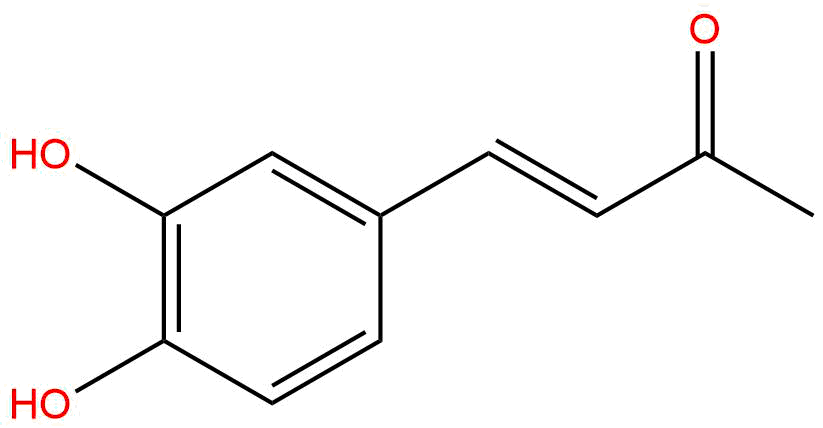
Ziqiketone is a naturally occurring biphenyl product with a unique structure, and its chemical name is 3,5-dihydroxy-2- (4-hydroxyphenyl) -2,3-dihydro-4H-pyran-4-one. Its core skeleton is composed of a dihydropyranone ring directly connected to a benzene ring through a C-C bond, belonging to the typical C6-C3-C6 biphenyl derivatives. This structure gives it good planarity and conjugated system, which is the structural basis for its interactions with various biomolecules such as enzymes, receptors, and DNA.
From the perspective of pharmacological parameters, the molecular weight of Ziziphylketone is 178.1870, which belongs to small molecule compounds. The calculated lipid water partition coefficient (LogP) is 1.7566, indicating that the compound has moderate lipophilicity, which is beneficial for transmembrane transport and cellular absorption. The topological polar surface area (TPSA) is 57.53 Å ², which is relatively low and usually indicates good membrane permeability. The water solubility value is 1.7306 (usually measured in mg/mL or log mol/L, indicating acceptable water solubility but not highly hydrophilic). Of particular note is that the predictive model shows that fisetin has a high blood-brain barrier (BBB) permeability, which provides the possibility for its potential therapeutic application in central nervous system related diseases. In the early safety evaluation indicators, the predicted risk of hERG inhibition is "no", indicating a low risk of causing QT interval prolongation in the heart; The Ames test result is 0.6 (usually a value less than 1.5 is considered negative), indicating a low risk of mutagenicity. These physicochemical and preliminary safety parameters together outline the profile of ketone as a promising lead compound for development.
Plant sources and extraction methods
Ziqiketone mainly comes from various plants in the Osmunda genus of the Osmunda family, such as Osmunda japonica Thunb. and Osmunda cinnamomea L. These plants have a long history of application in traditional East Asian medicine, often used to treat diseases such as colds, bleeding, and infections. Their medicinal parts are mostly rhizomes or tender leaves.
At present, the extraction of osmanthus ketone mainly adopts organic solvent extraction combined with modern chromatographic separation technology. The common process is as follows: first, the dried materials of Osmanthus plants (such as roots and stems) are crushed, and then extracted or refluxed using polar organic solvents such as methanol, ethanol, or acetone. Combine the extraction solutions and concentrate under reduced pressure to obtain the crude extract. Subsequently, liquid-liquid partitioning was performed using solvents such as ethyl acetate and water to enrich the target components. Further purification usually depends on column chromatography technology, such as silica gel column chromatography, gel column chromatography (Sephadex LH-20), and gradient elution with solvent systems of different polarity (such as petroleum ether ethyl acetate, chloroform methanol). High performance liquid chromatography (HPLC), especially preparative HPLC, is a key step in obtaining high-purity cinnamyl ketone monomers. In recent years, some green extraction techniques such as ultrasound assisted extraction and microwave-assisted extraction have also been attempted to improve extraction efficiency. However, the content of resveratrol in plants is usually low, and its large-scale acquisition remains one of the bottlenecks restricting its further research and development. In the future, alternative pathways such as plant tissue culture, chemical synthesis, or biosynthesis may need to be explored.
Pharmacological activity research
The most notable pharmacological activity of Ziziphylketone is focused on its anti-tumor properties, especially in the treatment of ovarian cancer. A large number of in vitro studies have shown that fisetin exhibits significant proliferation inhibitory activity on various human ovarian cancer cell lines, such as SKOV3, A2780, cisplatin resistant strain A2780/CP70, etc. Its IC50 value is usually at the micromolar level. Its anti-tumor effect is not only reflected in inhibiting cell proliferation, but also in inducing cell cycle arrest and promoting cell apoptosis. Research has shown that resveratrol can block ovarian cancer cells in the G0/G1 or S phase, thereby preventing them from entering mitosis. More importantly, resveratrol can effectively induce apoptosis in ovarian cancer cells, characterized by typical features such as morphological changes, phosphatidylserine eversion, activation of Caspase family proteins, and DNA fragmentation.
In addition to its direct cytotoxic effects, Ziziphone has shown unique potential in reversing multidrug resistance (MDR) in ovarian cancer. MDR is the main cause of chemotherapy failure, often associated with overexpression of ATP binding cassette (ABC) transporter family members such as P-glycoprotein (P-gp, encoded by ABCB1 gene). Research has shown that resveratrol can downregulate the expression of ABCB1 or functionally inhibit the pumping activity of P-gp, thereby increasing the accumulation of chemotherapy drugs (such as doxorubicin and paclitaxel) in cells and restoring the sensitivity of drug-resistant cells to chemotherapy drugs.
In addition, resveratrol also exhibits other related biological activities, including antioxidant (by activating the Nrf2/ARE pathway), anti-inflammatory, and certain tyrosinase (TYR) inhibitory activity. These multiple pharmacological effects together constitute the comprehensive basis of the anti ovarian cancer effect of Ziziphylvanillone.
Mechanism of action and molecular targets
The anti ovarian cancer effect of Ziqiketone involves a complex molecular network and multiple key targets, and its multi-target nature is its advantage in overcoming drug resistance and enhancing therapeutic efficacy. According to existing research, its mechanism of action mainly revolves around the following aspects:
-
Inducing apoptosis and regulating apoptosis related proteins Ziqiketone can significantly downregulate the expression of anti apoptotic protein BCL-2, and may also affect pro apoptotic proteins such as BAX, disrupt mitochondrial membrane potential, lead to the release of cytochrome C, and activate endogenous apoptotic pathways. This is one of the core mechanisms by which it induces cancer cell death.
-
Inhibition of STAT3 signaling pathway Signal transducer and activator of transcription factor 3 (STAT3) is continuously activated in ovarian cancer, promoting cell proliferation, survival, invasion, and immune escape. Ziqiketone has been shown to inhibit the phosphorylation (activated form) of STAT3, block its nuclear translocation, and inhibit the transcription of downstream target genes (such as Cyclin D1, BCL-2, Survivor), thereby exerting anti-tumor effects.
-
Interference with DNA Topoisomerase Function DNA topoisomerases (TOP1 and TOP2A) are key enzymes involved in DNA replication and transcription, and are also targets of various chemotherapy drugs. Research has shown that resveratrol may cause DNA damage accumulation, trigger DNA damage response (DDR), and ultimately lead to cell death by inhibiting the activity of TOP1 and TOP2A. Meanwhile, it may also have inhibitory effects on tyrosyl DNA phosphodiesterase 1 (TDP1), a key enzyme that repairs DNA damage caused by TOP1 inhibitors, which could enhance the efficacy of TOP1 inhibitor drugs or overcome related resistance.
-
Regulating the MAPK/ERK signaling pathway Mitogen activated protein kinase 1 (MAPK1, ERK2) is an important kinase that regulates cell growth and differentiation. Ziqiketone may participate in its regulation of cell cycle and proliferation by affecting the activity of the MAPK/ERK pathway.
-
Affects estrogen receptor signaling Estrogen receptor alpha (ESR1) plays a role in the occurrence and development of some ovarian cancers. Ziqiketone may act as a regulator of ESR1, interfering with estrogen signaling and thereby inhibiting the growth of estrogen dependent tumor cells.
-
Activate the antioxidant stress pathway By activating nuclear factor E2 related factor 2 (NFE2L2/Nrf2), resveratrol can upregulate the expression of a series of phase II detoxifying enzymes and antioxidant proteins. On the one hand, this may contribute to its chemopreventive potential, and on the other hand, moderate Nrf2 activation in tumor cells may also affect their tolerance to oxidative stress and chemotherapy sensitivity. Its dual role needs to be analyzed in specific contexts.
-
Inhibit drug efflux pump As mentioned earlier, by acting on ABCB1/P-gp, fisetin directly counteracts the MDR mechanism.
In summary, resveratrol forms a synergistic network by simultaneously acting on multiple key targets and pathways, including apoptosis regulation (BCL2, STAT3), DNA damage and repair (TOP1/2A, TDP1), signal transduction (MAPK1, STAT3, ESR1), oxidative stress response (NFE2L2), and drug transport (ABCB1), leading to growth inhibition and death of ovarian cancer cells.
Evaluation of drug properties and pharmacokinetics
Although Ziqiketone has shown good anti ovarian cancer activity in vitro and some in vivo models, whether it can ultimately become a drug depends on the systematic drug efficacy evaluation and pharmacokinetic (PK) characteristics.
Based on its physicochemical properties (moderate LogP, low TPSA), it is expected that fisetin has good oral absorption potential and cell permeability. Its high blood-brain barrier permeability prediction is a feature, but it is not necessary for the treatment of ovarian cancer, and potential risks of central nervous system side effects need to be considered. The preliminary in vitro safety warning (hERG negative, Ames negative) has given the green light for its safety assessment, but comprehensive preclinical toxicology studies are still needed.
At present, there is still a lack of pharmacokinetic research data on the Ziziphone system, which is a key shortcoming in its development chain. Limited reports suggest that fisetin may undergo extensive metabolism in animals, and the core PK parameters such as bioavailability, tissue distribution, and half-life of its prototype drug urgently need to be clarified. Its metabolic pathway may involve glucuronidation and sulfation of hydroxyl groups, as well as possible ring opening or reduction reactions of the pyranone ring. It is crucial to clarify the main metabolites, metabolic enzymes (such as CYP450 isoenzymes), and excretion pathways (kidney/gallbladder) for evaluating drug interactions and safety.
In addition, the water solubility and chemical stability of fisetin also need to be optimized at the formulation level, such as by preparing salts, prodrugs, or using nano delivery systems (such as liposomes, polymer nanoparticles) to improve its solubility, stability, and tumor targeting, while potentially reducing systemic toxicity.
Clinical application prospects and prospects
As a multi-target natural lead compound for anti ovarian cancer, the clinical application prospects of Ziziphone mainly include the following aspects:
-
As a novel candidate drug for ovarian cancer treatment With its multi-target effect and potential to reverse drug resistance, Ziqiketone has the potential to be developed as a monotherapy for the treatment of advanced or drug-resistant ovarian cancer, especially for patients resistant to platinum and paclitaxel.
-
As a chemotherapy sensitizer Given its clear ABCB1 inhibitory activity and potential inhibition of DNA repair enzyme TDP1, the combination of Ziziphone with existing chemotherapy drugs (such as topotecan, etoposide, paclitaxel, doxorubicin, etc.) may produce synergistic effects, reduce chemotherapy drug dosage, minimize toxic side effects, and overcome or delay the occurrence of drug resistance. This is one of its most attractive and potential directions for rapid clinical translation.
-
As a component of the combination therapy strategy The intervention of resveratrol on signaling pathways such as STAT3 and MAPK may have the potential for combination therapy with targeted therapeutic drugs or immune checkpoint inhibitors, providing new ideas for exploring comprehensive treatment plans for ovarian cancer.
However, there are still many challenges in pushing Ziqiketone into clinical practice: firstly, systematic preclinical studies need to be completed, including verifying its efficacy and safety in animal models that are closer to human diseases, such as patient derived xenograft PDX models; Secondly, it is necessary to comprehensively elucidate its pharmacokinetic and metabolic characteristics in vivo; Thirdly, it is necessary to solve the problem of large-scale acquisition, and the development of efficient chemical synthesis or semi synthesis routes is crucial; Fourthly, it is necessary to explore in depth the complex effects and potential off target toxicity that its multi-target effects may bring in vivo.
Future research should prioritize: ① conducting in-depth in vivo pharmacological and toxicological evaluations; ② Accurately identify its direct target and binding mode using chemical biology methods such as affinity fishing, molecular docking, and kinetic simulation; ③ Based on structure-activity relationship (SAR) research, carry out reasonable structural modification and optimization to improve its activity, selectivity, and drug properties; ④ Develop advanced delivery systems suitable for clinical drug administration.
Conclusion
Ziqiketone is a natural biphenyl compound found in traditional medicinal ferns with significant anti ovarian cancer activity. The study of its mechanism of action revealed a multi-target network involving inducing apoptosis, inhibiting STAT3, interfering with DNA topoisomerase, activating Nrf2 antioxidant pathway, and inhibiting P-gp drug efflux pump, providing a solid scientific basis for overcoming multidrug resistance in ovarian cancer. Although it has shown some favorable preliminary characteristics in terms of drug properties, its comprehensive pharmacokinetic properties, in vivo safety, and large-scale preparation remain key bottlenecks that need to be overcome in future translational research. With the continuous deepening of research, Ziqiketone is expected to be developed as a new monotherapy or chemotherapy sensitizer for ovarian cancer, bringing new hope for improving the prognosis of ovarian cancer patients, especially drug-resistant patients. The continuous exploration of fisetin not only involves the development of a specific compound, but also provides a valuable example for searching for multi-target anti-tumor drugs from natural products.