Introduction/Overview
In the long river of natural product chemistry and drug discovery, triterpenoids have always occupied a central position due to their structural diversity and extensive biological activity. They are not only an important component of plant secondary metabolites, but also a valuable source for developing new therapeutic drugs, especially anti-tumor drugs. Among them, triterpenoid molecules with novel skeletons or significant activities isolated from traditional medicinal plants are a hot research topic. 12 β - acetoxycoccinic acid (CAS: 125247-74-7) is a remarkable natural triterpenoid acid. Since its discovery, this compound has received continuous attention from the pharmacological community due to its significant anti-tumor potential demonstrated in vitro and in vivo models. Its unique chemical structure, especially the acetoxy substitution at the C-12 position, is considered one of the key pharmacophores for its biological activity. Research has shown that 12 β - acetoxy ursolic acid does not exert a single cytotoxic effect, but can intervene in malignant biological behaviors such as tumor cell proliferation, survival, invasion, and metastasis through multiple targets and pathways, involving the regulation of apoptosis related proteins, signal transduction pathways, cell cycle, and tumor microenvironment at multiple levels. This article aims to systematically review the chemical properties, plant sources, pharmacological activities, mechanisms of action, pharmacological evaluation, and clinical translation prospects of 12 β - acetoxy ursolic acid, in order to provide comprehensive scientific references for the in-depth research of this compound and the development of future anti-tumor drugs.
Chemical structure and physicochemical properties
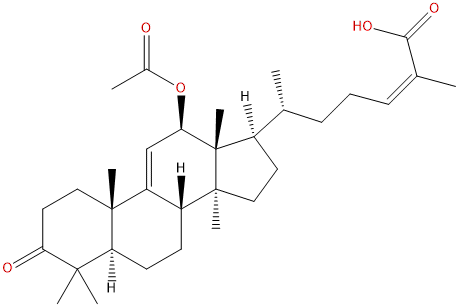
12 β - acetoxy rhamnoic acid is a pentacyclic triterpenoid compound with a molecular formula of C32H48O5 and a molecular weight of 512.7310. Its core skeleton is the Oleanane type triterpenoid, which is one of the most widely distributed triterpenoid types in nature. The structural feature of this compound is that its C-3 position is usually a hydroxyl group (which may form a glycoside), the C-17 position is a carboxyl group, and the most distinctive feature is that there is an acetoxy (- OCOCH3) substituent attached to the C-12 position. This acetylation modification significantly changes the polarity, spatial conformation, and mode of interaction with biomolecules of the molecule, which is a key structural marker that distinguishes it from other similar triterpenoid acids such as ursolic acid and oleanolic acid, and is closely related to its enhanced biological activity.
From the analysis of physical and chemical properties, this compound exhibits typical hydrophobic triterpenoid acid characteristics. The calculated lipid water partition coefficient (LogP) is 6.0019, indicating its high lipophilicity, which facilitates its penetration into the phospholipid bilayer of cells, but may also lead to poor water solubility. Its topological polar surface area (TPSA) is 80.6700 Å ², which is relatively moderate and reflects the contribution of polar groups (carboxyl, acetoxy, etc.) present in the molecule to the overall polarity. The predicted water solubility value is extremely low (0.0047 mg/mL), which poses the primary challenge for its formulation development. In the early warning indicators of drug safety, this compound is predicted to have no significant risk of hERG potassium channel inhibition (hERG inhibition: No), indicating a low potential risk of causing QT interval prolongation in the heart. At the same time, its Ames test predicted a value of 0.0, indicating no mutagenicity tendency in preliminary computer evaluation, providing preliminary positive signals for its safety. In addition, its ability to penetrate the blood-brain barrier is predicted to be 'low', which means it may not be suitable for treating primary or metastatic tumors of the central nervous system, but it may also reduce potential neurotoxic side effects.
Plant sources and extraction methods
12 β - acetoxy black tiger acid is mainly derived from the Magnoliaceae genus of black tiger in the Magnoliaceae family(Kadsura)Plants. Black Tiger(Kadsura coccinea The roots and stems of Lem. A.C. Smith are its main natural sources. Black tiger, as a traditional Chinese medicine, is commonly used in folk medicine to treat rheumatism, epigastric pain, and traumatic injuries. Its modern pharmacological research has revealed various activities such as anti-inflammatory, antioxidant, and anti-tumor effects, which are closely related to its rich triterpenoid components.
The extraction and isolation of 12 β - acetoxy gallic acid from plant materials usually follow the conventional process of natural product chemistry. Firstly, organic solvents are used to extract the dried and crushed plant roots or stems. Common solvents include methanol, ethanol, or ethanol water mixed solvents with different ratios. Soxhlet extraction, reflux extraction, or ultrasound assisted extraction methods are used to maximize the extraction of triterpenoids with a wide range of polarities. After obtaining the crude extract, the solvent was recovered by vacuum concentration.
Subsequently, the crude extract was subjected to preliminary fractionation using liquid-liquid extraction method. Concentrates are often suspended in water and extracted sequentially with organic solvents such as petroleum ether, ethyl acetate, and n-butanol. 12 β - acetoxy black tiger acid is usually enriched in the ethyl acetate extraction site due to its carboxyl and acetoxy groups, moderate polarity.
Further purification relies on various chromatographic techniques. Silica gel column chromatography is commonly used as a preliminary separation method, using different ratios of petroleum ether ethyl acetate or chloroform methanol gradient elution to separate complex mixtures into multiple fractions. Combine the fractions containing the target compound by monitoring with thin layer chromatography (TLC) or high-performance liquid chromatography (HPLC). Subsequently, it is usually necessary to use reverse silica gel column chromatography (such as C18 packing, methanol water or acetonitrile water as mobile phase), dextran gel column chromatography (such as Sephadex LH-20) or preparative high-performance liquid chromatography (Prep HPLC) for repeated purification until a high-purity 12 β - acetoxyblack tiger acid monomer compound is obtained. Structural identification involves the comprehensive use of techniques such as nuclear magnetic resonance (NMR, including 1H NMR, 13C NMR, 2D NMR such as HSQC, HMBC, COSY, etc.), mass spectrometry (MS), infrared spectroscopy (IR), and X-ray single crystal diffraction.
Pharmacological activity research
Numerous in vitro and in vivo pharmacological studies have confirmed that the core pharmacological activity of 12 β - acetoxy ursolic acid is anti-tumor, exhibiting broad-spectrum and significant inhibitory activity against various human tumor cell lines.
In vitro anti-tumor activity: The compound has proliferation inhibitory activity on breast cancer (such as MCF-7, MDA-MB-231), liver cancer (HepG2, SMMC-7721), lung cancer (A549), colon cancer (HCT-116, SW480), prostate cancer (PC-3, LNCaP), ovarian cancer (SK-OV-3) and many other cancer cells, and its half inhibitory concentration (IC50 value) is mostly in the micro molar (μ M) level, and some sensitive cell lines can reach the sub micro molar level. Its function is not limited to inhibiting cell proliferation, but can also effectively induce tumor cell apoptosis, manifested as typical apoptotic features such as cell morphological shrinkage, chromatin condensation, DNA fragmentation, and phosphatidylserine eversion. In addition, the study also found that the compound can inhibit the migration and invasion ability of tumor cells, indicating its potential for anti metastasis. In some studies, it has also shown certain inhibitory effects on drug-resistant tumor cell lines.
In vivo anti-tumor activity In a nude mouse transplant tumor model, administration of 12 β - acetoxy ursolic acid (usually via intraperitoneal injection or gavage) can dose dependently inhibit tumor growth, and tumor weight and volume are significantly smaller than the model control group. Importantly, at the effective dose, the experimental animals did not show significant weight loss or signs of organ toxicity, indicating a relatively wide treatment window and low in vivo toxicity. These in vivo experimental data provide stronger support for its anti-tumor efficacy.
Other potential activities In addition to its direct anti-tumor effect, based on the traditional use of its plant origin and the activity of structurally similar compounds, it is speculated that 12 β - acetoxy ursolic acid may also have anti-inflammatory and antioxidant activities. These auxiliary activities may indirectly contribute to its anti-tumor effect by regulating the tumor microenvironment, but there are few specialized research reports on this topic and further exploration is needed.
Mechanism of action and molecular targets
The anti-tumor effect of 12 β - acetoxy ursolic acid is not achieved through a single pathway, but involves a complex multi-target and multi-path network. Existing research has revealed its interactions with multiple key tumor associated proteins and signaling pathways.
-
Inducing cell apoptosis (targeting BCL2 family and STAT3)One of the most prominent mechanisms of this compound is the activation of the endogenous mitochondrial apoptosis pathway. It can downregulate the expression of anti apoptotic proteins B cell lymphoma 2 (BCL2) and myeloid leukemia 1 (MCL1), while possibly upregulating the expression of pro apoptotic proteins such as BAX, leading to a decrease in mitochondrial membrane potential, release of cytochrome C, and activation of the Caspase cascade reaction, ultimately triggering cell apoptosis. In addition, it can also inhibit the phosphorylation and activation of signal transduction and transcription activator 3 (STAT3). STAT3 is an important oncogenic transcription factor, whose sustained activation promotes cell survival, proliferation, and immune escape. Inhibiting the STAT3 pathway further weakens the cell's survival signal and synergistically promotes apoptosis with BCL2 family regulation.
-
Inhibiting tumor invasion and metastasis (targeting MMP2 and HIF1A)This compound can downregulate the expression and activity of matrix metalloproteinase-2 (MMP2). MMP2 is a key enzyme that degrades the extracellular matrix (ECM) and basement membrane, playing a central role in tumor invasion and metastasis. Meanwhile, it can also inhibit the stability and transcriptional activity of hypoxia inducible factor-1 alpha (HIF1A). HIF1A is the main regulatory factor for tumor adaptation to hypoxic microenvironment, which can upregulate the expression of various genes such as MMP2 and vascular endothelial growth factor (VEGF). By inhibiting HIF1A, the compound upstream inhibits pro invasion and angiogenesis programs.
-
Interference with DNA metabolism and cell cycle (targeting TOP1/TOP2A)Research has shown that 12 β - acetoxy rhamnoic acid can inhibit the activity of topoisomerase I (TOP1) and topoisomerase II α (TOP2A). Topoisomerase is a key enzyme that regulates the topological structure of DNA and is essential in DNA replication, transcription, and chromosome separation. Inhibition of these enzymes can lead to DNA damage, replication fork arrest, triggering DNA damage response, resulting in cell cycle arrest (usually in G2/M phase) and inducing apoptosis.
-
Regulating signal transduction pathways (targeting MAPK1/ERK)This compound has a regulatory effect on the mitogen activated protein kinase 1 (MAPK1, ERK2) pathway. The ERK pathway typically responds to growth factor signals, promoting cell proliferation and survival. 12 β - acetoxy ursolic acid may inhibit the overactivation of this pathway, thereby suppressing the proliferation of tumor cells.
-
Affects hormone related pathways (targeting ESR1 and CYP19A1): For hormone dependent tumors such as breast cancer, this compound shows the potential of interaction with estrogen receptor α (ESR1), and may be used as an antagonist or regulator. In addition, it can also inhibit the activity of aromatase (CYP19A1), which is the rate limiting enzyme in estrogen biosynthesis. It interferes with estrogen signal pathway through dual effects, providing a mechanism basis for its treatment of estrogen receptor positive breast cancer.
In summary, 12 β - acetoxyursolic acid forms a synergistic anti-tumor network by simultaneously acting on apoptosis regulators (MCL1, BCL2, STAT3), invasion and metastasis related factors (MMP2, HIF1A), DNA metabolic enzymes (TOP1, TOP2A), growth signaling pathway (MAPK1), and hormone signaling axis (ESR1, CYP19A1), which helps overcome the problem of single target drug resistance.
Evaluation of drug properties and pharmacokinetics
Despite the excellent pharmacological activity of 12 β - acetoxy ursolic acid, there are significant challenges in its drug likeness, which is an obstacle that must be overcome for its conversion into clinical drugs.
Physical and chemical properties and absorption distribution As mentioned earlier, the compound's main defects are its extremely high LogP value (6.0019) and extremely low water solubility (0.0047 mg/mL). Low water solubility can lead to poor oral absorption, low bioavailability, and difficulty in making injection solutions suitable for intravenous administration. Its large molecular weight (>500) and moderate TPSA also pose certain limitations on its passage through intestinal mucosal cells. The predicted blood-brain barrier permeability is low, which limits its application in central nervous system tumors, but may reduce the risk of central neurotoxicity.
Metabolism, excretion, and toxicity Currently, there is a lack of pharmacokinetic studies on the 12 β - acetoxy ursolic acid system, including absorption, distribution, metabolism, and excretion (ADME), in public literature. As a triterpenoid compound, it is likely to undergo phase I metabolism (such as oxidation, reduction, and hydrolysis of cytochrome P450 enzymes) and phase II combined metabolism (such as glucuronidation and sulfation) in the liver. The acetoxy and carboxyl groups present in its structure are potential metabolic sites. Carboxyl groups may undergo glucuronic acid binding to form ester glycosides, increasing water solubility and promoting excretion. It is necessary to conduct experiments to clarify the main metabolic enzymes, metabolites and their activities, as well as key parameters such as half-life. In terms of early toxicity, computer prediction of no hERG inhibition and Ames mutagenicity risk is a positive signal, but comprehensive evaluation through systematic in vitro and in vivo toxicology experiments (such as acute toxicity, subchronic toxicity, genetic toxicity, etc.) is still needed.
Formulation strategy In order to overcome the bottleneck of poor water solubility, modern pharmaceutical formulation technology will play a key role. Possible strategies include: ① making prodrugs, such as esterifying carboxyl groups and hydrolyzing them into active forms in vivo to enhance oral absorption; ② Applying nano delivery systems, such as liposomes, polymer micelles, nanoemulsions, or solid lipid nanoparticles, to encapsulate or load them significantly improves solubility and bioavailability, and enables passive or active targeting of tumor tissues (EPR effect or ligand modification); ③ Form eutectic or solid dispersion.
Clinical application prospects and prospects
As a natural triterpenoid with multi-target anti-tumor activity, 12 β - acetoxy black tiger acid has broad clinical application prospects, but the road ahead is long and full of challenges.
Potential application directions:
1. Antitumor monotherapy or combination therapy Given its multi-target nature, it is expected to be developed as a novel broad-spectrum anti-tumor drug, particularly suitable for late stage tumors that develop resistance to single target drugs. A more realistic strategy may be to use it as an adjuvant drug in combination with existing chemotherapy drugs (such as topoisomerase inhibitors, taxanes) or targeted drugs to produce synergistic effects, reduce individual doses and toxic side effects, and overcome drug resistance.
2. Anti metastatic therapy Its inhibition of MMP2 and HIF1A activity suggests that it has unique value in inhibiting tumor invasion and metastasis, and may be developed for the prevention or treatment of tumor metastasis.
3. Hormone dependent tumor treatment: Its potential effects on ESR1 and CYP19A1 make it a candidate compound for the treatment of estrogen receptor positive breast cancer, which can be combined with existing endocrine therapy drugs or used in drug resistant patients.
Future research focus and challenges:
1. In depth mechanism research It is necessary to more accurately elucidate its direct interaction patterns (binding sites, affinity) with various targets (such as MCL1, STAT3), and use systems biology methods (such as proteomics, transcriptomics) to comprehensively reveal the changes in its intracellular signaling network.
2. Optimization of drug properties of the system This is the current core task. It is necessary to improve its water solubility and pharmacokinetic properties through rational drug chemical modification (structural optimization) while retaining or enhancing its activity. For example, exploring derivatives of carboxyl at C-17 or acetoxy at C-12.
3. Advanced delivery system development Vigorously develop nano formulations based on this compound, conduct comprehensive pre prescription research and in vitro and in vivo evaluations to improve their stability and targeting.
4. Comprehensive preclinical evaluation On the basis of optimizing compounds or formulations, complete pharmacological (more in vivo models), pharmacokinetic, and toxicological studies that comply with the guidelines for preclinical research of new drugs, and provide a complete data package for their application for clinical trials.
5. Explore other activities Exploring its potential anti-inflammatory and immune regulatory activities may open up its application in tumor immunotherapy or chronic inflammatory diseases.
Conclusion
12 β - acetoxy black tiger acid is a pentacyclic triterpenoid compound with significant anti-tumor activity isolated from the traditional medicinal plant black tiger. Its unique C-12 acetoxy structure is an important basis for its biological activity. Research has shown that this compound exhibits broad-spectrum anti-tumor potential through a multi-target mechanism, including inducing apoptosis (regulating MCL1, BCL2, STAT3), inhibiting invasion and metastasis (downregulating MMP2, HIF1A), interfering with DNA metabolism (inhibiting TOP1/TOP2A), and regulating growth and hormone signaling pathways (affecting MAPK1, ESR1, CYP19A1). However, its inherent physicochemical properties such as low water solubility and high lipophilicity constitute the main bottleneck for its conversion into clinical drugs. Future research should focus on improving its pharmacological properties through drug chemical modification and novel delivery system strategies, combined with in-depth mechanism exploration and systematic preclinical development, fully tapping into the value of this natural molecule as an anti-tumor candidate drug. The research process of 12 β - acetoxy ursolic acid once again confirms the eternal vitality of the strategy of searching for modern disease treatment lead compounds from the treasure trove of traditional medicinal plants.