Introduction/Overview
Natural products, as an important source of drug discovery and development, play an irreplaceable role in the history of human disease prevention and treatment. Triterpenoid saponins have always been a hot topic in natural product pharmacology research due to their structural diversity and wide range of biological activities. Holly plants are commonly used in traditional medicine for clearing heat, detoxifying, promoting blood circulation, and unblocking meridians, and their active substance basis has attracted much attention. Dongqing glycoside O, as an oleane type triterpenoid saponin isolated from the roots of Ilex mongolica, has gradually entered the field of researchers due to its potential pharmacological activities, especially anti-inflammatory effects, since its discovery. Although preliminary studies have shown that its inhibitory activity on xanthine oxidase is weak, its potential in regulating various inflammation related targets suggests that it may exert anti-inflammatory effects through more complex and diverse mechanisms. This article aims to provide a systematic review of the chemical structure, plant origin, pharmacological activity, mechanism of action, and medicinal properties of holly glycoside O, in order to provide comprehensive scientific references for the in-depth research and potential applications of this compound.
Chemical structure and physicochemical properties
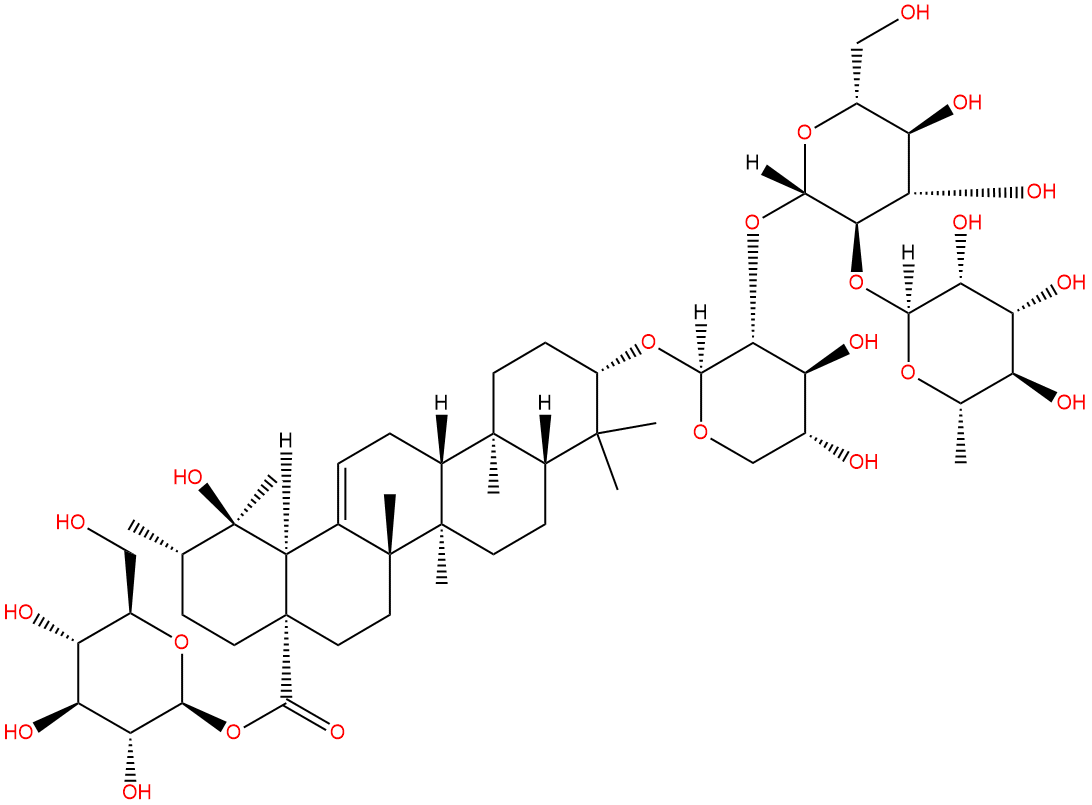
The chemical name of wintergreen glycoside O is 3-O - β - D-glucopyranosyl - (1 → 2) - α - L-arabinopyranosyl-28-O - α - L-rhamnopyranosyl - (1 → 2) - [β - D-xylopyranosyl - (1 → 4)] - β - D-glucopyranosyl oleanolic acid. Its CAS number is 136552-23-3, molecular formula is C53H86O23, and molecular weight is 1075.2490 Da. This compound belongs to the oleanane type pentacyclic triterpenoid saponin, and its glycoside is oleanolic acid. A disaccharide chain composed of glucose and arabinose is connected at the C-3 position, while a trisaccharide chain composed of glucose, xylose, and xylose is connected at the C-28 position. This highly glycosylated structure is an important basis for its water solubility and biological activity.
From the analysis of parameters related to drug properties, the calculated value of the lipid water partition coefficient (LogP) of wintergreen glycoside O is 1.7938, indicating that it has a certain degree of lipophilicity, but is not highly lipophilic. Its topological polar surface area (TPSA) is as high as 353.9000 Å ², which is mainly attributed to the abundant hydroxyl and glycosidic bonds in the molecule, resulting in strong polarity. The predicted value of its water solubility is 0.2239 mg/mL, belonging to the category of slight solubility, which is consistent with its high molecular weight and polyhydroxy structure. These physicochemical properties determine its pharmacokinetic characteristics: high TPSA and molecular weight indicate limited transmembrane passive diffusion ability, and oral bioavailability may be low; The prediction of blood-brain barrier permeability is "low", which means it is difficult to enter the central nervous system. This may be a favorable characteristic for treating peripheral inflammation or gout, but limits its application in central nervous system inflammation related diseases. In addition, preliminary toxicity predictions indicate that the hERG channel inhibition risk is "no", and the Ames test mutagenicity prediction value is 0.0, suggesting that it may have good cardiac safety and low genetic toxicity risk, providing favorable preliminary safety clues for subsequent development.
Plant sources and extraction methods
Ilex glycoside O mainly comes from the dried roots of the Ilex genus in the Ilex family. Mao Dongqing is a commonly used folk herb in southern China, which has the effects of clearing heat and detoxifying, promoting blood circulation and unblocking meridians, reducing swelling and pain. It is commonly used to treat cardiovascular and cerebrovascular diseases, vasculitis, and sore throat.
The extraction and separation of wintergreen glycoside O from plant materials usually follow the conventional process of natural product chemistry. Firstly, the dried holly roots are crushed and subjected to heating reflux or ultrasound assisted extraction using high concentration ethanol (such as 70% -95%) to fully extract polar and moderately polar components, including saponins. The extract is concentrated under reduced pressure to obtain a paste. Subsequently, by utilizing the high polarity and surface activity characteristics of saponin compounds, water suspension is often used, followed by liquid-liquid distribution extraction using organic solvents such as n-butanol or ethyl acetate to enrich saponin sites. The crude saponin obtained needs to be further separated and purified using various chromatographic techniques. Silica gel column chromatography is commonly used for preliminary separation using gradient elution systems such as chloroform methanol water. In view of the large polarity and many structural analogs of ileoside O, subsequent refining often requires the help of modern separation methods such as reverse phase chromatography (such as ODS C18 column, methanol water or acetonitrile water as mobile phase), dextran gel chromatography (such as Sephadex LH-20), and high-performance liquid chromatography. Through techniques such as thin-layer chromatography, high-performance liquid chromatography, and mass spectrometry for tracking, detection, and structural identification, high-purity monomers of holly glycoside O were ultimately obtained. Optimizing the extraction solvent, extraction method, and chromatographic conditions is the key to improving its yield and purity.
Pharmacological activity research
At present, the pharmacological activity research of holly glycoside O is still in its early stages, but its potential value in anti-inflammatory and other fields has been revealed.
-
anti-inflammatory activity This is the pharmacological activity of wintergreen glycoside O that has received the most attention. Although its direct inhibition of xanthine oxidase (XOD) activity is relatively weak (IC50=53.05 μ M), far weaker than clinical drugs such as allopurinol, this does not prevent it from exerting anti-inflammatory effects through other pathways. Research has shown that the anti-inflammatory effects of many triterpenoid saponins do not rely on single enzyme inhibition, but rather on regulating complex inflammatory signaling networks. The structure of holly glycoside O is similar to that of known active anti-inflammatory compounds such as holly saponins, suggesting that it may exhibit activity in various acute and chronic inflammation models by affecting the expression of inflammatory factors and inhibiting inflammatory signaling pathways. For example, it may have inhibitory effects on lipopolysaccharide induced macrophage inflammation models, carrageenan induced rat paw swelling models, etc. The specific effects need to be experimentally confirmed.
-
Other potential activities Based on the extensive activity of its parent nucleus structure, oleanolic acid, and similar saponins, wintergreen glycoside O may also have other potential pharmacological effects. For example, derivatives of oleanolic acid are often reported to have hepatoprotective, anti-tumor, antioxidant, and immunomodulatory activities. As a glycoside derivative, the introduction of sugar chains in holly glycoside O may alter its biological activity, target selectivity, and pharmacokinetic properties, thereby giving rise to new functional characteristics. For example, glycosylation may enhance its water solubility and interaction with certain membrane receptors, thereby exhibiting unique activity in regulating immune cell function. These potential active fields are important directions for future research.
Mechanism of action and molecular targets
The anti-inflammatory mechanism of wintergreen glycoside O is speculated to be closely related to its regulation of multiple inflammation related targets and signaling pathways. Based on research on similar compounds and bioinformatics analysis, its potential target network may include:
-
Nuclear factor kappa B signaling pathway NF - κ B is the core transcription factor of inflammatory response. Holly glycoside O may inhibit the activation of I κ B kinase or promote the stability of I κ B, preventing nuclear translocation of NF - κ B (such as p50/p65 dimer), thereby downregulating the gene expression of a series of pro-inflammatory mediators downstream, including TNF - α, IL-6, inducible nitric oxide synthase, and cyclooxygenase-2.
-
JAK-STAT signaling pathway STAT3 is a key protein that mediates cytokine signaling pathways such as IL-6. Holly glycoside O may inhibit the phosphorylation of JAK kinase, block the activation of STAT3 and dimerization nuclear translocation, thereby inhibiting gene transcription related to cell proliferation, survival, and inflammation, which is particularly important in chronic inflammation and inflammation related cancers.
-
Inflammatory bodies and cell pyroptosis Caspase-1 is a key effector protease for inflammasome activation, responsible for cleaving the precursors of IL-1 β and IL-18, and mediating cell apoptosis. Holly glycoside O may inhibit the activity of Caspase-1 by intervening in the assembly or activation of inflammasomes such as NLRP3, thereby reducing the release of mature IL-1 β and alleviating inflammatory responses.
-
Pain and sensory neural regulation Transient receptor potential vanillic acid subtype 1 and transient receptor potential anchor protein subtype 1 are non selective cation channels located on sensory neurons, involved in the regulation of inflammatory pain and neurogenic inflammation. Dongqing glycoside O may act as a regulator to affect the open state of these channels, thereby exerting analgesic and anti neuroinflammatory effects.
-
Prostaglandins and nitric oxide synthesis Cyclooxygenase-1 and cyclooxygenase-2 are key enzymes in prostaglandin synthesis, and NOS2 is responsible for producing high levels of inflammatory mediator nitric oxide. Dongqing glycoside O may reduce the expression or activity of these enzymes and decrease the production of inflammatory mediators such as prostaglandin E2 and nitric oxide through transcriptional inhibition or direct interaction.
In summary, wintergreen glycoside O may play a role as a "multi-target, multi pathway" regulator, exerting comprehensive anti-inflammatory effects through synergistic effects on the inflammatory network composed of the above targets, from multiple levels such as transcriptional regulation, signal transduction, mediator production, and sensory nerve sensitization. This multi-target mode of action may give it unique advantages in treating complex inflammatory diseases, but it also poses challenges for elucidating its mechanisms.
Evaluation of drug properties and pharmacokinetics
Based on its physicochemical properties and preliminary computer predictions, a preliminary evaluation of the pharmacological properties of wintergreen glycoside O is conducted
-
Absorption and oral bioavailability The molecular weight exceeds 1000 Da, TPSA is extremely high, and its water solubility is limited, which severely limits its ability to penetrate the gastrointestinal epithelial cell membrane through passive diffusion. As a highly glycosylated saponin, it may rely on transporters in the gut or undergo hydrolysis (deglycosylation) by gut microbiota to be absorbed in the form of aglycones, but overall oral bioavailability is expected to be very low. Formulation strategies such as making nanocrystals, liposomes, phospholipid complexes, or combining them with absorption enhancers may be necessary means to improve their oral absorption.
-
distribution The predicted blood-brain barrier permeability is low, indicating that it is mainly distributed in peripheral tissues and organs, which is a favorable targeting characteristic for the treatment of systemic or peripheral inflammation. The binding rate with plasma proteins, tissue distribution specificity and other parameters need to be experimentally studied.
-
Metabolism and excretion As a saponin compound, wintergreen glycoside O is likely to undergo extensive metabolism in the body. Firstly, the gut microbiota may hydrolyze it into secondary glycosides or aglycones such as oleanolic acid. After entering the bloodstream, the liver is its main metabolic site, and phase I reactions (such as hydroxylation) and phase II reactions (such as glucuronidation and sulfation) may occur. Its prototype and metabolites may be mainly excreted through bile, with some excreted through the kidneys. Clarifying its main metabolites, key metabolic enzymes, and excretion pathways is crucial for evaluating its drug efficacy persistence, potential drug interactions, and safety.
-
Preliminary safety The computer prediction suggests that there is no risk of hERG inhibition and Ames mutagenicity, which is a positive signal. However, saponin compounds often cause hemolysis or gastrointestinal irritation due to their surface activity, so a systematic preclinical safety evaluation is needed, including acute toxicity, long-term toxicity, reproductive toxicity, etc., to comprehensively evaluate their safety window.
Clinical application prospects and prospects
The clinical application prospects of wintergreen glycoside O mainly rely on the in-depth development of its anti-inflammatory activity, but it faces challenges and opportunities on its path.
Potential application directions:
1. Inflammatory diseases Given its multi-target anti-inflammatory properties, wintergreen glycoside O or its structurally optimized derivatives may be used to treat autoimmune or chronic inflammatory diseases such as rheumatoid arthritis, osteoarthritis, inflammatory bowel disease, and chronic nephritis. Its potential role in targeting peripheral nerve endings (such as TRPV1/TRPA1) also suggests its potential in treating inflammatory pain and neuropathic pain.
2. Gouty arthritis Although its direct inhibition of XOD activity is weak, its strong anti-inflammatory network regulation ability may have a relieving effect on inflammatory symptoms during acute gout attacks, or it can be used as an adjuvant therapy drug.
3. As a lead compound for structural optimization Its parent nucleus structure is clear and its activity is traceable, making it an ideal lead compound for medicinal chemical modification. By simplifying sugar chains, modifying glycosides, preparing prodrugs or synthesizing derivatives, it is expected to improve their drug properties (such as increasing oral bioavailability and enhancing targeting), and may discover new compounds with stronger activity and higher selectivity.
Challenges faced and future research directions:
1. Deep analysis of the mechanism of action The current mechanism research is mostly based on prediction and analogy, and it is urgent to use experimental techniques such as gene knockout, reporter genes, co precipitation, and surface plasmon resonance to directly verify the interaction between holly glycoside O and the above key targets in cell and animal models, and clarify the detailed regulatory mechanisms of its upstream and downstream signaling pathways.
2. Systematic pharmacodynamic evaluation It is necessary to systematically evaluate the efficacy of wintergreen glycoside O in various standardized in vivo inflammation models, such as LPS induced sepsis model, collagen induced arthritis model, DSS induced colitis model, etc., to determine its effective dosage range and dose-response relationship.
3. Comprehensive pharmacokinetic studies Conduct ADME research in animals to clarify key pharmacokinetic parameters such as absolute bioavailability, tissue distribution, major metabolic pathways, elimination half-life, etc., providing a basis for formulation design and dosing regimens.
4. Pharmaceutical research To address its poor water solubility and permeability, new drug delivery systems have been developed, such as injectable nano formulations, oral self microemulsions, or cyclodextrin inclusion complexes, to improve their delivery efficiency and therapeutic efficacy.
5. Security system evaluation Complete standardized preclinical toxicology studies to lay a safe foundation for their potential clinical translation.
Conclusion
As a triterpenoid saponin derived from the traditional herb Ilex mongolica, wintergreen glycoside O has become a noteworthy research object in the field of natural product pharmacology due to its unique chemical structure and preliminary revealed multi-target anti-inflammatory potential. Although it has weak activity in directly inhibiting xanthine oxidase and faces challenges in drug development due to low oral bioavailability, its potential ability to regulate key inflammatory signaling nodes such as NF - κ B, STAT3, and inflammasomes provides new ideas for its application in anti-inflammatory therapy. Future research should focus on confirming its molecular mechanism through experiments, optimizing its chemical structure to improve its properties, and using modern formulation technology to overcome its delivery challenges. With the continuous deepening of research, wintergreen glycoside O is expected to become a valuable lead compound for developing new anti-inflammatory drugs, or provide key material basis for interpreting the modern scientific connotation of the traditional efficacy of wintergreen, thus building a bridge between traditional medical wisdom and modern drug development.