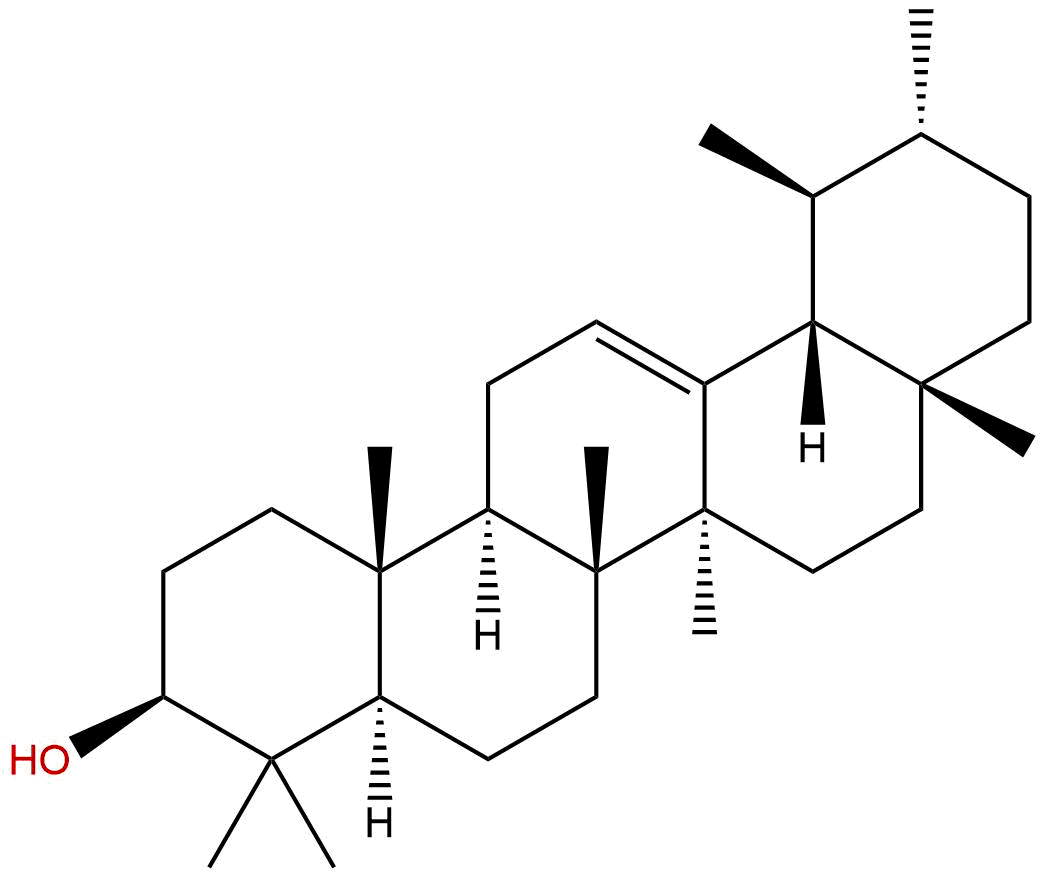


Product name: α-Amyrine
Synonym name: α-Amirin; α-Amyrenol
Catalogue No.: BP4974
Cas No.: 638-95-9
Formula: C30H50O
Mol Weight: 426.729
Botanical Source:
Type of Compound: Triterpenoids
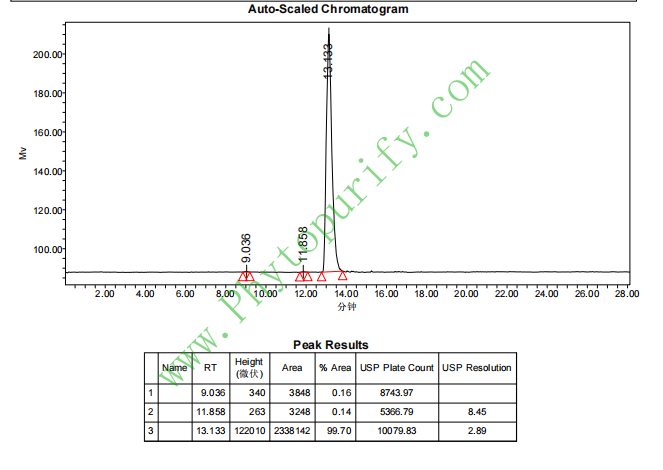
Purity: 95%~99%
Analysis Method: HPLC-DAD or/and HPLC-ELSD
Identification Method: Mass, NMR
Packing: Brown vial or HDPE plastic bottle
Storage: Store in a well closed container, protected from air and light. Put into refrigerate or freeze for long term storage.
Whenever possible, you should prepare and use solutions on the same day. However, if you need to make up stock solutions in advance, we recommend that you store the solution as aliquots in tightly sealed vials at -20℃. Generally, these will be useable for up to two weeks.
The product could be supplied from milligrams to grams
Inquire for bulk scale.
For Reference Standard and R&D, Not for Human Use Directly.
HPLC of α-Amyrine
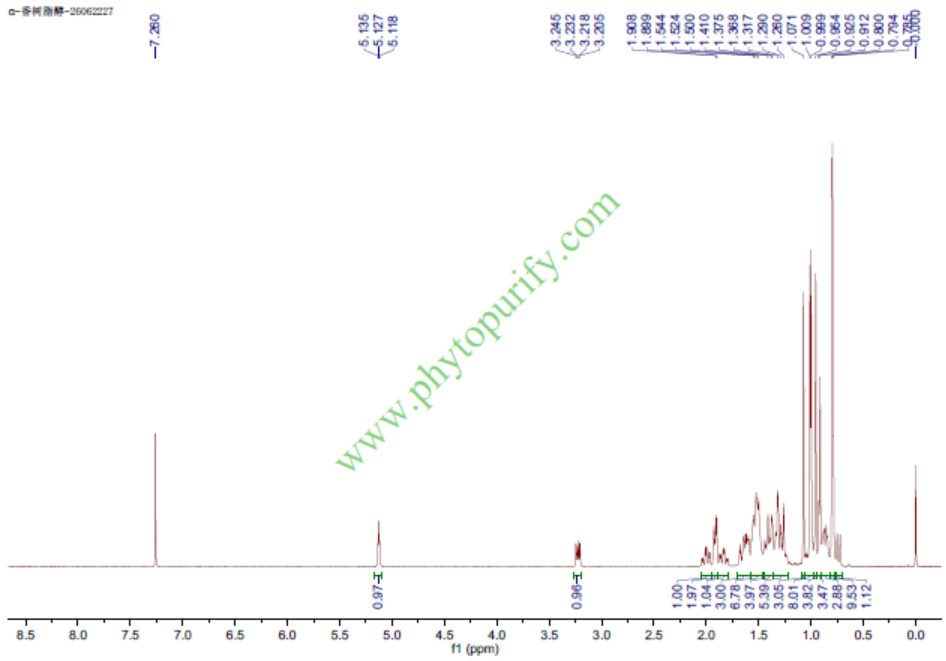
HNMR of α-Amyrine
Storage conditions:Short-term storage at 2~8℃, long-term storage at -20 ~ -80℃
20.2300
8.3601
8.3578
.0000
9.6874
11.3764
High
92.9038
4.6952
No
No
No
No
No
No
0.0
No
No
Yes
No
Natural products, as an important source of drug discovery, play an irreplaceable role in the long history of human fight against diseases. Among numerous natural compounds with biological activity, pentacyclic triterpenoids have attracted much attention due to their structural diversity and wide pharmacological activities. Alpha amyrin, as a typical pentacyclic triterpenoid compound of the Ussurine type, is widely present in various medicinal plants and resins, and has long been used in traditional medical systems to treat inflammation related diseases. With the deepening of modern pharmacological research, various biological activities of α - coumarin, such as anti-inflammatory, analgesic, antioxidant, hepatoprotective, and anti ulcer effects, have gradually been revealed, especially its multi-target mechanism in regulating inflammatory signaling pathways, making it one of the research hotspots in the field of natural product pharmacology.
The chemical structural characteristics of α - aromatic resin alcohols are the presence of double bonds at positions C12-C13 in their pentacyclic triterpenoid skeleton, as well as hydroxyl substitution in the β - configuration at position C3, which endows them with unique biological activity. In recent years, research on alpha aromatic resin alcohols has progressed from simple activity screening to molecular mechanism analysis, target identification, and drug efficacy evaluation. Especially its role in regulating key inflammatory signaling pathways such as IL-6/STAT3, NF - κ B, and NLRP3 inflammasomes provides an important lead compound basis for the development of novel anti-inflammatory drugs. However, as a candidate drug, α - coumarin also faces challenges such as poor water solubility and low bioavailability, which prompts researchers to explore solutions such as structural modification and novel drug delivery systems.
This review aims to systematically review the research progress on the chemical properties, plant sources, pharmacological activities, mechanisms of action, and pharmacological evaluation of alpha cinnamyl alcohol, and to provide prospects for its clinical application, in order to provide reference for the in-depth research and development of this natural product.
Alpha Myrin, also known as Urs-12-en-3 β - ol, belongs to the Ursane type of pentacyclic triterpenoids. Its molecular formula is C ∝₀ H ₅₀ O, and its molecular weight is 426.7290 g/mol. Structurally, the core skeleton of α - aromatic resin alcohol consists of five fused rings, including four hexagonal rings and one pentagonal ring. The A/B, B/C, and C/D rings are all trans fused, while the D/E ring is cis fused. This rigid skeleton structure endows the molecule with high hydrophobicity and stability.
The most significant structural features of α - coumarin include: firstly, the presence of a double bond between positions C12-C13, which is located in the C ring and is a characteristic structural unit of ursolic triterpenoids. It is also the key difference between α - coumarin and oleanane triterpenoids (such as β - coumarin). Secondly, the hydroxyl group at the C3 position exists in a β configuration, namely the 3 β - hydroxyl group, which is the main active site for the derivatization and biotransformation of α - aromatic resin alcohols. Thirdly, the entire molecule has multiple chiral centers, including C3, C5, C8, C9, C10, C14, C17, C18, C19, C20, and C21 positions, forming specific stereochemical configurations. The configuration of these chiral centers has a significant impact on the biological activity of the molecule.
The physicochemical properties of alpha aromatic resin alcohol fully reflect its characteristics as a typical fat soluble natural product. Its lipid water partition coefficient (LogP) is as high as 8.3601, indicating that the compound has strong lipophilicity, which is consistent with the hydrophobic properties of its pentacyclic triterpenoid skeleton. The extremely high LogP value means that the solubility of alpha cinnamyl alcohol in water is extremely low, with a water solubility parameter of 0.0000. This characteristic is both an advantage and a challenge in drug development: on the one hand, it is beneficial for it to pass through biological membranes and blood-brain barriers, but on the other hand, it brings difficulties to formulation development and in vivo delivery.
The topological polar surface area (TPSA) is 20.2300 Å ², which is a relatively low value mainly due to the unique hydroxyl group in the molecule. Low TPSA values are typically associated with good membrane permeability and oral absorption potential, but may also increase non-specific binding and toxicity risks. It is worth noting that the blood-brain barrier permeability of α - coumarin has been evaluated as "high", suggesting its possible central nervous system activity, but it may also bring central related side effects.
In terms of safety prediction, the hERG inhibition assessment result is' no ', indicating a low risk of alpha cinnamyl alcohol causing QT interval prolongation in the heart. The Ames test result is 0.0, indicating that it does not have significant mutagenicity. These preliminary safety assessment results provide favorable conditions for the further development of alpha aromatic resin alcohols.
Alpha aromatic resin alcohols are widely distributed in nature and mainly exist in the resin, bark, leaves, and fruits of higher plants. Traditionally, alpha aromatic resin alcohol is one of the important components of Boswellia plant resins, and together with beta aromatic resin alcohol, it forms the precursor of frankincense acid compounds. In addition, various plants such as Burseraceae, Anacardiaceae, Apocynaceae, Asteraceae, etc. contain abundant α - coumarins.
Specifically, the leaves and fruits of olives (Olea europaea), the bark and leaves of mangifera indica, aromatic plants such as rosemary (Rosmarinus officinalis), Salvia officinalis, and Perilla frutescens, as well as various traditional medicinal plants such as Centella asiatica and Tripterygium wilfordii, have all been reported to contain alpha cinnamyl alcohol. The content of α - coumarin varies greatly among different plant sources, usually with higher content in resin materials and relatively lower content in leaves and fruits.
The extraction of α - aromatic resin alcohol is usually carried out using organic solvent extraction method, and a suitable solvent system is selected based on its high lipophilicity. Traditional extraction methods include soaking or refluxing dried and crushed plant materials in non-polar or moderately polar solvents such as petroleum ether, n-hexane, chloroform, or ethyl acetate. In recent years, modern technologies such as ultrasound assisted extraction and microwave-assisted extraction have also been applied to improve extraction efficiency and shorten extraction time.
The crude extract after extraction needs to undergo further separation and purification steps. Column chromatography is the most commonly used separation method, often using silica gel column chromatography with gradient elution systems such as petroleum ether ethyl acetate or n-hexane acetone for separation. Due to the small difference in polarity between α - aromatic resin alcohol and β - aromatic resin alcohol, it is often difficult to achieve complete separation solely by silica gel column chromatography. Other techniques such as silver nitrate silica gel column chromatography (utilizing the difference in complexation between double bonds and silver ions), preparative high-performance liquid chromatography (HPLC), or high-speed countercurrent chromatography (HSCCC) are needed for fine separation.
In terms of structural identification, the confirmation of α - aromatic resin alcohols mainly relies on nuclear magnetic resonance spectroscopy (NMR) and mass spectrometry (MS) techniques. In the H-NMR spectrum, the chemical shift of the C12 alkene hydrogen typically exhibits a characteristic broad single peak at δ 5.10-5.20 ppm, while the C3 hydroxyl proton signal is at δ 3.20-3.30 ppm. In the C-NMR spectrum, the C12 and C13 ene carbon signals appear at δ 124-125 ppm and δ 139-140 ppm, respectively. In mass spectrometry, the molecular ion peak m/z 426 [M] ⁺ and characteristic fragment ions m/z 218 (RDA cleavage product) and m/z 203 provide important basis for structural confirmation.
Anti inflammatory activity is one of the most prominent pharmacological effects of α - coumarin, and it is also the most extensively studied direction. A large number of in vitro and in vivo experiments have confirmed that alpha cinnamyl alcohol exhibits significant inhibitory effects on various inflammatory models. At the cellular level, α - coumarin can inhibit lipopolysaccharide (LPS) - induced macrophage inflammatory response and reduce the production of pro-inflammatory cytokines such as tumor necrosis factor - α (TNF - α), interleukin-6 (IL-6), and interleukin-1 β (IL-1 β). In animal models, α - coumarin can effectively alleviate carrageenan induced paw swelling in rats, xylene induced ear swelling in mice, and cotton ball induced granuloma formation, demonstrating a dual inhibitory effect on acute and chronic inflammation.
It is worth noting that the anti-inflammatory activity of α - coumarin is comparable or superior to classical nonsteroidal anti-inflammatory drugs (NSAIDs), but with fewer gastrointestinal side effects. Research has shown that alpha cinnamyl alcohol has a certain inhibitory effect on both cyclooxygenase-1 (PTGS1/COX-1) and cyclooxygenase-2 (COX-2), but with a high selectivity index, which may be the structural basis for its anti-inflammatory activity and lower gastrointestinal toxicity.
The analgesic effect of α - coumarin is closely related to its anti-inflammatory activity. In classic pain models such as acetic acid writhing test, hot plate test, and formalin test, α - coumarin alcohol showed dose-dependent analgesic effects. Its analgesic mechanism involves multiple levels: on the one hand, it reduces inflammatory pain by inhibiting the production of inflammatory mediators; On the other hand, it may exert central and peripheral analgesic effects by activating opioid receptors or regulating transient receptor potential (TRP) channels. Especially the regulatory effect of α - coumarin on TRPV1 and TRPA1 channels provides new ideas for its application in the treatment of neuropathic pain.
The liver protective effect is another important pharmacological activity of alpha cinnamyl alcohol. In liver injury models induced by carbon tetrachloride (CCl ₄), acetaminophen (APAP), and alcohol, pretreatment or treatment with alpha cinnamyl alcohol can significantly reduce serum transaminase (ALT, AST) levels, alleviate liver cell necrosis and steatosis, and enhance liver antioxidant enzyme activity. Its hepatoprotective mechanism involves inhibiting oxidative stress, reducing inflammatory response, regulating apoptotic signaling pathways, and promoting liver cell regeneration.
The protective effect of α - coumarin on digestive system ulcers has also received attention. In ethanol, nonsteroidal anti-inflammatory drugs, and stress-induced gastric ulcer models, alpha cinnamyl alcohol can increase gastric mucosal blood flow, promote mucus secretion, enhance gastric mucosal barrier function, while inhibiting gastric acid secretion and pepsin activity. Its anti ulcer effect is related to mechanisms such as antioxidant, anti-inflammatory, and promotion of prostaglandin synthesis.
In addition to the main activities mentioned above, α - coumarin has been reported to have various biological activities such as antioxidant, antibacterial, antiviral, anti-tumor, hypoglycemic, and lipid-lowering. In terms of antioxidant properties, α - coumarin can scavenge free radicals and enhance the activity of antioxidant enzymes such as superoxide dismutase (SOD) and glutathione peroxidase (GPx). In terms of anti-tumor effects, alpha cinnamyl alcohol exhibits cytotoxic effects on various cancer cell lines, and can exert anticancer activity through mechanisms such as inducing apoptosis, cell cycle arrest, and inhibiting angiogenesis.
The anti-inflammatory effect of α - coumarin involves the regulation of multiple key inflammatory signaling pathways, exhibiting multi-target and multi pathway characteristics.
Nuclear factor kappa B (NF - κ B) is the core transcription factor of inflammatory response, regulating the expression of a large number of pro-inflammatory genes. Alpha cinnamyl alcohol can inhibit the activity of I κ B kinase β (IKBKB/IKK β), prevent the phosphorylation and degradation of I κ B α, and thus inhibit the nuclear translocation and transcriptional activity of NF - κ B. Specifically, alpha cinnamyl alcohol can reduce the transfer of p65 (RELA) subunits to the nucleus, decrease the binding ability of NF - κ B to DNA, and subsequently downregulate the expression of target genes such as TNF - α, IL-6, IL-1 β, inducible nitric oxide synthase (NOS2/iNOS), and cyclooxygenase-2 (PTGS2/COX-2).
Signal transducer and activator of transcription factor 3 (STAT3) plays an important role in inflammation and tumorigenesis. Alpha cinnamyl alcohol has been found to inhibit the phosphorylation activation of STAT3, interfere with its dimerization and nuclear translocation processes. By inhibiting the IL-6/STAT3 signaling axis, α - coumarin can reduce the expression of downstream pro-inflammatory and pro proliferative genes. It is worth noting that the inhibitory effect of α - coumarin on STAT3 may be closely related to its anti-inflammatory and anti-tumor activities.
NLRP3 inflammasome is an important component of the innate immune system, and its abnormal activation is associated with various inflammatory diseases. Alpha cinnamyl alcohol can inhibit the assembly and activation of NLRP3 inflammasomes, reduce the activation of caspase-1 (CASP1) and mature secretion of IL-1 β. This effect may be achieved by inhibiting upstream signals such as reactive oxygen species (ROS) production and potassium ion efflux.
Transient receptor potential (TRP) channels play a crucial role in sensory conduction and inflammatory response. Alpha cinnamyl alcohol has a regulatory effect on TRPV1 and TRPA1 channels, which is closely related to its analgesic and anti-inflammatory activities. Research has shown that alpha cinnamyl alcohol can activate TRPV1 channels, causing calcium ion influx and subsequently leading to channel desensitization, resulting in analgesic effects. Meanwhile, alpha cinnamyl alcohol can also regulate the activity of TRPA1 channel, affecting the transmission of inflammatory pain signals.
Alpha coumarin has inhibitory effects on key enzymes in the arachidonic acid metabolism pathway. It can inhibit the activity of cyclooxygenase-1 (PTGS1/COX-1) and cyclooxygenase-2 (PTGS2/COX-2), reducing the synthesis of prostaglandins. Compared with classical NSAIDs, α - coumarin has a higher selectivity for COX-2 than COX-1, which may be the structural basis for its strong anti-inflammatory activity and minimal gastrointestinal side effects. In addition, alpha cinnamyl alcohol can also inhibit the activity of 5-lipoxygenase (5-LOX), reduce the production of leukotrienes, and thus exert a dual anti-inflammatory effect.
Inducible nitric oxide synthase (NOS2/iNOS) is extensively induced to express under inflammatory conditions, producing excess nitric oxide (NO) and participating in inflammatory responses and tissue damage. Alpha cinnamyl alcohol can inhibit LPS or cytokine induced expression of NOS2 and reduce the production of NO. This effect is mainly achieved by inhibiting the activity of transcription factors such as NF - κ B and STAT3, thereby regulating the expression of NOS2 at the transcriptional level.
Based on Lipinski's "Five Rules" and other drug evaluation criteria, the molecular weight of α - coumarin is 426.73 Da (<500), the number of hydrogen bond donors is 1 (<5), and the number of hydrogen bond acceptors is 1 (<10), which meet the basic requirements of oral medication. However, its LogP value is as high as 8.36, far exceeding the upper limit of 5, indicating that its lipid solubility is too strong, which may lead to poor water solubility, incomplete oral absorption, and non-specific binding.
The TPSA of α - aromatic resin alcohol is only 20.23 Å ², far below the upper limit of 140 Å ², indicating its good membrane permeability. The blood-brain barrier permeability assessment is' high ', indicating that the compound may have central nervous system activity, but also increases the risk of central toxicity. In terms of safety, the hERG inhibition risk assessment was negative, and the Ames test result was negative. These preliminary data support the safety of its further development.
At present, there is relatively limited systematic research on the pharmacokinetics of alpha aromatic resin alcohols, but some key characteristics have been revealed in previous studies. Due to its extremely high lipid solubility, the oral bioavailability of α - coumarin may be low, which is related to its extremely poor solubility in aqueous media. Animal experiments have shown that after oral administration, the absorption of alpha cinnamyl alcohol is slow and incomplete, mainly distributed in liver, adipose tissue, and brain tissue.
In terms of metabolism, α - coumarin is mainly metabolized by the liver, and the hydroxyl group at the C3 position is the main metabolic site. It can undergo glucuronidation and sulfation binding reactions, forming water-soluble metabolites that are excreted through bile and urine. In addition, C12-C13 double bonds may also undergo oxidative metabolic reactions such as epoxidation. The metabolites of α - coumarin may retain some biological activity, but their specific pharmacological effects still need further research.
Researchers have explored various solutions to the problem of poor water solubility and low bioavailability of alpha aromatic resin alcohols. In terms of structural modification, esterification, etherification, or glycosylation modification of the C3 hydroxyl group can improve its water solubility and biological activity. For example, the succinate derivatives of alpha cinnamyl alcohol exhibit significantly improved water solubility while maintaining anti-inflammatory activity. In addition, the introduction of phosphate groups or amino acid residues can also improve its pharmacokinetic properties.
In terms of formulation technology, new drug delivery systems such as liposomes, nanoparticles, and cyclodextrin inclusion complexes have been used to improve the solubility and bioavailability of alpha cinnamyl alcohol. Phospholipid complex technology can significantly enhance the oral absorption of alpha cinnamyl alcohol, and its relative bioavailability can be increased several times. Solid dispersion technology can improve the dissolution rate and oral absorption of alpha aromatic resin alcohol by dispersing it in a water-soluble carrier.
Based on the significant anti-inflammatory activity and multi-target mechanism of action of α - coumarin, its application prospects in the treatment of inflammatory diseases are broad. Compared with traditional nonsteroidal anti-inflammatory drugs, α - coumarin has the advantages of low gastrointestinal toxicity and a wide range of targets, and is expected to be developed as a new drug for the treatment of chronic inflammatory diseases such as rheumatoid arthritis, osteoarthritis, and inflammatory bowel disease. Especially its multiple inhibitory effects on NF - κ B, STAT3, and NLRP3 inflammasomes give it unique advantages in the treatment of complex inflammatory diseases.
Alpha cinnamyl alcohol exerts analgesic effects by regulating TRPV1 and TRPA1 channels, which is different from existing analgesics and provides new ideas for the development of novel analgesics. Its dual analgesic effects in both central and peripheral areas, as well as its potential therapeutic effect on neuropathic pain, make it valuable for development in the field of chronic pain treatment. However, its high blood-brain barrier permeability also suggests the need to pay attention to central nervous system related side effects.
Liver disease is a global health issue and currently lacks effective treatment drugs. The hepatoprotective activity of alpha cinnamyl alcohol, especially its protective effect against chemical liver injury, alcoholic liver disease, and non-alcoholic fatty liver disease, makes it a candidate compound for developing hepatoprotective drugs. It protects liver cells through multiple mechanisms such as antioxidant, anti-inflammatory, and anti apoptotic effects, and has the advantage of comprehensive treatment.
Despite the various pharmacological activities and promising development prospects of alpha resin alcohols, there are still many challenges in their pharmacological properties. Firstly, the extremely low water solubility and oral bioavailability are the main bottlenecks restricting its clinical translation, which need to be improved through structural modification and formulation techniques. Secondly, high lipid solubility may lead to non-specific distribution and accumulation of drugs in the body, increasing the risk of toxic side effects. In addition, although the multi-target effect of alpha cinnamyl alcohol is beneficial for achieving comprehensive therapeutic effects, it may also bring about off target effects and insufficient selectivity.
Future research directions should include: in-depth analysis of the binding modes between alpha aromatic resin alcohols and various targets, providing a basis for structural optimization; Develop derivatives with higher selectivity and better pharmacokinetic properties; Explore combination therapy strategies to achieve synergistic effects and reduce low toxicity side effects; Conduct systematic toxicology and pharmacokinetic studies to lay the foundation for clinical trials.
As a widely present pentacyclic triterpenoid compound in nature, α - aromatic resin alcohol has become an important object of natural product pharmacology research due to its unique chemical structure and rich pharmacological activity. The research process of α - coumarin, from the active ingredients of traditional medicinal plants to the leading compounds in modern drug development, reflects the value of natural products in drug discovery. It exerts multiple pharmacological effects such as anti-inflammatory, analgesic, and hepatoprotective effects by regulating multiple targets and signaling pathways such as NF - κ B, STAT3, NLRP3 inflammasome, TRP channel, etc., demonstrating the advantages of multi-target therapy.
However, the clinical conversion of alpha cinnamic acid still faces challenges in drug formation due to poor water solubility and low bioavailability. In the future, through structural modification, formulation optimization, and in-depth mechanism research, it is expected to overcome these obstacles and develop this natural product into a novel drug for treating inflammatory diseases. With a deeper understanding of the mechanism of action of alpha aromatic resin alcohols and advances in chemical modification techniques, the clinical application prospects of this ancient natural product are worth looking forward to.
