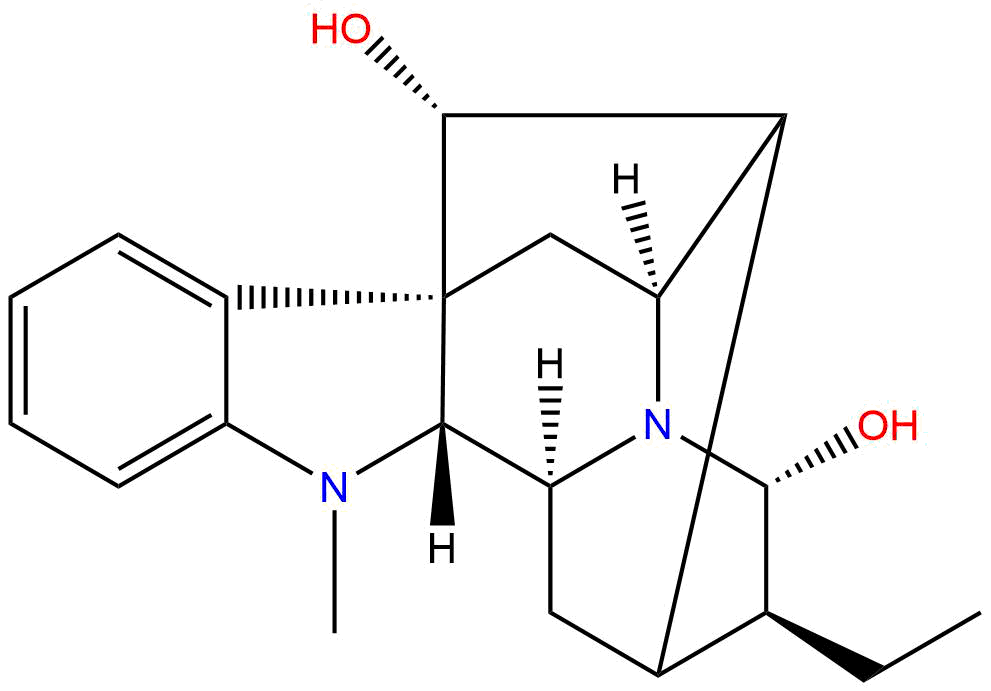


Product name: Ajmaline
Synonym name:
Catalogue No.: BP4189
Cas No.: 4360-12-7
Formula: C20H26N2O2
Mol Weight: 326.44
Botanical Source: Rauvolfia verticillata
Type of Compound: Alkaloids
Purity: 95%~99%
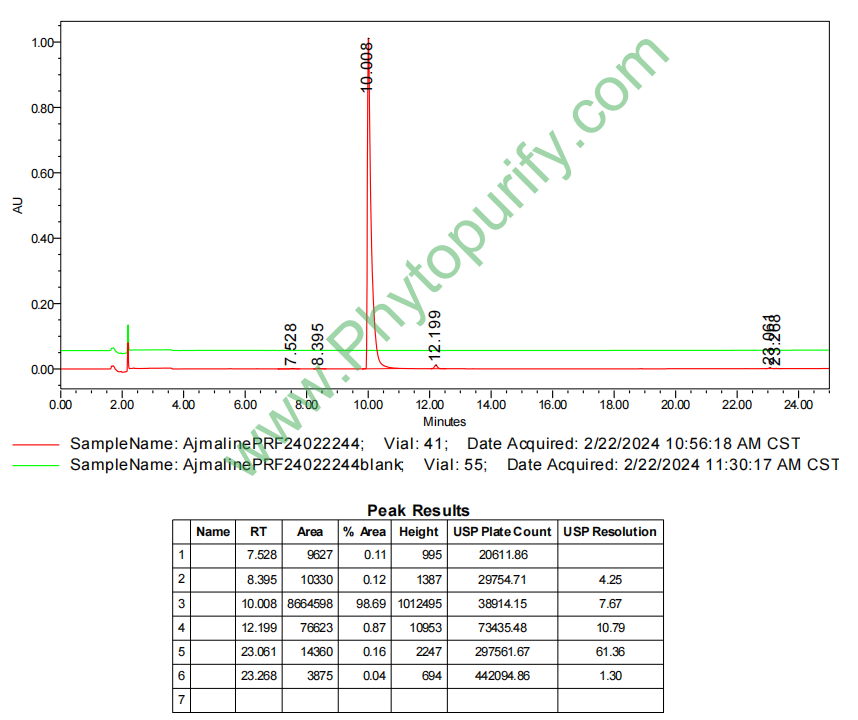
Analysis Method: HPLC-DAD or/and HPLC-ELSD
Identification Method: Mass, NMR
Packing: Brown vial or HDPE plastic bottle
Storage: Store in a well closed container, protected from air and light. Put into refrigerate or freeze for long term storage.
Whenever possible, you should prepare and use solutions on the same day. However, if you need to make up stock solutions in advance, we recommend that you store the solution as aliquots in tightly sealed vials at -20℃. Generally, these will be useable for up to two weeks.
The product could be supplied from milligrams to grams
Inquire for bulk scale.
For Reference Standard and R&D, Not for Human Use Directly.
HPLC of Ajmaline
Storage conditions:Short-term storage at 2~8℃, long-term storage at -20 ~ -80℃
46.9400
1.9324
1.3798
.2837
4.1606
15.5329
High
70.9179
6.3806
No
No
No
No
Yes
Yes
0.0
No
No
No
No
Arrhythmia, especially ventricular tachycardia (VT), is a common and life-threatening cardiovascular emergency in clinical practice. Its pathological and physiological mechanisms are complex, involving disturbances in the electrophysiological activity of myocardial cells. In the long history of exploring antiarrhythmic drugs, finding efficient and low toxicity active molecules from natural products has always been an important direction for drug development. Ajmaline, also known as Amarin, is a type of alkaloid found in the genus Ajmaline in the family Apocynaceae(Rauvolfia)Monoterpenoid indole alkaloids isolated from plants have attracted much attention due to their unique antiarrhythmic activity. Since its discovery in the mid-20th century, lovastatin has been widely used in clinical practice as a Class 1A antiarrhythmic drug for the treatment of various types of arrhythmias, particularly in the diagnosis of Brugada syndrome and emergency management of ventricular tachycardia.
The discovery of rhodopsin is closely related to the traditional medicinal history of the Rhododendron genus plants. Lofowood, especially Indian snake root wood(Rauvolfia serpentina)In traditional Indian medicine (Ayurveda), it has been used for thousands of years to treat hypertension, mental illness, and snake bites. In the 1950s, with the isolation of active ingredients such as Reserpine, scientists conducted systematic research on the chemical composition of this genus of plants and ultimately isolated lolubine. Unlike nifedipine, which mainly acts on the central nervous system and sympathetic nerve endings, lovastatin has been found to have significant cardiac electrophysiological effects by directly acting on ion channels on the myocardial cell membrane, thereby exerting anti arrhythmic effects. This discovery not only enriches the chemical structure types of antiarrhythmic drugs, but also provides a classic example for searching for ion channel modulators from natural products.
From a chemical structure perspective, lovastatin belongs to a complex polycyclic indole alkaloid, and its unique skeletal structure endows it with the ability to bind with high affinity to the sodium channel in the myocardium. As a Class 1A antiarrhythmic drug, lovastatin moderately blocks sodium channel influx, prolongs action potential duration (APD) and effective refractory period (ERP), thereby inhibiting the formation and conduction of abnormal impulses and restoring normal heart rhythm. However, its clinical application also faces challenges, such as potential risk of arrhythmia (especially when used in combination with other drugs) and significant differences in pharmacokinetics between individuals. In recent years, with the deepening understanding of the structure and function of ion channels, as well as the development of pharmacogenomics, the study of the mechanism of action of lovastatin has progressed from macroscopic electrophysiological effects to molecular level target recognition and binding mode analysis, providing important insights for its precise application and the design of new generation antiarrhythmic drugs.
This article aims to provide a comprehensive professional review of the chemical structure and physicochemical properties, plant sources and extraction methods, pharmacological activity and mechanism of action, drug efficacy evaluation and pharmacokinetic characteristics of lovastatin. Based on this, it also looks forward to its clinical application prospects and future research directions, in order to provide reference for scholars engaged in natural product chemistry, pharmacology, and cardiovascular disease research.
The chemical structure of rhodopsin is the basis of its pharmacological activity. Its chemical name is (17R, 21 β) - Ajgalan-17,21-diol, belonging to the Ajmaline type of monoterpenoid indole alkaloids. Its core skeleton is a highly condensed polycyclic system, consisting of an indole ring, a pyridine ring, and a rare nitrogen-containing bicyclic [3.2.1] octane structure. Specifically, its structural features include: an indole nucleus (formed by the fusion of a benzene ring and a pyrrole ring), connected to a pyridine ring (D ring) consisting of C5, C6, C7, C16, C17, C20, and N1, and a bridged ring system (E ring) consisting of C7, C16, C17, C20, and C21. The two key hydroxyl groups in the molecule are located at positions C17 and C21, respectively. The hydroxyl group at position C21 can form an intramolecular hydrogen bond with the nitrogen atom at position N1, which is considered crucial for its binding to sodium channels. The molecular formula of lovastatin is usually expressed as C ₂₀ H ₂₆ N ₂ O ₂, with a molecular weight of 326.44 g/mol and a CAS number of 4360-12-7.
In terms of physical and chemical properties, lovastatin exhibits typical alkaloid characteristics. Its LogP value is 1.9324, indicating that it has moderate lipid solubility, which allows it to be soluble in both organic solvents (such as chloroform, methanol, ethanol) and to some extent in water. The calculated value of its water solubility is 0.2837 mg/mL, which belongs to the category of slight solubility. This is related to the presence of polar hydroxyl and nitrogen atoms in its molecular structure, but the overall skeleton is still dominated by hydrophobic polycyclic structures. The Topological Polar Surface Area (TPSA) is 46.94 Å ², which is lower than the threshold of passive diffusion through the cell membrane (approximately 140 Å ²), indicating good membrane permeability. In fact, its blood-brain barrier (BBB) penetration has been evaluated as "high", which explains its potential to cause central nervous system side effects such as dizziness and ataxia in clinical practice. It is worth noting that although rosmarine itself is a sodium channel blocker, its inhibitory activity on hERG (human Ether - à - go Related Gene) potassium channels is shown as "no" in the standard predictive model, which is consistent with its relatively low risk of apical torsion transition ventricular tachycardia (TdP) in clinical applications, although it may still prolong the QT interval. In addition, the Ames test result was 0.0, indicating that it did not show significant mutagenicity in the standard bacterial recovery mutation test, providing a safety basis for its clinical use. These physicochemical properties collectively determine the absorption, distribution, metabolism, and excretion characteristics of lovastatin as an oral or injectable drug.
Loquat mainly comes from the Apocynaceae family and the genus Loquat(Rauvolfia)Plants. There are over 100 species of this genus of plants worldwide, widely distributed in tropical and subtropical regions, including the Indian snake root wood(Rauvolfia serpentina)The most famous is the traditional and main commercial source of lovastatin. In addition, there are many other species of plants in the genus Loropsis, such as Chinese Loropsis(Rauvolfia verticillata)Urging the Turf Wood(Rauvolfia vomitoria)It also contains the alkaloid, but the content varies depending on the species, place of origin, harvest season, and plant parts (roots, stems, leaves). Usually, the content of lovastatin is highest in plant roots, especially in the root bark. Except for the genus Rosa, a few other plants such as certain Vinca Trace amounts have also been found in plants of the genus, but the genus Lolium is its main natural source.
The traditional extraction method is mainly based on the acid-base properties of alkaloids. The classic process involves crushing the dried roots of Osmanthus fragrans, wetting them with an alkaline solution (such as lime water or ammonia water) to allow the alkaloids to exist in the form of free bases, and then extracting them by percolation or reflux using organic solvents (such as benzene, chloroform, ethanol). After concentrating the extract, extract it with an acidic aqueous solution (such as dilute sulfuric acid or hydrochloric acid) to salt the alkaloids and transfer them to the aqueous phase. The aqueous phase is then alkalized with alkaline solution, and the free alkaloids are back extracted with organic solvents. After concentration, the crude extract is separated and purified by column chromatography (such as silica gel column, alumina column) or preparative thin-layer chromatography using the difference in polarity or alkalinity between lovastatin and other alkaloids (such as reserpine, yohimbine, etc.). The commonly used elution systems are chloroform methanol or ethyl acetate methanol gradient systems. Due to the presence of two hydroxyl groups in the structure of lovastatin and its relatively high polarity, it is usually eluted later than berberine on a silica gel column. In addition, by utilizing its property of forming crystalline salts with certain acids such as picric acid and oxalic acid, purification can also be achieved through repeated recrystallization.
Modern extraction and separation techniques have greatly improved the extraction efficiency and purity of lovastatin. Supercritical Fluid Extraction (SFE) technology, especially using carbon dioxide as a solvent, is widely used for efficient extraction of alkaloids from the roots of Rosa rugosa due to its non-toxic, residue free, and low operating temperature advantages. High Speed Counter Current Chromatography (HSCCC), as a liquid-liquid distribution chromatography technique, does not require a solid stationary phase and avoids irreversible adsorption of the sample on the column. It is particularly suitable for the separation of alkaloid mixtures with similar polarity, such as lovastatin, and can achieve one-step preparation level purification. In addition, Molecular Imprinted Technology (MIT) has also been developed for selective recognition and enrichment of lovastatin from complex plant extracts. With the promotion of green chemistry concepts, researchers are also exploring the use of new green solvents such as ionic liquids and deep eutectic solvents to replace traditional organic solvents for extraction, in order to reduce environmental burden. Regardless of the method used, the quality control of the final product typically relies on high-performance liquid chromatography (HPLC) or liquid chromatography-mass spectrometry (LC-MS) techniques to ensure that the purity and content of rosmarine meet pharmaceutical standards.
The core pharmacological activity of Luofumu alkaloid is its anti arrhythmic effect, especially against ventricular arrhythmias. As a Class 1A antiarrhythmic drug in the Vaughan Williams classification, its characteristic action is to moderately block voltage-gated sodium channels (Nav1.5) on the myocardial cell membrane, while prolonging action potential duration (APD) and effective refractory period (ERP). This dual effect enables it to effectively inhibit the abnormal increase in cardiac cell autonomy and reentry excitation, thereby terminating or preventing ventricular tachycardia (VT) and ventricular fibrillation (VF). Clinical studies have confirmed that intravenous injection of lovastatin can rapidly terminate most types of ventricular tachycardia, especially idiopathic ventricular tachycardia and bundle branch reentry tachycardia. In addition, it has unique value in diagnosing Brugada syndrome. Brugada syndrome is a hereditary ion channel disease characterized by ST segment elevation in the right chest lead of the electrocardiogram, which can lead to sudden death. Intravenous injection of lovastatin can induce or exacerbate characteristic electrocardiographic changes in patients with Brugada syndrome, thereby revealing potential diagnostic clues, and is therefore widely used as a drug stimulation test drug for this disease.
In addition to its direct effect on sodium channels, lovastatin also exhibits certain activity on other ion channels. Research has shown that it can block the HERG (Kv1.11) potassium channel, which is responsible for the rapid delayed rectifier potassium current (I2 Kr) of action potential repolarization in myocardial cells. In HEK293 cells, the half maximal inhibitory concentration (IC ₅₀) at which rosuvastatin blocks HERG current is approximately 1 μ M, while the IC ₅₀ measured in the Xenopus oocyte expression system is 42.3 μ M. This difference may be related to the expression system, cellular environment, or the distribution of drugs on the membrane. The blocking effect on HERG channels explains the role of lovastatin in prolonging QT interval, which is also one of its characteristics as a class 1A drug. However, unlike some pure HERG blockers such as dofetide, lovastatin simultaneously blocks sodium channels, and this multi-channel blocking effect may to some extent reduce the risk of early afterdepolarization (EAD) and apical torsion ventricular tachycardia (TdP) caused solely by HERG blockade. In addition, there have been reports suggesting that lovastatin may also have a slight effect on other subtypes of calcium and potassium channels, but its clinical significance is not yet clear.
In addition to antiarrhythmic effects, rosuvastatin also exhibits other pharmacological activities. For example, it has a certain local anesthetic effect, which is related to its ability to block sodium channels in nerve cells. In addition, early studies also found that it has a weak anti adrenergic effect, but much weaker than the same plant compound, reserpine. In recent years, some studies have begun to explore the potential of lovastatin in non cardiovascular disease fields. For example, in vitro experiments have shown that lovastatin can inhibit the proliferation of certain tumor cell lines, and its mechanism may be related to inducing cell cycle arrest or apoptosis, but related research is still in a very early stage. In addition, due to its excellent blood-brain barrier penetration, its impact on the central nervous system is also worth paying attention to, although it is currently mainly regarded as a cardiovascular drug in clinical practice. Overall, the pharmacological activity research of lovastatin still focuses on the cardiovascular system, and its potential applications in other fields need to be further explored and systematized.
The core mechanism of the antiarrhythmic effect of lovastatin is its blocking effect on voltage-gated sodium channels (Nav1.5) in cardiomyocytes. The Nav1.5 channel is composed of an alpha subunit (encoded by the SCN5A gene) and an auxiliary beta subunit, responsible for the sodium ion influx (I2Na) during the rapid depolarization process of myocardial action potential phase 0. Loquat alkaloids bind to channels in an "open state blocker" manner, where they preferentially bind to the open conformation of the channel, blocking ion channels and inhibiting sodium ion influx. This combination has use dependence, which means that the blocking effect is stronger when the heart rate is high (channel opening frequency is high), allowing it to more effectively exert inhibitory effects during tachycardia, while having relatively less impact on normal heart rate, reflecting its therapeutic advantages. Specifically, the indole ring and hydroxyl groups in the molecule of lovastatin are believed to undergo hydrophobic interactions and hydrogen bonding with specific amino acid residues within the channel pores, such as F1760 and Y1767 located in the S6 segment of the IV region, thereby physically blocking the ion conduction pathway. This binding mode is similar to classical Class 1A drugs such as quinidine, but there are differences in binding kinetics and affinity.
In addition to directly blocking sodium channels, the inhibitory effect of rosmarine on HERG potassium channels is also an important component of its mechanism of action. The HERG channel (Kv1.11) mediated I-Kr current is the key to the 3-phase repolarization of action potentials in cardiomyocytes. The blockade of HERG channels by lovastatin is also usage dependent, but its binding site is different from that of sodium channels, mainly located at aromatic amino acid residues inside the channel pores (such as Y652 and F656). By blocking I2 Kr, rosuvastatin delays the repolarization process of myocardial cells, thereby prolonging action potential duration (APD) and effective refractory period (ERP). The prolongation of APD and ERP, especially the increase in ERP/APD ratio, causes myocardial cells to remain in a refractory state for a longer period of time, effectively blocking the formation and maintenance of reentry excitation, which is another important mechanism for its anti arrhythmic effect. It is worth noting that there are differences in the concentration of the blocking effect of rosmarine on sodium and potassium channels. Generally, the blocking concentration on sodium channels is lower, which determines that it mainly exerts sodium channel blocking effect at therapeutic concentrations, while the blocking effect on potassium channels may become significant at high concentrations or specific pathological states.
From the perspective of molecular targets, lovastatin is a multi-target drug, and its anti arrhythmic effect is the result of the synergistic action of multiple ion channel targets. This multi-target characteristic brings both therapeutic advantages and potential risks. For example, in patients with Brugada syndrome, the sodium channel blockade further weakens the sodium current that has already been functionally weakened due to SCN5A gene mutations, leading to the disappearance of the right ventricular epicardial action potential dome and exacerbating ST segment elevation, which is used for diagnosis. However, for some patients with structural heart disease, especially those with myocardial ischemia or heart failure, the dual blocking effect of sodium and potassium channels may lead to conduction block and increased repolarization dispersion, thereby inducing new arrhythmias (arrhythmogenic effects). Therefore, understanding the binding kinetics, affinity, and net effects of lovastatin on different ion channels and physiological/pathological states is crucial for guiding its safe and effective clinical applications. In recent years, with the development of cryo electron microscopy (Cryo EM) technology, scientists have successfully resolved the high-resolution three-dimensional structures of sodium and potassium channels that bind to drugs. This provides an unprecedented opportunity to understand the interaction between lovastatin and its targets at the atomic level, and lays the structural biology foundation for designing a more selective new generation of antiarrhythmic drugs.
Luofumu alkaloid, as a classic drug that has been on the market for many years, has been fully validated in clinical practice for its pharmacological properties. From the perspective of medicinal chemistry, its molecular weight (326.44 Da) and LogP value (1.93) both meet the basic requirements of Lipinski's "Five Rules" for oral drugs (molecular weight<500, LogP<5), indicating that it has good drug like properties. TPSA (46.94 Å ²) is moderate, indicating good membrane permeability, which is consistent with the observation that it can pass through the blood-brain barrier. However, its water solubility (0.2837 mg/mL) is relatively poor, which is a characteristic of BCS (Biopharmaceutical Classification System) Class II or IV drugs. This may be one of the main reasons for its low oral bioavailability and large individual differences. In terms of safety, a negative Ames test indicates no genetic toxicity, and a predicted "no" hERG inhibition also suggests a relatively low risk of TdP. However, caution should still be exercised in clinical applications regarding its prolonged QT interval and potential arrhythmogenic effects. Overall, the pharmacological characteristics of lovastatin have both advantages (such as clear targets and strong activity) and challenges (such as poor solubility and significant individual differences in pharmacokinetics).
In terms of pharmacokinetics (PK), lovastatin exhibits complex and significant individual differences. Its oral absorption is incomplete and irregular, with low bioavailability, usually below 20% -30%. This is mainly due to its poor water solubility and significant first pass effects in the intestine and liver. Food may affect its absorption rate and degree. Intravenous administration is a commonly used route for terminating ventricular tachycardia in clinical practice, which can quickly achieve effective blood drug concentrations. In terms of distribution, due to its lipophilicity and high membrane permeability, lovastatin is widely distributed in the body with a large apparent distribution volume (Vd). It can quickly penetrate the blood-brain barrier and enter the central nervous system, which is directly related to its possible central side effects such as dizziness and ataxia. The plasma protein binding rate is about 60% -70%, mainly binding to albumin and α 1-acid glycoprotein.
The metabolism of lovastatin is mainly carried out in the liver, mediated by the cytochrome P450 enzyme system (mainly CYP2D6). CYP2D6 is a metabolic enzyme with significant genetic polymorphism, and there are poor metabolizers (PMs) and extensive metabolizers (EMs) in the population. This genetic difference is the fundamental reason for the significant individual differences in the pharmacokinetics of lovastatin. In slow metabolizers, drug clearance rates are significantly reduced and blood drug concentrations increase, which can easily lead to toxic reactions such as severe hypotension and heart block. Therefore, when using lovastatin in clinical practice, especially for long-term oral administration, CYP2D6 genotype testing or therapeutic drug monitoring (TDM) should be considered. Its main metabolic pathways include hydroxylation, N-demethylation, etc. The metabolites are partially active, but their activity is usually lower than that of the parent drug. Loquat alkaloids and their metabolites are mainly excreted through the kidneys, with a small amount excreted through bile. Its elimination half-life (t ₁/₂) is approximately 6-10 hours in fast metabolizers, while it can be extended to over 20 hours in slow metabolizers. This significant individual difference requires clinical medication to be highly individualized, starting from low doses and adjusting doses based on efficacy and adverse reactions.
Loquat alkaloids occupy a unique position in the treatment of clinical arrhythmias, with both promising and challenging application prospects. At present, its most core clinical applications include: 1)Acute termination of ventricular tachycardia Intravenous injection of lovastatin is an effective method for terminating specific types of ventricular tachycardia, such as idiopathic ventricular tachycardia and bundle branch reentry tachycardia, especially in patients with stable hemodynamics. 2)Diagnosis of Brugada syndrome As the standard medication for drug stimulation testing, it is used to reveal the electrocardiogram characteristics of patients with occult Brugada syndrome, and has irreplaceable value for screening and risk stratification of high-risk populations. 3)Pre excitation syndrome (WPW syndrome)Can be used to terminate atrioventricular reentrant tachycardia and evaluate the refractory period of the bypass. However, due to its potential arrhythmogenic effects (especially in patients with structural heart disease) and individual differences in pharmacokinetics, its use in long-term oral therapy has gradually been replaced by safer and better tolerated drugs (such as amiodarone, sotalol, and zolpidem).
Looking ahead to the future, the research and clinical application of lovastatin may develop in the following directions:
Precision Medicine and Pharmacogenomics Given the decisive impact of CYP2D6 gene polymorphism on the pharmacokinetics of lovastatin, personalized dosing regimens based on patient CYP2D6 genotype will become a trend in future clinical applications. By pre genotyping, slow metabolizers can be identified, avoiding drug accumulation and poisoning, while providing more effective doses for fast metabolizers, achieving maximum efficacy and safety. Therapeutic drug monitoring (TDM) will also become a routine tool to guide clinical dose adjustments.
Development of new dosage forms and new routes of administration Developing new drug delivery systems is an important direction to overcome the low oral bioavailability and large individual differences of lovastatin. For example, formulation technologies such as liposomes, nanoparticles, and solid dispersions are expected to improve their solubility and oral absorption. In addition, non-invasive routes such as transdermal drug delivery systems or nasal administration may also be explored to achieve smoother blood drug concentrations and better patient compliance.
Structural Modification and Research on New Derivatives Using lovastatin as the lead compound, structural modification was carried out through medicinal chemical methods to improve its selectivity towards sodium channels and reduce its blocking effect on HERG potassium channels, thereby reducing the risk of arrhythmia. Meanwhile, optimizing its pharmacokinetic properties, such as increasing water solubility and reducing CYP2D6 dependent metabolism, is expected to develop safer and more effective second-generation antiarrhythmic drugs. For example, esterification or etherification modification of the C17 and C21 hydroxyl groups, or substitution of the indole ring, are possible modification directions.
Expansion of indications Based on its blocking effect on sodium channels, the potential application of lovastatin in other sodium channel related diseases is worth exploring. For example, certain types of neuropathic pain, epilepsy, and other diseases are also associated with abnormal sodium channel function. In addition, in recent years, studies have found that lovastatin may have anti-inflammatory or anti-tumor activities. Although these findings are still in the early stages, they provide new ideas for expanding its indications. However, these non cardiovascular applications need to overcome the main obstacle of their cardiotoxicity.
Deepening of Basic Research With the advancement of structural biology and computational chemistry, the use of cryo electron microscopy technology to analyze the complex structure of lovastatin with Nav1.5 and HERG channels will reveal its precise binding mode and conformational changes, providing an atomic level blueprint for rational drug design. At the same time, using induced pluripotent stem cells (iPSCs) derived cardiomyocytes to establish disease models can more accurately evaluate their efficacy and toxicity under specific genetic backgrounds (such as Brugada syndrome, long QT syndrome), promoting the development of personalized therapies.
As a classic Class 1A antiarrhythmic drug discovered from traditional medicinal plants, the research process of Luofumu alkaloid is a model of the cross fusion of natural product chemistry, pharmacology, and clinical medicine. From the folk application of snake root wood in India to the target confirmation of modern cardiac electrophysiology, lovastatin not only provides an effective tool for treating ventricular tachycardia and diagnosing Brugada syndrome in clinical practice, but also reveals the core role of myocardial sodium and potassium channels in cardiac rhythm regulation. Its unique chemical structure - a complex polycyclic indole alkaloid skeleton - endows it with the ability to specifically bind to ion channels, while its "open state blockade" and "use dependence" characteristics reflect the ingenuity of drug design.
However, the clinical application of lovastatin is not flawless. Its significant shortcomings, including low and unstable oral bioavailability, significant pharmacokinetic individual differences caused by CYP2D6 gene polymorphism, and potential risk of arrhythmia, limit its widespread application and prompt the medical community to continuously seek better alternative solutions. However, the value of lovastatin as a lead compound cannot be ignored. Through in-depth research on it, we have not only gained valuable knowledge about the relationship between ion channel structure and function, but also pointed out the direction for developing a new generation of safer and more effective antiarrhythmic drugs. In the future, with the deepening of precision medicine concepts, the popularization of pharmacogenomics technology, and the development of new drug delivery systems and structural modification strategies, lovastatin and its derivatives are expected to have new vitality in the field of cardiovascular disease treatment, or open up new application areas beyond their indications. The continuous research on lovastatin will continue to write an indispensable chapter in modern medicine for natural products.
