


Product name: Yohimbine Hydrochloride
Synonym name: Gynimbine; Menolysin; Parkimbine; Tosanpin; Yobinol; Yocon; Yohydrol
Catalogue No.: BP1462
Cas No.: 65-19-0
Formula: C21H27ClN2O3
Mol Weight: 390.908
Botanical Source: Rauvolfia verticillata
Physical Description:
Type of Compound: Alkaloids
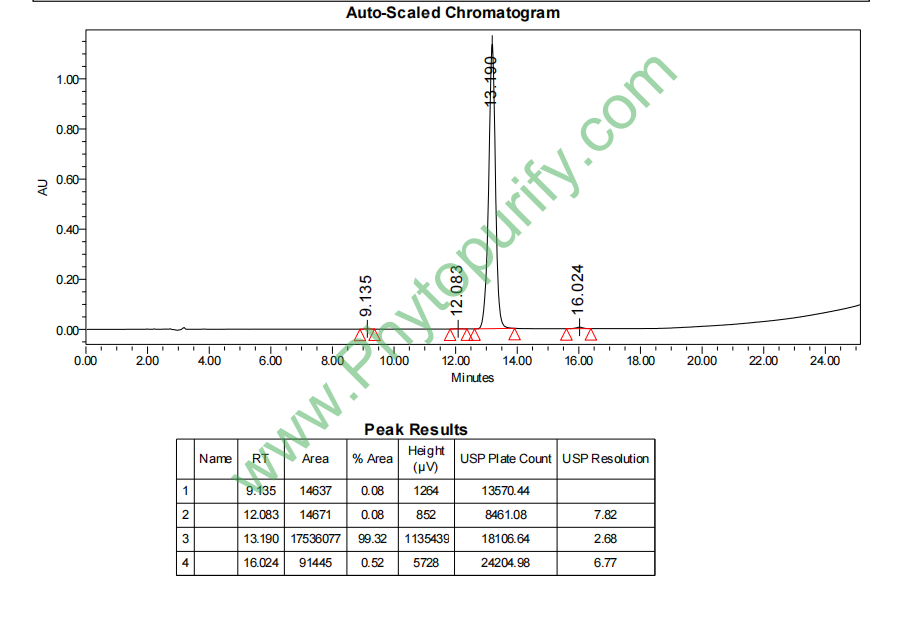
Purity: 95%~99%
Analysis Method: HPLC-DAD or/and HPLC-ELSD
Identification Method: Mass, NMR
Packing: Brown vial or HDPE plastic bottle
Storage: Store in a well closed container, protected from air and light. Put into refrigerate or freeze for long term storage.
Whenever possible, you should prepare and use solutions on the same day. However, if you need to make up stock solutions in advance, we recommend that you store the solution as aliquots in tightly sealed vials at -20℃. Generally, these will be useable for up to two weeks.
The product could be supplied from milligrams to grams
Inquire for bulk scale.
Chengdu Biopurify Phytochemicals Ltd. is a leading company in the research, development, manufacture and marketing of High Quality Phytochemicals and Extracts(especially Active Ingredients from Traditional Chinese Medicine,TCM), Natural Active Pharmaceutical Ingredients worldwide.
The main services:
A. Supply active ingredients and reference standards of TCM, from mgs to kgs scale
B. Custom extraction and purification, target Herb Active Ingredients
C. Custom synthesis and semi-synthesis for Natural Active Ingredients
D. CR(contract research), CM(contract manufacture) and PD(process development) services from lab scale, pilot scale to commercial scale(GMP is also available)
E. TCM compounds library for drug screen,more than 3000 compounds available, many of them are rare and unique.
HPLC of Yohimbine Hydrochloride
Storage conditions:Short-term storage at 2~8℃, long-term storage at -20 ~ -80℃
65.5600
2.1595
1.5265
.2780
1.8905
14.0013
High
62.7806
3.9577
No
No
No
Yes
No
No
0.0
No
No
No
No
Yohimbine Hydrochloride (CAS: 65-19-0) is a classic indole alkaloid, and its parent compound Yohimbine was originally isolated from the bark of the Pausinystalia johimbe plant in the family Rubiaceae in Africa. As a selective alpha-2 adrenergic receptor antagonist, yohimbine hydrochloride holds a unique position in the history of pharmacology. It promotes the release of neurotransmitters such as norepinephrine and dopamine by blocking alpha-2 adrenergic receptors in the central and peripheral nervous systems, resulting in a series of complex physiological effects. In history, its extract was used in African folk medicine to stimulate desire and treat fatigue. Modern pharmacological research focuses on the therapeutic potential of male sexual dysfunction (MSD), particularly psychological or mild organic erectile dysfunction (ED). Although the emergence of phosphodiesterase 5 (PDE5) inhibitors such as sildenafil has greatly changed the treatment landscape of ED, yohimbine hydrochloride still holds value in specific therapeutic fields and scientific research due to its unique mechanism of action - primarily targeting the central nervous system and sympathetic nervous system tone regulation. This article aims to systematically review the chemical properties, plant sources, pharmacological activities, molecular mechanisms of action, pharmacological evaluation, and clinical application prospects of yohimbine hydrochloride, in order to provide a comprehensive academic perspective for the in-depth study and rational application of this classic natural product.
Yuhengbin hydrochloride is the hydrochloride form of Yuhengbin, with the chemical name 17 α - hydroxyYuhengland-16 α - carboxylic acid methyl ester hydrochloride. Its molecular formula is C21H26N2O3 · HCl, with a molecular weight of 354.4500. The core structure of yohimbine is a complex polycyclic indole alkaloid skeleton, which belongs to yohimbane derivatives. The skeleton is composed of an indole ring fused with a nine membered nitrogen-containing heterocyclic ring. The 17 α - hydroxyl and 16 α - methyl ester groups in its structure are crucial for its pharmacological activity.
In terms of physical and chemical properties, yohimbine hydrochloride is a white or off white crystalline powder with a slightly bitter taste. Its lipophilic water partition coefficient (LogP) is 2.1595, indicating that the compound has a certain degree of lipophilicity, but is not highly hydrophobic. The topological polar surface area (TPSA) is 65.56 Å ², reflecting the presence of hydrogen bond acceptors (such as ester groups, hydroxyl groups, and tertiary amines) in the molecule. Its water solubility data is 0.2780 mg/mL, which is slightly soluble, but after salt formation (hydrochloride salt), its solubility is better than that of free base, making it more suitable for formulation development. These properties collectively determine its good membrane permeability, which is consistent with its evaluation of "high" blood-brain barrier permeability (BBB), indicating that it can effectively enter the central nervous system and exert pharmacological effects.
The natural source of hydrochloride yohimbine is mainly the Pausinystalia johimbe tree (formerly known as Corynanthe johimbe) of the Rubiaceae family, which is native to West and Central Africa. Its active alkaloids are mainly enriched in the bark. In addition, yohimbine and its stereoisomers can also be isolated from Rauwolfia plants in the Apocynaceae family, such as Rauwolfia serpentina, but the content is usually low.
Traditional extraction methods often use solvent extraction. The general process is to heat reflux or percolate extract the dried and crushed yohimbine bark using a polar solvent (such as methanol, ethanol, or acidified water/alcohol mixture). After concentration, the extract is preliminarily purified by acid-base treatment: first, acid (such as dilute hydrochloric acid) is added to dissolve the alkaloids into salts in the aqueous phase, and then alkaline (such as ammonia water or sodium hydroxide) is adjusted to make the free alkaloids precipitate. The crude yohimbine can be further purified by recrystallization or column chromatography techniques (such as silica gel column chromatography, eluted with chloroform methanol system). Finally, dissolve the purified yohimbine base in a suitable solvent, introduce hydrogen chloride gas or add hydrochloric acid ethanol solution to obtain its hydrochloride salt crystals. Modern technology may combine more efficient and environmentally friendly separation techniques such as macroporous adsorption resin and high-speed countercurrent chromatography. It should be noted that in addition to yohimbine, natural extracts often contain other structurally similar alkaloids (such as the stereoisomer α - yohimbine of yohimbine), and their biological activities may differ. Therefore, standardized extraction and quality control are crucial.
The pharmacological activity of yohimbine hydrochloride is extensive and complex, mainly due to its antagonistic effect on alpha-2 adrenergic receptors.
The impact on sexual function This is its most highly regarded activity. Numerous preclinical and clinical studies have shown that yohimbine hydrochloride has an improving effect on male sexual dysfunction caused by various reasons, especially psychological or neurogenic erectile dysfunction. It can function through a dual mechanism of central and peripheral mechanisms: in the central nervous system, it antagonizes alpha-2 receptors in the hypothalamus, brainstem, and other regions, reduces sympathetic nervous tension, relieves its inhibition of sexual arousal, and may promote the release of neurotransmitters related to sexual arousal, such as dopamine and norepinephrine; In the periphery, blocking the alpha-2 receptors on the smooth muscle of the penile corpus cavernosum blood vessels relatively enhances cholinergic nerve mediated vasodilation, which is beneficial for erection.
The impact on the cardiovascular system As an alpha-2 receptor antagonist, it blocks presynaptic alpha-2 receptors, promotes norepinephrine release, and typically leads to increased heart rate and blood pressure (especially diastolic blood pressure). This effect limits its application in patients with hypertension or cardiovascular disease.
The impact on metabolism Yuhengbin can promote lipolysis and increase plasma free fatty acid levels by antagonizing alpha-2 receptors on adipocytes, inhibiting negative feedback regulation of lipolysis. This characteristic has been studied for weight loss assistance, but it has not been widely used due to its cardiovascular side effects.
The impact on anxiety and stress The function is bidirectional. Low doses may produce anti anxiety effects by acting on specific brain regions such as the amygdala, while high doses may lead to adverse reactions such as anxiety and panic due to widespread activation of the noradrenergic system. It is also used as a pharmacological tool for studying anxiety and post-traumatic stress disorder (PTSD).
Other activities The study also suggests that it may have mild local anesthetic effects, diuretic effects, and affect insulin secretion.
The core mechanism of action of yohimbine hydrochloride is to act as a competitive antagonist, selectively (but not exclusively) blocking alpha-2 adrenergic receptors (ADRA2). The alpha-2 receptor belongs to the G protein coupled receptor (GPCR) family, which is divided into three subtypes: ADRA2A, ADRA2B, and ADRA2C. Yuhengbin has antagonistic activity against them, and its effect varies depending on the tissue distribution.
In the complex network of male sexual dysfunction, the action of yohimbine hydrochloride involves multiple targets, forming a network pharmacology map:
* Core target:ADRA2A and ADRA2B Blocking these receptors is the molecular basis for yohimbine to produce peripheral vasodilation (including penile corpus cavernosum) and central nervous system excitation (promoting norepinephrine release).
* Neurotransmitters and regulatory system:
* Dopamine system By relieving the inhibition of dopaminergic neurons by alpha-2 receptors, indirectly promoting DRD2 Activation of the dopamine receptor pathway enhances sexual desire and reward effects.
* 5-HT system: Yes HTR1A 5-HT1A receptors have a certain affinity and may be involved in regulating emotional and anxiety levels, affecting sexual performance.
* Nitric oxide system May indirectly affect neuronal nitric oxide synthase through sympathetic tone regulation(NOS1)And endothelial nitric oxide synthase(NOS3)The activity promotes the production of NO, which is a key mediator for erection.
* Sex hormones and local metabolism:
* Androgen receptor (AR)There are studies suggesting that yohimbine may have a weak regulatory effect on AR or indirectly affect androgen signaling by improving sexual function status.
* 5 α - reductase 2 (SRD5A2)The evidence is weak and may not directly inhibit, but the overall effect may affect the dihydrotestosterone metabolic pathway.
* Other related targets:
* Cannabinoid receptor 1 (CNR1)There are a few studies exploring their interactions, which may involve a cross dialogue between anxiety and appetite regulation.
* Phosphodiesterase 5A (PDE5A)Yuhengbin is not a direct inhibitor, but its ability to improve hemodynamics may have synergistic potential with PDE5 inhibitors.
In summary, the improvement of male sexual dysfunction by yohimbine hydrochloride is not achieved through a single target, but through antagonizing the core alpha-2 receptor, which triggers changes in the functional status of the noradrenergic system, thereby "disrupting" the entire molecular network involved in sexual arousal, vasoconstriction, and neuroendocrine regulation, resulting in a comprehensive effect.
From the perspective of drugability parameters, the molecular weight of yohimbine hydrochloride is moderate, and LogP shows that it has good lipid solubility, facilitating transmembrane transport. The TPSA value is within an acceptable range, consistent with its good oral absorption and BBB penetration. However, there are also significant challenges to its medicinal properties:
* Safety Warning:HERG inhibition positive This indicates that the compound has the potential to prolong the QT interval of the heart and induce the risk of tip twisting ventricular tachycardia, which is an important signal of its cardiac toxicity.The Ames test result is 0.0(usually indicating no mutagenicity, but needs to be interpreted in conjunction with specific experiments), suggesting that the genetic toxicity risk may be low, but comprehensive toxicological evaluation is still needed.
* pharmacokinetics After oral administration, the absorption is rapid, but the first pass effect is significant, and the bioavailability varies greatly among individuals (about 30% -90%). The plasma protein binding rate is moderate. It can be widely distributed throughout the body, including the central nervous system. Mainly metabolized in the liver through the cytochrome P450 enzyme system (such as CYP2D6, CYP3A4), producing various hydroxylated metabolites. The prototype drug and metabolites are mainly excreted through the kidneys, with a short half-life of about 0.5-2.5 hours. This rapid metabolism and clearance require multiple administrations to maintain efficacy, but also increases the risk of blood drug concentration fluctuations.
* Treating narrow windows The effective dose is very close to the dose that causes side effects such as anxiety, palpitations, and hypertension, and the treatment index is low. This requires that clinical use must start with small doses and be closely monitored.
Although the position of yohimbine hydrochloride in the ED treatment market dominated by PDE5 inhibitors has declined significantly, its unique mechanism still endows it with specific application value and future research directions:
Current clinical positioning:
Exploration of new dosage forms and combination therapy:
Exploration of new indications:
Challenges and Future Directions:
As a classic natural product derived from traditional medicinal plants, the role of hydrochloride yohimbine as an alpha-2 adrenergic receptor antagonist provides a valuable tool and perspective for pharmacological research. In the field of treating male sexual dysfunction, it represents a paradigm of action different from PDE5 inhibitors, which improves sexual function by regulating the balance of excitation and inhibition in the central nervous system. Although its clinical application is limited by drug defects such as narrow treatment windows and cardiovascular side effects, in-depth research on it greatly enriches our understanding of the complex relationship between the autonomic nervous system and sexual function regulation. In the future, through drug chemistry optimization, development of new drug delivery systems, application of precision medicine strategies, and exploration of new indications, yohimbine hydrochloride and its derivatives are expected to regain new vitality on a safer and more effective level. It will continue to serve as a model compound that connects traditional wisdom with modern pharmacology and inspires new drug development, leaving a lasting mark in the history of natural product pharmacology.
