
| Catalog No | Package | Original Price | Price | Inventory | Quantity | Operating |
|---|---|---|---|---|---|---|
| BP1203-20mg | 20mg | $30.00 | Sign in |
|


Synonym name:
Catalogue No.: BP1203
Cas No.: 50-55-5
Formula: C33H40N2O9
Mol Weight: 608.688
Botanical Source: Alkaloid from Rauwolfia serpentina, Rauwolfia vomitoria, Rauwolfia macrophylla, very many other Rauwolfia spp., Vinca minor, Alstonia constricta and many other spp. in the Apocynaceae, e.g. Vallesia dichotoma and Excavatia coccinea (preferred genus name
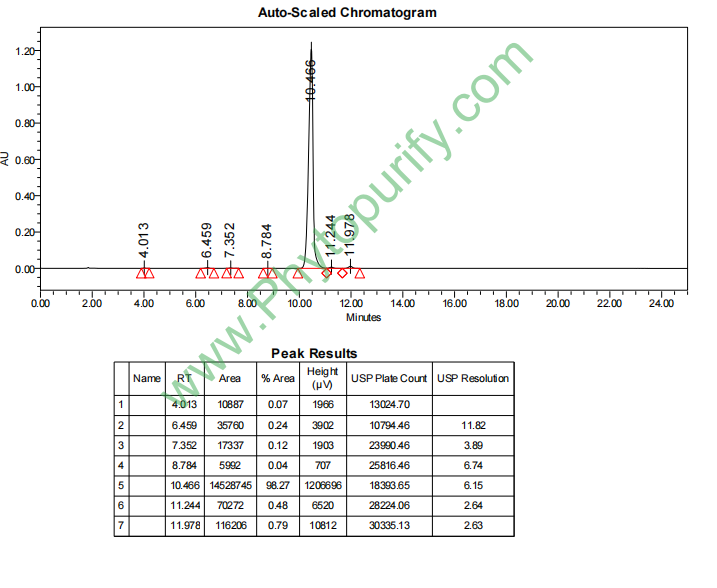
Purity: 95%~99%
Analysis Method: HPLC-DAD or/and HPLC-ELSD
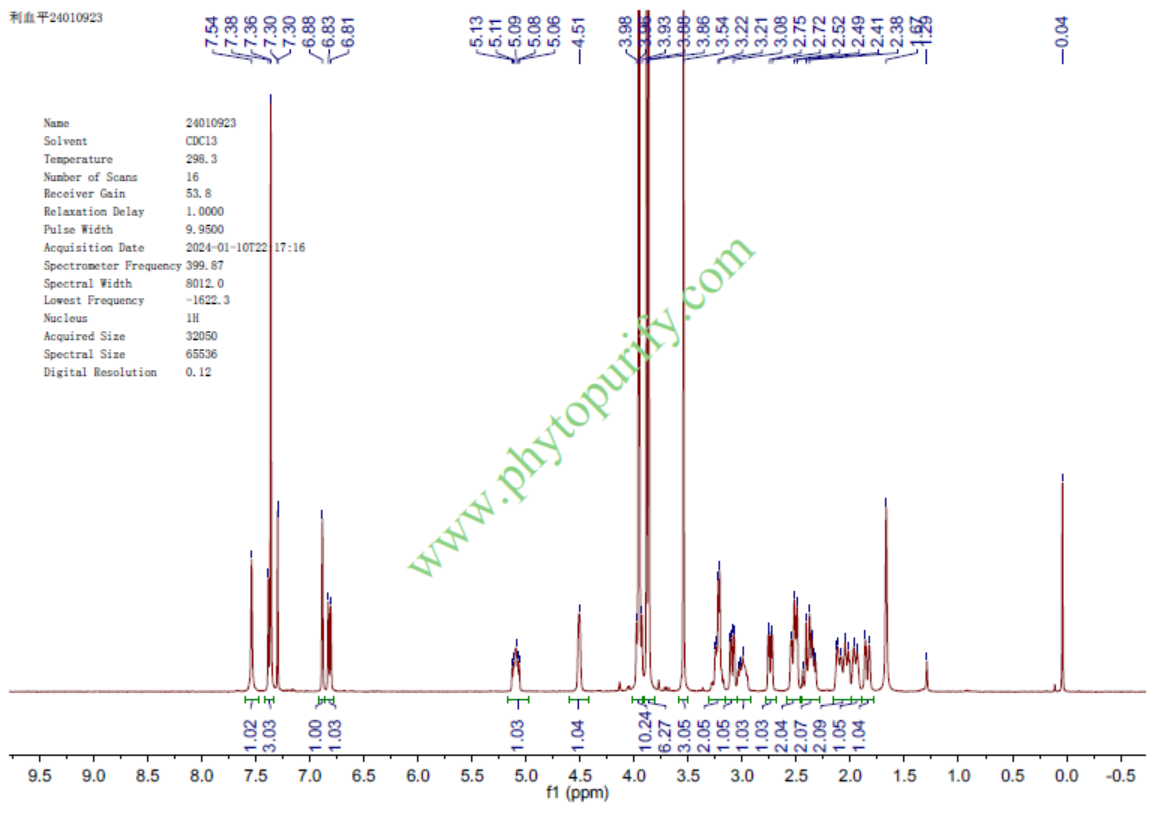
Identification Method: Mass, NMR
Packing: Brown vial or HDPE plastic bottle
Can be supplied from milligrams to grams.
For Reference Standard and R&D, Not for Human Use Directly.
Inquire for bulk scale.
HPLC of Reserpine
HNMR of Reserpine
Storage conditions:Short-term storage at 2~8℃, long-term storage at -20 ~ -80℃
117.7800
3.7991
3.3906
.0424
2.1050
4.9653
High
89.7449
4.3422
No
No
Yes
Yes
No
No
0.0
No
No
No
Yes
Reserpine, as a milestone natural alkaloid, has profoundly influenced the development trajectory of pharmacological research and clinical practice since its isolation and identification from the traditional medicinal plant Rosa rugosa in the mid-20th century. Its CAS number is 50-55-5 and it is the Indian snake shaped rosewood(Rauwolfia serpentina)Waiting for the core active ingredients of plant roots. The most significant discovery of reserpine is its excellent antihypertensive effect, making it the world's first widely used plant-based antihypertensive drug, ushering in a new era of hypertension drug treatment. Not only that, it is also an important member of the first generation of antipsychotic drugs used to treat mental disorders such as schizophrenia. Its unique mechanism of action - by irreversibly inhibiting vesicular monoamine transporter 2 (VMAT2), depleting monoamine neurotransmitters (such as norepinephrine, dopamine, serotonin) in nerve endings - makes it an indispensable tool in neuropharmacological research, used to construct animal models of depression, Parkinson's disease, and other diseases. Despite the significant decline in the status of reserpine as a first-line clinical treatment with the emergence of safer and more selective synthetic drugs such as selective beta blockers, ACE inhibitors, etc., its value as a classic drug and molecular probe has remained unchanged. In recent years, with the deepening of understanding of VMAT2 targets and the rise of drug repurposing strategies, research on the use of nifedipine in neurological and psychiatric disorders, as well as certain cancers, has presented a new perspective. This article aims to provide a systematic review of the chemical properties, plant sources, pharmacological activities, molecular mechanisms of action, pharmacological characteristics, and the evolution and future potential of clinical applications of levonorgestrel, in order to provide comprehensive academic references for a deeper understanding of this classic natural product and the development of potential new uses.
Liriopine belongs to the Yohimban class of indole alkaloids, with a complex molecular structure and multiple chiral centers. Its chemical name is 11,17-dimethoxy-18- [(3,4,5-trimethoxybenzoyl) oxy] Yohimban-16-carboxylic acid methyl ester, with a molecular formula of C33H40N2O9 and a molecular weight of 608.6880.
Structurally, Liriopine is composed of three parts: 1) a polycyclic trophin nucleus (composed of indole and quinoline fused together), which is the pharmacophore basis related to its central nervous system effects; 2) A trimethoxybenzoyl group is connected to the 18th position of the tropane nucleus through an ester bond; 3) A methyl ester group is connected at position 16. This unique ester bond structure is crucial for its activity, as it can be hydrolyzed by esterases in vivo to produce the active metabolite, Reserpic acid, which has much lower activity than the original drug.
In terms of physical and chemical properties, reserpine is a white or pale yellow crystalline powder, odorless, and almost tasteless. Its lipid water partition coefficient (LogP) is 3.7991, indicating that the compound has good lipophilicity, which is consistent with its ability to smoothly penetrate the blood-brain barrier (BBB). The calculated topological polar surface area (TPSA) is 117.78 Å ², reflecting the presence of multiple hydrogen bond acceptors (such as methoxy and ester groups) in the molecule. Its water solubility is extremely low, about 0.0424 mg/mL, which poses a challenge for formulation development and usually requires the formation of microcrystals or complexes to improve solubility. Lixiaping is unstable under light and oxidation conditions, and is prone to decomposition, discoloration, and failure. Therefore, it needs to be stored in a dark and sealed environment. Its alkalinity is weak, with a pKa value of about 6.6. These physicochemical properties directly affect its pharmacokinetic behavior and formulation process.
Lixiaoping mainly comes from the Oleander family and the genus Loropsis(Rauwolfia)A variety of plants, including the snake like rosewood(R. serpentina The root content of Benth. ex Kurz (L.) is the most abundant and has the greatest medicinal value. In addition, vomiting rosewood(R. vomitoria Afzel and other plants are also important resource plants. Loquat has a thousand year history of use in Ayurvedic medicine in India, known as "Sarpagandha", used to treat symptoms such as mental disorders, insomnia, snake bites, and hypertension.
The extraction and separation of reserpine is a classic natural product chemical process. The following steps are usually taken:
1. Raw material pretreatment Grind the dried roots of rosewood into coarse powder.
2. Solvent extraction By utilizing the solubility properties of alkaloids, methanol, ethanol, or dilute acid aqueous solutions (such as 1% tartaric acid) are often used for percolation or reflux extraction. Acid water extraction can dissolve alkaloids into salts, and then obtain total alkaloids through alkalization precipitation.
3. Preliminary purification After concentrating the extract, liquid-liquid extraction is performed using organic solvents (such as chloroform, dichloromethane) under alkaline conditions (pH 8-9) to enrich lipid soluble alkaloids.
4. Separation and refinement The separation of reserpine is often performed using chromatographic techniques. Traditional methods include alumina or silica gel column chromatography, with gradient elution using different ratios of organic solvents (such as benzene chloroform, chloroform methanol). Modern technology often uses high-performance liquid chromatography (HPLC) or medium pressure preparative chromatography for high-purity separation.
5. Crystallization After concentrating the fraction rich in levonorgestrel, high-purity levonorgestrel crystals can be obtained by recrystallization using solvents such as methanol water and acetone.
Due to the slow growth of plants, low content of reserpine (about 0.1-0.2% in roots), and complex and costly chemical synthesis routes, extraction from plants remains its main source. The analysis of biosynthetic pathways and synthetic biology techniques provide potential directions for future sustainable production.
The pharmacological activity of reserpine is extensive and profound, mainly due to its depletion effect on monoamine neurotransmitters.
Cardiovascular system activity (lowering blood pressure and slowing heart rate)This is the most famous pharmacological effect of reserpine. By depleting the noradrenaline (NE) in peripheral sympathetic nerve endings, it blocks the release of neurotransmitters in nerve impulse transmission, leading to a sustained decrease in peripheral vascular resistance, slower heart rate, and weakened myocardial contractility, resulting in a mild, slow, but long-lasting antihypertensive effect. Its antihypertensive effect takes effect several hours after administration, with peaks occurring between several days to several weeks, and the effect can continue for several weeks even after discontinuation.
Central nervous system activity:
Other potential activities In recent years, studies have suggested that as a VMAT2 inhibitor, reserpine may affect the storage and metabolism of monoamine substances in tumor cells, and has research value in neuroendocrine tumors (such as pheochromocytoma) or certain cancers that rely on monoamine signaling pathways. In addition, its inhibitory activity on prolyl oligopeptidase may also be related to neuroprotection or cognitive regulation, but further research is needed.
The core mechanism of action of Li Xue Ping is Irreversible and high affinity inhibition of vesicular monoamine transporter 2 (VMAT2)。
Main target: VMAT2 VMAT2 is located on the presynaptic vesicle membrane of neurons and neuroendocrine cells, responsible for actively transporting and concentrating monoamine neurotransmitters (NE, DA, 5-HT) in the cytoplasm into vesicles for release. Liriopine binds to the substrate binding site of VMAT2, forming a stable covalent bond like complex that irreversibly blocks its transport function. This results in newly synthesized and reabsorbed neurotransmitters being unable to enter vesicles for storage and instead being degraded by monoamine oxidase (MAO) in the cytoplasm. Eventually, the neurotransmitter reserves within the vesicles are gradually depleted, and when nerve impulses arrive, there is not enough neurotransmitter to release, thereby blocking the chemical transmission of nerve signals.
Indirect association with related disease targets The antihypertensive efficacy of Liriopine involves indirect regulation of multiple classic cardiovascular target systems, but it is not a direct agonist or antagonist of these receptors.
Therefore, Li Xue Ping produces a series of downstream and extensive neurological and cardiovascular effects by acting on the key upstream protein VMAT2, which stores neurotransmitters. This "source blocking" mechanism makes it widely effective but also has many side effects.
Based on the provided parameters and known research, a comprehensive evaluation of the pharmacological properties of Liriopine is conducted
Absorption and distribution The oral absorption of reserpine is irregular and incomplete (about 30-50%), and food can affect its absorption. Due to its high LogP value (3.8) and moderate molecular weight, it has good membrane permeability and can be widely distributed to various tissues, including the heart and adipose tissue Highly penetrating the blood-brain barrier This explains the dual role of the pivot and the periphery. The plasma protein binding rate is relatively high (about 96%).
Metabolism and excretion Lysine is mainly hydrolyzed by esterases in the body to produce low activity levels of Lysine acid and trimethoxybenzoic acid. Lysophosphatidic acid can further undergo glucuronidation or other II binding reactions. Its metabolism mainly occurs in the liver, with some also occurring in the intestine and plasma. The proportion of prototype drugs excreted through the kidneys is very low (<1%), mainly in the form of metabolites excreted in feces and urine. Its elimination half-life is relatively long, about 50-100 hours, which is related to its irreversible binding to VMAT2 and slow release from adipose tissue, and also explains its long-lasting effect and continued effect after discontinuation.
Challenges of drug formation and safety warnings:
The clinical application of Levofloxacin has gone through a process from glory to marginalization. At present, in most countries, it is no longer the first-line treatment for hypertension or mental illness, but is mainly replaced by safer and better tolerated drugs.
Current and potential clinical application directions:
1. Adjuvant therapy for specific refractory hypertension In patients with refractory hypertension who have not responded to multiple combination therapy options, low-dose nifedipine (such as 0.1-0.25 mg/day) can still be used as an effective additive due to its unique mechanism of action and low cost.
2. Research tools and disease model inducers In basic scientific research, reserpine is the "gold standard" tool drug for inducing depressive like behavior and Parkinson's like symptoms (exhausted striatal DA) in animals, used for screening and mechanism research of antidepressants and anti Parkinson's disease drugs.
3. Exploration of drug reuse:
* Neuropsychiatric disorders The renewed focus on VMAT2 has led to a reassessment of the use of doxepin analogs or low-dose regimens in the treatment of diseases related to Huntington's disease, such as chorea and Tourette syndrome, which involve overactive monoaminergic systems. The commercially available VMAT2 inhibitors tetrabenazine and deuterated tetrabenazine are successful derivatives of this approach.
* oncology Exploring the possibility of using nifedipine as a chemotherapy sensitizer or as a standalone treatment for the expression of VMAT2 in neuroendocrine tumors and certain solid tumors.
* Anti infection and immune regulation Early research suggests that it may have anti malarial and antiviral activity, but the mechanism is unclear and needs to be validated by modern technology.
Future prospects:
1. Structural optimization and derivative development Design and develop VMAT2 modulators with higher reversibility and tissue selectivity (such as peripheral selectivity) based on the maternal nucleus of levonorgestrel to preserve efficacy and reduce central side effects (such as depression).
2. New drug delivery system Using techniques such as nano formulations and liposomes to improve its water solubility, enhance targeting, and control release rate, in order to reduce systemic toxicity and optimize treatment index.
3. Application in the context of precision medicine In the future, personalized medication may be achieved by identifying patient subgroups with good response to Liriopine and low risk of side effects through biomarkers.
4. As a chemical probe Continue to utilize its irreversible binding properties to further investigate the protein structure, functional regulation, and role of VMAT2 in physiological and pathological processes.
Lixueping, a natural alkaloid derived from ancient medicinal plants, has left an indelible mark in the history of medicine with its unique and powerful irreversible inhibition mechanism of VMAT2. It is not only the first modern plant-based antihypertensive drug, promoting the development of cardiovascular pharmacology, but also a key "molecular surgical knife" in the field of neuroscience, helping scientists reveal the mysteries of the monoamine neurotransmitter system. Although its position in mainstream clinical treatment has been replaced by more superior drugs due to its extensive side effects and irreversible properties, the value of reserpine has not faded. It has successfully transformed from a "therapeutic drug" to an indispensable "research tool" and continues to provide inspiration and templates for the development of new generation VMAT2 targeted drugs. Currently, under the new paradigm of drug reuse and precision medicine, a deeper understanding of reserpine and its targets is expected to pave the way for its rejuvenation in new indications such as neurological and psychiatric disorders, tumors, etc. The story of Li Xueping is a classic case about how natural products inspire science and evolve their roles through clinical testing, continuously demonstrating the enormous potential of combining traditional medical wisdom with modern scientific research.
