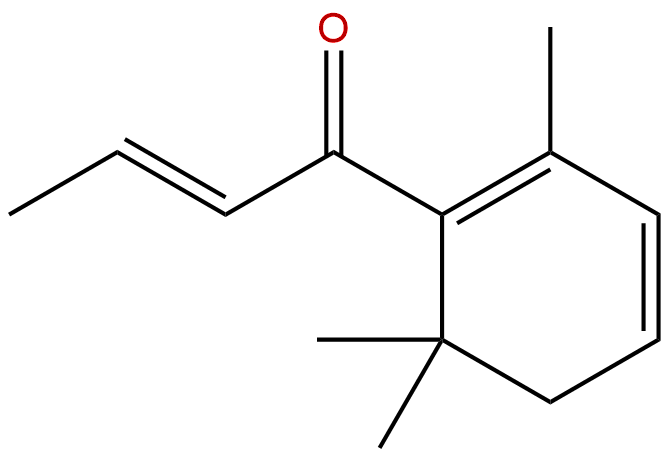


Product name: Damascenone
Synonym name:
Catalogue No.: BP3105
Cas No.: 23696-85-7
Formula: C13H18O
Mol Weight: 190.286
Botanical Source:
Type of Compound:
Purity: 95%~99%
Analysis Method: HPLC-DAD or/and HPLC-ELSD
Identification Method: Mass, NMR
Packing: Brown vial or HDPE plastic bottle
Storage: Store in a well closed container, protected from air and light. Put into refrigerate or freeze for long term storage.
Whenever possible, you should prepare and use solutions on the same day. However, if you need to make up stock solutions in advance, we recommend that you store the solution as aliquots in tightly sealed vials at -20℃. Generally, these will be useable for up to two weeks.
The product could be supplied from milligrams to grams
Inquire for bulk scale.
For Reference Standard and R&D, Not for Human Use Directly.
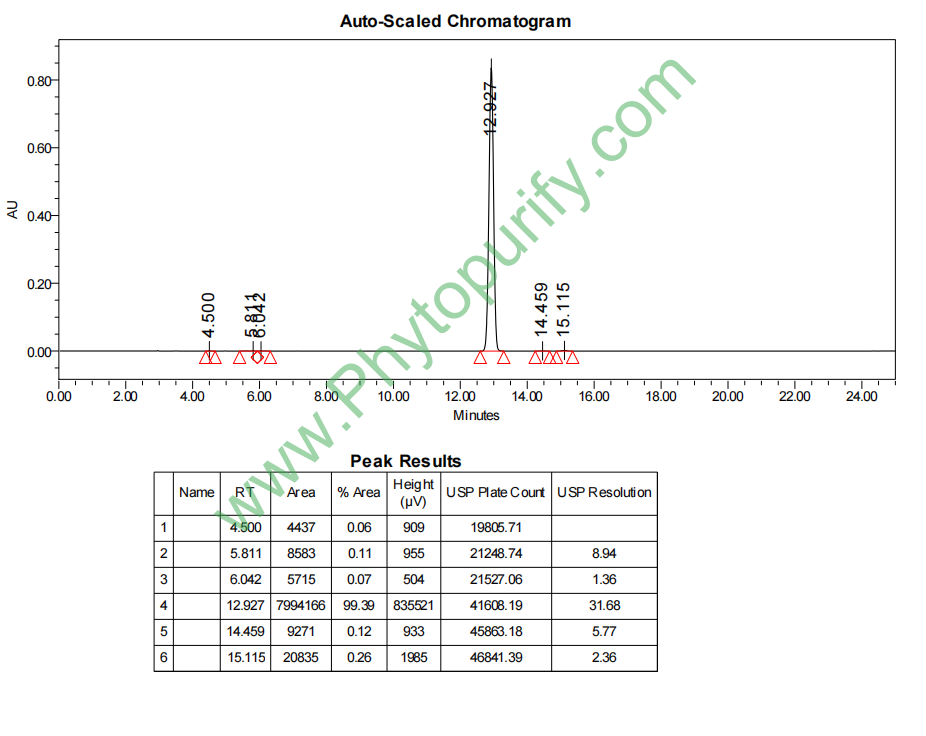
HPLC of Damascenone
Storage conditions:Short-term storage at 2~8℃, long-term storage at -20 ~ -80℃
17.0700
3.6984
3.6984
.0708
8.7498
16.1389
High
80.7879
3.3429
Yes
Yes
No
No
No
Yes
0.0
No
Yes
Yes
Yes
Spice allergy, as a type I hypersensitivity disease, is increasingly concerned. Its incidence rate is on the rise worldwide, which seriously affects the quality of life of patients. This disease is mainly caused by specific spice ingredients and involves complex immunological mechanisms, including mast cell activation, histamine release, and abnormal activation of Th2 type immune response, leading to elevated levels of inflammatory factors such as interleukin (such as IL-4, IL-5, IL-13), which in turn trigger a series of allergic symptoms in the skin, respiratory tract, and digestive tract. At present, the main clinical intervention methods are antihistamines (targeting HRH1/HRH2) and local corticosteroids, but long-term use may be accompanied by side effects or limited efficacy. Therefore, exploring efficient and low toxicity new anti allergic active molecules from natural products has become one of the important directions for drug development.
Damascenone (CAS number: 23696-85-7), a volatile sesquiterpene compound found in various plants, has long been known in the spice industry for its unique and rich aroma in roses, tea, tobacco, and fruits. In recent years, the research focus has shifted from its sensory attributes to exploring its biological activity. It is worth noting that from the plants of the Araceae family Epipremnum pinnatum The isolation and identification of magnolol from Eucommia ulmoides leaves have been reported to have significant anti-inflammatory activity, providing preliminary clues for its potential application in immune related diseases, especially allergic diseases. This article aims to provide a systematic review of the chemical properties, plant sources, anti-inflammatory and anti allergic pharmacological activities, potential molecular mechanisms of action, pharmacological characteristics, and clinical application prospects of magnolol in diseases such as spice allergies, in order to provide scientific basis for the deep development of this natural product.
The chemical name of Damanone is 1- (2,6,6-trimethyl-1,3-cyclohexadien-1-yl) -2-buten-1-one, with a molecular formula of C13H18O and a molecular weight of 190.2860. The core of its structure is a cyclohexadiene ring, connected to an unsaturated butenone side chain. This compound exists in two geometric isomers, cis (Z -) and trans (E -), and is commonly found in nature in the form of a mixture, namely (E/Z) - diketone. The two isomers have slight differences in aroma characteristics, but their biological activity studies are mostly conducted in the form of mixtures or main active forms.
From the analysis of physical and chemical properties, the lipophilic water partition coefficient (LogP) of Damarone is 3.6984, indicating that it has good lipophilicity and is easy to penetrate cell membranes. The topologically polar surface area (TPSA) is relatively low, only 17.0700 Å ², which is consistent with its molecular structure containing only one carbonyl oxygen atom as a hydrogen bond acceptor. The water solubility is poor, about 0.0708 mg/mL, indicating that it may require the use of solubilization technology in formulation development. It is worth noting that its high lipophilicity and smaller molecular size indicate that it has High blood-brain barrier permeability Although this may have an impact on applications related to the central nervous system, the potential neural effects of anti allergic drugs that mainly act on the peripheral immune system need to be evaluated in subsequent studies. Preliminary safety screening of the drug indicates that at the tested concentration, Damarone Not inhibiting hERG potassium channels(hERG inhibition: No), reduced the risk of inducing QT interval prolongation and apical torsion type ventricular tachycardia in the heart; Meanwhile,The Ames test result is 0.0 Preliminary indications suggest that it has no direct genetic toxicity, providing positive data for its safety assessment.
Damarone is widely distributed in nature, but its content is usually low. Its main plant sources include roses from the Rosaceae family (Rosa damascena, also known as the Damascus rose), tea (Camellia sinensis), tobacco (Nicotiana tabacum), and various fruits such as apples, grapes, tomatoes, etc. However, research on its pharmacological activity, especially anti-inflammatory activity, mainly focuses on the Araceae family Epipremnum pinnatum Qilin Leaf, also known as a closely related species of "Green Luo". This plant has been applied in traditional medicine, and modern research has isolated and identified one of the key active ingredients from its extract, Damanone.
The extraction and separation methods of magnolol are quite challenging due to its volatility and trace presence in plant matrices. The conventional methods include:
1. Steam distillation and water vapor distillation Suitable for extracting essential oils from fresh flowers (such as roses), one of the aroma components in the essential oil, Damarone, is obtained. This method is easy to operate, but high temperatures may cause isomerization or degradation.
2. Organic solvent extraction For plant leaves or dry materials (such as Kirin leaves), solvents such as methanol, ethanol, and dichloromethane are often used for extraction or Soxhlet extraction. This method has a high extraction efficiency and can obtain various secondary metabolites, including Damarone.
3. Simultaneous distillation and extraction Combining the advantages of distillation and solvent extraction, it is particularly suitable for the enrichment of volatile components and can effectively improve the recovery rate of cyclohexanone.
4. Supercritical fluid extraction Using supercritical CO ₂ as a solvent, it has the advantages of low temperature, non toxicity, and adjustable selectivity. It is an advanced technology for obtaining high-purity and high-quality natural Malaysian ketone, but the equipment cost is relatively high.
5. Chromatographic separation technology The crude extract obtained through preliminary extraction needs to be further separated and purified by column chromatography (such as silica gel column, reverse phase C18 column), high performance liquid chromatography, and other techniques to obtain high-purity macrolide or its isomers for pharmacological research.
Targeted extraction of active macrolide from Qilin leaves is usually carried out using ethanol or methanol extraction, followed by tracking and separation using various chromatographic methods to determine its effective parts based on activity.
The pharmacological activity research of Malaysian ketone has surpassed its traditional spice use, demonstrating various biological effects, among which anti-inflammatory and potential anti allergic activities are the most remarkable.
1. Anti inflammatory activity
Multiple in vitro and in vivo studies have confirmed the core anti-inflammatory effects of Damarone. In cell models, Damarone can significantly inhibit the production of nitric oxide (NO), prostaglandin E2 (PGE2), and pro-inflammatory cytokines such as tumor necrosis factor - α (TNF - α), interleukin-1 β (IL-1 β), and IL-6 induced by lipopolysaccharide (LPS) or other stimulants in macrophages (such as RAW 264.7 cells). Its effect is concentration dependent, indicating that it can effectively inhibit the excessive release of inflammatory mediators. In animal inflammation models such as mouse ear swelling model and paw swelling model, local or systemic administration of Damacetone also showed the effect of reducing tissue edema and inhibiting inflammatory cell infiltration.
2. Anti allergic potential
Although there is relatively little research directly targeting the anti allergic effects of Damacetone, its powerful anti-inflammatory properties, especially its potential regulatory ability on the Th2 cytokine network, provide a solid theoretical basis for its anti allergic applications. The core of allergic reactions is the dominant differentiation of Th2 cells and the secretion of cytokines such as IL-4, IL-5, IL-13, which drive key pathological processes such as IgE class switching, eosinophil activation and recruitment, and airway hyperresponsiveness. If Damarone can inhibit the production or signaling of these factors, it may interrupt the cascade amplification process of allergic reactions. Preliminary studies suggest that Damarone may indirectly affect the expression of Th2 cytokines by regulating key inflammatory signaling pathways such as nuclear factor kappa B (NF - κ B) and mitogen activated protein kinases (MAPKs). Further experiments are needed to directly verify its effects on the function of mast cells, eosinophils, and Th2 cells.
3. Other biological activities
In addition, the study also reported that Damarone has antioxidant activity, can clear free radicals, and alleviate oxidative stress damage; There are also studies indicating that it has cytotoxicity towards certain tumor cell lines, but its anti-cancer mechanism and specificity still need to be further explored. There have been sporadic reports on its activity in neuroprotection, antibacterial and other aspects, but none of them are currently the focus of research.
The exact molecular mechanism of the anti-inflammatory and anti allergic effects of Damarone is still under in-depth analysis, and existing evidence points to its regulatory effects on multiple inflammatory signaling pathways and key targets. Based on the targets related to spice allergies (HRH1, HRH2, IL4, IL5, IL13), the potential network of action can be outlined as follows:
1. Regulation of inflammatory signaling pathways
- Inhibition of NF - κ B pathway NF - κ B is a core transcription factor that regulates the expression of numerous pro-inflammatory genes, including TNF - α, IL-6, IL-1 β, and chemokines. Research has shown that Damarone can inhibit the degradation of I κ B α, prevent nuclear translocation of NF - κ B p65 subunit, and thus suppress the production of downstream inflammatory mediators at the transcriptional level. This may be the main mechanism of its broad-spectrum anti-inflammatory effect.
- MAPK pathway regulation The MAPK family (such as p38, JNK, ERK) plays a crucial role in inflammatory response and cellular stress. Damarone has been shown to inhibit LPS induced phosphorylation of p38 and JNK, thereby affecting the activity of transcription factors such as AP-1 and synergistically suppressing inflammatory responses.
2. Potential effects on allergy related specific targets
- Histamine receptor (HRH1/HRH2)Currently, there is no direct evidence to suggest that Damarone is an antagonist of HRH1 or HRH2. However, its anti-inflammatory effect may be achieved by stabilizing the mast cell membrane, inhibiting its degranulation, thereby reducing the release of histamine, indirectly reducing the binding of histamine to receptors, and alleviating allergic symptoms. This requires further receptor binding experiments and validation of mast cell degranulation models.
- Th2 type cytokines (IL-4, IL-5, IL-13)This is the most critical entry point for the anti allergic potential of Madone. Given that the gene expression of IL-4, IL-5, and IL-13 is regulated by pathways such as NF - κ B and STAT6, it is likely that Damarone downregulates the production of these cytokines by inhibiting upstream pathways such as NF - κ B. Specifically, IL-4 is a key inducer of IgE class switching, IL-5 dominates eosinophil activation, and IL-13 is closely associated with airway hyperresponsiveness and mucus secretion. Future research needs to directly measure the effects of Damarone treatment on the mRNA and protein levels of these cytokines in allergic models such as ovalbumin sensitized mice, and explore its intervention effect on the STAT6 signaling pathway.
- Other potential targets Damarone may also act on inflammatory effector enzymes such as cyclooxygenase-2 (COX-2) and inducible nitric oxide synthase (iNOS), inhibiting their expression and activity, and reducing the production of PGE2 and NO.
In summary, Madone may exert its effects through multiple targets and pathways: on the one hand, it produces a wide range of anti-inflammatory effects by inhibiting core inflammatory pathways such as NF - κ B and MAPK; On the other hand, it is possible to indirectly inhibit the production of key Th2 cytokines (IL-4, IL-5, IL-13) through the above-mentioned pathways, and may intervene in the allergic reaction process at multiple stages by stabilizing mast cells and affecting histamine release.
Based on its physical and chemical properties and preliminary biological data, conduct a preliminary pharmacological evaluation of Damarone:
Advantage:
1. Low molecular weight(190 Da), The structure is relatively simple and easy to optimize through chemical synthesis or semi synthesis.
2. Good membrane permeability A high LogP value and low TPSA indicate good oral absorption potential and cell penetration ability.
3. Preliminary safety is good HERG inhibition negative and Ames test negative are important favorable factors for advancing its preclinical development.
4. Clear anti-inflammatory activity Provided pharmacological basis for the treatment of inflammation related diseases (including allergies).
Challenges and unknowns:
1. Poor water solubility This will be the primary challenge in formulation development. It may be necessary to use cyclodextrin inclusion, nanoemulsion, liposome or prodrug strategies to improve its bioavailability.
2. High blood-brain barrier permeability For the treatment of peripheral allergic diseases, it may be necessary to reduce their central permeability through structural modifications to avoid potential central nervous system side effects.
3. Lack of pharmacokinetic data At present, there is almost no research on the in vivo absorption, distribution, metabolism, and excretion (ADME) process of magnolol. Key parameters such as oral bioavailability, plasma protein binding rate, major metabolic organ (likely liver, via cytochrome P450 enzyme system), metabolites and their activity, elimination half-life, etc. urgently need to be obtained through standardized preclinical pharmacokinetic studies.
4. Differences in Isomer Activity There may be differences in the efficacy, metabolism, and toxicity of E - and Z-damanone isomers, which need to be evaluated separately to determine the dominant active isomer.
The future path of drug development should include: systematic in vitro ADME screening (such as microsomal metabolic stability, CYP enzyme inhibition/induction, plasma stability), selection of appropriate animal models for complete pharmacokinetic studies, and preliminary formulation studies based on efficacy and safety considerations.
As a natural product with clear anti-inflammatory activity, Madone has shown promising clinical application prospects in the following fields:
1. Treatment of spice allergies and related allergic skin diseases
This is the most direct application direction. It can be developed into topical preparations (such as cream, gel, spray) to alleviate allergic contact dermatitis, eczema and other symptoms caused by contact with spices. Its anti-inflammatory and potential anti itch effects (by inhibiting inflammatory mediators) may provide better therapeutic effects than traditional antihistamine ointments. Specific experiments targeting the HRH1/HRH2 and IL-4/IL-5/IL-13 pathways need to be conducted, and animal allergy models need to be established to verify their efficacy.
2. Expand to other Th2 type immune-mediated diseases
If it is confirmed that Damarone can effectively inhibit IL-4, IL-5, IL-13, its application can be extended to a wider range of diseases such as allergic rhinitis, allergic asthma, atopic dermatitis, etc. It can be considered to be developed as inhalant (asthma), nasal spray (rhinitis) or systemic drug delivery agent.
3. As an anti-inflammatory adjuvant ingredient
In cosmetics or functional skincare products, Malaysian ketone can be added as a natural anti-inflammatory and soothing ingredient for sensitive skin care, reducing skin inflammation caused by environmental stimuli.
4. Combination therapy strategy
Given that it may act through a mechanism different from that of classical antihistamines (HRH1 antagonists), the combination of Madone and existing anti allergic drugs may produce synergistic effects, improving efficacy or reducing monotherapy doses and side effects.
Challenges and future research directions:
1. Deep explanation of mechanism It is necessary to use techniques such as gene knockout, reporter genes, and chromatin immunoprecipitation to clarify the direct regulatory effect and specific molecular target (whether it is a kinase or receptor) of Damarone on the transcription of target genes such as IL-4, IL-5, IL-13.
2. Comprehensive evaluation of preclinical efficacy and safety Confirm its efficacy in standardized animal models of diseases and complete systematic safety evaluations such as acute toxicity, long-term toxicity, and reproductive toxicity.
3. Structural optimization and improvement of drug properties Based on the pharmacophore model, structural modifications were made to Damarone with the aim of improving its water solubility, selectivity (enhancing its effect on allergic targets and reducing unnecessary BBB penetration), metabolic stability, and oral bioavailability.
4. Clinical translational research After obtaining sufficient preclinical data support, gradually promote human clinical trials to verify their safety and effectiveness.
Damarone, a long cherished aromatic molecule in the spice industry, is attracting the attention of the pharmacology community with its emerging anti-inflammatory pharmacological activities. Tracing its biological activity from plants such as Qilin leaves reveals its value in intervening in inflammation and potential allergic reactions. It exerts anti-inflammatory effects by inhibiting key signaling pathways such as NF - κ B, and may indirectly regulate the HRH1/HRH2 and Th2 cytokine (IL-4, IL-5, IL-13) networks closely related to spice allergies, providing scientific evidence for its treatment of allergic diseases. Despite facing challenges such as poor water solubility and unclear pharmacokinetics in drug development, its clear activity, good preliminary safety, and small molecular structure have laid a solid foundation for subsequent development. Future research needs to focus on in-depth analysis of its anti allergic specific mechanism, systematic preclinical efficacy and safety evaluation, and optimization of its drug properties through medicinal chemistry methods. Damarone is expected to successfully transform from a natural aroma contributor into a lead compound for a new type of anti-inflammatory and anti allergic drug, bringing new treatment options for allergy patients.
