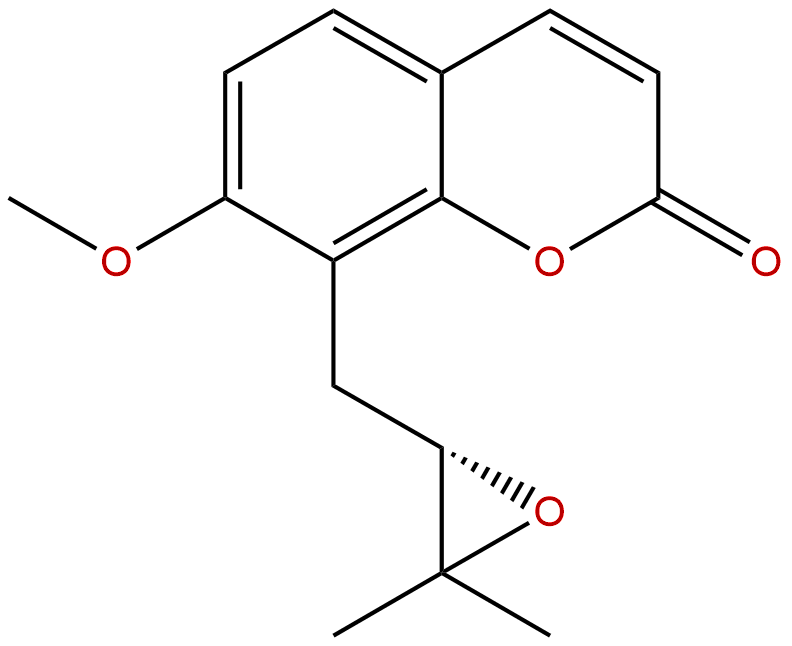


Product name: Meranzin
Synonym name:
Catalogue No.: SBP00392
Cas No.: 23971-42-8
Formula: C15H16O4
Mol Weight: 260.289
Botanical Source:
Physical Description: Cryst.
Type of Compound: Coumarins
Purity: 95%~99%
Analysis Method: HPLC-DAD or/and HPLC-ELSD
Identification Method: Mass, NMR
Packing: Brown vial or HDPE plastic bottle
The product could be supplied from milligrams to grams. Inquire for bulk scale.
We provide solution to improve the water-solubility of compounds, thereby facilitating the variety of activity tests and clinic uses.
For Reference Standard and R&D, Not for Human Use Directly.
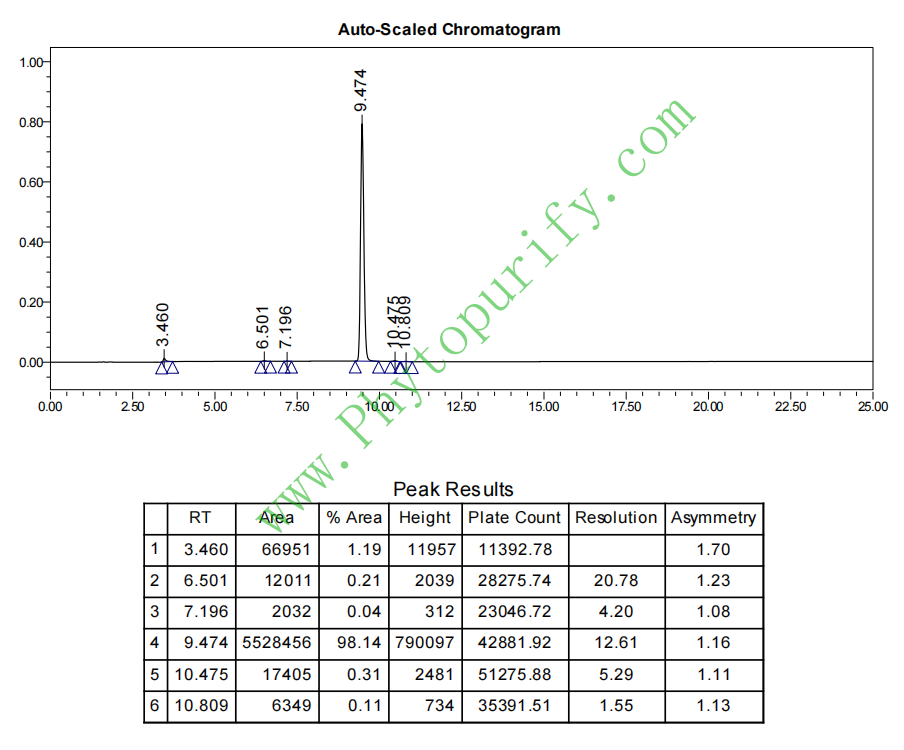
HPLC of Meranzin
Storage conditions:Short-term storage at 2~8℃, long-term storage at -20 ~ -80℃
51.9700
2.7973
2.7975
.0362
4.3190
19.6452
High
82.3740
3.1033
No
No
Yes
No
Yes
Yes
0.9
Yes
No
Yes
Yes
Meranzin, chemical name Meranzin, CAS number 23971-42-8, is a natural coumarin compound with a molecular formula of C15H16O4 and a molecular weight of approximately 260.29 g/mol. This compound is mainly derived from traditional Chinese medicines Immature Bitter Orange (Citrus aurantium) and Dried Tangerine Peel (Citrus reticulata), both of which belong to the Rutaceae family and have a long history of clinical application in traditional Chinese medicine. In recent years, with the deepening of natural product chemistry and pharmacology research, hesperidin has received widespread attention due to its significant biological activity. Current research shows that orange peel lactone is one of the key active ingredients in Chaihu Shugan San (CSS), a traditional Chinese medicine, which has multiple pharmacological effects such as anti-inflammatory, analgesic, regulating intestinal movement, antioxidant, and potential anti atherosclerosis and anti depression. Its mechanism of action involves regulation of α 2-adrenergic receptors, involvement in the AMPA-ERK1/2-BDNF signaling pathway, and regulation of oxidative stress-related targets such as NFE2L2, SOD1, CAT, GPX1, HMOX1. This article will provide a systematic and professional science popularization analysis of hesperidin from the aspects of chemical structure, plant origin, pharmacological mechanism, medicinal evaluation, and research prospects.
The molecular formula of hesperidin is C15H16O4, with a molecular weight of 260.2890 g/mol, and it belongs to coumarin derivatives. Its SMILES is represented as COc1ccc2ccc (=O) oc2c1C [C @ @ H] 1OC1 (C) C, indicating that the structure contains a coumarin parent nucleus (benzo [a] - pyranone), a methoxy group, a cyclopropane ring, and a chiral center ([C @ @ H]), which provides a structural basis for its stereoselective biological activity. From the perspective of physicochemical properties, the lipid water partition coefficient (LogP) of hesperidin is 2.7973, and the LogD is 2.7975, indicating that the compound has moderate lipophilicity and is conducive to transmembrane absorption and distribution. Its topological polar surface area (TPSA) is 51.9700 Å ², belonging to a moderately polar molecule, which to some extent affects its water solubility (measured water solubility is 0.0362 mg/mL, belonging to low solubility). However, its Caco-2 cell permeability is 19.6452 × 10 ⁻⁶ cm/s, indicating good intestinal absorption potential; The blood-brain barrier (BBB) penetration assessment is "high", indicating that hesperidin may easily enter the central nervous system, which is consistent with its mechanism of antidepressant activity. In addition, the plasma protein binding rate (PPB) was 82.374%, indicating that the majority of protein binding in the blood may affect its free concentration and pharmacokinetics. These physicochemical parameters provide important references for its subsequent pharmacokinetics and formulation development.
Hesperidin mainly comes from the Rutaceae plants Citrus aurantium and Citrus reticulata. Citrus aurantium is an immature sour orange fruit with a bitter, pungent, and sour taste, slightly cold in nature, and belongs to the spleen and stomach meridians. It is often used in traditional Chinese medicine to break down qi, eliminate accumulation, and disperse phlegm and phlegm; Chenpi, on the other hand, is the dried peel of mature citrus fruits. It has a pungent and bitter taste, is warm, and belongs to the lung and spleen meridians. It has the effects of regulating qi, strengthening the spleen, drying dampness, and resolving phlegm. Both are commonly used medicinal herbs in traditional Chinese medicine clinical practice, especially in formulas for soothing the liver, regulating qi, and harmonizing the spleen and stomach. For example, the classic formula Chaihu Shugan San (CSS) contains ingredients such as Fructus Aurantii and Chenpi, which are used to treat chest and rib pain, depression, and unhappiness caused by liver qi stagnation. Modern research has shown that coumarin components (such as hesperidin) in these medicinal herbs are an important material basis for their pharmacological effects. The combination of traditional application experience and modern pharmacological research provides historical basis and scientific guidance for the activity verification and development of hesperidin.
Orangelactone has many pharmacological activities, including anti-inflammatory, analgesic, regulating intestinal movement, antioxidant, anti atherosclerosis and antidepressant effects. Its mechanism of action involves multiple targets and signaling pathways. The following is a detailed analysis based on target information:
(1) Antioxidant activity and related targets
The antioxidant activity of hesperidin is one of its core pharmacological activities. The database shows that hesperidin acts on multiple antioxidant related targets, including NFE2L2 (nuclear factor E2 related factor 2), SOD1 (superoxide dismutase 1), CAT (catalase), GPX1 (glutathione peroxidase 1), and HMOX1 (heme oxygenase 1). These targets together form a key network for cellular defense against oxidative stress:
- NFE2L2 It is the main transcriptional regulator of oxidative stress response, which can upregulate the expression of various antioxidant enzymes (such as SOD, CAT, GPX, HMOX1) after activation, enhancing the ability of cells to clear reactive oxygen species (ROS).
- SOD1 Catalytic conversion of superoxide anions into hydrogen peroxide is the first line of defense against oxidation.
- CAT and GPX1 Further decompose hydrogen peroxide to prevent its conversion into more toxic hydroxyl radicals.
- HMOX1 Degradation of hemoglobin produces biliverdin, carbon monoxide, and iron ions, and biliverdin itself has antioxidant activity.
Orangelactone may directly or indirectly activate the NFE2L2 pathway and synergistically up regulate the expression of these antioxidant enzymes, thereby reducing oxidative damage, which is of great significance for preventing atherosclerosis (oxidative stress is one of its main pathogenesis).
(2) Anti inflammatory and analgesic effects
Research has shown that hesperidin has significant anti-inflammatory and analgesic activities. Its anti-inflammatory mechanism may be related to the inhibition of inflammatory mediators such as prostaglandins and cytokines, while its analgesic effect may involve the regulation of central and peripheral pain pathways. In addition, Meranzin hydrate has been found to mimic the promoting effect of Fructus Aurantii on intestinal motility, which is at least partially mediated by stimulating H1 histamine receptors, providing a mechanistic basis for its application in gastrointestinal function regulation.
(3) Antidepressant and neuroprotective potential
Hesperidone, as an active ingredient in Chaihu Shugan San, has shown potential in the treatment of depression. The mechanism may include regulating α 2-adrenergic receptors (involved in emotional and stress responses), activating the AMPA receptor-ERK1/2-BDNF signaling pathway (which is closely related to neuroplasticity and antidepressant effects). In addition, its high BBB penetration allows hesperidin to directly act on the central nervous system, promote the expression of neurotrophic factors, and improve depressive like behavior.
(4) Anti atherosclerosis potential
Atherosclerosis is a chronic inflammatory disease, which is closely related to oxidative stress. Orangelactone reduces the oxidation of low-density lipoprotein (LDL) and vascular endothelial damage through the above antioxidant mechanism, and its anti-inflammatory effect also helps to inhibit plaque formation, so it has the potential to prevent atherosclerosis. Depression and cardiovascular disease often occur in combination, and the dual effects of hesperidin may provide new ideas for the co treatment of these two diseases.
Based on the provided pharmacological parameters and in combination with Lipinski's Rule of Five and other standards, the pharmacological potential of hesperidone is evaluated as follows:
(1) Lipinski Five Rule Compliance
-Molecular weight (MW): 260.29<500 Da, consistent.
- LogP:2.7973 < 5, Compliant.
-Hydrogen bond donor (HBD): Based on structural inference, the coumarin mother nucleus does not have a strong hydrogen bond donor, estimated HBD ≤ 5, which is consistent.
-Hydrogen bond acceptor (HBA): The molecule contains four oxygen atoms (carbonyl, ether bonds, etc.), HBA ≤ 10, Compliant.
-Number of rotatable keys: The structure is relatively rigid and has fewer rotatable keys, which is expected to meet the requirements.
Overall, hesperidin fully complies with Lipinski's five rules, indicating its good oral absorption potential.
(2) Pharmacokinetic and toxicity parameter analysis
- Absorption and distribution Caco-2 has high permeability (19.6452), indicating good intestinal absorption; BBB has high penetrability, which is beneficial for central function; But the PPB is as high as 82.374%, which may limit the concentration of free drugs.
- Metabolism and toxicity:
-The Ames test value is 0.9 (usually<1 is negative), indicating no significant mutagenicity.
-Chromosomal aberration is considered 'present', indicating a potential risk of genetic toxicity that requires further verification.
-HERG inhibition is' no ', indicating a low risk of cardiac toxicity.
-Photo_tox is "present", indicating that the compound may exhibit toxicity under light exposure, which is consistent with the characteristics of many coumarin compounds. Therefore, it is important to avoid light when preparing and using the compound.
-Respiratory sensitization (Resp_Sens) is "yes" and there may be a risk of respiratory allergies.
-Serum biochemical indicators: Ser_LK (alkaline phosphatase), Ser_ST (aspartate aminotransferase), Ser_LT (alanine aminotransferase) are all "yes", indicating a possible impact on liver function and the need to monitor liver enzyme levels.
- Other parameters Low water solubility (0.0362 mg/mL) may affect formulation development and needs to be improved through solubilization techniques such as cyclodextrin inclusion and nano formulations.
(3) Comprehensive evaluation of drug properties
Hesperidone performs well in oral absorption and central penetration, conforming to the basic rules of drug likeness. However, its toxicity risks (especially phototoxicity, chromosomal aberration, and liver enzyme effects) cannot be ignored. In further development, systematic toxicological studies are needed to optimize the structure or formulation to reduce toxicity, while also paying attention to its pharmacokinetic properties (such as low free concentration issues caused by high protein binding rates).
At present, research on hesperidin mainly focuses on pharmacological activity verification and mechanism of action exploration. Previous studies have confirmed its efficacy in anti-inflammatory, antioxidant, antidepressant, and regulating gastrointestinal motility, and have preliminarily revealed its multi-target characteristics. However, most studies are still in the in vitro and animal model stage, lacking systematic preclinical and clinical research data. Future research directions may include:
1. In depth mechanism research Using omics techniques such as transcriptomics and proteomics to comprehensively analyze the network of action of hesperidin, especially its precise targets and cross dialogues in antioxidant and antidepressant pathways.
2. Structural optimization and derivative development Structural modifications are made to address its toxicity (such as phototoxicity and hepatotoxicity) to improve safety and efficacy.
3. Pharmaceutical research Develop new drug delivery systems (such as nanoparticles, liposomes) to improve their water solubility and bioavailability.
4. Preclinical evaluation Conduct standardized pharmacokinetic and toxicological studies to lay the foundation for clinical trials.
5. Indications expansion Explore its potential applications in metabolic diseases, neurodegenerative diseases, and other fields.
Hesperidone, as an active ingredient in traditional Chinese medicine, reflects the research approach of "modernization of traditional Chinese medicine". Its multi target and multi effect characteristics meet the treatment needs of complex diseases (such as depression combined with atherosclerosis), and it has the potential to develop new multi target drugs. However, there are still many challenges in transitioning from natural products to clinical drugs, which require interdisciplinary collaboration and modern pharmaceutical technology to promote their clinical application.
Summary Hesperidin is a natural coumarin compound with multi-target pharmacological activity, derived from traditional Chinese medicine Fructus Aurantii and Chenpi. Through regulating antioxidant targets (NFE2L2, SOD1, etc.), neural signal pathways (AMPA-ERK1/2-BDNF) and other mechanisms, it has shown multiple effects of anti-inflammatory, antioxidant, antidepressant and anti atherosclerosis. The evaluation of drug properties shows that it complies with the rules of drug likeness, but there is a certain risk of toxicity. Future research needs to focus on mechanism deepening, structural optimization, and clinical translation to fully unleash its therapeutic potential and provide new treatment strategies for related diseases.
