Kuding Dongqing Glycoside D: A Natural Treasure from Traditional Tea Beverage to Modern Anti inflammatory and Metabolic Regulation
1. Overview
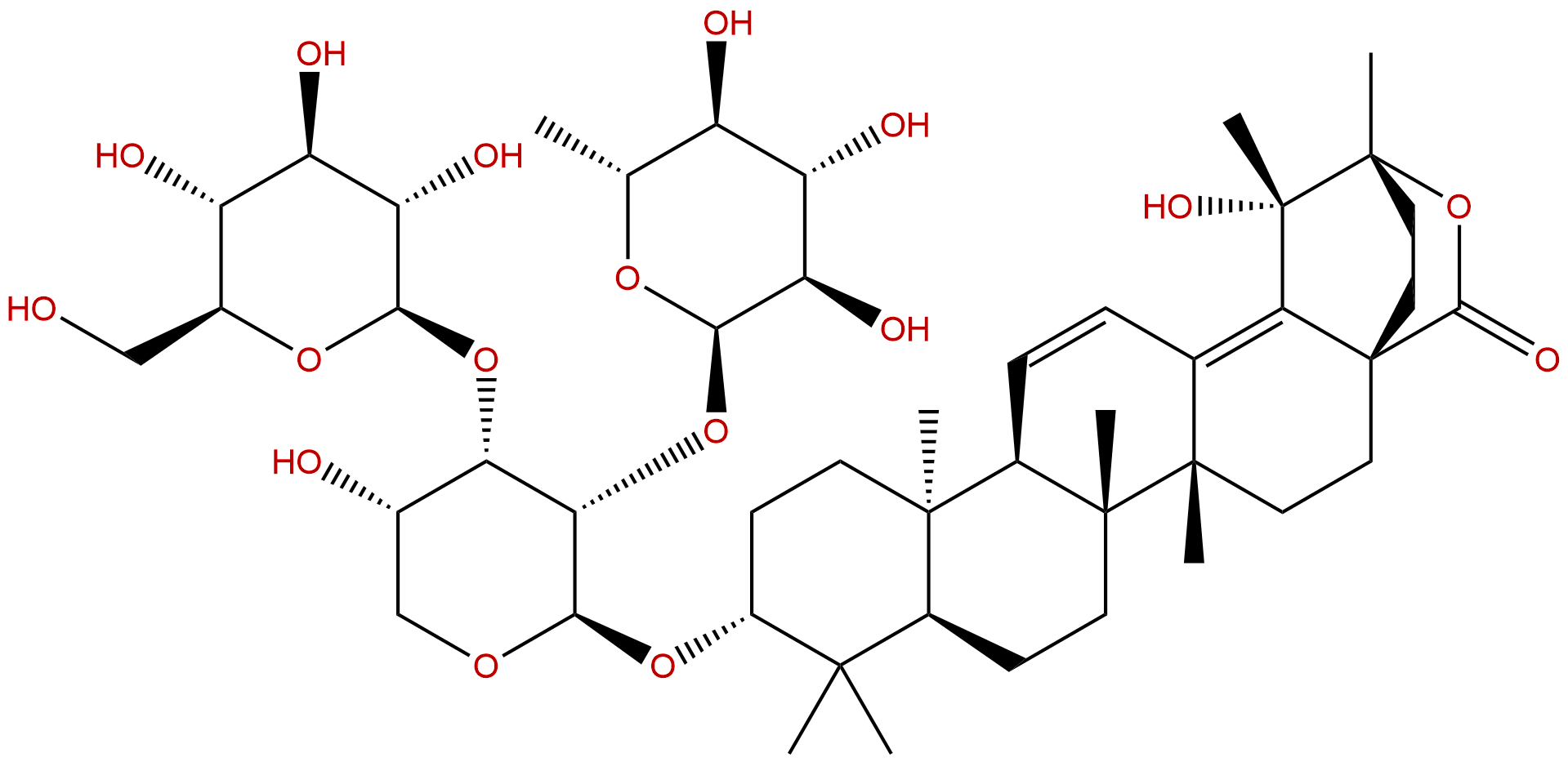
Kudinolide D is a traditional medicinal plant derived from Kudinolide Kuding Tea Natural triterpenoid saponins isolated from Ilex kudingcha. Its CAS number is 173792-61-5, molecular formula is C47H72O17, and molecular weight is approximately 909.08 g/mol. As one of the main triterpenoid saponins in Kuding tea, Kuding holly glycoside D has shown significant effects in recent years due to its significant anti-inflammatory and Inhibit fat formation The biological activity has attracted much attention. Modern pharmacological research has shown that it can exert potential anti obesity and anti-inflammatory effects by regulating key signaling pathways within cells, such as the AMPK pathway, and affecting various inflammation related transcription factors. Its target involves multiple key molecules closely related to inflammation and metabolism, such as TNF, PTGS2, NFKB1, IL6, IL1B, etc. This provides scientific basis for its application in the treatment of metabolic syndrome, chronic inflammatory diseases, and other aspects. This article will systematically expound the scientific value of this natural product from its chemical structure, plant origin, pharmacological mechanism, medicinal evaluation, and research prospects.
2. Chemical structure and physicochemical properties
The molecular structure of Kuding Dongqing Glycoside D is complex and belongs to Oleander type triterpenoid saponins The SMILES string provides a detailed description of its stereoconfiguration, indicating that it is a steroid compound with multiple chiral centers and glycosylation modifications. The sugar groups in the molecule, such as glucose, are linked to triterpenoid glycosides through glycosidic bonds, which have a significant impact on their water solubility and biological activity.
From the perspective of pharmacological parameters:
- Molecular weight (MW)At 909.08 g/mol, it significantly exceeds the category of conventional small molecule drugs (usually<500 g/mol) and belongs to the category of large molecule saponins.
- Lipid water partition coefficient (LogP)A value of 2.32 indicates that the compound has a certain lipophilicity, but is not highly hydrophobic.
- Topological Polarity Surface Area (TPSA)As high as 263.75 Å ², this is mainly attributed to the presence of a large number of hydroxyl and sugar groups in the molecule, resulting in high polarity, indicating that its transmembrane permeability may be poor.
- Water solubility Low (0.0411 mg/mL), which is consistent with its larger molecular weight and polar surface area, may affect its oral bioavailability.
- Caco-2 cell permeability The value of 0.9253 is relatively low, further confirming that its intestinal absorption may face challenges.
- Blood-brain barrier (BBB) penetrability Being 'low' means it is unlikely to enter the central nervous system to exert its effects, which may not necessarily be a disadvantage for drugs targeting the peripheral system, such as anti-inflammatory and metabolic drugs.
These physicochemical properties determine the absorption and distribution challenges that bitter holly glycoside D may face in drug development, but also provide clues for its specific mode of action (such as possibly acting locally in the intestine or requiring formulation technology to improve delivery).
3. Plant sources and traditional applications
Kuding holly glycoside D is derived from Kuding Tea Its botanical name is Ilex kudingcha. Kuding tea does not originate from the Camellia family, but from the Aquifoliaceae family of plants in the genus Aquifoliaceae, mainly distributed in southern China, such as Guangxi, Guangdong, Hainan, and other places.
Kuding tea has a long history of medicinal and edible use in China and Southeast Asia. Traditionally, it has been used as a Clearing heat and relieving summer heat, generating fluids and quenching thirst, reducing food intake and phlegm, lowering cholesterol and blood pressure The tea drink. In folk culture, it is often used to relieve symptoms such as sore throat, red eye headache, indigestion, and "three highs" (hypertension, hyperlipidemia, and hyperglycemia). Its taste is bitter, its nature is cold, and it belongs to the liver, lung, and stomach meridians. The description of these traditional effects is highly consistent with the anti-inflammatory and lipid metabolism regulating activities revealed by modern research.
The chemical composition of Kuding tea is complex, mainly including triterpenoid saponins (such as Kuding Dongqing Glycoside D), flavonoids, phenolic acids, etc. Among them, triterpenoid saponins are considered to be the substance basis for their bitterness and main biological activity. From traditional experience to modern science, the value of Kuding tea is being re recognized and enhanced through in-depth research on its iconic components such as Kuding holly glycoside D.
4. Pharmacological activity and mechanism of action
The core pharmacological activity of Kuding Dongqing Glycoside D is concentrated in anti-inflammatory and Inhibit fat formation In two aspects, its mechanism of action involves precise regulation of multiple key targets and signaling pathways.
4.1 Anti fat formation effect
Existing research has clearly indicated that bitter holly glycoside D can be regulated by AMPK signaling pathway To inhibit the differentiation (adipogenesis) of 3T3-L1 preadipocytes. AMPK (AMP activated protein kinase) is a core regulatory factor of cellular energy metabolism, which can inhibit fat synthesis and promote fatty acid oxidation when activated. Kuding holly glycoside D may downregulate key transcription factors involved in adipogenesis, such as peroxisome proliferator activated receptor gamma (PPAR gamma) and CCAAT/enhancer binding protein alpha (C/EBP alpha), by activating AMPK, ultimately inhibiting triglyceride accumulation and adipocyte maturation. This mechanism provides potential application value for its prevention and treatment of metabolic diseases such as obesity and non-alcoholic fatty liver disease.
4.2 Anti inflammatory effects and their target network
The anti-inflammatory effect of Kuding Dongqing Glycoside D is closely related to its regulation of multiple classic inflammatory targets. According to database information, its targets include:
- TNF (tumor necrosis factor) and IL6 (interleukin-6), IL1B (interleukin-1 β)These are key pro-inflammatory cytokines that play a central role in acute and chronic inflammation. Inhibiting their production or activity is a classic anti-inflammatory strategy.
- NFKB1 (nuclear factor kappa B)This is a core transcription factor that controls the expression of numerous inflammatory genes, including the aforementioned cytokines. Inhibition of the NF - κ B pathway is a common mechanism of action for many anti-inflammatory drugs.
- PTGS2 (prostaglandin endoperoxide synthase 2, also known as COX-2)This is a key enzyme that mediates prostaglandin synthesis in inflammatory responses and is also the main target of nonsteroidal anti-inflammatory drugs such as celecoxib.
Scientific explanation and correlation:
Kuding holly glycoside D is likely to be obtained through a Multi target collaboration The way to exert anti-inflammatory effects. For example, it may reduce the expression of TNF, IL6, IL1B, and COX-2 at the transcriptional level by inhibiting the activation of NF - κ B. Meanwhile, the reduction of COX-2 will decrease the synthesis of pro-inflammatory prostaglandins (such as PGE2). This multi-level intervention on the upstream (transcription factor) and downstream (effector molecule) of inflammatory cascade reaction may enable it to have more comprehensive anti-inflammatory effects than single target drugs, especially for the treatment of chronic diseases driven by multiple inflammatory mediators, such as rheumatoid arthritis, atherosclerosis, metabolic inflammation, etc.
The activation of the AMPK pathway has also been confirmed to have anti-inflammatory effects, as it can inhibit inflammatory signals such as NF - κ B. Therefore, the content of Kuding Dongqing Glycoside D Anti fat formation and anti-inflammatory The effects may be interrelated and mutually reinforcing through the common node AMPK, which coincides with the pathological characteristics of metabolic diseases often accompanied by chronic low-grade inflammation ("metabolic inflammation").
5. Evaluation of drug properties
Based on the provided pharmacological parameters, combined with classic Lipinski's Five Rules The preliminary evaluation of the pharmacological potential of bitter holly glycoside D can be based on criteria such as Rule of Five (Ro5)
- Lipinski Rule Compliance:
- Molecular weight (MW): 909>500 (not compliant)
- LogP: 2.32<5 (compliant)
- Hydrogen bond donors (HBD, estimated based on structure>10):>5 (not compliant)
- Hydrogen bond acceptors (HBA, estimated based on structure>17):>10 (not compliant)
-
Number of rotatable keys (estimated based on structure): usually>10 (not applicable)
Conclusion Ku Ding Dongqing Glycoside D seriously violates multiple of Lipinski's five rules (molecular weight, hydrogen bond donor acceptor), indicating that its development as an oral small molecule drug faces enormous challenges, mainly manifested as Poor oral absorption and low bioavailability。
-
Analysis of other key parameters:
- TPSA and permeability The extremely high TPSA (263.75) and low Caco-2 permeability (0.9253) confirm its poor membrane permeability, which is consistent with Ro5 prediction.
- BBB penetrability Low, not suitable for developing central nervous system drugs, but not harmful to peripheral anti-inflammatory/metabolic effects.
- Plasma protein binding rate (PPB)71.99%, belonging to moderate to high, may affect its free drug concentration and efficacy.
- Toxicity warning The Ames test (0.0) and chromosome aberration (none) results are negative, indicating no direct genetic toxicity. HERG inhibition is' no ', reducing the risk of cardiac toxicity. But the serum markers (Ser_LK/AST/ALT) showed "yes", indicating that there may be some impact on the liver under experimental conditions, and liver toxicity needs to be closely monitored in subsequent development.
- Syn_ Accessibility The score is 7.6036 (usually the higher the score, the more difficult it is to synthesize), combined with its complex structure, indicating that the total synthesis route is long and costly, and extraction and isolation from natural plants are still the main source.
Comprehensive Assessment:
Kuding holly glycoside D is a lead compound with clear and attractive multi-target pharmacological activity. However, it Poor drug similarity Especially with its huge molecular weight and polar structure, its pharmacokinetic properties (absorption, distribution) are not ideal, making it extremely difficult to directly develop into traditional oral small molecule drugs.
Future development strategies may require a different approach:
- Prodrug strategy Modify sugar or hydroxyl groups to prepare lipophilic prodrugs, improve absorption, and hydrolyze them into active ingredients in vivo.
- New drug delivery system Using techniques such as nano formulations (such as liposomes, polymer micelles), microspheres, or enteric coating to improve their solubility, stability, and targeted delivery efficiency.
- Local administration Consider developing formulations for local anti-inflammatory purposes (such as skin inflammation, intra-articular injection) to avoid the absorption challenges of systemic administration.
- As a dietary supplement/health food development Develop standardized extract products based on their natural sources and traditional consumption history to assist in regulating metabolism and inflammation.
6. Research Status and Application Prospects
Research status:
At present, research on the D glycoside of Ilex latifolia is still in progress Preclinical stage The existing literature mainly focuses on the following aspects:
1. Preliminary exploration of activity screening and mechanism Confirmed its anti adipogenic and anti-inflammatory activities in cell models such as 3T3-L1 adipocytes and macrophages, and preliminarily elucidated its effects through pathways such as AMPK and NF - κ B.
2. Study on Structure Activity Relationship Start exploring the relationship between its chemical structure (such as sugar type and quantity) and activity, providing a foundation for structural optimization.
3. Development of analytical methods Establish high-performance liquid chromatography (HPLC) and other methods for quality control of Ilex foliaceus D in Kuding tea and its products.
However, regarding its Detailed in vivo pharmacodynamics, pharmacokinetics, and toxicology and Accurate molecular binding targets The research on whether it directly acts or indirectly regulates is still very lacking, which is a gap that must be filled to push it towards application.
Application Prospects:
Despite facing challenges in developing medicinal properties, the future of bitter holly glycoside D is still full of opportunities:
1. New treatment options for metabolic diseases: For obesity, type 2 diabetes, non-alcoholic fatty liver and other metabolic diseases with inflammation, its dual mechanism of action (metabolism regulation+anti-inflammatory) has unique advantages. If the delivery problem can be solved through formulation technology, it is expected to develop into a new type of therapeutic drug.
2. Natural anti-inflammatory agents As a multi-target anti-inflammatory lead compound, it can be used to treat chronic inflammatory diseases such as rheumatoid arthritis and inflammatory bowel disease.
3. Functional foods and health products Kuding tea itself is already a traditional beverage. In depth research on Kuding Dongqing Glycoside D can provide modern scientific endorsement for its traditional effects of "lipid-lowering" and "clearing heat", and promote the development of health foods based on Kuding tea extract with clear ingredients and precise effects.
4. Model of modernization of traditional Chinese medicine The systematic study of Kuding Dongqing Glycoside D is a successful case of discovering modern drug lead compounds from a traditional Chinese medicine/tea drink, which helps to promote the international recognition and development of active ingredients in Chinese medicine.
Summary:
Kuding Dongqing Glycoside D is a star molecule derived from traditional Kuding tea, with remarkable multi-target anti-inflammatory and metabolic regulatory activities. Although its physical and chemical properties pose obstacles to the development of traditional drugs, this is not the end point. The advancement of modern pharmacy, medicinal chemistry, and biotechnology has provided various tools and ideas for transforming highly active but unique natural products into usable drugs. Future research needs to focus on overcoming its delivery challenges while deepening the understanding of its mechanisms, and systematically evaluating its in vivo safety and effectiveness. Whether ultimately as an innovative drug, new formulation, or high-end functional ingredient, bitter holly glycoside D will continue to write its unique value chapter in the field of natural product pharmacy.