Introduction/Overview
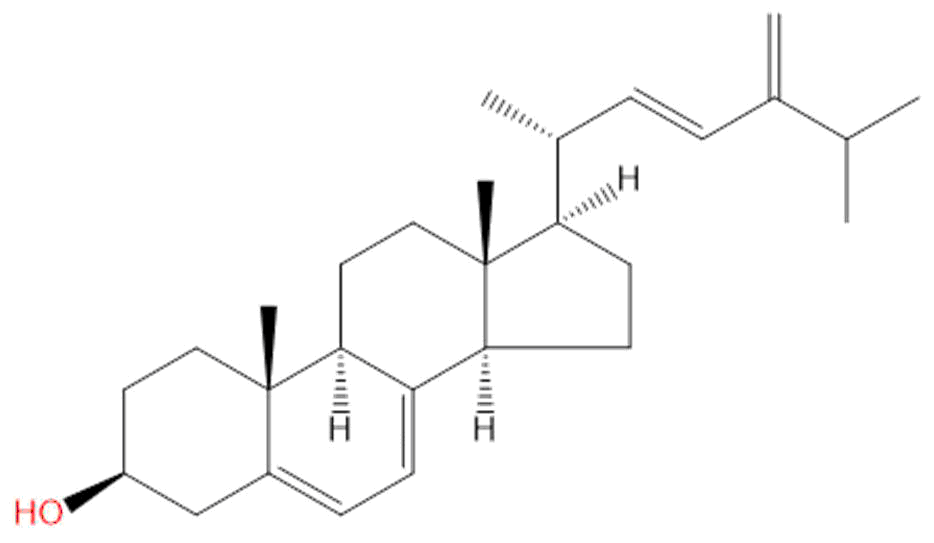
24,28-dehydroergosterol (24,28-DHE) is a structurally unique 3 β - sterol natural product with multiple biological activities. Its molecular structure contains double bonds at positions 5, 7, and 22, and a methylene group at position 24, endowing it with unique chemical properties and biological functions. As one of the metabolites of Saccharomyces cerevisiae, 24,28-DHE plays an important role in sterol metabolism and signal transduction. In recent years, with the deepening of pharmacological research on natural products, 24,28-DHE has gradually become a research hotspot due to its potential anti-tumor activity, especially its application value in the treatment of prostate cancer.
Prostate cancer, as a common malignant tumor in men, has a complex pathogenesis involving multiple signaling pathways and molecular targets. Although existing treatment methods have achieved certain therapeutic effects, there are still issues such as drug resistance and side effects. Natural products have become important resources for developing new anti-cancer drugs due to their structural diversity and wide range of biological activities. 24,28-DHE exhibits excellent anti prostate cancer potential by regulating multiple key targets including BCL2, STAT3, AR, etc. This article provides a systematic review of the chemical structure, sources, pharmacological activity, mechanism of action, and pharmacological evaluation of 24,28-dehydroergosterol, aiming to provide theoretical basis and research direction for its clinical translation.
Chemical structure and physicochemical properties
The chemical name of 24,28-dehydroergosterol is 7,22,24 (28) - tetraen-3 β - ol, with a molecular formula of C28H42O and a molecular weight of 394.6430. Its core structure is a typical steroid skeleton, consisting of four fused rings (A, B, C, D), with double bonds at positions 5, 7, and 22. The presence of a methylene group at position 24 distinguishes it from ordinary ergosterol. The hydroxyl group at the 3 β position endows it with a certain polarity and is an important functional group for its biological activity.
In terms of physical and chemical properties, 24,28-DHE exhibits high hydrophobicity, with a LogP value of up to 7.6486, indicating its extremely strong lipid solubility and difficulty in dissolving in water (solubility of approximately 0.0001 mg/mL). Its polar surface area (TPSA) is only 20.23 Å ², indicating a low overall polarity of the molecule. High lipid solubility is beneficial for its penetration through cell membranes and the blood-brain barrier (BBB), and experimental data supports its high BBB penetration ability. In addition, 24,28-DHE did not exhibit hERG channel inhibition and the Ames mutagenicity test result was negative, indicating its good safety.
Structurally, 24,28-DHE belongs to 3 β - hydroxy-Delta (5) - steroids, derived from the hydride of 5 α - ergotamine. The multiple unsaturated bonds in its structure endow it with strong electronic conjugation effects, which may affect its binding properties and biological activity with biomolecules.
Plant sources and extraction methods
24,28-dehydroergosterol is mainly present in yeast and some fungi, especially in the sterol metabolites generated during the metabolism of Saccharomyces cerevisiae. Although its content is relatively low in plants, it has also been reported in some fungal and plant derived microbial symbionts. Due to its main source being microorganisms, traditional plant extraction is relatively rare and relies more on microbial fermentation and biosynthetic technologies.
The extraction method usually uses organic solvent extraction combined with chromatographic separation technology. The typical process includes:
- Fermentation culture Utilize brewing yeast or related fungi for large-scale fermentation to accumulate 24,28-DHE.
- cell disruption Break the cell wall mechanically or enzymatically to release intracellular sterols.
- Organic solvent extraction Common solvents such as ethanol, methanol, ethyl acetate, or chloroform are used for the extraction of sterols.
- Separation and purification Purification was carried out using methods such as silica gel column chromatography and reverse phase high performance liquid chromatography (RP-HPLC) to obtain high-purity 24,28-DHE.
- Appraisal analysis Confirm the structure through mass spectrometry (MS), nuclear magnetic resonance (NMR), infrared spectroscopy (IR) and other methods.
In recent years, with the development of synthetic biology, the construction of genetically engineered strains has significantly improved the biosynthetic efficiency of 24,28-DHE, providing a new technological path for its large-scale production.
Pharmacological activity research
The pharmacological activities of 24,28-dehydroergosterol mainly focus on anti-tumor, anti-inflammatory, and immune regulation, with its most significant inhibitory effect on prostate cancer.
Anti prostate cancer activity
Multiple in vitro cell experiments have shown that 24,28-DHE can significantly inhibit the proliferation of prostate cancer cell lines (such as LNCaP, PC-3, DU145) and induce cell apoptosis. Its concentration range is usually in the micromolar range, exhibiting strong cytotoxicity selectivity. Mechanism studies have revealed that 24,28-DHE regulates cell cycle related proteins, blocks cell cycle progression, and promotes activation of apoptosis related proteins.
Anti inflammatory and immune regulation
24,28-DHE can inhibit the release of inflammatory mediators, such as inhibiting the activation of the NF - κ B signaling pathway and reducing the expression of pro-inflammatory cytokines (TNF - α, IL-6, etc.), demonstrating good anti-inflammatory effects. In addition, it has a regulatory effect on immune cell function, which can enhance the phagocytic activity and antioxidant capacity of macrophages.
Other pharmacological effects
Some studies also suggest that 24,28-DHE has a protective effect on the nervous system, possibly through its high blood-brain barrier permeability, exerting neuroprotective and antioxidant effects, and has potential application value in neurodegenerative diseases.
Mechanism of action and molecular targets
The mechanism of action of 24,28-dehydroergosterol in anti prostate cancer involves multiple signaling pathways and key molecular targets, mainly including:
1. Regulation of anti apoptotic protein BCL2
BCL2 is an anti apoptotic protein that is highly expressed in various tumor cells and promotes cell survival. 24,28-DHE can downregulate BCL2 expression, disrupt intracellular anti apoptotic balance, and induce cell apoptosis.
2. Regulation of protein tyrosine phosphatase PTPN1
PTPN1 plays a negative regulatory role in cell signaling and participates in regulating the proliferation and migration of tumor cells. 24,28-DHE inhibits the growth and metastasis ability of tumor cells by affecting PTPN1 activity.
3. Inhibition of signal transduction and transcription activator STAT3
STAT3 is a transcription factor that is abnormally activated in various tumor cells, promoting cell proliferation and immune escape. 24,28-DHE can inhibit the phosphorylation and nuclear translocation of STAT3, block its transcriptional activity, and exert anti-tumor effects.
4. Regulation of estrogen receptor beta (ESR2)
ESR2 is expressed in prostate tissue and participates in hormone signaling regulation. 24,28-DHE may affect hormone dependent growth of tumor cells by regulating ESR2 activity.
5. ABCB1 mediated drug efflux inhibition
ABCB1 is an important multidrug resistance related protein, and inhibition of its expression or function by 24,28-DHE can help reverse tumor cell resistance and improve the efficacy of chemotherapy drugs.
6. Activation of antioxidant transcription factor NFE2L2
NFE2L2 regulates cellular antioxidant response and protects cells from oxidative stress damage. 24,28-DHE enhances cellular antioxidant capacity and reduces oxidative stress in the tumor microenvironment by activating the NFE2L2 pathway.
7. Regulation of MAPK1 signaling pathway
MAPK1 (ERK2) is involved in cell proliferation and differentiation signal transduction, and 24,28-DHE affects tumor cell growth and survival by regulating MAPK1 activity.
8. Activation of pro apoptotic protein CASP9
CASP9 is a key initiating enzyme in the endogenous apoptotic pathway, and 24,28-DHE induces CASP9 activation, initiating the cascade of cell apoptosis.
9. Regulation of CYP19A1 (aromatase) and androgen receptor (AR)
CYP19A1 is involved in estrogen synthesis, and AR is a key receptor for prostate cancer cell growth. 24,28-DHE may intervene in hormone dependent tumor growth by regulating the expression or activity of both.
In summary, 24,28-DHE exerts its comprehensive therapeutic effect against prostate cancer through multi-target and multi pathway synergistic effects.
Evaluation of drug properties and pharmacokinetics
The pharmacological evaluation of 24,28-dehydroergosterol shows that it has certain potential for drug development, but there are also challenges.
Physical and chemical properties of drugs
High lipid solubility (LogP=7.6486) is beneficial for cell membrane penetration and blood-brain barrier penetration, supporting its potential application in central nervous system diseases. The low polarity (TPSA=20.23) further enhanced its membrane permeability. However, its extremely low water solubility (0.0001 mg/mL) limits its oral bioavailability and formulation development, which needs to be improved through nanocarriers, liposomes, or other drug delivery systems.
safety assessment
The hERG channel inhibition test result is negative, indicating a low risk of cardiac toxicity. The Ames mutagenicity test showed 0, indicating no significant genotoxicity and good safety.
Pharmacokinetic characteristics
At present, there is limited data on the in vivo absorption, distribution, metabolism, and excretion (ADME) of 24,28-DHE. Its high blood-brain barrier permeability suggests that it may have a good distribution in the central nervous system. In the future, it is necessary to conduct systematic pharmacokinetic studies in vivo to clarify their half-life, bioavailability, and metabolic pathways, in order to guide clinical dosage form design.
Potential for drug interactions
Due to its structural similarity to steroid hormones, it may interact with hormone receptors and metabolic enzymes (such as the CYP450 family) in the body. Further research is needed to investigate its induction or inhibition of drug metabolizing enzymes and evaluate potential drug interaction risks.
Clinical application prospects and prospects
24,28-dehydroergosterol, as a natural sterol compound, has shown broad application prospects in the field of prostate cancer treatment due to its unique structure and multi-target anticancer mechanism. Its high blood-brain barrier permeability also provides the possibility for the treatment of neurological diseases.
The key to future clinical applications lies in:
- Formulation optimization Addressing its low water solubility issue and enhancing the bioavailability of oral or injectable formulations.
- Systematic pharmacokinetic study Clarify the metabolic characteristics and safe dosage range in the body.
- Preclinical and clinical trials To verify its efficacy and safety in treating prostate cancer, and explore the potential of combination therapy.
- In depth exploration of target mechanism Combining modern molecular biology techniques to further elucidate its functional network and guide precise medication.
- Extended indication research Exploring its application in inflammatory and neurodegenerative diseases based on its anti-inflammatory and neuroprotective effects.
In addition, combining synthetic biology and chemical modification techniques to design 24,28-DHE derivatives and optimize their pharmacological and pharmacokinetic properties will greatly promote their clinical translation process.
Conclusion
24,28-dehydroergosterol, as a natural sterol with unique structure and multiple biological activities, exhibits significant anti prostate cancer potential. It provides a novel therapeutic approach by regulating the proliferation, apoptosis, and drug resistance mechanisms of tumor cells through multiple targets and pathways. Although its high lipid solubility and low water solubility pose certain challenges for drug development, its good safety and blood-brain barrier permeability lay the foundation for its clinical application. In the future, through in-depth pharmacological mechanism research, pharmacokinetic analysis, and formulation technology improvement, 24,28-DHE is expected to become a new natural drug candidate molecule for the treatment of prostate cancer and related diseases. Continuous interdisciplinary collaboration will drive it from laboratory research to clinical applications, benefiting patients.