Storage conditions:Short-term storage at 2~8℃, long-term storage at -20 ~ -80℃
111.1300
1.5923
1.5923
.0315
2.3616
3.8837
Low
79.4683
4.7454
No
No
No
No
Yes
No
0.0
Yes
No
No
Yes
Natural products, as an important source of drug discovery, play an irreplaceable role in the long history of human fight against diseases. Among them, Bufadianolide compounds derived from amphibian skin secretions and certain plants have long been a hot topic in medicinal chemistry and pharmacology research due to their unique chemical structure and significant biological activity, especially their cardiotonic effects and anti-tumor potential. Bufalin, Cinobufagin, and Hellebrigenin are representative compounds of steroidal glycosides with a C-17 linkage to an α - pyrone ring. These compounds exhibit various pharmacological activities.
Among numerous bufadienolide compounds,Hellebrigenol As an important metabolite and active molecule, it has gradually attracted the attention of researchers in recent years. Its CAS number is 508-79-2, and its chemical name is usually associated with the aglycone of the root of the plant, but there are slight structural differences, mainly reflected in the reduced state of specific functional groups. As a metabolite of bufadienolide, coumarin not only inherits the core pharmacophore of the parent compound, but may also possess unique metabolic kinetic characteristics and target selectivity. Preliminary studies have shown that coumarin exhibits remarkable activity in anti-tumor, especially anti leukemia, and its mechanism of action involves the regulation of multiple key signaling pathways and targets, including FLT3, JAK2, DNMT3A, BCR-ABL, etc. These targets are precisely the core driving factors for the occurrence, development, and drug resistance of leukemia.
Given that leukemia, especially acute myeloid leukemia (AML) and chronic myeloid leukemia (CML), still faces significant challenges such as recurrence, drug resistance, and severe toxic side effects in clinical treatment, it is of great practical significance to search for candidate compounds with novel structures, unique mechanisms of action, and low toxicity. Chougonol provides valuable lead compounds for the development of novel anti leukemia drugs due to its clear anti leukemia activity, ability to intervene in multiple key targets, and preliminary pharmacological characteristics. This article aims to provide a comprehensive and systematic review of the chemical structure, physicochemical properties, source extraction, pharmacological activity, mechanism of action, pharmacological evaluation, and clinical application prospects of Quercus acutissima, in order to provide reference for the in-depth research and development of this natural product.
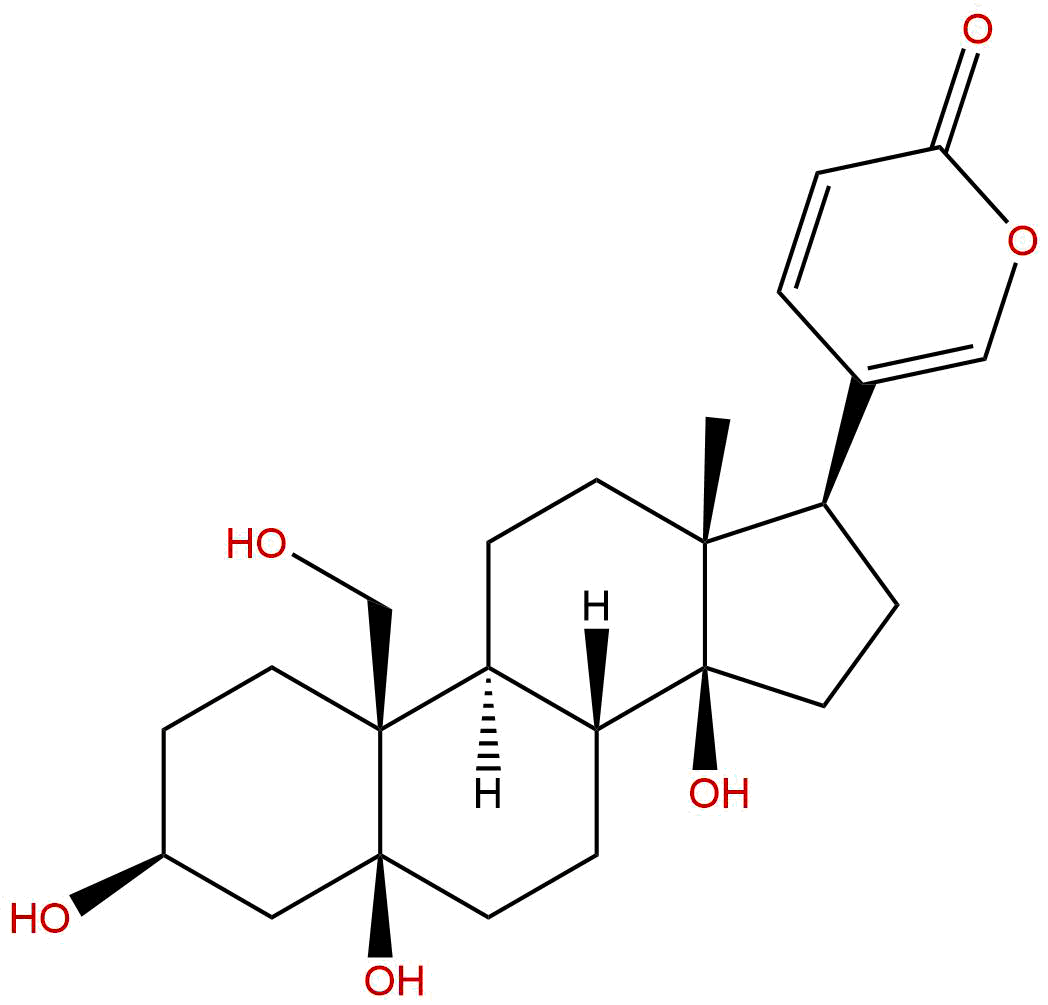
Chougonol belongs to the typical class of bufadienolide compounds, with its core skeleton being the steroid nucleus, and an unsaturated hexagonal lactone ring - α - pyranone ring - connected at the C-17 position. Unlike classical cardiac glycosides such as digoxin, the C-17 side chain of bufadienolide is an alpha pyranone ring instead of a five membered butenolide ring, which is a key structural feature that distinguishes it from cardiac glycosides (Cardenolide). Specifically, when it comes to coumarin, its structure is based on the basic bufadienolide skeleton, with hydroxyl substituents typically present at positions C-14 and C-5. Compared with the parent compound Hellebrigenin, the naming of Hellebrigenin implies the possible presence of specific hydroxyl reduction states in its structure, such as the reduction of the aldehyde group (- CHO) at C-19 to a hydroxymethyl group (- CH ₂ OH), or differences in hydroxyl configuration at C-3, although the exact structural differences depend on high-precision spectroscopy (such as NMR, mass spectrometry) and X-ray single crystal diffraction for final confirmation. This subtle structural change can often significantly affect the polarity of molecules, the binding mode with target proteins, and metabolic stability.
Based on the provided pharmacological parameters, we can conduct a comprehensive analysis of the physicochemical properties of Quercus edulis:
Molecular weight and formula The molecular weight is 418.5300 Da, belonging to the category of small molecule compounds, which meets the requirement of Lipinski's "Five Rules" for molecular weight less than 500. Its molecular formula can usually be inferred as C ₂₄ H ∝₄ O ₆ (based on the toad diene lactone skeleton and multiple hydroxyl substitutions), which needs to be confirmed by structural analysis.
Lipid water partition coefficient (LogP)The LogP value is 1.5923. This value indicates that Quercetin has moderate lipophilicity. LogP between 1-3 is generally considered an ideal range for drug development, ensuring sufficient lipid solubility to penetrate cell membranes while avoiding issues of poor solubility and rapid metabolic clearance caused by excessive lipophilicity. Compared with many highly lipophilic natural products such as paclitaxel LogP~3.5, the polarity of caryophyll is relatively high, which may be related to the presence of multiple hydroxyl groups (- OH) in its molecule.
Polarized surface area (TPSA)TPSA is 111.13 Å ². TPSA is an important parameter for predicting drug oral absorption and blood-brain barrier penetration ability. Generally, molecules with TPSA greater than 140 Å ² have poor oral absorption, while molecules with TPSA greater than 90 Å ² are less likely to penetrate the blood-brain barrier. The TPSA value of 111.13 Å ² indicates that the oral bioavailability of caryophyll may face challenges, but it is not absolutely unacceptable. More importantly, this value clearly indicates its Low blood-brain barrier penetration ability This is an advantageous feature for developing drugs to treat tumors outside the central nervous system, such as leukemia, as it can reduce the risk of central neurotoxicity.
Water solubility The water solubility is 0.0315 mg/mL (approximately 31.5 μ g/mL). This value belongs to the category of low water solubility. Low water solubility is a common problem among many steroid natural products, and it is also one of the main bottlenecks limiting their formulation development and in vivo absorption. Although the solubility of 0.0315 mg/mL is relatively low, it can still be improved through formulation techniques such as the use of solubilizers, liposomes, nanocrystals, cyclodextrin inclusion complexes, etc., to meet the needs of in vitro and in vivo efficacy evaluation and clinical administration.
Security prediction:
In summary, Quercetin has typical structural characteristics of steroid lactones, and its physicochemical properties exhibit moderate lipophilicity, poor water solubility, and no cardiotoxicity or genotoxicity warning. These properties provide direction for subsequent pharmacological activity research and drug optimization.
The name "Helleborus" comes from Helleborus, a perennial herbaceous plant belonging to the Ranunculaceae family. It is named after its use in traditional medicine for treating mental illnesses and inducing sneezing. However, the distribution of bufadienolide compounds in nature is far more than that. Its main sources include:
Bufonis Venenum This is the most famous source of bufadienolide. Chansu is a member of the toad family (such as the Chinese toad) Bufo bufo gargarizans Or black eyed toad Bufo melanostictus)The white fluid secreted by the posterior ear gland and skin gland is processed and dried. Chansu is rich in various bufadienolactone compounds, such as bufalin, bufogenin, resibufogenin, and saikosaponin. As a metabolite, coumarin may be converted from coumarin during the processing, storage, or in vivo metabolism of toad venom.
Plants of the Genus Hymenoceros As its name suggests, plants of the genus Hymenoceros (such as) Helleborus niger、Helleborus orientalis It is also a natural source of this type of compound. These plants contain a variety of cardiac glycosides and bufadienolactones, including the glycosides of Hericides and their related glycosides. Enzymatic reactions or non enzymatic transformations within plants may produce coumarin.
Other sources In addition to the two main sources mentioned above, certain other plants (such as sea onions) Urginea maritima)Toad dienes have also been found in animals, such as certain fireflies.
Given that the content of coumarin in natural sources is usually low and often coexists with other structurally similar bufadienolactones, its extraction and purification require a systematic and refined process.
Raw material pretreatment Crush and sieve the dried toad venom or reed plant materials. For toad venom, due to its high content of protein and lipids, it is usually necessary to first use low polarity solvents (such as petroleum ether or n-hexane) for degreasing treatment to remove impurities.
Solvent extraction Extract using solvents with increasing polarity. Common extraction solvents include ethanol, methanol, or their aqueous solutions. For example, reflux extraction with 70% -95% ethanol or room temperature percolation extraction can effectively dissolve the bufadienolactone components from the raw material. The extract was concentrated under reduced pressure to obtain the total extract.
Preliminary separation The total extract is suspended in water and subjected to liquid-liquid extraction using organic solvents of different polarities, such as petroleum ether, ethyl acetate, and n-butanol. Due to the moderate polarity of bufadienolide compounds, they are usually enriched in the ethyl acetate layer and n-butanol layer.
chromatographic separation This is a crucial step in purification. The most commonly used method is silica gel column chromatography. Gradient elution using solvent systems such as chloroform methanol or petroleum ether acetone can separate different polarities of bufadienolactones. For isomers with extremely similar structures (such as coumarin and coumarin), it may be necessary to combine the following techniques:
Structural Identification The purified compounds need to be structurally confirmed through modern spectroscopic techniques, mainly including:
Through the methods of the above system, high-purity caryophyll can be extracted, isolated, and identified from natural raw materials, providing a material basis for subsequent pharmacological activity research.
At present, the most notable area of pharmacological activity research on Hericinolol is its anti leukemia effect. Leukemia is a malignant clonal disease of hematopoietic stem cells, which can be classified into acute myeloid leukemia (AML), acute lymphocytic leukemia (ALL), chronic myeloid leukemia (CML), and chronic lymphocytic leukemia (CLL) based on the course of the disease and cell type. Existing studies have shown that Quercetin has significant inhibitory effects on proliferation and induces apoptosis in various leukemia cell lines.
Effect on AML cells AML is the most common acute leukemia in adults, characterized by abnormal proliferation of myeloid progenitor cells in the bone marrow. Research has shown that caryophyll can effectively inhibit the proliferation of various AML cell lines (such as MV4-11, MOLM-13, OCI-AML3, etc.), with a half maximal inhibitory concentration (IC ₅₀) typically ranging from nanomolar to low micromolar levels. This potent inhibitory effect is not only reflected in cell viability, but also in the ability to induce apoptosis, manifested as activation of Caspase-3/9, cleavage of PARP protein, and eversion of phosphatidylserine.
Effect on CML cells The characteristic of CML is the presence of the Philadelphia chromosome (Ph chromosome) and its encoded BCR-ABL fusion protein. Although tyrosine kinase inhibitors (TKIs) such as imatinib are first-line treatments for CML, the issue of drug resistance is becoming increasingly prominent. Research has found that carvacrol exhibits strong cytotoxic activity against both imatinib sensitive and resistant CML cell lines (such as K562 and K562/IM resistant strains), suggesting its potential to overcome TKI resistance.
Effect on ALL cells ALL is the most common malignant tumor in children. Preliminary studies have also shown that coumarin has inhibitory effects on certain ALL cell lines, such as Jurkat and Nalm-6, but its sensitivity and specific mechanism still need further exploration.
In addition to leukemia, as a member of the bufotoxin family, coumarin may also have potential anti-tumor activity against other solid tumors. It has been reported that bufalin and cinobufotalin with similar structures have inhibitory effects on many solid tumor cells, such as liver cancer, lung cancer, stomach cancer, breast cancer, colorectal cancer, etc. Therefore, it can be reasonably inferred that Hericinole may also have broad-spectrum anti-tumor potential, but this requires more experimental evidence to confirm. Its effects may involve inhibiting cell proliferation, inducing apoptosis, inducing autophagy, inhibiting angiogenesis, reversing epithelial mesenchymal transition (EMT), and regulating the tumor immune microenvironment.
The most classic function of bufadienolide compounds is cardiotonic, which is achieved by inhibiting Na ⁺/K ⁺ - ATPase on the myocardial cell membrane, increasing intracellular calcium ion concentration, and thereby enhancing myocardial contractility. However, this cardiotonic effect is often difficult to separate from anti-tumor activity, which is also the main reason for its cardiotoxicity. The key to evaluating the safety of Quercetin is whether its cardiac activity is weakened relative to its parent compound (such as bufalin). At present, there are relatively few direct research reports on its cardiac activity, but the predicted results of "hERG inhibition: no" in the pharmacological parameters suggest that its risk of cardiac toxicity may be low, but this cannot completely rule out its direct inhibitory effect on Na ⁺/K ⁺ - ATPase. Therefore, assessing the cardiac safety of the system is a necessary step in future research.
The anti leukemia mechanism of Quercus acutissima is the result of the synergistic effect of multiple targets and pathways, which is highly consistent with the target information provided. The core mechanism can be summarized as follows:
Leukemia, especially AML and CML, is highly dependent on abnormally activated tyrosine kinase signaling pathways for its occurrence and development. In the provided target information,FLT3、JAK2、KIT and BCR-ABL All belong to this category.
DNMT3A (DNA methyltransferase 3A) It is another high-frequency mutated gene in AML. DNMT3A mutations (such as R882H) can lead to abnormal DNA methylation patterns, affecting gene expression and promoting leukemia. Toad diene lactones have been reported to affect epigenetic modifications. For example, they can inhibit the activity of histone deacetylase (HDAC) or alter DNA methylation status by affecting the expression of DNMTs. Therefore, coumarin may exert anti leukemia effects by correcting the abnormal methylation pattern caused by DNMT3A mutations, reactivating silenced tumor suppressor genes. This provides a theoretical basis for combination therapy, such as in combination with demethylating drugs azacitidine or decitabine.
Among the provided targets,DCK (deoxycytidine kinase)、CDA (Cytidine Deaminase)、NT5C2 (5 '- nucleotidase II) and RRM1/RRM2 (ribonucleotide reductase subunit M1/M2) All are closely related to nucleotide metabolism. These enzymes are targets or resistance related enzymes of many classic chemotherapy drugs, such as cytarabine Ara-C and fludarabine.
Toad diene lactones have been shown to interfere with nucleotide metabolism through multiple pathways. For example, they can downregulate the expression of RRM2, thereby inhibiting DNA synthesis; Alternatively, the sensitivity of Ara-C can be regulated by affecting the activity of DCK/CDA. The regulatory effect of carvacrol on these targets not only explains its own anti proliferative activity, but also suggests that it may be used as a chemotherapy sensitizer in combination with nucleoside analogues (such as Ara-C) to overcome drug resistance and improve therapeutic efficacy.
In addition to the specific targets mentioned above, bufadienolide compounds generally have the ability to induce endoplasmic reticulum stress (ERS) and disrupt mitochondrial function. They can induce ERS, activate unfolded protein response (UPR), and ultimately lead to cell apoptosis by inhibiting Na ⁺/K ⁺ - ATPase, altering intracellular ion homeostasis. At the same time, they can also directly act on mitochondria, causing a decrease in mitochondrial membrane potential (Δ PSI m), releasing apoptotic factors such as cytochrome c, and activating the Caspase cascade reaction. These broad-spectrum cytotoxic mechanisms are also one of the reasons why it can overcome multiple drug resistance mechanisms.
In summary, the anti leukemia mechanism of Quercetin is a complex network, which can directly inhibit the key kinases driving leukemia (FLT3, JAK2, KIT, BCR-ABL), interfere with the survival and proliferation of leukemia cells by regulating epigenetics (DNMT3A) and nucleotide metabolism (DCK, CDA, NT5C2, RRM1/2), and induce endoplasmic reticulum stress and mitochondrial apoptosis. This multi-target mode of action gives it unique advantages in addressing the high heterogeneity and drug resistance of leukemia.
Based on the aforementioned physical and chemical properties parameters, we can conduct a preliminary evaluation of the pharmacological properties of Quercus edulis.
Advantage:
challenge:
At present, there are very few reports on the in vivo pharmacokinetics (PK) of Quercus edulis. We can make reasonable speculations based on its physicochemical properties and PK characteristics of similar compounds (such as bufalin):
Future pharmacokinetic studies should focus on establishing sensitive LC-MS/MS methods for analyzing biological samples; Conduct PK studies on intravenous and oral administration in rats or mice to clarify their absolute bioavailability, half-life, clearance rate, and distribution characteristics; Identify its main metabolites and metabolic pathways; Assess its potential drug drug interaction (DDI) risk.
Leukemia treatment This is the most promising application area of Quercetin. Its multi-target mechanism of action, especially its inhibition of driver genes such as FLT3, JAK2, BCR-ABL, as well as its regulation of nucleotide metabolism and epigenetics, makes it potential for treating various subtypes of leukemia. Especially for the following situations, it may have unique value:
Other tumor treatments In view of the broad-spectrum anti-cancer activity of its family members, its application in solid tumors such as liver cancer, lung cancer, breast cancer, etc. can be explored, but its heart safety needs to be focused.
Poor water solubility and low bioavailability This is the primary obstacle to its clinical translation. The solution strategy includes:
Cardiac toxicity risk Although the hERG prediction result is negative, the inherent Na ⁺/K ⁺ - ATPase inhibition of bufadienolactone remains a potential risk. The solution strategy includes:
Metabolic stability and potential toxicity It is necessary to systematically evaluate the activity/toxicity of its metabolic pathways and metabolites. Blocking unfavorable metabolic sites and improving metabolic stability through structural modifications such as introducing fluorine atoms, methylation, etc.
As a naturally occurring and structurally unique metabolite of bufadienolide, coumarin has shown promising prospects in the development of new anti leukemia drugs due to its clear anti leukemia activity, multi-target synergistic mechanism, and preliminary demonstrated advantages in drug efficacy (especially low cardiac toxicity and genetic toxicity risk). It is not only an extension of the active ingredients in traditional Chinese medicine Chansu, but also a successful example of mining lead compounds with unique modes of action from natural products based on modern drug discovery concepts.
However, from laboratory discoveries to clinical applications, Quercetin still faces key challenges such as poor water solubility, unknown metabolic stability, and potential cardiac toxicity. Future research needs to focus on addressing these bottlenecks, utilizing interdisciplinary approaches such as medicinal chemistry, pharmacology, pharmacy, and toxicology to conduct in-depth and systematic research. Especially, through structural optimization and advanced formulation technology, it is expected to overcome the shortcomings of its physicochemical properties and transform it into an efficient, low toxicity, and clinically applicable candidate drug for anti leukemia. In depth research on coumarin may not only provide new treatment options for leukemia patients, but also further enrich our understanding of the structure-activity relationship and pharmacological mechanisms of bufadienolactone compounds, providing valuable experience and inspiration for exploring modern innovative drugs from the treasure trove of traditional natural medicines.
Batch can search by a CAS number,one per line