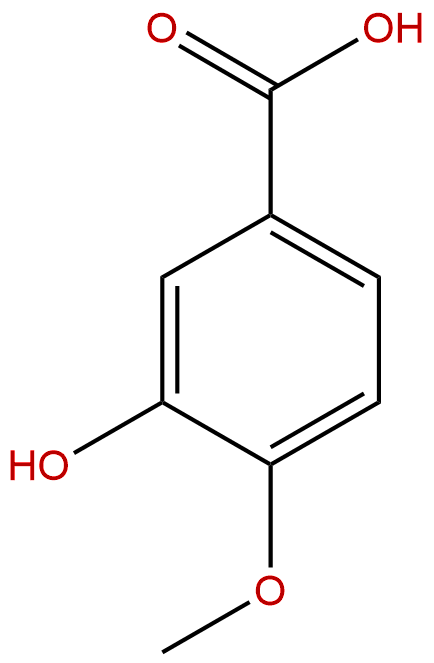


Product name: isovanillic acid
Synonym name:
Catalogue No.: BP3216
Cas No.: 645-08-9
Formula: C8H8O4
Mol Weight: 168.148
Botanical Source:
Physical Description: Powder
Type of Compound: Phenols
Purity: 95%~99%
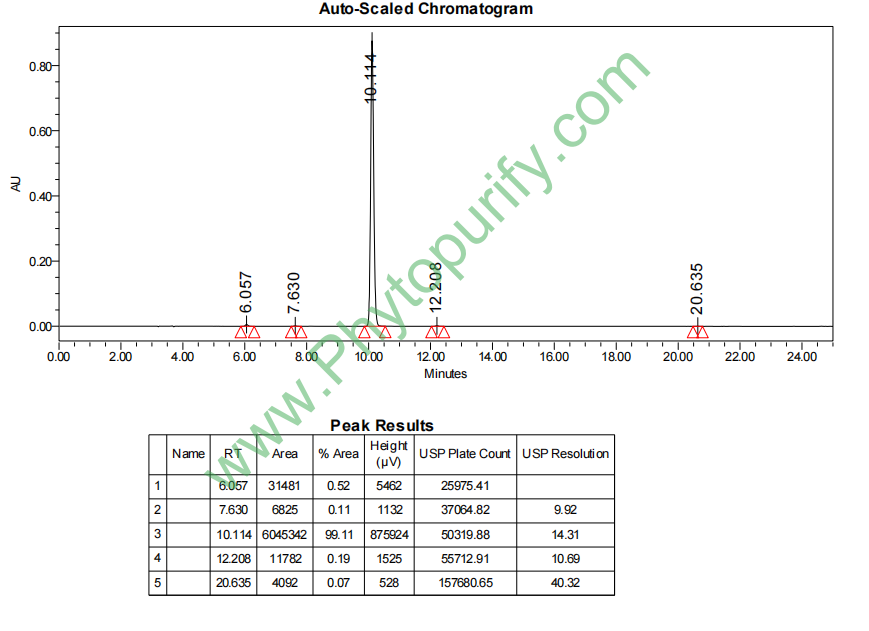
Analysis Method: HPLC-DAD or/and HPLC-ELSD
Identification Method: Mass, NMR
Packing: Brown vial or HDPE plastic bottle
The product could be supplied from milligrams to grams. Inquire for bulk scale.
We provide solution to improve the water-solubility of compounds, thereby facilitating the variety of activity tests and clinic uses.
For Reference Standard and R&D, Not for Human Use Directly.
HPLC of isovanillic acid
Storage conditions:Short-term storage at 2~8℃, long-term storage at -20 ~ -80℃
66.7600
1.6346
-1.1009
3.3097
4.2754
3.5053
Low
82.6406
1.5839
Yes
No
No
No
Yes
No
0.0
Yes
No
Yes
No
Isovanillic acid (3-hydroxy-4-methoxybenzoic acid, CAS number: 645-08-9) is a natural phenolic acid compound widely found in various medicinal plants. As a derivative of benzoic acid, its structural characteristic is that the 3rd position on the benzene ring is hydroxyl and the 4th position is methoxy. This unique substitution pattern distinguishes it from the common vanillic acid (4-hydroxy-3-methoxybenzoic acid) and endows it with a unique biological activity spectrum. Isovanillic acid was originally derived from the traditional Chinese medicine Scrophularia ningpoensis(Scrophularia ningpoensis)The report on its antithrombotic activity, obtained through isolation, has opened up a systematic exploration of its pharmacological value. In recent years, with the deep integration of natural product chemistry and molecular pharmacology, research has found that the biological activity of isovanillic acid is far beyond this, and it has shown potential application value in multiple fields such as anti-inflammatory, antibacterial, antioxidant, neuroprotective, and anti-tumor. Of particular note is that its mechanism of action involves the regulation of multiple key signaling pathways and molecular targets, such as TLR4, STAT3, PPAR γ, etc., making it a valuable molecular probe for connecting traditional Chinese medicine theory with modern precision medicine. This article aims to systematically review the chemical properties, plant sources, pharmacological activities, mechanisms of action, medicinal properties, and clinical application prospects of isovanillic acid, in order to provide comprehensive academic references for the in-depth research and development of this compound.
The chemical name of isovanillic acid is 3-hydroxy-4-methoxybenzoic acid, with a molecular formula of C8H8O4 and a molecular weight of 168.15 g/mol. Its chemical structure consists of a benzoic acid nucleus, with a phenolic hydroxyl group attached to the 3rd position (meta position) of the benzene ring and a methoxy group attached to the 4th position (ortho position). This substitution mode is the fundamental difference between it and the isomer vanillic acid (4-hydroxy-3-methoxybenzoic acid), and deeply affects its physicochemical properties and biological activity.
From the analysis of physical and chemical properties, isovanillic acid is a white to off white crystalline powder. The calculated lipid water partition coefficient (LogP) is about 1.63, indicating that the compound has a certain degree of lipophilicity, but still tends to be hydrophilic overall, which is related to the carboxyl and phenolic hydroxyl groups present in its molecule. Its topological polar surface area (TPSA) is 66.76 Å ², reflecting the contribution of polar functional groups in the molecule. The experimental data shows that its water solubility is about 3.31 mg/mL, belonging to the range of slightly soluble to soluble, which provides a basis for its absorption and distribution in organisms. Its carboxyl group can dissociate at physiological pH, forming an anionic form, which may affect its transmembrane transport and binding to target proteins. The melting point is around 250-252 ° C, indicating high thermal stability. These basic physicochemical parameters are the starting point for evaluating it as a candidate drug molecule.
Isovanillic acid is widely distributed in nature and mainly exists in the roots, stems, leaves, and fruits of various medicinal plants. Its most famous source is the plant Scrophularia in the family Scrophulariaceae(Scrophularia ningpoensis)This is the first source of its anti thrombotic activity discovered. In addition, it has also been isolated from other traditional medicinal plants, such as rosemary in the family Lamiaceae(Rosmarinus officinalis)Goji berries from the Solanaceae family(Lycium barbarum)Fruits, as well as some edible fungi and grains, have also been detected. The diversity of these plant sources suggests that isovanillic acid may be a product of an important phenolic acid synthesis pathway in plant secondary metabolism.
The extraction of isovanillic acid from plant materials is usually carried out using organic solvent extraction method. The common process includes crushing dried plant materials and then leaching or reflux extraction with polar solvents such as methanol, ethanol, or acetone. After vacuum concentration, the crude extract was subjected to liquid-liquid distribution extraction using solvents such as petroleum ether and ethyl acetate. Isovanillic acid was mainly enriched in the ethyl acetate fraction. Further purification relies on various chromatographic techniques, such as silica gel column chromatography, preparative thin layer chromatography (PTLC), and high-performance liquid chromatography (HPLC), especially HPLC with a reverse phase C18 column, which has become the standard method for obtaining high-purity isovanillic acid. In recent years, some green extraction techniques such as ultrasound assisted extraction, microwave-assisted extraction, and supercritical fluid extraction have also been explored to improve extraction efficiency and reduce solvent consumption. The optimization of the extraction process requires comprehensive consideration of the matrix complexity of the target plant, the content of isovanillic acid, and the final purity requirements.
Numerous in vitro and in vivo pharmacological studies have shown that isovanillic acid has multiple biological activities, which form the cornerstone of its potential therapeutic value.
Antithrombotic and anticoagulant activity This is the core activity of isovanillic acid that was first reported. Research has shown that it can significantly inhibit platelet aggregation, prolong clotting time, and exhibit preventive effects against arterial thrombosis in animal models. Its effect may be related to affecting the arachidonic acid metabolism pathway and inhibiting platelet activating factor.
Anti inflammatory and immune regulatory activity Isovanillic acid has shown significant anti-inflammatory effects in various acute and chronic inflammation models. It can effectively inhibit the excessive production of nitric oxide (NO), prostaglandin E2 (PGE2), and pro-inflammatory cytokines (such as TNF - α, IL-6, IL-1 β) induced by lipopolysaccharides (LPS) and other factors in macrophages. This anti-inflammatory effect is an important basis for its intervention in infections, metabolic diseases, and neurodegenerative diseases.
Antibacterial activity Isovanillic acid exhibits inhibitory activity against various Gram positive and Gram negative bacteria, including Staphylococcus aureus, Escherichia coli, etc. Its antibacterial mechanism may involve disrupting the integrity of bacterial cell membranes, inhibiting bacterial biofilm formation, or interfering with the function of key bacterial enzymes.
Antioxidant and neuroprotective activities As a phenolic compound, isovanillic acid has the ability to scavenge free radicals (such as DPPH, ABTS free radicals) and reduce metal ions. In the neural cell injury model, it can alleviate oxidative stress-induced cell apoptosis, indicating its potential protective effect on oxidative stress-related neurological diseases such as Alzheimer's disease and Parkinson's disease.
Antitumor activity Preliminary studies have shown that isovanillic acid can inhibit the proliferation of certain tumor cells and induce their apoptosis. Its anti-tumor effect may be related to regulating the cell cycle and activating apoptotic signaling pathways, but the specific mechanism still needs to be further explored.
The multiple pharmacological activities of isovanillic acid stem from its regulation of multiple nodes in the cellular signaling network. Existing research has preliminarily revealed its interactions with a series of key protein targets:
TLR4/NF - κ B pathway Toll like receptor 4 (TLR4) is a core receptor that recognizes pathogen related molecular patterns, initiates innate immune and inflammatory responses. Isovanillic acid has been shown to inhibit the binding or downstream signaling of LPS to TLR4, thereby blocking the activation of nuclear factor kappa B (NF - κ B). The inhibition of NF - κ B leads to a decrease in transcription of numerous pro-inflammatory mediators downstream, including cytokines, chemokines, inducible nitric oxide synthase iNOS, and cyclooxygenase-2 COX-2, which reasonably explains its powerful anti-inflammatory effect. RELA (p65), as a key subunit of NF - κ B, is also a potential target for its action.
STAT3 signaling pathway Signal transducer and activator of transcription factor 3 (STAT3) is an important hub connecting cytokine signaling and gene expression, and its sustained activation is closely related to chronic inflammation and tumor development. Research has shown that isocoumarinic acid can inhibit the phosphorylation (activation) of STAT3, thereby blocking its nuclear translocation and target gene transcription, which may mediate its anti-inflammatory and potential anti-tumor effects.
PPAR gamma nuclear receptor Peroxisome proliferator activated receptor gamma (PPAR gamma) is a key nuclear receptor that regulates glucose and lipid metabolism and inflammatory response. Isovanillic acid may act as a ligand or regulator of PPAR γ to activate the receptor, thereby promoting the expression of anti-inflammatory genes and inhibiting the proinflammatory pathways such as NF - κ B, which provides a molecular basis for its application in metabolic inflammation (such as diabetes and atherosclerosis).
PTPN1(PTP1B)Protein tyrosine phosphatase 1B is a key negative regulator of insulin and leptin signaling pathways and a potential target for the treatment of type 2 diabetes and obesity. Isovanillic acid may enhance insulin receptor signaling sensitivity by inhibiting PTP1B activity.
Other related targets The study also suggests that isovanillic acid may interact with the following targets: anti apoptotic protein MCL1 (affecting cell survival), DNA repair enzyme APEX1 (possibly related to oxidative stress response), serine protease inhibitor SERPINE1 (PAI-1, associated with fibrinolysis and thrombosis), and protein kinase C alpha (PRKCA, involved in various cellular processes). The diversity of these targets together form a complex network of multi pharmacological effects of isovanillic acid.
Based on calculations and preliminary experimental data, a preliminary evaluation of the pharmacological properties of isovanillic acid is conducted
Absorption, distribution, metabolism, excretion (ADME) characteristics Its moderate LogP value (~1.63) and TPSA value (~66.76 Å ²) comply with the Rule of Five, indicating that it has good oral absorption potential. The water solubility is still acceptable, which is beneficial for the development of formulations. The prediction of blood-brain barrier (BBB) permeability as "low" suggests that its ability to enter the central nervous system in its original form may be limited, which has little impact on the treatment of peripheral diseases, but may require structural modifications or special delivery systems for the treatment of central nervous system diseases. At present, there are few research reports on its systemic pharmacokinetics. It is known that phenolic acid compounds typically undergo extensive II binding metabolism (such as glucuronidation and sulfation) in vivo and may be metabolized by gut microbiota.
Preliminary Safety Assessment The calculated prediction shows that the risk of hERG channel inhibition is "no", which reduces the potential risk of inducing QT interval prolongation and apical torsion ventricular tachycardia, and is a favorable safety indicator. The predicted value of Ames test is 0.0, indicating that it may not be mutagenic, but experimental verification is needed.
Challenges and optimization directions in drug development Although preliminary data is optimistic, isovanillic acid, as a small molecule phenolic acid, still faces some challenges: ① It may be metabolized rapidly in the body with a short half-life; ② Poor blood-brain barrier penetration; ③ Its carboxyl and phenolic hydroxyl groups may cause first pass effects or highly bind to plasma proteins. Future strategies for optimizing drug properties may include: preparing its prodrugs (such as esterifying carboxyl groups to improve lipid solubility and membrane permeability, and hydrolyzing them into active forms in vivo); Perform structural modifications to improve metabolic stability; Or develop new drug delivery systems (such as nanoparticles, liposomes) to improve their bioavailability and targeting.
The multi-target and multi pathway properties of isovanillic acid provide broad prospects for its application in various disease fields
cardiovascular disease Based on its clear antiplatelet aggregation and antithrombotic activity, isovanillic acid is expected to be developed as a novel antithrombotic drug or as a supplement or alternative to existing anticoagulant/antiplatelet drugs for the prevention and treatment of myocardial infarction, stroke, and deep vein thrombosis. Its anti-inflammatory and antioxidant activities may have comprehensive therapeutic benefits for atherosclerosis, a chronic inflammatory disease.
Infection and inflammatory diseases Its dual effects of antibacterial and anti-inflammatory make it promising in the treatment of bacterial infections (especially severe infections accompanied by excessive inflammatory reactions) as well as chronic inflammatory diseases such as rheumatoid arthritis and inflammatory bowel disease. By targeting pathways such as TLR4/NF - κ B, it may become a natural drug for regulating immune balance.
Metabolic diseases: By acting on targets such as PPAR γ and PTP1B, isovanillic acid may improve insulin resistance and regulate lipid metabolism, providing new candidate molecules for the treatment of type 2 diabetes, non-alcoholic fatty liver disease and obesity.
Neurological disorders Although BBB penetration is limited, its antioxidant and anti-inflammatory properties may still be beneficial for peripheral neuropathy or indirectly affecting neurodegenerative processes through mechanisms such as regulating systemic inflammation. Improving its brain entry efficiency through pharmaceutical methods is a direction worth exploring.
neoadjuvant therapy Its inhibitory effect on survival promoting pathways such as STAT3 suggests that it may be used as an adjuvant in combination with conventional chemotherapy drugs to enhance anti-tumor efficacy or alleviate chemotherapy induced inflammatory side effects.
Looking ahead to the future, research on isovanillic acid needs to be further developed: firstly, surface plasmon resonance (SPR), isothermal titration calorimetry (ITC), co crystallization and other technologies need to be used to directly verify and clarify its precise binding mode and interaction strength with the speculated targets (such as TLR4, STAT3, PPAR γ). Secondly, systematic preclinical pharmacokinetic and toxicological studies must be conducted to clarify its ADME characteristics and safety window in animals. Finally, exploring its structural optimization strategy to improve its pharmacokinetic defects while retaining the core pharmacophore is a key step in advancing it from an active natural product to a clinical candidate drug.
Isovanillic acid, a natural phenolic acid discovered from traditional Chinese medicine Scrophularia ningpoensis, has attracted increasing attention from the pharmacological community due to its unique chemical structure and extensive and significant pharmacological activities. The research process from the initial anti thrombotic effect to the revealed multiple effects such as anti-inflammatory, antibacterial, and metabolic regulation reflects the scientific development path from traditional experience to modern molecular mechanism interpretation. The current research has preliminarily outlined a network landscape in which it exerts its effects by intervening in multiple key signaling nodes such as TLR4/NF - κ B, STAT3, and PPAR γ, demonstrating its potential as a multi-target therapeutic molecule. Although it still faces challenges in terms of metabolic stability and tissue distribution in drug development, its good drug like starting point and preliminary safety prediction have laid the foundation for its further development. In the future, through in-depth target validation, systematic preclinical evaluation, and rational drug chemistry optimization, isovanillic acid is expected to develop from a promising natural lead compound into an innovative drug for treating thrombotic, inflammatory, and metabolic diseases, thus better interpreting the value of natural products in modern medicine.
