Introduction/Overview
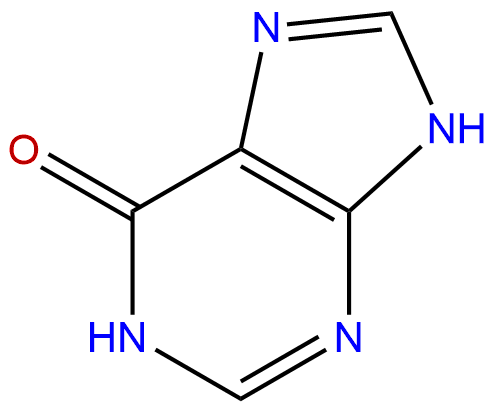
Hypoxanthine, as an important intermediate in purine metabolism, plays a crucial physiological role in the body. It is a purine nucleotide derivative, structurally consisting of a purine ring with an oxygen substituent at position 6, and functionally closely related to adenine. Hypoxanthine is not only a key component in nucleic acid synthesis and catabolism, but also widely used as an hypoxia indicator due to its specific accumulation under hypoxic conditions. In addition, hypoxanthine plays an important role as a potential free radical generator in oxidative stress and related pathological processes. In recent years, with the in-depth study of the relationship between abnormal purine metabolism and various diseases such as gout, cardiovascular disease, neurodegenerative diseases, etc., the pharmacological value of hypoxanthine has gradually been valued, especially its role in the pathogenesis of gout has attracted widespread attention.
This article provides a systematic review of the chemical structure and physicochemical properties, plant sources and extraction methods, pharmacological activity, mechanism of action and molecular targets, pharmacological evaluation and pharmacokinetic characteristics of hypoxanthine. Finally, it explores its clinical application prospects and development trends, aiming to provide comprehensive academic references for researchers in the field of natural product pharmacology.
Chemical structure and physicochemical properties
The molecular formula of hypoxanthine (CAS number: 68-94-0) is C5H4N4O, with a molecular weight of 136.1140. Its chemical structure is an oxo derivative of the purine ring system, characterized by the substitution of the 6th nitrogen atom of purine with oxygen to form an oxopurine structure. This structure endows hypoxanthine with strong polarity and good water solubility (approximately 0.5469 mg/mL), making it easy to dissolve and transport in living organisms.
In terms of physical and chemical properties, the LogP value of hypoxanthine is -0.5982, indicating its strong hydrophilicity and low lipid solubility. Its topological polar surface area (TPSA) is 74.43 Å ², indicating that its molecular polarity is high and conducive to stable binding with polar biomolecules such as enzymes and receptors. In addition, hypoxanthine has a high ability to penetrate the blood-brain barrier, which makes its role in central nervous system related pathological states worthy of attention. The negative result of hERG channel inhibition experiment indicates a low risk of cardiac toxicity. The Ames test score is 0.6, indicating low genotoxicity potential and good safety basis.
Hypoxanthine has good chemical stability, but under oxidative conditions, it can be catalyzed by xanthine oxidase (XDH) to convert into xanthine and uric acid, accompanied by the generation of reactive oxygen species (ROS), demonstrating its potential as a free radical generator.
Plant sources and extraction methods
Hypoxanthine is widely present in various plant tissues, especially in nuclei and cytoplasm rich in nucleic acids. Its content is greatly influenced by plant species, tissue parts, developmental stages, and environmental conditions. Typical plants rich in hypoxanthine include leguminous plants, grains, and some medicinal plants such as Astragalus membranaceus and Panax ginseng.
The traditional method for extracting hypoxanthine mainly relies on water extraction and alcohol extraction combined with centrifugation, filtration and other steps. The specific process usually includes:
- Sample Pretreatment Dry and crush plant materials, and screen for suitable particle sizes.
- Solvent extraction Use purified water or 70% ethanol as the extraction agent, reflux and extract for several hours at a suitable temperature (40-60 ℃).
- Crude extract concentration By reducing pressure and concentrating to remove most of the solvent, a concentrated solution rich in hypoxanthine is obtained.
- Purification and Separation Further purify hypoxanthine using techniques such as high-performance liquid chromatography (HPLC), ion exchange resin, or silica gel column chromatography.
- Identification and quantification Confirm the structure and purity using methods such as mass spectrometry (MS), nuclear magnetic resonance (NMR), and ultraviolet visible spectroscopy (UV Vis).
In recent years, the application of new technologies such as ultrasound assisted extraction, microwave-assisted extraction, and enzymatic assisted extraction has improved the extraction efficiency and purity of hypoxanthine, reduced energy consumption and solvent usage, and promoted the feasibility of its industrial production.
Pharmacological activity research
As an important intermediate in purine metabolism, hypoxanthine's pharmacological activity is mainly reflected in the following aspects:
1. Hypoxia indicator and free radical generation
Under conditions of hypoxia or reperfusion injury, intracellular ATP breakdown leads to a significant accumulation of hypoxanthine. Hypoxanthine is catalyzed by xanthine oxidase to produce xanthine and uric acid, accompanied by the production of reactive oxygen species (ROS) such as superoxide anions, and participates in oxidative stress response. Its characteristic as a potential free radical generator makes it an important biomarker in the study of hypoxic-ischemic diseases such as cerebral ischemia and myocardial infarction.
2. Gout and hyperuricemia related effects
Hypoxanthine is a precursor of uric acid in the purine metabolism pathway, and excessive accumulation can lead to increased uric acid production and trigger gout. Research has shown that hypoxanthine affects uric acid levels by regulating the activity of xanthine oxidase (XDH). In addition, hypoxanthine interacts with uric acid transporters such as URAT1, ABCG2, SLC22A12 to regulate renal excretion of uric acid and participate in the pathogenesis of gout.
3. Antioxidant and neuroprotective potential
Although hypoxanthine itself can promote free radical generation, its metabolite uric acid has strong antioxidant capacity. Uric acid can eliminate excessive free radicals and protect nerve cells from oxidative damage. Some studies suggest that by regulating the balance of hypoxanthine metabolism, it is expected to exert neuroprotective effects and slow down the progression of neurodegenerative diseases.
4. Immune regulatory effect
Hypoxanthine and its metabolites play a role in the energy metabolism of immune cells, affecting inflammatory responses. Its metabolic abnormalities may promote the release of inflammatory mediators and participate in the pathological processes of chronic inflammation and autoimmune diseases.
Mechanism of action and molecular targets
The biological effects of hypoxanthine are mainly achieved through its metabolic enzymes and uric acid transporters, involving multiple signaling pathways and molecular targets.
1. Xanthine oxidase (XDH)
XDH is a key enzyme that catalyzes the oxidation of hypoxanthine to xanthine and uric acid, accompanied by the generation of reactive oxygen species. The regulation of XDH activity directly affects the metabolic rate and oxidative stress level of hypoxanthine, and is a core target of gout and hypoxia related diseases. XDH inhibitors, such as allopurinol, have been widely used in the treatment of gout.
2. Uric acid transporters (URAT1, SLC22A12, ABCG2)
These membrane proteins are responsible for the renal reabsorption and excretion of uric acid. As a precursor of uric acid, hypoxanthine's metabolites are closely related to the functions of these transporters. Regulating the activity of these proteins can help control blood uric acid levels and alleviate gout symptoms.
3. PDZK1
PDZK1 is a multifunctional adapter protein that regulates the localization and function of uric acid transporters such as URAT1 and ABCG2. Abnormal metabolism of hypoxanthine may affect PDZK1 mediated signaling, thereby affecting uric acid metabolism.
4. Free radical generation and oxidative stress signaling pathway
Hypoxanthine catalyzes the production of superoxide anions through XDH, activating signaling pathways such as NF - κ B and MAPK, inducing inflammatory responses and cell apoptosis. These mechanisms are of great significance in hypoxia reperfusion injury and chronic inflammatory diseases.
Evaluation of drug properties and pharmacokinetics
The pharmacological parameters of hypoxanthine indicate that it has certain potential for drug development:
- Molecular weight (136.1140)Moderate, in line with Lipinski's rules, beneficial for oral absorption.
- LogP value (-0.5982)Indicating its strong hydrophilicity, which facilitates dissolution and distribution in body fluids.
- TPSA(74.43 Ų)Moderate, conducive to cell membrane penetration and binding to targets.
- Water solubility (0.5469 mg/mL)Good and convenient formulation design.
- High blood-brain barrier penetration, indicating its potential application in central nervous system diseases.
- No hERG channel inhibitory activity Reduce the risk of cardiac toxicity.
- Ames test low mutagenicity The safety is relatively good.
In terms of pharmacokinetics, hypoxanthine rapidly distributes in the blood and tissues, especially in the liver and kidneys, after oral absorption in the body. Its metabolism is mainly catalyzed by xanthine oxidase to convert into xanthine and uric acid, which are excreted by the kidneys. The half-life of hypoxanthine is relatively short, and the dynamic balance in the body is significantly affected by the activity of metabolic enzymes and uric acid excretion.
Due to its endogenous metabolite nature, hypoxanthine has low toxicity, but high doses or metabolic abnormalities may cause uric acid accumulation and oxidative stress. Therefore, attention should be paid to dose control and metabolic regulation in drug development.
Clinical application prospects and prospects
As a key intermediate in purine metabolism and hypoxia indicator, hypoxanthine has various clinical application potentials:
- Diagnosis and treatment of gout and hyperuricemia
The monitoring of hypoxanthine levels can serve as a biomarker for gout attacks and abnormal uric acid metabolism. In the future, the development of more effective uric acid lowering drugs by regulating hypoxanthine metabolizing enzymes (such as XDH) and uric acid transporters has broad prospects.
- Early diagnosis of hypoxic-ischemic diseases
Hypoxanthine accumulates significantly under hypoxic conditions, and combined with modern biosensing technology, it can be used for early diagnosis and monitoring of diseases such as cardiovascular and cerebrovascular ischemia, organ transplant ischemia-reperfusion injury, etc.
- Development of antioxidant and neuroprotective drugs
By regulating the balance of hypoxanthine and its metabolite uric acid, it is expected to develop novel therapeutic strategies for neurodegenerative diseases such as Parkinson's disease and Alzheimer's disease.
- Immune regulation and inflammatory diseases
Abnormal metabolism of hypoxanthine is closely related to chronic inflammation, and future research can explore its therapeutic potential in autoimmune and inflammatory diseases.
- New drug carriers and targeted therapy
By utilizing the hydrophilicity and biocompatibility of hypoxanthine structure, targeted drug carriers or nucleic acid analogues can be designed to provide new ideas for precision medicine.
Although hypoxanthine has broad application prospects, its metabolism is complex and dynamic changes in the body are fast, posing challenges for clinical translation. In the future, it is necessary to strengthen systematic research on its metabolic regulation mechanism, drug interactions, and long-term safety.
Conclusion
As an important purine nucleotide derivative, hypoxanthine has become an important subject of natural product pharmacology research due to its critical role in energy metabolism, oxidative stress, and uric acid metabolism. Its unique chemical structure and physicochemical properties endow it with good medicinal properties and biological activity, especially showing important clinical value in gout, hyperuricemia, and hypoxia related diseases.
In the future, with the cross fusion of molecular biology, medicinal chemistry, and clinical medicine, in-depth research on hypoxanthine and its metabolic pathways will promote the development of new diagnostic biomarkers and therapeutic drugs, providing strong support for precise treatment of related diseases. Strengthening the pharmacokinetics, toxicology, and clinical application research of hypoxanthine will be the key to maximizing its medicinal value.
In summary, hypoxanthine is not only an important component of basal metabolism, but also a natural product with broad pharmacological potential. Its future application prospects in natural medicine development and disease treatment are worth looking forward to.