Tea saponin E2: research progress from natural products to candidate drugs for lowering blood lipids
Introduction/Overview
Natural products, as an important source of drug discovery, play an irreplaceable role in human health. China is the hometown of tea, tea trees(Camellia sinensis)Not only does it provide a popular beverage for the world, but its diverse chemical composition also provides a rich library of lead compounds for drug development. Theasaponins are an important class of triterpenoid saponins in tea plants, with various biological activities including anti-inflammatory, anti-tumor, and lipid-lowering effects. Among numerous tea saponin homologs, Theasaponin E2 (CAS number: 220114-30-7) has attracted widespread attention from researchers due to its unique pharmacological activity and promising pharmacological prospects.
Tea saponin E2 was initially isolated from tea seeds or leaves and belongs to the oleanane type triterpenoid saponins. Research has shown that the compound has significant cytotoxicity against K562 (human chronic myeloid leukemia cells) and HL60 (human promyelocytic leukemia cells), with a half maximal inhibitory concentration (IC50) of 14.7 μ g/mL, indicating its potential anti-tumor activity. However, what is even more remarkable is the potential of tea saponin E2 in lowering blood lipids. Hyperlipidemia is an important risk factor for cardiovascular and cerebrovascular diseases in atherosclerosis, coronary heart disease and stroke, and the prevalence rate continues to rise worldwide. Although existing lipid-lowering drugs such as statins have definite therapeutic effects, they have adverse reactions such as muscle toxicity and elevated liver enzymes, and some patients are intolerant to statins. Therefore, it is of great clinical significance to search for new, safe, and effective candidate compounds for lowering blood lipids from natural products.
The lipid-lowering effect of tea saponin E2 involves multiple key targets, including cholesterol ester transfer protein (CETP), 3-hydroxy-3-methylglutaryl-CoA reductase (HMGCR), low-density lipoprotein receptor (LDLR), apolipoprotein B (APOB), proprotein converting enzyme subtilisin 9 (PCSK9), apolipoprotein E (APOE), and peroxisome proliferator activated receptor alpha (PPARA). These targets cover multiple stages of cholesterol synthesis, absorption, transport, and metabolism, suggesting that tea saponin E2 may exert lipid-lowering effects through a multi-target synergistic mechanism. This article will provide a systematic review of the research progress of tea saponin E2 from the aspects of chemical structure, plant origin, pharmacological activity, mechanism of action, pharmacological evaluation, and clinical application prospects, in order to provide reference for the further development of this compound.
Chemical structure and physicochemical properties
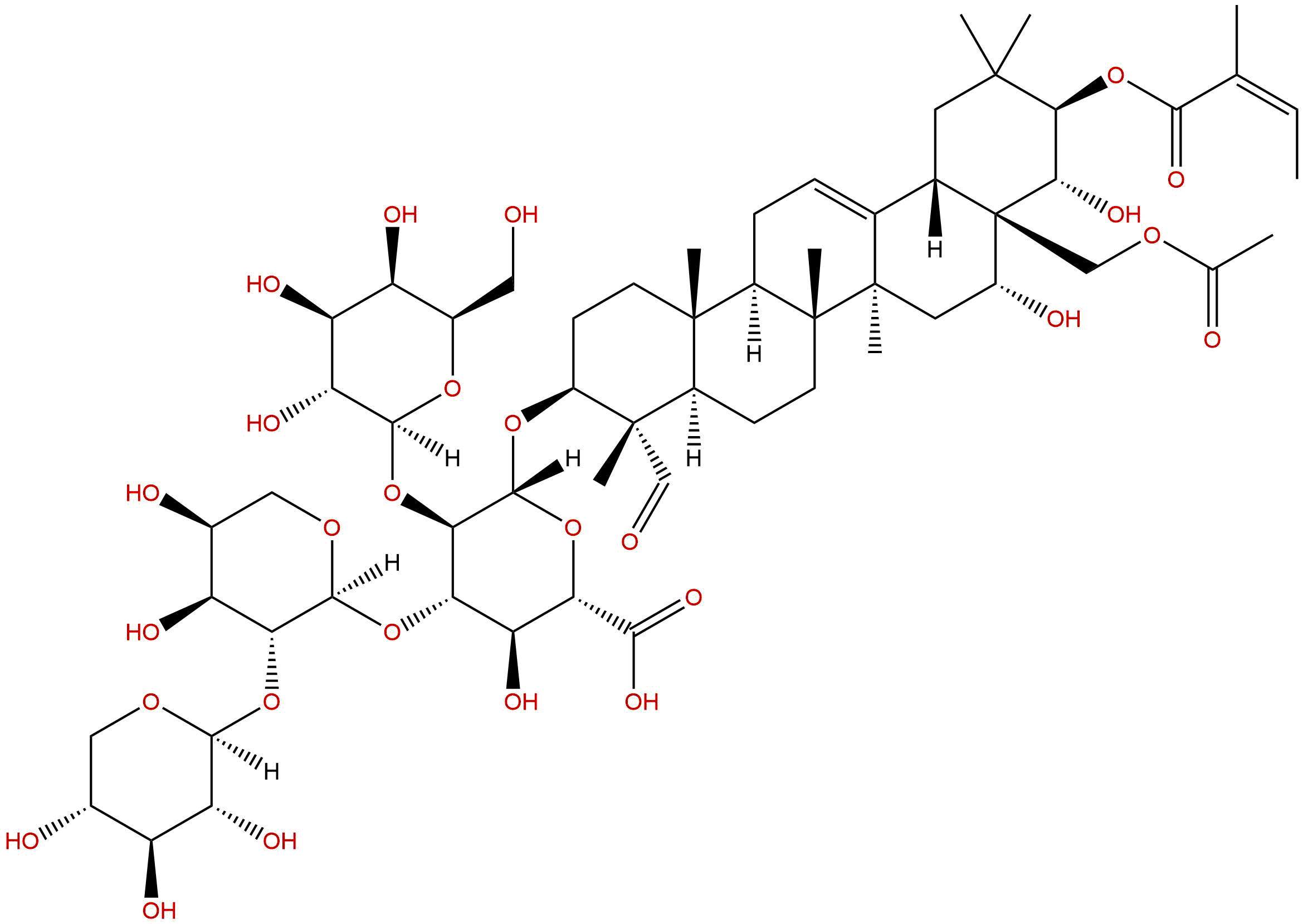
Tea saponin E2 belongs to the triterpenoid saponin class, and its parent nucleus is a pentacyclic triterpenoid of oleanane type. Structurally, the glycoside of tea saponin E2 is Theasapogenol, usually a derivative of Theasapogenin A or B. The sugar chain is composed of multiple monosaccharide units, including glucose, galactose, xylose, xylose, etc., which are connected to the C-3 or C-28 positions of the aglycone through glycosidic bonds. In addition, the E2 molecule of tea saponin may also contain substituent groups such as acetyl and angelica groups, which have important effects on its biological activity and physicochemical properties.
The molecular formula of tea saponin E2 is C ₅₈ H ₉₄ O ₂₈, with a molecular weight of up to 1231.3420 Da, belonging to the category of large molecule natural products. Its lipid water partition coefficient (LogP) is 0.9995, indicating that the compound has moderate lipophilicity, which can maintain a certain solubility in the aqueous phase and cross the lipid bilayer of biological membranes. The topological polar surface area (TPSA) is 423.5700 Å ², which is much higher than the recommended upper limit of 140 Å ² for oral medications, indicating the possibility of oral absorption disorders. The water solubility parameter is 0.5883 mg/mL, which belongs to the category of slight solubility. It is worth noting that the blood-brain barrier permeability of tea saponin E2 is relatively low, which to some extent reduces the risk of central nervous system toxicity. The hERG inhibition test result is negative, indicating a low risk of cardiac toxicity. The Ames test result is 0.0, indicating no significant mutagenicity.
From a comprehensive analysis of its physical and chemical properties, tea saponin E2 exhibits certain pharmacological characteristics, but its high molecular weight and high polar surface area pose potential challenges for its development as an oral drug. However, natural saponin compounds can often achieve increased bioavailability through pathways such as gut microbiota metabolism and lymphatic absorption, so their development prospects cannot be denied solely based on conventional pharmacological rules. In addition, the good safety characteristics of tea saponin E2 (no hERG inhibition, no mutagenicity) lay the foundation for its subsequent research.
Plant sources and extraction methods
Tea saponin E2 mainly comes from Camellia plants, especially tea trees(Camellia sinensis)Various parts of it. There are significant differences in the content and composition of tea saponin in different tissues and organs of tea trees. Generally speaking, tea seeds (seeds) have the highest content of tea saponin, with a total content of 10% -15% of the dry weight of the seeds. Tea leaves (especially old leaves) and tea flowers also contain tea saponin, but the content is relatively low. As a trace component of the tea saponin family, the absolute content of tea saponin E2 in tea trees is usually low, which poses certain difficulties for its large-scale acquisition.
The extraction of tea saponin E2 is usually carried out using solvent extraction method, which separates it based on its solubility differences in different solvents. Traditional extraction methods include water extraction, alcohol extraction (methanol or ethanol), and mixed solvent extraction. Due to the presence of multiple sugar and hydroxyl groups in tea saponin molecules and their high polarity, they have good solubility in water and lower alcohols. Research has shown that a 70% -80% ethanol aqueous solution has the highest extraction efficiency for tea saponin, which can fully dissolve the target compound and reduce the co solubility of impurities such as fat soluble pigments and proteins. The extraction temperature is usually controlled at 60-80 ℃ for 2-4 hours, with a solid-liquid ratio of 1:10 to 1:20 (w/v). To improve extraction efficiency, modern technologies such as ultrasound assisted extraction, microwave-assisted extraction, or enzyme assisted extraction can be used.
The crude extract contains a large amount of impurities such as sugars, proteins, and pigments, which require further purification. The commonly used purification methods include macroporous adsorption resin column chromatography, silica gel column chromatography, reverse phase C18 column chromatography, and high-performance liquid chromatography (HPLC) preparation. Macroporous adsorption resins (such as D101 and AB-8) can effectively enrich tea saponin and remove water-soluble impurities; Silica gel column chromatography utilizes the difference in polarity of different compounds for separation, usually using a chloroform methanol water system for gradient elution. For the trace component of tea saponin E2, it is often necessary to combine reverse phase HPLC for final purification to obtain samples with a purity greater than 95%. In recent years, high-speed countercurrent chromatography (HSCCC) and preparative liquid chromatography-mass spectrometry (Prep LC-MS) techniques have also been applied for efficient separation of tea saponin monomers.
It is worth noting that the separation and purification of tea saponin E2 face two main challenges: firstly, its structure is similar to that of its homologs (such as tea saponin E1, E3, etc.), making separation difficult; Secondly, it has low natural content and requires a large amount of starting materials. Therefore, establishing an efficient and scalable extraction and purification process is a prerequisite for further research on tea saponin E2. In addition, the exploration of biosynthetic or chemical synthesis pathways is also worth paying attention to, but current related research is still in its infancy.
Pharmacological activity research
Cytotoxicity and anti-tumor activity
Tea saponin E2 showed significant cytotoxicity towards K562 and HL60 cell lines, with an IC50 value of 14.7 μ g/mL (approximately 11.9 μ M). This activity level is moderate to strong among natural saponin compounds. K562 cells are human chronic myeloid leukemia cell lines, and HL60 cells are human promyelocytic leukemia cell lines, both of which are classic models of hematological malignancies. The killing effect of tea saponin E2 on these two types of cells suggests that it may have anti leukemia potential.
Further research suggests that the mechanism by which tea saponin E2 induces apoptosis in tumor cells may be related to the mitochondrial pathway. Saponins typically have the ability to disrupt the integrity of cell membranes, increase membrane permeability, and cause leakage of cellular contents. In addition, tea saponin E2 may induce cell apoptosis by activating the caspase cascade, upregulating the Bax/Bcl-2 ratio, and releasing cytochrome c. However, at present, the research on the anti-tumor activity of tea saponin E2 is still relatively limited, and its activity in solid tumor cell lines (such as lung cancer, liver cancer, breast cancer, etc.) has yet to be systematically evaluated.
Hypolipidemic activity
Reducing blood lipids is the most promising pharmacological activity of tea saponin E2. Hyperlipidemia is mainly characterized by an increase in serum total cholesterol (TC), triglycerides (TG), low-density lipoprotein cholesterol (LDL-C), and a decrease in high-density lipoprotein cholesterol (HDL-C). Tea saponin E2 exhibits comprehensive lipid regulation ability by acting on multiple lipid metabolism related targets.
At the cellular level, tea saponin E2 can inhibit the activity of HMGCR in HepG2 human liver cancer cells and reduce de novo synthesis of cholesterol. Meanwhile, it can also upregulate the expression of LDLR, promoting the uptake and clearance of LDL-C. In animal models, tea saponin E2 can significantly reduce serum TC, TG, and LDL-C levels in high-fat diet induced hyperlipidemic mice, and increase HDL-C levels. It is worth noting that the inhibitory effect of tea saponin E2 on CETP is particularly prominent. CETP is a key enzyme in the cholesterol reverse transport process, responsible for transferring cholesterol esters from HDL to VLDL and LDL. Inhibition of CETP can increase HDL-C levels and decrease LDL-C levels, a mechanism similar to marketed CETP inhibitors such as anacetrapib, but tea saponin E2, as a natural product, may have better safety.
In addition, tea saponin E2 can also regulate the expression of APOB and APOE. APOB is the main apolipoprotein of LDL, and its level is positively correlated with the risk of atherosclerosis; APOE is involved in the metabolism of chyle particles and VLDL, and has anti atherosclerosis effect. The inhibitory effect of tea saponin E2 on PCSK9 is also worth paying attention to. PCSK9 can promote the degradation of LDLR, while inhibiting PCSK9 can increase the expression of LDLR, thereby reducing LDL-C levels. This mechanism has a synergistic effect with statins, suggesting that tea saponin E2 may be used in combination with statins to enhance lipid-lowering effects and reduce statin dosage.
Other pharmacological activities
In addition to its anti-tumor and lipid-lowering activities, tea saponin E2 may also have anti-inflammatory, antioxidant, and hepatoprotective effects. Saponin compounds generally have anti-inflammatory activity, and tea saponin E2 may exert anti-inflammatory effects by inhibiting the NF - κ B signaling pathway and reducing the expression of pro-inflammatory cytokines such as TNF - α and IL-6. Its antioxidant activity may stem from the hydrogen donating ability of multiple hydroxyl groups in the molecule, which can scavenge free radicals and inhibit lipid peroxidation. In view of the key role of oxidative stress and inflammation in the occurrence and development of atherosclerosis, the anti-inflammatory and antioxidant activities of tea saponin E2 may cooperate with its lipid-lowering effect to play a role in cardiovascular protection.
Mechanism of action and molecular targets
The lipid-lowering effect of tea saponin E2 involves multiple molecular targets, exhibiting typical multi-target synergistic characteristics. The following provides a detailed explanation of its main targets and mechanisms of action.
CETP inhibition
Cholesterol ester transfer protein (CETP) is a key protein in lipid metabolism, mediating the exchange of cholesterol esters in HDL with triglycerides in VLDL and LDL. High CETP activity will lead to lower HDL-C level and higher LDL-C level, increasing the risk of atherosclerosis. The inhibitory effect of tea saponin E2 on CETP is one of the core mechanisms of its lipid-lowering activity. Molecular docking studies have shown that the sugar chain portion of tea saponin E2 can form hydrogen bonds with the active site of CETP, while the glycoside portion is stably bound through hydrophobic interactions. This binding mode can effectively block the lipid transfer function of CETP, thereby increasing HDL-C levels.
HMGCR inhibition
3-hydroxy-3-methylglutaryl-CoA reductase (HMGCR) is the rate limiting enzyme in the cholesterol biosynthesis pathway and a classic target of statins. Tea saponin E2 can inhibit the activity of HMGCR, reduce the production of mevalonic acid, and thus lower the synthesis of endogenous cholesterol. Unlike statins, tea saponin E2, as a natural product, may have a milder mechanism of inhibiting HMGCR and is less likely to cause severe muscle toxicity. In addition, tea saponin E2 may also downregulate the expression of HMGCR at the transcriptional level, rather than just inhibiting enzyme activity, which provides a guarantee for its long-term safety.
LDLR upregulation
Low density lipoprotein receptor (LDLR) is the main pathway for clearing plasma LDL-C. Tea saponin E2 can upregulate the expression of LDLR on the surface of liver cells, increase the uptake and degradation of LDL-C. This effect is partly due to its inhibition of PCSK9. PCSK9 can bind to LDLR and guide it into lysosomal degradation, thereby reducing the recycling of LDLR. Tea saponin E2 reduces the degradation of LDLR by inhibiting the expression or activity of PCSK9, allowing more LDLR to reside on the cell surface and exert its function of clearing LDL-C.
APOB and APOE regulation
Apolipoprotein B (APOB) is the main structural protein of VLDL and LDL, and its level is positively correlated with plasma cholesterol levels. Tea saponin E2 can reduce the expression of APOB and decrease the secretion of VLDL. Apolipoprotein E (APOE) is involved in the clearance of chyle particles and VLDL, and has anti atherosclerosis effect. Tea saponin E2 can upregulate the expression of APOE and promote the metabolism of lipoproteins rich in triglycerides. This bidirectional regulatory effect on apolipoprotein enables tea saponin E2 to comprehensively improve the lipid profile.
PPARA activation
Peroxisome proliferator activated receptor alpha (PPARA) is a member of the nuclear receptor superfamily and plays a central regulatory role in lipid metabolism. PPARA activation can upregulate the expression of fatty acid oxidation related genes, reduce triglyceride levels, and increase HDL-C levels. Tea saponin E2 may act as an agonist of PPARA, exerting lipid-lowering effects by activating this receptor. It is worth noting that beta lowering drugs (such as fenofibrate) exert their effects by activating PPARA, and the PPARA agonist activity of tea saponin E2 suggests that it may have a similar triglyceride lowering effect as beta lowering drugs.
In summary, tea saponin E2 comprehensively regulates lipid metabolism by inhibiting CETP and HMGCR, upregulating LDLR, regulating APOB and APOE, activating PPARA, and other multi-target mechanisms. This multi-target mode of action not only enhances the lipid-lowering effect, but also reduces the risk of adverse reactions that may arise from single target inhibition, reflecting the unique advantages of natural products in drug discovery.
Evaluation of drug properties and pharmacokinetics
Drugability assessment
Based on Lipinski's five rules (molecular weight ≤ 500, LogP ≤ 5, hydrogen bond donor ≤ 5, hydrogen bond acceptor ≤ 10) and Veber's rule (rotatable bond ≤ 10, TPSA ≤ 140 Å ²), the pharmacological properties of tea saponin E2 face certain challenges. Its molecular weight (1231 Da) far exceeds the threshold of 500 Da, and its TPSA (423.57 Å ²) is also much higher than 140 Å ², indicating that its oral bioavailability may be low. However, natural saponin compounds are often absorbed in the body through special pathways such as intestinal microbiota metabolism and lymphatic absorption, so traditional pharmacological rules cannot be simply applied.
The LogP of tea saponin E2 is 0.9995, which is within the ideal range (0-3), indicating its moderate lipophilicity. The water solubility is 0.5883 mg/mL, which belongs to the category of slight solubility and can be improved through formulation techniques such as solid dispersions, liposomes, nanoemulsions, etc. Low blood-brain barrier permeability is beneficial for reducing central nervous system toxicity. HERG inhibition negative and Ames test negative indicate low risk of cardiac and genetic toxicity, and good safety characteristics.
Pharmacokinetic characteristics
At present, the systematic study on the pharmacokinetics of tea saponin E2 is not sufficient, but it can be inferred by referring to the pharmacokinetic characteristics of other tea saponin compounds. After oral administration, the absorption rate of tea saponin is usually low due to its large molecular weight and high polarity. Most tea saponins enter the colon and are metabolized by the gut microbiota. The β - glucosidase and β - glucuronidase produced by gut microbiota can hydrolyze the glycosidic bonds of tea saponin, releasing aglycones or secondary glycosides. These metabolites may have higher biological activity or better absorption.
The distribution of tea saponin E2 in the body may be mainly in the liver and intestines, which is consistent with the characteristic that the lipid-lowering targets (HMGCR, LDLR, PCSK9, etc.) are mainly distributed in the liver. In terms of metabolism, tea saponin E2 may undergo metabolic pathways such as deglycosylation, acetylation, and glucuronic acid binding. The main excretion pathway may be bile excretion, with some metabolites being excreted through feces.
It is worth noting that the lymphatic absorption pathway of tea saponin E2 deserves attention. Large molecule lipophilic compounds can be absorbed through the intestinal lymphatic system, bypassing the first pass effect of the liver and improving bioavailability. Preparing tea saponin E2 into liposomes and self emulsifying drug delivery systems may significantly improve its oral absorption.
safety evaluation
Preliminary safety evaluation shows that tea saponin E2 has good safety characteristics. A negative Ames test indicates no mutagenicity, while a negative hERG inhibition indicates a low risk of cardiac toxicity. However, tea saponin compounds generally have hemolytic activity, which is a common characteristic of saponin compounds. The hemolytic activity of tea saponin E2 needs to be systematically evaluated to determine its safe dosage range. In addition, toxicology research on long-term toxicity, reproductive toxicity, and immunotoxicity is still blank and needs to be supplemented in subsequent studies.
Clinical application prospects and prospects
The development potential of lipid-lowering drugs
Tea saponin E2, as a natural candidate compound for lowering blood lipids, has the following unique advantages: firstly, it has a multi-target mechanism of action, which can simultaneously regulate multiple links of cholesterol synthesis, absorption, transport, and metabolism, comprehensively improving the blood lipid profile; Secondly, natural products have relatively high safety and low long-term medication risks; Thirdly, the mechanism of action is complementary to existing drugs and can be used in combination with statins, fibrates, and other drugs to achieve synergistic effects and reduce adverse reactions.
However, the development of tea saponin E2 also faces many challenges. Firstly, the low oral bioavailability is the main bottleneck restricting its clinical application. Advanced formulation technologies such as nanoliposomes, phospholipid complexes, and self microemulsifying drug delivery systems need to be developed to improve their oral absorption. Secondly, the low natural content and difficulty in extraction and purification result in high production costs. Biotechnology methods (such as cell culture, genetic engineering) or semi synthetic strategies may become effective ways to solve the problem of raw material sources. In addition, the hemolytic activity of tea saponin E2 needs special attention, which can be reduced in toxicity and improved in therapeutic index through structural modifications such as sugar chain modification and acetylation.
Combination use with other drugs
The combination of tea saponin E2 and statins is theoretically feasible. Statins reduce cholesterol synthesis by inhibiting HMGCR, but feedback upregulate PCSK9 expression, leading to increased degradation of LDLR and partially offsetting the lipid-lowering effect. Tea saponin E2 can inhibit PCSK9, upregulate LDLR, and complement statins. In addition, the inhibitory effect of tea saponin E2 on CETP can increase HDL-C, which statins do not possess. Therefore, the combination of tea saponin E2 and statins is expected to achieve more comprehensive lipid management.
The combined use of tea saponin E2 and beta drugs is also worth exploring. Betrate drugs mainly reduce triglycerides by activating PPARA, and tea saponin E2 also has PPARA agonist activity. The combination of the two may produce a synergistic effect in reducing triglycerides. In addition, the combination of tea saponin E2 and PCSK9 inhibitors (such as evolocumab) may also enhance the LDL-C lowering effect.
Other potential application areas
In addition to lowering blood lipids, the anti-tumor activity of tea saponin E2 also deserves further development. Its cytotoxicity towards K562 and HL60 cells suggests that it may be used for leukemia treatment. In the future, we can systematically evaluate the activity of tea saponin E2 on solid tumors (such as liver cancer, lung cancer, breast cancer, etc.), and explore its combined application with chemotherapy drugs. In addition, tea saponin E2 has potential application value in the treatment of chronic inflammatory diseases such as atherosclerosis, non-alcoholic fatty liver disease due to its anti-inflammatory and antioxidant activities.
Future research directions
The future research on tea saponin E2 should focus on the following aspects: firstly, establishing efficient and scalable extraction and purification processes to solve the problem of raw material sources; Secondly, the system conducts pharmacokinetic studies to clarify its absorption, distribution, metabolism, and excretion characteristics, providing a basis for formulation design; Thirdly, further elucidate the molecular mechanism of its lipid-lowering effect, especially the molecular basis of multi-target synergistic effect; Fourth, conduct systematic toxicological evaluations, including acute toxicity, long-term toxicity, reproductive toxicity, etc; Fifth, develop new drug delivery systems to improve oral bioavailability; Sixth, explore structural modification strategies to enhance activity, reduce toxicity, and improve pharmacokinetic properties.
Conclusion
Tea saponin E2, as a natural triterpenoid saponin compound isolated from tea trees, has shown great potential as a new candidate drug for lipid-lowering due to its unique chemical structure and multi-target lipid-lowering mechanism. This compound comprehensively regulates lipid metabolism by inhibiting CETP and HMGCR, upregulating LDLR, regulating APOB and APOE, activating PPARA, and other pathways, reflecting the multi-target and multi pathway nature of natural products. Preliminary pharmacological evaluation shows that tea saponin E2 has good safety characteristics, without hERG inhibition or mutagenicity. However, the main bottleneck in its development is the oral absorption barrier caused by high molecular weight and high polar surface area.
The development of tea saponin E2 still faces many challenges, from natural products to innovative drugs. However, with the continuous development of modern medicinal chemistry, pharmacy, pharmacology, and biotechnology, these challenges are expected to be gradually overcome. The study of tea saponin E2 not only provides new lead compounds for the development of lipid-lowering drugs, but also provides important references for the drug development of natural saponin compounds. We have reason to believe that in the near future, tea saponin E2 or its derivatives have the potential to become effective drugs for treating hyperlipidemia and related cardiovascular and cerebrovascular diseases, contributing to human health.