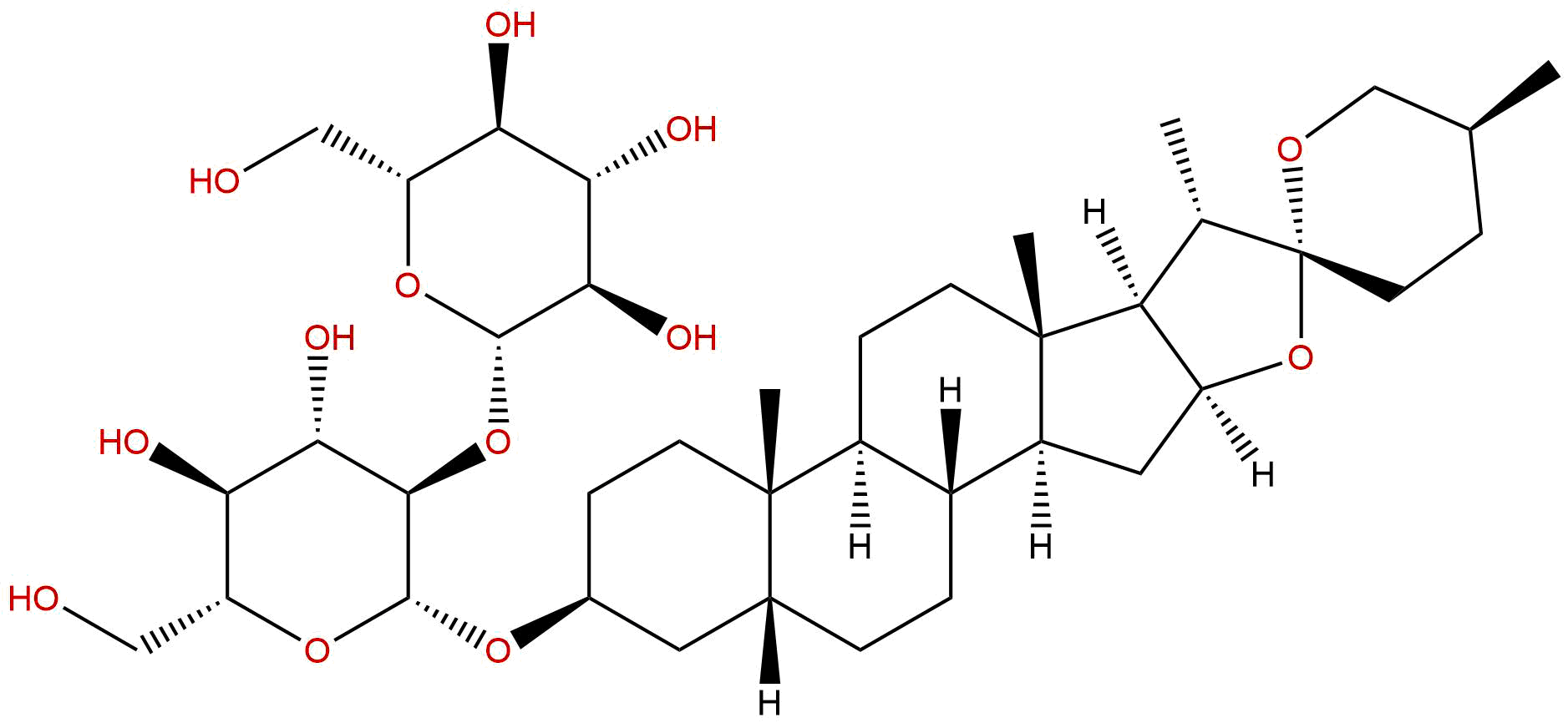


Product name: Asparanin A
Synonym name: 25(S)-Schidigera saponin D5;Asparinin A
Catalogue No.: BP5404
Cas No.: 84633-33-0
Formula: C39H64O13
Mol Weight: 740.928
Botanical Source:
Type of Compound: Steroids
Purity: 95%~99%
Analysis Method: HPLC-DAD or/and HPLC-ELSD
Identification Method: Mass, NMR
Packing: Brown vial or HDPE plastic bottle
Storage: Store in a well closed container, protected from air and light. Put into refrigerate or freeze for long term storage.
Whenever possible, you should prepare and use solutions on the same day. However, if you need to make up stock solutions in advance, we recommend that you store the solution as aliquots in tightly sealed vials at -20℃. Generally, these will be useable for up to two weeks.
The product could be supplied from milligrams to grams
Inquire for bulk scale.
For Reference Standard and R&D, Not for Human Use Directly.
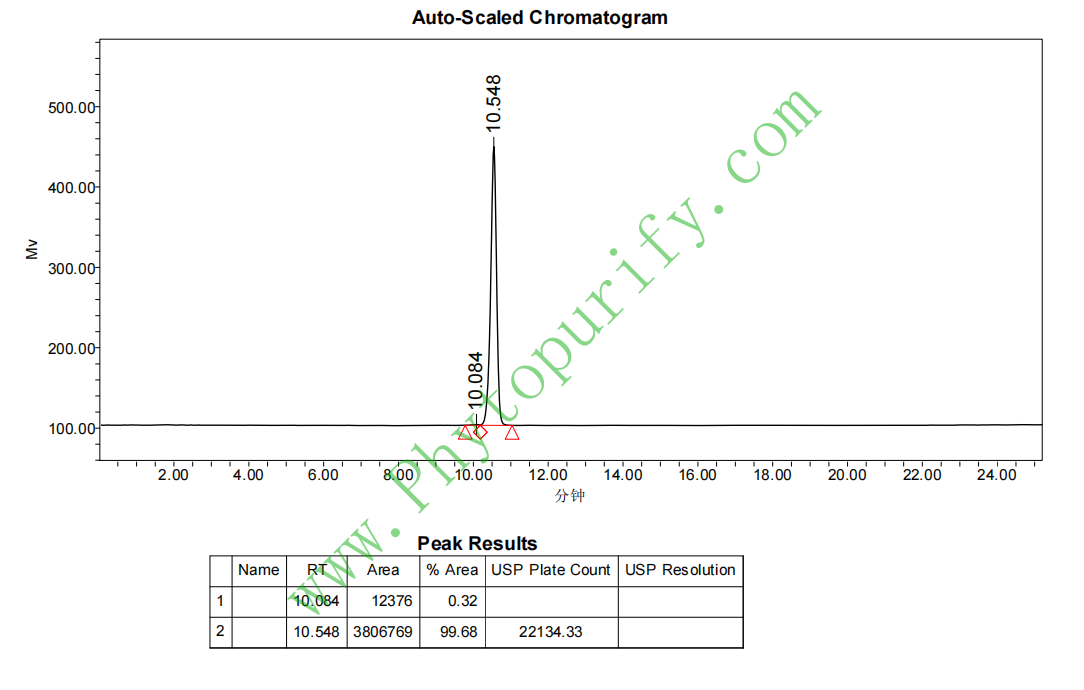
HPLC of Asparanin A
Storage conditions:Short-term storage at 2~8℃, long-term storage at -20 ~ -80℃
196.9900
2.2270
2.2268
.0229
.6957
.3410
Low
65.5963
6.1978
No
No
No
No
No
No
0.0
Yes
No
No
No
Natural products, as an important source of drug discovery, play an irreplaceable role in the long history of human fight against diseases. From the classic analgesic morphine to the antimalarial drug artemisinin, the complex chemical structures in nature provide endless inspiration for modern drug development. Among numerous natural products with biological activity, those from the Liliaceae plant Asparagus genus(Asparagus)The steroidal saponins have attracted much attention due to their diverse pharmacological activities. Asparanin A (CAS number: 84633-33-0) is one of the shining pearls.
Aspartame A is a type of furostane saponin isolated from traditional medicinal plants, and its initial research focus was on its significant anti-cancer activity. Recent studies have shown that aspartic acid A can induce apoptosis in tumor cells through multiple signaling pathways, particularly through the mitochondrial pathway and PI3K/AKT signaling pathway, blocking the cell cycle in the G0/G1 phase and effectively inhibiting cancer cell proliferation. More importantly, in in vivo experiments, aspartic acid A demonstrated strong tumor growth inhibition efficacy in the Ishikawa endometrial cancer xenograft model in mice, laying a solid foundation for its transition from laboratory to clinical application.
In addition to its anti-cancer activity, the potential anti HIV activity of aspartic acid A has also attracted interest from the scientific community. Its potential targets may involve multiple key proteins such as CCR5, CXCR4, HIV-1 protease (HIV1-PR), integrase (INT/Integrase), reverse transcriptase (RT), and gp120. The potential of this multi-target action may give it unique advantages in combating drug resistance of HIV virus. This article will provide a systematic review of the research progress of aspartic acid A from multiple dimensions, including chemical structure, plant origin, pharmacological activity, mechanism of action, medicinal properties, and clinical application prospects, aiming to provide comprehensive references for the in-depth development and utilization of this natural product.
Aspartame A belongs to the class of steroidal saponins, specifically a type of furostane saponin. Its chemical structure consists of two parts: aglycones and sugar chains. The aglycone part is a furostanol skeleton, which is a common type of structure in steroidal saponins, characterized by the F-ring being an oxygen-containing pentagonal furan ring. The aglycone of aspartic acid A is usually (25S) -5 β - furostan-20 (22) - ene-3 β, 26 diol. Sugar chains are connected at positions C-3 and C-26, respectively. The sugar chain at C-3 position is usually composed of monosaccharides such as glucose (Glc) and rhamnose (Rha) connected by specific glycosidic bonds, while the sugar chain at C-26 position is usually a single glucose group. This unique glycosylation pattern not only determines its hydrophilicity and lipophilicity, but also plays a crucial role in its interaction with biological targets.
From the perspective of physical and chemical properties, the molecular weight of aspartic acid A is 740.9280 Da, which is a medium-sized molecule. Its lipid water partition coefficient (LogP) is 2.2270, indicating that it has a certain lipophilicity but is not completely hydrophobic, which is beneficial for its transmembrane transport and distribution in organisms. The topological polar surface area (TPSA) is 196.9900 Å ², which is a relatively high value typically associated with the molecule's hydrogen bonding ability and suggests that it may not easily penetrate the blood-brain barrier. In fact, its blood-brain barrier penetration ability has been evaluated as' low ', which is a favorable feature for the development of non central nervous system targeted drugs that can avoid potential neurotoxic side effects. The water solubility data is 0.0229 mg/mL, indicating poor water solubility, which may be one of the reasons why its oral bioavailability is facing challenges. In addition, key pharmacological evaluation indicators show that aspartic acid A has no inhibitory activity on hERG potassium ion channels (hERG inhibition: no), which greatly reduces its risk of causing QT interval prolongation and arrhythmia in the heart. The Ames test result was 0.0, indicating that it did not show mutagenicity in the bacterial recovery mutation test, preliminarily confirming its low genetic toxicity.
Overall, the chemical structure of aspartic acid A endows it with unique biological activity, while its physicochemical properties provide preliminary positive evaluations for its pharmacological properties, especially its low cardiac toxicity and low mutagenic risk, making it a highly promising candidate drug molecule.
Asparagine A mainly comes from the Liliaceae family and the Asparagus genus(Asparagus)Plants. This genus of plants is widely distributed worldwide, and many of its species have a long history of application in traditional medicine. The most common sources of plants include:
1. Asparagus(Asparagus officinalis)As a common vegetable, asparagus is not only a nutritious food, but also an important source of aspartic acid A. Research has shown that both the tender stems and rhizomes of asparagus contain aspartic acid A.
2. Tianmen Winter(Asparagus cochinchinensis)This is a commonly used nourishing yin herb in traditional Chinese medicine, and its root is one of the main ingredients for extracting aspartic acid A.
3. South African Tianmen Winter(Asparagus africanus)In traditional African medicine, it is used to treat various diseases and has also been proven to contain aspartic acid A.
4. Other types As follows:Asparagus racemosus Traditional Indian herbs have also been reported to contain this compound.
The content of aspartic acid A in plants is usually low and often coexists with other structurally similar steroidal saponins, so its extraction and purification process requires sophisticated separation techniques. The typical extraction process is as follows:
1. Raw material pretreatment and extraction:
- raw material Usually, dry roots or tender stems of plants are used.
- solvent Due to its hydrophilicity, aspartic acid A is often extracted using polar solvents such as methanol, ethanol, or aqueous ethanol (such as 70% -80% ethanol) for reflux extraction or cold soaking extraction. Sometimes non-polar solvents such as petroleum ether or dichloromethane are used for degreasing to improve the purity of subsequent extraction.
- method Ultrasound assisted extraction or microwave-assisted extraction can improve extraction efficiency and shorten time.
2. Preliminary separation and enrichment:
- Liquid-liquid extraction After concentrating the extract, perform fractional extraction using solvents of different polarities (such as petroleum ether, ethyl acetate, n-butanol). Asparagine A is usually enriched in the n-butanol extraction layer.
- Macroporous adsorption resin The n-butanol extract can be preliminarily enriched with saponin components by column chromatography using macroporous adsorption resins (such as D101, AB-8) and gradient elution with different concentrations of ethanol water system.
3. Purification and identification:
- silica gel column chromatography Repeated silica gel column chromatography using solvent systems such as chloroform methanol water or dichloromethane methanol water is a key step in achieving the separation of aspartic acid A from other saponins.
- Reverse phase column chromatography Using ODS (octadecylsilane bonded silica gel) reverse phase column with methanol water or acetonitrile water as mobile phase for fine separation.
- High performance liquid chromatography (HPLC)Preparation HPLC is the ultimate method for obtaining high-purity aspartic acid A (usually>98%).
- Structural Identification The purified compound was structurally confirmed by nuclear magnetic resonance spectroscopy (NMR, including 1H-NMR, 13C-NMR, COSY, HSQC, HMBC, etc.), high-resolution mass spectrometry (HR-MS), and chemical methods (such as identifying the type and connection mode of sugars after acid hydrolysis).
The pharmacological activity research of aspartic acid A mainly focuses on two fields: anti-tumor and anti HIV, among which the research on anti-tumor activity is the most in-depth and extensive.
Aspartame A exhibits broad-spectrum anti-tumor activity and has inhibitory effects on various cancer cell lines.
In vitro cytotoxicity Research has shown that aspartic acid A can significantly inhibit the proliferation of various human cancer cells, including but not limited to:
In vivo anti-tumor activity The in vivo anti-tumor efficacy of aspartic acid A has been validated in a xenograft mouse model. In the Ishikawa endometrial cancer tumor bearing mouse model, intraperitoneal injection or oral administration of aspartic acid A can significantly inhibit tumor growth, and no significant weight loss or other serious toxic reactions were observed, indicating its good safety at therapeutic doses.
In addition to its anti-tumor effect, aspartic acid A also exhibits potential anti HIV activity. Although related research is not as in-depth as anti-tumor research, existing evidence suggests that it may exert its effects by targeting key targets in multiple HIV life cycles.
This multi-target and multi link mode of action makes aspartic acid A potentially advantageous in overcoming HIV resistance, but the specific molecular mechanism and in vivo efficacy still need further research.
The pharmacological activity of aspartic acid A, especially its anticancer activity, is achieved by regulating multiple key signaling pathways and molecular targets within cells. The core mechanism can be summarized as inducing cell apoptosis and cell cycle arrest.
Aspartame A is a potent inducer of cell apoptosis, and its effect mainly relies on the mitochondrial mediated endogenous apoptotic pathway.
Aspartame A can arrest the cancer cell cycle in the G0/G1 phase, thereby inhibiting cell proliferation.
The PI3K/AKT signaling pathway is a core pathway that regulates cell survival, proliferation, and metabolism, and is abnormally activated in various cancers. Aspartame A is an effective inhibitor of this pathway.
In summary, aspartic acid A forms a powerful anti-cancer network by synergistically regulating the mitochondrial apoptosis pathway, cell cycle checkpoint, and PI3K/AKT survival pathway, ultimately leading to cancer cell apoptosis and proliferation inhibition.
Whether a natural product can be transformed from an "active molecule" into a "clinical drug" depends on its drug like and pharmacokinetic properties. The performance of Aspartame A in this area has both advantages and challenges.
Based on the provided parameters and classic pharmacological rules such as the Lipinski Five Rules, evaluate aspartic acid A:
- Molecular weight (MW):740.93 Da, Far exceeding the threshold of 500 Da. This usually means that its oral absorption may be poor and it belongs to the category of "non class drug" molecules.
- Lipid water partition coefficient (LogP)2.227, within a reasonable range of -0.4 to 5.6, indicates moderate lipophilicity.
- Hydrogen bond donor/acceptor As a saponin, its molecule contains a large number of hydroxyl groups, and the number of hydrogen bond donors and acceptors far exceeds the thresholds of 5 and 10. Although this is beneficial for binding to the target, it will seriously affect its membrane permeability.
- TPSA 196.99 Å ², much higher than the threshold of 140 Å ², further confirms its poor membrane permeability.
Conclusion According to classical rules, the pharmacological properties of aspartic acid A are poor, mainly due to its high molecular weight and polarity, which may result in extremely low oral bioavailability. However, this does not mean that it has no development value. Many successful natural product drugs, such as paclitaxel and rapamycin, also violate these rules. For such molecules, it is usually necessary to develop non oral administration routes (such as injection) or adopt novel drug delivery systems.
As a natural product with multi-target activity, aspartic acid A has broad clinical application prospects, but also faces many challenges.
The most direct clinical application prospect of asparagine A lies in cancer treatment, especially for endometrial cancer, liver cancer, breast cancer and other solid tumors.
- As a chemotherapy drug Given its unique mechanism of inducing apoptosis through mitochondria and PI3K/AKT pathway, aspartic acid A has the potential to be developed as a novel chemotherapy drug. The combination therapy with existing chemotherapy drugs such as cisplatin and paclitaxel is worth exploring, as it may improve efficacy and reduce drug resistance through synergistic effects.
- targeted therapy The PI3K/AKT pathway is abnormally activated in various cancers, and aspartic acid A, as an inhibitor of this pathway, is expected to be used to treat specific cancer subtypes with PI3K/AKT pathway mutations, achieving precise treatment.
- adjuvant therapy Its low cardiac toxicity and low genetic toxicity make it a potential adjuvant therapy drug after radiotherapy and chemotherapy, used to prevent tumor recurrence and metastasis.
The multi target anti HIV activity of asparagine A provides a new idea for its application in the treatment of AIDS.
- Multi-target inhibitor Simultaneously acting on multiple stages such as virus entry, reverse transcription, integration, and maturation can significantly reduce the probability of the virus developing drug resistance.
- As an adjuvant therapy Can be used in combination with existing highly effective antiretroviral therapy (HAART) as an "adjuvant" to enhance efficacy or reduce the dosage of HAART drugs, thereby reducing their long-term toxicity.
- Prophylactic medication Its activity of blocking virus entry makes it potentially developed as a microbicide for preventing sexual transmission of HIV.
Despite the bright prospects, the clinical translation of aspartic acid A still faces significant challenges, and future research should focus on the following aspects:
Asparagine A, a natural steroidal saponin derived from plants of the Asparagus genus, has become a remarkable new star in the field of natural drug development due to its unique anti-cancer mechanism of inducing apoptosis and blocking the cell cycle through the mitochondrial pathway and PI3K/AKT signaling pathway, as well as its significant anti-tumor efficacy demonstrated in in vivo models. Its potential broad-spectrum anti HIV activity, especially its multi-target mode of action, adds unique value to it. Although aspartic acid A faces significant challenges in drug development, particularly in terms of oral bioavailability due to its high molecular weight and strong polarity, its low cardiac toxicity, low genetic toxicity, and clear in vivo efficacy provide strong support for its feasibility as an injection or developed through advanced drug delivery systems.
The road to the conversion of aspartic acid A from laboratory activity discovery to clinical final application is still long and challenging. Future research should focus on addressing its pharmacokinetic deficiencies and leveraging the power of modern medicinal chemistry and nanotechnology to transform it into a truly clinically applicable drug. The in-depth study of asparagine A is not only expected to bring new treatment options for cancer and AIDS patients, but also confirms that nature is still a valuable treasure house for human beings to find new drugs and overcome persistent diseases. With the continuous deepening of research, we have reason to believe that aspartic acid A and its derivatives will occupy a place in future clinical treatments.
