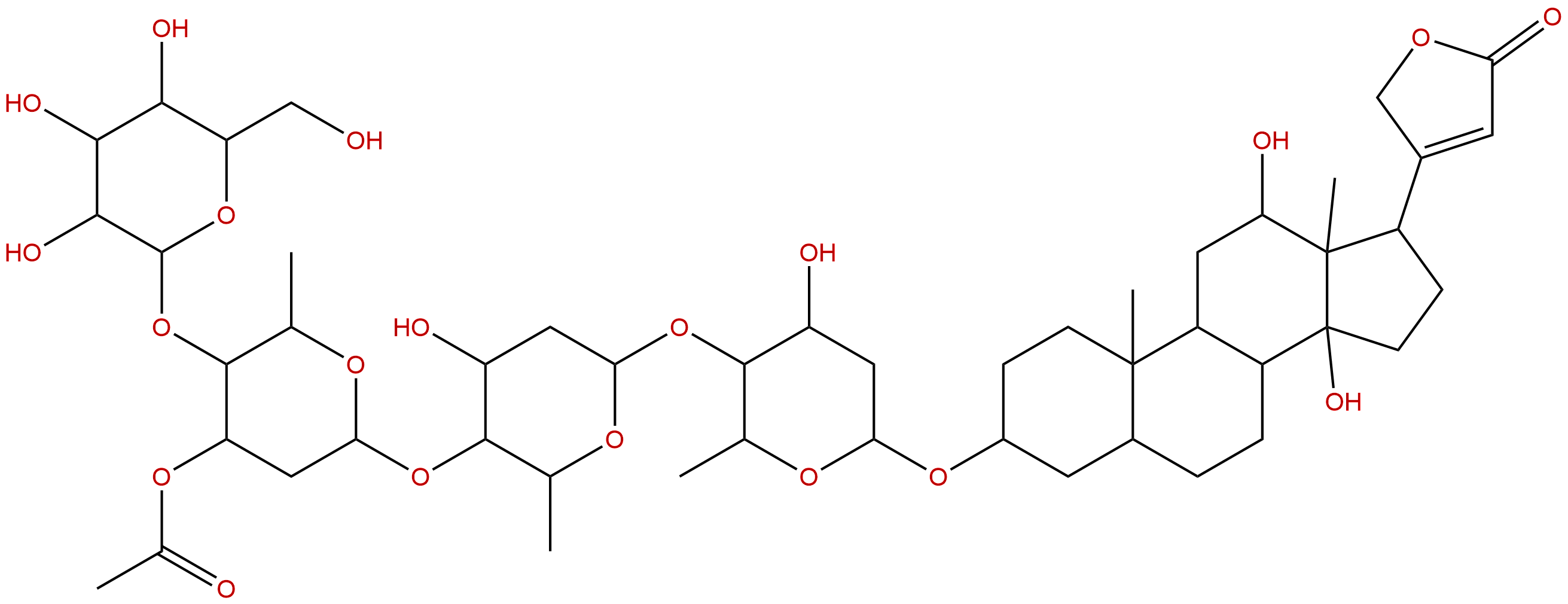


Synonym name: Celanide; Digilanide C; Cedilanid; Ceglunate; Digilanogen C
Catalogue No.: BP0838
Cas No.: 17575-22-3
Formula: C49H76O20
Mol Weight: 985.127
Botanical Source: Digitalis lanata
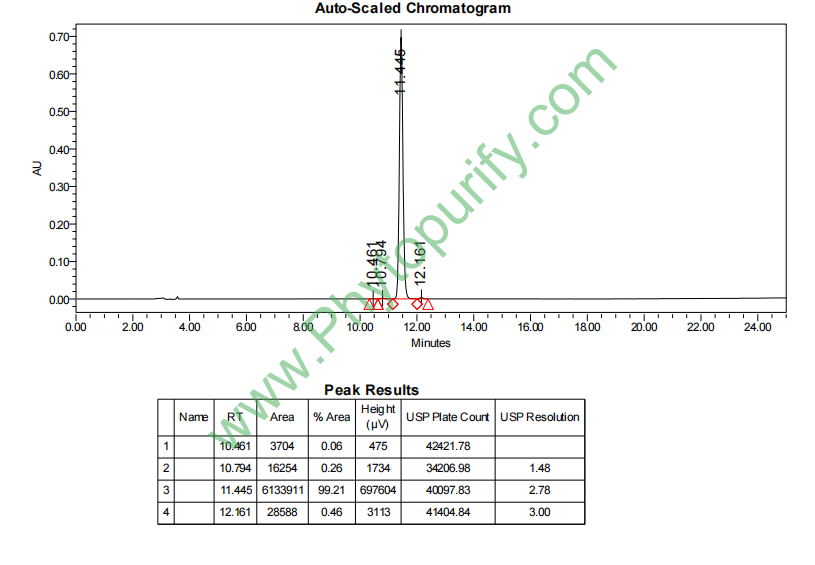
Purity: 95%~99%
Analysis Method: HPLC-DAD or/and HPLC-ELSD
Identification Method: Mass, NMR
Packing: Brown vial or HDPE plastic bottle
Can be supplied from milligrams to grams.
For Reference Standard and R&D, Not for Human Use Directly.
Inquire for bulk scale.
HPLC of Lanatoside C
Storage conditions:Short-term storage at 2~8℃, long-term storage at -20 ~ -80℃
Lanatoside C is a typical natural product of cardiac glycosides, widely present in plants such as Digitalis lanata. As an important member of cardiac glycoside drugs, verbascoside C plays an important role in the treatment research of cardiovascular diseases, especially congestive heart failure and arrhythmia, due to its unique cardiac pharmacological activity. In recent years, with the prevalence of viral infectious diseases, the potential of hairy flower glycoside C in the field of anti-virus has been gradually discovered, especially in the inhibition of dengue virus, flavivirus Kunjin virus, alphavirus Chikungunya virus and Sindbis virus, as well as Enterovirus 71 and other virus infections, which shows its remarkable inhibitory effect on multiple targets and mechanisms. This article provides a systematic review of the chemical structure and physicochemical properties, plant sources and extraction methods, pharmacological activity and mechanism of action, pharmacological evaluation and pharmacokinetic characteristics of verbascoside C, and looks forward to its clinical application prospects, aiming to provide comprehensive and in-depth reference materials for researchers in related fields.
The molecular formula of aucubin C is C47H74O19, with a molecular weight of 985.1270 and a CAS number of 17575-22-3. Its structure belongs to the class of cardiac glycosides, and the typical steroid core structure is connected to the glycosidic part, containing three sugar units, namely glucose and rhamnose. The core structure of Mao Hua Glycoside C includes a four ring steroid skeleton (cardiac glycoside nucleus) connected to glycosidic bonds, and the presence of glycosides endows it with high polarity and water solubility.
In terms of physicochemical properties, the LogP value of verbascoside C is 1.4199, indicating its moderate lipophilicity and favorable cell membrane permeability. Its polar surface area (TPSA) is relatively large, reaching 288.2800 Å ², indicating its high molecular polarity, which is consistent with its low water solubility (0.1039). Although the water solubility of anthocyanins C is not high, it is sufficient to support its distribution and absorption in the body. The low permeability of the blood-brain barrier suggests a lower risk of central nervous system side effects. The hERG channel inhibition experiment result was negative, indicating that verbascoside C has good cardiac electrophysiological safety. The Ames mutagenicity test result was 0.0, indicating no significant mutagenic potential and high safety.
Mao Hua Glycoside C is mainly present in plants of the Mao Hua genus, especially in the leaves of Digitalis lanata, where it is abundant. Mao Hua, as a traditional herb, has a long history and is widely used in the treatment of cardiovascular diseases. The content of anthocyanins C in plants is influenced by multiple factors such as growth environment, harvesting time, and extraction process.
The common methods for extracting verbascoside C include solvent extraction, liquid-liquid partitioning, column chromatography, etc. Traditional extraction usually uses methanol or ethanol as solvents to obtain crude extracts through reflux extraction, which are then separated and purified by silica gel column chromatography or reverse phase high performance liquid chromatography (RP-HPLC). Modern extraction techniques such as ultrasound assisted extraction (UAE), microwave-assisted extraction (MAE), and supercritical fluid extraction (SFE) can improve extraction efficiency and purity, reduce solvent usage, and conform to the concept of green chemistry.
The purified verbascoside C was structurally identified using techniques such as nuclear magnetic resonance (NMR), mass spectrometry (MS), and infrared spectroscopy (IR) to ensure its chemical purity and structural correctness. The establishment of standardized extraction process is of great significance for ensuring the medicinal quality and subsequent pharmacological research of verbascoside C.
As a cardiac glycoside drug, Mao Hua Gan C mainly inhibits the activity of Na ⁺/K ⁺ - ATPase on the myocardial cell membrane, leading to an increase in intracellular sodium ion concentration, which in turn affects calcium ion exchange, increases intracellular calcium ion concentration, and enhances myocardial contractility (positive inotropic effect). This mechanism has shown significant efficacy in the treatment of congestive heart failure and arrhythmia with verbascoside C. Its positive inotropic effect can improve cardiac pumping function and alleviate symptoms of heart failure.
In recent years, the research on the antiviral properties of verbascoside C has attracted widespread attention. Research has shown that verbascoside C has a broad-spectrum inhibitory effect on various viruses, including Dengue virus, Kunjin virus of the Flaviviridae family, Chikungunya virus of the Flaviviridae family, Sindbis virus, and all four serotypes of Enterovirus 71. Its IC50 against dengue virus in HuH-7 cells is 0.19 μ M, demonstrating extremely high antiviral activity.
The antiviral effect of verbascoside C may involve multiple stages of the virus replication cycle, including virus adsorption, entry, replication, and assembly. Its targets are diverse, involving viral proteins and host cytokines, exhibiting a synergistic inhibitory effect of multiple targets.
Maohua glycoside C has also been reported to have various biological activities such as regulating energy metabolism, anti-inflammatory, and antioxidant effects. For example, by activating the AMPK (5 'AMP activated protein kinase) signaling pathway, it participates in regulating the metabolic status of myocardial cells and improving cardiac function. In addition, verbascoside C has regulatory effects on various enzymes and transcription factors (such as EHMT2, APP, PTPN1, MAOA, ESR2, etc.), suggesting its potential as an adjuvant therapy in various disease states.
The pharmacological mechanism of action of verbascoside C is complex, involving multiple molecular targets and signaling pathways.
Maohua glycoside C specifically binds to the sodium potassium ATPase alpha subunit on the myocardial cell membrane, inhibiting its activity, leading to an increase in intracellular sodium ion concentration, inhibiting the function of the sodium calcium exchanger (NCX), increasing intracellular calcium ion concentration, and enhancing myocardial contractility. This mechanism is the basis of its cardiotonic effect.
Maohua glycoside C can activate AMPK (PRKAA1), regulate energy metabolism, promote ATP production in myocardial cells, improve myocardial energy supply, and alleviate myocardial injury. The activation of AMPK may also participate in anti-inflammatory and antioxidant responses, protecting heart tissue.
Maohua glycoside C affects the activity of histone methyltransferase EHMT2, regulates gene expression, and participates in the regulation of cell proliferation, apoptosis, and inflammatory response. This provides a new molecular mechanism perspective for its role in cardiovascular diseases and viral infections.
In terms of antiviral mechanism, verbascoside C interferes with viral RNA replication, protein synthesis, and assembly processes through multi-target action. It exhibits inhibitory effects on various viruses, which may be related to its regulation of ion balance, energy metabolism, and signal transduction in host cells, blocking the formation of viral replication environment.
Maohua glycoside C also acts on various enzymes and transcription factors, such as PTPN1 (protein tyrosine phosphatase 1), MAOA (monoamine oxidase A), ESR2 (estrogen receptor β), ABCB1, and ABCG2 (ATP binding cassette transporter), affecting cell signaling, drug transport, and metabolic processes, and may be involved in the regulation of its pharmacological effects and drug interactions.
The pharmacological parameters of verbascoside C indicate that it has certain drug potential. The molecular weight is close to 1000, which is a relatively large molecule, but a moderate LogP value (1.4199) is beneficial for cell membrane permeation. A higher TPSA (288.2800) indicates strong polarity, which may limit oral absorption and bioavailability, and requires optimization of drug formulations to increase in vivo exposure.
The low water solubility (0.1039) poses a challenge to formulation design, but dissolution and absorption can be improved through techniques such as salt formation and nanocarriers. Low blood-brain barrier permeability reduces the risk of central nervous system side effects. HERG channel inhibition negative and Ames test negative indicate good safety, low risk of arrhythmia, and low risk of genetic toxicity.
In terms of pharmacokinetics, oral absorption of verbascoside C is slow, its bioavailability is limited, and it is widely distributed in the body. It is mainly metabolized by the liver and excreted by the kidneys. Its half-life is moderate and suitable for maintaining stable blood drug concentrations. The metabolic pathway involves glycoside hydrolysis and steroid nucleus redox reactions, and the activity and safety of metabolites need further research.
Mao Hua Gan C, as a traditional cardiac glycoside drug, has a relatively mature application basis in the treatment of heart failure and arrhythmia. Its unique pharmacological properties and good safety make it still of significant clinical value. With the in-depth study of its antiviral activity, verbascoside C has shown broad application prospects in the adjuvant treatment of viral infections, especially dengue fever, enterovirus and other diseases.
Future research should focus on the following aspects:
Optimization of drug formulations By using new formulations such as nanotechnology and liposome encapsulation, the bioavailability and targeting of verbascoside C can be improved, reducing side effects.
In depth analysis of antiviral mechanisms Combining virology and molecular biology techniques, elucidate the targets and signaling pathways of verbascoside C on different viruses, and promote its development as a broad-spectrum antiviral drug.
Clinical trial design Conduct multicenter, randomized controlled clinical trials to validate the efficacy and safety of verbascoside C in cardiovascular disease and viral infections, clarify indications and medication regimens.
Combination therapy strategy Explore the combined use of verbascoside C with other antiviral or cardiovascular drugs to achieve synergistic effects and reduce the risk of drug resistance.
Toxicological and pharmacokinetic studies Systematically evaluate the safety of long-term medication, clarify the activity and potential toxicity of metabolites, and provide scientific basis for clinical application.
As a natural product of cardiac glycosides with a long history of application, verbascoside C not only plays an important role in the treatment of cardiovascular diseases, but its broad-spectrum antiviral activity also provides new ideas for the prevention and treatment of emerging viral infections. Its complex chemical structure, multi-target mechanism of action, and good safety make it a model for natural product pharmacology research. In the future, with the continuous advancement of molecular pharmacology and medicinal chemistry technologies, verbascoside C is expected to expand its clinical applications through modern drug development strategies and become an important drug in the treatment of cardiovascular diseases and viral infections. Continued in-depth basic and clinical research will lay a solid foundation for its clinical translation and industrialization, promoting its contribution to global public health.
