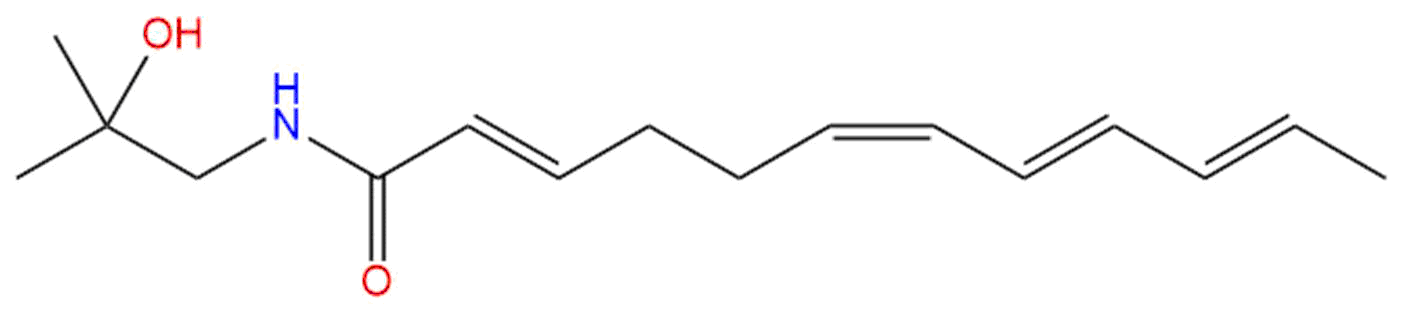


Product name: Hydroxy-α-sanshool
Synonym name:
Catalogue No.: BP4106
Cas No.: 83883-10-7
Formula: C16H25NO2
Mol Weight: 263.381
Botanical Source: Zanthoxyli pericarpium
Physical Description:
Type of Compound: Alkaloids
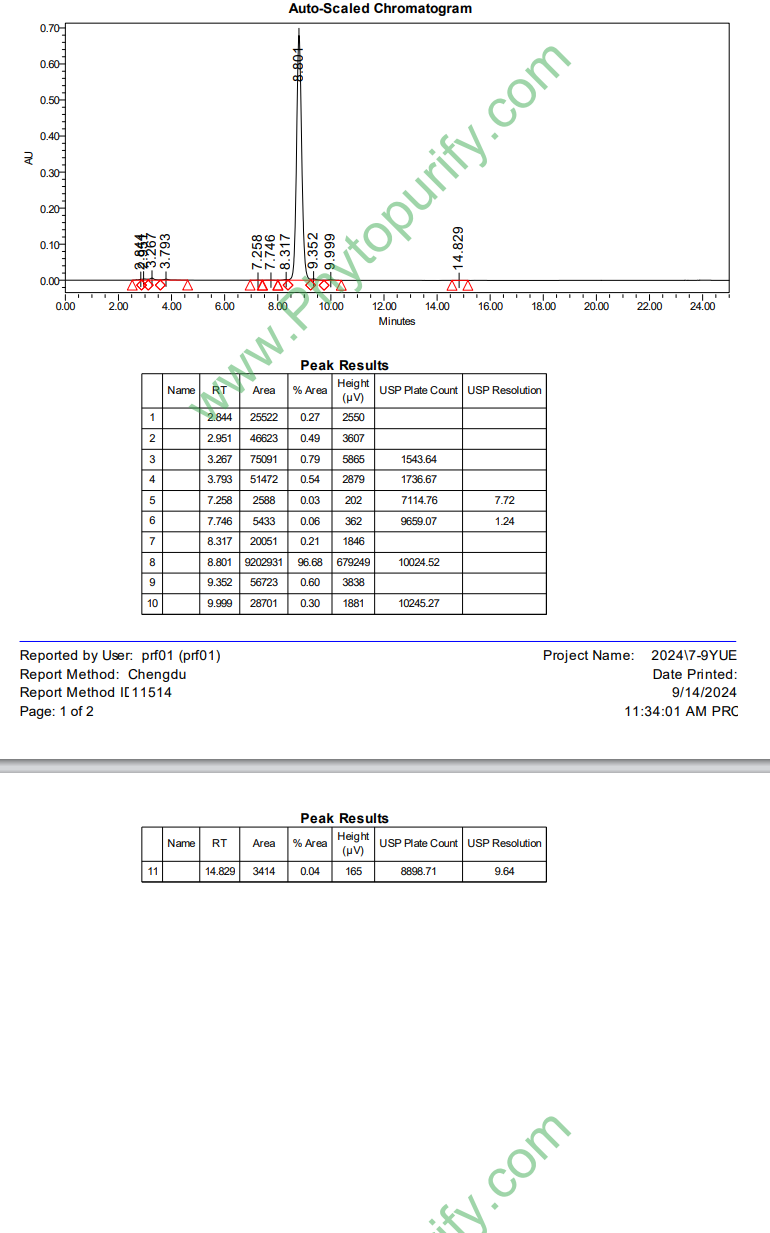
Purity: 95%~99%
Analysis Method: HPLC-DAD or/and HPLC-ELSD
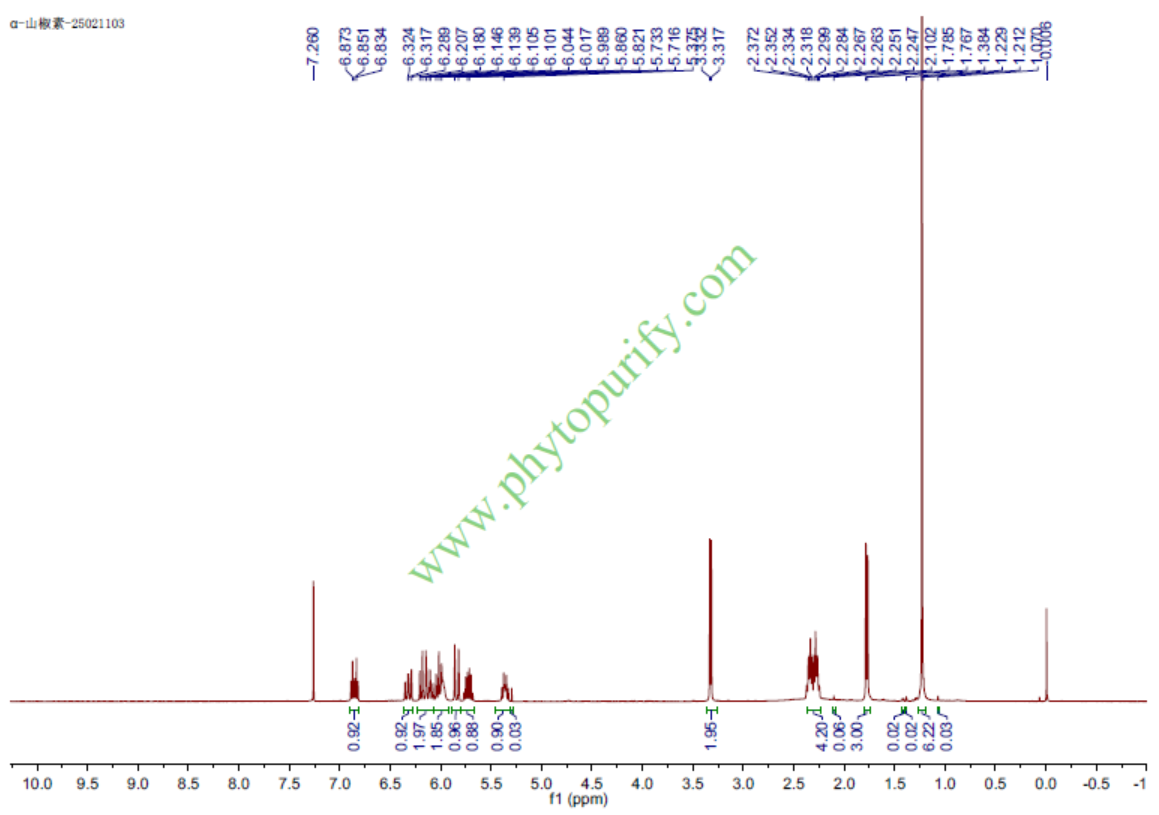
Identification Method: Mass, NMR
Packing: Brown vial or HDPE plastic bottle
Storage: Store in a well closed container, protected from air and light. Put into refrigerate or freeze for long term storage.
The product could be supplied from milligrams to grams
Inquire for bulk scale.
For Reference Standard and R&D, Not for Human Use Directly.
Description:
Hydroxy-alpha-sanshool exerts antiobesity and hypolipidemic activities in HFD rats by reducing liver oxidative stress and thus could be considered as a potential candidate drug to cure or prevent obesity and hyperlipidemia. It also has analgesic properties, it activates TRPV1 and TRPA1 in sensory neurons.
References:
Biophysical Journal, 2012, 102(3):323a.
The Plant-Derived Alkylamide, Hydroxy-Alpha-Sanshool, Induces Analgesia through Inhibition of Voltage-Gated Sodium Channels
Many native cultures use extracts from Xanthozylum plants to topically treat toothache and joint pain. One active component of these extracts is the alkylamide, Hydroxy-alpha-sanshool, which induces tingling and numbing paresthesia when applied to the skin or tongue. To understand the physiological mechanisms underlying paresthesias, we sought to identify the molecular targets of sanshool in the somatosensory system.
METHODS AND RESULTS:
We first measured the analgesic properties of sanshool using mouse models of somatosensory behavior. Topical application of sanshool on the hind paw of naïve mice did not alter their sensitivity to noxious thermal or mechanical stimuli. However, in a model of neurogenic inflammation, sanshool acutely suppressed inflammatory hypersensitivity to mechanical force whereas it did not suppress hypersensitivity to heat. These data suggest that sanshool inhibits activity of a subset of sensory neurons that transduce mechanical, but not thermal, stimuli. In cultured dorsal root ganglion (DRG) neurons from mice, sanshool inhibited action potential (AP) firing in a subset of medium-to-large diameter neurons, which are thought to mediate mechanotransduction. In contrast, sanshool did not inhibit AP firing in small-diameter sensory neurons, which predominantly transduce noxious heat. In addition to size, sensory neurons are distinct in their expression of sensory neuron-specific voltage-gated sodium channels. Thus the differential effect of sanshool on sensory neurons may be due to selective activity of sanshool on different sodium channels. To test this idea, we compared the effects of sanshool on two sodium channel subtypes that are expressed in sensory neurons, Nav1.7 and 1.8. Sanshool reduced the magnitude of Nav1.7 and Nav1.8 currents but caused a hyperpolarizing shift in the steady-state inactivation curve of Nav1.7 only.
CONCLUSIONS:
Thus intrinsic molecular differences between sensory neurons, such as expression of different sodium channel subtypes, may underlie specificity of sanshool action.
HPLC of Hydroxy-α-sanshool
HNMR of Hydroxy-α-sanshool
Storage conditions:Short-term storage at 2~8℃, long-term storage at -20 ~ -80℃
Hydroxy - α - sanhook (CAS number: 83883-10-7) is a natural product derived from plants of the pepper genus. Due to its unique chemical structure and significant biological activity, it has received widespread attention in the field of pharmacology research in recent years. As an agonist of TRPA1 and TRPV1 receptors, hydroxy - α - coumarin has shown significant value in the study of pain regulation mechanisms. In addition, an increasing number of studies indicate that this compound has potential therapeutic effects in the field of anti-tumor therapy, involving multiple tumor related molecular targets. This article provides a systematic review of the chemical structure and physicochemical properties, plant sources and extraction methods, pharmacological activity, mechanism of action, pharmacological evaluation, and clinical application prospects of hydroxyl - α - coumarin. The aim is to provide a theoretical basis and reference for the in-depth research and drug development of this natural product.
Hydroxyl - α - coumarin belongs to the coumarin class of compounds, with a molecular formula of C17H27NO2 and a molecular weight of 263.3810. Its structural features mainly include a hydroxyl containing fatty amine skeleton with certain polarity and hydrophobicity, with a LogP value of 2.4863, showing moderate lipid solubility, which is conducive to membrane penetration and in vivo distribution. Its topological polar surface area (TPSA) is 49.33 Å ², indicating that its molecular polarity is moderate and may have good bioavailability. The low water solubility (0.1288 mg/mL) to some extent limits its direct oral absorption, but also contributes to its stability and membrane binding ability in a lipid environment.
The hydroxyl group in the hydroxyl - α - coumarin structure endows it with a certain hydrophilicity, while the molecule does not inhibit the hERG channel, indicating a low risk of cardiac toxicity. The Ames test result is 0, indicating that the compound has no significant genotoxicity. In addition, hydroxy - α - coumarin has a high blood-brain barrier penetration ability, indicating its potential application value in central nervous system (CNS) diseases.
Hydroxyl - α - coumarin is mainly present in the fruits and rhizomes of Zanthoxylum spp., especially in Zanthoxylum bungeanum and Sichuan pepper (Zanthoxylum simulans). Pepper plants are widely distributed in Asia and are commonly used in traditional Chinese medicine for treatments such as dispelling wind, relieving pain, promoting blood circulation, and removing blood stasis.
The methods for extracting hydroxyl - α - coumarin mainly include solvent extraction, ultrasound assisted extraction, and liquid chromatography separation. The commonly used solvents are ethanol or methanol, combined with ultrasound assisted technology, which can improve extraction efficiency and purity. After rotary evaporation and concentration, the extract was separated and purified using column chromatography or high-performance liquid chromatography (HPLC) to obtain high-purity hydroxyl - α - coumarin.
In recent years, green extraction techniques such as supercritical CO2 extraction and microwave-assisted extraction have also been applied to the extraction of this compound, which have the advantages of fast extraction speed, low solvent residue, and environmental friendliness, providing feasible solutions for industrial production.
The pharmacological activities of hydroxy - α - coumarin mainly focus on two fields: neural regulation and anti-tumor.
Hydroxyl - α - coumarin is an agonist of TRPA1 and TRPV1 in the TRP (transient receptor potential) channel family, with EC50 values of 69 μ M and 1.1 μ M, respectively. The TRPV1 receptor is an important target for perceiving thermal pain and inflammatory pain, while the TRPA1 receptor is involved in the transmission of chemical and mechanical pain. Hydroxyl - α - coumarin activates these two receptors, induces calcium influx, regulates neuronal excitability, and thus affects pain perception and nerve conduction.
In animal models, hydroxy - α - coumarin exhibits significant analgesic effects, especially in inflammatory and neuropathic pain models, by regulating TRP channel activity and reducing pain behavior, suggesting its potential as an analgesic. In addition, the compound has a high penetrability to the central nervous system and may be involved in central pain regulation.
Hydroxy - α - coumarin exhibits inhibitory effects on proliferation and induces apoptosis in various tumor cell lines. Its anti-tumor mechanism involves multiple signaling pathways and key molecular targets, including:
The multi-target and multi pathway mechanisms of action make hydroxy - α - coumarin a candidate molecule with broad-spectrum anti-tumor potential.
The biological effects of hydroxy - α - coumarin are mainly achieved through its activation of TRPA1 and TRPV1 receptors. TRP channels, as non selective cation channels on the cell membrane, regulate calcium influx and participate in various physiological processes such as pain, inflammation, and nerve conduction. The high affinity of hydroxyl - α - coumarin for TRPV1 (EC50 of 1.1 μ M) enables it to effectively activate the receptor, induce neuronal excitation, and trigger pain signal transduction.
In terms of anti-tumor effects, hydroxyl - α - coumarin achieves its biological effects by regulating multiple signaling pathways. Research has shown that this compound can downregulate the expression of anti apoptotic proteins MCL1 and BCL2, promoting tumor cells to enter the apoptotic program. At the same time, hydroxyl - α - capsaicin inhibits the phosphorylation of STAT3, blocks its transcriptional activity, and thus inhibits the proliferation and immune escape of tumor cells. In addition, hydroxyl - α - coumarin reduces the matrix degradation and metastasis ability of tumor cells by inhibiting MMP2 activity.
Hydroxyl - α - coumarin also affects the DNA metabolism of tumor cells, inhibits TOP1 and TOP2A activity, interferes with DNA replication and repair, leading to tumor cell cycle arrest and death. The inhibitory effect on HIF1A limits the adaptability of tumors in hypoxic environments, inhibiting angiogenesis and metabolic reprogramming. The regulation of the MAPK1 signaling pathway further affects the balance between cell proliferation and apoptosis. The regulation of hormone related targets ESR1 and CYP19A1 provides new ideas for the treatment of hormone dependent tumors.
In summary, hydroxyl - α - coumarin achieves its complex pharmacological effects through the synergistic action of multiple targets and pathways, reflecting the diverse biological activity characteristics of natural products.
The pharmacological parameters of hydroxyl - α - coumarin indicate that it has good potential for drug development. The molecular weight of 263.38 Da conforms to Lipinski's rule, with a LogP of 2.49, indicating that it has moderate lipid solubility, which is beneficial for cell membrane penetration and in vivo distribution. The TPSA is 49.33 Å ², indicating good membrane permeability and bioavailability.
Low water solubility (0.1288 mg/mL) may limit its oral absorption, but solubility and bioavailability can be improved through formulation techniques such as nanoparticles, liposomes, etc. Hydroxy - α - coumarin has high blood-brain barrier penetration ability and is suitable for the treatment of central nervous system related diseases.
In terms of safety, hydroxy - α - coumarin does not inhibit hERG channels, reducing the risk of cardiac toxicity. The Ames test is negative, indicating no significant genotoxicity. In addition, preliminary pharmacokinetic studies have shown that it has good stability and distribution characteristics in vivo, but the specific absorption, metabolism, and excretion (ADME) processes still need further systematic research.
Hydroxy - α - coumarin, as an agonist of TRPA1 and TRPV1, has broad application prospects in the field of pain management. Its unique mechanism of action provides a theoretical basis for the development of new analgesics, especially suitable for the treatment of inflammatory and neuropathic pain. In addition, its excellent blood-brain barrier penetration makes it potentially valuable in central pain and neurological disorders.
In the field of anti-tumor, hydroxyl - α - capsaicin exhibits broad-spectrum anti-tumor activity by regulating tumor cell proliferation, apoptosis, and metastasis through multiple targets. In the future, chemical modification and drug carrier technology can be combined to optimize its pharmacokinetics and targeting, enhancing clinical efficacy and safety. Especially in the treatment of hormone dependent tumors, hypoxic microenvironment related tumors, and drug-resistant tumors, hydroxyl - α - coumarin has important application potential.
In addition, the multi-target properties of hydroxyl - α - coumarin also provide new ideas for its research in fields such as inflammation and metabolic diseases. In the future, we should strengthen the molecular level analysis of its mechanism of action, conduct systematic pharmacokinetic and toxicological studies, and promote its translation from laboratory to clinical practice.
Hydroxyl - α - coumarin, as a natural product derived from the genus coumarin, has become a hot topic in natural product pharmacology research due to its unique chemical structure and diverse pharmacological activities. Its role as an agonist of TRPA1 and TRPV1 in pain regulation, as well as its regulation of multiple signaling pathways in the field of anti-tumor, demonstrates the advantages of natural products with multiple targets and mechanisms.
The pharmacological parameters show that hydroxyl - α - coumarin has good potential for drug development and high safety. In the future, by combining modern medicinal chemistry and formulation technology, in-depth exploration of its pharmacokinetics and clinical applications is expected to promote hydroxyl - α - coumarin as an important candidate molecule for novel analgesics and anti-tumor drugs.
In summary, hydroxyl - α - coumarin not only enriches the pharmacological research content of natural products, but also provides new drug development directions for the treatment of related diseases, with broad research and application prospects.
