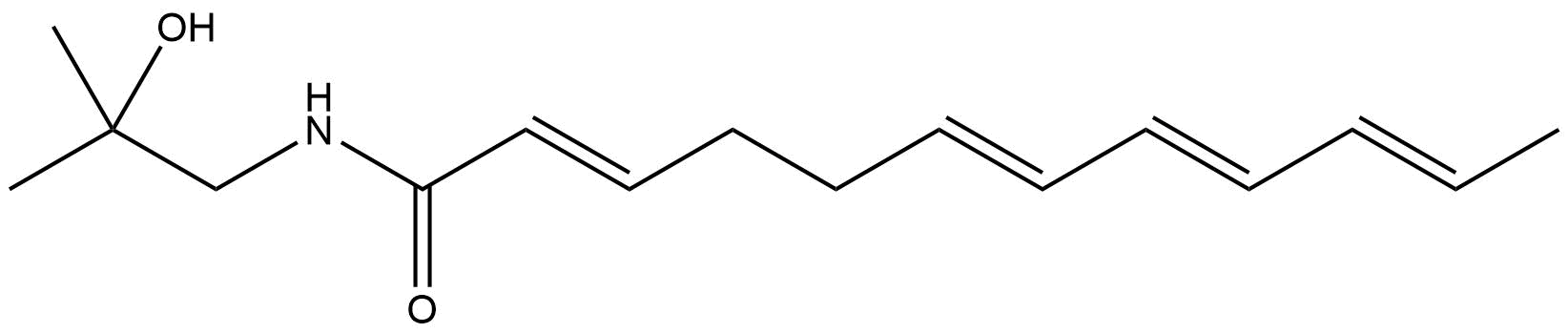


Product name: Hydroxy-β-sanshool
Synonym name:
Catalogue No.: BP4107
Cas No.: 97465-69-5
Formula: C16H25NO2
Mol Weight: 263.381
Botanical Source: Zanthoxyli pericarpium
Physical Description:
Type of Compound: Alkaloids
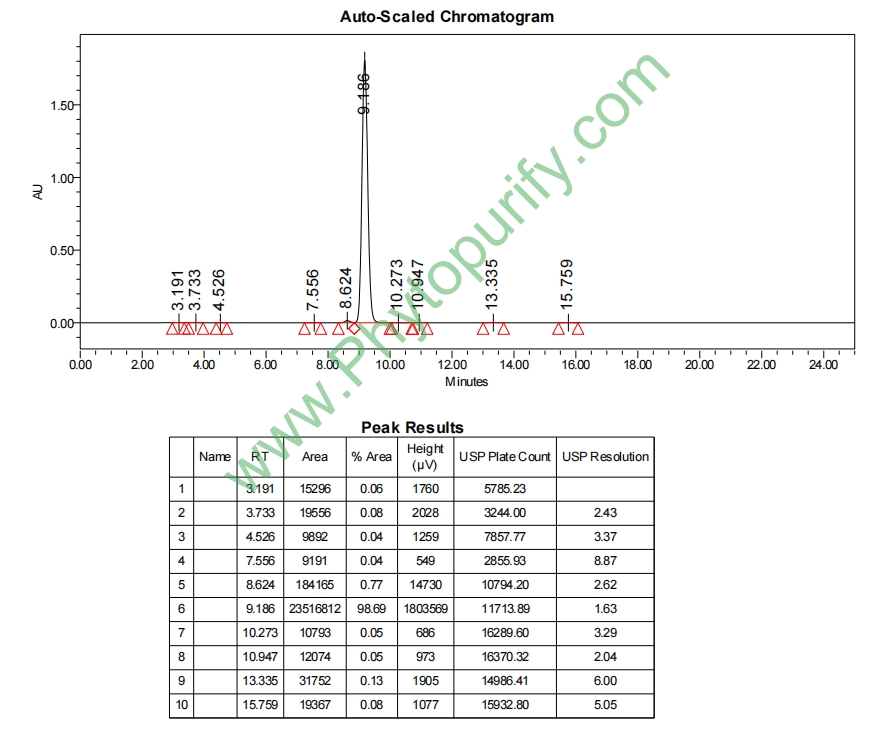
Purity: 95%~99%
Analysis Method: HPLC-DAD or/and HPLC-ELSD
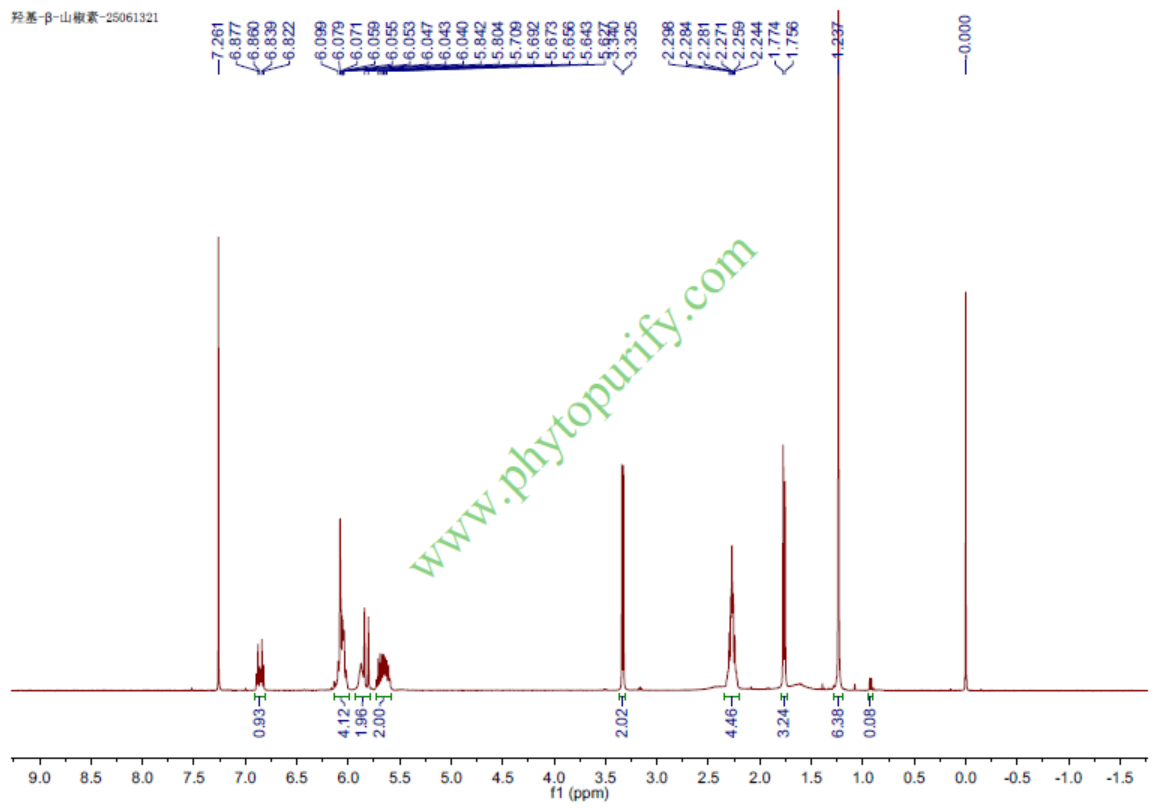
Identification Method: Mass, NMR
Packing: Brown vial or HDPE plastic bottle
Storage: Store in a well closed container, protected from air and light. Put into refrigerate or freeze for long term storage.
Whenever possible, you should prepare and use solutions on the same day. However, if you need to make up stock solutions in advance, we recommend that you store the solution as aliquots in tightly sealed vials at -20℃. Generally, these will be useable for up to two weeks.
The product could be supplied from milligrams to grams
Inquire for bulk scale.
For Reference Standard and R&D, Not for Human Use Directly.
Description:
Hydroxy-β-sanshool is a pungent compound, it can cause oral numbness.
References:
J Agric Food Chem. 2018 Jun 6;66(22):5621-5634.
Dynamic Proteome Alteration and Functional Modulation of Human Saliva Induced by Dietary Chemosensory Stimuli.
METHODS AND RESULTS:
Saliva flow measurements and SDS-PAGE separation of human whole saliva freshly collected after oral stimulation with citric acid (sour), aspartame (sweet), iso-α-acids (bitter), mono sodium l-glutamate (umami), NaCl (salty), 6-gingerol (pungent), hydroxy-α-sanshool (tingling), and Hydroxy-beta-sanshool (numbing), followed by tryptic digestion, nano-HPLC-MS/MS, and label-free protein quantitation demonstrated a stimulus- and time-dependent influence of the dietary chemosensates on salivation and the salivary proteome composition. Gene ontology enrichment analysis showed evidence for stimulus-induced alterations of the saliva proteome to boot an efficient molecular defense network of the oral cavity, e.g., 6-gingerol increased salivary lactoperoxidase activity, catalyzing the oxidation of thiocyanate to produce the antimicrobial and antifungal hypothiocyanate, from 0.37 ± 0.02 to 0.91 ± 0.05 mU/mL 45 s after stimulation. In comparison, oral citric acid stimulation induced an increase of myeloperoxidase activity, catalyzing the chloride oxidation to generate antimicrobial hypochloride in saliva, from 0.24 ± 0.04 to 0.70 ± 0.1 mU/mL as well as an increase of salivary levels of lysozyme, exhibiting antimicrobial activity on Gram-positive bacteria, from 6.0-10 to 100-150 μg/mL.
CONCLUSIONS:
Finally, microbial growth experiments clearly demonstrated for the first time that the increase of the salivary lysozyme abundance upon oral citric acid stimulation translates into an enhanced biological function, that is an almost complete growth inhibition of the two lysozyme-sensitive Gram-positive bacteria tested.
HPLC of Hydroxy-β-sanshool
HNMR of Hydroxy-β-sanshool
Storage conditions:Short-term storage at 2~8℃, long-term storage at -20 ~ -80℃
Hydroxy - β - sanhook is an important class of natural alkyl amide compounds, mainly found in Zanthoxylum spp. and green pepper oil. As one of the main active ingredients of the unique spicy and numbing sensation of Sichuan pepper, hydroxyl - β - coumarin not only gives Sichuan pepper a unique flavor experience, but also exhibits various biological activities in pharmacological research, especially in the field of anti-inflammatory, showing significant potential. In recent years, with the deepening development of natural product pharmacology, hydroxyl - β - coumarin has become a research hotspot and attracted widespread attention due to its unique molecular structure and multi-target mechanism of action.
This review aims to systematically summarize the chemical structure and physicochemical properties, plant sources, and extraction methods of hydroxyl - β - coumarin, with a focus on its pharmacological activity and mechanism of action, exploring its pharmacological properties and pharmacokinetic characteristics, and finally looking forward to its clinical application potential and future research directions, providing comprehensive reference for researchers in related fields.
Hydroxy - β - coumarin belongs to the alkyl amide class of natural products, with a molecular formula of C16H25NO2 and a molecular weight of 263.3810. Its structural features include the combination of an alkyl side chain and an amide group, as well as the presence of hydroxyl functional groups in the molecule, endowing it with specific polarity and biological activity. The LogP value of this compound is 2.5036, indicating its moderate lipid solubility, which is beneficial for cell membrane penetration and bioavailability. Its polar surface area (TPSA) is 49.33 Å ², indicating that the molecule has a certain polarity that facilitates binding to biomolecule targets.
Hydroxyl - β - coumarin has low water solubility (0.1263 mg/mL), which is consistent with its hydrophobic alkyl chain structure. It is worth noting that this compound has a high ability to penetrate the blood-brain barrier, suggesting its potential role in the central nervous system. In terms of safety, hydroxy - β - coumarin does not exhibit hERG channel inhibitory activity, and the Ames mutagenicity test results are negative, indicating a low potential risk of cardiac and genetic toxicity.
Hydroxyl - β - coumarin is mainly present in Zanthoxylum bungeanum Maxim and green pepper oil, and is a representative component of various coumarin compounds in Zanthoxylum bungeanum. Sichuan pepper, as a traditional Chinese medicine and seasoning, is widely distributed in China and East Asia. Its fruits and seeds contain abundant volatile oils and non-volatile alkyl amides, among which hydroxyl - β - coumarin has a higher content.
There are various methods for extracting hydroxyl - β - coumarin, including solvent extraction, ultrasound assisted extraction, and supercritical CO2 extraction. Traditional solvent extraction often uses ethanol, methanol, or ethyl acetate as solvents, combined with reflux or ultrasound assistance to improve extraction efficiency. Supercritical CO2 extraction has been widely used in the extraction of Sichuan pepper oil and its active ingredients in recent years due to its advantages of good selectivity, no solvent residue, and environmental friendliness. After extraction, it is usually purified by column chromatography, preparative high-performance liquid chromatography (pre HPLC) and other methods to obtain high-purity hydroxyl - β - coumarin.
The anti-inflammatory activity of hydroxy - β - coumarin is one of its most significant pharmacological properties. Multiple in vitro and in vivo studies have shown that this compound can significantly inhibit the production of inflammatory mediators and the activation of inflammatory signaling pathways. Its targets include various inflammation related factors, including IL-6, TNF - α, NOS2, PTGS1 (COX-1), PTGS2 (COX-2), CASP1 (caspase-1), NFKB1, STAT3, etc.
In the macrophage model, hydroxyl - β - capsaicin can inhibit LPS induced release of inflammatory factors, reduce the expression levels of IL-6 and TNF - α, and alleviate inflammatory responses. In addition, the compound exerts anti-inflammatory effects by regulating the NF - κ B and STAT3 signaling pathways, inhibiting the transcriptional activity of pro-inflammatory genes. The inhibitory effect of CASP1 helps to block the activation of inflammasomes, further reducing the release of pro-inflammatory cytokines.
Hydroxyl - β - coumarin acts as a regulator of TRPV1 and TRPA1 channels, participating in neural perception and pain transmission processes. TRPV1 and TRPA1 are important ion channels for perceiving spiciness and pain sensation. Hydroxyl - β - coumarin activates or regulates these channels to produce a unique spiciness sensation, while also exerting analgesic and neuroprotective effects. Its high blood-brain barrier penetration supports its potential application in the central nervous system.
In addition to anti-inflammatory and neuroregulatory effects, hydroxyl - β - coumarin also exhibits certain antioxidant activity, which can clear free radicals and alleviate oxidative stress damage. In addition, studies suggest that it may be involved in regulating lipid metabolism and immune response, but the relevant mechanisms still need to be further explored.
The biological activity of hydroxyl - β - coumarin mainly depends on its regulation of multiple molecular targets, forming a complex signaling network. Its key mechanism of action includes:
Inhibit the expression of pro-inflammatory cytokines Hydroxyl - β - coumarin reduces the release of inflammatory mediators and alleviates inflammatory responses by inhibiting the expression of IL-6 and TNF - α.
Regulating the NF - κ B signaling pathway NF - κ B is the core transcription factor of inflammatory response, and hydroxy - β - coumarin exerts anti-inflammatory effects by blocking the activation of NF - κ B, inhibiting the transcription of pro-inflammatory genes.
Blocking the STAT3 signaling pathway STAT3 is involved in cell proliferation and inflammatory response. Hydroxy - β - coumarin inhibits STAT3 phosphorylation, regulates cytokine expression, and suppresses the inflammatory process.
Inhibition of CASP1 activity CASP1 is a key enzyme in inflammasomes, and hydroxy - β - coumarin inhibits CASP1, blocks the maturation and release of IL-1 β, and reduces inflammatory response.
Adjusting TRPV1 and TRPA1 ion channels Hydroxyl - β - coumarin acts as an agonist or regulator of TRPV1 and TRPA1, affecting calcium ion influx and participating in pain perception and neural regulation.
Inhibition of PTGS1 and PTGS2 (COX-1 and COX-2)By inhibiting cyclooxygenase activity, reducing prostaglandin synthesis, and lowering inflammation and pain responses.
Regulating NOS2 expression Hydroxyl - β - coumarin inhibits inducible nitric oxide synthase (iNOS/NOS2), reduces excessive production of nitric oxide, and alleviates oxidative stress and inflammation.
In summary, hydroxyl - β - coumarin achieves its pharmacological effects of anti-inflammatory and neural regulation through multi-target and multi pathway synergistic effects.
The pharmacological parameters of hydroxyl - β - coumarin indicate that it has good potential for drug development. The molecular weight of 263.38 conforms to Lipinski's rule, with a moderate LogP value of 2.5, which is conducive to oral absorption and cell membrane penetration. The TPSA is 49.33 Å ², indicating that it has suitable polarity for binding to the target.
Low water solubility may limit its bioavailability, but its solubility and stability can be improved through formulation optimization (such as nanocarriers, liposomes, etc.). Its high blood-brain barrier penetration ability provides the possibility for the treatment of central nervous system diseases.
In terms of safety, hydroxy - β - coumarin does not inhibit hERG channels, reducing the risk of cardiac toxicity, and the Ames test is negative, indicating a low risk of genetic toxicity and meeting the requirements for safe medication.
Pharmacokinetic studies are still in the preliminary stage. The existing data suggests that hydroxy - β - coumarin is well absorbed orally and widely distributed in the body, especially enriched in the nervous system. Its metabolic pathway may involve oxidation and binding reactions of liver enzymes, with excretion mainly through bile and urine. In the future, further systematic research is needed on its absorption, distribution, metabolism, and excretion (ADME) characteristics to guide clinical medication design.
Hydroxy - β - coumarin, as a multifunctional active ingredient from natural sources, has broad clinical application prospects. Its significant anti-inflammatory effect makes it potentially therapeutic in chronic inflammatory diseases such as arthritis, inflammatory bowel disease, respiratory inflammation, etc. By regulating TRPV1 and TRPA1 channels, hydroxy - β - coumarin can also be used as an adjuvant therapy for neuropathic pain, neuroinflammation, and related central nervous system diseases.
In addition, hydroxyl - β - coumarin has good safety and abundant sources, making it suitable for development as oral or topical preparations. In the future, modern drug delivery technology can be combined to enhance its bioavailability and targeting, and expand its clinical application scope.
However, current clinical research on hydroxyl - β - coumarin is still limited and lacks systematic clinical trial data. Future research should focus on in-depth evaluation of its pharmacodynamics, toxicology, and pharmacokinetics, clarify its optimal administration route and dosage, and explore its potential for combined use with existing anti-inflammatory drugs.
Hydroxy - β - coumarin, as an important alkyl amide natural product in Sichuan pepper oil, exhibits a wide range of pharmacological activities and good medicinal properties due to its unique chemical structure and multi-target anti-inflammatory mechanism. Its potential in anti-inflammatory, neural regulation, and analgesic aspects provides valuable examples for the pharmacological research of natural products.
In the future, by combining modern medicinal chemistry, molecular biology, and pharmacokinetic techniques, the mechanism of action and clinical application value of hydroxyl - β - coumarin will be deeply revealed, which will help promote its translation from laboratory research to clinical practice, promote the development of innovative natural product drugs, and provide new strategies and choices for the treatment of inflammatory and neurological diseases.
