Introduction/Overview
Daucostrin acetate, CAS number 4282-00-2, is a natural product derived steroidal saponin compound widely present in various plants, especially in the carrot genus. As an acetylated derivative of daucosterol, acetylated daucosterol has attracted widespread attention in the field of natural product pharmacology due to its significant biological activity, particularly in antioxidant, anti-inflammatory, and cell protective potential. In recent years, with the in-depth study of oxidative stress and its related disease mechanisms, the research on acetylated carotenoids as a natural antioxidant has gradually increased, and its mechanism of action, molecular targets, and pharmacological characteristics have also been gradually revealed.
This article aims to systematically review the chemical structure and physicochemical properties, plant sources, and extraction methods of acetylated carotenoids, with a focus on their pharmacological activity and mechanism of action. By analyzing the molecular basis of their antioxidant effects in combination with molecular targets, we further explore their pharmacological and pharmacokinetic characteristics. Finally, we look forward to their clinical application potential and future research directions, providing theoretical basis and research references for natural product pharmacology and new drug development.
Chemical structure and physicochemical properties
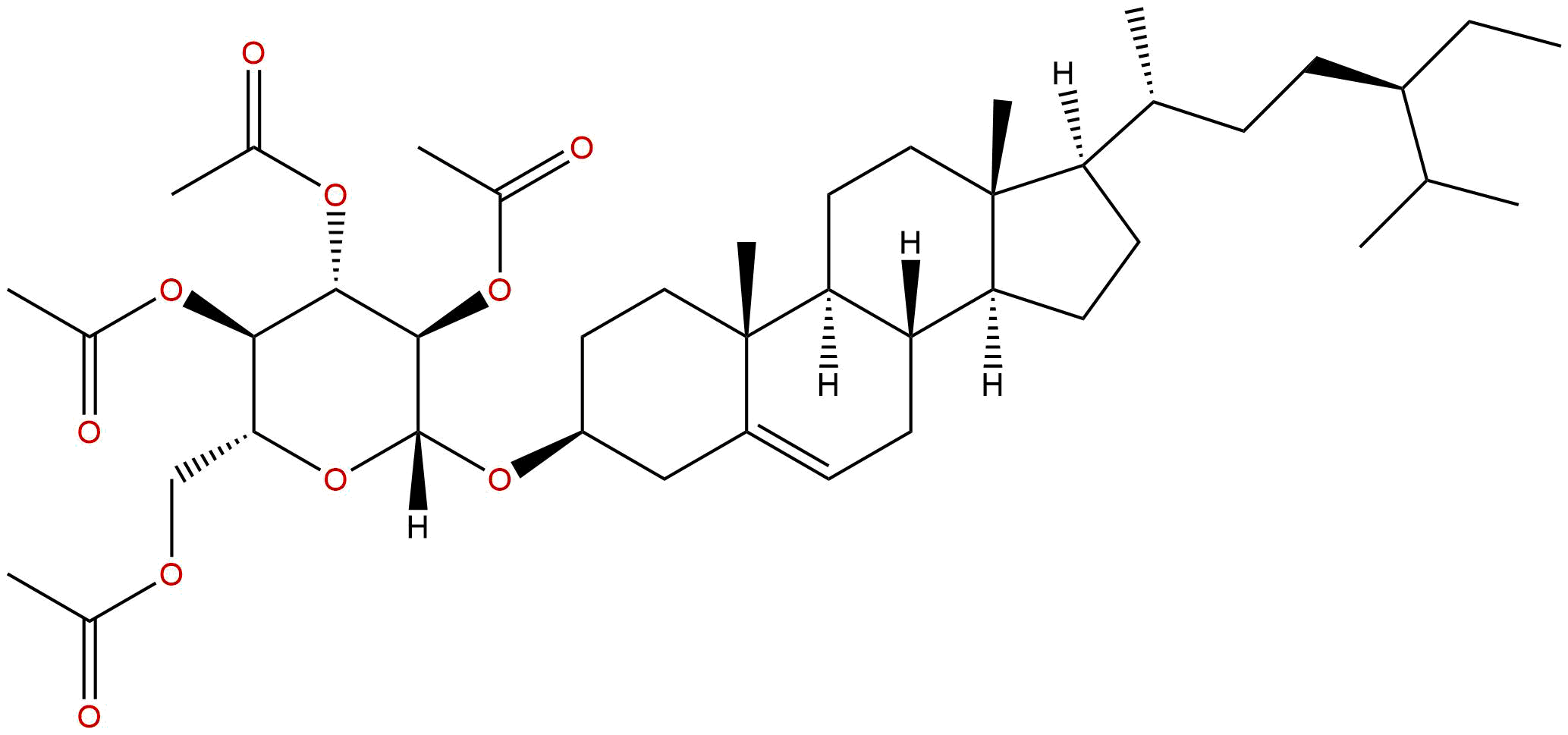
Acetylated carotenoids are a type of steroidal saponin compound with a complex molecular formula and a molecular weight of 745.0070. Its structure is based on the steroid core, supplemented by glycosidic and acetyl modifications. The introduction of acetyl not only changes its molecular polarity, but also affects its biological activity and pharmacokinetic properties. Its LogP value is 7.6564, indicating strong lipophilicity and high affinity in lipid environments. The TPSA (topological polar surface area) is 123.6600, indicating that the molecule has a certain polarity region that may affect its ability to penetrate biofilms.
The extremely low water solubility (0.0011) indicates that the solubility of acetylated carotenoids in the aqueous phase is limited, which poses a challenge to their absorption and distribution in vivo. It is worth noting that the compound has a high blood-brain barrier penetration ability, indicating its potential role in the central nervous system. In addition, the hERG channel inhibition experiment results were negative, indicating a low risk of cardiac toxicity. The Ames test result is 0.0, indicating that it does not have significant mutagenicity and has high safety.
In summary, the chemical structure and physicochemical properties of acetylated carotenoids provide a basis for their biological activity and pharmacokinetic characteristics, especially their high lipid solubility and blood-brain barrier penetration ability, laying the material foundation for their potential as neuroprotective agents.
Plant sources and extraction methods
Acetylated carotenoids are mainly found in various plants, especially in plants of the Daucus genus. It has a wide range of natural sources, including traditional medicinal plants such as carrots (Daucus carota) and celery (Angelica sinensis). The content of acetylated carotenoids in plants is greatly influenced by factors such as variety, growth environment, and harvesting time.
The extraction method usually uses organic solvent extraction combined with chromatographic separation technology. Common extraction solvents include methanol, ethanol, and their aqueous solutions. By utilizing their lipophilicity, a mixture containing a large amount of steroidal saponins is first obtained through crude extraction. Subsequently, purification was carried out using methods such as silica gel column chromatography and reverse phase high performance liquid chromatography (RP-HPLC) to obtain high-purity acetylated carotenoids.
In recent years, new green extraction technologies such as ultrasound assisted extraction (UAE) and microwave-assisted extraction (MAE) have been applied to the extraction of acetylated carotenoids, significantly improving extraction efficiency and purity, while reducing solvent dosage and extraction time, in line with the principles of green chemistry. In addition, enzyme assisted extraction has also been explored to improve extraction selectivity and stability of active ingredients.
Pharmacological activity research
The pharmacological activities of acetylated carotenoids mainly focus on their antioxidant, anti-inflammatory, anti-tumor, and neuroprotective properties.
antioxidant activity
As a natural antioxidant, acetylated carotenoids can effectively eliminate free radicals, inhibit lipid peroxidation, and protect cells from oxidative damage. In vitro experiments have shown that the compound can enhance the activity of antioxidant enzymes such as superoxide dismutase (SOD), catalase (CAT), and glutathione peroxidase (GPX1), reduce reactive oxygen species (ROS) levels, and alleviate cell damage caused by oxidative stress.
anti-inflammatory effect
Acetylated carotenoids exhibit significant anti-inflammatory effects by regulating inflammation related signaling pathways and inhibiting the expression of pro-inflammatory factors such as tumor necrosis factor - α (TNF - α), interleukin-6 (IL-6), and nitric oxide synthase (iNOS). Its anti-inflammatory mechanism is closely related to the regulation of the nuclear factor kappa B (NF - κ B) signaling pathway, which can alleviate inflammatory reactions and protect tissues from inflammatory damage.
Antitumor activity
Some studies have reported that acetylated carotenoids have inhibitory effects on various tumor cells, inducing apoptosis, blocking cell cycle progression, and inhibiting tumor cell proliferation and migration. Its anti-tumor mechanism involves multiple signaling pathways, including regulating apoptosis related proteins, inhibiting matrix metalloproteinases (MMPs) activity, and reducing the invasive ability of tumor cells.
Neuroprotective effect
Due to its excellent blood-brain barrier penetration, research on the neuroprotective effects of acetylated carotenoids is increasing. The experimental results show that the compound can alleviate oxidative stress in nerve cells, inhibit neuroinflammatory reactions, promote nerve cell survival, and has potential application value in the treatment of neurodegenerative diseases such as Alzheimer's disease and Parkinson's disease.
Mechanism of action and molecular targets
The antioxidant effect of acetylated carotenoids is mainly achieved by regulating multiple key targets, involving oxidative stress-related enzymes and transcription factors.
Core transcription factors: NFE2L2/NRF2
NFE2L2 (Nuclear factor erythroid 2-related factor 2, NRF2) is a core transcription factor that regulates cellular antioxidant response. Acetylated carotenoids can activate the NRF2 signaling pathway, promote its nuclear translocation, enhance the expression of antioxidant enzyme genes such as SOD1, SOD2, CAT, GPX1, and HMOX1, improve cellular antioxidant capacity, and alleviate oxidative damage.
Antioxidant enzyme system
Acetylated carotenoids enhance the ability of cells to clear reactive oxygen species and effectively inhibit oxidative stress-induced cell damage by upregulating the expression and activity of superoxide dismutase (SOD1, SOD2), catalase (CAT), glutathione peroxidase (GPX1), and heme oxygenase-1 (HMOX1).
Matrix metalloproteinases (MMPs)
MMP1 and MMP3, as extracellular matrix degrading enzymes, play important roles in tissue remodeling and inflammation processes. Acetylated carotenoids can inhibit the expression and activity of MMP1 and MMP3, reduce tissue damage and inflammatory response, and promote tissue repair.
Tyrosinase (TYR)
The regulatory effect of acetylated carotenoids on tyrosinase (TYR) is still under exploration. As a key enzyme in melanin synthesis, tyrosinase's regulation may be related to antioxidant and cell protective mechanisms.
In summary, acetylated carotenoids exert their antioxidant and cell protective functions through multi-target and multi-path synergistic effects, providing a molecular basis for their various pharmacological activities.
Evaluation of drug properties and pharmacokinetics
The pharmacological evaluation of acetylated carotenoids shows that they have certain advantages and challenges.
Pharmaceutical properties parameters
- molecular weight 745.0070, higher molecular weight may affect its oral bioavailability.
- LogP 7.6564 indicates its high lipid solubility, which is beneficial for cell membrane penetration, but may lead to poor water solubility and affect absorption.
- TPSA 123.6600, moderate polarity, helpful for binding to the target.
- Water solubility 0.0011, extremely low, indicating insufficient solubility and requiring improvement through formulation technology.
- Blood-brain barrier penetration High, beneficial for the treatment of central nervous system diseases.
- HERG inhibition None, with good security.
- Ames test Negative, low risk of genetic toxicity.
Pharmacokinetic characteristics
At present, there are relatively few systematic pharmacokinetic studies on acetylated carotenoids. Its high lipid solubility and low water solubility suggest that oral absorption may be limited, and it is widely distributed in the body, especially able to penetrate the blood-brain barrier. The metabolic pathway may involve steroid and glycoside metabolism in the liver enzyme system, with excretion mainly through bile and urine. Further in vivo pharmacokinetic and metabolic studies are needed in the future to clarify its absorption, distribution, metabolism, and excretion (ADME) characteristics.
Formulation strategy
Modern formulation technologies such as nanocarriers, liposomes, and solid dispersions can be used to improve its bioavailability and targeting, enhance drug efficacy, and reduce side effects in response to its low water solubility and large molecular weight.
Clinical application prospects and prospects
Acetylated carotenoids have shown broad application prospects in the prevention and treatment of various diseases due to their significant antioxidant, anti-inflammatory, and neuroprotective effects.
Neurodegenerative diseases
Its excellent blood-brain barrier penetration ability and antioxidant properties make it a potential therapeutic candidate for neurodegenerative diseases such as Alzheimer's disease and Parkinson's disease. By reducing oxidative stress and inflammatory response, protecting neuronal survival, and delaying disease progression.
Inflammatory diseases
Acetylated carotenoids can regulate the inflammatory signaling pathway, inhibit the expression of inflammatory factors, and are suitable for adjuvant therapy of chronic inflammatory diseases such as rheumatoid arthritis and inflammatory bowel disease.
Antitumor therapy
Its inhibitory effect on tumor cells and regulatory ability on the tumor microenvironment provide the possibility for the development of new anti-tumor drugs, especially in combination chemotherapy and targeted therapy, which are expected to exert synergistic effects.
Future research directions
- Pharmacokinetics and toxicology Systematically evaluate its internal behavior and long-term safety.
- In depth analysis of the mechanism of action Combining multiple omics techniques to reveal its multi-target action network.
- Formulation development Optimize the administration route and dosage form to improve the feasibility of clinical application.
- clinical trial Conduct early clinical studies to verify its efficacy and safety.
Conclusion
Acetylated carotenoids, as a natural product with multiple biological activities, have significant value in the field of natural medicine research and development due to their excellent antioxidant and neuroprotective properties. Its unique chemical structure and physicochemical properties provide the basis for its pharmacological activity, while its multi-target mechanism of action reveals its broad therapeutic potential. Although there are still challenges in pharmacokinetics and clinical applications, with the advancement of modern drug development technology, acetylated carotenoids are expected to become an important breakthrough in natural product pharmacology and new drug development. In the future, through systematic research and clinical validation, acetylated carotenoids may provide new strategies and choices for the treatment of various diseases.