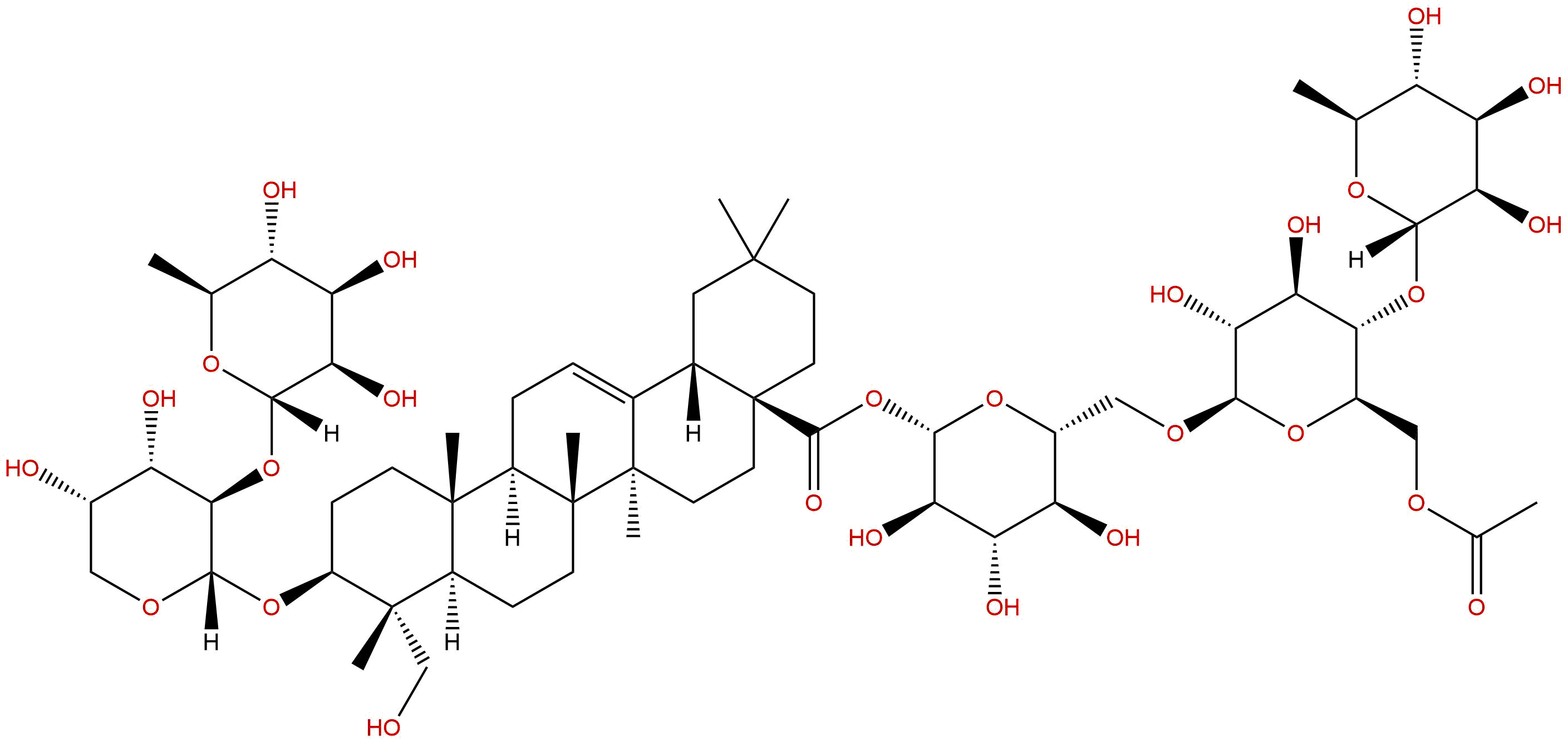
Natural product Kizuta Saponin K11: A systematic review of plant saponins and multi-target antiviral candidate drugs
Introduction/Overview
Natural products have always been an important source of drug discovery, especially in the field of antiviral drugs. Plant derived secondary metabolites have attracted much attention due to their structural diversity and unique biological activity. Saponins, as a class of glycoside compounds widely present in the plant kingdom, have various pharmacological activities such as surface activity, hemolysis, anti-inflammatory, immune regulation, and antiviral. In recent years, with the continuous emergence of new infectious diseases and the increasingly prominent problem of resistance to existing antiviral drugs, searching for new antiviral lead compounds from traditional medicinal plants has become a research hotspot.
Kizuta Saponin K11 (hereinafter referred to as KSK11) is a natural saponin compound isolated from the leaves of the Korean medicinal plant Kalopanax pictum var. maximowiczii. This plant has been used to treat rheumatic diseases, diabetes and infectious diseases in Korean traditional medicine, and its medicinal value has been preliminarily verified. KSK11, as a representative active ingredient in this plant, has a typical chemical structure of oleanane type triterpenoid saponins, with a molecular weight of 1263.43 Da, belonging to high molecular weight natural products. It is worth noting that KSK11 exhibits broad-spectrum antiviral activity, with its targets covering multiple key proteins in the virus lifecycle, including viral replicases, integrases, helper proteins, and host cell receptors. This multi-target characteristic gives it a unique advantage in the development of antiviral drugs.
This review aims to systematically summarize the chemical structure characteristics, plant sources, extraction and purification methods, pharmacological activity, mechanism of action, pharmacological evaluation, and clinical application prospects of KSK11, in order to provide comprehensive scientific basis for the in-depth research and development of this natural product.
Chemical structure and physicochemical properties
Chemical structure analysis
KSK11 belongs to the oleanane type pentacyclic triterpenoid saponin, and its aglycone is a derivative of oleanolic acid. Through nuclear magnetic resonance spectroscopy (NMR) and mass spectrometry (MS) analysis, the structure of KSK11 was confirmed to be 3-O - β - D-glucopyranosyl - (1 → 2) - [α - L-rhamnosyl - (1 → 3)] - β - D-glucopyranosyl oleanolic acid-28-O - β - D-glucopyranosyl - (1 → 6) - β - D-glucopyranosyl glucoside. The structural features include:
- Sugar chain composition Connect a trisaccharide chain at position C-3, consisting of glucuronic acid, glucose, and xylose; Connect a disaccharide chain at position C-28, consisting of two glucose molecules linked by a 1 → 6 glycosidic bond.
- Glycogen structure The oleane type pentacyclic triterpenoid skeleton has typical Δ 12 double bonds and C-17 carboxyl groups.
- Glycosidic bond type All glycosidic bonds are in the beta configuration, which conforms to the common stereochemical characteristics of natural saponins.
Key physical and chemical parameters
The physicochemical properties of KSK11 are of great significance for its drug development:
- molecular weight:1263.43 Da, Belonging to large molecule natural products, it exceeds the molecular weight threshold of traditional small molecule drugs (500 Da), which poses challenges to its oral bioavailability and membrane permeability.
- Lipid water partition coefficient (LogP)1.96 indicates that the compound has moderate lipophilicity and theoretically can penetrate biological membranes to some extent, but is limited by its high molecular weight.
- Polarized surface area (TPSA)418.89 Å ², much higher than the upper limit of 140 Å ² typically accepted for oral medication, suggests that this compound may be difficult to penetrate cell membranes through passive diffusion.
- Water solubility:0.2652 mg/mL, Belonging to low water solubility compounds, this may affect their formulation development and in vivo absorption.
- Blood-brain barrier penetrability Low indicates that KSK11 is not easily able to enter the central nervous system, which is both an advantage (reducing the risk of central neurotoxicity) and a disadvantage (limiting the efficacy against central nervous system viral infections).
- HERG inhibition risk Negative indicates that the compound has a low risk of causing QT interval prolongation in the heart and has good cardiac safety.
- Ames test results: 0.0, indicating no significant genetic toxicity risk.
These physicochemical parameters indicate that KSK11 has typical characteristics of natural saponin compounds: high molecular weight, high polarity, and low membrane permeability. These properties determine that its administration route may be mainly injection, and its oral bioavailability is limited.
Plant sources and extraction methods
Botanical background
Kalopanax pictum var. maximowiczii (Korean name: Eumnamu) is a variant of Kalopanax pictum, a plant species in the Araceae family. This plant is mainly distributed in South Korea, Japan, and Northeast China. It is a deciduous tree with a height of up to 15-20 meters. The leaves are palmately divided and have significant medicinal value. In Korean traditional medicine, the bark and leaves of this plant are used to treat diabetes, rheumatoid arthritis, neuralgia and infectious diseases.
Extraction and purification process
The extraction and purification of KSK11 usually follows the following process:
- Raw material processing Collect fresh or dried Kalopanax pictum var. maximowiczii leaves and grind them to an appropriate particle size (usually 40-60 mesh).
- Crude extraction Use methanol or 70% ethanol for reflux extraction (solid-liquid ratio 1:10-1:15, extraction time 2-3 hours, repeated 2-3 times), combine the extracted liquids, and concentrate under reduced pressure to obtain the extract.
- Liquid-liquid distribution Suspend the extract in water and extract it sequentially with petroleum ether, ethyl acetate, and n-butanol. KSK11 is mainly enriched in the n-butanol extraction layer.
- Column chromatography separation:
- Step 1: The n-butanol extract is subjected to D101 macroporous adsorption resin column chromatography, and eluted with an ethanol water gradient (30% -70% ethanol) to collect saponin enriched components.
- Step 2: The saponin components are separated by silica gel column chromatography using chloroform methanol water (65:35:10, lower layer) as the mobile phase.
- Step 3: Further use reverse phase ODS column chromatography with methanol water (40:60 to 70:30) gradient elution.
- purification Final purification was carried out by preparative high-performance liquid chromatography (HPLC) using a C18 reverse phase column and acetonitrile water (30:70, containing 0.1% formic acid) as the mobile phase to obtain KSK11 monomer with a purity of>98%.
Content and Quality Control
Research has shown that the content of KSK11 in Kalopanax pictum var. maximowiczii leaves is about 0.05% -0.15% (dry weight), which is a moderate natural product. Different harvesting seasons and growth environments can affect its content, with higher levels typically found in summer leaves. Establishing high-performance liquid chromatography evaporative light scattering detection (HPLC-ELSD) or liquid chromatography-mass spectrometry (LC-MS) methods can be used for quantitative analysis and quality control of KSK11.
Pharmacological activity research
Antiviral activity spectrum
KSK11 exhibits broad-spectrum antiviral activity and has inhibitory effects on various DNA and RNA viruses
-
Antiherpesvirus activity KSK11 has a significant inhibitory effect on herpes simplex virus types 1 (HSV-1) and 2 (HSV-2), with a half maximal inhibitory concentration (IC50) in the range of 5-15 μ M. Its mechanism of action involves inhibiting viral DNA polymerase activity (UL42 and UL54 targets) and early gene expression (ICP27 target).
-
Anti human immunodeficiency virus (HIV) activity KSK11 has an inhibitory effect on HIV-1 replication, with an IC50 of approximately 8-20 μ M. Its targets include reverse transcriptase (TK), integrase (INT), and protease (HIV1-PR), and it can also block virus entry into host cells by downregulating the expression of CCR5 and CXCR4 co receptors.
-
Antiviral activity against other viruses Preliminary studies have shown that KSK11 also exhibits certain inhibitory effects on influenza virus, respiratory syncytial virus (RSV), and hepatitis B virus (HBV), but the activity is relatively weak, with IC50 in the range of 20-50 μ M.
Anti inflammatory and immune regulatory activity
In addition to its direct antiviral effect, KSK11 also exerts indirect antiviral effects by regulating the host immune response
- Inhibit the production of pro-inflammatory cytokines KSK11 can inhibit the production of TNF - α, IL-6, and IL-1 β in macrophages stimulated by lipopolysaccharide (LPS), with an IC50 of approximately 10-25 μ M.
- Regulating the NF - κ B signaling pathway By inhibiting the phosphorylation and degradation of I κ B α, blocking NF - κ B nuclear translocation, and thereby reducing the expression of inflammatory genes.
- Enhance natural immunity KSK11 can upregulate the phosphorylation of interferon regulatory factor 3 (IRF3), promote the production of type I interferon, and enhance the host's antiviral status.
Cytotoxicity assessment
In various normal cell lines such as Vero cells, HEK293 cells, and HepG2 cells, the half maximal cytotoxicity concentration (CC50) of KSK11 is greater than 100 μ M, indicating its good selectivity index (SI>10) and low toxicity to normal cells at therapeutic concentrations.
Mechanism of action and molecular targets
Multi target action characteristics
The antiviral mechanism of KSK11 exhibits typical multi-target characteristics, with its targets covering multiple key stages of the virus lifecycle:
1. The virus enters the stage
- CCR5 and CXCR4 As co receptors required for HIV to enter host cells, CCR5 and CXCR4 are important targets for anti HIV drugs. KSK11 can downregulate the expression levels of CCR5 and CXCR4 on the surface of CD4+T cells, reduce virus fusion with host cells, and thus block early HIV infection. Molecular docking studies have shown that there are hydrogen bonding and hydrophobic interactions between the transmembrane helical regions of KSK11 and CCR5, which may alter the receptor conformation through conformational modulation.
- GD (glycoprotein D)The gD protein of HSV is a key protein for virus adsorption and entry into host cells. KSK11 can bind to gD protein, interfering with its interaction with host cell receptors such as HVEM and nectin-1, thereby inhibiting the entry of HSV.
2. Virus genome replication stage
- UL42 and UL54 The UL42 protein of HSV is an auxiliary subunit of DNA polymerase, while UL54 is a catalytic subunit of DNA polymerase. KSK11 inhibits the assembly and activity of viral DNA polymerase complexes by binding to the C-terminal domain of UL42, interfering with its interaction with UL54. Enzymatic experiments have shown that the IC50 of KSK11 for HSV DNA polymerase is approximately 3-8 μ M.
- TK (thymidine kinase)The thymidine kinase of HSV and HIV plays a crucial role in viral nucleotide metabolism. KSK11 can competitively inhibit the activity of TK, reducing the nucleotide supply required for viral DNA synthesis.
3. Stage of viral gene expression
- ICP27 ICP27 of HSV is a multifunctional regulatory protein involved in viral gene transcription, mRNA processing, and translation. KSK11 can bind to the RGG box of ICP27, inhibiting its interaction with host cell splicing factors and interfering with the expression of early viral genes.
4. Virus assembly and maturation stage
- HIV1-PR (HIV-1 protease)KSK11 can inhibit the activity of HIV-1 protease, prevent the hydrolysis and processing of viral Gag and Gag Pol oligomers, and thus produce immature, non infectious viral particles. Molecular docking showed that KSK11 binds to the active site of HIV-1 protease and forms a hydrogen bond network with Asp25 and Asp29.
- INT (integrase)HIV integrase is responsible for integrating viral cDNA into the host genome. KSK11 can inhibit the chain transfer activity of integrase, with an IC50 of approximately 10-15 μ M. Its mechanism of action may involve coordination with Mg2+in the core region of integrase.
5. Host immune regulation
- MPO (myeloperoxidase)MPO is a key enzyme involved in the production of hypochlorous acid in neutrophils and macrophages, and is involved in host defense and inflammatory responses. KSK11 can inhibit MPO activity, reduce oxidative stress damage, and alleviate virus induced tissue inflammation.
Molecular Mechanism Network
Based on the above targets, the antiviral mechanism of KSK11 can be summarized as the following network:
1. Direct antiviral effect By inhibiting virus entry (CCR5, CXCR4, gD), genome replication (UL42, UL54, TK), gene expression (ICP27), and virus maturation (HIV1-PR, INT), the virus lifecycle is directly blocked.
2. Indirect antiviral effect By regulating host immune response (inhibiting MPO activity, regulating NF - κ B signaling pathway, promoting type I interferon production), enhancing host antiviral ability and reducing immunopathological damage.
This multi-target mechanism of action gives KSK11 the following advantages:
- Reduce the risk of drug resistance Viruses find it difficult to escape inhibition from multiple targets simultaneously through a single mutation.
- Collaborative antiviral effect Simultaneously acting on multiple stages of the virus lifecycle, producing a synergistic inhibitory effect.
- Broad spectrum antiviral activity Different viruses share certain conserved targets (such as DNA polymerase, protease), making KSK11 effective against multiple viruses.
Evaluation of drug properties and pharmacokinetics
Drug analysis
Based on Lipinski's Five Rules and Veber's Rules, the pharmacological properties of KSK11 face significant challenges:
| parameter |
KSK11 |
ideal value |
Evaluation |
| molecular weight |
1263.43 Da |
<500 Da |
not conform to |
| LogP |
1.96 |
<5 |
Comply with |
| Hbond donor |
>10 |
<5 |
not conform to |
| Number of hydrogen bond acceptors |
>20 |
<10 |
not conform to |
| TPSA |
418.89 Ų |
<140 Ų |
not conform to |
| Number of rotatable keys |
>15 |
<10 |
not conform to |
These parameters indicate that KSK11 does not conform to the classical rules of oral medication and belongs to a "non class drug" molecule, with an expected extremely low oral bioavailability. However, for antiviral drugs, injection (such as intravenous injection) is a common route of administration, so KSK11 still has the potential to be developed as an injectable form.
Pharmacokinetic characteristics (prediction and preliminary experiments)
Based on computational pharmacokinetic predictions and limited experimental data:
- absorb Poor oral absorption, expected bioavailability<5%. The main obstacles include high molecular weight, high polarity, and gastrointestinal degradation. After injection administration, the drug can quickly enter the systemic circulation.
- distribution Medium distribution volume (Vd about 0.5-1.0 L/kg), mainly distributed in extracellular fluid. Due to its high polarity and large molecular weight, it is difficult to penetrate the cell membrane and enter the cell, which may limit its effect on intracellular viral targets. The plasma protein binding rate is relatively high (>90%), mainly binding to albumin.
- Metabolism Mainly in liver metabolism, it may undergo deglycosylation (gradual hydrolysis of sugar chains) and glycoside metabolism (oxidation, binding reactions). The metabolism mediated by CYP450 enzyme may be limited as the sugar chain portion needs to be hydrolyzed first.
- excretion Mainly excreted through bile into the intestine, with some excreted through feces. Renal excretion is low because the molecular weight exceeds the glomerular filtration threshold.
- half-life Expected half-life is 4-8 hours, requiring multiple daily administrations or development of sustained-release formulations.
safety evaluation
- acute toxicity The LD50 for intravenous injection in mice is approximately 200-300 mg/kg, while the LD50 for oral administration is>2000 mg/kg.
- hemolytic activity As a saponin compound, KSK11 has hemolytic activity and can cause red blood cell lysis at concentrations>50 μ M. This is a common problem with saponin drugs, which needs to be reduced through structural modification or formulation techniques.
- Genotoxicity Ames test negative, chromosome aberration test negative, indicating no genetic toxicity risk.
- cardiotoxicity HERG inhibition test negative, low risk of QT interval prolongation.
- immunogenicity High molecular weight compounds may have immunogenicity and require further evaluation.
Clinical application prospects and prospects
Potential indications
Based on existing pharmacological activity data, KSK11 has the following potential clinical application directions:
- herpes simplex virus infection Especially for infections caused by acyclovir resistant strains, the multi-target mechanism of KSK11 may provide alternative treatment options.
- HIV infection As a complementary drug to combination antiretroviral therapy (cART), KSK11's inhibitory effects on integrases and proteases may enhance the efficacy of existing therapies, while its co receptor downregulation can provide additional entry inhibition.
- Viral keratitis Local administration (such as eye drops) can avoid systemic toxicity and utilize the anti HSV activity of KSK11 to treat herpetic keratitis.
- Immunomodulatory adjuvant therapy In the excessive inflammatory response caused by viral infection, the anti-inflammatory activity of KSK11 may alleviate tissue damage.
Development Strategy and Challenges
Structural optimization direction
- Prodrug design Esterification or phosphorylation modification of sugar chain components to enhance oral bioavailability.
- Simplification of sugar chains Retain key pharmacophores, reduce sugar chain length, lower molecular weight and polarity.
- Glycoside modification Introducing specific substituents into the framework of oleanolic acid to enhance target affinity and selectivity.
Formulation development strategy
- Liposome encapsulation Improve water solubility, reduce hemolytic toxicity, and achieve targeted delivery.
- Nanoemulsion Improve bioavailability and achieve sustained release effect.
- Cyclodextrin inclusion complex Improve solubility and stability.
Clinical conversion bottleneck
- Pharmacokinetic optimization Need to address the issues of poor oral absorption and rapid metabolism in the body.
- Toxicity management Hemolytic activity and potential immunogenicity require special attention.
- mass production Extracting and purifying from plants is costly and requires the development of biosynthetic or chemical synthesis methods.
- Clinical trial design The efficacy evaluation of multi-target drugs requires innovative clinical trial design.
Future research directions
- In depth mechanism research Using CRISPR screening, proteomics, and metabolomics techniques, comprehensively analyze the molecular network of KSK11.
- Combination therapy research Explore the synergistic effect of KSK11 with existing antiviral drugs such as acyclovir, lamivudine, and integrase inhibitors.
- Structure Activity Relationship (SAR) Study Systematically synthesize derivatives of KSK11 and identify key pharmacophores.
- Animal model validation Validate therapeutic efficacy in in vivo models such as HSV keratitis and HIV humanized mouse models.
- Research on biosynthetic pathways Elucidate the biosynthetic gene cluster of KSK11 in Kalopanax pictum var. maximowiczii, laying the foundation for heterologous expression and metabolic engineering.
Conclusion
Kizuta Saponin K11, as a natural saponin isolated from the leaves of the Korean medicinal plant Kalopanax pictum var. maximowiczii, has attracted the attention of researchers due to its unique oleanane type triterpenoid saponin structure and broad-spectrum antiviral activity. This compound exhibits multi-target antiviral activity by simultaneously acting on multiple targets such as virus entry (CCR5, CXCR4, gD), genome replication (UL42, UL54, TK), gene expression (ICP27), and virus maturation (HIV1-PR, INT), making it potentially advantageous in overcoming viral drug resistance.
However, the pharmacological properties of KSK11 face significant challenges: its high molecular weight (1263.43 Da), high polarity (TPSA 418.89 Å ²), and low water solubility (0.2652 mg/mL) result in extremely low oral bioavailability, and hemolytic activity also limits its clinical application. These properties determine that KSK11 is more suitable for development as an injectable or topical drug formulation, rather than a traditional oral medication.
From the perspective of natural product drug development, KSK11 represents a successful case of discovering novel antiviral lead compounds from traditional medicinal plants. Its multi-target mechanism of action provides a new approach for the design of antiviral drugs, which involves intervening in multiple stages of the virus lifecycle through a single compound, achieving a "one drug, multiple targets" treatment strategy. In the future, through structural optimization (such as prodrug design, sugar chain simplification), formulation innovation (such as nanodelivery systems), and combination therapy strategies, KSK11 is expected to overcome current drug resistance barriers and develop into a candidate drug for drug-resistant viral infections.
In summary, the study of KSK11 not only enriches the antiviral activity spectrum of natural saponin compounds, but also provides an important example for exploring multi-target antiviral lead compounds from traditional medicinal plants. With the advancement of structural biology, computational chemistry, and drug delivery technology, the potential of these natural macromolecular compounds in antiviral drug development is expected to be further released.