


Product name: Acaciin
Synonym name: Buddleoside; linarin
Catalogue No.: BP0115
Cas No.: 480-36-4
Formula: C28H32O14
Mol Weight: 592.55
Botanical Source: Occurs in Linaria vulgaris, Robinia and Micromeria spp. and other plants
Physical Description: Yellow powder
Type of Compound: Flavonoids
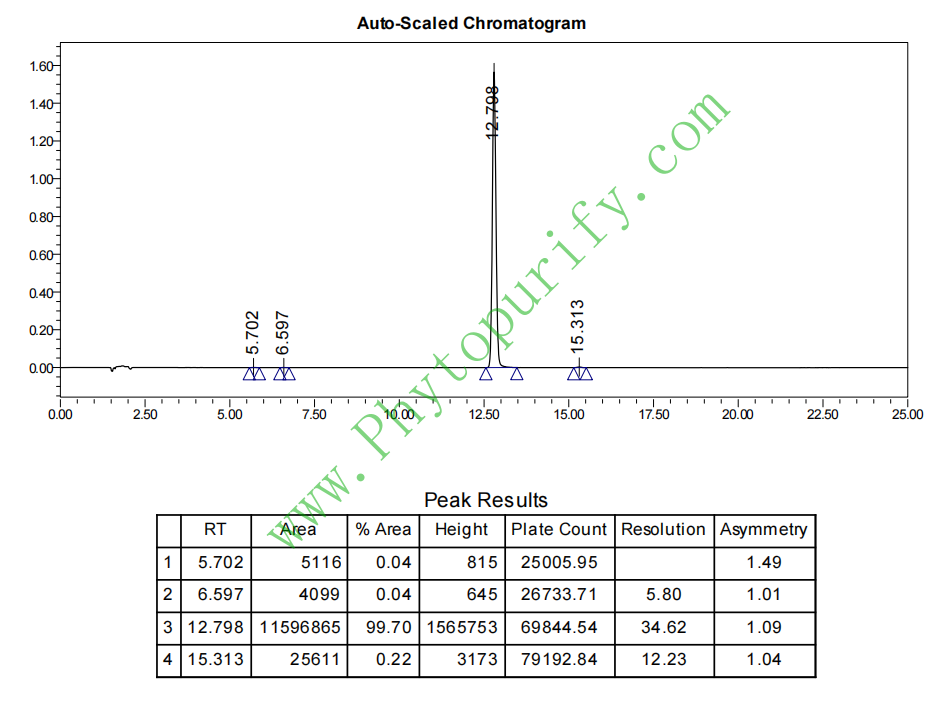
Purity: 95%~99%
Analysis Method: HPLC-DAD or/and HPLC-ELSD
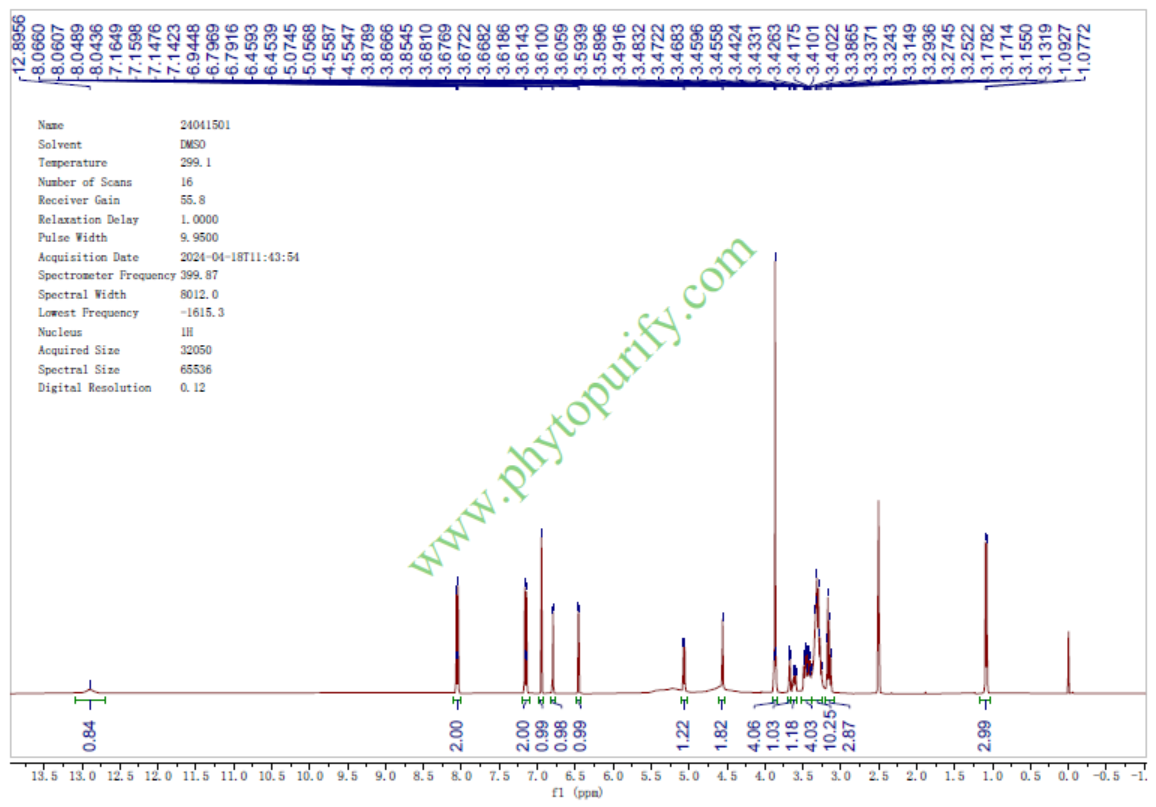
Identification Method: Mass, NMR
Packing: Brown vial or HDPE plastic bottle
Storage: Store in a well closed container, protected from air and light. Put into refrigerate or freeze for long term storage.
Whenever possible, you should prepare and use solutions on the same day. However, if you need to make up stock solutions in advance, we recommend that you store the solution as aliquots in tightly sealed vials at -20℃. Generally, these will be useable for up to two weeks.
The product could be supplied from milligrams to grams, up to kilograms
Inquire for bulk scale.
Descriptions:
Linarin is a flavone glycoside in the plants Flos chrysanthemi indici, Buddleja officinalis, Cirsium setosum, Mentha arvensis and Buddleja davidii, possesses analgesic, antipyretic, anti-inflammatory and neuroprotective activities. [1]
Linarin is known to have anti-acetylcholinesterase effects, prevents Aβ(25-35)-induced neurotoxicity through the activation of PI3K/Akt, which subsequently inhibits GSK-3β and up-regulates Bcl-2, may be a potent therapeutic compound against Alzheimer's disease acting through both acetylcholinesterase inhibition and neuroprotection.[2]
Linarin has dose-dependent analgesic and anti-inflammatory activities.[3]
Linarin can protect osteoblasts against hydrogen peroxide-induced osteoblastic dysfunction and may exert anti-resorptive actions, at least in part, via the reduction of RANKL and oxidative damage.[4]
Linarin induces the osteogenic differentiation and mineralization of MC3T3-E1 osteoblastic cells by activating the BMP-2/RUNX2 pathway through PKA signalingin vitroand protected against OVX-induced bone lossin vivo, suggests that linarin is a useful natural alternative for the management of postmenopausal osteoporosis.[5]
References:
[1] Lou H, Fan P, Perez R G, et al. Bioorgan Med Chem, 2011, 19(13):4021-7.
[2] Martínez-Vázquez M, Ramírez Apan T O, Lastra A L, et al. Planta Medica, 1998, 64(2):134-7.
[3] Kim Y H, Lee Y S, Choi E M. Cell Immunol, 2011, 268(2):112-6.
[4] Feng X, Wang X, Liu Y, et al. Iran J Pharm Res, 2015, 14(3):949-54.
[5] Li J, Hao L, Wu J, et al. Int J Mol Med, 2016, 37(4):901-10.
[6] Guo Q, Fang H, Shen H. China Journal of Chinese Materia Medica, 2010, 35(9).
HPLC of Acaciin
HNMR of Acaciin
Storage conditions:Short-term storage at 2~8℃, long-term storage at -20 ~ -80℃
217.9700
.2998
.2965
1.9686
.4961
.1845
Low
79.9815
4.5623
Yes
No
Yes
No
No
No
0.9
Yes
No
No
Yes
Acaciin, also known as apigenin 7-O - α - L-rhamnose - (1 → 6) - β - D-glucoside, is a flavonoid carbon glycoside widely present in various medicinal plants. Its CAS number is 480-36-4. For a long time in the traditional medical system, its source plants, such as acacia and amaranth, are often used to treat eye inflammation, hypertension, diabetes and other diseases. Modern pharmacological research has gradually revealed that paeoniflorin not only has classic anti-inflammatory and antioxidant activities, but also exhibits unique potential in neuroprotection, metabolic regulation, and prevention and treatment of eye diseases. In recent years, with the development of systems pharmacology and molecular docking technology, the target and mechanism network of baicalin in complex diseases, especially in optic neurodegenerative diseases such as glaucoma, have become increasingly clear. This article aims to provide a systematic review of the chemical properties, plant sources, pharmacological activities, multi-target mechanisms of action, and medicinal properties of paeoniflorin. It also looks forward to its application prospects in clinical translation, in order to provide scientific basis for the deep development and utilization of this natural product.
The molecular formula of paeoniflorin is C ₂₈ H ∝ ₂ O ₁₄, with a molecular weight of 592.5500. Its core structure is apigenin, a flavonoid compound. Its structural feature is that the 7th hydroxyl group of the apigenin nucleus is connected to a disaccharide chain - α - L-rhamnose - (1 → 6) - β - D-glucose through a glycosidic bond. This flavonoid carbon glycoside structure has stronger chemical stability and enzymatic resistance compared to common oxygen glycosides, which to some extent affects its metabolic processes in organisms.
From the analysis of physical and chemical properties, the theoretical lipid water partition coefficient (LogP) of baicalin is 0.2998, indicating that it has a certain degree of hydrophilicity. Its topological polar surface area (TPSA) is as high as 217.9700 Å ², which is mainly attributed to the numerous oxygen atoms and sugar moieties in the molecule, resulting in strong polarity. The calculated water solubility value is 1.9686 mg/mL, which belongs to the range of slightly soluble to soluble. These parameters collectively determine the absorption and distribution characteristics of paeoniflorin in vivo: higher polarity and TPSA are usually unfavorable for passive transmembrane diffusion, which may limit its oral bioavailability. In addition, its ability to cross the blood-brain barrier (BBB) is predicted to be "low", suggesting that its direct action on the central nervous system may face challenges, but for diseases that primarily target the eye and peripheral tissues, such as glaucoma, this characteristic may not be an absolute disadvantage.
Menghua glycoside is widely distributed in nature, mainly found in various plants such as legumes, horsetails, and lips.
1. Main plant sources:
* Fabaceae The flowers of Robinia pseudoacacia are one of the most famous sources of anthocyanins, and Acaciin is named after it.
* Ma Qianke The dried flower buds of Buddleja officinalis are a traditional Chinese medicine, and paeoniflorin is one of its characteristic active ingredients, closely related to the traditional efficacy of "improving vision and eliminating shadows".
* Lipstick family Prunella vulgaris also contains anthocyanins in its entire plant, which are related to its anti-inflammatory and antihypertensive effects.
* Other sources It has also been detected in medicinal plants such as honeysuckle and chrysanthemum.
A large number of in vitro and in vivo studies have confirmed that baicalin has multiple pharmacological activities, laying the foundation for its multi-target therapeutic potential.
Anti inflammatory and immune regulatory effects Menghua glycoside can significantly inhibit the excessive production of nitric oxide (NO), prostaglandin E2 (PGE2), tumor necrosis factor - α (TNF - α), interleukin-6 (IL-6) and other pro-inflammatory factors induced by lipopolysaccharide (LPS) and other factors in macrophages. Its function involves inhibiting the activation of nuclear factor kappa B (NF - κ B) and mitogen activated protein kinases (MAPKs) signaling pathways.
Antioxidant and neuroprotective effects As a flavonoid compound, paeoniflorin can directly scavenge free radicals such as DPPH and ABTS, and enhance the activity of endogenous antioxidant enzymes such as superoxide dismutase (SOD) and glutathione peroxidase (GSH Px). In neural cell injury models such as hydrogen peroxide, glutamate, or β - amyloid protein induction, paeoniflorin exhibits the ability to increase cell survival, reduce apoptosis, alleviate oxidative stress, and mitochondrial dysfunction, suggesting its protective potential against neurodegenerative diseases.
Eye protection and potential for reducing intraocular pressure This is a field that has received much attention in recent years regarding the production of anthocyanins. Research has shown that baicalin can alleviate eye inflammation in experimental dry eye and uveitis models. More importantly, in glaucoma related models, baicalin exhibits a trend of reducing intraocular pressure (IOP). The mechanism may involve inhibiting extracellular matrix remodeling of trabecular meshwork, improving the function of aqueous humor outflow pathway, and providing direct protection to retinal ganglion cells.
Anti diabetes and prevention of complications Menghua glycoside can inhibit alpha glucosidase activity, delay carbohydrate absorption, and help reduce postprandial blood sugar. At the same time, it can improve insulin resistance, and reduce the accumulation of sorbitol in tissues by inhibiting the activity of aldose reductase (AKR1B1), thus preventing and treating complications such as diabetes cataract and neuropathy.
Other activities The study also reported that baicalin has anti anxiety, anti fibrosis, anti-tumor and other activities, but its strength and mechanism of action need further clarification.
Based on network pharmacology and molecular docking research, the therapeutic effect of baicalin on diseases such as glaucoma exhibits the characteristics of "multi-component multi-target multi pathway". The mechanism of action of the target list you provided can be analyzed as follows:
Regulating aqueous humor dynamics and reducing intraocular pressure:
Protecting the optic nerve and retinal ganglion cells:
Antioxidant and anti-inflammatory properties:
In summary, through synergistic effects on multiple targets mentioned above, Montenegrin has constructed a comprehensive prevention and treatment network for glaucoma from three aspects: reducing intraocular pressure (etiological intervention), antioxidant and anti-inflammatory (pathological process intervention), and direct neuroprotection (outcome intervention).
Based on the provided pharmacological parameters and existing research, the preliminary evaluation of the pharmacological properties of baicalin is as follows:
Absorption, Distribution, Metabolism, and Excretion (ADME):
Preliminary evaluation of safety:
Challenges and optimization of drug development The main challenge is that oral bioavailability may be low. Future research needs to determine its absolute bioavailability through experiments and explore prodrug modification, eutectic technology, or the development of non oral administration routes (such as eye drops and ocular implants) to overcome this bottleneck. Its good water solubility and preliminary safety prediction provide a favorable foundation for its further development.
The clinical application prospects of baicalin mainly focus on the field of chronic complex diseases, especially glaucoma.
As a candidate drug for multi-target treatment of glaucoma Existing glaucoma drugs mostly target a single target (such as prostaglandin analogs, beta blockers). Menghua glycoside has the potential to have dual effects of lowering intraocular pressure and neuroprotection, which is in line with the concept of modern glaucoma treatment shifting from "lowering intraocular pressure" to "protecting the optic nerve". Developing eye drops or sustained-release formulations containing paeoniflorin is expected to become a new type of comprehensive anti glaucoma drug.
Treatment of diabetes and its complications: Based on its AKR1B1 inhibition and α - glucosidase inhibitory activity, montmorillonite or its structural optimization can be used to develop drugs or functional food for preventing and treating diabetes cataract, neuropathy and assisting in reducing blood sugar.
Potential in neurodegenerative diseases Its antioxidant, anti-inflammatory, and neuroprotective effects suggest that it may be beneficial for conditions such as Alzheimer's disease and Parkinson's disease. Although its BBB permeability is low, it can be bypassed through strategies such as intranasal administration or explored by developing prodrugs of its aglycone apigenin.
Outlook and Future Research Directions:
Menghua glycoside, as a natural flavonoid carbon glycoside with abundant sources, has shown great potential in the prevention and treatment of complex diseases such as glaucoma due to its unique pharmacological properties of anti-inflammatory, antioxidant, neuroprotective, and multi-target regulation. Preliminary studies in systems pharmacology have revealed the molecular network of its action on multiple key targets such as APP, CA2, MMP9, AKR1B1, providing a theoretical basis for its therapeutic advantage of "multi-target synergy". Despite facing challenges in drug development, especially in oral absorption and BBB permeability, its good water solubility and preliminary predicted cardiovascular safety lay a positive foundation for its further development. In the future, through in-depth mechanism verification, pharmacokinetic research and advanced preparation technology, it is expected that montmorillonite will be successfully transformed from a traditional plant active ingredient into an innovative drug candidate for the treatment of glaucoma, diabetes complications and other diseases, providing a model for the modernization and accurate use of natural products.
