Introduction/Overview
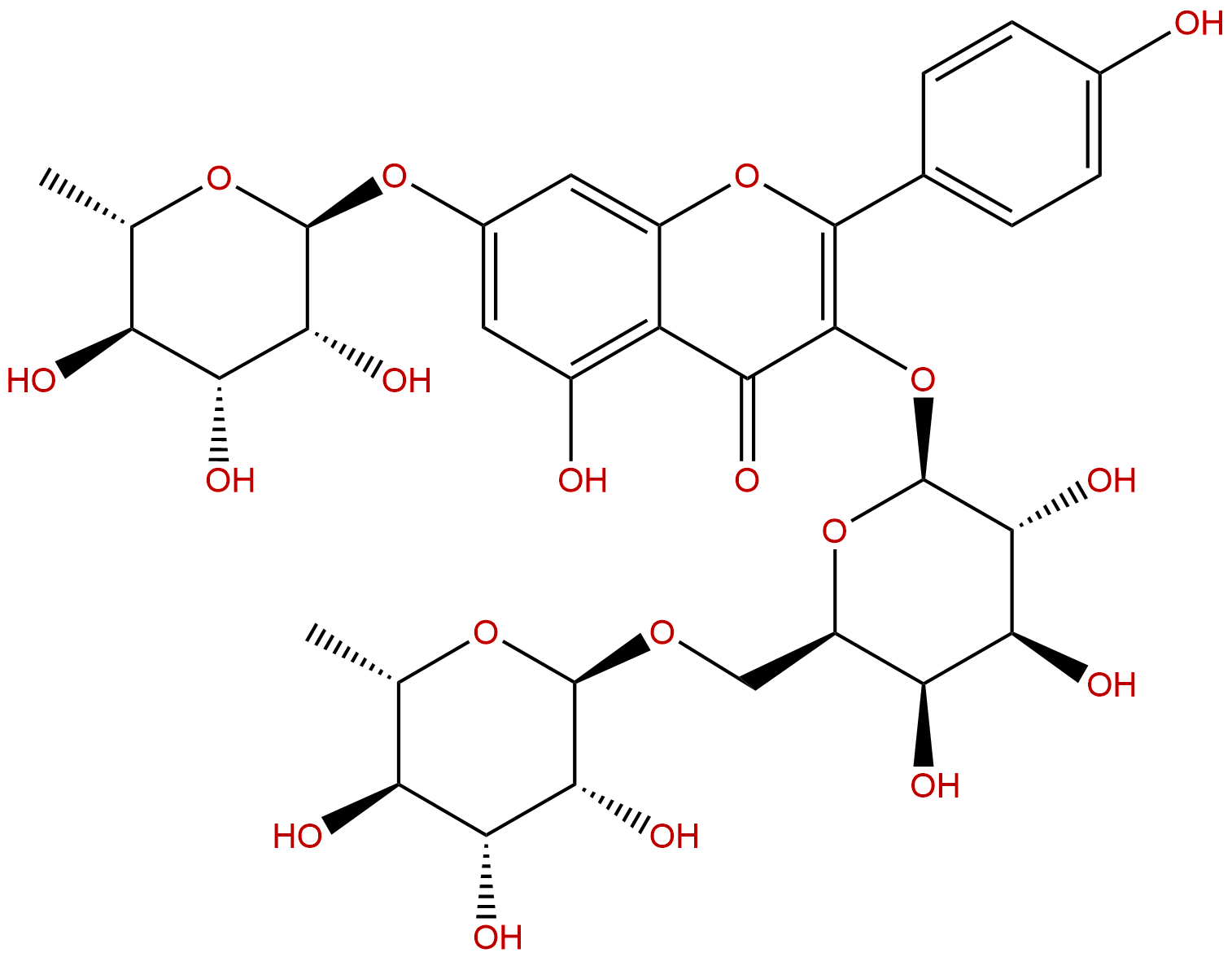
Flavonoids, as one of the most widely distributed plant secondary metabolites in nature, have always been an important treasure trove in the field of drug development due to their diverse chemical structures and extensive biological activities. Robinin (CAS number: 301-19-9) is a unique flavonoid glycoside with the chemical name kaempferol-3-O - α - L-rhamnoside (1 → 6) - β - D-galactose-7-O - α - L-rhamnoside. It is mainly found in the leaves of leguminous plants such as Vigna unguiculata. In recent years, with the deepening of modern pharmacological research, Robinia pseudoacacia glycoside has gradually emerged from numerous natural products, demonstrating more complex and precise pharmacological effects beyond traditional antioxidant activity. Research has shown that Robinia pseudoacacia glycoside can exert significant anti-inflammatory and anti-tumor effects by inhibiting key inflammation and tumor related signaling pathways such as transforming growth factor - β (TGF - β), Toll like receptor 4/nuclear factor - κ B (TLR4/NF - κ B), and TLR2 phosphatidylinositol 3-kinase protein kinase B (TLR2-PI3k-AKT). Of particular note is its synergistic effect with methotrexate in experimental arthritis models, as well as its protective effect against doxorubicin induced cardiac toxicity, revealing its enormous potential as an adjuvant therapy drug. In addition, its clear spectrum of anti allergic targets, such as ALOX5, HRH1, IL-4/5/13, also provides a solid theoretical basis for its application in the field of allergic diseases. This article aims to systematically review the chemical properties, plant sources, pharmacological activities, molecular mechanisms of action, pharmacological evaluation, and clinical application prospects of Robinia pseudoacacia glycoside, in order to provide comprehensive academic references for the in-depth development and transformation research of this natural product.
Chemical structure and physicochemical properties
Robinia pseudoacacia glycoside is a flavonol glycoside compound with a molecular weight of 740.6640 Da. Its core parent nucleus is Kaempferol, which is a typical 3,5,7,4 '- tetrahydroxyflavonol. The structural specificity of Robinia pseudoacacia glycoside lies in its complex glycosylation pattern: a disaccharide chain consisting of α - L-rhamnose (1 → 6) and β - D-galactose is connected to the C-3 hydroxyl group of kaempferol, while an α - L-rhamnose monosaccharide is connected to the C-7 hydroxyl group. This triple sugar chain structure significantly increases its molecular polarity and profoundly affects its physicochemical properties and biological activity.
From the perspective of pharmacological parameters, the theoretical lipid water partition coefficient (LogP) of Robinia pseudoacacia glycoside is -0.5322, indicating its high hydrophilicity. Its topological polar surface area (TPSA) is as high as 308.1200 Å ², which is mainly attributed to the large number of hydroxyl groups and oxygen atoms on the sugar ring in the molecule, further confirming its strong polarity characteristics. Consistent with this, its water solubility prediction value is good (3.4763, usually in the order of mg/mL or log mol/L, depending on the model), indicating that it has good solubility in biological aqueous environments. However, high polarity and large TPSA also mean that its ability to penetrate lipid biofilms is limited, and its blood-brain barrier (BBB) permeability is predicted to be "low", suggesting that it may not be suitable for direct treatment of central nervous system diseases. In the early safety warning indicators, Robinia pseudoacacia glycoside showed no significant risk of hERG potassium channel inhibition (hERG inhibition: No), and the Ames test predicted a value of 0.0, suggesting that it may not have direct genetic toxicity, providing preliminary positive signals for its safety evaluation. Overall, Robinia pseudoacacia glycoside is a natural glycoside molecule with high hydrophilicity, low central permeability, and good preliminary safety.
Plant sources and extraction methods
Robinia pseudoacacia glycoside is mainly distributed in Fabaceae plants in nature. Its most famous plant source is the leaves of Vigna unguiculata, which was also an important source for its early discovery and naming. In addition, sophoroid has also been detected or isolated in the flowers and leaves of Robinia pseudoacacia (whose genus name is also derived from Robinin's name), soybean (Glycine max), and some medicinal plants such as Equisetum arvense. There are differences in the content of Robinia pseudoacacia glycosides in different plant parts and growth environments, which poses challenges for resource development and standardized extraction processes.
The extraction of Robinia pseudoacacia glycosides from plant materials often uses classic natural product extraction and separation techniques. Firstly, polar solvents are usually used for extraction. Given the hydrophilicity of Robinia pseudoacacia glycosides, methanol, ethanol, or their aqueous solutions (such as 70% -80% ethanol) are commonly used extraction solvents. They can be effectively extracted from plant cells through hot reflux, ultrasound assisted, or microwave-assisted extraction methods. After filtering and concentrating the crude extract, a paste rich in flavonoids is obtained.
Subsequently, further separation and purification are required to obtain high-purity Robinia pseudoacacia glycoside. The commonly used methods include:
1. Solvent Extraction Method Using the polarity of Robinia pseudoacacia glycoside, liquid-liquid distribution is carried out using solvents such as ethyl acetate and n-butanol to enrich it in the aqueous or n-butanol phase.
2. Column chromatography This is the most critical purification step. Large pore adsorption resins (such as D101, AB-8) are often used for initial enrichment, followed by fine separation using silica gel column chromatography, polyamide column chromatography, or reverse phase silica gel (such as ODS-C18) column chromatography. Gradient elution (commonly used water methanol or water acetonitrile systems) can effectively separate sophoroside from other flavonoid glycosides and impurities based on polarity differences.
3. Modern preparation technology High performance liquid chromatography (HPLC), especially preparative HPLC, has become the ultimate and reliable method for obtaining high-purity sophoroside (used in pharmacological experiments and standards).
The optimization of extraction process is usually based on the yield and purity of Robinia pseudoacacia glycoside, and parameters such as extraction temperature, time, solvent concentration, and solid-liquid ratio are optimized through response surface methodology.
Pharmacological activity research
The pharmacological activity research of Robinia pseudoacacia glycoside has expanded from early in vitro antioxidant testing to include multiple modern pharmacological fields such as anti-inflammatory, anti-tumor, anti allergic, and organ protection, demonstrating multi-target and multi pathway action characteristics.
1. Anti inflammatory activity
The anti-inflammatory effect of Robinia pseudoacacia glycoside is one of its most highly regarded activities. In the lipopolysaccharide (LPS) - induced macrophage (such as RAW264.7) inflammation model, Robinia pseudoacacia glycoside can dose dependently inhibit the production of nitric oxide (NO), prostaglandin E2 (PGE2), and pro-inflammatory cytokines such as tumor necrosis factor - α (TNF - α), interleukin-6 (IL-6), and IL-1 β. More importantly, its anti-inflammatory effect has been validated in animal models. Research has shown that the combination of Robinia pseudoacacia glycoside and the classic anti rheumatic drug Methotrexate exhibits significant synergistic effects in experimental arthritis models (such as collagen induced arthritis), effectively reducing joint swelling, synovial hyperplasia, and bone destruction. Its efficacy is superior to monotherapy, providing new ideas for the development of novel anti arthritis combination therapies.
2. Antitumor activity
Robinia pseudoacacia glycoside exhibits growth inhibition and pro apoptotic activity on various tumor cell lines. It has been reported that it can inhibit the proliferation of breast cancer, liver cancer, colon cancer and other cells. Its anti-tumor mechanism is not solely cytotoxic, but involves inducing cell cycle arrest (such as G2/M phase), activating apoptotic signaling pathways (such as Caspase-3), and inhibiting tumor cell invasion and migration. These effects are closely related to their regulation of key signaling pathways.
3. Anti allergic activity
Robinia pseudoacacia glycoside has been predicted and partially experimentally confirmed to have anti allergic potential. Its targets cover multiple key aspects of allergic reactions, including inhibiting 5-lipoxygenase (ALOX5) to reduce leukotriene synthesis, antagonizing histamine H1 receptor (HRH1) to alleviate allergic symptoms, and downregulating the expression of Th2 cytokines IL-4, IL-5, and IL-13, thereby inhibiting IgE production, eosinophil activation, and airway hyperresponsiveness. In addition, interventions on transcription factor STAT6 and thymic stromal lymphopoietin (TSLP) may potentially regulate allergic immune responses upstream.
4. Cardiac protective effect
In the model of organ damage induced by chemotherapy drugs, Robinia pseudoacacia glycoside shows protective potential. Research has shown that Robinia pseudoacacia glycoside can significantly alleviate the cardiac toxicity induced by Doxorubicin, manifested by improving cardiac function indicators, reducing serum levels of myocardial injury markers, and alleviating pathological changes in myocardial tissue. This discovery is of great significance for the development of adjuvant drugs to alleviate the side effects of cancer chemotherapy.
5. Other activities
In addition, there are also studies reporting that Robinia pseudoacacia glycoside has antibacterial, antiviral (such as anti influenza virus), and protective activities against oxidative damage to nerve cells, but its specific mechanism and in vivo effectiveness still need further exploration.
Mechanism of action and molecular targets
The multiple pharmacological activities of Robinia pseudoacacia glycoside stem from its precise intervention in multiple key signaling pathways within cells. Existing research has revealed that its core mechanism of action mainly revolves around the following aspects:
1. Inhibit the TLR4/NF - κ B inflammatory pathway
Toll like receptor 4 (TLR4) and its downstream nuclear factor kappa B (NF - κ B) pathway are the core mediators of innate immunity and chronic inflammation. Robinia pseudoacacia glycoside can inhibit the binding of LPS to TLR4 or interfere with the recruitment of downstream adaptor proteins (such as MyD88), thereby blocking the activation of I κ B kinase (IKK), inhibiting the degradation of I κ B α and nuclear translocation of NF - κ B p65 subunit. The inhibition of NF - κ B activity directly leads to the downregulation of gene transcription of inflammatory mediators such as TNF - α, IL-6, IL-1 β, COX-2, and iNOS. This is one of the fundamental mechanisms by which it exerts anti-inflammatory effects, and is also partially related to anti-tumor (inhibition of tumor associated inflammation) and anti allergic effects.
2. Regulating the TGF - β signaling pathway
Transforming growth factor - β (TGF - β) plays a dual role in fibrosis, tumor progression, and immune regulation. Robinia pseudoacacia glycoside has been shown to inhibit the expression or signal transduction of TGF - β 1. In models of arthritis and organ fibrosis, inhibiting the TGF - β pathway helps alleviate tissue fibrosis and abnormal proliferation. In the tumor microenvironment, regulation of TGF - β signaling may affect epithelial mesenchymal transition (EMT), thereby inhibiting tumor metastasis.
3. Interference with TLR2-PI3K-AKT pathway
TLR2 is another important pattern recognition receptor. Robinia pseudoacacia glycoside can downregulate the phosphorylation levels of downstream phosphatidylinositol 3-kinase (PI3K) and protein kinase B (AKT) by inhibiting the activation of TLR2. The PI3K/AKT pathway is a core pathway that regulates cell survival, proliferation, and metabolism. Inhibiting this pathway can promote tumor cell apoptosis and also play a role in regulating immune cell function and inflammatory response.
4. Regulating the allergy related target network
The anti allergic effect of Robinia pseudoacacia glycoside involves a target network: reducing the production of potent inflammatory mediator leukotrienes by affecting ALOX5; Directly antagonize histamine effects by acting on HRH1; By inhibiting the IL-4/IL-13 and its downstream STAT6 pathway, blocking IgE class switching and activation of mast cells/eosinophils; Inhibiting TSLP can cut off the initiation of Th2 type immune response from the epithelial cell source. This multi-target effect may lead to comprehensive therapeutic effects on complex allergic diseases.
5. Antioxidant and Nrf2 pathway
As a flavonoid compound, Robinia pseudoacacia glycoside itself has the ability to scavenge free radicals. In addition, research suggests that it may activate the nuclear factor E2 related factor 2 (Nrf2) antioxidant defense pathway, upregulate the expression of phase II detoxifying enzymes such as heme oxygenase-1 (HO-1), which may be an important mechanism for its resistance to oxidative stress-induced cardiac injury caused by drugs such as doxorubicin.
Evaluation of drug properties and pharmacokinetics
Although Robinia pseudoacacia glycoside has shown encouraging biological activity in vitro and animal models, its ultimate potential as a drug depends on systematic drug efficacy evaluation and pharmacokinetic properties.
1. Analysis of pharmacological parameters
As mentioned earlier, Robinia pseudoacacia glycoside has high hydrophilicity (low LogP, high TPSA) and good water solubility, which is beneficial for its dissolution and distribution in vivo. However, its larger molecular weight and polysaccharide structure may affect its transmembrane absorption. The low permeability of the blood-brain barrier limits its application in central nervous system diseases, but its impact on peripheral system diseases such as arthritis, allergies, and tumors may be relatively small. The absence of hERG inhibition and Ames mutagenicity warning is its early safety advantage. However, flavonoid glycosides generally suffer from low oral bioavailability, which is the main challenge faced by Robinia pseudoacacia glycosides.
2. Pharmacokinetic studies
At present, there is relatively limited pharmacokinetic research on the Robinia pseudoacacia glycoside system, but based on its structural characteristics and studies of similar compounds, preliminary speculation can be made:
- absorb After oral administration, Robinia pseudoacacia glycoside may have poor absorption in the upper intestine due to its high polarity and low lipid solubility. The gut microbiota may play a key role, as its glycosidic bonds may be hydrolyzed by bacterial enzymes, releasing glycosylated kaempferol or partially deglycosylated metabolites that increase lipid solubility and are more easily absorbed. Therefore, Robinia pseudoacacia glycoside may be a "prodrug", and the substance that truly works in the body may be its metabolites.
- distribution After absorption, the prototype drug and its metabolites are mainly distributed in blood and organs with abundant blood flow such as the liver and kidneys, making it difficult to enter brain tissue. The binding rate with plasma proteins is not yet clear.
- Metabolism In addition to gut microbiota metabolism, the absorbed Robinia pseudoacacia glycoside and its aglycones will undergo extensive phase II metabolism in the liver, mainly glucuronidation and sulfation, forming more water-soluble complexes.
- excretion Metabolites are mainly excreted through the kidneys with urine, and some may also be excreted through bile.
Future research requires the use of technologies such as liquid chromatography-mass spectrometry (LC-MS/MS) to accurately determine the concentrations of sophoroside and its major metabolites in biological samples, obtain key pharmacokinetic parameters such as oral bioavailability, half-life, clearance rate, and investigate their species differences.
3. Pharmaceutical Strategy
To improve the bioavailability of Robinia pseudoacacia glycoside, advanced formulation techniques may be required, such as making it into phospholipid complexes, cyclodextrin inclusion complexes, nanoemulsions or solid lipid nanoparticles, and other novel drug delivery systems. These technologies can enhance its lipid solubility, increase membrane permeability, protect it from premature metabolism, thereby improving its oral absorption and targeted delivery.
Clinical application prospects and prospects
The diversified pharmacological activities of Robinia pseudoacacia glycoside have brought potential application prospects in multiple therapeutic fields, but its transformation still needs to overcome many challenges.
1. Potential clinical application directions
- Rheumatoid immune diseases Based on its synergistic effect with methotrexate in experimental arthritis, Robinia pseudoacacia glycoside is the most promising adjuvant therapy for the treatment of diseases such as rheumatoid arthritis and ankylosing spondylitis. It may help reduce the use of traditional anti rheumatic drugs such as methotrexate to improve the condition, thereby reducing its side effects such as liver toxicity and bone marrow suppression.
- allergic diseases Its multi-target anti allergic properties make it have potential for development in the treatment of allergic rhinitis, allergic asthma, atopic dermatitis, and other conditions, and may become a new type of multifunctional anti allergic natural medicine.
- neoadjuvant therapy On the one hand, its direct anti-tumor activity can be used to develop anti-tumor drugs or adjuvant drugs; On the other hand, its role in reducing the cardiac toxicity of doxorubicin is particularly valuable and can be developed as a cardioprotective agent for tumor chemotherapy, improving the safety window and patient tolerance of chemotherapy.
- Organ fibrosis By inhibiting the TGF - β pathway, Robinia pseudoacacia glycoside may play a role in the prevention and treatment of diseases such as pulmonary fibrosis and liver fibrosis.
2. Challenges faced and future research directions
- Bioaccumulation and structural optimization Low oral bioavailability is the primary bottleneck. Future research needs to further elucidate its metabolic fate in vivo and improve its pharmacokinetic properties through chemical modifications (such as preparing prodrugs, simplifying sugar chains) or developing novel drug delivery systems.
- Deep analysis of the mechanism of action At present, mechanism research is still mainly focused on the pathway level, and it is necessary to use chemical biology methods (such as molecular docking, surface plasmon resonance, photoaffinity labeled probes, etc.) to directly identify the target proteins that interact with each other and clarify their "first target" of action.
- Systematic preclinical evaluation According to the Good Laboratory Practice (GLP) requirements, a systematic toxicological evaluation (acute toxicity, long-term toxicity, reproductive toxicity, etc.) needs to be completed to comprehensively assess its safety.
- High quality clinical research Ultimately, it is necessary to design rigorous randomized controlled clinical trials to verify their effectiveness and safety in humans, clarify their treatment window and optimal medication regimen.
- Resources and Sustainability Developing stable and sustainable sources of plant raw materials or achieving large-scale production through synthetic biology methods such as microbial heterologous synthesis is an important guarantee for industrialization.
Conclusion
Robinia pseudoacacia glycoside, as a plant derived flavonoid glycoside, has shown great potential in anti-inflammatory, anti-tumor, anti allergic, and organ protection fields due to its unique chemical structure and multi-target pharmacological mechanism. It is not only an excellent molecular probe for studying the complex biological effects of natural products, but also a valuable lead compound for developing novel multi-target therapeutic drugs. Despite facing challenges in drug formulation, particularly in terms of oral bioavailability, with the rapid development of modern medicinal chemistry, pharmacy, and pharmacology technologies, these challenges are expected to be overcome one by one through structural optimization, formulation innovation, and mechanism deepening. In the future, in-depth research on Robinia pseudoacacia glycosides is expected to not only generate innovative drugs derived from traditional plants, but also further enrich our understanding of the role of flavonoid compounds in regulating human disease networks, and promote the development of natural product pharmacology towards more precise and practical directions.