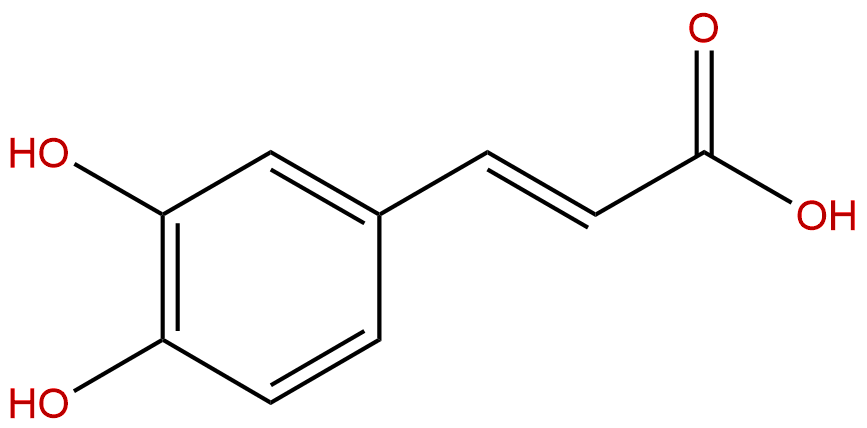


Synonym name: 3,4-Dihydroxycinnamic acid
Catalogue No.: BP0300
Cas No.: 331-39-5
Formula: C9H8O4
Mol Weight: 180.159
Botanical Source:
Purity: 95%~99%
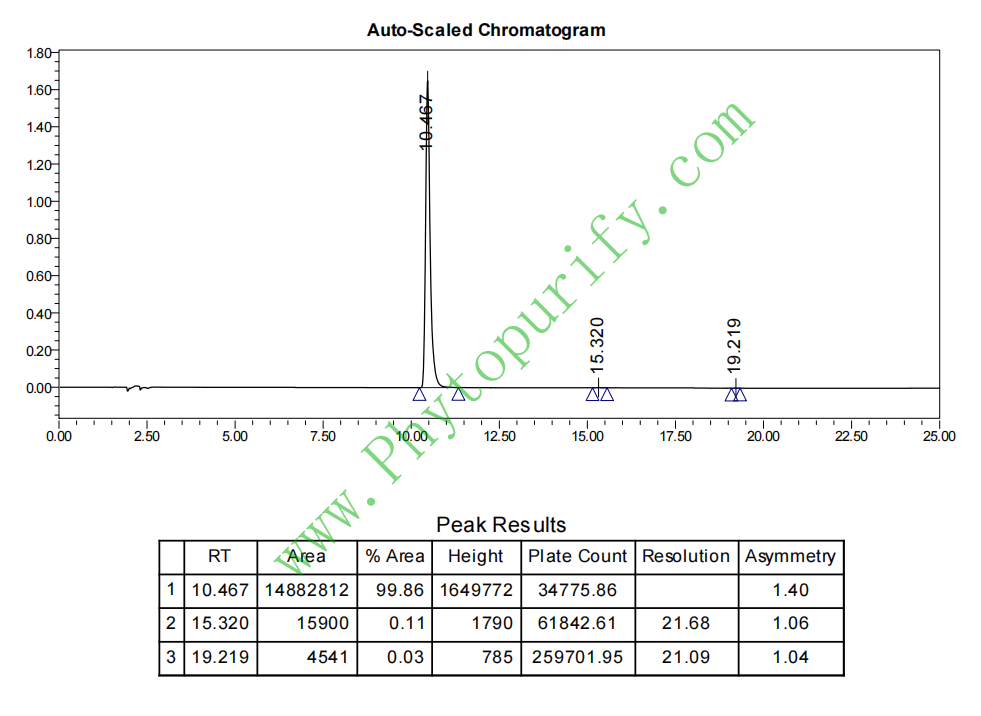
Analysis Method: HPLC-DAD or/and HPLC-ELSD
Identification Method: Mass, NMR
Packing: Brown vial or HDPE plastic bottle
Can be supplied from milligrams to grams.
For Reference Standard and R&D, Not for Human Use Directly.
Inquire for bulk scale.
Storage conditions:Short-term storage at 2~8℃, long-term storage at -20 ~ -80℃
77.7600
1.4238
-1.0137
2.5474
3.4461
11.1754
Low
79.0218
2.0355
Yes
No
No
No
Yes
No
0.0
Yes
Yes
Yes
Yes
Caffeic acid, also known as 3,4-dihydroxycinnamic acid, is a natural phenolic acid widely present in the plant kingdom, with a CAS number of 331-39-5. As an important member of the hydroxycinnamic acid family, caffeic acid is not only a key product of plant secondary metabolism, but also a hot topic in natural product pharmacology research due to its diverse biological activities. Caffeic acid and its derivatives (such as caffeic acid phenethyl ester) are abundant in various medicinal plants and daily diets (such as coffee, fruits, vegetables, and Chinese herbs), providing a material basis for their "medicinal food homology" characteristics. Modern pharmacological studies have shown that caffeic acid exhibits multiple biological activities, including antioxidant, anti-inflammatory, neuroprotective, anti-tumor, antibacterial, and immunomodulatory properties. Its mechanism of action involves the regulation of multiple key molecular targets, particularly as an inhibitor of transient receptor potential vanillic acid subtype 1 (TRPV1) ion channels and 5-lipoxygenase (5-LO), and plays a central role in regulating the antioxidant stress pathway mediated by nuclear factor E2 related factor 2 (NRF2). This article aims to systematically review the chemical properties, plant sources, pharmacological activities, molecular mechanisms of action, pharmacological evaluation, and clinical application prospects of caffeic acid, in order to provide comprehensive scientific references for the deep development and utilization of this natural product.
The molecular formula of caffeic acid is C9H8O4, with a molecular weight of 180.1590 g/mol. Its basic chemical structure is cinnamic acid (cinnamic acid), with a hydroxyl group (catechol structure) attached to the 3rd and 4th positions of the benzene ring, and a carboxyl group on the acrylic side chain. This structure exists in two geometric isomers, cis - and trans -, with the trans isomer being more stable and common in nature, commonly referred to as caffeic acid.
The chemical structure of caffeic acid determines its unique physicochemical properties. Its catechol structure is a potent electron donor, giving it significant antioxidant activity and the ability to effectively scavenge free radicals and chelate metal ions. Its calculated lipid water partition coefficient (LogP) is about 1.42, indicating that it has a certain degree of lipophilicity, but overall it still leans towards hydrophilicity. Its topological polar surface area (TPSA) is 77.76 Å ², reflecting the high proportion of polar functional groups (hydroxyl, carboxyl) in the molecule. The solubility of caffeic acid in water is about 2.55 mg/mL, which belongs to the range of slightly soluble to soluble, which is beneficial for its absorption and distribution in organisms. However, its blood-brain barrier permeability is predicted to be "low", suggesting that its prototype drug may have limited access to the central nervous system. In the preliminary safety evaluation, caffeic acid did not show hERG potassium channel inhibitory activity (low risk of arrhythmia), and the Ames test result was negative (0.0), indicating that it has no significant genetic toxicity potential. These basic pharmacological parameters lay the foundation for its subsequent pharmacological applications.
Caffeic acid is widely distributed in the plant kingdom and is a key intermediate in the phenylpropanoid metabolic pathway of plants. Its main sources include:
1. Food and Beverage Coffee beans (name source), olives, apples, pears, thistle, potatoes, thyme, sage, mint, and various berries (such as blueberries and strawberries) all contain free or bound caffeic acid.
2. medicinal plants Many traditional herbs are rich in caffeic acid or its derivatives, such as honeysuckle, chrysanthemum, dandelion, summer grass, Artemisia scoparia, etc. The anti-inflammatory, heat clearing, and detoxifying effects of these herbs are partially attributed to caffeic acid.
3. Bee products Propolis, especially poplar type propolis, contains high concentrations of caffeic acid and its ester derivatives (such as caffeic acid phenethyl ester), which are the main contributors to the biological activity of propolis.
The extraction method of caffeic acid mainly depends on its form of existence in the raw material (free or ester, glycoside bound). Conventional extraction techniques include:
* Solvent extraction method The most commonly used method. Use methanol, ethanol, acetone or their mixed solvents with water for extraction, reflux or ultrasound assisted extraction. This method has high efficiency and relatively low cost.
* Alkaline hydrolysis extraction For caffeic acid that exists in the form of ester bonds (such as chlorogenic acid, which is formed by the esterification of caffeic acid and quinic acid), dilute alkaline solution (such as NaOH) is often used for hydrolysis to release free caffeic acid, which is then separated and purified.
* Purification technology After filtration and concentration, the crude extract can be separated and purified using column chromatography (such as silica gel column, macroporous adsorption resin column), preparative high-performance liquid chromatography (HPLC), and other techniques to obtain high-purity caffeic acid.
In recent years, some green extraction techniques such as supercritical fluid extraction and microwave-assisted extraction have also been explored to improve extraction efficiency and selectivity.
A large number of in vitro and in vivo studies have confirmed that caffeic acid has a wide range of pharmacological activities, mainly including the following aspects:
antioxidant activity Caffeic acid is widely recognized as a potent natural antioxidant. Its catechol structure can directly scavenge various reactive oxygen/nitrogen species such as superoxide anions (O ₂⁻ •), hydroxyl radicals (• OH), peroxyl radicals (ROO •), and hydrogen peroxide (H ₂ O ₂). In addition, it can also reduce oxidized metal ions (such as Fe ³ ⁺, Cu ² ⁺), preventing them from participating in the Fenton reaction to generate free radicals, thereby protecting biomolecules (such as DNA, proteins, lipids) from oxidative damage.
anti-inflammatory activity Caffeic acid exerts anti-inflammatory effects through multiple pathways. As an inhibitor of 5-lipoxygenase (5-LO) and 15 lipoxygenase (15-LO), it can block the metabolism of arachidonic acid to produce pro-inflammatory mediators leukotrienes (LTs). Meanwhile, caffeic acid can also inhibit the expression of cyclooxygenase-2 (COX-2) and the production of prostaglandin E2 (PGE2). In cell models, caffeic acid can effectively inhibit the excessive release of inflammatory factors such as nitric oxide (NO), tumor necrosis factor - α (TNF - α), and interleukin-6 (IL-6) in macrophages induced by lipopolysaccharide (LPS).
Neuroprotective activity Research has shown that caffeic acid has a protective effect on various models of neurological damage. Its mechanism involves antioxidant stress, inhibition of neuroinflammation, anti apoptosis, and regulation of neurotrophic factors. Caffeic acid can alleviate neuronal toxicity induced by β - amyloid protein (A β), indicating its potential value in the prevention and treatment of Alzheimer's disease. In addition, its inhibition of TRPV1 channel may also be involved in regulating pain and neuroinflammatory processes.
Antitumor activity Caffeic acid has been shown to inhibit proliferation, induce apoptosis and block cell cycle in a variety of cancer cell lines (such as breast cancer, liver cancer, colon cancer, lung cancer, melanoma). Its anti-tumor mechanism is complex, including epigenetic regulation such as upregulation of pro apoptotic proteins (such as Bax), downregulation of anti apoptotic proteins (such as Bcl-2), activation of caspase cascade reaction, inhibition of matrix metalloproteinases (MMPs), and inhibition of histone deacetylase (HDAC) activity.
Antibacterial and antiviral activity Caffeic acid has inhibitory effects on various bacteria (such as Staphylococcus aureus, Escherichia coli) and fungi. The mechanism may be related to the disruption of microbial cell membrane integrity and inhibition of key enzyme activity. In addition, studies have shown that caffeic acid has an inhibitory effect on the replication of certain viruses, such as human immunodeficiency virus HIV and herpes simplex virus HSV.
Cardiovascular protective activity: Caffeic acid can protect cardiovascular diseases such as atherosclerosis through multiple ways such as anti-oxidation, anti-inflammatory, inhibition of low-density lipoprotein (LDL) oxidation, anti platelet aggregation, and improvement of vascular endothelial function.
The multiple pharmacological activities of caffeic acid stem from its diverse regulation of cellular signaling pathways and direct effects on specific molecular targets. Its core mechanism of action and key targets are as follows:
Core activators of NRF2/ARE antioxidant pathway This is the core mechanism by which caffeic acid exerts antioxidant and cell protective effects. Under oxidative stress, caffeic acid or its metabolites can modify Kelch like ECH associated protein 1 (KEAP1), leading to its dissociation from nuclear factor E2 associated factor 2 (NRF2). Free NRF2 translocates to the nucleus and binds to antioxidant response elements (ARE), initiating the transcriptional expression of a series of downstream phase II detoxifying enzymes and antioxidant proteins. These proteins include:
Lipoxygenase (LOX) and cyclooxygenase (COX) pathway inhibitors Caffeic acid is an effective inhibitor of 5-LO and 15-LO in the arachidonic acid metabolism pathway, directly reducing the production of pro-inflammatory mediator leukotrienes. At the same time, it can also downregulate the expression of COX-2 and reduce the production of prostaglandins, thereby exerting anti-inflammatory effects in the early and late stages of inflammatory reactions.
TRPV1 ion channel antagonist Transient receptor potential vanillic acid subtype 1 (TRPV1) is a key non selective cation channel involved in pain perception, neurogenic inflammation, and thermoregulation. Caffeic acid can inhibit the activation of TRPV1, which may be related to its analgesic and anti neuroinflammatory effects.
Other enzyme targets:
Although caffeic acid has significant biological activity, its direct application as a drug still faces some challenges in drug development.
Pharmacokinetic characteristics:
* absorb After oral administration, caffeic acid is rapidly absorbed in the upper small intestine through monocarboxylic acid transporters (MCTs), but its absolute bioavailability is not high (about 10-20%), mainly due to first pass effects and intestinal metabolism.
* distribution After absorption, it is widely distributed in various tissues throughout the body, but due to its high polarity, high plasma protein binding rate (about 70-80%), and low blood-brain barrier permeability, its prototype drug concentration in target tissues (especially the central nervous system) may be limited.
* Metabolism Caffeic acid undergoes extensive metabolism in the body. The main metabolic pathways include: ① methylation Catechin-O-methyltransferase (COMT) methylates one hydroxyl group to produce products such as Ferulic acid; ② Sulfation Sulfonyltransferase (SULT) catalyzes the formation of sulfate ester complexes; ③ Glucuronidation UDP glucuronic acid transferase (UGT) catalyzes the formation of glucuronic acid complexes. In addition, the gut microbiota can partially hydrolyze or reduce it.
* excretion Metabolites are mainly excreted through urine, with a small amount excreted through bile and feces. The prototype drug has extremely low levels in urine.
Challenges and Strategies in Drug Development:
1. Poor metabolic stability The catechol structure of caffeic acid is easily methylated by COMT, resulting in a short half-life in vivo (about 1-2 hours) and rapid loss of activity.
2. Low bioavailability The first pass effect and extensive binding metabolism limit its systemic exposure.
3. Difficulty in delivering target tissue Especially for the treatment of central nervous system diseases, low blood-brain barrier permeability is the main obstacle.
Improvement strategy:
* Structural modification Develop prodrugs or derivatives of caffeic acid, such as esterification or etherification of its phenolic hydroxyl group, or synthesis of amide derivatives, to improve its lipid solubility, metabolic stability, and bioavailability. Caffeic acid phenethyl ester (CAPE) is a successful example, with superior activity and stability compared to caffeic acid.
* New drug delivery system Using nanotechnology (such as liposomes, nanoparticles, solid lipid nanoparticles), microemulsions, cyclodextrin inclusion complexes, and other carrier systems to encapsulate or composite caffeic acid, in order to improve its solubility, stability, targeting, and bioavailability.
* combination therapy Combined with other natural products or drugs that have synergistic effects, reducing their respective doses, improving efficacy, and reducing potential side effects.
Caffeic acid and its derivatives/preparations have shown broad clinical application prospects in multiple disease fields:
Future research should focus on: ① further elucidating the multi-target synergistic mechanism of caffeic acid in complex disease networks; ② Using computer-aided drug design and synthetic biology methods to develop novel caffeic acid derivatives with higher activity and better drug properties; ③ Promote research on targeted delivery systems based on nanotechnology to achieve precise treatment; ④ Conduct high-quality, large-scale preclinical and clinical studies to confirm its safety and effectiveness, and promote its transformation from "dietary components" to "therapeutic drugs".
As a natural phenolic acid compound with a wide range of sources and diverse activities, the research value of caffeic acid has far exceeded the initial field of plant chemistry. From basic antioxidant and anti-inflammatory effects to complex neuroprotection, anti-tumor effects, and metabolic regulation, caffeic acid exhibits multidimensional and multi-level pharmacological effects by acting on multiple key targets such as NRF2, 5-LO, TRPV1, HDAC, etc. Despite facing challenges such as rapid metabolism and low bioavailability in drug development, these obstacles are gradually being overcome through strategies such as structural modification and dosage form innovation. With the rapid development of systems pharmacology, structural biology, and drug delivery technology, the in-depth exploration and rational development of caffeic acid will inevitably accelerate. It not only provides a classic example for understanding the concept of "drug food homology", but also offers highly promising lead compounds and drug candidate molecules for the development of innovative drugs, especially in major disease fields such as chronic inflammation, neurodegenerative diseases, and tumors. In the future, caffeic acid and its derivatives are expected to play a more important role in preventive and therapeutic medicine.
