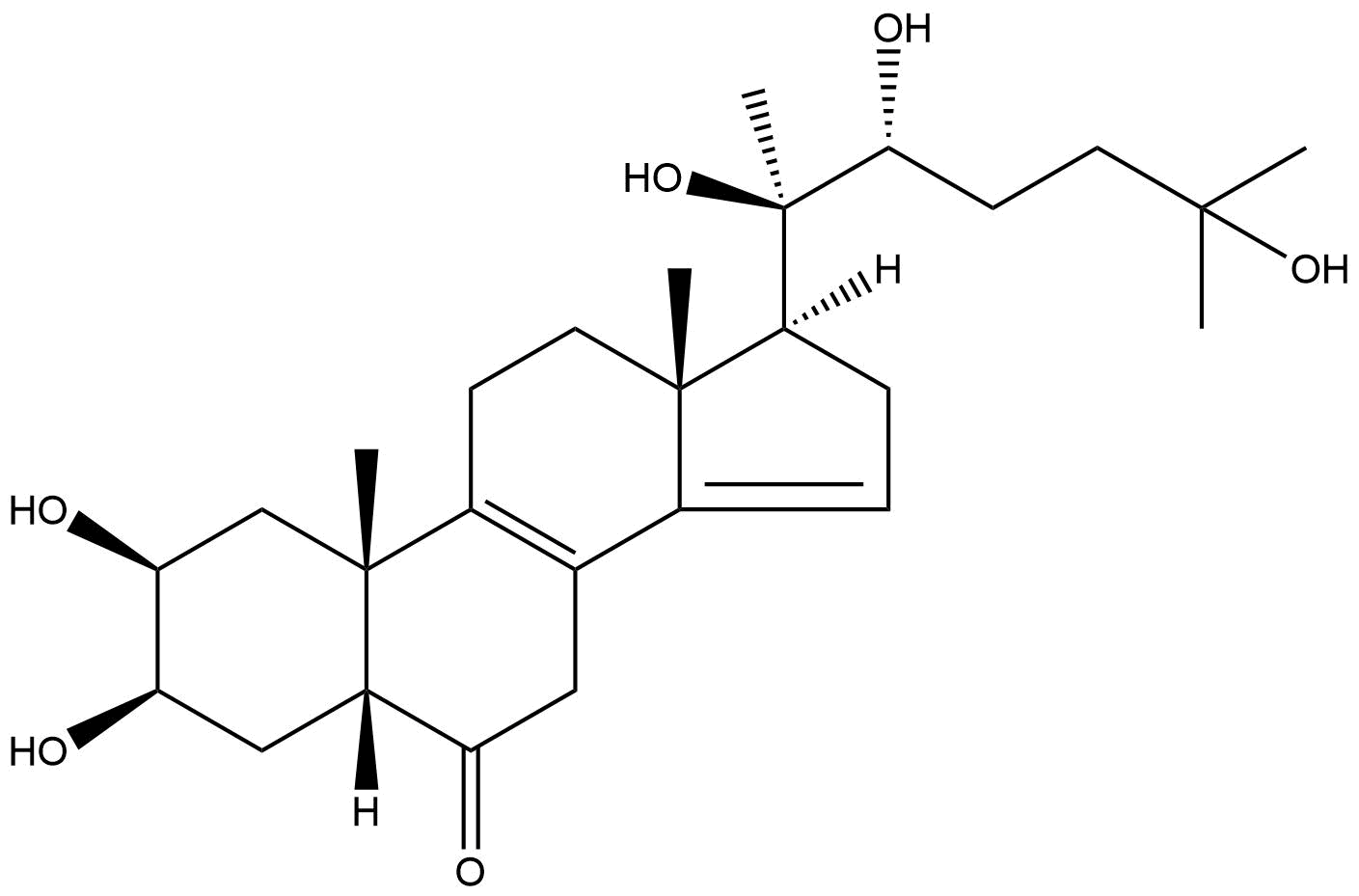


Product name: Podecdysone B
Synonym name:
Catalogue No.: BP2070
Cas No.: 22612-27-7
Formula: C27H42O6
Mol Weight: 462.627
Botanical Source: Cyanotis arachnoides C.B.Clarke
Type of Compound: Steroids
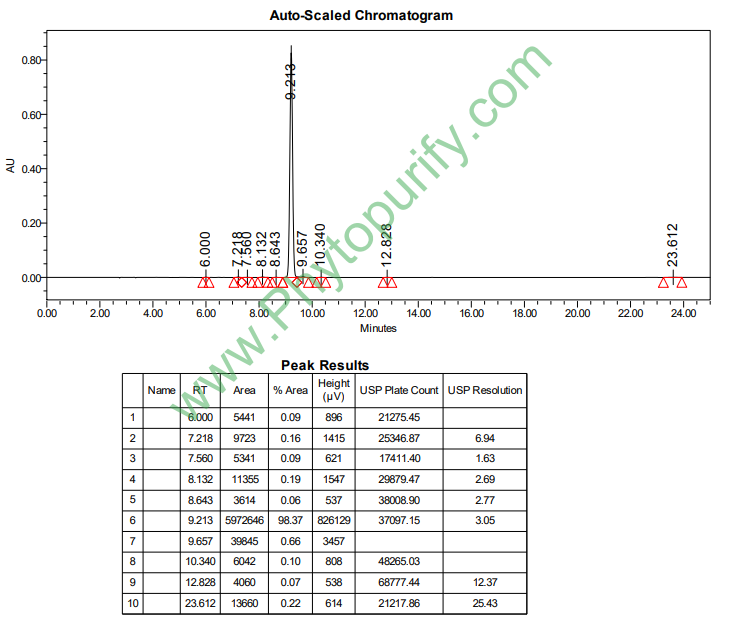
Purity: 95%~99%
Analysis Method: HPLC-DAD or/and HPLC-ELSD
Identification Method: Mass, NMR
Packing: Brown vial or HDPE plastic bottle
Storage: Store in a well closed container, protected from air and light. Put into refrigerate or freeze for long term storage.
Whenever possible, you should prepare and use solutions on the same day. However, if you need to make up stock solutions in advance, we recommend that you store the solution as aliquots in tightly sealed vials at -20℃. Generally, these will be useable for up to two weeks.
The product could be supplied from milligrams to grams
Inquire for bulk scale.
Chengdu Biopurify Phytochemicals Ltd. is a leading company in the research, development, manufacture and marketing of High Quality Phytochemicals and Extracts(especially Active Ingredients from Traditional Chinese Medicine,TCM), Natural Active Pharmaceutical Ingredients worldwide.
The main services:
A. Supply active ingredients and reference standards of TCM, from mgs to kgs scale
B. Custom extraction and purification, target Herb Active Ingredients
C. Custom synthesis and semi-synthesis for Natural Active Ingredients
D. CR(contract research), CM(contract manufacture) and PD(process development) services from lab scale, pilot scale to commercial scale(GMP is also available)
E. TCM compounds library for drug screen,more than 3000 compounds available, many of them are rare and unique.
HPLC of Podecdysone B
Storage conditions:Short-term storage at 2~8℃, long-term storage at -20 ~ -80℃
118.2200
2.2895
2.2896
.0964
.9438
8.9714
Low
68.3887
5.3404
No
No
No
No
No
No
0.0
Yes
No
Yes
Yes
Podecdysone B is a typical phytoecdysone, which was originally isolated from Podocarpus spp. As a type of natural steroid compound, plant ecdysteroids have attracted much attention in pharmacology and natural product research in recent years due to their unique biological activity and structural diversity. Podocarpine sterone B not only has a complex steroidal skeleton with polyhydroxy substitution, but also shows the potential to regulate a variety of disease related targets, covering diabetes, metabolic syndrome, inflammatory diseases, osteoporosis, neurodegenerative diseases and other fields.
The purpose of this review is to systematically summarize the chemical structure, physical and chemical properties, plant sources and extraction methods of rosiglitazone B, focus on its pharmacological activity and mechanism of action, explore its pharmacokinetic characteristics in combination with pharmaceutical parameters, and finally look forward to its clinical application potential and future research directions, providing theoretical basis and research reference for natural product pharmacology and new drug development.
The chemical structure of rosiglitazone B is based on the 5 β - cholesta-8,14-dien-6-one skeleton, the molecular formula is C27H42O6, and the molecular weight is 462.6270. Its structural features include five hydroxyl substituents at positions 2, 3, 20, 22, and 25, as well as a 6-oxo group, belonging to the complex category of 3 β - hydroxysteroids, 26 hydroxysteroids, 20 hydroxysteroids, 2 β - hydroxysteroids, 22 hydroxysteroids, and 6-oxosteroids. The steroid skeleton substituted with multiple hydroxyl groups endows it with strong polarity and diverse biological activities.
In terms of physical and chemical properties, the LogP value of rosiglitazone B is 2.2895, which shows that it has moderate fat solubility and is conducive to the penetration of cell membrane. The polar surface area (TPSA) is 118.22 Å ², indicating a high molecular polarity that may affect its oral absorption and bioavailability. Low water solubility (0.0964 mg/mL) suggests limited solubility in the aqueous phase, but sufficient to support in vivo distribution. The blood-brain barrier has a low permeability, which may limit its direct effects on the central nervous system. The negative result of hERG channel inhibition experiment indicates a low risk of cardiac toxicity. The Ames mutagenicity test showed 0, indicating a low risk of genotoxicity and a good safety basis.
Podocarpine sterone B is mainly isolated from the genus Lysimachia. Dew grass is widely distributed in temperate and subtropical regions of Asia, and its whole plant or rhizome parts are commonly used as medicine in traditional Chinese medicine. There are abundant plant ecdysteroids in plants. As an important member, rosiglitazone B is not as high as some mainstream plant ecdysteroids (such as 20 hydroxyecdysterone), but its unique structure endows it with special biological activities.
The extraction method usually uses organic solvent extraction combined with column chromatography separation technology. The specific steps include:
In recent years, green extraction technologies such as ultrasonic assisted extraction and microwave assisted extraction have also been gradually applied to the extraction of rosin sterone B to improve the extraction efficiency and purity and reduce the use of organic solvents.
As a representative compound of plant ecdysone, rosiglitazone B shows multi target and multi pathway pharmacological activities, covering metabolic regulation, anti-inflammatory, bone metabolism regulation and neuroprotection.
Diabetes and metabolic syndrome are metabolic diseases with high incidence rate and complicated pathological mechanism worldwide. Roshansone sterone B promotes energy metabolism balance, enhances insulin sensitivity, inhibits gluconeogenesis and improves glucose metabolism by activating AMPK (5 'AMP activated protein kinase) pathway. In addition, its regulation of key enzymes such as sodium glucose cotransporter 2 (SGLT2) and glucokinase (GCK) helps to lower blood glucose levels.
Related studies have shown that rosiglitazone B can enhance insulin signal transduction and improve the function of pancreatic β cells by downregulating the activity of protein tyrosine phosphatase 1B (PTPN1). Meanwhile, its regulation of estrogen receptor beta (ESR2) and monoamine oxidase A (MAOA) may mediate the cross regulation of metabolism and neuroendocrine function.
Inflammation is the common pathological basis of various chronic diseases. ROHANSONE STERONE B can reduce the expression of pro-inflammatory factor TNF - α and STAT3 and reduce inflammatory response by inhibiting TLR4 (Toll like receptor 4) mediated inflammatory signaling pathway. Its regulation of lipoxygenases (ALOX5, ALOX15) and nuclear factor erythroid 2-related factor 2 (NFE2L2) promotes antioxidant defense and reduces oxidative stress damage.
In addition, ROHANSONE STERONE B regulates inflammatory related enzymes such as protein kinase C α (PRKCA) and caspase 1 (CASP1), further playing the role of anti-inflammatory and apoptosis protection. Its effect on TRPV1 (transient receptor potential vanillic acid receptor 1) may be involved in the regulation of pain and inflammation perception.
Osteoporosis is a common metabolic bone disease in the elderly. Roxandrosterone B promotes the expression of bone formation related transcription factors RUNX2 and SP7 and enhances osteoblast activity by regulating estrogen receptor alpha (ESR1) and vitamin D receptor (VDR). Its regulation of matrix metalloproteinase 9 (MMP9), bone resorption related enzymes (CTSK), and bone protective factor TNFRSF11B (osteoprotegerin) helps to inhibit bone resorption and maintain bone homeostasis.
ROHANSONE STERONE B also promotes the synthesis and mineralization of bone matrix by regulating osteocalcin (BGLAP), bone calcium binding protein (COL1A1) and bone formation inhibitor SOST, showing good anti osteoporosis potential.
Neurodegenerative diseases such as Alzheimer's disease involve pathological mechanisms such as neuronal apoptosis, oxidative stress, and inflammatory response. Roshandrosterone B reduces neuronal apoptosis by regulating BCL2 family anti apoptotic proteins; Inhibit the activity of β - amyloid precursor protein (APP) and β - secretase 1 (BACE1), and reduce amyloid deposition.
Its regulation of TLR4, PRKCA, MAPT (microtubule associated protein Tau), and ALOX5 reduces neuroinflammation and oxidative damage. The activation of NFE2L2 enhances cellular antioxidant capacity, while the regulation of TRPV1 may affect nerve conduction and pain perception, exerting an overall neuroprotective effect.
The multi target mechanism of rosiglitazone B reflects its complex biological functions as a natural steroid. Its main mechanism of action includes:
Molecular targets encompass AMPK(PRKAA1)、SGLT2、GCK、PTPN1、MAOA、ESR1/2、TLR4、STAT3、ALOX5/15、NFE2L2、TRPV1、BCL2、APP、BACE1、MAPT Etc., reflecting its extensive biological regulatory network.
The pharmaceutical parameters of rosiglitazone B show that it has certain potential for drug development:
At present, the pharmacokinetic study on rosiglitazone B is relatively limited. It is speculated that its oral absorption may be limited by high polarity and water solubility, and the metabolic pathway in vivo may involve hepatic steroid metabolic enzymes. In the future, it is necessary to conduct systematic research on pharmacokinetics and metabolite identification in vivo, to clarify their bioavailability, distribution, metabolism, and excretion characteristics.
Roxandrosterone B shows a broad potential for clinical application due to its multi target and multi pathway pharmacological activities. Its regulatory role in diabetes and metabolic syndrome is expected to be developed as a new drug for the treatment of metabolic diseases. The anti-inflammatory and antioxidant properties make it valuable as an adjuvant therapy in chronic inflammatory diseases. The anti osteoporosis effect provides a new treatment approach for elderly bone metabolism diseases. The neuroprotective effect provides potential candidate molecules for the prevention and treatment of neurodegenerative diseases.
Future research should focus on:
In addition, combining modern drug delivery technologies such as nanocarriers and liposomes can further improve their drug properties and enhance therapeutic efficacy.
As a typical plant ecdysone, rosiglitazone B, with its unique chemical structure and diverse pharmacological activities, has become a hot spot in natural product pharmacology. It has shown significant therapeutic potential in metabolic diseases, inflammation, bone metabolism, and neuroprotection. Although research is still in its early stages, its good safety and multi-target mechanism of action provide a solid foundation for the development of new drugs. In the future, through in-depth pharmacological mechanism research, pharmacokinetic optimization and clinical verification, rosiglitazone B is expected to become a new candidate drug for the treatment of many diseases, promoting the transformation of natural products into clinical applications.
