Progress in pharmacological research on ketogenic acid: a multi-target natural triterpenoid compound
Introduction/Overview
Natural products, as an important source of drug discovery, play an indispensable role in the long-term struggle between humans and diseases. Among numerous natural compounds with biological activity, pentacyclic triterpenoids have attracted much attention due to their structural diversity and wide pharmacological activities. Bryonolic acid (CAS number: 24480-45-3), as a typical D: C-friedooleanane type pentacyclic triterpenoid compound, has attracted strong interest from researchers in the field of natural product pharmacology in recent years.
Acetoacetic acid was originally derived from the roots of plants in the Cucurbitaceae family(Bryonia The separation and identification of spp, from which its name comes. With the deepening of research, it has been found that this compound is widely present in various medicinal plants, including plant groups such as Cucurbitaceae and Coriaceae. It is worth noting that 20 epi diarrheal acid, as its stereoisomer, is derived from the gourd plant in the Cucurbitaceae family(Lagenaria siceraria)The stem of the horse mulberry and the middle of the horse mulberry family plants(Coriaria intermedia)It was isolated from the roots and also exhibited significant anti-tumor activity.
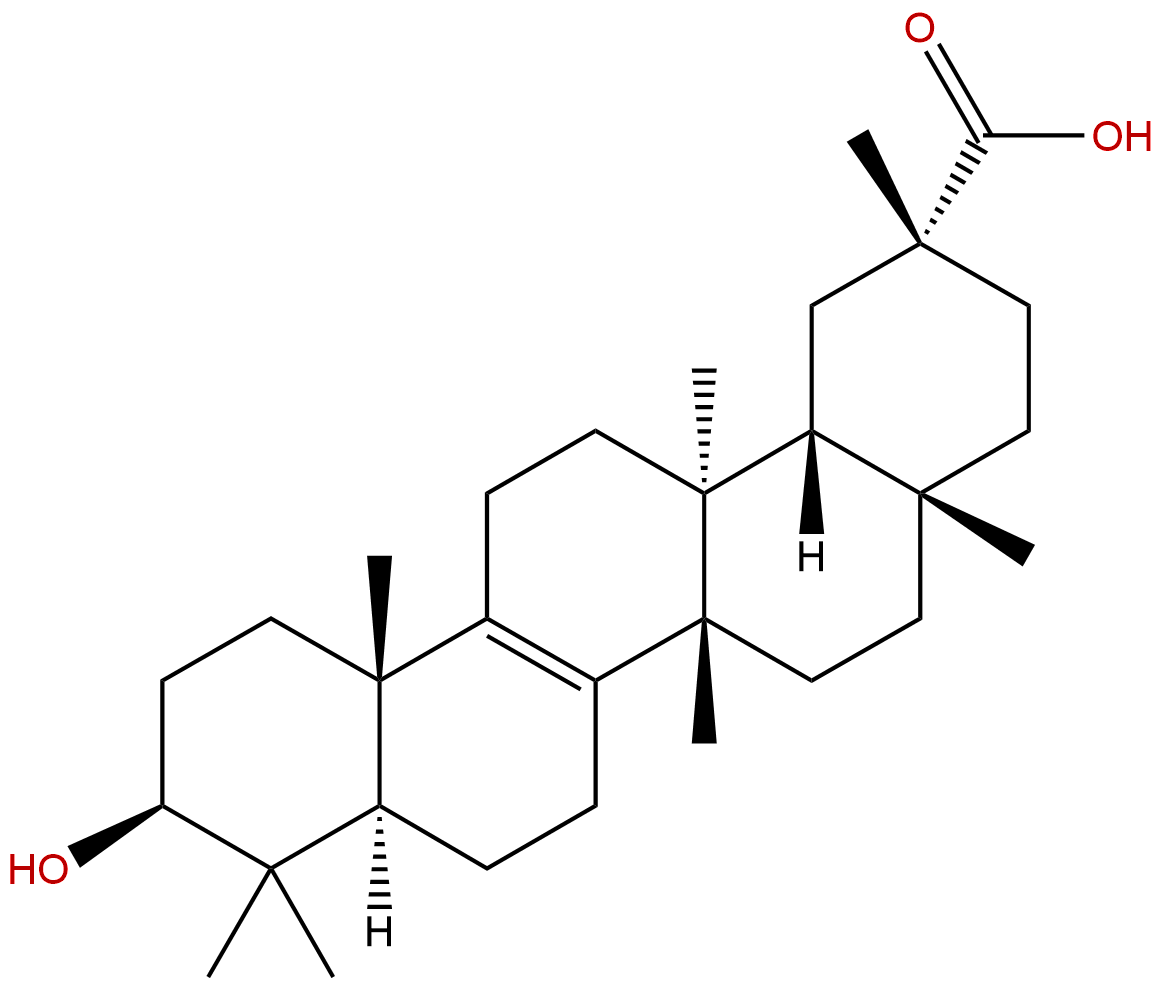
From a chemical classification perspective, diarrhetinic acid belongs to the D: C-friedoolinane type triterpenes, which is a relatively special subtype in the pentacyclic triterpenoid family. Its core skeleton is formed by six isoprene units through specific cyclization reactions. This compound serves as both a metabolite and an anti-tumor agent. Its molecular structure contains one hydroxyl and one carboxyl functional group, making it a hydroxy monocarboxylic acid compound.
In recent years, significant progress has been made in the pharmacological activity research of ketogenic acid. Research has shown that this compound has various biological activities such as immune regulation, anti-inflammatory, antioxidant, and anticancer. Its mechanism of action involves multiple signaling pathways and molecular targets. Especially in the field of anti-inflammatory treatment, galacturonic acid can regulate multiple key targets including IL-6, STAT3, CASP1, TRPV1, RELA, PTGS1, TNF, TRPA1, IKBKB, and NOS2, demonstrating the potential of multi-target intervention in inflammatory response. These findings not only deepen our understanding of the pharmacological effects of natural triterpenoids, but also provide valuable lead compounds for the development of novel anti-inflammatory and anti-tumor drugs.
This article will provide a systematic review of the research progress of galacturonic acid from the aspects of chemical structure and physicochemical properties, plant sources and extraction methods, pharmacological activity research, mechanism of action and molecular targets, pharmacological evaluation and pharmacokinetics, clinical application prospects and prospects, in order to provide reference for the in-depth research and development of this compound.
Chemical structure and physicochemical properties
Chemical structural characteristics
The chemical structure of diarrheal acid belongs to the D: C-friedooleanane type pentacyclic triterpene, and its core skeleton consists of five fused hexagonal rings (A, B, C, D, E rings). Unlike common oleanane or ursane triterpenes, D: C-friedooleanane triterpenes are characterized by a rearrangement of the bond between the C and D rings, forming a unique "friedo" skeleton. This structural rearrangement endows this type of compound with unique spatial configuration and biological activity.
Specifically, the molecular formula of diarrheal acid is C ③₀ H ₄₈ O3, with a molecular weight of 456.7110 g/mol. Its structure contains the following key functional groups:
-One carboxyl group (- COOH): located at position C-28, endows the compound with weak acidity
-One hydroxyl group (- OH): located at C-3 position, with a secondary alcohol structure
-Multiple methyl substituents: distributed at different positions of the skeleton, increasing the hydrophobicity of the molecule
20 epi diarrhetinic acid is a stereoisomer of diarrhetinic acid, and there is a difference in the configuration between the two at the C-20 position. This subtle structural difference may lead to different interaction modes between the two and biological targets, resulting in different pharmacological activity spectra.
Physicochemical properties
The physicochemical properties of alcohol acid have a significant impact on its bioavailability and medicinal properties. According to the results of computational chemistry and experimental measurements, the key physicochemical parameters of this compound are as follows:
Lipophilicity and Solubility The LogP value of diarrheal acid is 6.7452, indicating that the compound has high lipophilicity. A high LogP value indicates that the compound is easily able to penetrate biofilms, but it may also lead to poor water solubility. Its water solubility is only 0.0012 mg/mL, which is one of the main obstacles limiting its in vivo application due to its extremely low water solubility. Acetoacetic acid has good solubility in organic solvents such as ethanol, dimethyl sulfoxide (DMSO), and chloroform.
Polar Surface Area The topological polar surface area (TPSA) is 57.53 Å ², which is lower than the commonly believed oral drug absorption threshold (about 140 Å ²), indicating that the compound theoretically has good intestinal permeability. However, its high lipophilicity and low water solubility may offset this advantage.
acid-base properties Due to the presence of a carboxyl group in the molecule, diarrheal acid exhibits weak acidity. Under physiological pH conditions, carboxyl groups may partially dissociate, affecting their charge state and binding ability to target proteins.
Stability As a pentacyclic triterpenoid compound, galacturonic acid has good chemical stability under conventional conditions. However, under strong acid, strong base, or high temperature conditions, dehydration, oxidation, or skeletal rearrangement reactions may occur.
Plant sources and extraction methods
Plant-based
Acetoacetic acid is widely distributed in nature and mainly exists in the following plant groups:
Cucurbitaceae family This is the main source family of diarrheal acid. This compound was first derived from the genus Niigata(Bryonia)Separated from plants, hence the name. In addition, in the gourd(Lagenaria siceraria)Bitter gourd(Momordica charantia)Silk gourd(Luffa cylindrica)It has been found in various gourd family plants. It is worth noting that 20 epi diarrheal acid was isolated from the stem of gourd, indicating that different plant parts may contain different stereoisomers.
Coriariaceae: Middle Masang(Coriaria intermedia)The root is another important source of 20 epi diarrheal acid. The plants of the genus Morus are commonly used in traditional medicine to treat inflammatory diseases, and the study of their active ingredients provides a scientific basis for traditional medicine.
Other families and genera In recent years, researchers have also detected the presence of abscisic acid or its analogues in plants such as Fabaceae and Euphorbiaceae, suggesting that the distribution of this compound in the plant kingdom may be more widespread than expected.
Extraction and Separation Methods
The extraction and separation of diarrheal acid usually follow the classic process of natural product chemistry, including the following steps:
Raw material pretreatment Dry and crush plant materials (roots, stems, or whole plants), sieve them through a 40-60 mesh sieve to improve extraction efficiency.
Solvent extraction According to the lipophilic characteristics of galacturonic acid, organic solvents are usually used for extraction. Common extraction solvents include:
-Ethanol or methanol: suitable for laboratory scale extraction, can simultaneously extract polar and non-polar components
-Chloroform or dichloromethane: selective extraction of moderately polar components
-Ethyl acetate: has good solubility for triterpenoids
The extraction methods can be cold soaking, percolation, or Soxhlet extraction. To improve extraction efficiency, multiple extractions (3-5 times) are usually used in combination with ultrasound assistance or heating reflux.
Preliminary separation After the extraction solution is concentrated under reduced pressure, liquid-liquid distribution extraction is carried out. Common solvent systems include petroleum ether water, chloroform water, ethyl acetate water, etc. Acetoacetic acid is mainly enriched in moderately polar organic phases such as chloroform phase or ethyl acetate phase.
chromatographic separation This is the key step in obtaining purified galacturonic acid. Common chromatographic methods include:
-Silica gel column chromatography: using gradient elution (such as petroleum ether ethyl acetate or chloroform methanol system)
-Reverse phase column chromatography: using C18 or C8 stationary phase, eluted with methanol water or acetonitrile water system
-Preparation type high performance liquid chromatography (HPLC): used for the preparation of high-purity samples
Structural Identification The purified compound was structurally confirmed by nuclear magnetic resonance spectroscopy (¹ H-NMR, ¹ ³ C-NMR, 2D-NMR), mass spectrometry (MS), infrared spectroscopy (IR), and ultraviolet spectroscopy (UV).
Pharmacological activity research
anti-inflammatory activity
Inflammation is the body's defense response to harmful stimuli, but excessive or sustained inflammation can lead to tissue damage and the occurrence of various diseases. The anti-inflammatory activity of ketogenic acid is one of its most concerned pharmacological effects.
In vitro studies have shown that diarrheal acid can significantly inhibit the production of pro-inflammatory cytokines in macrophages stimulated by lipopolysaccharide (LPS). In the RAW264.7 macrophage model, this compound reduces the levels of tumor necrosis factor - α (TNF - α), interleukin-6 (IL-6), and nitric oxide (NO) in a concentration dependent manner. Further research has found that ketogenic acid can inhibit the expression of inducible nitric oxide synthase (iNOS, encoded by the NOS2 gene) and cyclooxygenase-2 (COX-2), thereby reducing the production of inflammatory mediators.
In animal models, diarrheal acid has shown protective effects on various inflammatory models. In the carrageenan induced rat plantar swelling model, oral or intraperitoneal injection of laxative acid can significantly reduce the degree of edema, and its effect is comparable to the positive control drug indomethacin. In the arthritis model induced by complete Freund's adjuvant (CFA), the joint swelling, bone erosion, and cartilage destruction of rats treated with ketogenic acid were significantly improved.
It is worth noting that the regulatory effect of diarrheal acid on TRPV1 and TRPA1 ion channels is closely related to its anti-inflammatory activity. TRPV1 and TRPA1 are members of the transient receptor potential (TRP) channel family, playing critical roles in pain transmission and neurogenic inflammation. Alcohol can alleviate inflammation related pain responses by inhibiting the activity of these channels.
Immune regulatory activity
Alcohol has a bidirectional regulatory effect on the immune system. On the one hand, under immunosuppressive conditions, this compound can enhance immune function; On the other hand, during excessive immune activation, it can suppress immune responses and maintain immune homeostasis.
Research has found that diarrheal acid can promote the proliferation and differentiation of T lymphocytes, and enhance the killing activity of natural killer (NK) cells. In the cyclophosphamide induced immunosuppression mouse model, treatment with ketogenic acid can restore spleen index, increase serum immunoglobulin levels, and increase the proportion of T cell subsets. These results indicate that the compound has immune enhancing potential.
On the contrary, in autoimmune disease models, diarrheal acid exhibits immunosuppressive effects. In the experimental autoimmune encephalomyelitis (EAE) model, treatment with ketogenic acid can alleviate the severity of the disease, inhibit the differentiation of pathogenic T cells (such as Th1 and Th17 cells), and promote the expansion of regulatory T cells (Treg). The bidirectional nature of this immune regulation makes galacturonic acid potentially valuable in the treatment of different immune related diseases.
antioxidant activity
Oxidative stress is a common pathological mechanism in various diseases, including inflammation, cancer, neurodegenerative diseases, etc. Ejaculatory acid exhibits significant antioxidant activity, capable of scavenging free radicals and enhancing endogenous antioxidant enzyme activity.
In chemical systems, galacturonic acid exhibits scavenging ability against 1,1-diphenyl-2-trinitrophenylhydrazine (DPPH) free radicals, 2,2 '- bis (3-ethylbenzothiazoline-6-sulfonic acid) (ABTS) cationic free radicals, and superoxide anions. Its antioxidant activity is related to the hydroxyl and carboxyl functional groups in the molecule, which can provide hydrogen atoms or electrons to neutralize free radicals.
In a cellular model, ketogenic acid can reduce oxidative damage induced by hydrogen peroxide (H ₂ O ₂), decrease intracellular reactive oxygen species (ROS) levels, and increase the activity of superoxide dismutase (SOD), glutathione peroxidase (GPx), and catalase (CAT). In addition, the compound can activate the nuclear factor E2 related factor 2 (Nrf2) signaling pathway, promote gene expression driven by antioxidant response elements (ARE), and enhance the antioxidant defense ability of cells.
anticancer activity
The anticancer activity of galacturonic acid has been a research hotspot in recent years. In vitro experiments showed that the compound had cytotoxic effects on a variety of cancer cell lines, including breast cancer (MCF-7, MDA-MB-231), lung cancer (A549, H1299), liver cancer (HepG2, Huh7), colon cancer (HT-29, HCT116) and prostate cancer (PC-3, DU145).
Ketogenic acid exerts anticancer effects through multiple mechanisms:
- Inducing apoptosis By activating the mitochondrial pathway (upregulating Bax, downregulating Bcl-2, releasing cytochrome c, activating caspase-9 and caspase-3) and the death receptor pathway (upregulating Fas, FasL, activating caspase-8)
- cell cycle arrest Blocking cancer cells in G0/G1 or G2/M phase is associated with downregulation of cyclin D1, cyclin E, CDK4, and CDK6 expression
- Inhibit invasion and metastasis Reduce the migration and invasion ability of cancer cells by inhibiting the activity of matrix metalloproteinases (MMP-2 and MMP-9)
- Angiogenesis inhibition Inhibition of vascular endothelial growth factor (VEGF) expression and microvascular formation
It is worth noting that 20 epi diarrheal acid exhibits different characteristics in anti-tumor activity compared to diarrheal acid. Research has shown that 20 epi diarrheal acid has stronger cytotoxicity against certain drug-resistant cancer cells, which may be related to differences in target binding caused by its different stereoconfigurations.
Mechanism of action and molecular targets
Signal pathway regulation
The pharmacological activity of ketogenic acid involves the regulation of multiple signaling pathways, among which the most important are the NF - κ B and STAT3 signaling pathways.
NF - κ B signaling pathway NF - κ B is a key transcription factor in inflammation and cancer. In the resting state, NF - κ B binds to the inhibitory protein I κ B and exists in an inactive form in the cytoplasm. When stimulated by inflammation (such as TNF - α, LPS), I κ B kinase (IKK, encoded by the IKBKB gene) is activated, phosphorylates and degrades I κ B, releases NF - κ B (mainly composed of RELA/p65 subunits) into the nucleus, and initiates target gene transcription. Diarrhea root alcohol inhibits the activity of IKK β, prevents the phosphorylation and degradation of I κ B, and thus suppresses the nuclear translocation and transcriptional activity of NF - κ B. This leads to downregulation of downstream pro-inflammatory genes such as TNF, IL-6, NOS2, PTGS1.
STAT3 signaling pathway STAT3 (Signal Transduction and Transcription Activation Factor 3) plays an important role in inflammation and tumorigenesis. Diarrhea root alcohol can inhibit the phosphorylation of STAT3 (Tyr705 site), prevent its dimerization and nuclear translocation, thereby suppressing the expression of STAT3 target genes (such as cyclin D1, Bcl xL, VEGF). In addition, the compound can indirectly regulate STAT3 signaling by inhibiting the activity of upstream kinases such as JAK2 and Src.
Nrf2 signaling pathway Under oxidative stress conditions, diarrheal acid can activate the Nrf2 signaling pathway. After dissociation from Keap1, Nrf2 enters the nucleus and binds to ARE, initiating the expression of antioxidant enzyme genes (such as SOD, GPx, CAT) and phase II detoxifying enzyme genes (such as NQO1, HO-1), enhancing the cell's antioxidant capacity.
Key molecular targets
Glycyrrhetinic acid regulates multiple molecular targets through direct or indirect action, which are involved in multiple biological processes such as inflammation, immunity, oxidative stress, and cancer.
Inflammatory related targets:
- IL-6 Interleukin-6, a pleiotropic pro-inflammatory cytokine. Diarrhea root alcohol inhibits the transcription and secretion of IL-6.
- STAT3 As mentioned above, it is a key downstream molecule in the IL-6 signaling pathway.
- CASP1 Cysteine aspartate protease 1 is involved in inflammasome activation and IL-1 β maturation. Ketogenic acid can inhibit CASP1 activity.
- TRPV1 and TRPA1 Transient receptor potential channels are involved in pain transmission and neurogenic inflammation. Alcohol can inhibit the activity of these channels.
- RELA The p65 subunit of NF - κ B is the core component of NF - κ B transcriptional activity.
- PTGS1 Prostaglandin endoperoxide synthase 1 (COX-1) is involved in prostaglandin synthesis. Alcohol can inhibit its activity.
- TNF Tumor necrosis factor - α is a key initiating factor in inflammatory response.
- IKBKB I κ B kinase β is a key kinase that activates the NF - κ B pathway.
- NOS2 Inducible nitric oxide synthase catalyzes the production of NO. Diarrhea root alcohol inhibits its expression.
Multi target synergistic effect
The pharmacological activity of ketogenic acid is not the result of the action of a single target, but the comprehensive effect of coordinated regulation of multiple targets. For example, in its anti-inflammatory effect, the compound simultaneously inhibits two pro-inflammatory signaling pathways, NF - κ B and STAT3, and downregulates the production of multiple inflammatory mediators (TNF - α, IL-6, NO, prostaglandins). This multi-target intervention strategy can more effectively control the inflammatory response and may reduce the common problem of resistance to single target drugs.
Evaluation of drug properties and pharmacokinetics
Analysis of drug properties parameters
Based on medicinal chemistry and computational pharmacology methods, a systematic evaluation of the pharmacological properties of galacturonic acid was conducted, and the results are as follows:
Drug Evaluation According to Lipinski's five rules (molecular weight<500, LogP<5, hydrogen bond donor<5, hydrogen bond acceptor<10), the molecular weight (456.71) and number of hydrogen bond donors/acceptors of galacturonic acid meet the requirements, but the LogP value (6.7452) exceeds the recommended range, indicating high lipophilicity. In addition, according to the Veber rule (rotatable bonds<10, TPSA<140 Å ²), the TPSA (57.53 Å ²) of this compound meets the requirements, but the number of rotatable bonds needs further confirmation.
Water solubility The extremely low water solubility of 0.0012 mg/mL is the main limiting factor for the medicinal properties of diarrheal acid. Low water solubility not only affects oral absorption, but may also lead to uneven distribution and accelerated metabolic clearance in the body.
Blood-brain barrier penetration The evaluation shows that the blood-brain barrier penetration ability of diarrheal acid is low, which is unfavorable for the treatment of central nervous system diseases, but may be beneficial for diseases that require avoidance of central side effects, such as peripheral inflammation.
safety assessment The hERG inhibition test result was negative, indicating that the compound has a low risk of causing QT interval prolongation in the heart. The Ames test result is 0.0, indicating no significant mutagenicity. These preliminary safety data provide positive signals for subsequent development.
Pharmacokinetic characteristics
The pharmacokinetic studies of ketogenic acid are not sufficient, and the existing data mainly come from animal experiments and computer simulations
absorb Due to poor water solubility, oral bioavailability may be low. Intraperitoneal injection or intravenous administration may be more effective routes of administration. New drug delivery systems such as nanomaterials, liposomes, and cyclodextrin inclusion complexes are expected to improve their oral absorption.
distribution High lipophilicity makes it easy for diarrheal acid to bind with plasma proteins and be widely distributed in tissues and organs. Its apparent distribution volume (Vd) may be relatively large.
Metabolism As a pentacyclic triterpenoid compound, diarrheal acid is mainly metabolized by the liver. Possible metabolic pathways include hydroxylation, carboxylation, glucuronic acid binding, and sulfate binding. The cytochrome P450 enzyme system (especially CYP3A4) may be involved in its metabolism.
excretion Metabolites are mainly excreted into the intestine through bile, and some are excreted from the body through feces. Renal excretion may not be the main pathway.
Structural modification strategy
Researchers have proposed various structural modification strategies to address the pharmacological defects of ketogenic acid
- Prodrug design Convert carboxyl groups into ester prodrugs, improve lipid solubility and membrane permeability, and release active parent drugs through esterase hydrolysis in vivo
- Introduction of water-soluble functional groups Introducing phosphate, amino acid, or sugar groups into molecules to enhance water solubility
- nano-formulation Using lipid nanoparticles, polymer micelles, or solid lipid nanoparticles to encapsulate diarrheal acid and improve its solubility and bioavailability
- Molecular optimization Preparation of structurally similar compounds through semi synthetic methods and screening for derivatives with better pharmacokinetic properties
Clinical application prospects and prospects
Potential therapeutic areas
Based on the pharmacological activity spectrum of ketogenic acid, it has potential application value in the following disease fields:
Inflammatory diseases Including rheumatoid arthritis, osteoarthritis, inflammatory bowel disease, dermatitis, etc. The multi-target anti-inflammatory effect of ketogenic acid may provide better efficacy and safety than traditional nonsteroidal anti-inflammatory drugs (NSAIDs).
Cancer adjuvant therapy As a chemotherapy sensitizer or radiotherapy sensitizer, ketogenic acid may enhance the efficacy of traditional anti-cancer treatments while reducing their side effects. Its multi-target anti-cancer mechanism helps overcome tumor drug resistance.
Autoimmune diseases The immunomodulatory effect of galacturonic acid makes it potential for the treatment of autoimmune diseases such as multiple sclerosis and systemic lupus erythematosus.
Oxidative stress-related diseases For example, cardiovascular diseases, diabetes complications, neurodegenerative diseases, etc., the antioxidant activity of purgational alkyd may play a protective role.
challenges faced
Despite its broad prospects, the clinical translation of galacturonic acid still faces many challenges:
Pharmacokinetic defects Low water solubility and possible high first pass effect are the main obstacles. We need to develop a suitable drug delivery system.
The mechanism of action is unclear Although multiple targets have been identified, the direct target proteins have not been fully determined, which limits structure based drug optimization.
Insufficient validation of in vivo activity Most studies remain at the level of in vitro and animal models, lacking systematic in vivo pharmacological and toxicological data.
Quality Control Standards As a natural product, its extraction, purification, and quality control standards need to be established to ensure consistency between batches.
Future research directions
- Target discovery and validation Identification of the direct target proteins of diarrheal acid using chemical biology methods such as affinity chromatography and drug affinity responsive target stability techniques
- Research on Structure Activity Relationship Systematically synthesizing derivatives of diarrheal acid and exploring the effects of different substituents on activity and pharmacokinetics
- Development of new formulations Exploring methods to improve bioavailability through nanotechnology, phospholipid complexes, and self microemulsifying drug delivery systems
- Combination therapy research Evaluate the synergistic effect of ketogenic acid with existing drugs (such as chemotherapy drugs and biologics)
- Preclinical safety evaluation Conduct systematic research on acute and chronic toxicity, reproductive toxicity, and genetic toxicity
Conclusion
As a pentacyclic triterpenoid compound with a unique D: C-friedooleanane skeleton, galacturonic acid exhibits a rich spectrum of pharmacological activities, including anti-inflammatory, immunomodulatory, antioxidant, and anticancer effects. Its multi-target mechanism involves key signaling pathways such as NF - κ B, STAT3, Nrf2, as well as multiple molecular targets such as IL-6, TNF, TRPV1, CASP1, reflecting the unique advantages of natural product multi pathway and multi-target intervention in diseases.
However, there is still a significant gap between laboratory findings and clinical applications. The low water solubility and high lipophilicity of ketogenic acid are the main bottlenecks in its drug development, which need to be overcome through structural modification and formulation techniques. Meanwhile, in-depth research on its direct targets and metabolic pathways in vivo will provide important guidance for rational drug design.
With the continuous advancement of natural product chemistry, pharmacology, and drug delivery technology, diarrheal acid and its derivatives are expected to play an important role in the treatment of inflammatory diseases and cancer. Future research should focus on addressing its pharmacokinetic deficiencies, elucidating molecular mechanisms, verifying in vivo efficacy and safety, promoting the transition of this natural triterpenoid compound from the laboratory to clinical practice, and contributing to human health.