Introduction/Overview
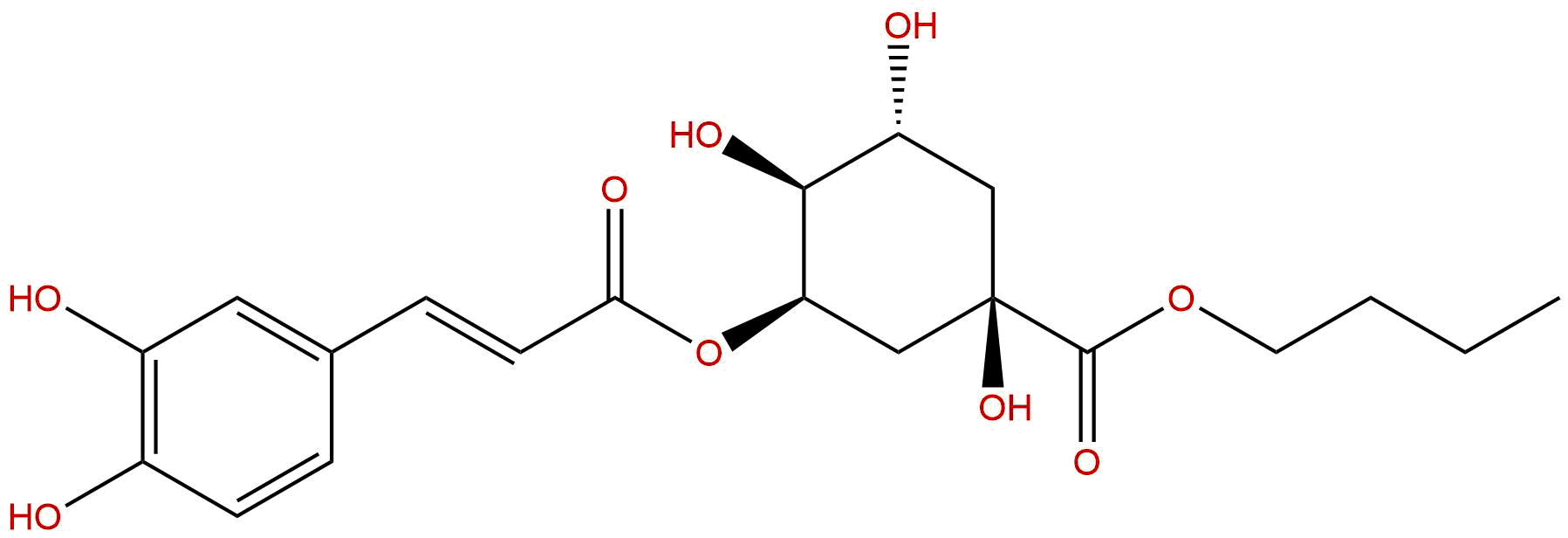
Butyl neochlorogenate (CAS number: 409361-64-4), as a natural product derivative, has attracted widespread attention in the field of natural product pharmacology in recent years. Its structure belongs to the esterified derivatives of chlorogenic acid compounds. Because of its unique chemical properties and biological activities, especially its remarkable potential in regulating blood sugar levels, it has become a hot spot in the research of diabetes and related metabolic diseases. Diabetes, as a chronic metabolic disease with increasing incidence rate worldwide, urgently needs to develop effective and safe hypoglycemic drugs. The use of multiple targets to regulate blood glucose metabolism by butyl chlorogenic acid provides new ideas and directions for the development of natural medicines.
This article aims to systematically review the chemical structure and physicochemical properties, plant sources and extraction methods, pharmacological activity and mechanism of action, pharmacological evaluation and pharmacokinetic characteristics of butyl chloroformate, and explore its clinical application prospects. It is expected to provide comprehensive reference materials for researchers in related fields and promote the in-depth research and development of this compound.
Chemical structure and physicochemical properties
Novochlorogenic acid butyl ester is a butyl derivative of chlorogenic acid, with a molecular formula of C21H26O9 and a molecular weight of 410.4190. Its structure is based on the core skeleton of chlorogenic acid, which introduces butyl side chains through esterification reaction, enhancing the lipid solubility and membrane permeability of the molecule. The LogP value of the compound is 1.2214, indicating its moderate lipophilicity, which is beneficial for membrane penetration and in vivo distribution. The polar surface area (TPSA) is 153.75 Å ², indicating high polarity, which is related to its polyhydroxy structure and facilitates hydrogen bonding with biological targets.
The water solubility index is 1.1579, indicating that it has a certain solubility in water environment, but its solubility is lower compared to non-polar solvents. The low penetration ability of the blood-brain barrier suggests limited distribution in the central nervous system, which may reduce the risk of central side effects. The hERG channel inhibition experiment result was negative, indicating that the compound has high electrophysiological safety for the heart. The Ames mutagenicity test showed 0, indicating no mutagenicity and good safety.
Structurally, butyl chlorogenic acid retains the phenolic hydroxyl and caffeoyl structures of chlorogenic acid, which play critical roles in antioxidant and enzyme inhibitory activities. The introduction of butyl ester not only improves lipid solubility, but may also affect its binding mode with target proteins, thereby regulating its pharmacological activity.
Plant sources and extraction methods
Butyl chlorogenic acid is mainly present in various plants, especially in the leaves, fruits, and rhizomes of certain medicinal and edible plants. Chlorogenic acid compounds are widely present in plants such as Asteraceae, Solanaceae, and Rubiaceae. As a derivative, butyl chlorogenic acid is usually obtained through enzymatic reactions or artificial esterification synthesis in plants.
Common natural sources include:
- Chrysanthemum spp Chrysanthemums contain abundant chlorogenic acid and its derivatives, with a high content of butyl chlorogenic acid.
- Coffee beans (Coffea spp.)As the main source of chlorogenic acid, a certain amount of butyl chlorogenic acid has also been detected in coffee beans.
- Lycium barbarum Goji berries and leaves contain various phenolic compounds, including butyl chlorogenic acid.
The extraction methods mainly include:
- Solvent extraction method Using polar solvents such as ethanol, water, and methanol to extract plant powder, combined with ultrasound assisted extraction to improve extraction efficiency.
- Liquid liquid distribution and column chromatography purification Separate and purify the target compound using techniques such as silica gel column chromatography and reverse phase high performance liquid chromatography (RP-HPLC).
- Esterification synthesis Part of the studies used chlorogenic acid as the raw material and synthesized new butyl chlorogenic acid through butanol esterification reaction to obtain high-purity samples for pharmacological activity research.
The optimization of extraction process includes the regulation of solvent ratio, temperature, time, and pH value to maximize yield and purity. In addition, green extraction technologies such as supercritical CO ₂ extraction and microwave-assisted extraction are gradually being applied to the extraction of such compounds, improving environmental friendliness and economic benefits.
Pharmacological activity research
The pharmacological activity research of butyl neogreen acid focuses on its hypoglycemic effect and related metabolic regulatory functions. Both in vitro and in vivo experiments have shown that the compound has significant effects in regulating glucose metabolism, insulin sensitivity, and pancreatic beta cell function.
Hypoglycemic effect
Multiple animal model studies have shown that butyl chlorogenic acid can effectively lower blood glucose levels. Its function is manifested as:
- Improving insulin resistance By enhancing the insulin signaling pathway, glucose uptake is promoted.
- Promote insulin secretion Protect pancreatic beta cells and delay their functional failure.
- Inhibit gluconeogenesis Reduce liver glucose production and lower fasting blood sugar.
Antioxidant and anti-inflammatory effects
Chlorogenic acid compounds are known for their strong antioxidant capacity, and butyl chlorogenic acid also exhibits the ability to scavenge free radicals and alleviate oxidative stress. This is of great significance for the prevention of complications of diabetes. In addition, its anti-inflammatory activity reduces the inflammatory response of pancreatic islets and surrounding tissues by inhibiting the expression of inflammatory factors, further improving metabolic status.
Other potential activities
Some studies suggest that butyl chlorogenic acid may regulate lipid metabolism, protect cardiovascular function, and have neuroprotective effects, but the relevant evidence is not sufficient and further in-depth exploration is needed.
Mechanism of action and molecular targets
The hypoglycemic effect of butyl chlorogenic acid involves multiple molecular targets and exhibits a synergistic regulation of multiple targets. The main targets include:
- Glucokinase (GCK)As a key enzyme in liver and pancreatic beta cells, GCK catalyzes glucose phosphorylation, which is a rate limiting step in glucose metabolism. Novochlorogenic acid butyl ester promotes glucose utilization and insulin secretion by activating GCK.
- Peroxisome proliferator activated receptor gamma (PPARG)PPARG regulates lipid metabolism and insulin sensitivity. Novochlorogenic acid butyl ester activates PPARG, improves insulin resistance, promotes adipocyte differentiation and glucose metabolism.
- Dipeptidyl peptidase 4 (DPP4)DPP4 degrades glucagon like peptide-1 (GLP-1), limiting its insulin secretion promoting function. Novochlorogenic acid butyl ester inhibits DPP4 activity, prolongs GLP-1 action time, and enhances insulin secretion.
- Insulin receptor substrate 1 (IRS1)IRS1 is a key protein for insulin signaling, mediating downstream signals after insulin receptor activation. Novochlorogenic acid butyl ester promotes phosphorylation of IRS1 and enhances insulin signaling.
- Glucose transporter 4 (SLC2A4, GLUT4)GLUT4 mediates glucose uptake in muscle and adipose tissue. This compound promotes the translocation of GLUT4 to the cell membrane and increases glucose uptake.
- Insulin receptor (INSR)As the starting point of insulin signaling, the activation of INSR is crucial for regulating blood glucose. Novochlorogenic acid butyl ester may enhance INSR expression or sensitivity, promoting effective transmission of insulin signaling.
Through the multi-target effects mentioned above, butyl chlorogenic acid has achieved comprehensive regulation of blood glucose homeostasis, demonstrating its potential as a multi-target natural medicine.
Evaluation of drug properties and pharmacokinetics
The new butyl chlorogenic acid exhibits good characteristics in terms of drug properties:
- Molecular weight (410.4190)Moderate, in line with Lipinski's rules, beneficial for oral absorption.
- LogP(1.2214)Moderate, with both hydrophilic and lipophilic properties, it helps with in vivo distribution and cell membrane penetration.
- TPSA(153.75 Ų)Slightly higher, may affect oral bioavailability, but through esterification modification, lipid solubility is improved.
- Water solubility (1.1579)Moderate, convenient for formulation design.
- Low blood-brain barrier penetration Reduce the risk of central nervous system side effects.
- No hERG inhibition and no mutagenicity Good safety.
Pharmacokinetic studies have shown that butyl chlorogenic acid is absorbed quickly after oral administration, with a moderate plasma half-life. It is mainly metabolized by the liver, and its metabolites include chlorogenic acid and butanol produced by hydrolysis. The biotransformation process may affect activity and toxicity, and further systematic research is needed.
Due to its ester based structure, esterase mediated hydrolysis is the main pathway of its metabolism in vivo, and the hydrolysis product chlorogenic acid itself has multiple biological activities, which may have a synergistic effect with the overall pharmacological effect of butyl neochlorogenic acid.
Clinical application prospects and prospects
Given its multi-target effects and good safety in lowering blood sugar and regulating metabolism, the clinical development prospects of butyl chloroformate are broad. Future research and development directions include:
- Optimization of drug formulations Improve oral bioavailability, develop sustained-release or targeted formulations, enhance efficacy and patient compliance.
- Preclinical safety evaluation Systematic evaluation of long-term toxicity, teratogenicity, and drug interactions to ensure safe clinical application.
- Clinical trial design: Phase I to III clinical trials were carried out to verify its hypoglycemic effect and the prevention of complications of diabetes.
- Combination therapy research: Explore the synergy with existing hypoglycemic drugs and optimize the comprehensive management plan of diabetes.
- Development of indications for multiple diseases Given its anti-inflammatory and antioxidant properties, it has been expanded to fields such as cardiovascular disease, metabolic syndrome, and neurodegenerative diseases.
In addition, combining modern drug design technologies such as computer-aided drug design (CADD), structural optimization, and drug delivery system development will further enhance the efficacy and clinical application value of butyl chlorogenic acid.
Conclusion
As a natural product derivative with multi-target hypoglycemic activity, butyl chlorogenic acid exhibits good pharmacological and safety properties. It can achieve comprehensive regulation of blood glucose metabolism by regulating key targets such as GCK, PPARG, DPP4, IRS1, SLC2A4 and INSR, and has the potential to become a new type of drug for treating diabetes. In the future, it is necessary to strengthen its pharmacokinetics and preclinical evaluation, promote clinical transformation research, and promote its application in the treatment of diabetes and related metabolic diseases. With the continuous progress of natural product pharmacology and modern drug research and development technology, butyl neochlorogenic acid is expected to become an important breakthrough in the field of natural drug development, bringing new treatment options for diabetes patients.