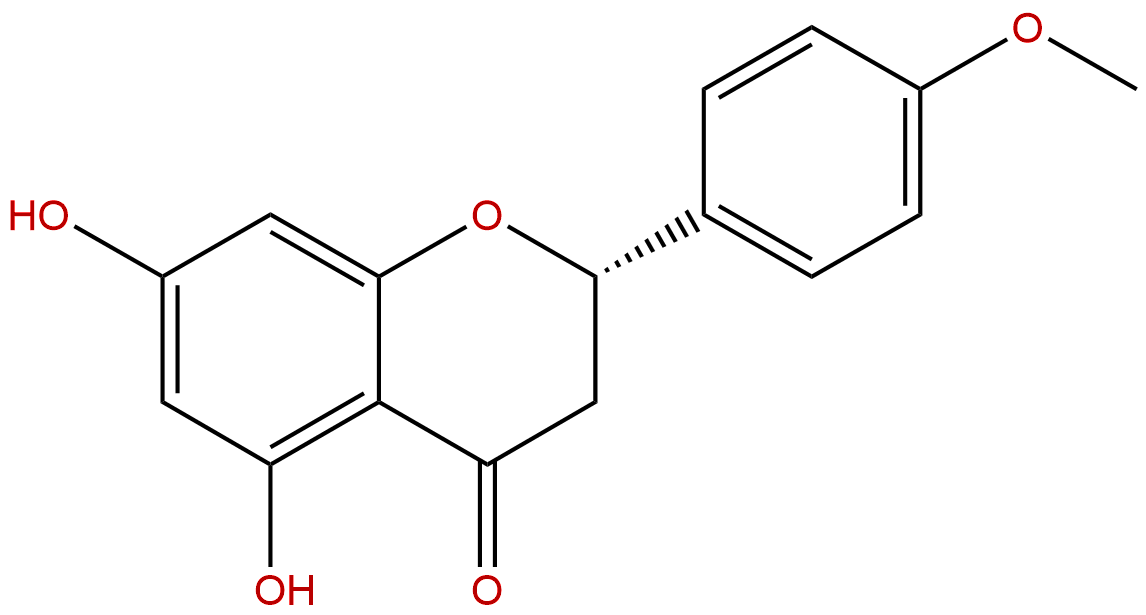


Product name: Isosakuranetin
Synonym name:
Catalogue No.: BP3213
Cas No.: 480-43-3
Formula: C16H14O5
Mol Weight: 286.283
Botanical Source:
Physical Description: Powder
Type of Compound: Flavonoids
Purity: 95%~99%
Analysis Method: HPLC-DAD or/and HPLC-ELSD
Identification Method: Mass, NMR
Packing: Brown vial or HDPE plastic bottle
The product could be supplied from milligrams to grams. Inquire for bulk scale.
We provide solution to improve the water-solubility of compounds, thereby facilitating the variety of activity tests and clinic uses.
For Reference Standard and R&D, Not for Human Use Directly.
Description:
Isosakuranetin is a plant exudate with known cytotoxic and fungicide properties, it may act on wheat root segments as an inhibitor of K+ permeation. Isosakuranetin is a TRPM3 blocker, significantly reduces the sensitivity of mice to noxious heat and PregS-induced chemical pain; it induced- inhibition of ERK1/2 and PI3K/AKT signaling pathways activate MITF and subsequent expression of Tyr, TRP1, and TRP2.
References:
Phytochemistry, 1997, 46(2):245-8.
The effect of isosakuranetin (5,7-dihydroxy 4′-methoxy flavanone) on potassium uptake in wheat root segments.
Isosakuranetin (ISK; 5,7-dihydroxy 4′-methoxy flavanone) is a plant exudate with known cytotoxic and fungicide properties.
METHODS AND RESULTS:
When tested on wheat root segments at a concentration of 70μM it inhibited K+ dependent H+ extrusion and net uptake of K+, while leaving the membrane potential (PD) unaltered. Fusicoccin (FC) + ISK treatment resulted in a slight membrane depolarization, while ISK alone did not alter O2 consumption or alternative oxidase activity. ISK did not increase the pyruvate content in incubated root tissues or inhibit Fe2+ uptake. The observed drop in K+ net uptake depended on a decrease in K+ influx into the cell, leading to the suggestion that ISK may act on wheat root segments as an inhibitor of K+ permeation.
CONCLUSIONS:
The lack of proton leakage and membrane disruption by ISK made this compound a weak candidate as a phytoalexin, and suggesting a major role as an allelopathic molecule.
Mol Pharmacol. 2013 Nov;84(5):736-50.
Flavanones that selectively inhibit TRPM3 attenuate thermal nociception in vivo.
Transient receptor potential melastatin 3 (TRPM3) is a calcium-permeable nonselective cation channel that is expressed in a subset of dorsal root (DRG) and trigeminal ganglia sensory neurons. TRPM3 can be activated by the neurosteroid pregnenolone sulfate (PregS) and heat. TRPM3⁻/⁻ mice display an impaired sensation of noxious heat and thermal hyperalgesia. We have previously shown that TRPM3 is blocked by the citrus fruit flavanones hesperetin, naringenin, and eriodictyol as well as by ononetin, a deoxybenzoin from Ononis spinosa.
METHODS AND RESULTS:
To further improve the tolerability, potency, and selectivity of TRPM3 blockers, we conducted a hit optimization procedure by rescreening a focused library that was composed of chemically related compounds. Within newly identified TRPM3 blockers, Isosakuranetin and liquiritigenin displayed favorable properties with respect to their inhibitory potency and a selective mode of action. Isosakuranetin, a flavanone whose glycoside is contained in blood oranges and grapefruits, displayed an IC₅₀ of 50 nM and is to our knowledge the most potent inhibitor of TRPM3 identified so far. Both compounds exhibited a marked specificity for TRPM3 compared with other sensory TRP channels, and blocked PregS-induced intracellular free Ca2⁺ concentration signals and ionic currents in freshly isolated DRG neurons. Furthermore, Isosakuranetin and previously identified hesperetin significantly reduced the sensitivity of mice to noxious heat and PregS-induced chemical pain.
CONCLUSIONS:
Because the physiologic functions of TRPM3 channels are still poorly defined, the development and validation of potent and selective blockers is expected to contribute to clarifying the role of TRPM3 in vivo.
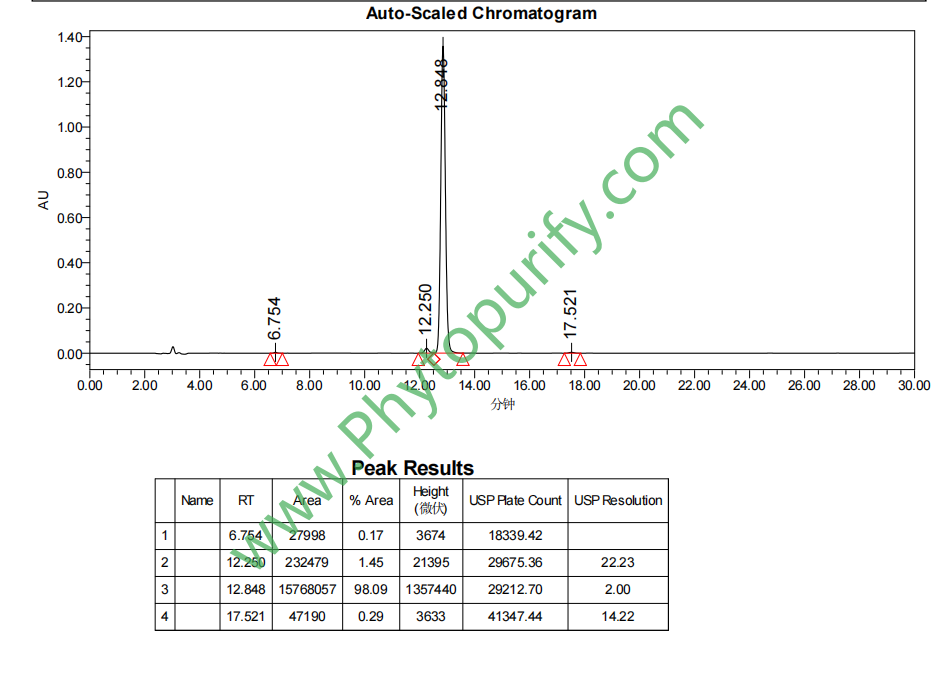
HPLC of Isosakuranetin
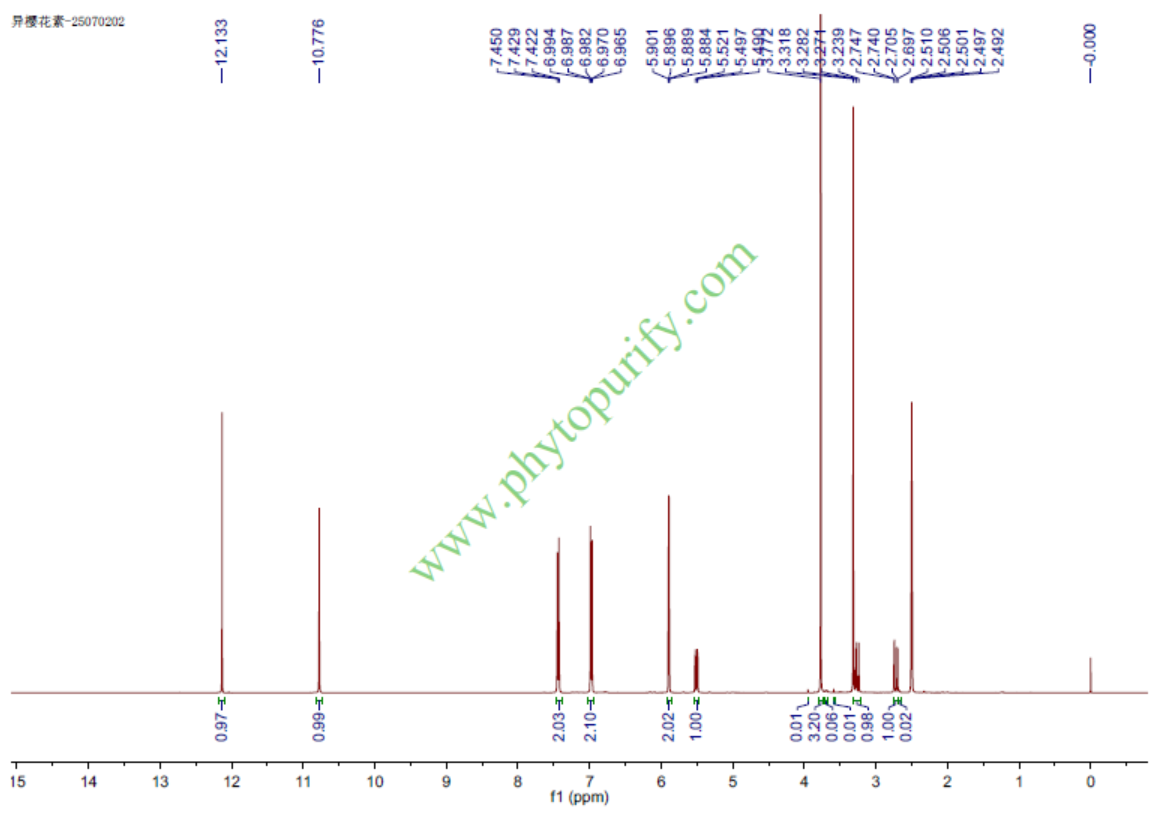
HNMR of Isosakuranetin
Storage conditions:Short-term storage at 2~8℃, long-term storage at -20 ~ -80℃
75.9900
2.7644
2.5262
.2035
3.7452
15.9120
Low
89.9981
2.6960
No
No
Yes
No
Yes
No
0.6
No
No
Yes
No
Flavonoids, as a widely distributed class of secondary metabolites in nature, have always been an important source of drug development due to their structural diversity and extensive biological activity. Isosakuranetin, also known as 5,7-dihydroxy-4 '- methoxyflavanone, is a typical methoxylated flavanone compound. Since its discovery, its unique chemical structure and potential biological activity have gradually attracted the attention of pharmacology and medicinal chemistry researchers. Early research focused on its antioxidant and anti-inflammatory properties, but in recent years, with advances in molecular pharmacology and target screening techniques, isocherry blossom extract has been identified as a selective blocker of transient receptor potential M3 (TRPM3) ion channels, opening up a new path for its application in the treatment of pain, inflammation, and related diseases. It is particularly noteworthy that in the complex pathological network of immune diseases such as allergies and asthma, isocherry blossom extract exhibits the potential for multi-channel and multi link intervention by acting on multiple key targets such as histamine receptor 1 (HRH1), interleukin (IL-4, IL-5, IL-13), and high affinity IgE receptor (FCER1A). This article aims to systematically review the chemical properties, plant sources, pharmacological activities, molecular mechanisms of action, medicinal characteristics, and clinical application prospects of isocherry blossom extract, in order to provide comprehensive academic references for the in-depth development and transformation research of this natural product.
The molecular formula of isocherry blossom extract is C16H14O5, with a molecular weight of 286.2830 g/mol. Its core structure is the flavanone skeleton, also known as the dihydroflavonoid structure, characterized by saturated bonds at the C2 and C3 positions of the C ring, forming a non planar conformation. Isocherry blossom extract has a phenolic hydroxyl group at the 5th and 7th positions of the A ring, which is a key functional group for its antioxidant activity. At the 4 'position of the B ring, there is a methoxy group (- OCH3) attached, which significantly affects the polarity, lipophilicity, and biological activity of the compound, and is the main structural feature that distinguishes it from other flavanone compounds such as naringin and naringenin.
Based on its chemical structure, isocherry blossom extract exhibits typical flavonoid physicochemical properties. The calculated lipid water partition coefficient (LogP) is 2.7644, indicating that the compound has moderate lipophilicity, which is beneficial for transmembrane transport and cellular absorption. The topologically polar surface area (TPSA) is 75.99 Å ², which is relatively small and further supports its good membrane permeability. The theoretical water solubility is about 0.2035 mg/mL, which belongs to the category of slightly soluble to poorly soluble. This suggests that solubilization strategies may need to be considered in formulation development, such as making cyclodextrin inclusion complexes, nanocrystals, or prodrugs. The blood-brain barrier permeability prediction of isocherry blossom extract is "low", which means that it is not easily able to enter the central nervous system. This may actually reduce the risk of central side effects for drugs that mainly act on peripheral targets such as immune cells and airway smooth muscles. In addition, preliminary drug warning screening showed that it was negative in the hERG channel inhibition test, indicating a low potential risk of arrhythmia; The Ames test result is 0.6, indicating that its mutagenic risk is also at a low level, providing preliminary positive signals for its safety evaluation.
Isocherry blossom extract is relatively concentrated in nature and mainly exists in citrus plants of the Rutaceae family. Its most famous plant source is Bergamot That is, Citrus bergamia Risso et Poiteau. The peel, juice, and even leaves of fragrant lemon contain isocherry blossom extract, which is an important component of the plant's characteristic flavonoid family. In addition, small amounts were also detected in other citrus fruits such as grapefruit and lime, as well as some medicinal plants such as perilla and licorice.
Extracting isocherry blossom extract from plant materials often follows the general process of natural product chemistry.Solvent extraction method It is the most basic method, often using polar organic solvents such as methanol, ethanol, or acetone for extraction through immersion, reflux, or ultrasound assisted extraction. Due to its lipophilicity, ethyl acetate is also an effective extraction solvent and is commonly used in liquid-liquid extraction and enrichment steps.Modern extraction techniques Microwave assisted extraction and supercritical carbon dioxide extraction have been applied to improve extraction efficiency and selectivity, with the latter being particularly suitable for obtaining high-purity products without residual organic solvents.
The crude extract after extraction needs to undergo systematic separation and purification. Commonly used Column chromatography technology Using silica gel as the stationary phase, gradient elution systems such as chloroform methanol or petroleum ether ethyl acetate are employed.High performance liquid chromatography In particular, preparative HPLC is a crucial final step in obtaining high-purity isocherry blossom extract monomers, often using a reverse phase C18 column with methanol water or acetonitrile water as the mobile phase. Structural identification relies on spectroscopic techniques such as nuclear magnetic resonance and mass spectrometry. In recent years, bio directed separation strategies have been widely applied, which utilize specific activity screening such as anti allergy or TRPM3 inhibition to track target compounds, thereby more efficiently locating and isolating isocherry blossom pigments from complex plant matrices.
Numerous in vitro and in vivo pharmacological studies have confirmed that isocherry blossom extract has multiple biological activities, with its core revolving around anti-inflammatory, antioxidant, anti allergic, and ion channel regulatory effects.
1. Anti inflammatory and antioxidant activity:
As a flavanone compound, the basic pharmacological property of isocherry blossom extract is its strong antioxidant capacity. The ortho phenolic hydroxyl group on its A ring can effectively scavenge free radicals such as superoxide anions and hydroxyl radicals, and inhibit lipid peroxidation. In various cellular inflammatory models, such as lipopolysaccharide stimulated macrophages, isocherry blossom extract can dose dependently inhibit the production of inflammatory mediators such as nitric oxide and prostaglandin E2, while downregulating the expression of inducible nitric oxide synthase and cyclooxygenase-2. In animal models such as mouse ear swelling and paw swelling experiments, isocherry blossom extract also showed significant anti-inflammatory effects.
2. Anti allergy and anti asthma activity:
This is the most distinctive pharmacological research direction of isocherry blossom extract. In allergic disease models, isocherry blossom extract exhibits a comprehensive inhibitory effect.
* Regulation of mast cells and eosinophils Isocherry blossom extract can inhibit antigen induced degranulation of mast cells and reduce the release of pre-existing mediators such as histamine and β - aminoglucosidase. Its function is related to stabilizing the cell membrane and inhibiting intracellular calcium ion mobilization.
* Inhibition of Th2 type immune response One of the core pathological features of asthma is an excessive Th2 immune response. Research has shown that isocherry blossom extract can inhibit the production of Th2 cytokines, especially IL-4, IL-5, and IL-13, by lymphocytes, thereby affecting IgE class switching, eosinophil recruitment and activation, and the formation of airway hyperresponsiveness.
* Validation of in vivo asthma model In the mouse asthma model induced by ovalbumin, administration of isocherry blossom extract can significantly reduce airway inflammatory cell infiltration (especially eosinophils), decrease airway hyperresponsiveness, reduce mucus overproduction, and improve lung tissue pathological damage. Its effect is closely related to the inhibition of the expression levels of IL-4, IL-5, and IL-13 in lung tissue.
3. TRPM3 channel blocking activity:
The transient receptor potential M3 channel is a non selective cation channel expressed in various cells such as sensory neurons and pancreatic beta cells, and is associated with pain perception, insulin secretion, and inflammation regulation. Isocherry blossom extract has been identified as an effective natural TRPM3 blocker. It can inhibit TRPM3 currents activated by the neurosteroid pregnenolone sulfate. This characteristic endows heterocherry blossom extract with potential analgesia and Neuromodulation This provides new scientific basis for its application in chronic pain, migraine and other fields.
The multiple pharmacological activities of isocherry blossom extract stem from its interactions with multiple molecular targets, forming a synergistic network.
1. Core target group: anti allergy/asthma pathway
* HRH1 (Histamine Receptor 1)Histamine is a key mediator in allergic reactions. Isocherry blossom extract may act as an antagonist or regulator of HRH1, competitively inhibiting the binding of histamine to receptors, thereby blocking histamine induced bronchoconstriction, increased vascular permeability, and other effects, directly alleviating allergic symptoms.
* IL-4, IL-5, IL-13 (interleukins)Isocherry blossom extract inhibits the production of these Th2 cytokines at both the gene and protein levels. The upstream mechanism may involve inhibiting the activation of transcription factors such as GATA-3 and STAT6, which are key regulators of Th2 cell differentiation and cytokine expression. By inhibiting the IL-4/IL-13 signaling, the production of IgE and B cell class switching can be reduced; By inhibiting IL-5, the proliferation, activation, and survival of eosinophils can be weakened.
* FCER1A (high affinity IgE receptor alpha chain)This is the core receptor that initiates the degranulation cascade of mast cells and eosinophils. Isocherry blossom extract may attenuate allergen triggered type I hypersensitivity reactions at the source by downregulating the expression of FCER1A or interfering with its cross-linking with IgE.
2. Key ion channel target: TRPM3
Isocherry blossom extract directly acts on TRPM3 ion channels, possibly by binding to channel pore regions or conformational regulatory sites, preventing the influx of cations such as calcium and sodium ions. In sensory neurons, inhibition of TRPM3 can reduce neuronal excitability, thereby producing analgesic effects. TRPM3 is also expressed in immune cells, and its blockade may indirectly affect calcium signal dependent immune cell function, synergizing with anti-inflammatory and anti allergic effects.
3. Integration of signaling pathways
The above target effects ultimately converge on the regulation of several key intracellular signaling pathways:
* NF - κ B pathway Isocherry blossom extract can inhibit the degradation of I κ B α and nuclear translocation of NF - κ B p65 subunit, thereby extensively downregulating the expression of various inflammatory and chemokines.
* MAPK pathway Its inhibition of ERK, JNK, and p38 MAPK phosphorylation is involved in the regulation of cell proliferation, apoptosis, and inflammatory response.
* Calcium signaling pathway By blocking TRPM3 and potentially affecting the release of other calcium channels or intracellular calcium stores, isocherry blossom extract can stabilize intracellular calcium ion concentration, which is a common key mechanism for inhibiting mast cell degranulation and neuronal excitation.
Although the pharmacological activity of isocherry blossom extract is clear, whether it can become a drug still needs to undergo systematic pharmacological evaluation.
1. Absorption, distribution, metabolism, and excretion
* absorb A moderate LogP value suggests that it may have good passive diffusion absorption in the small intestine after oral administration. But its low water solubility may become a limiting factor for oral bioavailability.
* distribution The predicted blood-brain barrier permeability is low, mainly distributed in peripheral tissues and organs. The binding rate between it and plasma proteins still requires experimental data, which will affect its free drug concentration and efficacy.
* Metabolism Flavonoids mainly undergo phase II metabolism in the body, which involves binding with glucuronic acid and sulfuric acid. The phenolic hydroxyl group of isocherry blossom extract is the main binding site, especially the 7th hydroxyl group, which has high activity. In addition, the liver cytochrome P450 enzyme system (such as CYP1A2, CYP3A4) may be involved in its oxidative metabolism. The presence of methoxy groups may result in slightly better metabolic stability than polyhydroxyflavanones.
* excretion Metabolites are mainly excreted through the kidneys and urine.
2. Challenges and strategies for optimizing drug properties
The main challenges of using isocherry blossom extract as a drug lead compound at present are:
* Solubility and bioavailability Low water solubility limits its dosage form selection and in vivo exposure. The strategy includes: preparing nano formulations, phospholipid complexes, and solid dispersions; Or carry out structural modifications, such as introducing hydrophilic groups to prepare prodrugs.
* Metabolic stability The rapid binding metabolism of phenolic hydroxyl groups may lead to strong first pass effects and short half lives. Metabolic stability can be improved through structural modifications, such as hydroxylation or prodrug protection.
* Selectivity and effectiveness Although it has a blocking effect on TRPM3, the selectivity towards other members of the TRP family needs to be further clarified to avoid off target effects. Through structure based drug design, optimizing its binding pocket interaction with TRPM3 is expected to improve efficacy and selectivity.
3. Preliminary safety
The existing preliminary data (hERG negative, low-risk Ames test) provides a basic guarantee for its safety, but comprehensive preclinical toxicology research, including acute toxicity, long-term toxicity, reproductive toxicity, etc., is still a necessary path for future development.
The multi-target action characteristics of isocherry blossom extract provide unique advantages in the treatment of complex diseases, and its clinical application prospects mainly focus on the following directions:
1. Treatment of Allergic Diseases and Asthma
As a multi-target anti allergic agent, isocherry blossom extract is expected to be developed as a new type of Asthma prevention or control medication Especially suitable for patients who are insensitive to existing glucocorticoids or experience side effects. Its combination with existing drugs such as leukotriene receptor antagonists and anti IgE monoclonal antibodies may produce synergistic effects. In addition, it also has potential applications in diseases such as allergic rhinitis and atopic dermatitis.
2. Chronic pain management
Based on its TRPM3 blocking activity, isocherry blossom extract can serve as a novel approach Analgesic lead compound Used to treat neuropathic pain, inflammatory pain, and migraine. The characteristic of mainly having peripheral effects may avoid the central addictive and sedative side effects of opioid drugs.
3. Pharmaceutical chemistry optimization as lead compounds
Isocherry blossom extract itself can be used as a "nursery compound" for systematic structural modification and structure-activity relationship research through medicinal chemical methods. For example, modifying the A ring hydroxyl and B ring methoxy groups with substituents, or modifying the C ring with saturated bonds, aims to obtain a new chemical entity with stronger activity, higher selectivity, and better pharmacokinetic properties.
4. Dietary supplements and functional foods
Given its natural presence in citrus fruits, extracts rich in isocherry blossom extract (such as lemon extract) can be developed as dietary supplements or functional food ingredients to assist in regulating immunity and alleviating mild allergic symptoms.
prospect Future research should focus on: ① using crystallographic or cryo electron microscopy techniques to analyze the complex structure of key targets such as isocherry blossom extract and TRPM3, providing a blueprint for rational drug design; ② Conduct systematic preclinical pharmacodynamic and pharmacokinetic studies to clarify the in vivo effective dose, window of action, and dosage form requirements; ③ Explore the synergistic effects and mechanisms of its combination with other drugs; ④ Pay attention to the safety of its long-term use. With the deepening of interdisciplinary research, heterocherry blossom extract, an ancient natural molecule, is expected to rejuvenate and contribute new strength to human health.
As a methoxyflavanone derived from citrus plants, isocherry blossom extract exhibits multidimensional pharmacological activity centered around TRPM3 channel blockade and multiple anti allergic/anti-inflammatory mechanisms due to its unique chemical structure. From inhibiting degranulation of mast cells to regulating the Th2 cytokine network, from blocking pain related ion channels to regulating key inflammatory signaling pathways, its action profile is clear and extensive. Despite facing common challenges such as solubility and metabolic stability in drug development, its good initial safety and clear target of action have laid a solid foundation for subsequent development. Currently, natural product research is shifting from crude extract applications to precise drug design based on clear targets, and isocherry blossom extract is a typical example of this trend. Through in-depth structure-activity relationship research, advanced formulation technology, and systematic preclinical evaluation, isocherry blossom extract is highly likely to be successfully transformed from a potential natural active ingredient into an innovative drug or lead compound for treating diseases such as asthma, allergies, and chronic pain, demonstrating the irreplaceable value and sustained vitality of natural products in modern drug development.
