Introduction/Overview
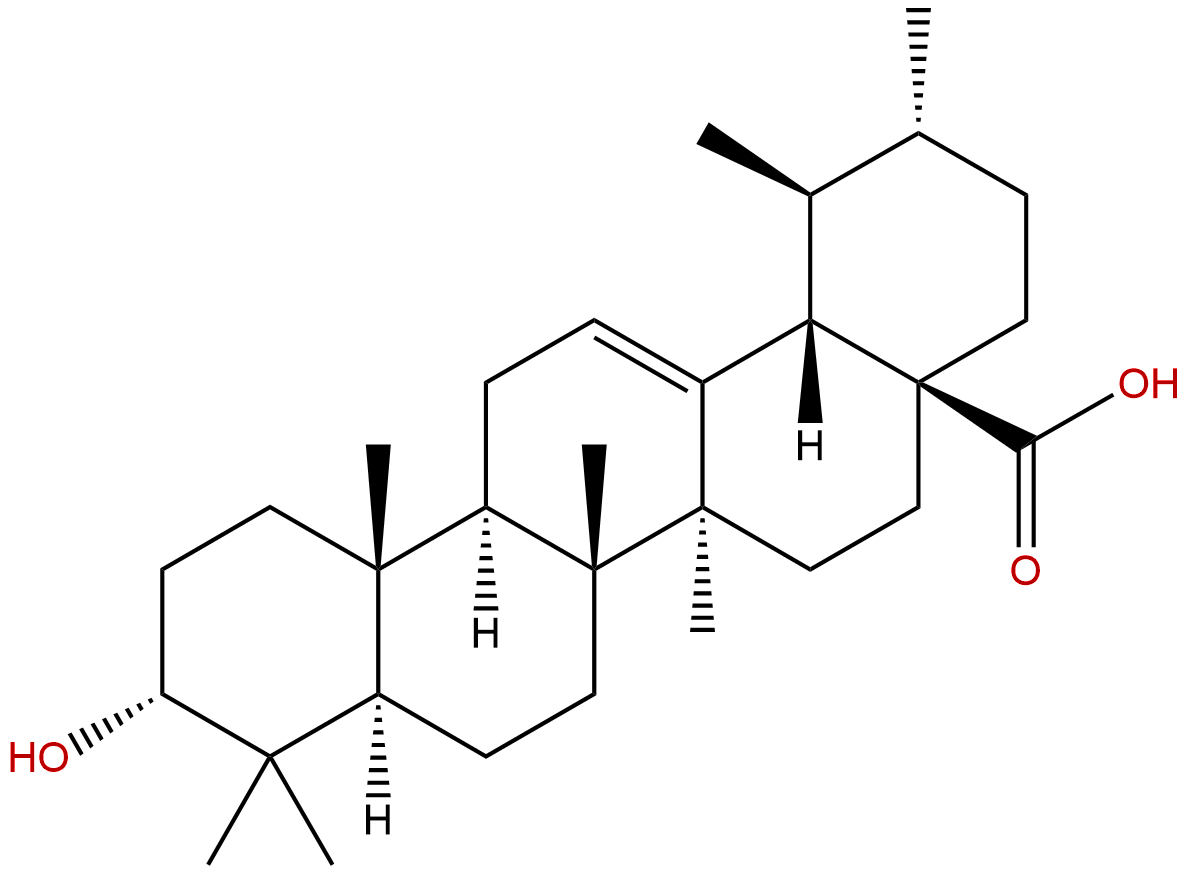
Natural products have long been an important source of innovative drug discovery, among which triterpenoids have attracted much attention due to their wide range of biological activities and structural diversity. Ursolic acid (UA), as a star molecule of the pentacyclic triterpenoid family, has been widely studied for its anti-inflammatory, antioxidant, and anti-tumor pharmacological effects. 3-Epiursolic acid (3-EUA), CAS number 989-30-0, is a stereoisomer of ursolic acid with a change in hydroxyl configuration at the C-3 position. This small stereochemical change often leads to significant differences in its biological activity spectrum, target of action, and pharmacological strength compared to the parent compound. In recent years, studies have found that 3-EUA is a competitive inhibitor of cathepsin L, which opens up new research directions for its application in various pathological processes, especially in diseases related to abnormal activation of cathepsin L, such as cancer, osteoarthritis, and benign prostatic hyperplasia (BPH). This article aims to provide a systematic review of the chemical properties, plant sources, pharmacological activities, molecular mechanisms of action, medicinal properties, and clinical application prospects of 3-ursolic acid, in order to provide comprehensive scientific references for the deep development and utilization of this natural product.
Chemical structure and physicochemical properties
The molecular formula of 3-Ursolic Acid (3-EUA) is C ∝₀ H ₄₈ O ∝, with a molecular weight of 456.7110. Its chemical structure belongs to the oleanane type pentacyclic triterpenoid, and the only difference from ursolic acid is the stereochemistry of the C-3 hydroxyl group. The C-3 hydroxyl group of ursolic acid is in the β - configuration (straight bond), while the C-3 hydroxyl group of 3-EUA is in the α - configuration (flat bond). This isomerization process may be catalyzed by specific enzymes in the plant.
In terms of physicochemical properties, 3-EUA exhibits typical triterpenoid acid characteristics. Its lipophilic water partition coefficient (LogP) is 6.6304, indicating that the compound has a high degree of lipophilicity. The theoretical polar surface area (TPSA) is 57.53 Å ², mainly derived from one carboxyl group and one hydroxyl group. These parameters determine its extremely low water solubility (approximately 0.0011 mg/mL), which is often one of the main challenges faced by such natural products in formulation development and in vivo delivery processes. At room temperature, 3-EUA typically exists in the form of white or off white crystals or powders. The carboxyl groups in its structure enable it to form salts with bases, which may be a potential strategy to improve its solubility and bioavailability.
Plant sources and extraction methods
3-Epiursolic acid is relatively widely distributed in nature, but its content is usually lower than its isomer ursolic acid. According to literature reports, one of its main plant sources is loquat(Eriobotrya japonica)Especially loquat leaves. Loquat leaves are commonly used in traditional medicine to relieve cough and phlegm, and their active ingredients may include ursolic acid and its derivatives such as 3-EUA. In addition, the compound has also been detected in various other plants, such as rosemary(Rosmarinus officinalis)Apple peel, Ligustrum genus(Ligustrum)Plants often coexist with ursolic acid.
The extraction method mainly follows the conventional process of triterpenoids in plant chemistry. Firstly, dry plant materials (such as loquat leaves) are crushed and subjected to reflux extraction or ultrasound assisted extraction using highly polar organic solvents (such as methanol, ethanol, or aqueous ethanol). The crude extract was obtained by vacuum concentration of the extraction solution. Subsequently, the triterpenoid components were preliminarily enriched using liquid-liquid extraction method (usually by partitioning ethyl acetate or chloroform with water). Further purification relies on various chromatographic techniques, including normal phase silica gel column chromatography, reverse phase C18 column chromatography (such as ODS), and high performance liquid chromatography (HPLC). Due to the close structural similarity between 3-EUA and ursolic acid, separation is difficult and typically requires the use of efficient reverse phase chromatography systems. High purity monomer compounds can be obtained through preparative thin layer chromatography (PTLC) or cyclic preparative HPLC. Structural identification is accomplished through methods such as nuclear magnetic resonance (NMR, including ¹ H-NMR and ¹ ³ C-NMR), mass spectrometry (MS), and comparison with known standards.
Pharmacological activity research
Based on its characteristics as a selective inhibitor of protease L, the pharmacological activity research of 3-EUA mainly focuses on the pathological processes related to this target, and has shown potential in multiple disease models.
-
Antitumor activity Cathepsin L plays a crucial role in tumor invasion, metastasis, and angiogenesis. As a selective inhibitor, 3-EUA has shown inhibitory and pro apoptotic effects on the proliferation of various cancer cells in vitro studies. Its function may weaken the migration and invasion ability of tumor cells by inhibiting their protein hydrolysis activity. Compared to its non significant effect on tissue protease B, the selective inhibition of tissue protease L by 3-EUA may result in lower off target effects and better safety.
-
Potential for combating benign prostatic hyperplasia (BPH)Benign prostatic hyperplasia is a common disease in elderly men, which involves multiple mechanisms such as androgen/estrogen imbalance, dysregulation of cell proliferation and apoptosis, inflammation, and oxidative stress. Although research on 3-EUA is still in its infancy, its potential molecular target network (such as AR, ESR1, CYP19A1, PTGS2, TGFB1, etc.) suggests the possibility of its multi pathway intervention in BPH. For example, by regulating estrogen receptor (ESR1) or aromatase (CYP19A1) to affect local hormone balance; Exert anti-inflammatory effects by inhibiting cyclooxygenase-2 (PTGS2); Or regulate the proliferation and apoptosis of prostate cells by affecting pathways such as TGFB1 and CASP3. Its role as a protease L inhibitor may also be involved in extracellular matrix remodeling, affecting prostate interstitial hyperplasia.
-
Anti inflammatory and antioxidant activity As a member of triterpenoid compounds, 3-EUA is likely to inherit certain anti-inflammatory and antioxidant properties. The carboxyl and hydroxyl groups in its structure may help clear free radicals and regulate inflammatory signaling pathways such as nuclear factor kappa B (NF - κ B). Inhibition of PTGS2 (COX-2) is also an important potential mechanism for its anti-inflammatory effects.
-
Other potential activities Cathepsin L is also involved in processes such as bone remodeling and pathogen infection, so 3-EUA may also have research value in areas such as osteoporosis and viral infections.
Mechanism of action and molecular targets
The most clear and characteristic molecular target of 3-EUA is Cathepsin L It is a lysosomal cysteine protease that can be secreted to the extracellular space or translocated to other cellular compartments under specific conditions, participating in processes such as protein degradation, antigen presentation, hormone processing, and extracellular matrix remodeling. 3-EUA competitively inhibits the enzyme activity, with an IC50 value of 6.5 μ M and an inhibition constant Ki of 19.5 μ M. What's important is that it affects the same family Cathepsin B Without significant inhibitory effects, this selectivity is crucial for the development of targeted therapeutic drugs, as tissue protease B has a wider range of functions in normal physiological processes, and non selective inhibition may lead to more side effects.
In addition to this core target, based on the pathological network of related diseases such as BPH, 3-EUA may exert synergistic effects through multiple targets and pathways:
* Hormone related targets Androgen receptor (AR), estrogen receptor alpha (ESR1), aromatase (CYP19A1). Intervening in these targets may regulate the hormonal microenvironment within prostate tissue, inhibiting hyperplasia driven by dihydrotestosterone (DHT) or estrogen.
* Inflammation and proliferation related targets Cyclooxygenase-2 (PTGS2/COX-2). Inhibition of COX-2 can reduce the production of inflammatory mediators such as prostaglandin E2 and alleviate the inflammatory state associated with BPH.
* Cell cycle and apoptosis related targets Protein kinase C ε type (PRKCE), transcription factor MYC (MYC), caspase-3 (CASP3), and transforming growth factor β 1 (TGFB1). These targets are involved in key regulation of cell proliferation, differentiation, and programmed cell death. For example, inhibiting PRKCE or MYC may block the cell cycle; Activating CASP3 or regulating TGFB1 signaling can promote apoptosis of abnormally proliferating cells.
* Growth factors and tumor suppressor factors Insulin like growth factor 1 (IGF1), phosphatase and tensin homolog (PTEN). The IGF1 signaling pathway promotes cell growth, while PTEN is an important tumor suppressor gene that negatively regulates the PI3K/Akt survival pathway.
In summary, the mechanism of action of 3-EUA may be a comprehensive pattern centered on selective inhibition of tissue protease L and synergistic regulation of hormone balance, inflammatory response, and cell fate related signaling networks. However, the direct interaction between these potential targets and 3-EUA, as well as their dominant position in vivo, still require further biochemical and cellular biology experiments for verification.
Evaluation of drug properties and pharmacokinetics
Based on the provided pharmacological parameters, a preliminary evaluation of the drug like properties of 3-EUA can be conducted:
- Molecular weight (456.7)Meets Lipinski's "Five Rules" (<500 Da).
- Fat solubility (LogP=6.63)Significantly higher than the ideal range (LogP is generally considered to be better between 2-5). Excessive fat solubility is the cause of it Very low water solubility (0.0011 mg/mL) The main reason for this suggests that its oral absorption may be poor and it is prone to accumulate in adipose tissue.
- Polar surface area (TPSA=57.53 Å ²)Moderate, conducive to transmembrane permeation.
- Blood-brain barrier permeability Predicted as' low '. This is not beneficial for treating central nervous system diseases, but may reduce potential side effects on the central nervous system.
- Cardiac toxicity risk (hERG inhibition)A prediction of 'no' is a positive signal indicating a lower potential risk of arrhythmia.
- Genotoxicity risk (Ames test)The predicted value is 0.0, indicating that there is no mutagenicity alert in the preliminary computer model, but experimental confirmation is required.
comprehensive evaluation The core pharmacological challenge of 3-EUA lies in its Extremely low water solubility and excessively high fat solubility This will inevitably affect its oral bioavailability, formulation difficulty, and in vivo distribution. The pharmacokinetic (ADME: absorption, distribution, metabolism, excretion) research of this substance currently has limited publicly available data. It can be inferred that after oral administration, its absorption may be incomplete and unstable, and it is easily influenced by food; After absorption, it may highly bind to plasma proteins (such as albumin); It is mainly metabolized by the liver cytochrome P450 enzyme system in the body, and may undergo reactions such as hydroxylation and carboxyl binding (such as glucuronidation); The main excretion pathway may be bile excretion.
To improve its medicinal properties, future research may consider the following strategies: 1) Prodrug design Derive carboxyl or hydroxyl groups to prepare precursor drugs with higher water solubility (such as ester, salt, or phosphate precursor drugs), and release the active drug through hydrolysis in vivo. 2) Formulation technology Using delivery systems such as nanocrystals, liposomes, micelles, and cyclodextrin inclusion complexes to improve their solubility and dissolution rate. 3) Structural modification Reasonably modify the molecule while maintaining the core pharmacophore, optimize its LogP value, and balance lipophilicity and hydrophilicity.
Clinical application prospects and prospects
3-Epiursolic acid, as a naturally occurring active molecule with unique selectivity, its clinical application prospects mainly depend on the in-depth exploration of its core pharmacological effects and the breakthrough of its pharmacological bottlenecks.
-
Disease field:
- Benign prostatic hyperplasia (BPH)This is one of the most promising directions. Given the current side effects of BPH treatment drugs, such as 5 α - reductase inhibitors and α 1-receptor blockers, including sexual dysfunction and orthostatic hypotension, there is a market demand for developing multi-target, naturally sourced new therapeutic agents. The potential regulatory effects of 3-EUA on hormone receptors, inflammatory factors, and apoptosis related targets make it a candidate drug or dietary supplement ingredient with comprehensive therapeutic advantages.
- Cancer adjuvant therapy As a selective cathepsin L inhibitor, 3-EUA may be developed as an adjuvant drug to inhibit tumor metastasis, especially for malignant tumors with high cathepsin L expression (such as breast cancer, prostate cancer, glioma, etc.). Combined with conventional chemotherapy or targeted drugs, it may enhance efficacy or overcome drug resistance.
- Bone and joint diseases Cathepsin L is involved in cartilage degradation. 3-EUA may be used in the treatment research of osteoarthritis, protecting joints by inhibiting excessive degradation of cartilage matrix.
- Anti fibrotic diseases Cathepsin L is involved in tissue remodeling and its role in pulmonary fibrosis and liver fibrosis has also received attention. 3-EUA may provide new intervention ideas for such diseases.
-
Development Challenges and Prospects:
- Deepening basic research The current research on 3-EUA is still not systematic enough. It is urgent to validate its efficacy in more reliable disease models, especially in vivo models of BPH, and clarify the specific contribution weights and network relationships of its multi-target effects.
- Optimization of drug properties As mentioned earlier, solving its solubility and bioavailability issues is the key to clinical translation. Resources need to be invested in systematic prodrug design, formulation development, and pharmacokinetic studies.
- Comprehensive evaluation of safety Although the computer predicts a low risk of cardiac toxicity and genetic toxicity, a complete preclinical safety pharmacology evaluation (acute toxicity, chronic toxicity, reproductive toxicity, etc.) still needs to be completed.
- Natural Products and New Drug Development 3-EUA itself can serve as a lead compound to obtain derivatives with stronger activity and better drug properties through structural optimization. Meanwhile, plant extracts containing high levels of 3-EUA, such as loquat leaf extract, are also expected to be developed into functional products with specific health claims.
Conclusion
3-Epiursolic acid, as a differential isomer of ursolic acid, demonstrates the pharmacological value of triterpenoid natural products from a new perspective through its unique selective inhibitory activity against protease L. It not only provides valuable chemical probes for studying the role of protease L in tumors, proliferative diseases, and inflammation, but also demonstrates potential advantages in multi-target treatment strategies for complex multifactorial diseases such as benign prostatic hyperplasia. Although its inherent physicochemical properties (low water solubility, high lipid solubility) pose significant challenges for drug development, modern medicinal chemistry and pharmaceutical technology provide multiple feasible solutions for this. Future research should focus on further elucidating its multi-target mechanism of action, utilizing advanced technologies to improve its pharmacokinetic properties, and validating its safety and efficacy in more comprehensive preclinical models. With the advancement of these studies, 3-epiursolic acid is expected to gradually develop from an interesting natural product into a candidate drug or lead compound with clear clinical application prospects, providing new options for the treatment of related diseases.