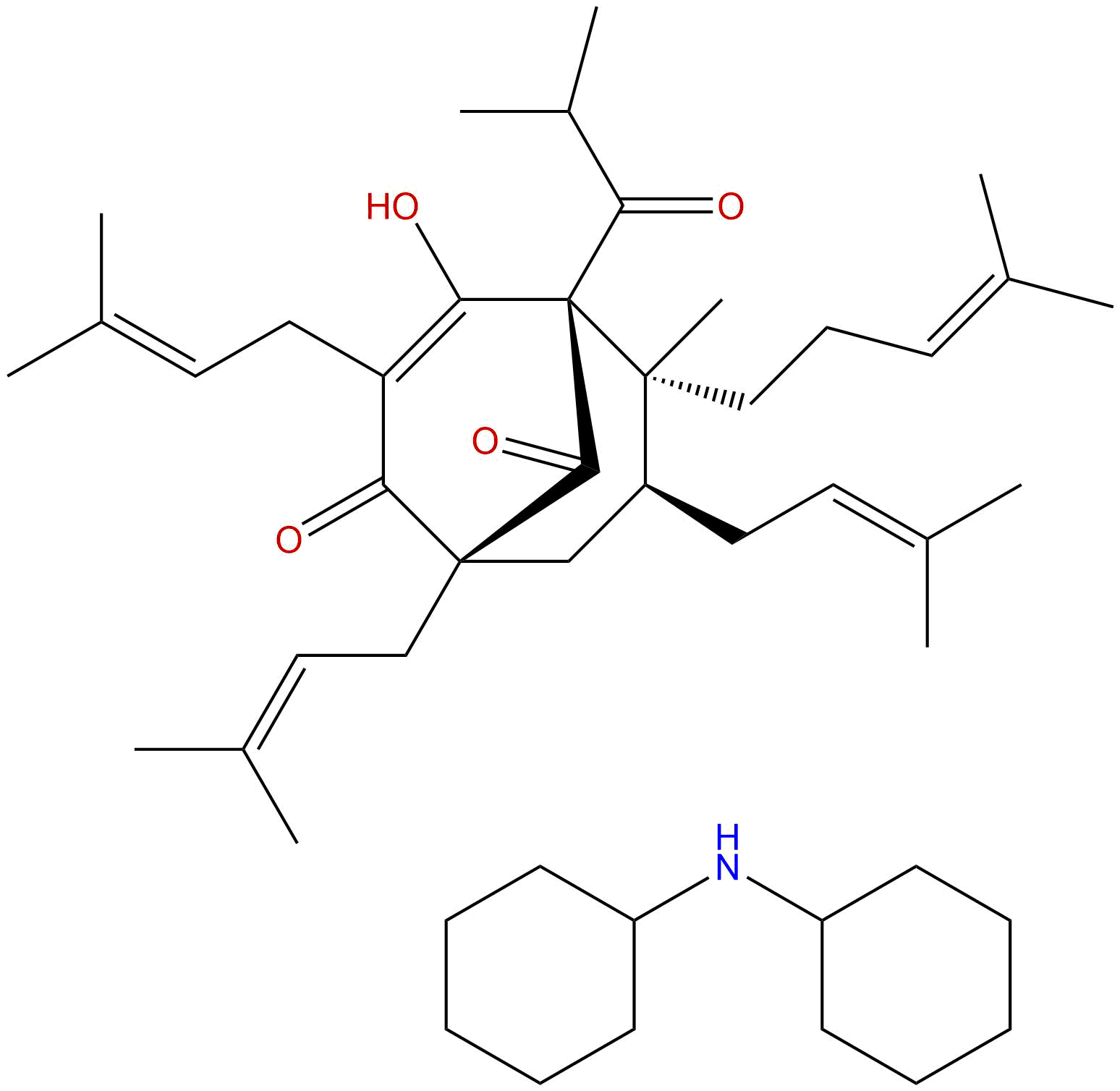


Product name: Hyperforin dicyclohexylammonium salt
Synonym name:
Catalogue No.: BP4448
Cas No.: 238074-03-8
Formula: C47H75NO4
Mol Weight: 718.12
Botanical Source:
Type of Compound:
Purity: 95%~99%
Analysis Method: HPLC-DAD or/and HPLC-ELSD
Identification Method: Mass, NMR
Packing: Brown vial or HDPE plastic bottle
Storage: Store in a well closed container, protected from air and light. Put into refrigerate or freeze for long term storage.
Whenever possible, you should prepare and use solutions on the same day. However, if you need to make up stock solutions in advance, we recommend that you store the solution as aliquots in tightly sealed vials at -20℃. Generally, these will be useable for up to two weeks.
The product could be supplied from milligrams to grams
Inquire for bulk scale.
For Reference Standard and R&D, Not for Human Use Directly.
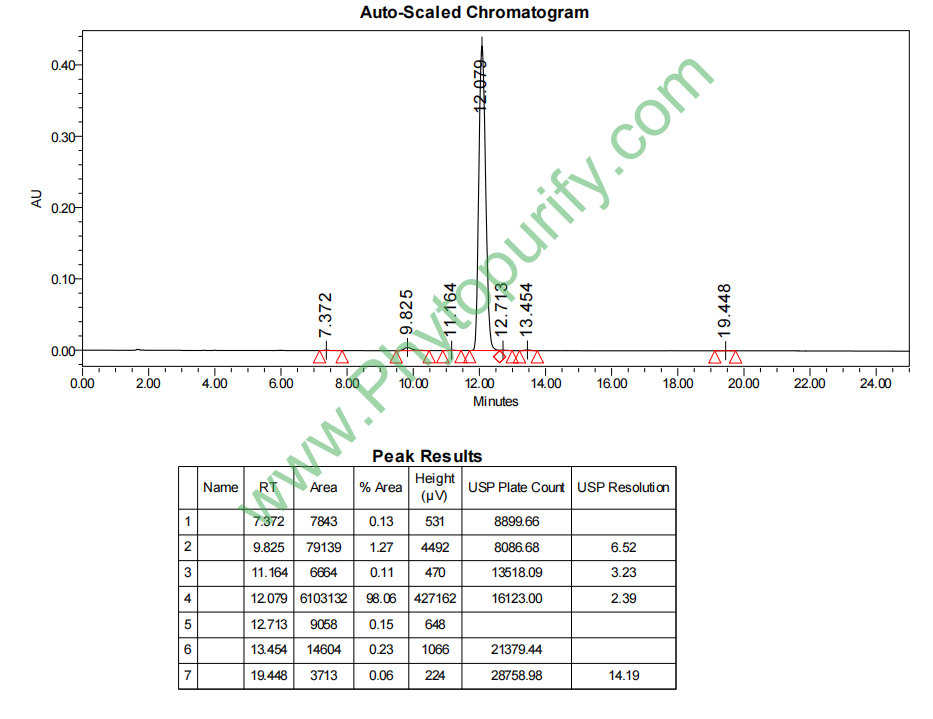
HPLC of Hyperforin dicyclohexylammonium salt
Storage conditions:Short-term storage at 2~8℃, long-term storage at -20 ~ -80℃
71.4400
7.1272
4.9735
.0007
6.3930
5.1357
High
91.0911
5.7337
Yes
Yes
Yes
No
No
No
0.0
Yes
Yes
Yes
Yes
Hyperforin dicyclohexylamine salt (CAS: 238074-03-8) is a stable salt form of Hyperforin. Hypericin is the main active lipid soluble component isolated from the traditional medicinal plant Hypericum perforatum L., also known as St. John's wort. Its complex pharmacological properties make it a star molecule in the field of natural product antidepressant research. Since its antidepressant activity was identified in the 1990s, Hypericin has attracted much attention due to its unique multi-target mechanism of action, which is in stark contrast to traditional single target drugs such as selective serotonin reuptake inhibitors (SSRIs). However, the chemical properties of Hypericin are unstable, easily oxidized and photodegraded, and its medicinal properties are poor, which severely limits its in-depth research and clinical translation. By salt formation with dicyclohexylamine, its stability is significantly improved, providing a reliable material basis for systematic pharmacological, toxicological, and pharmacokinetic studies. This article aims to provide a systematic review of the chemical properties, pharmacological activities, multi-target mechanisms of action, pharmacological evaluation, and clinical translation prospects of cyclohexylamine salt in Hypericum perforatum, in order to provide comprehensive academic references for the deep development and utilization of this important natural product.
Hypericin is a polyisoprene acyl triphenylphenol derivative with a unique skeleton. The parent nucleus structure is 1,3,5-trihydroxybenzene, in which two hydroxyl groups are acylated by complex isoprene side chains, forming a highly lipophilic spirocyclic lactone structure. This complex isoprene structure is the key to its biological activity and directly leads to its extremely low polarity. The cyclohexylamine salt of Hypericum perforatum is prepared by the salt formation of acidic phenolic hydroxyl groups and basic cyclohexylamine in Hypericum perforatum molecules. The molecular formula is C35H52O4 · C12H23N and the molecular weight is 536.7970.
After salt formation, the physical and chemical properties of the compound undergo significant changes. Firstly, the stability has been significantly improved. Free Hypericin is easily degraded under light, oxygen, and high temperatures, while its dicyclohexanium salt form significantly enhances its resistance to oxidation and photolysis, making it easy to store and experiment. Secondly, its lipid solubility is still extremely high, with a calculated LogP value of 7.1272, which determines that it is almost insoluble in water (with a water solubility of about 0.0007 mg/mL), but can be well dissolved in organic solvents such as ethanol, DMSO, etc. Its topological polar surface area (TPSA) is 71.44 Å ², which is relatively small. Combined with its high lipid solubility, it indicates excellent membrane permeability. Both computational and experimental data indicate that the compound can efficiently penetrate the blood-brain barrier (BBB permeability is high), which is crucial for its central nervous system antidepressant activity. In addition, preliminary pharmacological screening showed no significant inhibitory effect on hERG potassium channels at conventional concentrations (hERG inhibition: No), and the Ames test result was negative (0.0), indicating a low potential mutagenic risk and providing preliminary positive signals for its safety evaluation.
The source of cyclohexylamine in Hypericum perforatum is the medicinal plant Hypericum perforatum. This plant is widely distributed in temperate regions around the world, and its dry aboveground parts are widely used in Europe and America to treat mild to moderate depression. Its efficacy has been supported by multiple clinical studies. Hypericin mainly exists in the glandular trichomes of plants, and its content is significantly affected by the place of origin, harvest season, plant part, and storage conditions, usually ranging from 1% to 5%.
The efficient and high-purity extraction of Hypericin from plant raw materials is a prerequisite for its research and application. Due to its sensitivity to light, heat, and oxygen, as well as extremely low polarity, the extraction and purification process of Hypericin requires special consideration. Traditional methods often use organic solvents such as ethanol, methanol, acetone, or dichloromethane for cold soaking or percolation extraction to reduce degradation. Subsequently, utilizing its lipophilic properties, it is often preliminarily enriched through liquid-liquid extraction (such as using petroleum ether or n-hexane to extract from the alcohol extract). Further purification relies on various chromatographic techniques, including silica gel column chromatography, reverse phase C18 column chromatography, and high performance liquid chromatography (HPLC). During or after the purification process, the obtained free Hypericin can be reacted with dicyclohexylamine in a suitable solvent to crystallize or precipitate its dicyclohexylamine salt. Modern technology has also explored supercritical CO2 extraction technology, which operates in a low-temperature, oxygen isolated environment and can effectively reduce the damage of thermosensitive components. It can selectively extract lipophilic components by adjusting pressure and temperature, making it a promising method for obtaining high-quality Hypericin and its salt forms.
The core pharmacological activity of cyclohexylamine derived from its parent compound, amygdalin, and its most prominent and extensively studied activity is its antidepressant activity. A large number of preclinical studies have confirmed that Hypericin has shown efficacy comparable to classical antidepressants in various animal models of depression, such as forced swimming test, tail suspension test, and chronic unpredictable mild stress model. Its antidepressant effect takes effect relatively quickly, and long-term administration is more effective.
In addition to its core activity of antidepressant, extensive research has also revealed the diverse pharmacological potential of Hypericin:
1. Antibacterial and antiviral activity Has shown strong inhibitory effects on Gram positive bacteria such as Staphylococcus aureus and methicillin-resistant Staphylococcus aureus, and its mechanism may be related to the destruction of bacterial membrane structure. In addition, it also exhibits inhibitory activity against certain enveloped viruses such as influenza virus and hepatitis C virus.
2. Anti inflammatory and analgesic effects By inhibiting cyclooxygenase-2 (COX-2), 5-lipoxygenase (5-LOX), and nuclear factor kappa B (NF - κ B) signaling pathways, anti-inflammatory effects are exerted and analgesic effects are demonstrated in an inflammatory pain model.
3. Neuroprotection and cognitive improvement In cell and animal models of neurodegenerative diseases such as Alzheimer's disease and Parkinson's disease, Hypericin has shown potential to protect neurons, reduce amyloid toxicity, and inhibit tau protein hyperphosphorylation, suggesting its potential benefits for cognitive function.
4. Antitumor activity In vitro studies have shown that Hypericin can inhibit the proliferation and induce apoptosis of various tumor cells, such as leukemia, melanoma, and prostate cancer. Its mechanism involves mitochondrial dysfunction, reactive oxygen species generation, and regulation of multiple signaling pathways.
These broad pharmacological activities together form the scientific basis for the pleiotropy of Hypericin as a natural product, and its bicyclic ammonium salt form provides a stable tool compound for further exploration of these activities.
The most notable feature of Hypericin is its "multi-target, multi pathway" antidepressant mechanism, which is completely different from the single target strategy of most synthetic antidepressants. Its functional network extensively involves the monoamine neurotransmitter system, neural plasticity, neuroendocrine, and intracellular signal transduction.
Non selective inhibition of reuptake of monoamine neurotransmitters The most classic mechanism of Hypericin is its ability to simultaneously and reversibly inhibit the reuptake of serotonin (5-HT), norepinephrine (NE), dopamine (DA), gamma aminobutyric acid (GABA), and glutamate by the presynaptic membrane, without directly interacting with the classical ligand binding sites of these transporters (such as SLC6A4). It is currently believed that it indirectly affects the function of transporters by increasing the concentration of sodium ions in the synaptic cleft or altering cell membrane fluidity, thereby achieving a broad-spectrum increase in neurotransmitter levels.
Inhibition of monoamine oxidase (MAO) and catechol-O-methyltransferase (COMT)Research has shown that Hypericin can mildly inhibit the activity of MAO-A and MAO-B, as well as suppress COMT, thereby reducing the degradation of monoamine neurotransmitters and further consolidating and prolonging their effects in the central nervous system.
Receptor regulation It can upregulate the density of 5-HT1A and 5-HT2A receptors in the brain and act as a negative allosteric regulator of GABAA receptors (possibly interacting with GABRA1 subunits), regulating the excitability balance of neurons.
Promote neural plasticity This is the key to its long-term antidepressant efficacy. Hypericin can activate brain-derived neurotrophic factor (BDNF) and its downstream tyrosine kinase B (TrkB) receptor signaling pathway. Meanwhile, it can inhibit glycogen synthase kinase-3 β (GSK3B) and activate cyclic adenosine monophosphate effector binding protein (CREB1). The inhibition of GSK3B and activation of CREB1 jointly promote the expression of BDNF, thereby supporting the survival of neurons, synaptic growth and remodeling, especially in emotional and cognitive related brain regions such as the hippocampus and prefrontal cortex.
Regulation of the hypothalamic pituitary adrenal (HPA) axis Overactivation of the HPA axis under chronic stress is an important pathological feature of depression. Hypericin can reduce plasma cortisol levels and downregulate the expression of corticotropin releasing hormone (CRH), thereby helping to restore normal HPA axis function.
In summary, through synergistic effects on multiple targets such as MAOA/B, SLC6A4, HTR1A, GABRA1, GSK3B, CREB1, BDNF, COMT, etc., from rapidly increasing monoamine levels to long-term promoting neural plasticity, a three-dimensional and comprehensive antidepressant network has been constructed.
Although the stability of cyclohexylammonium salt of Hypericum perforatum is better than its free form, its pharmacological properties still face a series of challenges and its pharmacokinetic characteristics are relatively complex.
Absorption and distribution Thanks to its extremely high lipid solubility (LogP>7), this compound should theoretically have good gastrointestinal absorption after oral administration. However, its stability in the intestine, possible first pass effects, and extremely low water solubility may limit its dissolution and absorption rate and degree. Once absorbed into the bloodstream, its high lipid solubility causes it to rapidly distribute and widely bind to plasma proteins (mainly lipoproteins), resulting in extremely low free drug concentrations. This also enables it to quickly cross the blood-brain barrier and reach higher concentrations in brain tissue, which is the basis for its central role, but may also increase the risk of central side effects.
Metabolism and excretion Hypericin is a strong inducer of cytochrome P450 enzymes, especially CYP3A4. Long term administration can significantly accelerate the clearance of self and other drugs metabolized by CYP3A4 (such as warfarin, cyclosporine, oral contraceptives, etc.), which is the main reason for the serious drug interactions of St. John's wort extract. It mainly undergoes oxidative metabolism through the liver CYP enzyme system, generating various hydroxylation or dealkylation products, most of which have lower activity than the prototype. The prototype drug and its metabolites are mainly excreted from feces through bile, with very little excretion by the kidneys.
Drug Challenge:
* Chemical and Metabolic Stability Even if it forms salt, it still faces oxidative metabolism challenges in the complex environment of the body.
* Extremely low water solubility Serious impact on the development of oral formulations (such as low bioavailability and large individual differences).
* Strong enzyme induction effect Causing unpredictable drug interaction risks is a major safety hazard in clinical applications.
* Potential hepatotoxicity Elevated liver enzymes have been observed in some animal models at high doses, and their long-term liver safety needs to be rigorously evaluated.
Therefore, the optimization strategy for the pharmacological properties of cyclohexylamine salt in Hypericum perforatum may include: developing novel drug delivery systems (such as liposomes, nanoemulsions, solid dispersions) to improve solubility and bioavailability; Perform structural modifications (such as preparing prodrugs or similar substances) to improve stability and reduce enzyme induced activity; Or use it as a lead compound to search for new molecules that retain its multi-target advantages but have better drug properties.
The clinical application prospects of the stable form of Hypericin, cyclohexylamine, are closely related to the development strategy of the molecule itself.
As a development of antidepressant drugs Its multi-target mechanism of action provides new ideas for the treatment of refractory depression or depression subtypes accompanied by anxiety and cognitive impairment. The future direction may not be to directly develop it as a single component drug, but to use it as a template to design and synthesize a series of analogs through medicinal chemical methods, aiming to preserve or optimize its multi-target properties (especially the inhibition of GSK3B and the upregulation of BDNF), while significantly improving its water solubility, metabolic stability, and safety (especially eliminating the strong induction of CYP3A4). This type of "optimized version" of Hypericin analogs is expected to become a new generation of multimodal antidepressants.
Application in neurodegenerative diseases Given its significant neuroprotective, anti-inflammatory, and promoting neurotrophic effects, research on the application of Hypericin in fields such as Alzheimer's disease and Parkinson's disease is on the rise. Its inhibitory effect on GSK3B (associated with tau protein phosphorylation and A β production) and activation of the CREB-BDNF pathway are highly correlated with the pathological mechanisms of these diseases and deserve further exploration.
Combination therapy strategy Considering its multi-target nature, the combination of low-dose Hypericin or its derivatives with traditional antidepressants (such as SSRIs) may result in synergistic effects, faster onset, and improved efficacy, while potentially reducing monotherapy doses and side effects. But this requires rigorous clinical research to verify its effectiveness and safety, especially the risk of drug interactions.
Application of New Formulation Technology Utilizing nanotechnology and targeted delivery systems to develop intelligent formulations that can improve brain targeting, reduce peripheral exposure, and control drug release is an important way to overcome existing drug bottlenecks and maximize therapeutic efficacy.
From natural products to chemical probes As a stable tool molecule, the dihydroammonium salt of Hypericin can be used to more accurately reveal the cellular and circuit mechanisms of multi-target antidepressant effects, providing a unique perspective for understanding the complex biology of depression.
The discovery of modern medicine from traditional herbs is represented by the use of cyclohexylamine, a compound found in Hypericum perforatum. The hypericin molecule contained behind it challenges and enriches traditional psychopharmacology theory with its unique multi-target and multi pathway mechanism of action. Despite its inherent chemical instability and complex pharmacokinetic properties, especially its strong drug-induced enzyme activity, which poses numerous obstacles for its direct conversion into ideal drugs, this is also the opportunity faced by natural product chemistry and medicinal chemistry. Through strategies such as salt stabilization, structural modification, and formulation innovation, continuous exploration and optimization of this lead compound are expected to ultimately develop a novel therapeutic drug that combines multi-target efficacy and good drug properties. This is not only of great significance for the treatment of depression, but also provides new candidate molecules for fields such as neurodegenerative diseases and inflammation. In depth research on the cyclohexylamine salt of Hypericin will continue to promote the modernization of natural product pharmacology from empirical description to precise targeting and rational design.
