Introduction/Overview
Natural products, as an important source of drug discovery, play an irreplaceable role in the long history of human struggle against diseases. In recent years, with the rapid development of modern separation technology and activity screening methods, more and more natural small molecules with unique biological activity have been discovered, and have shown great potential to become lead compounds and even innovative drugs. Among many highly regarded natural products, Cassiaside B2, as a traditional Chinese medicine, is derived from Cassia seed(Cassia obtusifolia L. Or Cassia tora L. The naphthopyranone glycosides isolated from the compound are gradually attracting widespread interest among pharmaceutical researchers.
Cassia seed, as a commonly used traditional Chinese medicine, was first recorded in the "Shennong Bencao Jing". It has the effects of clearing heat, improving vision, moistening the intestines, and promoting bowel movements. It is widely used in clinical practice to treat symptoms such as red and astringent eyes, headache, dizziness, and constipation. Modern pharmacological research has confirmed that Cassia seed contains various chemical components such as anthraquinone, naphthopyranone, polysaccharides, etc., which have various pharmacological activities such as lowering blood pressure, lowering blood lipids, protecting the liver, antioxidation, and anti-tumor. However, systematic studies on its single active ingredient, especially the naphthopyranone glycosides, have been relatively limited in the past.
The discovery and activity identification of Cassiaside B2 provide a new molecular level explanation for the traditional efficacy of Cassia seed. Research has shown that the compound has multiple pharmacological activities, particularly noteworthy for its properties as an inhibitor of protein tyrosine phosphatase 1B (PTP1B) and human monoamine oxidase A (hMAO-A). PTP1B is a key negative regulator of insulin and leptin signaling pathways, and its inhibitor is considered to be an important target for the treatment of type 2 diabetes and obesity; HMAO-A is closely related to the metabolism of neurotransmitters such as serotonin and norepinephrine, and its inhibitors play a central role in the treatment of depression and anxiety. In addition, Cassia seed glycoside B2 has been found to have anti allergic activity and is an agonist of 5-HT2C receptors. 5-HT2C receptors play an important role in regulating appetite, mood, and intraocular pressure. Especially its potential association with reducing intraocular pressure has opened up new avenues for the development of novel glaucoma treatment drugs.
This article aims to comprehensively review the chemical structure, physicochemical properties, plant origin, extraction process, pharmacological activity, mechanism of action, pharmacological characteristics, and clinical application prospects of Cassia seed glycoside B2, in order to provide a systematic and professional reference for the in-depth research and future development of this natural product.
Chemical structure and physicochemical properties
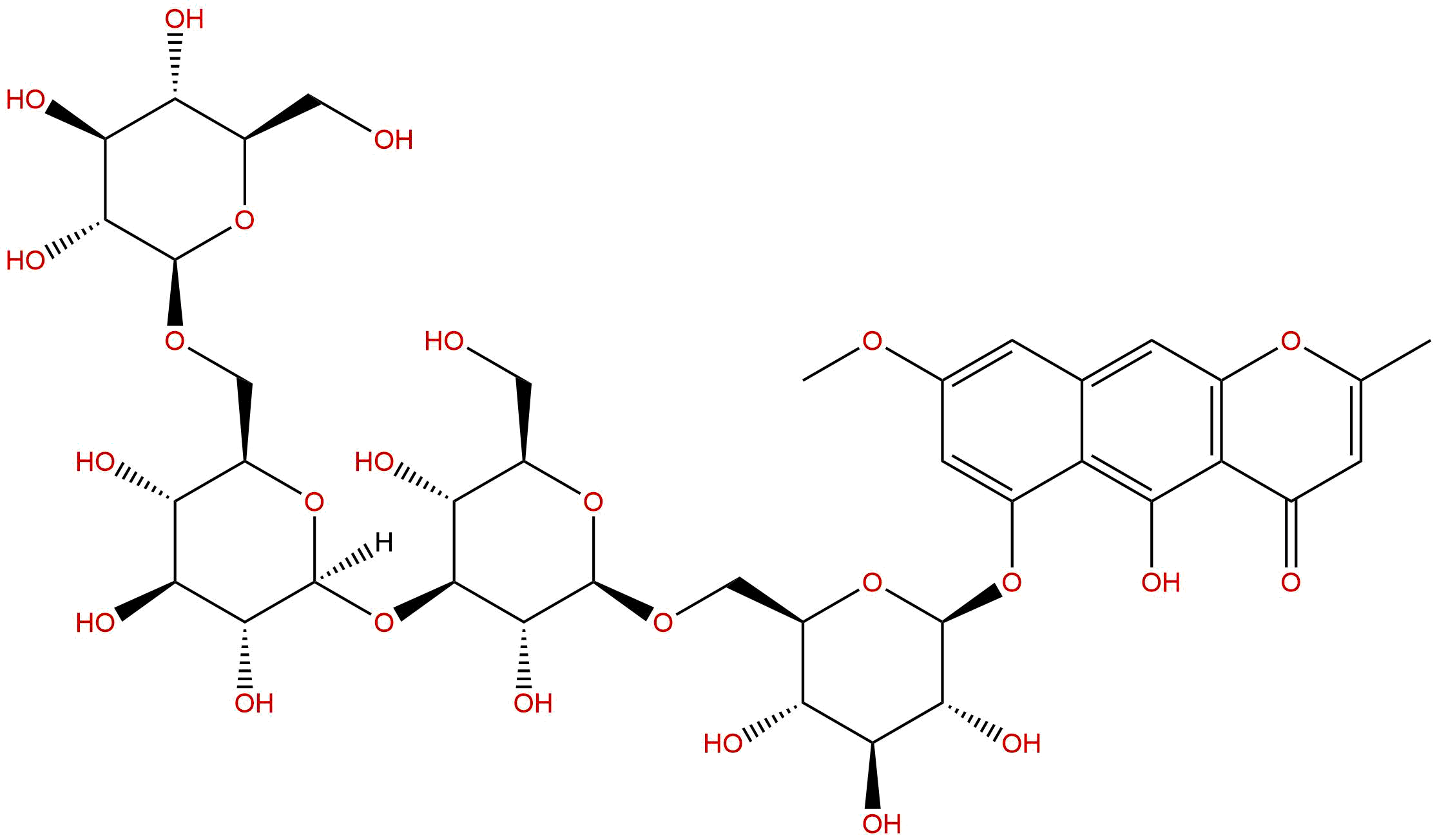
Cassiaside B2 belongs to the group of naphthopyranone glycosides. The core skeleton of its chemical structure is naphthopyrone, which is a polycyclic system composed of a naphthalene ring fused with a gamma pyranone. This skeleton is commonly found in plants of the Cassia genus and serves as the basis for various active ingredients in Cassia seeds. The unique feature of Cassia seed glycoside B2 lies in its glycosylation mode. According to existing research, its sugar chain is usually composed of multiple sugar units, including glucose, rhamnose, etc., which are connected to specific hydroxyl groups of the naphthopyranone nucleus through glycosidic bonds. This complex glycosylation modification not only increases the water solubility of the molecule, but also has a profound impact on its interaction with biological targets.
From the perspective of physical and chemical properties, the molecular weight of Cassia seed glycoside B2 is 920.8200 Da, which belongs to a medium to large natural product molecule. Its lipophilic water partition coefficient (LogP) is -1.3298, which is a negative value, indicating that the compound has extremely strong hydrophilicity and its solubility in water is much greater than its solubility in lipophilic solvents. This characteristic is highly consistent with the presence of multiple hydroxyl and sugar units in its molecular structure. In fact, its calculated water solubility value is as high as 7.8783 mg/mL, further confirming its good water solubility. For drug development, good water solubility is usually beneficial for formulation development and dissolution after oral administration, but excessive hydrophilicity may also affect its ability to penetrate biofilms.
Topological Polarity Surface Area (TPSA) is an important parameter for evaluating the interaction between molecules and biological membranes, as well as their ability to cross the blood-brain barrier. The TPSA of Cassia seed glycoside B2 is as high as 396.5000 Å ², far higher than the threshold commonly believed to passively diffuse through the blood-brain barrier (approximately 60-90 Å ²). This data strongly suggests that the compound's ability to enter the central nervous system through passive diffusion is very limited. This is completely consistent with the conclusion of "blood-brain barrier: low" in subsequent drug evaluation. This means that although Cassia seed glycoside B2 has activity against central nervous system targets such as hMAO-A and 5-HT2C receptors in vitro, its effectiveness in targeting these targets in vivo largely depends on the presence of active transport mechanisms or changes in blood-brain barrier permeability under pathological conditions. In addition, its high TPSA also suggests that its oral bioavailability may face challenges, as highly polar molecules often have difficulty passing through the lipid bilayer of intestinal epithelial cells.
Plant sources and extraction methods
The main plant source of Cassia Seed Glycoside B2 is Cassia from the Fabaceae Cassia genus(Cassia obtusifolia L. ) and Xiao Jueming(Cassia tora L. The dried and mature seeds of Chinese medicine, namely Cassia seed. Both of these plants are listed as authentic sources of Cassia seed in the Chinese Pharmacopoeia. The content of Cassia seed glycoside B2 in Cassia seed is usually low and belongs to trace active ingredients. Its content is influenced by various factors such as origin, harvesting time, processing method, and storage conditions. Except for cassia seed, other plants in the cassia genus, such as Wangjiangnan(Cassia occidentalis L. It may also contain the compound or its structural analogues, but there are differences in content and distribution of species.
Given the low content of Cassia seed glycoside B2 in plant materials, its extraction and purification process is the focus and difficulty of research. The traditional extraction method usually uses solvent extraction. Due to the high polarity and good water solubility of the compound, methanol, ethanol, or alcohol water mixed solutions with different ratios are often used as extraction solvents. For example, using 70% -80% ethanol reflux to extract cassia seed powder can effectively extract various polar components including cassia seed glycoside B2. The extract is filtered and concentrated under reduced pressure to obtain a paste.
In order to isolate and purify high-purity Cassia seed glycoside B2 from complex crude extracts, modern chromatographic techniques are essential. The classic separation process usually includes the following steps:
1. Preliminary separation Disperse the total extract in water and perform liquid-liquid extraction using solvents of different polarities such as petroleum ether, ethyl acetate, n-butanol, etc. Due to the high polarity of Cassia seed glycoside B2, it is mainly enriched in the n-butanol extraction layer or water layer.
2. Column chromatography separation The n-butanol extract or aqueous layer typically requires multiple column chromatography steps. Common stationary phases include macroporous adsorption resins (such as D101, AB-8), silica gel, polyamide, ODS (octadecylsilane bonded silica gel), etc. The elution system often uses methanol water or acetonitrile water gradient elution. For example, first use a macroporous adsorption resin column, wash with water and different concentrations of ethanol, and collect fractions rich in target components; Then, fine separation is carried out using a silica gel column or ODS column.
3. Preparation type high-performance liquid chromatography For initially purified fractions, preparative HPLC is the most effective means of obtaining high-purity monomeric compounds. Usually, a C18 reverse phase chromatography column is used, with acetonitrile water or methanol water (usually with a small amount of formic acid or acetic acid added to improve peak shape) as the mobile phase. Through isocratic or gradient elution, combined with a UV detector (detection wavelength is usually set around 280 nm or 254 nm), the target peak is collected to obtain a pure Cassia Seed Glycoside B2 with a purity greater than 98%.
In recent years, with the promotion of green chemistry concepts, some new extraction technologies, such as ultrasound assisted extraction, microwave-assisted extraction, enzyme assisted extraction, etc., have also been attempted for the extraction of active ingredients from Cassia seed, aiming to improve extraction efficiency, shorten time, and reduce the use of organic solvents. These methods also have potential application value in the extraction of Cassia seed glycoside B2, but further optimization of process parameters is needed for large-scale application.
Pharmacological activity research
Cassia seed glycoside B2 exhibits diverse pharmacological activities, covering multiple fields such as metabolism, neuropsychiatric, allergic reactions, and ophthalmology, reflecting the characteristic of multi-target effects of natural products.
1. Protein tyrosine phosphatase 1B (PTP1B) inhibitory activity
PTP1B is a negative regulator of insulin and leptin signaling transduction. It weakens insulin signaling and leads to insulin resistance by dephosphorylating insulin receptors and their substrates (IRS). Therefore, PTP1B inhibitors are considered to be effective strategies for the treatment of type 2 diabetes and obesity. Research has shown that Cassia seed glycoside B2 can effectively inhibit the activity of PTP1B. This discovery provides a molecular explanation for the traditional use of cassia seed in the treatment of "diabetes" (similar to diabetes in modern medicine). Compared to many synthetic PTP1B inhibitors, Cassia seed glycoside B2 derived from natural sources may have better safety and selectivity. The inhibitory mechanism may involve interaction with key amino acid residues (such as Cys215) at the PTP1B active site, thereby blocking substrate enzyme binding.
2. Inhibition activity of human monoamine oxidase A (hMAO-A)
Monoamine oxidase (MAO) is a key enzyme that catalyzes the oxidation and deamination of monoamine neurotransmitters such as serotonin, norepinephrine, and dopamine. There are two subtypes of MAO: MAO-A and MAO-B. MAO-A mainly metabolizes serotonin and norepinephrine, and its inhibitors are widely used in clinical practice to treat depression and anxiety. Cassia seed glycoside B2 has been identified as an inhibitor of hMAO-A. This means that it may exert antidepressant and anti anxiety effects by inhibiting the activity of MAO-A, increasing the concentration of serotonin and norepinephrine in synaptic cleft. This activity is potentially related to the traditional use of Cassia seed in treating symptoms such as irritability, headache, and dizziness that may be associated with emotional disorders.
3. 5-HT2C receptor agonist activity
5-HT2C receptors are G protein coupled receptors widely distributed in the central nervous system, especially highly expressed in areas such as the choroid plexus, hippocampus, and substantia nigra. This receptor is involved in regulating various physiological functions, including appetite, weight, mood, cognition, and intraocular pressure. Cassia seed glycoside B2 has been found to be an agonist of 5-HT2C receptors. This discovery is of great significance:
* Anti obesity potential 5-HT2C receptor agonists (such as chloramphenicol) have been approved for the treatment of obesity. Cassia seed glycoside B2 may inhibit appetite and increase satiety by activating this receptor, thereby aiding in weight management.
* Potential for reducing intraocular pressure This is one of the most remarkable new activities of Cassia seed glycoside B2. Research has shown that activating 5-HT2C receptors in the ciliary body can promote the outflow of aqueous humor through the uveoscleral pathway, thereby reducing intraocular pressure. This mechanism is different from the current first-line intraocular pressure lowering drugs (such as prostaglandin analogues), providing a new target for the development of novel glaucoma treatment drugs. Cassia seed glycoside B2, as a 5-HT2C receptor agonist, has been preliminarily confirmed to have a lowering effect on intraocular pressure in relevant studies, and has shown potential associations with various intraocular pressure regulation related targets such as CA2, CA4, CA12, ADCY5, PDE4B, PRKACA, CREB1, SLC4A4, SLC4A11, etc. These targets involve carbonic anhydrase, adenylate cyclase, phosphodiesterase, protein kinase A, and ion transporters, collectively forming a complex intraocular pressure regulation network.
4. Anti allergic activity
In addition to the aforementioned activities, Cassia seed glycoside B2 also exhibits anti allergic effects. Allergic reactions typically involve degranulation of mast cells and eosinophils, releasing allergens such as histamine and leukotrienes. Cassia seed glycoside B2 may exert anti allergic effects by stabilizing mast cell membranes, inhibiting the release of allergic mediators, or antagonizing allergic mediator receptors. This activity is consistent with its traditional use in treating symptoms such as "redness and swelling of the eyes" and "itching of the skin" that may be related to allergic reactions.
Mechanism of action and molecular targets
The pharmacological activity of Cassia seed glycoside B2 originates from its specific interactions with multiple molecular targets. Its mechanism of action exhibits the characteristics of multi-target and multi pathway.
-
PTP1B inhibition mechanism At the molecular level, Cassia seed glycoside B2 competitively or non competitively inhibits enzyme activity by binding to the active site of PTP1B enzyme, particularly forming covalent or non covalent interactions with the thiol group of the catalytic key residue Cys215. This inhibition blocks the dephosphorylation process of insulin receptors and IRS-1, enhances insulin signaling, ultimately improves insulin sensitivity, promotes glucose uptake and glycogen synthesis.
-
HMAO-A inhibition mechanism Cassia seed glycoside B2, as an inhibitor of hMAO-A, may mimic the natural substrate of MAO-A (such as 5-hydroxytryptamine) in its molecular structure through the naphthopyranone nucleus, thereby binding to the active site of the enzyme. By occupying the substrate binding pocket, it prevents the binding of neurotransmitters to enzymes and subsequent oxidative deamination reactions. This leads to an increase in the concentration of serotonin and norepinephrine in the synaptic cleft, thereby enhancing monoamine neurotransmission and exerting antidepressant and anti anxiety effects.
-
5-HT2C receptor activation mechanism After binding to the 5-HT2C receptor, Cassia seed glycoside B2 acts as an agonist, inducing conformational changes in the receptor and activating the Gq protein coupled to it. Gq protein further activates phospholipase C (PLC), catalyzing the hydrolysis of phosphatidylinositol diphosphate (PIP2) into inositol triphosphate (IP3) and diacylglycerol (DAG). IP3 promotes the release of calcium ions from intracellular calcium stores, while DAG activates protein kinase C (PKC). This series of signal cascade reactions ultimately leads to changes in cellular function. In the choroid plexus, this may lead to a decrease in cerebrospinal fluid secretion; In the hypothalamus, it is possible to activate pro melanocortin (POMC) neurons, release alpha melanocyte stimulating hormone (α - MSH), and thus suppress appetite. In the eye, the activation of 5-HT2C receptors in ciliary body cells, through the aforementioned signaling pathway, ultimately upregulates the expression and activity of matrix metalloproteinases (MMPs), promotes ciliary muscle relaxation and extracellular matrix remodeling, thereby increasing the outflow of aqueous humor through the uveoscleral pathway and reducing intraocular pressure.
-
Network of target points related to reducing intraocular pressure The intraocular pressure lowering effect of Cassia seed glycoside B2 is not solely dependent on 5-HT2C receptors. Research suggests that its function may involve a complex target network. For example, carbonic anhydrase (CA2, CA4, CA12) is a key enzyme in aqueous humor production; Adenylate cyclase (ADCY5) and protein kinase A (PRKACA) are key nodes in intracellular signal transduction; Phosphodiesterase (PDE4B) regulates cAMP levels; And members of the solute carrier family (SLC4A4, SLC4A11) participate in ion and pH balance, affecting aqueous humor secretion. Cassia seed glycoside B2 may regulate the activity of these targets directly or indirectly, thereby synergistically exerting the effect of reducing intraocular pressure. This multi-target mode of action may lead to stronger therapeutic efficacy and lower risk of drug resistance.
Evaluation of drug properties and pharmacokinetics
To convert Cassia seed glycoside B2 from an active natural product into a clinical candidate drug, a systematic evaluation of its pharmacological properties is necessary. The existing computational prediction data provides some preliminary but crucial clues.
-
Physicochemical properties As mentioned earlier, the molecular weight is 920.82 Da, LogP -1.33, and TPSA 396.5 Å ². These parameters indicate that Cassia seed glycoside B2 deviates significantly from the classical "Lipinski Five Rules" (molecular weight<500, LogP<5, hydrogen bond donor<5, hydrogen bond acceptor<10). This usually indicates poor oral bioavailability. High polarity and high molecular weight mean that its ability to passively diffuse through the intestinal epithelial cell membrane is extremely weak. Therefore, oral administration may face absorption barriers, resulting in extremely low bioavailability.
-
Water solubility Good water solubility (7.88 mg/mL) is a positive factor that facilitates the development of injectable formulations and avoids formulation difficulties caused by poor solubility.
-
Blood-brain barrier permeability Predicted as' low '. This is consistent with high TPSA values. For indications such as depression and obesity that require targeting of central nervous system targets such as hMAO-A and 5-HT2C receptors, this is a huge challenge. However, for peripheral targets such as PTP1B or ocular targets (reducing intraocular pressure), this characteristic may actually become an advantage as it can reduce central nervous system side effects.
-
Security prediction:
- HERG inhibition Predicted as' no '. Inhibition of hERG potassium channels is the main cause of prolonged QT interval and fatal arrhythmias (such as apical torsion ventricular tachycardia) in the heart. A negative predictive result is an important safety advantage.
- Ames test The predicted result is 0.6. The Ames test is used to detect the mutagenicity of compounds. Usually, a positive Ames test (usually>0.5) indicates potential genotoxicity. The result of 0.6 is at the critical value, indicating that there may be a certain risk of mutagenicity in Cassia seed glycoside B2, which needs to be closely monitored and verified in subsequent in vitro and in vivo experiments.
-
Pharmacokinetic Challenge Based on its physicochemical properties, the pharmacokinetic characteristics of Cassia seed glycoside B2 may manifest as poor oral absorption, low bioavailability, mainly distributed in the blood and extracellular fluid, difficult to enter the central nervous system, and may be mainly excreted through bile or kidneys. Its glycosidic bonds may be metabolized by gut microbiota in the intestine, producing glycosides or other metabolites that may have different biological activities from the original drug. Therefore, studying its metabolic pathways and the activity of metabolites in vivo is crucial.
Clinical application prospects and prospects
Although Cassia seed glycoside B2 faces challenges in drug development, its unique pharmacological activity spectrum, especially in reducing intraocular pressure, anti depression/anti anxiety, anti obesity, and anti allergy, has multiple potentials, making it have broad clinical application prospects.
-
Glaucoma treatment This is the most promising application direction for the transformation of Cassia seed glycoside B2. At present, first-line treatment drugs for glaucoma, such as prostaglandin analogues (such as latanoprost), mainly reduce intraocular pressure by increasing the outflow of aqueous humor through the uveoscleral pathway, but some patients have poor response or side effects. Cassia seed glycoside B2, as a 5-HT2C receptor agonist, provides a novel mechanism for reducing intraocular pressure. If it can be developed into locally administered eye drops, it can avoid the problem of poor oral absorption and directly act on eye targets. Its high water solubility also facilitates the preparation of eye drops. In addition, its multi-target effects, such as its potential impact on carbonic anhydrase, may lead to a synergistic effect in reducing intraocular pressure. Future research needs to focus on evaluating its intraocular pressure lowering effect, eye tolerance, corneal permeability, and long-term safety in animal models.
-
Treatment of metabolic diseases As a PTP1B inhibitor and 5-HT2C receptor agonist, cassoside B2 has a unique "kill two birds with one stone" potential in the treatment of type 2 diabetes with obesity. However, low oral bioavailability is its main obstacle. Future research directions include: 1) designing prodrug strategies to enhance lipid solubility and promote oral absorption by modifying their sugar or hydroxyl groups; 2) Developing non oral routes of administration, such as transdermal, intranasal, or injectable administration; 3) Explore the possibility of combining it with oral absorption enhancers; 4) Study its intestinal metabolites to see if they have better oral activity.
-
Psychiatric and neurological disorders Although the blood-brain barrier permeability is low, the antidepressant and anti anxiety potential of Cassia seed glycoside B2 as an hMAO-A inhibitor and 5-HT2C receptor agonist is still worth exploring. One possibility is that in pathological conditions such as depression, the permeability of the blood-brain barrier may increase, allowing some drugs to enter the central nervous system. Another strategy is to develop derivatives or metabolites that are easily accessible to the central nervous system. In addition, the peripheral MAO-A inhibitory activity may also indirectly affect central function by regulating peripheral monoamine levels.
-
Anti allergic application The anti allergic activity provides the possibility for its application in diseases such as allergic rhinitis, urticaria, and allergic conjunctivitis. Local administration (such as eye drops and nasal sprays) may be the preferred dosage form.
-
prospect Future research should focus on the following aspects:
- In depth pharmacological research: Systematically evaluate the efficacy of cassia seed glycoside B2 in a variety of animal models (such as high intraocular pressure model, diabetes/obesity model, depression model, allergy model), and clarify its dose effect relationship.
- Comprehensive pharmacokinetic studies Elucidate its absorption, distribution, metabolism, and excretion (ADME) process in the body, especially the identification and activity study of metabolites after oral administration.
- toxicological evaluation Conduct studies on acute toxicity, long-term toxicity, reproductive toxicity, and genetic toxicity of the system, especially to validate the predicted results of Ames test.
- Research on Structural Optimization and Structure Performance Relationship Using Cassia seed glycoside B2 as the lead compound, a series of analogues were synthesized through chemical modifications (such as changing the number and position of sugar groups, introducing specific functional groups), and the relationship between their structures and target activities such as PTP1B, hMAO-A, 5-HT2C receptors was studied to search for candidate compounds with stronger activity, higher selectivity, and better pharmacokinetic properties.
- Formulation development Develop suitable drug delivery systems, such as liposomes, nanoparticles, cyclodextrin inclusion complexes, etc., based on their high polarity and low oral bioavailability, to improve their bioavailability and targeting.
Conclusion
Cassiaside B2, a naphthopyranose glycoside derived from traditional Chinese medicine Cassia seed, is a natural product with multiple pharmacological activities and a unique mechanism of action. By inhibiting PTP1B and hMAO-A and activating 5-HT2C receptor, it shows great potential in treating type 2 diabetes, obesity, depression, allergic diseases and glaucoma. Especially its role as a 5-HT2C receptor agonist in reducing intraocular pressure provides a novel and highly promising strategy for the treatment of glaucoma.
However, this compound also faces typical challenges in the development of natural product drugs: its complex glycoside structure and extremely high polarity lead to drug resistance barriers such as low oral bioavailability and poor targeting of the central nervous system. In addition, its potential genetic toxicity risks also need to be carefully evaluated.
Nevertheless, Cassia seed glycoside B2 is undoubtedly a valuable lead compound. Through modern medicinal chemistry methods for structural optimization and advanced formulation technology, it is expected to overcome its pharmacokinetic deficiencies and develop it into innovative drugs for the treatment of metabolic diseases, ophthalmic diseases, or psychiatric disorders. The in-depth study of Cassia seed glycoside B2 not only helps to reveal the scientific connotation of traditional Chinese medicine Cassia seed, but also provides a valuable example for discovering innovative drugs from natural products. The future research path is full of challenges, but also contains great hope.