Introduction/Overview
Natural products, as an important source of drug discovery, play an irreplaceable role in the history of human health maintenance and disease treatment. Among numerous natural compounds with biological activity, anthraquinone, naphthoquinone, and their glycosides have attracted much attention due to their structural diversity and extensive pharmacological activities. Juemingzi(Cassia tora L.), As a traditional Chinese medicine, it has the effects of clearing the liver, improving vision, moistening the intestines, and promoting bowel movements. Its chemical composition is complex, mainly including anthraquinone, naphthalene, flavonoids, etc. Among them, Torachrysone 8-O-glucoside (also known as Nakahalene or Trachrysone), as a naphthalene glycoside compound isolated from Cassia seed, has gradually entered the field of researchers in recent years.
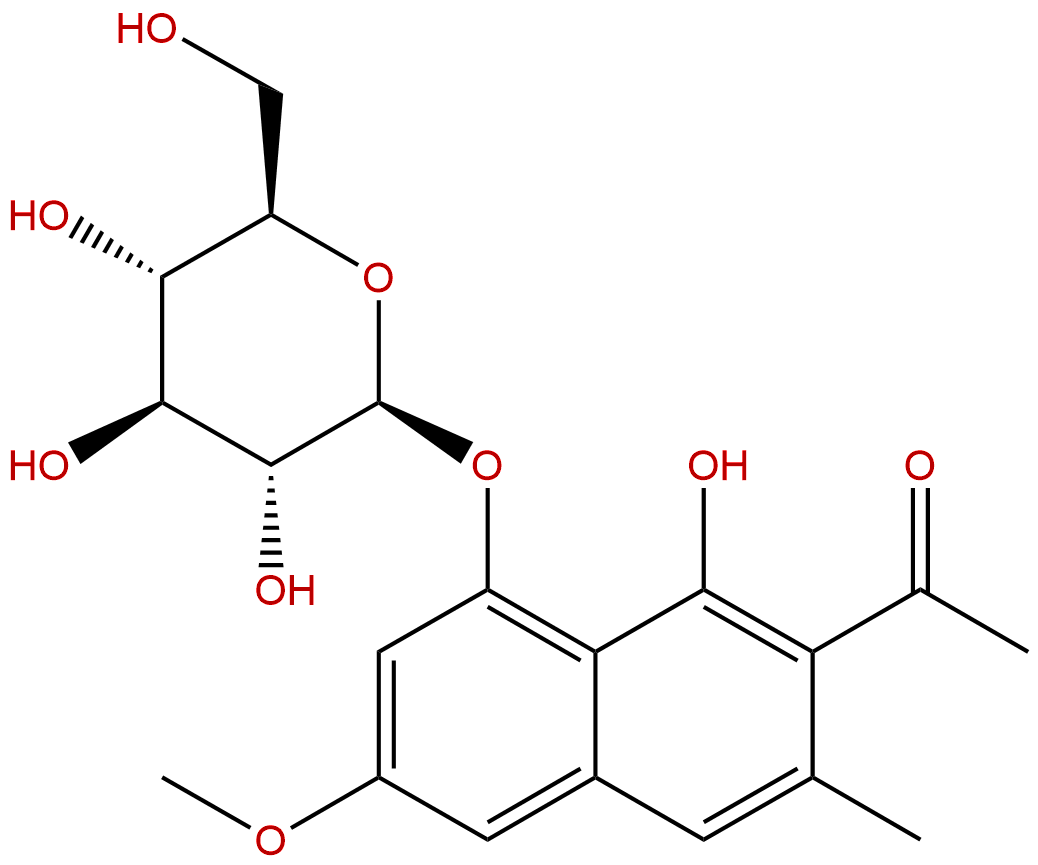
The chemical structure of kaempferol-8-O-glucoside belongs to the naphthalene derivatives, and its parent nucleus is kaempferol (Torachrysone), which is connected to a molecule of glucose at the 8th hydroxyl group. This structural feature endows it with unique physicochemical properties and biological activity. Early research mainly focused on the identification and determination of its content as a characteristic component in Cassia seed. However, with the development of modern pharmacology and molecular biology techniques, its potential pharmacological activities, especially in antioxidant, anti-inflammatory, anti-aging and other aspects, have gradually been revealed. Research has shown that this compound can regulate multiple signaling pathways and affect various enzymes and transcription factors related to oxidative stress, demonstrating great potential as a novel antioxidant and skin protector.
This article aims to comprehensively review the research progress of cassia ketone-8-O-glucoside, starting from its chemical structure and physicochemical properties, systematically elaborating on its plant origin, extraction methods, pharmacological activity, mechanism of action, pharmacological evaluation, and clinical application prospects, in order to provide scientific basis and reference for the in-depth research and development of this natural product.
Chemical structure and physicochemical properties
chemical structure
The chemical name of quercetin keto-8-O-glucoside is 1- (1-hydroxy-6-methoxy-3-methyl-8-naphthyl) ethanone-8-O - β - D-glucopyranoside. Its molecular formula is C ₂₀ H ₂₄ O ₉, and its molecular weight is 408.4030 g/mol. Structurally, the compound is composed of a naphthalene ring skeleton, with multiple substituents attached to the naphthalene ring: hydroxyl (- OH) at position 1, methoxy (- OCH ∝) at position 6, methyl (- CH ∝) at position 3, and a molecule of β - D-glucose connected by a glycosidic bond at position 8. This glycosylation modification not only increases the water solubility of the molecule, but may also affect its interaction mode with biological targets.
Physicochemical properties
According to computational chemistry and experimental data, Cassinolone-8-O-glucoside exhibits the following key physicochemical properties:
-
Lipid water partition coefficient (LogP)Its LogP value is 0.8967, indicating that the compound has moderate lipophilicity and slightly leans towards hydrophilicity. This characteristic enables it to maintain a certain balance between hydrophilic and lipid environments, which is beneficial for transport and distribution within the organism.
-
Polarized surface area (TPSA)The TPSA value is 145.9100 Å ². A higher TPSA value (usually greater than 140 Å ²) indicates that the compound has good oral absorption potential, but also suggests that its ability to penetrate cell membranes may be limited, especially difficult to pass through the blood-brain barrier. In fact, its blood-brain barrier penetration ability was evaluated as' low ', which is consistent with high TPSA values.
-
Water solubility The water solubility parameter is 3.4269, indicating good solubility in water. This is due to the presence of multiple hydroxyl and sugar groups in the molecule, which allows it to form hydrogen bonds in an aqueous environment, making it easy to dissolve. Good water solubility is crucial for drug formulation development and in vivo absorption.
-
Stability As a glycoside compound, quercetin keto-8-O-glucoside may undergo hydrolysis under acidic or enzymatic conditions, resulting in the removal of glycosides and the formation of the aglycone quercetin ketone. Therefore, in the process of extraction, storage, and in vivo metabolism, its stability needs to be considered, especially in the gastrointestinal environment.
Plant sources and extraction methods
Plant-based
Cassinol-8-O-glucoside is mainly derived from the leguminous plant Cassia(Cassia tora L. The dried and mature seeds of Chinese medicine, namely Cassia seed. In addition, in other plants of the same genus, such as the blunt leaved cassia(Cassia obtusifolia L. It has also been discovered in. Cassia seed, as a traditional Chinese medicine, is widely planted and has abundant resources in China. In addition to seeds, this compound may also be present in other parts of plants, but the content is usually highest in seeds. In recent years, with the deepening of research on the chemical composition of cassia seed, cassia ketone-8-O-glucoside has been confirmed as one of its important active ingredients and is often used as an indicator ingredient for quality control.
extraction method
The extraction of kaempferol-8-O-glucoside usually follows the conventional extraction process of natural glycoside compounds, mainly including the following steps:
-
Raw material pretreatment After drying and crushing, cassia seeds are sieved through a certain mesh to improve extraction efficiency. Due to the relative stability of the compound to heat, the hot reflux extraction method can be used.
-
Solvent selection According to its principle of "similar solubility", combined with its good water solubility and moderate lipophilicity, solvents with high polarity are often used for extraction. The most commonly used solvents are methanol, ethanol, or ethanol water mixed solutions in different proportions. High concentration ethanol (such as 70% -95%) helps to destroy cell walls and dissolve glycosides, while reducing the leaching of water-soluble impurities.
-
extraction process:
- Hot reflux extraction Mix the crushed cassia seed powder with a solvent and reflux extract several times under heating conditions. This method is easy to operate and has high extraction efficiency, making it a commonly used method in laboratories and industrial production. The extraction temperature is usually controlled at 60-80 ℃ for 1-3 hours.
- Ultrasound assisted extraction By utilizing the cavitation effect of ultrasound to accelerate solvent penetration and component dissolution, efficient extraction can be achieved at lower temperatures, which is beneficial for protecting thermosensitive components.
- Microwave assisted extraction By utilizing the penetrability and selective heating of microwaves, extraction time can be significantly shortened and yield can be improved.
-
Purification and Separation The crude extract contains a large amount of impurities and requires further purification. Common methods include:
- solvent extraction Using different polar solvents (such as petroleum ether, ethyl acetate, n-butanol) for liquid-liquid extraction, the target compound is enriched in a specific solvent layer. Cassinol-8-O-glucoside is usually enriched in the n-butanol layer.
- column chromatography Use silica gel, ODS (octadecylsilane bonded silica gel) or macroporous adsorption resin for column chromatography separation. By gradient elution, the target compound can be separated from other components.
- Preparation type high-performance liquid chromatography For high-purity samples, preparative HPLC can be used for purification to obtain compounds with a purity greater than 98%.
Pharmacological activity research
The pharmacological activity research of quercetin keto-8-O-glucoside mainly focuses on its antioxidant, anti-inflammatory, anti melanin production, and skin protection aspects.
antioxidant activity
Oxidative stress is a common pathological basis for various diseases, including aging, cardiovascular disease, neurodegenerative diseases, and cancer. Cassinoline-8-O-glucoside exhibits significant antioxidant capacity.
-
In vitro chemical experiments Through DPPH radical scavenging experiment, ABTS cation radical scavenging experiment, and FRAP (iron ion reduction/antioxidant capacity) experiment, it was confirmed that the compound has strong free radical scavenging and reducing abilities. Its activity may be related to the phenolic hydroxyl group (1-OH) in its molecular structure and the hydroxyl group on the sugar group, which can provide hydrogen atoms or electrons, neutralize free radicals, and block oxidation chain reactions.
-
Cell level research In various cell models, such as human keratinocytes HaCaT, fibroblasts, liver cells, etc., pre - or simultaneous administration of kaempferol-8-O-glucoside can significantly reduce intracellular reactive oxygen species (ROS) levels induced by hydrogen peroxide (H ₂ O ₂), ultraviolet light (UVB), or other oxidants. Meanwhile, it can also inhibit the production of malondialdehyde (MDA), a lipid peroxidation product, and protect cells from apoptosis or necrosis caused by oxidative damage.
Anti melanin generating activity
Excessive deposition of melanin is the main cause of skin pigmentation diseases such as melasma and freckles. Tyrosinase (TYR) is a key rate limiting enzyme in the synthesis of melanin. Research has shown that quercetin 8-O-glucoside can effectively inhibit the activity of tyrosinase, thereby reducing the production of melanin. In the B16F10 mouse melanoma cell model, the compound showed a dose-dependent decrease in intracellular tyrosinase activity and melanin content, with low cytotoxicity. This discovery provides a theoretical basis for its application in the field of whitening and skincare.
anti-inflammatory activity
Inflammation is a defense response of the body against injury and infection, but chronic inflammation is associated with various diseases. Preliminary research suggests that kaempferol-8-O-glucoside may have anti-inflammatory effects. It can inhibit the production of inflammatory mediators such as nitric oxide (NO) and prostaglandin E ₂ (PGE ₂) in macrophages stimulated by lipopolysaccharide (LPS), and downregulate the expression of inducible nitric oxide synthase (iNOS) and cyclooxygenase-2 (COX-2). These anti-inflammatory effects may be closely related to their antioxidant activity, as ROS itself can act as inflammatory signaling molecules.
Anti aging and skin protection
Given its antioxidant and anti melanogenesis activities, Cassinol-8-O-glucoside has shown potential in combating skin aging. Ultraviolet radiation is the main external cause of skin photoaging, which degrades extracellular matrix (such as collagen and elastin) by generating ROS and activating matrix metalloproteinases (MMPs), leading to skin sagging and wrinkles. Research has found that this compound can inhibit the expression of MMP-1 and MMP-3 in HaCaT cells induced by UVB, while promoting collagen synthesis, thereby helping to maintain the integrity of skin structure. In addition, its ability to activate the NRF2/ARE pathway (see mechanism section below) also provides a molecular level explanation for its anti-aging effect.
Mechanism of action and molecular targets
The various pharmacological activities of quercetin keto-8-O-glucoside do not exist in isolation, but are achieved by regulating a series of key molecular targets and signaling pathways. According to existing research, its core mechanism of action mainly revolves around antioxidant stress and regulation of related signaling networks.
Activate NRF2/ARE antioxidant pathway
Nuclear factor E2 related factor 2 (NFE2L2/NRF2) is a core transcription factor that cells use to respond to oxidative stress. Under normal circumstances, NRF2 binds to Kelch like ECH associated protein 1 (Keap1) and is in an inhibited state. When subjected to oxidative stress or electrophilic reagent stimulation, NRF2 dissociates from Keap1, translocates into the nucleus, binds to antioxidant response elements (ARE), and initiates the transcription of downstream antioxidant and detoxifying enzyme genes.
- Target: NRF2 (NFE2L2)Cassinolone-8-O-glucoside has been shown to promote nuclear translocation of NRF2 and enhance its transcriptional activity.
- Downstream targets Activated NRF2 further upregulates the expression of various key antioxidant enzymes, including:
- SOD1 (Cu/Zn SOD) and SOD2 (Mn SOD)Superoxide dismutase is responsible for dismutation of superoxide anions (O ₂⁻) into H ₂ O ₂ and O ₂.
- CAT (catalase)Decompose H ₂ O ₂ into H ₂ O and O ₂.
- GPX1 (Glutathione Peroxidase 1)Using glutathione (GSH) to reduce H ₂ O ₂ and organic peroxides to H ₂ O and corresponding alcohols.
- HMOX1 (Heme Oxygenase 1)Catalytic degradation of hemoglobin into biliverdin, carbon monoxide, and iron ions, biliverdin and its metabolite bilirubin are potent antioxidants.
By activating the NRF2/ARE pathway, quercetin keto-8-O-glucoside can synergistically enhance the overall antioxidant defense ability of cells, effectively clearing ROS and reducing oxidative damage.
Inhibition of matrix metalloproteinases (MMPs)
Matrix metalloproteinases (MMPs) are a class of zinc dependent endopeptidases responsible for degrading extracellular matrix. During the process of skin photoaging, UV induced ROS activates MMPs, leading to excessive degradation of collagen and elastin.
- Target: MMP1 (interstitial collagenase) and MMP3 (matrix metalloproteinase-1)Research has shown that kaempferol-8-O-glucoside can inhibit the mRNA and protein expression levels of MMP-1 and MMP-3 in HaCaT cells induced by UVB. The mechanism may be partially achieved by inhibiting the phosphorylation of upstream MAPK (mitogen activated protein kinase) signaling pathways (such as ERK, JNK, p38), as these pathways are key pathways for UV induced MMP expression. In addition, by activating the NRF2 pathway, it is also possible to indirectly inhibit the expression of MMP, as the activation of NRF2 is associated with anti-inflammatory and anti-aging effects.
Inhibition of Tyrosinase (TYR)
Tyrosinase (TYR) is a key enzyme in the melanin synthesis pathway, catalyzing the hydroxylation of tyrosine to dopa quinone.
- Target: TYR Cassinolone-8-O-glucoside has been shown to directly inhibit the enzymatic activity of TYR. This inhibitory effect may be competitive or non competitive, and the specific mechanism needs further research. Meanwhile, it may also reduce melanin production by downregulating the protein expression level of TYR. In addition, its antioxidant activity may indirectly affect melanin synthesis, as ROS itself can activate TYR.
Integrated Mechanism Network
In summary, the pharmacological effects of kaempferol-8-O-glucoside are not driven by a single target, but rather through a complex network. Its core is Activate NRF2/ARE pathway Thus, upregulating the expression of a series of antioxidant enzymes (SOD1/2, CAT, GPX1, HMOX1) enhances the cell's antioxidant defense. This core effect further:
1. Directly eliminate ROS Protect cells from oxidative damage.
2. Inhibition of ROS mediated MAPK pathway activation Thus downregulating the expression of MMP1/3 and exerting anti photoaging effects.
3. Inhibit TYR activity Reduce melanin production.
4. Inhibit inflammatory signals Play an anti-inflammatory role.
The synergistic effect of multiple targets and pathways gives it unique advantages in preventing and treating oxidative stress-related diseases.
Evaluation of drug properties and pharmacokinetics
Developing natural products into clinical drugs requires a systematic evaluation of their pharmacological properties, including pharmacokinetic characteristics, safety, and preliminary toxicity.
Analysis of drug properties parameters
According to the provided computer prediction parameters, quercetin keto-8-O-glucoside shows certain potential as a drug, but there are also challenges:
- Molecular weight and LogP The molecular weight is 408.40 Da, slightly higher than the limit of molecular weight<500 in Lipinski's Rule of Five, but still within an acceptable range. The LogP is 0.8967, which conforms to the rule (LogP<5), indicating moderate lipophilicity and favorable oral absorption and transmembrane transport.
- Water solubility Good water solubility (3.4269), beneficial for formulation development and in vivo dissolution and absorption.
- Blood-brain barrier penetration Evaluated as' low ', this is an advantage for developing drugs that act on peripheral tissues such as skin and liver, and can avoid central nervous system side effects; But for treating brain diseases, it is a disadvantage.
- HERG inhibition The predicted result is' no ', indicating a lower risk of causing QT interval prolongation and arrhythmia in the heart, which is an important safety advantage.
- Ames test The predicted result is 0.6 (usually<0.5 is negative,>0.5 is positive), which is near the critical value. This suggests that there may be a certain risk of genetic toxicity, which needs to be verified through more rigorous experiments such as bacterial recovery mutation test and chromosome aberration test in the future. This is a key risk point that needs to be focused on in the evaluation of drug properties.
Pharmacokinetic characteristics (speculated)
At present, there is limited experimental data on the in vivo pharmacokinetics of quercetin keto-8-O-glucoside. However, based on its structural characteristics and the patterns of similar compounds, it can be inferred that:
- absorb As a glycoside, its oral absorption may be limited. It may be hydrolyzed by β - glucosidase produced by gut microbiota in the small intestine to form the glycoside quercetin, which may be more easily absorbed. Therefore, its oral bioavailability may be low, but the aglycones may have different pharmacokinetic characteristics.
- distribution Due to its high polarity and low lipophilicity, its distribution volume may be small, mainly distributed in extracellular fluid and blood. Low blood-brain barrier penetration means that its concentration in the central nervous system is very low.
- Metabolism The main metabolic pathways may include: 1) hydrolysis into aglycones in the intestine or liver; 2) Glycosides or parent compounds undergo phase II metabolism (such as glucuronidation and sulfation) in the liver, forming more water-soluble metabolites that are easier to excrete.
- excretion Mainly excreted in the form of metabolites through urine and bile.
Preliminary evaluation of safety
In addition to the warning signal of Ames test, existing cytotoxicity studies usually show that within the effective concentration range, the toxicity of kaempferol-8-O-glucoside to normal cells (such as HaCaT and fibroblasts) is low, demonstrating a good safety window. However, data on long-term toxicity, reproductive toxicity, carcinogenicity, and other factors are still gaps that need to be filled in future research.
Clinical application prospects and prospects
Based on its unique pharmacological activity and preliminary pharmacological evaluation, quercetin keto-8-O-glucoside has shown broad clinical application prospects in multiple fields.
Skin care and anti-aging products
This is its most direct and promising application direction. Its multiple functions - antioxidant, inhibition of melanin production, inhibition of MMPs, and promotion of collagen synthesis - make it an ideal candidate ingredient for developing new functional cosmetics or dermatological drugs.
- whitening products As a tyrosinase inhibitor, it can be used to develop skin care products that whiten and lighten spots.
- Anti-aging products By antioxidant and inhibiting MMPs, it can be used to develop skincare products that can resist wrinkles, tighten, and repair photoaging.
- Sunscreen products As an auxiliary ingredient, it enhances the antioxidant capacity of sunscreen products and reduces UV damage.
Adjuvant therapy for oxidative stress-related diseases
Given its strong antioxidant and anti-inflammatory activities, this compound may have the potential to assist in the treatment of various oxidative stress-related diseases.
- Metabolic diseases Such as non-alcoholic fatty liver disease (NAFLD), diabetes complications. By activating the NRF2 pathway, the oxidative stress status of the liver and pancreas is improved.
- cardiovascular disease Inhibiting the oxidative damage and inflammatory reaction of vascular endothelial cells may help prevent atherosclerosis.
- Neurodegenerative diseases Although the blood-brain barrier has low penetration, it is expected to be used for the treatment of Alzheimer's disease and Parkinson's disease through structural modification or special delivery systems (such as nanocarriers).
As a lead compound for structural optimization
The molecular skeleton of kaempferol-8-O-glucoside is naphthalene glycoside, which has the potential for further chemical modification. For example:
- Improve bioavailability Through prodrug design, such as esterification modification of sugar groups, the oral absorption rate can be improved.
- Enhance targeting capability By connecting specific targeting groups, targeted delivery to specific tissues or cells can be achieved.
- Reduce toxicity Reduce the potential genetic toxicity of Ames test positive signals through structural modification.
Future research directions
- In depth pharmacokinetic research Conduct animal in vivo experiments to clarify their absorption, distribution, metabolism, and excretion (ADME) characteristics, especially oral bioavailability and metabolite activity.
- Toxicological evaluation of the system Complete standard toxicology experiments for acute toxicity, long-term toxicity, reproductive and developmental toxicity, especially to verify their genetic toxicity risks.
- Refined research on the mechanism of action Using techniques such as molecular docking and surface plasmon resonance (SPR), clarify its direct binding mode with targets such as NRF2, TYR, MMP, etc.
- Preclinical pharmacodynamic studies: Verify its efficacy in animal disease models (such as skin photoaging model, liver fibrosis model, diabetes model).
- Formulation development To explore its stability and transdermal absorption efficiency in different dosage forms (such as cream, gel, nano emulsion, liposome).
Conclusion
As a natural naphthol glycoside derived from the traditional Chinese medicine Cassia seed, Cassia flavanone-8-O-glucoside is gradually moving from behind the scenes to the forefront due to its unique chemical structure and significant biological activity. This article systematically reviews the research progress on its chemistry, sources, pharmacology, mechanisms, and drug properties. This compound activates the NRF2/ARE antioxidant pathway, upregulates key antioxidant enzymes such as SOD, CAT, GPX1, HMOX1, while inhibiting the activity of TYR and MMP1/3, demonstrating strong antioxidant, anti melanogenesis, anti-inflammatory, and anti photoaging potential.
Its pharmacological parameters are generally good, with good water solubility and low risk of cardiac toxicity. However, its oral bioavailability may be limited, and there is a potential genetic toxicity risk, which constitutes the main obstacle to its clinical translation. However, its application prospects in the fields of skin care and anti-aging are particularly promising, and it is expected to be developed as a new generation of natural whitening and anti-aging active ingredients.
Future research should focus on elucidating its pharmacokinetic characteristics in vivo, verifying its long-term safety, delving into its molecular mechanisms of action, and exploring ways to overcome its limitations through structural modifications or novel formulation technologies. With the continuous deepening of research, quercetin keto-8-O-glucoside is expected to develop from a natural product studied in a laboratory into a health product and drug candidate molecule with practical application value, contributing to the human health cause.