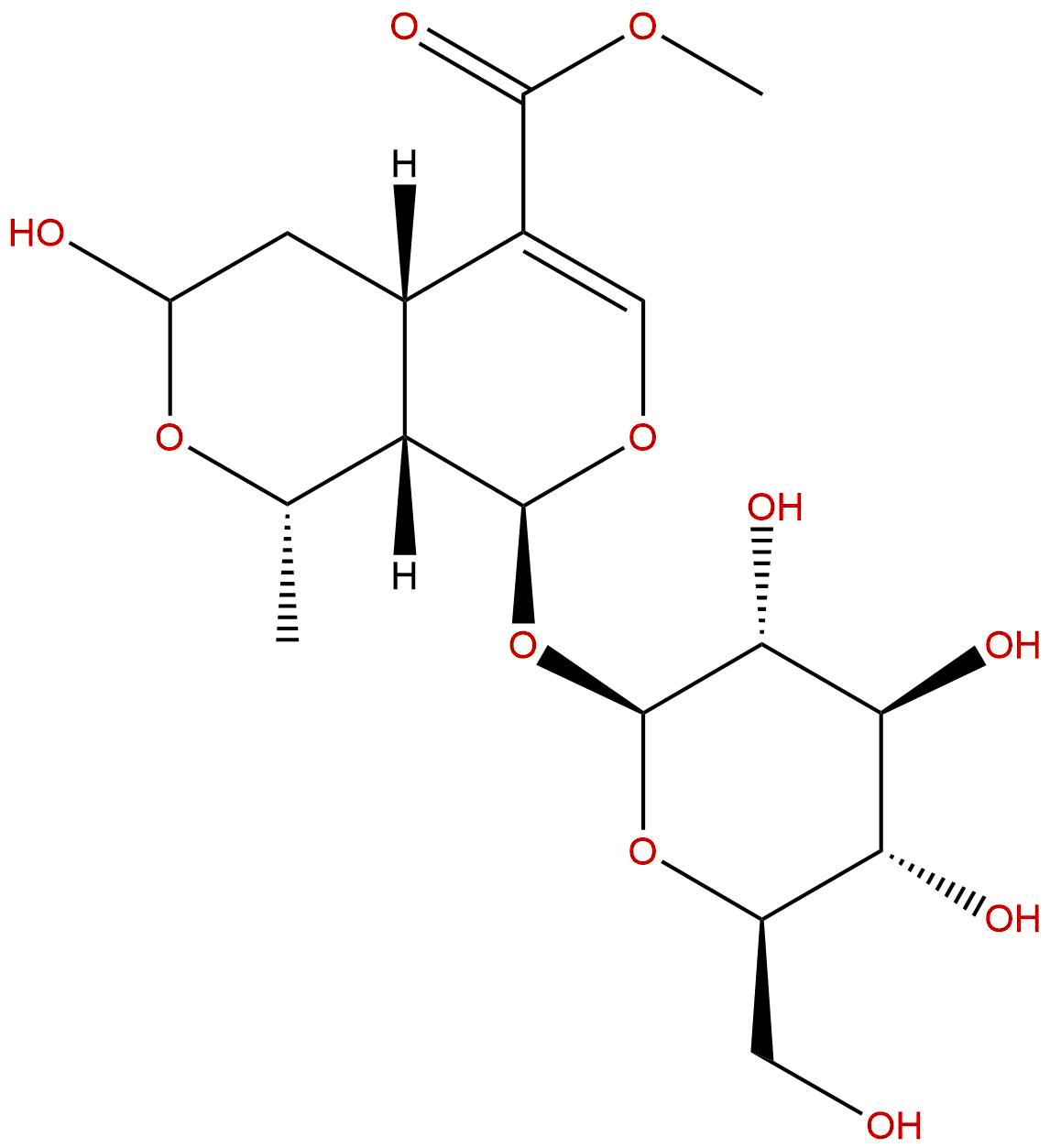


Product name: Morroniside
Synonym name: 7α,β-Morroniside
Catalogue No.: BP0960
Cas No.: 25406-64-8
Formula: C17H26O11
Mol Weight: 406.384
Botanical Source: Cornus officinalis Sieb.et Zucc.
Physical Description:
Type of Compound: Iridoids
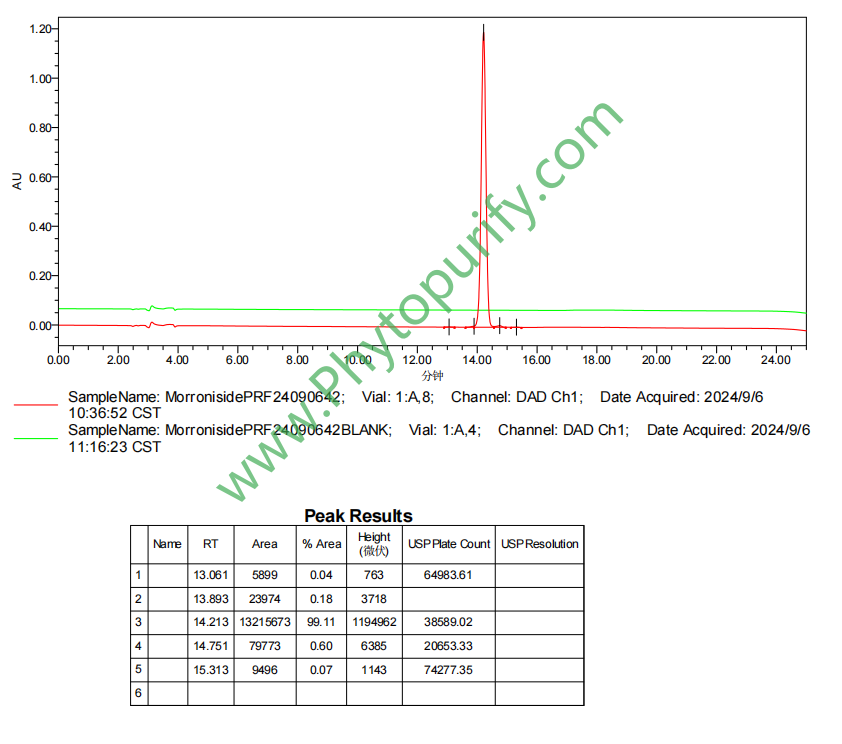
Purity: 95%~99%
Analysis Method: HPLC-DAD or/and HPLC-ELSD
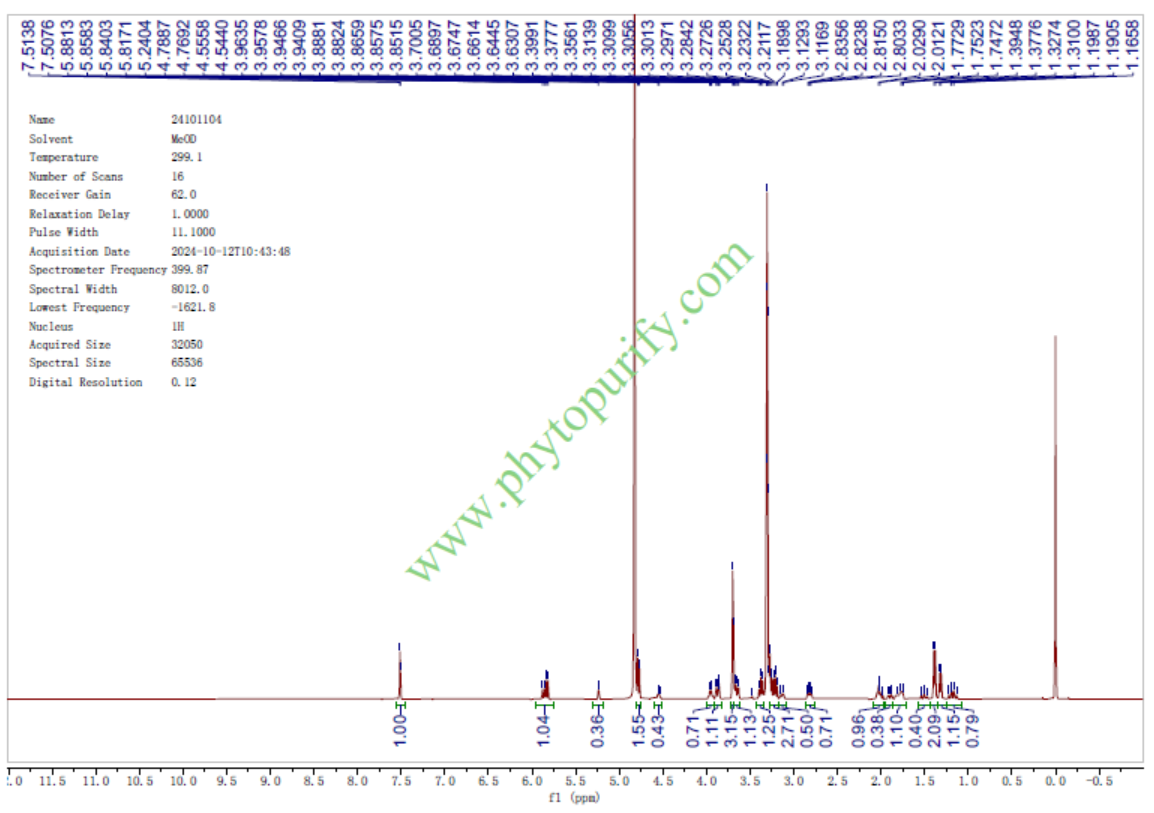
Identification Method: Mass, NMR
Packing: Brown vial or HDPE plastic bottle
Storage: Store in a well closed container, protected from air and light. Put into refrigerate or freeze for long term storage.
Whenever possible, you should prepare and use solutions on the same day. However, if you need to make up stock solutions in advance, we recommend that you store the solution as aliquots in tightly sealed vials at -20℃. Generally, these will be useable for up to two weeks.
The product could be supplied from milligrams to grams
Inquire for bulk scale.
Description:
Morroniside has therapeutic effects on diabetic angiopathies, renal damage, lipid metabolism and inflammation and bone resorption. Morroniside can notably protect the brain from damage induced by focal cerebral ischemia which might be related to morroniside antioxidant and anti-apoptotic properties in the brain.Morroniside can decrease the level of cycloxygenase(Cox) and it may be the mechanism of morroniside on inhibiting the platelet aggregation induced by ADP in rabbits.
References:
Can J Physiol Pharmacol. 2006 Dec;84(12):1267-73.
Morroniside and loganin extracted from Cornus officinalis have protective effects on rat mesangial cell proliferation exposed to advanced glycation end products by preventing oxidative stress.
Advanced glycation end products (AGE) are involved in the alterations of renal mesangial cell (MCs) growth, a feature of early stages of diabetic nephropathy (DN).
METHODS AND RESULTS:
We postulate that Morroniside and loganin, 2 components extracted from Cornus officinalis, may ameliorate the detrimental effects of AGE-induced MCs proliferation by preventing oxidative stress. Rat MCs cultured in AGE milieu were treated with Morroniside and loganin. Results showed that Morroniside and loganin inhibited AGE-induced MC proliferation as measured by 3-(4,5-dimethylthiazol-2-yl)-2,5-diphenyltetrazolium bromide (MTT) method. Fluorescence microscopy revealed that the Morroniside and loganin improved the morphological changes of MCs. Flow cytometric analysis showed that Morroniside and loganin inhibited the cell cycle of rat MCs. Furthermore, the level of reactive oxygen species was significantly reduced, and the activities of superoxide dismutase and glutathione peroxidase were markedly increased, whereas the level of malondialdehyde was not significantly reduced.
CONCLUSIONS:
These results suggest that Morroniside and loganin regulate MC growth by preventing oxidative stress. Thus, this study provides a molecular basis for the use of Morroniside and loganin in the early stages of DN.
Eur J Pharmacol. 2014 Sep 5;738:214-21.
Promoting neurogenesis via Wnt/β-catenin signaling pathway accounts for the neurorestorative effects of morroniside against cerebral ischemia injury.
Ischemic stroke is a leading cause of mortality and permanent disability in adults worldwide. Neurogenesis triggered by ischemia in the adult mammalian brain may provide insights into stroke treatment. Morroniside is an active component of sarcocarp of C. officinalis that have shown neuroprotective effects. The aim of the present study is to test whether Morroniside promotes neurogenesis via Wnt/β-catenin signaling pathway for brain recovery in a rat model of focal cerebral ischemia.
METHODS AND RESULTS:
Morroniside was administered intragastrically once daily at the concentrations of 30, 90 and 270 mg/kg for 7 days post-ischemia. Neurological functions were detected by Ludmila Belayev score tests. Endogenous neural stem cells responses were investigated with immunofluorescence staining of Ki-67 and Nestin to identify the neurogenesis in the subventricular zone (SVZ). The expression of proteins involved in and related to Wnt/β-catenin signaling pathway was detected by western blotting analysis. Morroniside significantly promoted neurogenesis for brain recovery 7 days post-ischemia. Increased expression of Wnt 3a, β-catenin and T-cell transcription factor-4 (Tcf-4), along with activation of downstream transcription factors Pax6 and neurogenin2 (Ngn2), indicated that the neurorestorative effects of Morroniside may be associated with Wnt/β-catenin signaling pathway.
CONCLUSIONS:
These data provide support for understanding the mechanisms of Morroniside in neurorestorative effects and suggest a potential new strategy for ischemic stroke treatment.
J Cell Mol Med. 2015 Aug;19(8):1877-86.
Protein kinase B and extracellular signal-regulated kinase contribute to the chondroprotective effect of morroniside on osteoarthritis chondrocytes.
Despite extensive studies on the multifaceted roles of Morroniside, the main active constituent of iridoid glycoside from Corni Fructus, the effect of Morroniside on osteoarthritis (OA) chondrocytes remains poorly understood.
METHODS AND RESULTS:
Here, we investigated the influence of Morroniside on cultured human OA chondrocytes and a rat experimental model of OA. The results showed that Morroniside enhanced the cell viability and the levels of proliferating cell nuclear antigen expression (PCNA), type II collagen and aggrecan in human OA chondrocytes, indicating that Morroniside promoted chondrocyte survival and matrix synthesis. Furthermore, different doses of Morroniside activated protein kinase B (AKT) and extracellular signal-regulated kinase (ERK) in human OA chondrocytes, and in turn, triggered AKT/S6 and ERK/P70S6K/S6 pathway, respectively. The PI3K/AKT inhibitor LY294002 or the MEK/ERK inhibitor U0126 attenuated the effect of Morroniside on human OA chondrocytes, indicating that the activation of AKT and ERK contributed to the regulation of Morroniside in human OA chondrocytes. In addition, the intra-articular injection of Morroniside elevated the level of proteoglycans in cartilage matrix and the thickness of articular cartilage in a rat experimental model of OA, with the increase of AKT and ERK activation.
CONCLUSIONS:
As a consequence, Morroniside has chondroprotective effect on OA chondrocytes, and may have the therapeutic potential for OA treatment.
HPLC of Morroniside
HNMR of Morroniside
Storage conditions:Short-term storage at 2~8℃, long-term storage at -20 ~ -80℃
164.3700
-1.4043
-1.4048
54.2116
.5429
.7278
Low
30.2048
4.8409
Yes
No
No
No
Yes
No
0.0
Yes
No
Yes
Yes
Natural products, as an important source of drug discovery, play an irreplaceable role in the long history of human struggle against diseases. One of the core pathways in modern drug development is to isolate and identify monomeric compounds with clear pharmacological activity from traditional herbs, and elucidate their mechanisms of action. Among numerous natural products with biological activity, iridoid glycosides have attracted much attention due to their extensive pharmacological activities. Morroniside, as a typical iridoid glycoside, is mainly derived from the Cornaceae plant Cornus officinalis(Cornus officinalis The dried and mature flesh of Sieb. et Zucc. is one of the main active ingredients of this plant and is also an indicator ingredient for the determination of the content of Fructus Corni in the Chinese Pharmacopoeia.
The chemical name of Monoglucoside is (2S, 3R, 4S, 5S, 6R) -2- [(1S, 4aS, 7R, 7aS) -1-hydroxy-7-methyl-1,4a, 5,6,7,7a-hexahydrocyclopentadieno [c] pyran-4-yl] oxy-6- (hydroxymethyl) tetrahydro-2H-pyran-3,4,5-triol, and its CAS registration number is 25406-64-8. According to traditional Chinese medicine theory, Cornus officinalis has the effects of tonifying the liver and kidneys, reducing astringency and promoting digestion. It is commonly used to treat conditions such as dizziness, tinnitus, lower back and knee pain, erectile dysfunction, nocturnal emissions, frequent enuresis, diarrhea, excessive sweating, and internal heat and thirst. Modern pharmacological research has revealed the more abundant biological activities of mononucleoside, especially in neuroprotection, cardiovascular protection, anti-inflammatory, antioxidant, anti apoptotic, and regulation of glucose and lipid metabolism, showing significant potential.
Of particular note is that mononucleoside exerts neuroprotective effects by inhibiting neuronal apoptosis and the expression of matrix metalloproteinase 9/2 (MMP9/2), providing important scientific evidence for its application in the treatment of neurodegenerative diseases such as ischemic stroke and Alzheimer's disease. At the same time, its protective effect on the cardiovascular system involves multiple key targets, such as Selectin P (SELP), 3-hydroxy-3-methylglutaryl-CoA reductase (HMGCR), Peroxisome proliferator activated receptor gamma (PPARG), angiotensin-converting enzyme (ACE), protein kinase B1 (AKT1), β 2-adrenergic receptor (ADRB2), voltage-gated potassium channel subfamily H member 2 (KCNH2), endothelial nitric oxide synthase (NOS3), intercellular adhesion molecule 1 (ICAM1), and vascular cell adhesion molecule 1 (VCAM1), showing the characteristics of multi-target and multi-path action, which is in line with the modern drug development's emphasis on "multi pathway". The pursuit of targeted drugs. This article will provide a systematic review of the research progress of mononucleoside from the aspects of chemical structure, plant origin, pharmacological activity, mechanism of action, medicinal properties, and clinical application prospects, in order to provide reference for the in-depth development and utilization of this natural product.
Monoglucoside belongs to the class of iridoid glycosides, and its chemical structure is composed of two parts: the aglycone (monoterpene) and the glucosyl group, which are connected by β - glycosidic bonds. The glycoside moiety has a unique cyclopentadieno [c] pyran skeleton composed of a fused cyclopentane ring and a dihydropyran ring, with a hydroxyl group at C-1 and a methyl group at C-7. The glucose group is connected to the aglycone through the C-4 oxygen atom. This structure endows mononucleoside with unique physicochemical properties and biological activity.
From the perspective of physical and chemical properties, the molecular formula of mononucleoside is C ₁₇ H ₂₆ O ₁₁, with a molecular weight of 406.3840 g/mol. Its lipid water partition coefficient (LogP) is -1.4043, indicating strong hydrophilicity but poor lipid solubility. This characteristic is closely related to the presence of multiple hydroxyl groups in its molecule, including multiple hydroxyl groups on glucose and one hydroxyl group on the aglycone. The polar surface area (TPSA) is 164.3700 Å ², further confirming its high polarity and good water solubility (water solubility of 54.2116 mg/mL). High water solubility is beneficial for its absorption and distribution in the body, but it may also limit its ability to penetrate biological membranes, especially the blood-brain barrier (BBB). The pharmacological parameters show that the blood-brain barrier permeability of Mononucleoside is "low", which poses a challenge for its application in central nervous system diseases, but also means that its peripheral side effects may be relatively small. In addition, the hERG inhibition test result was negative, and the Ames test result was 0.0, indicating a low risk of cardiac and genetic toxicity and a good safety basis.
The chemical stability of mononucleoside is affected by factors such as pH, temperature, and light exposure. Under acidic or alkaline conditions, its glycosidic bonds may undergo hydrolysis, generating aglycones and glucose. Under high temperature or strong light irradiation, its structure may also undergo degradation. Therefore, appropriate protective measures need to be taken during the extraction, separation, storage, and formulation development processes, such as controlling pH value, avoiding light, and low-temperature storage, to maintain its chemical stability and biological activity. Its UV absorption characteristics mainly come from the conjugated double bond system in iridoid glycosides, usually with a maximum absorption at around 240 nm, which can be used for its qualitative and quantitative analysis.
The main natural source of mononucleoside is the Cornaceae plant, Cornus officinalis(Cornus officinalis Dried and ripe fruit pulp from Sieb. et Zucc. Cornus officinalis is a deciduous shrub or small tree, mainly distributed in East Asia such as China, Japan, and the Korean Peninsula. In China, Cornus officinalis is mainly produced in Zhejiang, Henan, Anhui, Shaanxi, Sichuan and other places, among which the "Hangyu Meat" and "Yuyu Meat" produced in Hangzhou, Zhejiang and Nanyang, Henan are of better quality. In addition, mononucleoside is also present in some other plants, such as the Hamameliaceae family, but the content is usually low, and Cornus officinalis is still its main commercial source.
The content of mononucleoside in the flesh of Cornus officinalis varies depending on factors such as place of origin, harvesting time, and processing methods. Usually, it is harvested during the fruit ripening period (October to November), boiled or steamed in boiling water, removed from the core, and dried to obtain the medicinal herb of Cornus officinalis. Research has shown that there is a significant difference in the content of mononucleoside in Cornus officinalis from different production areas, with the content generally higher in Zhejiang production areas. In addition, the processing method can also affect the content of mononucleoside. Traditional steaming or steaming methods can help improve the dissolution rate of mononucleoside, but excessive heating may lead to its degradation.
The extraction method of mononucleoside is mainly based on its high water solubility. Traditional methods often use water extraction or alcohol extraction. The water extraction method is easy to operate and cost-effective, but the extraction efficiency is relatively low and there are many impurities. The alcohol extraction method (such as using methanol or ethanol) usually achieves higher extraction rates and fewer impurities. In recent years, various modern extraction techniques have been applied to the extraction of mononucleoside in order to improve extraction efficiency and purity, including:
1. Ultrasound assisted extraction Utilizing the cavitation effect and mechanical vibration of ultrasound to accelerate solvent penetration and cell wall rupture, thereby improving the dissolution rate and extraction rate of mononucleoside. This method has the advantages of short time, low temperature, and high efficiency.
2. Microwave assisted extraction By utilizing the penetrability and selective heating of microwaves, the temperature and pressure inside the cell rapidly increase, leading to cell wall rupture and rapid release of target components. This method also has the characteristics of high efficiency and speed.
3. Enzyme assisted extraction Using enzyme preparations such as cellulase and pectinase to break down cellulose and pectin in plant cell walls, reduce mass transfer resistance, and thus improve the extraction rate of mononucleoside. This method has mild conditions and is beneficial for maintaining the chemical stability of mononucleoside.
4. Supercritical fluid extraction Using supercritical CO ₂ as the solvent, selectively extract the target component by adjusting pressure and temperature. This method is green and environmentally friendly, with no solvent residue, but the equipment cost is relatively high, and the extraction efficiency of mononucleoside with high polarity may not be as good as traditional methods.
The crude extract after extraction needs further separation and purification to obtain high-purity mononucleoside. Common separation and purification methods include:
- Macroporous adsorption resin chromatography Utilizing the adsorption desorption properties of resin to selectively enrich mononucleoside. The commonly used resin types include D101, AB-8, HPD100, etc. This method is easy to operate, cost-effective, and can be produced on a large scale, making it the main method for industrial separation of mononucleoside.
- Silica gel column chromatography Separate the adsorption capacity differences of different polar components using silica gel. Gradient elution is usually performed using solvent systems such as chloroform methanol water. This method has good separation effect, but the operation is relatively cumbersome and suitable for laboratory scale preparation.
- High performance liquid chromatography Using a reverse phase C18 column with acetonitrile water or methanol water as the mobile phase, high-purity mononucleoside can be efficiently prepared. This method is mainly used for analyzing or preparing a small amount of high-purity standard samples.
- High-speed countercurrent chromatography A chromatographic technique based on liquid-liquid distribution principle, which does not require solid supports and avoids irreversible adsorption of samples, suitable for the preparation and separation of mononucleoside.
The pharmacological activity research of mononucleoside has been one of the hotspots in the field of natural products in recent years, with a wide range of effects, especially outstanding in neuroprotection and cardiovascular protection.
The neuroprotective effect of mononucleoside is one of its most closely studied pharmacological activities. A large number of in vitro and in vivo experiments have confirmed that mononucleoside can significantly alleviate neuronal damage caused by various reasons.
- Anti apoptotic effect Mononucleoside can significantly inhibit neuronal apoptosis in models of ischemia-reperfusion injury, glutamate excitotoxicity, and beta amyloid (A β) toxicity. The mechanism involves upregulating the expression of anti apoptotic protein Bcl-2, downregulating the expression of pro apoptotic protein Bax, inhibiting the activation of Caspase-3, and thus blocking the mitochondrial apoptosis pathway. In addition, mononucleoside can activate the PI3K/Akt signaling pathway, which is a key regulatory pathway for cell survival. Its activation can further inhibit the apoptotic cascade reaction.
- Inhibition of MMP9/2 expression Matrix metalloproteinases (MMPs), especially MMP-9 and MMP-2, play a crucial role in neuroinflammation and blood-brain barrier disruption. In the cerebral ischemia model, Mononucleoside can significantly inhibit the expression and activity of MMP-9 and MMP-2, thereby reducing damage to the blood-brain barrier, decreasing brain edema, and protecting neurons from secondary damage. This function is an important component of its neuroprotective mechanism.
- anti-oxidative stress Mononucleoside has direct free radical scavenging ability and can activate the nuclear factor E2 related factor 2 (Nrf2)/antioxidant response element (ARE) pathway, upregulate the expression of a series of antioxidant enzymes (such as superoxide dismutase (SOD), catalase (CAT), glutathione peroxidase (GSH Px)), thereby enhancing cellular antioxidant defense ability and reducing oxidative stress damage to neurons.
- Anti neuroinflammation Monoglycoside can inhibit the excessive activation of microglia and astrocytes, reduce the release of pro-inflammatory cytokines (such as TNF - α, IL-1 β, IL-6) and inflammatory mediators (such as nitric oxide NO, prostaglandin E2 PGE2), thereby alleviating neuroinflammatory reactions and protecting neurons.
Mononucleoside also has a significant protective effect on the cardiovascular system, involving multiple targets and pathways.
- Anti atherosclerosis Mononucleoside can lower blood lipid levels, especially total cholesterol (TC) and low-density lipoprotein cholesterol (LDL-C), and its mechanism may be related to the inhibition of HMGCR activity. At the same time, it can also inhibit the expression of vascular endothelial cell adhesion molecules (such as ICAM-1, VCAM-1), reduce the adhesion of monocytes to endothelial cells, and thus delay the formation of atherosclerotic plaque. In addition, the regulation of SELP is also involved in its anti-inflammatory and antithrombotic effects.
- Protect endothelial function of blood vessels Mononucleoside can activate the PI3K/Akt/eNOS signaling pathway, promote the phosphorylation of endothelial nitric oxide synthase (eNOS, i.e. NOS3), and increase the production of nitric oxide (NO). NO is a key factor in maintaining vasodilation, inhibiting platelet aggregation and leukocyte adhesion, and is crucial for protecting endothelial function.
- Anti myocardial ischemia-reperfusion injury In the myocardial ischemia-reperfusion model, mononucleoside can reduce myocardial infarction area and improve cardiac function. Its mechanism is related to inhibiting myocardial cell apoptosis, reducing oxidative stress, inhibiting inflammatory response, and improving energy metabolism. The activation of AKT1 is a key link in its cardioprotective effect.
- Regulate blood pressure Mononucleoside has an inhibitory effect on angiotensin-converting enzyme (ACE), which may be one of the mechanisms by which it exerts its antihypertensive effect. Meanwhile, the regulation of ADRB2 may also be involved in its cardiovascular effects.
- Antiarrhythmic treatment Mononucleoside has a negative inhibitory effect on KCNH2 (encoding hERG potassium channel), indicating a low risk of arrhythmia. However, research on its direct anti arrhythmic effect is still insufficient and needs to be further explored.
In addition to its neuroprotective and cardiovascular effects, Mononucleoside also exhibits various other pharmacological activities:
- Anti diabetes and complications Mononucleoside can improve insulin resistance, promote glucose uptake and utilization, and lower blood sugar levels. At the same time, it can also alleviate complications such as diabetes nephropathy and diabetes retinopathy through antioxidant and anti apoptosis mechanisms.
- Anti inflammatory and immune regulation Mononucleoside can inhibit the production of various inflammatory mediators, regulate immune cell function, and demonstrate therapeutic potential in various inflammatory disease models.
- Hepatoprotective effect Mononucleoside can alleviate chemical liver injury and inhibit liver fibrosis, and its mechanism is related to antioxidant, anti-inflammatory, and inhibition of hepatic stellate cell activation.
- anti-osteoporosis Monoglycoside can promote osteoblast differentiation, inhibit osteoclast activity, and have a bidirectional regulatory effect on bone metabolism.
The pharmacological activity of mononucleoside is the result of its interaction with multiple molecular targets, exhibiting typical multi-target and multi pathway action characteristics. Its core mechanism of action can be summarized as follows:
In summary, Mononucleoside forms a complex network regulatory system by acting on multiple key signaling pathways such as PI3K/Akt, Nrf2/ARE, NF - κ B, MAPK, as well as multiple direct targets such as HMGCR, ACE, eNOS, MMP-9/2, thereby exerting its multifaceted pharmacological activities.
The pharmacological evaluation of mononucleoside is a key step in pushing it from laboratory research to clinical application. Based on its physicochemical properties and preliminary pharmacokinetic studies, a preliminary evaluation of its pharmacological properties can be conducted.
The pharmacokinetic studies of Mononucleoside are not yet fully understood, but some preliminary findings have been made:
- absorb Due to its high water solubility and poor lipid solubility, the oral absorption of mononucleoside may be poor, and its bioavailability may be low. Its absorption may mainly occur in the small intestine and may involve active transport or passive diffusion. Studies have shown that the permeability of mononucleoside is low in Caco-2 cell models, indicating limited oral absorption.
- distribution The blood-brain barrier permeability of mononucleoside has been evaluated as' low ', which limits its application in central nervous system diseases. But its high water solubility makes it easy to distribute in blood and extracellular fluid. Its apparent distribution volume (Vd) may be relatively small.
- Metabolism Mononucleoside may undergo extensive metabolism in the body. The main metabolic pathways may include: 1) hydrolysis of glycosidic bonds to generate mononucleoside and glucose; 2) Further metabolism of the glycoside moiety, such as oxidation, reduction, methylation, glucuronic acid or sulfate binding, etc. The gut microbiota may play an important role in the metabolism of mononucleoside.
- excretion Mononucleoside and its metabolites may be mainly excreted through urine and bile. Due to its high water solubility, renal excretion may be its main clearance pathway.
Given the low oral bioavailability and poor BBB permeability of Mononucleoside, multiple strategies need to be adopted to improve its pharmacological properties
1. Prodrug design By chemical modification, the hydroxyl groups in Monoglycoside molecules are esterified or etherified to enhance their lipophilicity, thereby improving oral absorption and BBB permeability. After entering the body, the prodrug releases the active parent drug under the action of enzymes.
2. nano-formulation Using nanocarrier technologies such as liposomes, polymer nanoparticles, and solid lipid nanoparticles to encapsulate Mononucleoside, improving its stability, solubility, and bioavailability, and achieving targeted delivery.
3. Structural modification Modify the parent nucleus structure of Mononucleoside and search for derivatives with stronger activity and better pharmacokinetic properties. For example, while maintaining activity, reducing polar groups and increasing lipid solubility.
4. Optimization of administration route For indications that require central nervous system action, non oral routes such as nasal administration and intrathecal injection can be considered to bypass the blood-brain barrier.
Monoglycoside, with its diverse pharmacological activities and preliminary safety data, has shown broad clinical application prospects, especially in the following fields with great potential for development.
Mononucleoside has shown great potential in the treatment of ischemic stroke by inhibiting neuronal apoptosis, protecting the blood-brain barrier, anti-inflammatory, antioxidant and other mechanisms. Its inhibitory effect on MMP-9/2 expression is particularly crucial for reducing blood-brain barrier damage and brain edema after cerebral ischemia. The development of mononucleoside injections or intranasal formulations for the treatment of acute ischemic stroke is a highly promising direction. In addition, its application in chronic neurodegenerative diseases such as Alzheimer's disease and Parkinson's disease is also worth exploring, but the problem of low BBB permeability needs to be addressed.
Monoglycoside is expected to be developed as a drug to treat coronary heart disease, hypertension, heart failure and other cardiovascular diseases by regulating blood lipid, protecting vascular endothelium, anti atherosclerosis, anti myocardial ischemia-reperfusion injury and other effects. Its multi-target action characteristics meet the requirements of the complex pathological mechanisms of cardiovascular diseases. Especially as a natural source of ACE inhibitors and HMGCR inhibitors, it has unique advantages. Developing oral or compound preparations of Mononucleoside for long-term prevention and treatment of cardiovascular diseases has good market prospects.
Monoglycoside can reduce blood sugar, improve insulin resistance and protect kidney, retina and other target organs, making it a candidate drug for the treatment of type 2 diabetes and its complications. Its mechanism of action is partially similar to that of PPAR γ agonists, but it may have better safety. The development of monoglycoside preparations for diabetes nephropathy and diabetes retinopathy has important clinical value.
The anti-inflammatory, hepatoprotective, and anti osteoporosis activities of mononucleoside also provide possibilities for its application in related disease fields. For example, it can be used to treat chronic diseases such as non-alcoholic fatty liver disease and osteoarthritis.
Although significant progress has been made in the research of mononucleoside, there is still a long way to go before clinical application. Future research should focus on the following aspects:
1. In depth pharmacokinetic research The system elucidates the absorption, distribution, metabolism, and excretion (ADME) process of mononucleoside in the body, clarifies its metabolites and their activities, and provides a basis for formulation design and clinical administration plans.
2. Optimization of drug properties Through strategies such as prodrug design, nanoformulation, and structural modification, the focus is on addressing the issues of low oral bioavailability and poor BBB permeability.
3. Comprehensive toxicological evaluation According to the requirements of new drug development, complete systematic preclinical toxicology research, including long-term toxicity, reproductive toxicity, genetic toxicity, carcinogenicity, etc., to ensure its safety.
4. In depth elucidation of the mechanism of action Using modern molecular biology techniques such as gene knockout, proteomics, metabolomics, etc., further clarify the direct target and detailed signaling network of Mononucleoside.
5. clinical trial After completing sufficient preclinical research, standardized clinical trials should be initiated as soon as possible to verify their effectiveness and safety in the target indication.
6. Resource sustainability Establish a standardized planting base for Cornus officinalis to ensure the supply of raw materials for mononucleoside. At the same time, explore the feasibility of using biotechnology such as cell culture and genetic engineering to produce mononucleoside, in order to protect wild resources.
Monoglycoside, as a representative active ingredient in Cornus officinalis, is a natural product with multi-target and multi pathway effects. It exerts neuroprotective effects by inhibiting neuronal apoptosis and MMP-9/2 expression, and exhibits comprehensive cardiovascular protective activity by acting on multiple targets such as SELP, HMGCR, PPARG, ACE, AKT1, eNOS, ICAM-1, VCAM-1, etc. In addition, its potential in anti diabetes, anti inflammation and liver protection is also remarkable.
Despite the challenges in drug development, particularly in terms of oral bioavailability and blood-brain barrier permeability, Mononucleoside's excellent water solubility, low toxicity, and clear pharmacological activity make it a highly valuable lead compound for development. It is expected to be developed into an innovative drug for the treatment of major chronic diseases such as cerebrovascular diseases, cardiovascular diseases, diabetes and its complications through the optimization of modern pharmaceutical chemistry and pharmaceutics. In the future, with the continuous deepening of research on its mechanism of action, pharmacokinetics, and toxicology, as well as the successful application of drug performance optimization strategies, Mononucleoside and its derivatives are expected to move from the laboratory to clinical practice and contribute to the cause of human health. The in-depth study of mononucleoside not only helps to reveal the pharmacological substance basis of traditional Chinese medicine Cornus officinalis, but also provides valuable examples for discovering new drugs from natural products.
