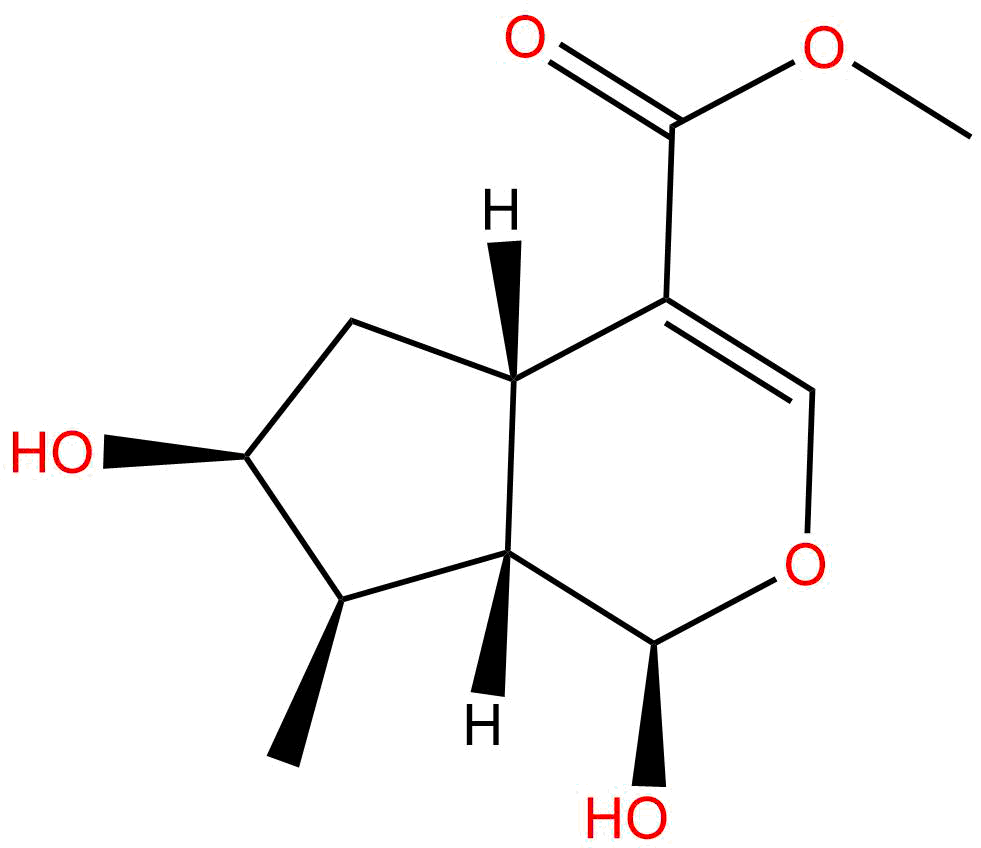


Product name: Loganetin
Synonym name:
Catalogue No.: SBP01834
Cas No.: 29748-10-5
Formula: C11H16O5
Mol Weight: 228.244
Botanical Source:
Physical Description:
Type of Compound: Iridoids
Purity: 95%~99%
Analysis Method: HPLC-DAD or/and HPLC-ELSD
Identification Method: Mass, NMR
Packing: Brown vial or HDPE plastic bottle
The product could be supplied from milligrams to grams
Inquire for bulk scale.
For Reference Standard and R&D, Not for Human Use Directly.
Description:
Standard reference
References:
Biol Pharm Bull. 2012;35(4):573-81.
Metabolism of ginsenoside Rb1 by human intestinal microflora and cloning of its metabolizing β-D-glucosidase from Bifidobacterium longum H-1.
To understand the role of intestinal microflora in expressing the pharmacological effect of ginsenoside Rb1, the metabolic activity of ginsenoside Rb1 by 148 fecal specimens was measured and its metabolizing β-glucosidase was cloned.
METHODS AND RESULTS:
The average activities for p-nitrophenyl-β-D-glucopyranoside and ginsenoside Rb1 were 0.097±0.059 μmol/min/mg and 0.311±0.118 pmol/min/mg, respectively. These enzyme activities were not different between male and female, or between ages. A gene encoding β-D-glucosidase (BglX) was cloned from Bifidobacterium longum H-1, which transformed ginsenoside Rb1 to compound K. The probe for cloning was synthesized from the genes encoding a β-D-glucosidase of previously reported B. longum DJO10A. The sequences of the cloned gene revealed 2364 bp open reading frame (ORF) encoding a protein containing 787 amino acids (molecular weight of 95 kDa). The gene exhibited 99% homology (identities) to that of B. longum. The cloned gene was expressed under T7 promoter of the expression vector, pET-39b(+), in Escherichia coli BL21(DE3), and the expressed enzyme was purified by using HiTrap immobilized metal affinity chromatography (IMAC) HP. The enzyme potently biotransformed ginsenoside Rb1, loganin, arctiin and arbutin to ginsenoside Rd, Loganetin, arctigenin and hydroquinone, respectively, but was not active in the case of hesperidin, and kakkalide.
CONCLUSIONS:
This is the first report on cloning and expression of β-D-glucosidase from B. longum. Based on these findings, ginsenoside Rb1 may be metabolized to bioactive compound(s) by exo-β-D-glucosidase(s) produced from the intestinal bacteria and its pharmacological effects may be dependent on intestinal bacterial exo-β-D-glucosidase(s) activity.
Phytochemistry. 2003 Sep;64(2):549-53.
seco-iridoids from Calycophyllum spruceanum (Rubiaceae).
METHODS AND RESULTS:
Three seco-iridoids 7-methoxydiderroside, 6'-O-acetyldiderroside and 8-O-tigloyldiderroside, were isolated from the wood bark of Calycophyllum spruceanum together with the known iridoids Loganetin, loganin and the seco-iridoids secoxyloganin, kingiside and diderroside. Their structures were elucidated by means of NMR and MS spectral data analysis. Using NOE correlations and coupling constants, the relative stereochemistry of the new derivatives was established.
CONCLUSIONS:
7-Methoxydiderroside, 6'-O-acetyldiderroside and the known secoxyloganin and diderroside showed in vitro activity against trypomastigote forms of Trypanosoma cruzi, with IC(50) values of 59.0, 90.2, 74,2 and 84.9 microg/mL, respectively and were compared to the standard gentian violet (IC(50) 7.5 microg/ml).
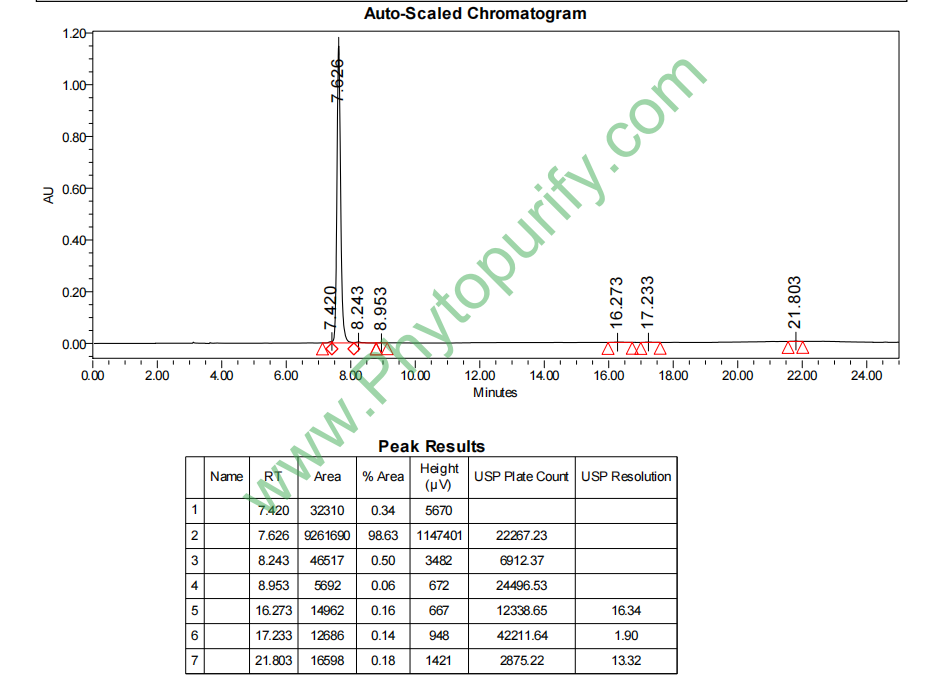
HPLC of Loganetin
Storage conditions:Short-term storage at 2~8℃, long-term storage at -20 ~ -80℃
75.9900
.1888
.1888
19.1013
1.5286
9.2411
High
30.6047
4.3586
Yes
No
No
No
Yes
No
0.0
Yes
Yes
Yes
Yes
Loganetin, also known as (4aS, 7aR) -1,4-a, 5,6,7,7a - hexahydrocyclopentane [c] pyran-4-carboxylic acid methyl ester, is a naturally occurring cyclic terpenoid compound. Its CAS number is 29748-10-5, molecular formula is C11H16O5, and molecular weight is 228.2440 g/mol. As a glycoside of loganin, loganin occupies an important position in plant secondary metabolites. The existing research describes it as a non-toxic natural product and points out its potential value in the study of multidrug-resistant Gram negative bacterial infections. Its biological functions are defined as antibacterial agents and plant metabolites. It is worth noting that the database information further reveals its association with multiple key inflammatory targets (such as TNF, PTGS2, NFKB1, IL6, IL1B), indicating that its core pharmacological activity may lie in anti-inflammatory Function. This provides modern pharmacological evidence for understanding the traditional medicinal value of the compound. This article will provide a systematic professional popularization of this natural product from its chemical basis, plant origin, pharmacological mechanism, medicinal evaluation, and research prospects.
The chemical structure of loganin is the basis of its biological activity. The SMILES string is: COC (=O) C1=CO C@@H[C@@H]2C@@HC@@H C[C@H]12, Clearly depicting its molecular skeleton: a condensed cyclopentapyran ring system, which is a characteristic structure of cyclohexene ether terpenes. The structure contains multiple chiral centers (represented by "@ @" and "@" in SMILES), indicating that it has a specific stereoconfiguration, which is crucial for its specific recognition with biological targets. The functional groups in the structure include: a methyl ester group (- COOCH3), an enoate ester structure, a lactol hemiacetal structure (formed from cyclic hemiacetals), and two secondary alcohol hydroxyl groups (- OH). These polar functional groups collectively determine their physical and chemical properties.
Based on the provided pharmacological parameters, we can quantitatively analyze its properties:
- Molecular weight (MW):228.2440 g/mol, Far less than 500, which falls within the typical range of small molecule drugs.
- Lipid water partition coefficient (LogP/LogD)All are 0.1888. This is a lower value, indicating that the compound has strong hydrophilicity and weak lipophilicity. This is consistent with the presence of multiple oxygen atoms in its structure (high TPSA).
- Topological Polarity Surface Area (TPSA)75.99 Å ². This value reflects the total surface area of polar atoms (mainly O and N) in the molecule and is a key parameter for predicting drug absorption and permeability. The value of 75.99 Å ² is at a moderately high level and may have some impact on passive transmembrane diffusion.
- Water solubility 19.1013 mg/mL (speculative unit). The extremely high water solubility data further confirms its good hydrophilicity, which is beneficial for the development of compound formulations and in vivo distribution.
- Blood-brain barrier penetrability (BBB-permeability)Annotated as' high '. This is a very interesting and important feature. Generally, high BBB penetration requires molecules to have moderate lipid solubility and small molecular size. The contradiction between LogP with lower logP and high BBB penetration may be attributed to its smaller molecular weight, specific molecular conformation, and hydrogen bond donor/acceptor mode, which enable it to pass through specific transporters or have better membrane permeability than predicted by LogP. This provides the possibility for its application in central nervous system related inflammatory diseases.
According to the database, a clear plant source of loganin is cornelian cherry Cornelian Cherry, scientific name Cornus officinalis Sieb. et Zucc.)。 Cornus officinalis belongs to the Cornaceae family, and its dried flesh is the famous traditional Chinese medicine "Cornus officinalis" (also known as "Cornaceae flesh").
In traditional medicine, the application of Cornus officinalis has a long history. According to traditional Chinese medicine theory, Cornus officinalis has a sour and astringent taste, a slightly warm nature, and belongs to the liver and kidney meridians. It has Tonifying the liver and kidneys, converging and solidifying the body The efficacy. Commonly used for treating conditions such as dizziness, tinnitus, lower back and knee pain, impotence, nocturnal emissions, frequent enuresis, diarrhea, excessive sweating, internal heat and thirst. It is an important component of the classic formulas "Liuwei Dihuang Wan" and "Shenqi Wan". Its "convergence" effect is often explained as the absorption of qi, blood, and body fluids, and from a modern medical perspective, it may be closely related to regulating immune, anti-inflammatory, antioxidant, and other activities.
As one of the active ingredients in Cornus officinalis, loganin provides a partial chemical basis for its traditional effects of "tonifying liver and kidney" and "anti-inflammatory". Although traditional applications do not directly target "antibacterial" effects, modern research has found that its aglycone (loganin) and its glycoside (loganin) have a wide range of biological activities, including anti-inflammatory, antioxidant, neuroprotective, and hypoglycemic effects, which are consistent with the multi-target and overall regulatory therapeutic characteristics of Cornus officinalis. Therefore, the study of loganin is a typical case of interpreting and verifying the wisdom of traditional Chinese medicine from the perspective of modern pharmacology.
The target information provided by the database has opened a window for us to gain a deeper understanding of the pharmacological mechanism of action of loganin. The five associated targets - TNF, PTGS2, NFKB1, IL6, IL1B - are all core regulatory molecules in the inflammatory response pathway. This strongly reminds,Anti inflammation is one of the most core and fundamental pharmacological activities of loganin。
(1) Target analysis and inflammatory pathways
- TNF (tumor necrosis factor) and IL-1 β (interleukin-1 β), IL-6 (interleukin-6)They are key pro-inflammatory cytokines produced by activated immune cells such as macrophages. In the early stages of inflammation, they are released in large quantities as "alarm signals", which can recruit more immune cells to the site of inflammation and further induce the production of other inflammatory mediators, forming a "cytokine storm" that plays a central role in acute and chronic inflammation, autoimmune diseases, sepsis and other diseases.
- PTGS2 (prostaglandin endoperoxide synthase 2, also known as COX-2)This is an inducible enzyme that is rapidly upregulated under inflammatory stimulation. It is responsible for catalyzing the production of prostaglandins (such as PGE2) from arachidonic acid, which is a potent analgesic, thermogenic, and vasodilator factor and the main mediator of inflammatory pain and fever. The main mechanism of action of nonsteroidal anti-inflammatory drugs (such as ibuprofen) is to inhibit COX-2.
- NF - κ B1 (nuclear factor kappa B1)This is a crucial transcription factor located downstream of multiple inflammatory signaling pathways. When cells are stimulated by factors such as TNF, IL-1, or bacterial lipopolysaccharides, NF - κ B is activated and translocated into the nucleus, initiating the transcription of a large number of pro-inflammatory genes including TNF, IL-6, IL-1 β, COX-2, serving as the "master switch" of the inflammatory response.
(2) Inference of mechanism of action
The association between loganin and these targets suggests that it may exert anti-inflammatory effects through multiple targets and pathways
1. Directly inhibit pro-inflammatory cytokines It is possible to weaken the initiation and amplification of inflammatory signals from the source by interfering with the synthesis of TNF, IL-1 β, IL-6 or directly blocking their binding to receptors.
2. Inhibit the synthesis of inflammatory mediators By inhibiting the activity or expression of COX-2, the production of prostaglandins that cause pain and heat is reduced, thereby alleviating local symptoms of inflammation (redness, swelling, heat, pain).
3. Regulating the core inflammatory signaling pathway The most crucial aspect may be the regulation of the NF - κ B signaling pathway. If kaempferol can inhibit the activation of NF - κ B, it will be able to simultaneously downregulate the expression of a series of pro-inflammatory molecules downstream, such as TNF, IL-6, IL-1 β, COX-2, etc., achieving a "bottom-up" anti-inflammatory effect. This is an efficient and fundamental anti-inflammatory strategy.
(3) Association with related diseases
Based on the above mechanism, the anti-inflammatory activity of loganin makes it potentially applicable in various inflammation related diseases:
- arthritis(Rheumatoid arthritis, osteoarthritis): Inhibits TNF, IL-1 β, IL-6, and COX-2 in joint synovium, reduces inflammation infiltration and cartilage damage.
- Inflammatory diseases of the nervous system(such as Alzheimer's disease, Parkinson's disease, multiple sclerosis, cerebral ischemia-reperfusion injury): Its high BBB penetration allows it to enter the central nervous system, inhibit neuroinflammation caused by excessive activation of microglia, and protect neurons.
- Metabolic inflammation(such as diabetes and atherosclerosis): chronic low-grade inflammation is an important pathological basis of these diseases. Inhibition of NF - κ B pathway helps to improve insulin resistance and vascular endothelial function.
- intestinal inflammation(such as inflammatory bowel disease): Regulating intestinal immune balance.
- sepsis Inhibit excessive systemic inflammatory response.
The description of its use in the study of multidrug-resistant Gram negative bacterial infections may be indirectly related to its anti-inflammatory effects. Severe bacterial infections, especially Gram negative bacterial infections, are largely caused by excessive immune inflammatory reactions triggered by bacterial endotoxins (LPS), such as septic shock. By inhibiting pathways such as NF - κ B, loganin may help control this deadly "inflammatory storm" and buy time for antibiotic treatment, serving as an adjuvant therapy rather than a direct bactericidal effect.
Drug efficacy assessment aims to determine the potential of a small molecule compound to develop into an oral medication. We combine Lipinski's Rule of Five (RO5) with the provided detailed parameters for analysis:
Lipinski's Five Rules Compliance Status:
1. Molecular weight<500 Da:is(228.24)。
2. Lipid water partition coefficient LogP<5:is(0.19, much lower than 5).
3. Hydrogen bond donors (total number of OH and NH)<5: Depending on the structure, there are 2 hydroxyl groups (secondary alcohols) and 1 lactol hydroxyl group (possibly serving as hydrogen bond donors), and the total number may be 3,Comply with。
4. Hydrogen bond acceptors (total number of O and N)<10: Molecular formula C11H16O5, with 5 oxygen atoms,Comply with。
Maqian glycoside fully conforms to Lipinski's five rules, indicating its good oral absorption potential.
Detailed analysis of specific parameters:
- Absorption and penetration:
- Caco-2 permeability: 9.2411 (speculated to be on the order of magnitude of apparent permeability coefficient Papp × 10 ⁻⁶ cm/s). Usually, Papp>10 × 10 ⁻⁶ cm/s is considered to have good permeability. This value is close to the threshold, combined with its high water solubility, indicating that it may have moderate absorption in the intestine through passive diffusion or active transport.
- Effective permeability (Peff): 1.5286 (unit may be x 10 ⁻⁴ cm/s). This is a parameter that is closer to the in vivo situation, with acceptable values, supporting its oral bioavailability foundation.
- distribution:
- BBB penetrability As mentioned earlier, being labeled as "high" is its significant advantage, expanding its application space for treating central nervous system diseases.
- Plasma protein binding rate (PPB)30.60%. This is a lower binding rate, which means that most of the drugs in the blood exist in free form, facilitating their distribution to tissues and exerting pharmacological effects.
- Metabolism and toxicity:
- AMES test: 0.0 (usually negative), indicating no direct genetic mutation toxicity.
- HERG inhibition No "indicates that it may not inhibit cardiac potassium ion channels and has a low risk of cardiac toxicity.
- chromosome aberration have This is a signal that requires high vigilance, indicating that the compound may cause chromosomal damage under specific testing conditions, with potential genotoxicity and carcinogenic risks. This is a major obstacle on its path to drug development, which needs to be confirmed and evaluated through more comprehensive in vitro and in vivo genetic toxicity tests (such as micronucleus tests) in subsequent research.
- Skin sensitization, respiratory sensitization, phototoxicity All are "no" or "none", indicating good security.
- Serum biochemical indicators Elevated levels of serum alkaline phosphatase (ALK), gamma glutamyltransferase (GGT), aspartate aminotransferase (AST), and alanine aminotransferase (ALT) are all marked as "yes". These are marker enzymes for liver cell damage or bile stasis. This data suggests that under testing conditions, loganin may have Hepatotoxicity potential This is another toxicity issue that requires special attention.
comprehensive evaluation:
Ma Qian Gan Yuan Pharmacokinetic properties Excellent performance in various aspects: small molecule size, good balance between water solubility and permeability, high BBB penetration, low protein binding rate, fully in line with the "Five Principles of Generic Drugs". However, in safety A red light has been lit on the side: potential chromosome aberration Risk and Hepatotoxicity The signs are the two main obstacles to its clinical application. In drug development, efficacy and safety must be balanced, with the latter often having veto power. Therefore, although the pharmacological activity of loganin is clear and its pharmacokinetic properties are excellent, its toxicity issues must be addressed through structural optimization (such as synthesizing derivatives with lower toxicity), in-depth mechanism of action research (clarifying whether toxicity is off target or related to anti-inflammatory targets), and rigorous preclinical safety evaluation.
At present, research on loganin is still mainly in progress Preclinical stage The existing literature mainly focuses on the study of the overall extract of its plant source (such as Cornus officinalis) or its main glycoside components (such as loganin). Maqiansu has been widely proven to have various activities in vitro and in vivo, including anti-inflammatory, antioxidant, neuroprotective, hepatoprotective, and hypoglycemic effects. Some of its effects are believed to be exerted after being metabolized into aglycones (such as Maqianglycoside) in the body. Therefore, as an active metabolite, loganin is gradually receiving more attention.
Research status:
1. Activity verification Studies have preliminarily confirmed that loganin and its related compounds have anti-inflammatory and antibacterial auxiliary activities, and their mechanism of action is closely related to the regulation of inflammatory signaling pathways such as NF - κ B and MAPK.
2. Mechanism Exploration The prediction based on database target information provides a clear direction for subsequent experimental research. In the future, technologies such as molecular docking, surface plasmon resonance, reporter gene experiments, and gene knockout will be needed to directly verify the interaction mode and efficacy of loganin with targets such as TNF, COX-2, and NF - κ B.
3. Toxicity assessment The genetic toxicity and hepatotoxicity risks suggested by the database are the most urgent scientific issues that need to be clarified and resolved in current research. It is necessary to conduct standard toxicology studies that comply with Good Clinical Practice (GLP) for drug non clinical research to determine its safe dosage range.
Application Prospects:
1. lead compound The structure of loganin is novel and its activity is clear, making it an excellent natural compound lead compound Pharmaceutical chemists can use it as a template for structural modification and optimization. For example, while retaining its core cyclohexene ether terpene skeleton and key pharmacophores, the aim is to introduce or modify certain functional groups Enhance anti-inflammatory activity, improve stability, while reducing or eliminating its genetic and liver toxicity Thus, more effective new anti-inflammatory drugs can be developed.
2. Therapeutic Area Given its clear anti-inflammatory mechanism and high BBB penetration, it Neurodegenerative diseases(Alzheimer's disease, Parkinson's disease) and Autoimmune diseases The prospects for treatment in China are particularly promising. As a multi-target anti-inflammatory agent, it may have better overall regulatory effects and lower resistance risks than single target drugs.
3. Research on Modernization of Traditional Chinese Medicine The in-depth study of loganin is an important component of interpreting the scientific connotation of "tonifying liver and kidney, consolidating and removing" in Cornus officinalis. By clarifying its in vivo processes, active forms, and targets of action, key scientific basis can be provided for the quality control, efficacy evaluation, and secondary development of Cornus officinalis and related compounds.
Summary:
Maqian glycoside is a natural iridoid compound derived from the traditional Chinese medicine Cornus officinalis. It exhibits multi-target anti-inflammatory activity centered on inhibiting the NF - κ B pathway due to its unique chemical structure, and has good drug like molecular characteristics, especially excellent blood-brain barrier penetration ability. However, its potential genetic toxicity and hepatotoxicity risks have cast a shadow over its path as a drug. The focus of future research will be on: thoroughly elucidating its precise molecular mechanism of action; Systematically evaluate and find ways to mitigate its toxicity risks; And carry out reasonable structural transformation based on it as a guide. The story of Ma Qian Gan Yuan vividly reflects the opportunities and challenges of discovering drug precursors from natural treasure trove, and its subsequent development deserves continuous attention from pharmaceutical researchers.
